
Upright Reach-In Freezer

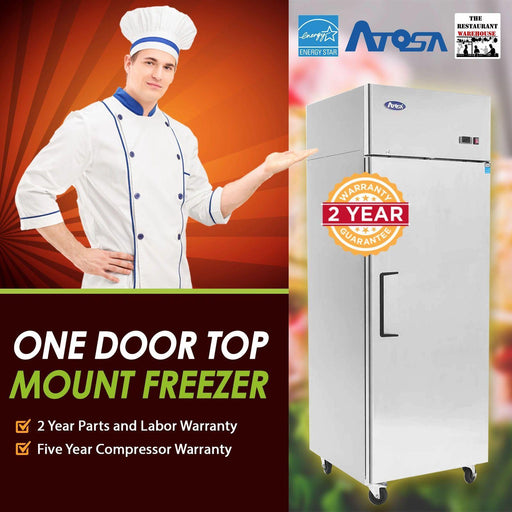
Atosa MBF8001GR 29-Inch 21.4 cu. ft. Commercial Freezer
Atosa
Original price
$3,396.00
Original price
$3,396.00
-
Original price
$3,396.00
Original price
$3,396.00
Current price
$2,447.00
$2,447.00
-
$2,447.00
Current price
$2,447.00
Atosa MBF8001GR Commercial Reach-In Freezer for Sale – Solid Door Atosa MBF8001GR commercial reach-in freezer for sale is designe...
View full details
Original price
$3,396.00
Original price
$3,396.00
-
Original price
$3,396.00
Original price
$3,396.00
Current price
$2,447.00
$2,447.00
-
$2,447.00
Current price
$2,447.00
Save 28%
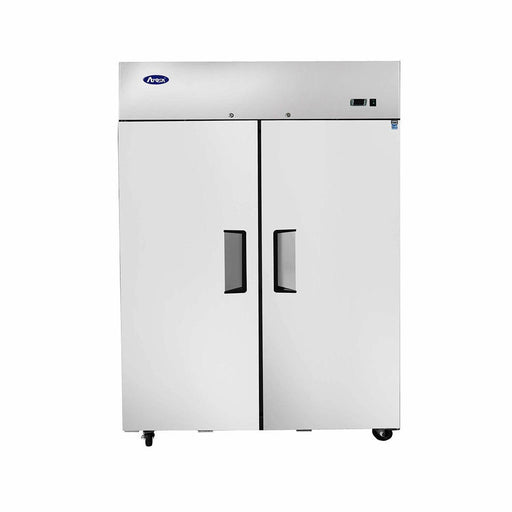
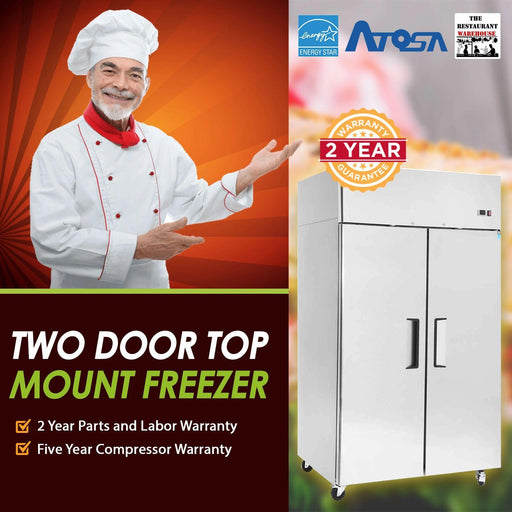
Atosa MBF8002GR 52-Inch Two Door 43.2 cu. ft. Commercial Freezer
Atosa
Original price
$5,206.00
Original price
$5,206.00
-
Original price
$5,206.00
Original price
$5,206.00
Current price
$3,751.00
$3,751.00
-
$3,751.00
Current price
$3,751.00
Atosa MBF8002GR 52-Inch Two-Door Commercial Reach-In Freezer In stock and built for daily commercial use. The Atosa MBF8002GR co...
View full details
Original price
$5,206.00
Original price
$5,206.00
-
Original price
$5,206.00
Original price
$5,206.00
Current price
$3,751.00
$3,751.00
-
$3,751.00
Current price
$3,751.00
Save 28%
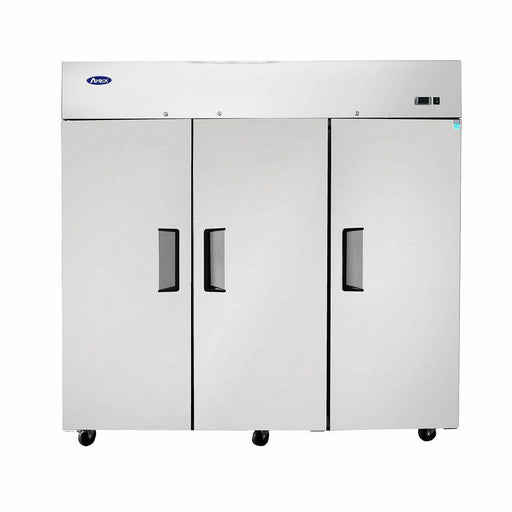
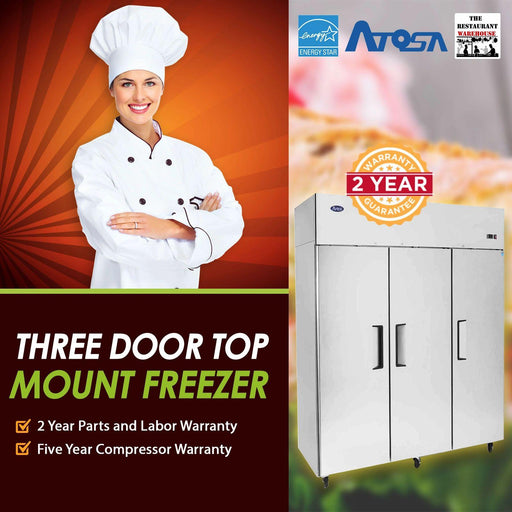
Atosa MBF8003GR 78-Inch Three Door 64.9 cu. ft. Commercial Freezer
Atosa
Original price
$7,356.00
Original price
$7,356.00
-
Original price
$7,356.00
Original price
$7,356.00
Current price
$5,300.00
$5,300.00
-
$5,300.00
Current price
$5,300.00
Atosa MBF8003GR 3-Door Commercial Reach-In Freezer – 64.9 Cu Ft Built for high-volume commercial kitchens that need maximum frozen storage an...
View full details
Original price
$7,356.00
Original price
$7,356.00
-
Original price
$7,356.00
Original price
$7,356.00
Current price
$5,300.00
$5,300.00
-
$5,300.00
Current price
$5,300.00
Save 28%
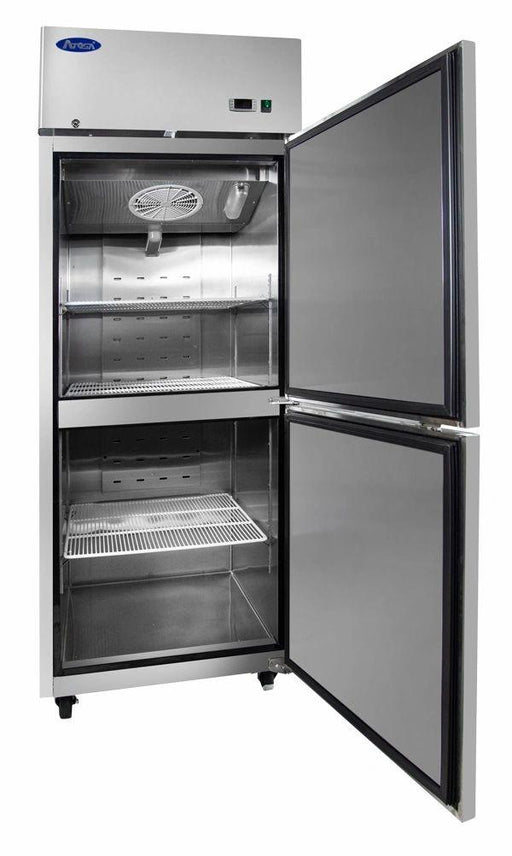
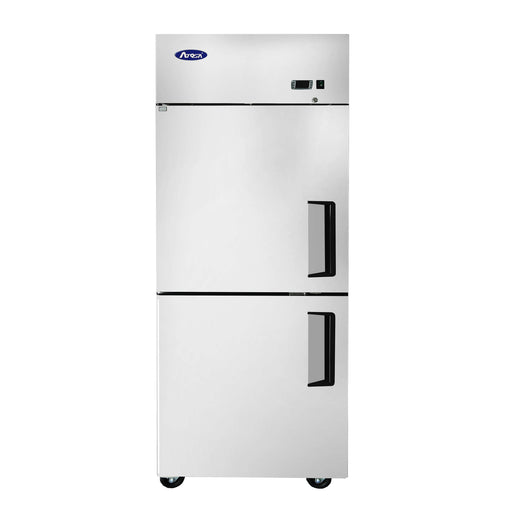
Atosa MBF8007GR 29-Inch Two Split Door Upright Freezer
Atosa
Original price
$3,680.00
Original price
$3,680.00
-
Original price
$3,680.00
Original price
$3,680.00
Current price
$2,652.00
$2,652.00
-
$2,652.00
Current price
$2,652.00
Atosa MBF8007GR 29-Inch Split-Door Commercial Freezer for Sale (ENERGY STAR®) Atosa MBF8007GR commercial reach-in freezer for sal...
View full details
Original price
$3,680.00
Original price
$3,680.00
-
Original price
$3,680.00
Original price
$3,680.00
Current price
$2,652.00
$2,652.00
-
$2,652.00
Current price
$2,652.00
Save 28%

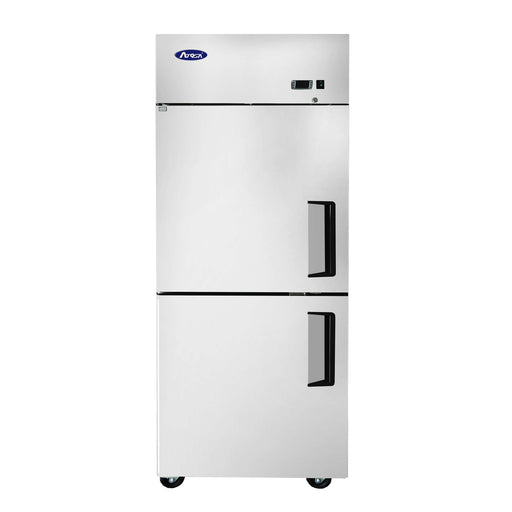
Atosa MBF8007GRL 29-Inch Two Half Door Freezer - Left Hinge 21.4 cu. ft.
Atosa
Original price
$3,680.00
Original price
$3,680.00
-
Original price
$3,680.00
Original price
$3,680.00
Current price
$2,652.00
$2,652.00
-
$2,652.00
Current price
$2,652.00
Atosa MBF8007GRL 29-Inch Split-Door Commercial Freezer for Sale (Left Hinge, ENERGY STAR®) Atosa MBF8007GRL commercial reach-in f...
View full details
Original price
$3,680.00
Original price
$3,680.00
-
Original price
$3,680.00
Original price
$3,680.00
Current price
$2,652.00
$2,652.00
-
$2,652.00
Current price
$2,652.00
Save 28%


Atosa MBF8008GR Four Solid Half Door Reach In Freezer
Atosa
Original price
$6,200.00
Original price
$6,200.00
-
Original price
$6,200.00
Original price
$6,200.00
Current price
$4,468.00
$4,468.00
-
$4,468.00
Current price
$4,468.00
Atosa MBF8008GR 2-Section Reach-In Commercial Freezer with Four Half Doors Built for high-volume kitchens and ready for daily commercial use. ...
View full details
Original price
$6,200.00
Original price
$6,200.00
-
Original price
$6,200.00
Original price
$6,200.00
Current price
$4,468.00
$4,468.00
-
$4,468.00
Current price
$4,468.00
Save 28%

Atosa MBF8021GR 29-inch Top Mount One-Section (1) Top Divided Door (2) Bottom Drawers Freezer
Atosa
Original price
$6,050.00
Original price
$6,050.00
-
Original price
$6,050.00
Original price
$6,050.00
Current price
$4,360.00
$4,360.00
-
$4,360.00
Current price
$4,360.00
Atosa MBF8021GR Reach-In Commercial Freezer with Door & Drawers Buy flexible frozen storage designed for fast-paced kitchens with t...
View full details
Original price
$6,050.00
Original price
$6,050.00
-
Original price
$6,050.00
Original price
$6,050.00
Current price
$4,360.00
$4,360.00
-
$4,360.00
Current price
$4,360.00
Save 28%
How to Choose the Right Upright Reach-In Freezer
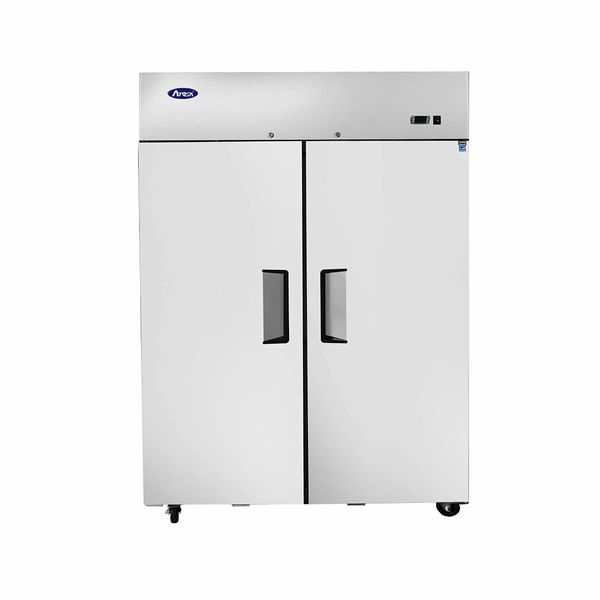
An upright reach-in freezer — sometimes called a commercial upright freezer or a vertical freezer — is the workhorse of most restaurant cold storage. Unlike a chest freezer where you have to dig through layers of frozen goods, an upright model stands tall and gives your team eye-level access to everything inside. Shelves and door compartments keep inventory organized and visible, which speeds up service, reduces food waste, and prevents the "freezer avalanche" of items tumbling out during a rush.
Every reach-in freezer in this collection is NSF-certified, engineered for continuous 24/7 operation, and holds product safely at 0°F (-18°C) or below. The right choice depends on door count, capacity, compressor location, and how the unit fits into your kitchen layout.
Single, Two, and Three Door Reach-In Freezers
Door count is the first decision. It drives capacity, footprint, and cost more than any other single spec.
- Single-door reach-in freezers — typically 27 to 31 inches wide, holding roughly 20 to 24 cubic feet. Best for small kitchens, food trucks, bakeries, coffee shops, and prep areas where you need reliable frozen storage without dedicating a lot of floor space.
- Two-door reach-in freezers — the most common choice for full-service restaurants. Typically 52 to 55 inches wide, holding 43 to 48 cubic feet. Two doors let you organize by category (proteins on one side, prepped ingredients or backup product on the other) and keep the second half sealed while pulling from the first, protecting temperature during heavy pull.
- Three-door reach-in freezers — typically 78 to 82 inches wide, holding 64 to 68 cubic feet. Ideal for high-volume kitchens, catering operations, and commissaries running large frozen inventory. The third door lets you segment by station or by temperature-sensitive category.
Top Mount vs Bottom Mount Compressor
Compare compressor placement against the heat, debris and service access at the freezer's actual installation point. Neither position is best for every kitchen.
- Top-mount compressor freezers: The refrigeration equipment sits above the cabinet, farther from floor-level debris. Airborne flour and grease still matter, warmer air can collect higher in the room, and overhead service access needs planning.
- Bottom-mount compressor freezers: Lower components can be easier to reach, and a raised cabinet floor can reduce bending to access the lowest storage area. Floor-level dust and spills still require attention.
Use the exact model's ventilation and maintenance instructions. Do not assume either layout is more efficient solely because of compressor position, or use the top as storage without confirming what the manufacturer permits.
Reach-In Freezer Sizing and Capacity
Storage volume is measured in cubic feet, but what matters in practice is how many pans, cambros, and cases you can fit. A rough guide:
- 20 to 24 cu ft (single door): ~7 to 10 full-size sheet pans plus door storage. Fits food trucks, small cafés, and satellite prep areas.
- 43 to 48 cu ft (two door): ~15 to 20 sheet pans. The everyday workhorse for most full-service restaurants.
- 64 to 68 cu ft (three door): ~25 to 30 sheet pans. Handles catering, banquets, high-volume batch prep, and commissary output.
Measure your space carefully. Confirm both the installation footprint and the delivery path — doorways, hallways, and any corners the freezer needs to turn. Also plan for 3 to 6 inches of clearance on all sides and the top for compressor airflow. Without it the compressor works harder, drives up your energy bill, and wears out faster.
Reach-In vs Chest Freezer
The upright vs chest question comes up in every freezer buying decision. Here is the honest trade-off:
- Upright wins on access speed and organization. Shelves and door bins let your team see and grab product in seconds. Ideal for line service and ingredients pulled multiple times per shift.
- Chest wins on capacity per dollar and energy efficiency. Cold air sinks, so opening a chest lid loses less cold air than opening an upright door. A stocked chest freezer also holds temperature for 2 to 3 days during a power outage, vs 4 to 24 hours for uprights.
- Most restaurants use both. An upright on the line for daily-use product, a chest in the back for overflow and long-term storage.
Construction, Compressor, and Warranty
Reach-in freezers get heavy daily use — the door alone opens hundreds of times per shift. Look for these build-quality signals:
- Stainless steel exterior and interior liner. Easier to clean and holds up to daily traffic without denting or corroding.
- Self-closing doors with 90° stay-open detent. Staff will forget to close the door during a rush — self-close protects your product and your electricity bill.
- Magnetic door gaskets that are cleanable and field-replaceable. A worn gasket is the #1 cause of frost buildup and premature compressor wear.
- Heavy-duty adjustable shelves — three to four per section is standard. Adjustability matters because your inventory changes seasonally.
- Locking casters for easier deep cleaning behind and under the unit.
- Certifications. Confirm NSF (food safety and cleanability), UL 471 (electrical and mechanical safety), and Energy Star where applicable.
- Warranty. Industry standard is 2 years parts and labor plus a 5-year compressor warranty. The compressor is the most expensive component to replace, so long compressor coverage is a strong build-quality signal. Atosa units in this collection carry that coverage and use R-290 refrigerant, a low-GWP natural refrigerant that meets current EPA rules and delivers better efficiency than legacy R-404A.
Electrical Requirements
Confirm your electrical setup before ordering — a mismatched outlet is the most common delivery-day problem:
- Single-door uprights typically run on a standard 115V/60Hz outlet.
- Two-door and three-door uprights often require a dedicated 20-amp circuit at 115V, or in larger commercial models 208-230V service.
- Verify with your electrician before delivery. A dedicated circuit is worth the small upfront cost — sharing a circuit with high-draw equipment (mixers, dish machines, ovens) causes voltage sag that shortens compressor life.
One overlooked detail: if the freezer was tilted during delivery, let it stand upright for at least 4 hours before plugging it in. Tilting can push compressor oil into the refrigerant lines, and running it immediately can permanently damage the compressor. After you plug in, wait 24 hours before loading product so the cabinet reaches setpoint and the refrigerant settles.
Temperature and Food Safety
Hold reach-in freezers at or below 0°F (-18°C). Set the thermostat to -10°F as a working target to buffer against door traffic and heat spikes from the kitchen. Verify with a separate NSF-listed appliance thermometer inside the cabinet and log the temperature at the start of every shift — the easiest way to make this habit stick is to add it to your existing line-check sheet.
Energy Efficiency
A freezer runs 24/7, so efficiency shows up on every utility bill. When comparing models:
- Prioritize ENERGY STAR-certified units — they use approximately 20% less energy than non-certified models. Over a 10-year lifespan that adds up to significant savings.
- Check the EnergyGuide label for estimated annual kWh consumption. Multiply by your local electricity rate for a real-world cost comparison.
- Keep the freezer away from heat-producing equipment (fryers, ovens, grills, dish machines).
- Store the unit away from direct sunlight and keep 3 to 6 inches of airflow clearance on all sides.
- Train staff to pull multiple items in a single door open rather than opening the freezer repeatedly during a rush. This one habit measurably reduces both temperature swings and monthly electricity use.
Reach-In Freezer Maintenance
Preventive maintenance is your best defense against compressor failure. Build these into existing line-check habits:
- Daily: Log the internal temperature at the start of every shift. Wipe down door handles and check that gaskets are clean and sealing tightly.
- Weekly: Wipe interior and exterior with a food-safe cleaner. Clean gaskets with warm soapy water to remove grime that breaks the seal.
- Monthly: Inspect and clean the condenser coils every 30 to 60 days in a greasy kitchen, or every 60 to 90 days in a cleaner environment. Dust on the coils is the #1 preventable cause of compressor failure.
- Quarterly: Check hinges, self-close mechanism, casters, and drain lines. Inspect the interior liner for damage. Deep-clean shelves and door bins.
Choosing a Commercial Single-Door Freezer
A one-door reach-in can serve a smaller kitchen or provide dedicated frozen storage beside a particular station. Start with the cases and containers you need to hold between deliveries, including your busiest service period. Compare usable shelf dimensions, adjustable shelf positions and door swing before choosing a model by cubic feet alone.
For an Atosa shortlist, compare the MBF8001GR top-mount freezer with the MBF8501GR bottom-mount freezer. Where a wall or adjoining equipment affects access, consider the left-hinge MBF8501GRL. For a narrower cabinet, review the MBF15FSGR slimline freezer, but check depth as well as width: a narrow cabinet is not necessarily a shallow one.
Check which controls and door features the exact model includes. A temperature display, high-temperature alarm, door-ajar alarm, self-closing mechanism and keyed lock are different features; do not assume every freezer has all of them. Ask about included shelves, replacement gaskets and service support before ordering.
Solid Doors, Glass Doors and Split-Door Layouts
Choose around the work the freezer will do. Solid doors suit back-of-house frozen storage, while glass-door freezers let staff or customers see the contents before opening the cabinet. Compare the selected models' energy figures and intended use rather than assuming visibility or door material alone determines operating cost.
Half-door models divide access into smaller openings. The Atosa MBF8007GR has one section with two half doors, while the MBF8008GR has two sections with four half doors. Door count is therefore not the same as section count, and multiple doors do not automatically mean separately controlled temperature zones.
Specialized layouts need their own checks. Pass-through equipment provides access from opposite sides; roll-in equipment is designed around compatible mobile racks. A combination refrigerator-freezer and a convertible cabinet are also different products. Confirm the intended operating mode, rack fit and installation requirements rather than treating a standard reach-in as interchangeable with these formats. A frozen-storage cabinet is not a substitute for equipment designed to rapidly chill hot food.
Compare Total Cost and Service Support
Compare the purchase price with delivery, any electrical work, operating costs and the cost of maintaining the equipment. For an energy comparison, use a current model-specific consumption figure: estimated annual electricity cost equals daily kWh multiplied by 365 and your electricity rate per kWh. Actual use varies with room conditions, loading and door openings; this is a comparison method, not a guaranteed bill.
Read the warranty for the exact model and use case, including coverage periods, exclusions and how to request service. Keep the invoice, model number and serial number together. Before ordering replacement shelves, gaskets or other components, confirm compatibility with that equipment rather than relying on cabinet width or appearance.
Explore restaurant equipment rental or financing and lease-to-own options if you want to compare ways to acquire the freezer. Ask us to confirm model eligibility, terms, current availability and delivery arrangements before making a decision.
Reach-In Freezer Buying Checklist
- Measure your space and delivery path. Include doorways, hallways, and clearance for ventilation.
- Choose door count based on volume. Single for small operations, two for most restaurants, three for high volume.
- Pick compressor location. Compare floor debris, surrounding heat, lowest-shelf access and safe service access.
- Confirm electrical requirements. 115V vs 208-230V, standard vs dedicated circuit.
- Verify ENERGY STAR certification. Roughly 20% lower annual electricity cost.
- Check warranty terms. 2 years parts and labor plus 5 years on the compressor is the commercial standard.
- Read the delivery and return policy before you buy. Freezer restocking fees can reach 35% for refused deliveries.
Compare Related Freezer Types
- Chest Freezers — bulk backup and long-term storage
- Undercounter Freezers — line-level access in smaller footprints
- Glass Door Freezers — merchandising and product visibility
- Merchandising Freezers — customer-facing frozen display
- Ice Cream Freezers — dedicated frozen dessert display
- Top Mount Compressor Freezers
- Bottom Mount Compressor Freezers
- Atosa Freezers — the brand-specific lineup we stock most heavily
- Commercial Freezers — full parent category
Related Buying Guides
- Commercial Freezer Temperature Guide
- Commercial Freezer Troubleshooting Guide
- Commercial Freezer Maintenance
- Atosa Refrigerator and Freezer Operating Instructions
Comparing Standing Freezers for Your Restaurant
If you are shopping for a standing freezer, compare commercial upright reach-in models against the work they will do in your kitchen. Make a short side-by-side list of suitable models with their usable shelf layout, door swing, included equipment, electrical requirements, documented energy use, and written warranty. This helps separate a feature you need from one that simply makes a specification sheet look more impressive.
Consider Noise and Monitoring at the Installation Point
For an open kitchen or a freezer near seating, ask whether the manufacturer provides a sound rating and the conditions under which it was measured. Do not assume that a model described as quiet will be unobtrusive in your particular room. Keep the required ventilation and service access when deciding where to place it.
If you need notifications outside business hours, confirm whether the selected freezer includes remote alerts or requires a separate monitoring system. Decide who will receive and respond to an alert. A temperature display, an audible alarm, and a phone notification are different capabilities, so verify each one rather than assuming they come together.
Arrange the Delivery Handoff Before Ordering
Confirm whether the delivery service ends at the curb or includes any inside placement, and arrange the people and equipment needed for the remaining move. Choose a delivery window that avoids your busiest service period where possible. Review the seller's freight-inspection procedure in advance so the person receiving the shipment knows how to document damage and whom to contact.
Frequently Asked Questions
What is an upright reach-in freezer?
An upright reach-in freezer is a vertical commercial freezer with hinged doors and interior shelves, designed for organized frozen storage and fast product access in restaurants, bakeries, and foodservice operations. It is engineered for continuous 24/7 operation and holds product at or below 0°F.
What size reach-in freezer do I need?
Single-door units (roughly 20 to 24 cu ft) fit small kitchens, food trucks, and coffee shops. Two-door units (43 to 48 cu ft) are the everyday choice for most full-service restaurants. Three-door units (64 to 68 cu ft) handle high-volume kitchens, catering operations, and commissaries.
Should I buy a top-mount or bottom-mount compressor freezer?
Compare conditions at the installation point. Top-mount equipment is farther from floor-level debris but can encounter warmer air and needs safe overhead service access. Bottom-mount equipment can offer easier lower access and a raised cabinet floor, but is nearer floor debris. Both designs need model-specific ventilation and maintenance.
Reach-in freezer or chest freezer — which is better for a restaurant?
Reach-in for daily-use product because shelves and door bins make items fast to find. Chest for bulk backup and long-term storage because they store more per dollar and hold temperature longer during power outages. Most restaurants use both.
What temperature should a reach-in freezer be set to?
Set the thermostat to -10°F. This gives you a buffer against door traffic and ambient heat, keeping product safely below the 0°F food-safety threshold at all times. Log the temperature at the start of every shift.
Do I need a dedicated electrical circuit for a reach-in freezer?
Single-door uprights typically run on a standard 115V outlet. Two-door and three-door models often require a dedicated 20-amp circuit at 115V or 208-230V service. Confirm with your electrician before ordering — sharing a circuit with high-draw equipment shortens compressor life.
What warranty is standard on a commercial reach-in freezer?
Industry standard is 2 years parts and labor plus a 5-year compressor warranty. The compressor is the most expensive component to replace, so long compressor coverage is one of the best build-quality signals available.
Do you rent commercial reach-in freezers?
Yes. The Restaurant Warehouse rents commercial freezers to pop-ups, catering operators, seasonal businesses, and any operator who wants freezer capacity without a long-term commitment. See our restaurant equipment rental page.