
Reach-In Refrigerators

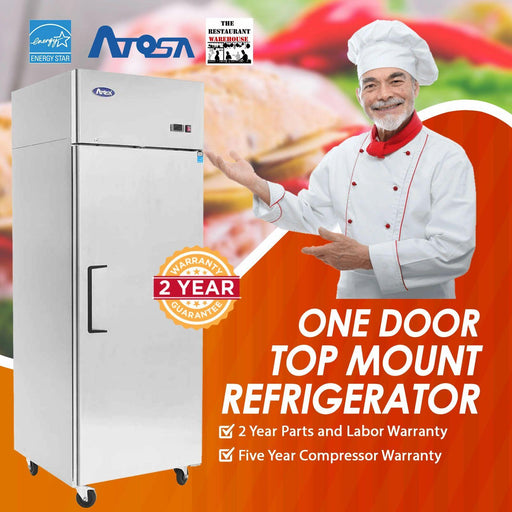
Atosa MBF8004GR 29-Inch One Door 21.4 cu. ft. Commercial Refrigerator
Atosa
Original price
$2,943.00
Original price
$2,943.00
-
Original price
$2,943.00
Original price
$2,943.00
Current price
$2,121.00
$2,121.00
-
$2,121.00
Current price
$2,121.00
Atosa MBF8004GR Commercial Refrigerator for Sale Atosa MBF8004GR commercial refrigerator for sale is designed for restaurants and...
View full details
Original price
$2,943.00
Original price
$2,943.00
-
Original price
$2,943.00
Original price
$2,943.00
Current price
$2,121.00
$2,121.00
-
$2,121.00
Current price
$2,121.00
Save 28%

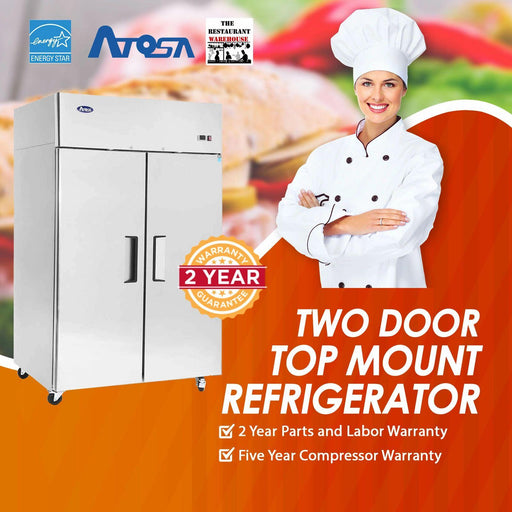
Atosa MBF8005GR 52-Inch Two Door 43.2 cu. ft. Commercial Refrigerator
Atosa
Original price
$4,154.00
Original price
$4,154.00
-
Original price
$4,154.00
Original price
$4,154.00
Current price
$2,993.00
$2,993.00
-
$2,993.00
Current price
$2,993.00
Atosa MBF8005GR 52-Inch Two-Door Commercial Reach-In Refrigerator for Sale Atosa MBF8005GR commercial reach-in refrigerator for s...
View full details
Original price
$4,154.00
Original price
$4,154.00
-
Original price
$4,154.00
Original price
$4,154.00
Current price
$2,993.00
$2,993.00
-
$2,993.00
Current price
$2,993.00
Save 28%
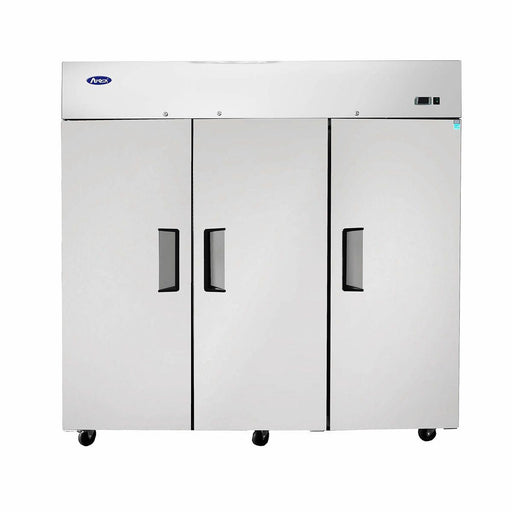
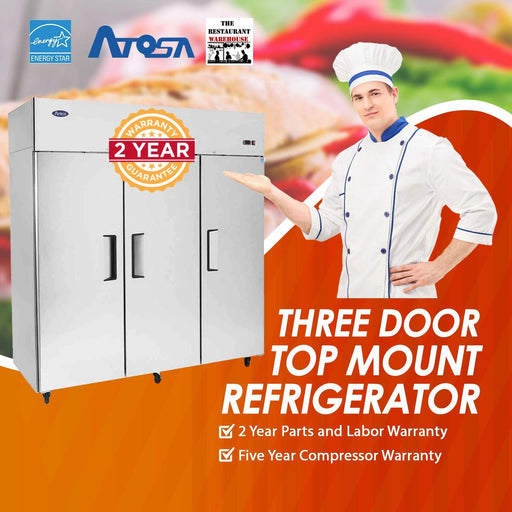
Atosa MBF8006GR 78-Inch Three Door 64.9 cu. ft. Commercial Refrigerator
Atosa
Original price
$6,393.00
Original price
$6,393.00
-
Original price
$6,393.00
Original price
$6,393.00
Current price
$4,607.00
$4,607.00
-
$4,607.00
Current price
$4,607.00
Atosa MBF8006GR 78-Inch 3-Door Commercial Reach-In Refrigerator for Sale Atosa MBF8006GR commercial reach-in refrigerator for sal...
View full details
Original price
$6,393.00
Original price
$6,393.00
-
Original price
$6,393.00
Original price
$6,393.00
Current price
$4,607.00
$4,607.00
-
$4,607.00
Current price
$4,607.00
Save 28%
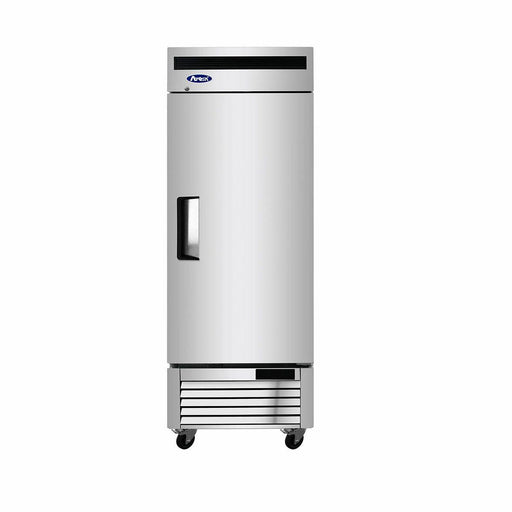
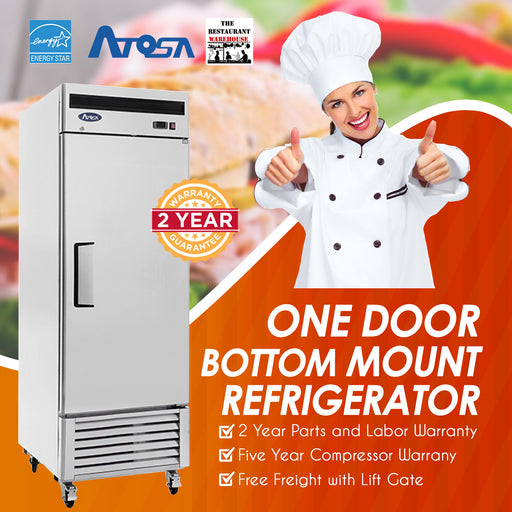
Atosa MBF8505GR 27-Inch One Door 19.1 cu. ft. Commercial Refrigerator
Atosa
Original price
$3,058.00
Original price
$3,058.00
-
Original price
$3,058.00
Original price
$3,058.00
Current price
$2,204.00
$2,204.00
-
$2,204.00
Current price
$2,204.00
Atosa MBF8505GR 27-Inch One Door Commercial Reach-In Refrigerator – ENERGY STAR® Need a compact, ENERGY STAR® commercial refrigerato...
View full details
Original price
$3,058.00
Original price
$3,058.00
-
Original price
$3,058.00
Original price
$3,058.00
Current price
$2,204.00
$2,204.00
-
$2,204.00
Current price
$2,204.00
Save 28%


Atosa MBF8505GRL 27-Inch One Door 19.1 cu. ft. Left Hinge Commercial Refrigerator
Atosa
Original price
$3,058.00
Original price
$3,058.00
-
Original price
$3,058.00
Original price
$3,058.00
Current price
$2,204.00
$2,204.00
-
$2,204.00
Current price
$2,204.00
Atosa MBF8505GRL 27-Inch Left-Hinged Commercial Reach-In Refrigerator (ENERGY STAR®) Buy the Atosa MBF8505GRL 27-inch commercial reach-in ref...
View full details
Original price
$3,058.00
Original price
$3,058.00
-
Original price
$3,058.00
Original price
$3,058.00
Current price
$2,204.00
$2,204.00
-
$2,204.00
Current price
$2,204.00
Save 28%
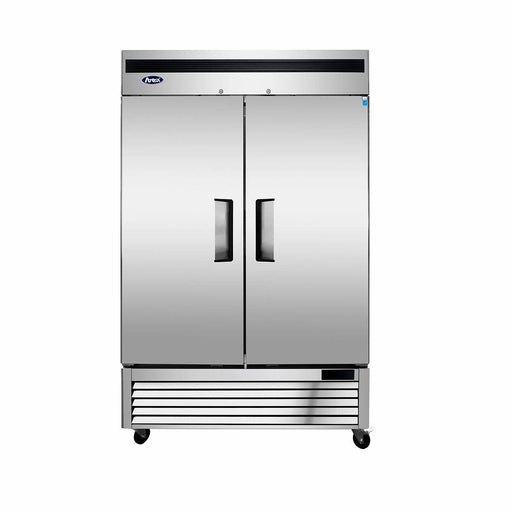
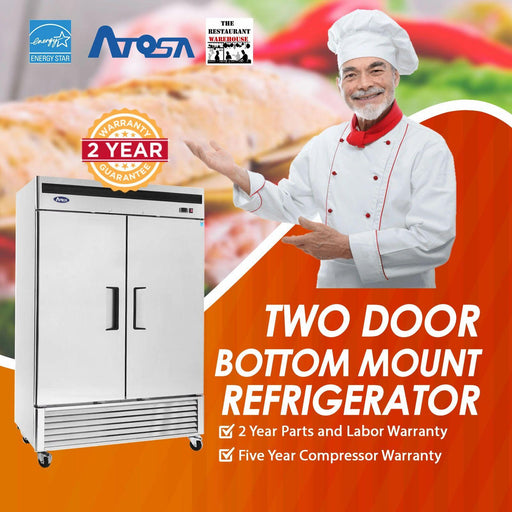
Atosa MBF8507GR 54-Inch Two Door 47.77 cu. ft. Commercial Refrigerator
Atosa
Original price
$4,325.00
Original price
$4,325.00
-
Original price
$4,325.00
Original price
$4,325.00
Current price
$3,117.00
$3,117.00
-
$3,117.00
Current price
$3,117.00
Atosa MBF8507GR 54-Inch Two Door Commercial Upright Refrigerator – ENERGY STAR Rated The Atosa MBF8507GR is a 54-inch, two-door c...
View full details
Original price
$4,325.00
Original price
$4,325.00
-
Original price
$4,325.00
Original price
$4,325.00
Current price
$3,117.00
$3,117.00
-
$3,117.00
Current price
$3,117.00
Save 28%
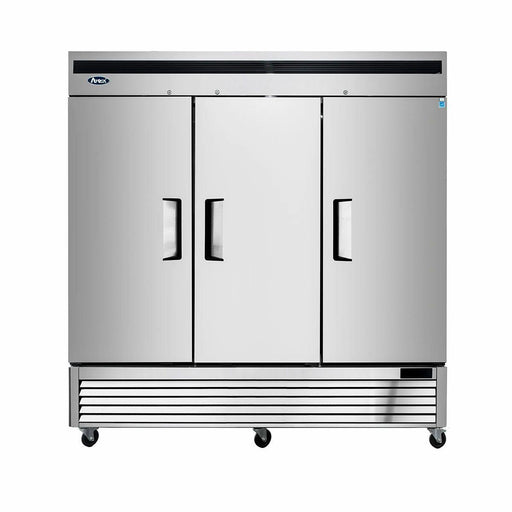
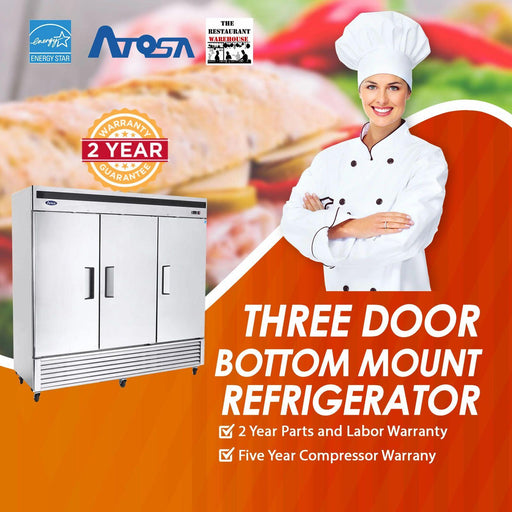
Atosa MBF8508GR 82-Inch Three Door 67.99 cu. ft. Commercial Refrigerator
Atosa
Original price
$6,734.00
Original price
$6,734.00
-
Original price
$6,734.00
Original price
$6,734.00
Current price
$4,852.00
$4,852.00
-
$4,852.00
Current price
$4,852.00
Atosa MBF8508GR 82" 3-Door Commercial Reach-In Refrigerator (ENERGY STAR®) – 67.99 Cu. Ft. Need high-capacity refrigerated storage...
View full details
Original price
$6,734.00
Original price
$6,734.00
-
Original price
$6,734.00
Original price
$6,734.00
Current price
$4,852.00
$4,852.00
-
$4,852.00
Current price
$4,852.00
Save 28%

Reach-in refrigerators are the workhorse of the professional kitchen — front-access cold storage that keeps ingredients within arm's reach of the cook line. Every model in this collection holds a consistent 33°F to 40°F, is built from heavy-gauge stainless steel, is NSF-certified for foodservice, and is available in one-, two-, and three-door configurations to match any menu volume. Most units are also ENERGY STAR rated, which lowers your monthly electric bill and qualifies for utility rebates in many states.
What Is a Reach-In Refrigerator?
A reach-in refrigerator is a vertical, front-loading refrigerator designed to sit on the kitchen floor and give staff fast, one-hand access to refrigerated product during service. Unlike walk-ins (used for bulk storage) or undercounter units (used at prep stations), reach-ins are the primary daily-service refrigerator in most restaurants: big enough to hold a full day's mise en place, small enough to fit into a standard kitchen footprint, and fast enough to keep up with a busy line.
Reach-ins are used across every foodservice format — full-service restaurants, quick-service kitchens, bars, cafés, bakeries, ghost kitchens, catering operations, and institutional foodservice. If you need reliable, on-demand cold storage that a line cook can access hundreds of times a shift without slowing down, a reach-in is the standard.
Reach-In Refrigerator Configurations
One-Door Reach-In Refrigerators
One-door reach-ins are the smallest full-size reach-in refrigerators, typically 27 to 29 inches wide and holding 19 to 22 cubic feet. They fit into tight spaces, cost the least, and are ideal for smaller kitchens, prep stations, satellite bars, coffee shops, and secondary storage in larger operations. Expect to pay $1,800 to $2,500 for a heavy-duty one-door reach-in.
Choose a one-door when your daily prep volume is modest, when the unit is a backup to a walk-in cooler, or when floor space is the primary constraint. Both right-hinge and left-hinge configurations are available for tight corner installs.
Two-Door Reach-In Refrigerators
Two-door reach-ins are the most common configuration in working kitchens. They are typically 52 to 54 inches wide, hold 43 to 48 cubic feet, and give you organized, high-capacity storage in the same footprint as two side-by-side one-door units — but with a single refrigeration system that costs less to run. Expect $3,000 to $3,500 for a two-door reach-in.
Choose a two-door when you are outfitting a standard full-service restaurant, a busy café, or a ghost kitchen with two or three cooks on the line. The extra capacity lets you separate raw proteins from ready-to-eat product, which is a HACCP best practice and simplifies inventory rotation.
Three-Door Reach-In Refrigerators
Three-door reach-ins are the largest single-cabinet reach-in configuration, typically 78 to 82 inches wide and holding 64 to 68 cubic feet. They are the workhorse for high-volume kitchens, banquet operations, hotels, and any kitchen doing more than 200 covers a day. Expect $4,500 to $5,000 for a three-door reach-in.
Choose a three-door when your menu requires separation of proteins, dairy, and produce; when you're feeding a large operation from a single reach-in; or when a walk-in cooler is not practical for the space. Three-door units also work well as bulk holding for prepped mise en place ahead of a busy service.
Top Mount vs Bottom Mount: Which Is Right for You?
Compressor location is one part of the buying decision. Compare top- and bottom-mount models against the actual installation, maintenance access, and operating conditions in your kitchen.
Top-Mount Reach-Ins
Top-mount reach-ins place the condenser and compressor above the storage cabinet. Consider overhead heat, total installation height, and access to clean and service the refrigeration equipment. Compare the exact model’s ventilation requirements and placement restrictions before selecting a location.
Do not assume a top-mounted compressor makes a refrigerator suitable beside a fryer, griddle, or other heat source. Follow the installation requirements for the specific unit.
Bottom-Mount Reach-Ins
Bottom-mount reach-ins place the condenser and compressor at the base. Consider floor-level dust or debris and access for cleaning and service when planning the installation. Compare actual cabinet dimensions and clearances rather than assuming a bottom-mount unit is always shorter or more efficient.
The top of a tall reach-in is not a substitute for a designated prep surface. For refrigeration with a working countertop, compare purpose-built worktop refrigerators instead.
How to Choose the Right Reach-In Refrigerator
1. Measure the Space First
Measure the installation space and the complete route from receiving to placement, including doorways, turns, and overhead restrictions. Confirm the exact model’s required ventilation and service clearances in its installation manual, and account for casters, door swing, and shelf-removal access. Do not use one fixed clearance measurement for every refrigerator.
2. Size to Your Menu Volume
Choose capacity around the ingredients and containers you need to hold between deliveries, including the busiest periods on your menu. Compare usable shelf space and container fit as well as advertised cubic feet, and leave room for stock rotation and the manufacturer’s required airflow. A fixed cubic-feet-per-meal rule cannot account for differences in menus, packaging, or delivery schedules.
3. Think About Workflow
Position the reach-in near the cook or prep station that uses it most. A well-placed reach-in eliminates dozens of steps per shift. If you have multiple stations, two smaller units can outperform one large unit that everyone crowds around during service.
4. Verify Your Electrical
Most reach-ins run on a standard 115V/60Hz outlet with a NEMA 5-15P plug. Larger three-door models may draw enough amps at startup that a dedicated circuit is recommended. Confirm with your electrician before install, and never share a circuit with a fryer, oven, or dishwasher.
Reach-In Refrigerators vs Other Cold Storage
Reach-ins are the daily-service standard, but they are not the only option. Depending on your kitchen layout and menu, one of these formats may be a better fit:
- Undercounter Refrigerators — for bars, cafés, and prep stations where floor space is tight and the storage lives under the work surface
- Worktop Refrigerators — for prep areas where the top of the refrigerator doubles as a stainless work surface
- Chef Bases — for cook lines where the reach-in refrigeration sits directly beneath a griddle, char-broiler, or range
- Sandwich Prep Tables and pizza prep tables — for stations built around cold pans of prepped ingredients
- Walk-In Coolers — for bulk storage, receiving, and multi-day inventory
- Commercial Freezers — for frozen storage paired with your reach-in
- All Commercial Refrigerators — full category overview
Installation, Maintenance, and Longevity
A reach-in refrigerator that is installed correctly and maintained on a regular schedule will typically last 10 to 20 years. Three habits get you to the top of that range:
Clean the condenser coils monthly. Grease and dust build up on the coils and force the compressor to work harder. A stiff nylon brush and a shop vacuum are all you need. Turn the unit off, brush the coils, vacuum the debris, and turn the unit back on.
Inspect the door gaskets quarterly. A torn or hardened gasket lets cold air escape, forces the compressor to run continuously, and drives up your electric bill. Replacement gaskets are inexpensive and ship pre-formed for the exact model.
Keep the unit level and give it airflow. A refrigerator that is not level will not drain condensate properly and will not seal its doors fully. Airflow clearance behind and above the unit prevents the condenser from overheating.
NSF, ENERGY STAR, and Compliance
All reach-in refrigerators sold by The Restaurant Warehouse are NSF-certified for foodservice sanitation, meet the electrical safety requirements of UL and ETL, and comply with current DOE efficiency standards. Reach-in refrigerators should be either sealed to the floor or elevated at least six inches to prevent debris and pest harborage. Interior surfaces should be smooth, easily cleanable, and free of sharp edges, with removable coated shelving that resists rust and corrosion.
Many models carry an ENERGY STAR label, which is required or incentivized in a growing number of state and utility rebate programs. If your operation is planning a full kitchen build, prioritizing ENERGY STAR reach-ins can add up to significant utility savings over the life of the equipment.
Choose the Door Style for the Job
Door count tells you how many sections a refrigerator has. Door style determines how your team accesses those sections, so compare both before choosing a cabinet.
- Solid doors: Consider these for back-of-house ingredient storage when seeing the contents from outside is not a priority. Compare the specific model's construction and energy use rather than assuming every solid-door cabinet performs alike.
- Glass doors: Consider these when staff or customers need to see the contents before opening the refrigerator. Confirm that the model is intended for the food and location you have in mind; a beverage merchandiser is not automatically a substitute for kitchen ingredient storage.
- Half doors: Separate upper and lower doors let staff open the portion they need. Check whether the smaller openings still accommodate your largest containers and allow shelves to be removed.
Hinge direction matters in a narrow aisle or corner. Plan where the open door will sit, whether a cart can still pass, and whether the person loading the refrigerator will block another station. Confirm hinge options for the exact model instead of assuming the door can be reversed on site.
Check What Fits on the Shelves
Published cubic feet are a starting point, not a guarantee that your containers will fit. Make a short list of the sheet pans, food boxes, covered tubs, and other containers you use most, including their dimensions with lids and handles.
Compare that list with usable shelf width and depth, door-opening dimensions, and adjustable shelf spacing. Ask about shelf load limits and compatible extra shelves or supports. Do not assume a full-size sheet pan or mobile rack will fit simply because a refrigerator has a large capacity rating.
Plan the loaded cabinet as well as the empty one. Leave the manufacturer's required space around air outlets and returns, and make sure staff can remove a heavy container without first moving several others. Choose capacity around your busiest inventory period and delivery schedule, not a fixed number of cubic feet per meal.
Organize the Reach-In Around Service
Give frequently used ingredients a clear home near the station that needs them. For example, a sandwich operation might group covered sauces, prepared vegetables, and replenishment containers so staff can restock without searching the whole cabinet.
Use labeled shelf zones and first-in, first-out rotation while following your food-safety storage procedures. Keep the cabinet organized enough that checking stock does not require unloading a shelf. Avoid packing containers against airflow openings just to squeeze in another delivery.
If you also use a walk-in, decide which items belong in reserve storage and which need to be within reach during service. A reach-in can hold the working supply while the walk-in holds replenishment stock; the amount in each should follow your menu, deliveries, and available space. See our walk-in coolers when comparing bulk-storage options.
Plan Delivery Before Ordering
A refrigerator that fits its final space still has to reach that space. Measure the complete delivery route and confirm the handling plan before placing the order.
- Access: Check receiving doors, hallways, tight turns, thresholds, and any elevator restrictions.
- Dimensions: Confirm the shipping dimensions and weight as well as the installed dimensions, including casters or legs.
- Delivery service: Ask whether the quote includes a liftgate, unloading, inside delivery, placement, or only curbside delivery.
- Site readiness: Confirm the model's electrical requirements, ventilation clearances, door swing, and space for cleaning and service.
- Setup: Establish who will move the unit into position, complete any required installation, and remove the old refrigerator.
Put these arrangements in writing with the supplier or delivery provider. Do not assume that free freight includes inside placement, installation, or removal of existing equipment.
Compare the Full Cost of the Refrigerator
Compare more than the purchase price. Include the delivery services you need, site preparation, accessories, and any removal or installation charges when deciding which model fits your budget.
For operating costs, use the exact model's published energy consumption and your local electricity rate rather than a promised percentage saving. Check current certification and any rebate eligibility for that specific model through the utility or program administrator. Our ENERGY STAR equipment collection covers energy-use comparisons in more detail.
Read the warranty terms as carefully as the specification sheet. Check parts, labor, compressor coverage, exclusions, and the process for requesting service. A longer compressor warranty does not necessarily extend full parts-and-labor coverage for the same period.
Reach-In Refrigerator Buying Resources
Reach-In Refrigerator FAQs
What is a reach-in refrigerator?
A reach-in refrigerator is a vertical, front-loading refrigerator designed for quick access to refrigerated ingredients during service. They are the primary daily-service refrigerator in most restaurants, bars, cafés, and foodservice kitchens.
What temperature should a reach-in refrigerator maintain?
Reach-in refrigerators should maintain internal temperatures between 33°F and 40°F to meet HACCP food safety guidelines. Every unit in this collection ships with a front-mounted digital display so staff can verify temperatures without opening the door.
How much does a reach-in refrigerator cost?
Expect roughly $1,800–$2,500 for a one-door, $3,000–$3,500 for a two-door, and $4,500–$5,000 for a three-door reach-in. Pricing varies with capacity, mount configuration, and ENERGY STAR rating.
Are reach-in refrigerators approved for professional kitchens?
Yes. Every reach-in refrigerator sold by The Restaurant Warehouse is NSF-certified and meets the health department requirements for professional foodservice when properly installed and maintained.
What's the difference between top mount and bottom mount?
A top-mount reach-in places refrigeration equipment above the cabinet, while a bottom-mount model places it at the base. Compare the exact units for installation height, ventilation, access for cleaning and service, and exposure to kitchen heat or floor-level debris. Neither arrangement is automatically best for every kitchen.
What size reach-in do I need?
List the ingredients and containers you must store between deliveries, then check shelf dimensions, door openings, and loading access against that list. Allow for peak inventory, stock rotation, and required airflow. Door count and published capacity help narrow the choice, but they do not replace checking the actual containers and kitchen layout.
Reach-in vs walk-in refrigerator — which do I need?
Most professional kitchens use both. Reach-ins are designed for daily access during service — they sit on the line, hold a day's mise en place, and are opened dozens of times per shift. Walk-in coolers are designed for bulk storage, multi-day inventory, and receiving. Reach-ins are for speed; walk-ins are for capacity.
What warranty comes with a reach-in refrigerator?
Warranty terms vary by manufacturer and model. Compare parts, labor, and compressor coverage separately, including exclusions and service requirements. Check the current written warranty for the exact unit; a longer compressor warranty does not necessarily mean full parts-and-labor coverage for that entire period.
Will a full-size sheet pan fit in a reach-in refrigerator?
Do not assume it will fit from the advertised cubic feet alone. Confirm the usable shelf dimensions, door opening, shelf spacing, and any required supports for your pans. If you need to roll a rack into the cabinet, check for a model specifically designed and dimensioned for that use.
Does refrigerator delivery include installation?
Delivery and installation are separate services unless the order terms specifically include both. Confirm unloading, liftgate service, inside placement, setup, and old-equipment removal before ordering so you know which arrangements remain your responsibility.