
Commercial Charbroilers, Broilers & Hot Plates
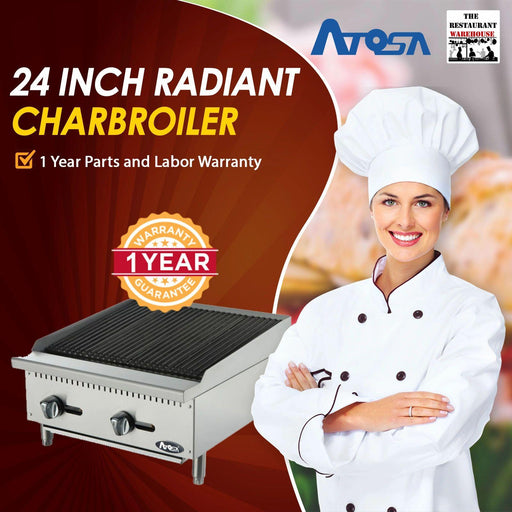
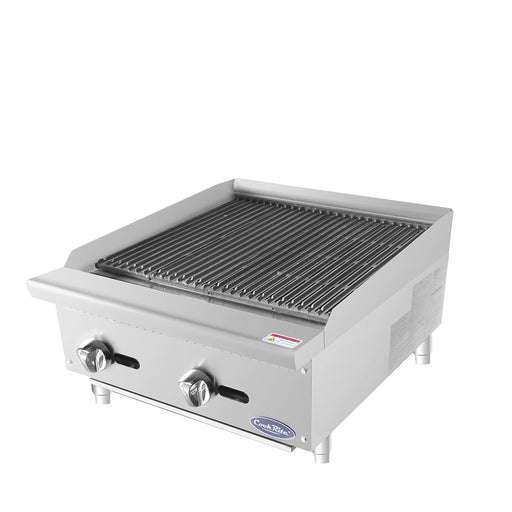
Atosa USA ATRC-24 Heavy Duty Stainless Steel 24-Inch Radiant Broiler - Natural Gas
Atosa
Original price
$1,280.00
Original price
$1,280.00
-
Original price
$1,280.00
Original price
$1,280.00
Current price
$923.00
$923.00
-
$923.00
Current price
$923.00
Atosa USA ATRC-24 24-Inch Radiant Charbroiler – Natural Gas The Atosa ATRC-24 Natural Gas Radiant Charbroiler delivers powerful grilling performan...
View full details
Original price
$1,280.00
Original price
$1,280.00
-
Original price
$1,280.00
Original price
$1,280.00
Current price
$923.00
$923.00
-
$923.00
Current price
$923.00
Save 28%
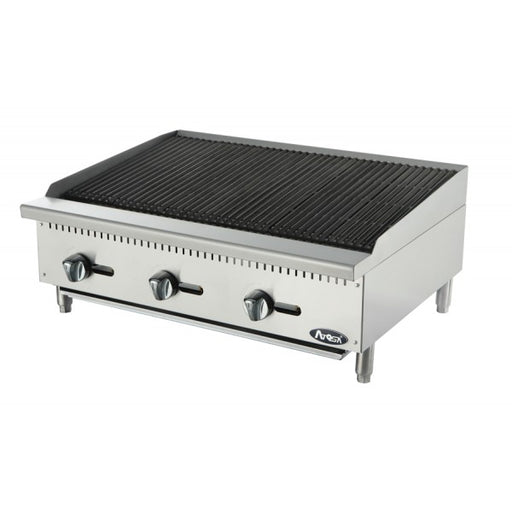
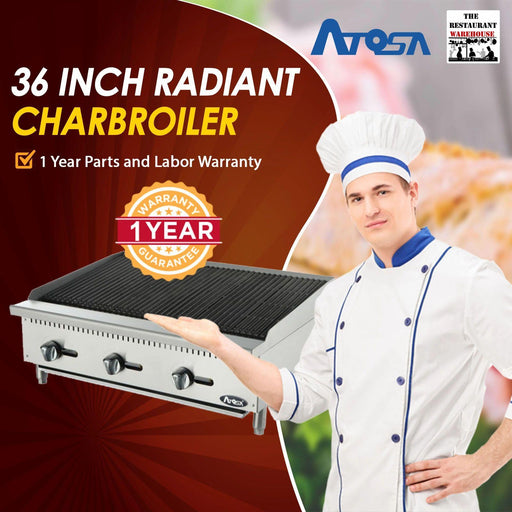
Atosa USA ATRC-36 Heavy Duty Stainless Steel 36-Inch Radiant Broiler - Natural Gas
Atosa
Original price
$1,718.00
Original price
$1,718.00
-
Original price
$1,718.00
Original price
$1,718.00
Current price
$1,238.00
$1,238.00
-
$1,238.00
Current price
$1,238.00
Atosa USA ATRC-36 Heavy Duty 36-Inch Radiant Charbroiler – Natural Gas Built for busy kitchens that need fast recovery and consistent grilling res...
View full details
Original price
$1,718.00
Original price
$1,718.00
-
Original price
$1,718.00
Original price
$1,718.00
Current price
$1,238.00
$1,238.00
-
$1,238.00
Current price
$1,238.00
Save 28%
Atosa USA ATRC-48 Heavy Duty Stainless Steel 48-Inch Radiant Broiler - Natural Gas
Atosa
Original price
$2,155.00
Original price
$2,155.00
-
Original price
$2,155.00
Original price
$2,155.00
Current price
$1,533.00
$1,533.00
-
$1,533.00
Current price
$1,533.00
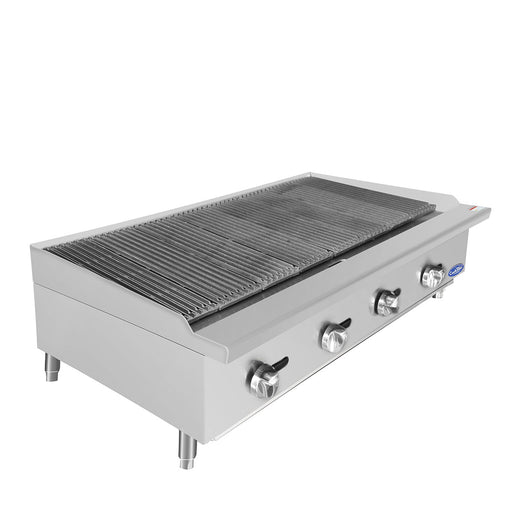
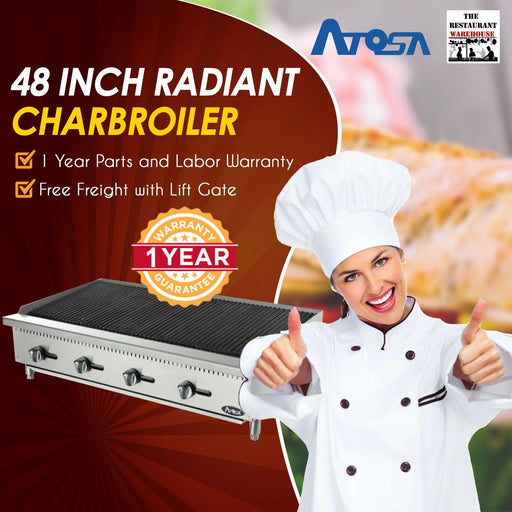
Atosa USA ATRC-48 Heavy Duty 48-Inch Radiant Charbroiler – Natural Gas The Atosa ATRC-48 Natural Gas Radiant Charbroiler delivers powerful co...
View full details
Original price
$2,155.00
Original price
$2,155.00
-
Original price
$2,155.00
Original price
$2,155.00
Current price
$1,533.00
$1,533.00
-
$1,533.00
Current price
$1,533.00
Save 29%
Atosa USA ATRC-24 Heavy Duty Stainless Steel 24-Inch Radiant Broiler - Propane
Atosa
Original price
$1,280.00
Original price
$1,280.00
-
Original price
$1,280.00
Original price
$1,280.00
Current price
$923.00
$923.00
-
$923.00
Current price
$923.00
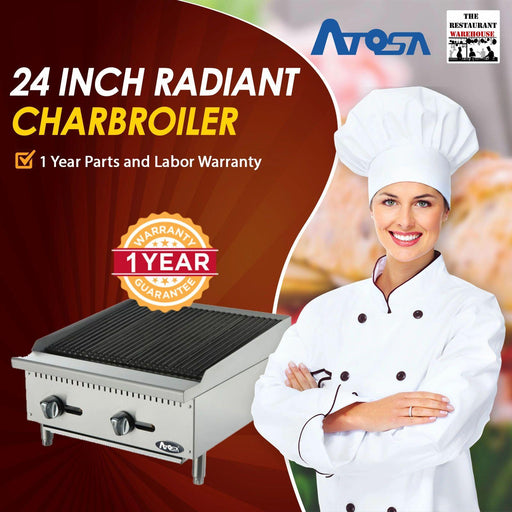
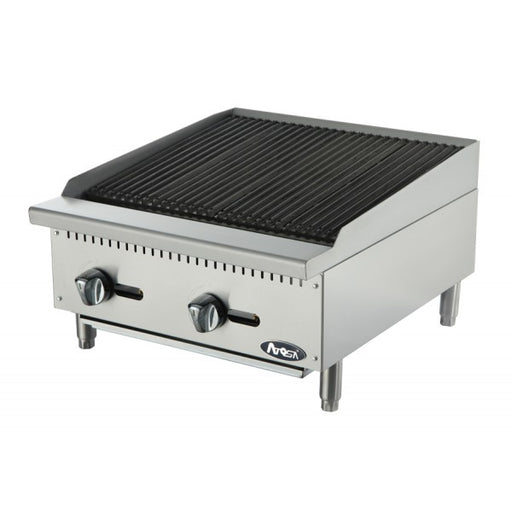
Atosa USA ATRC-24 Heavy Duty 24-Inch Radiant Charbroiler – Propane The Atosa ATRC-24 Radiant Charbroiler is a rugged, commercial-grade counte...
View full details
Original price
$1,280.00
Original price
$1,280.00
-
Original price
$1,280.00
Original price
$1,280.00
Current price
$923.00
$923.00
-
$923.00
Current price
$923.00
Save 28%
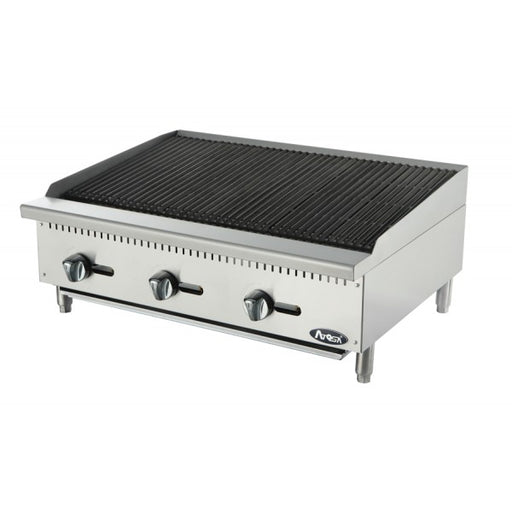
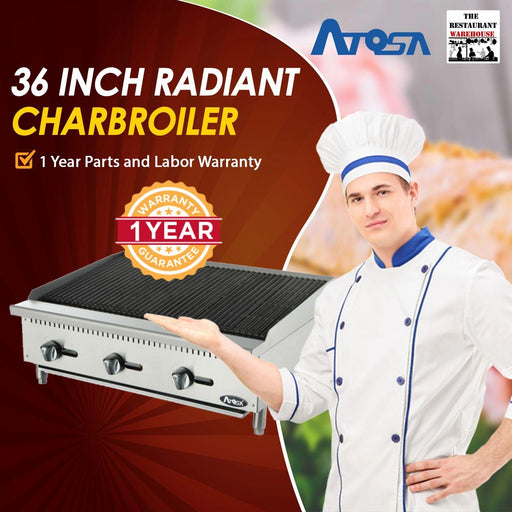
Atosa USA ATRC-36 Heavy Duty Stainless Steel 36-Inch Radiant Broiler - Propane
Atosa
Original price
$1,718.00
Original price
$1,718.00
-
Original price
$1,718.00
Original price
$1,718.00
Current price
$1,238.00
$1,238.00
-
$1,238.00
Current price
$1,238.00
Atosa USA ATRC-36 Heavy Duty 36-Inch Radiant Charbroiler – Propane The Atosa ATRC-36 Radiant Charbroiler is built for commercial kitchens that dem...
View full details
Original price
$1,718.00
Original price
$1,718.00
-
Original price
$1,718.00
Original price
$1,718.00
Current price
$1,238.00
$1,238.00
-
$1,238.00
Current price
$1,238.00
Save 28%
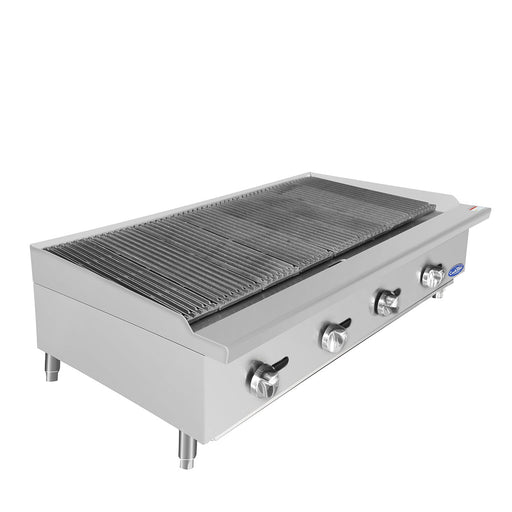
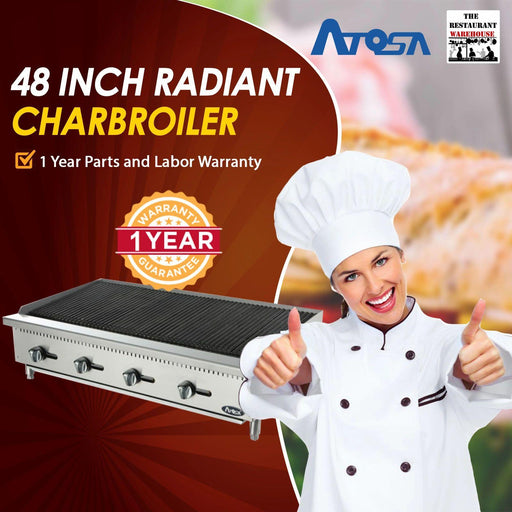
Atosa USA ATRC-48 Heavy Duty Stainless Steel 48-Inch Radiant Broiler - Propane
Atosa
Original price
$2,155.00
Original price
$2,155.00
-
Original price
$2,155.00
Original price
$2,155.00
Current price
$1,533.00
$1,533.00
-
$1,533.00
Current price
$1,533.00
Atosa USA ATRC-48 Heavy Duty 48-Inch Radiant Charbroiler – Propane The Atosa ATRC-48 Radiant Charbroiler is built for high-performance commercial ...
View full details
Original price
$2,155.00
Original price
$2,155.00
-
Original price
$2,155.00
Original price
$2,155.00
Current price
$1,533.00
$1,533.00
-
$1,533.00
Current price
$1,533.00
Save 29%
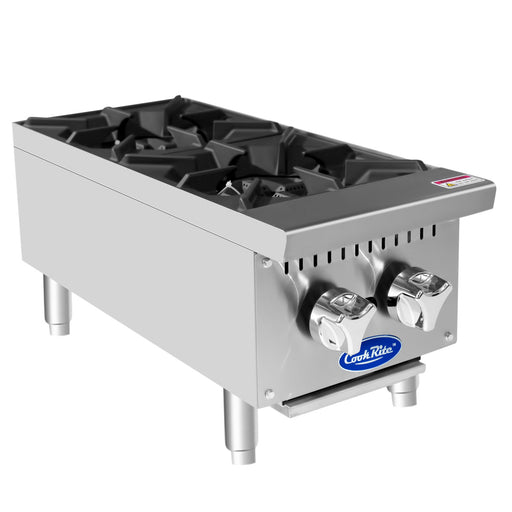
Atosa USA ACHP-2 12-Inch Two Burner Countertop Range Hotplate - Natural Gas
Atosa
Original price
$667.00
Original price
$667.00
-
Original price
$667.00
Original price
$667.00
Current price
$572.00
$572.00
-
$572.00
Current price
$572.00
Atosa USA ACHP-2 / ATHP-12-2 12-Inch Two Burner Hotplate – Natural Gas The Atosa ATHP-12-2 Heavy Duty Two Burner Hotplate delivers compact size w...
View full details
Original price
$667.00
Original price
$667.00
-
Original price
$667.00
Original price
$667.00
Current price
$572.00
$572.00
-
$572.00
Current price
$572.00
Save 14%
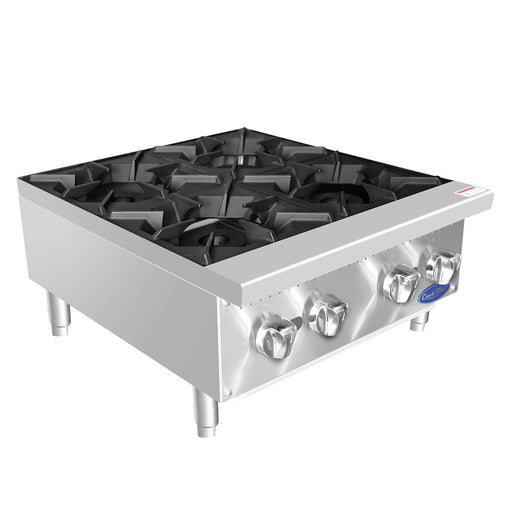
Atosa USA ACHP-4 24-Inch Four Burner Counter-top Range Hotplate - Natural Gas
Atosa
Original price
$988.00
Original price
$988.00
-
Original price
$988.00
Original price
$988.00
Current price
$846.00
$846.00
-
$846.00
Current price
$846.00
Atosa USA ACHP-4 / ATHP-24-4 24-Inch Four Burner Hotplate – Natural Gas The Atosa ATHP-24-4 Heavy Duty 4 Burner Hotplate delivers commercial-grad...
View full details
Original price
$988.00
Original price
$988.00
-
Original price
$988.00
Original price
$988.00
Current price
$846.00
$846.00
-
$846.00
Current price
$846.00
Save 14%
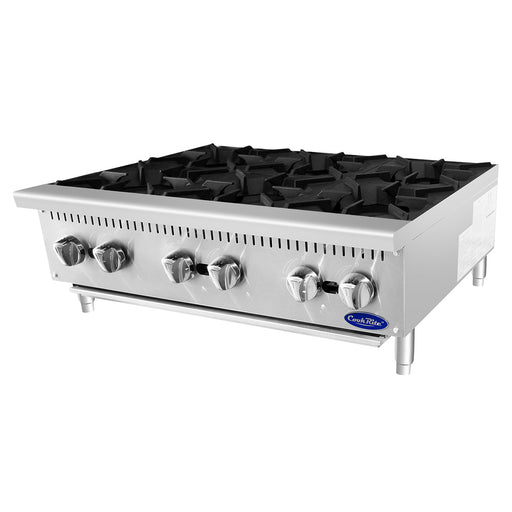
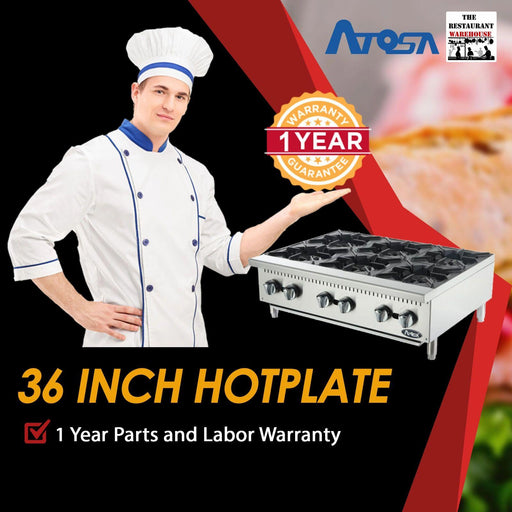
Atosa USA ACHP-6 36-Inch Six Burner Counter Top Hotplate Range - Natural Gas
Atosa
Original price
$1,337.00
Original price
$1,337.00
-
Original price
$1,337.00
Original price
$1,337.00
Current price
$1,147.00
$1,147.00
-
$1,147.00
Current price
$1,147.00
Atosa USA ACHP-6 / ATHP-36-6 36-Inch Six Burner Hotplate – Natural Gas The Atosa ATHP-36-6 Heavy Duty Six Burner Hotplate is built for high-volum...
View full details
Original price
$1,337.00
Original price
$1,337.00
-
Original price
$1,337.00
Original price
$1,337.00
Current price
$1,147.00
$1,147.00
-
$1,147.00
Current price
$1,147.00
Save 14%
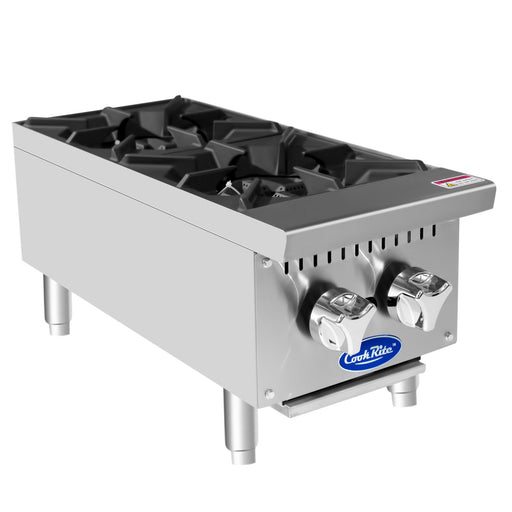
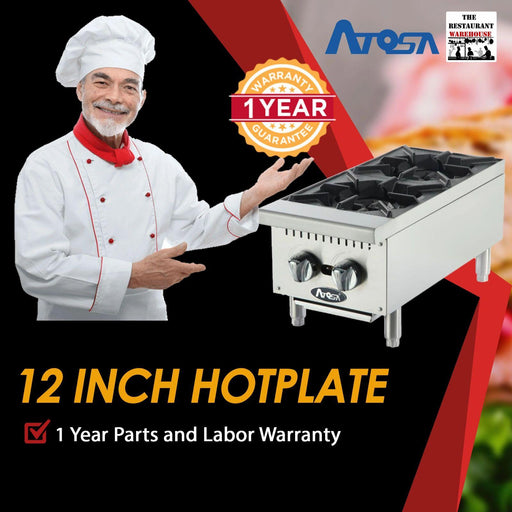
Atosa USA ACHP-2 12-Inch Two Burner Countertop Range Hotplate - Propane
Atosa
Original price
$667.00
Original price
$667.00
-
Original price
$667.00
Original price
$667.00
Current price
$572.00
$572.00
-
$572.00
Current price
$572.00
Atosa USA ACHP-2 / ATHP-12-2 12-Inch Two Burner Hotplate – Propane The Atosa ATHP-12-2 Heavy Duty Two Burner Hotplate delivers reliable commercia...
View full details
Original price
$667.00
Original price
$667.00
-
Original price
$667.00
Original price
$667.00
Current price
$572.00
$572.00
-
$572.00
Current price
$572.00
Save 14%
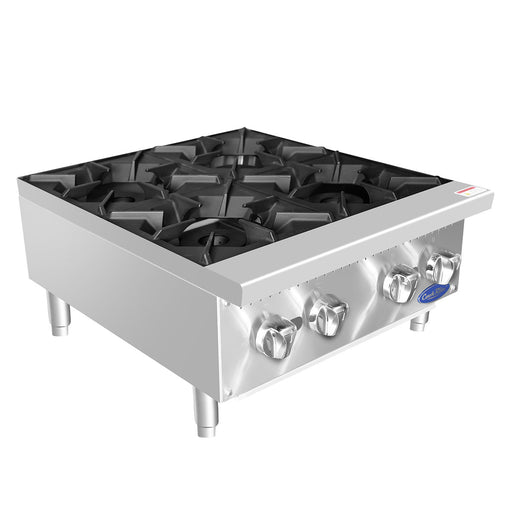
Atosa USA ACHP-4 24-Inch Four Burner Counter-top Hotplate - Propane
Atosa
Original price
$998.00
Original price
$998.00
-
Original price
$998.00
Original price
$998.00
Current price
$846.00
$846.00
-
$846.00
Current price
$846.00
Atosa USA ACHP-4 / ATHP-24-4 24-Inch Four Burner Hotplate – Propane The Atosa ATHP-24-4 Heavy Duty Four Burner Hotplate delivers serious cooking ...
View full details
Original price
$998.00
Original price
$998.00
-
Original price
$998.00
Original price
$998.00
Current price
$846.00
$846.00
-
$846.00
Current price
$846.00
Save 15%
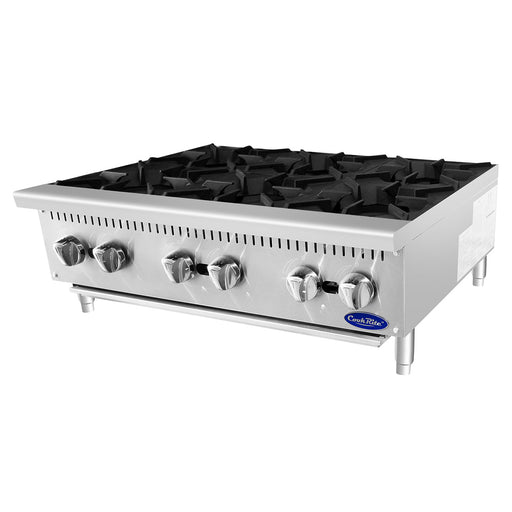
Atosa USA ACHP-6 36-Inch Six Burner Counter-top Hotplate - Propane
Atosa
Original price
$1,337.00
Original price
$1,337.00
-
Original price
$1,337.00
Original price
$1,337.00
Current price
$1,147.00
$1,147.00
-
$1,147.00
Current price
$1,147.00
Atosa USA ACHP-6 / ATHP-36-6 36-Inch Six Burner Hotplate – Propane The Atosa ATHP-36-6 Heavy Duty Six Burner Hotplate is built for commercial kit...
View full details
Original price
$1,337.00
Original price
$1,337.00
-
Original price
$1,337.00
Original price
$1,337.00
Current price
$1,147.00
$1,147.00
-
$1,147.00
Current price
$1,147.00
Save 14%
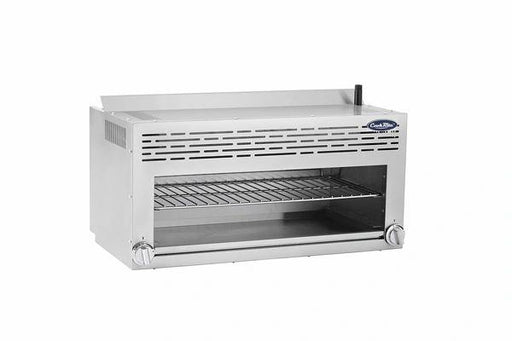
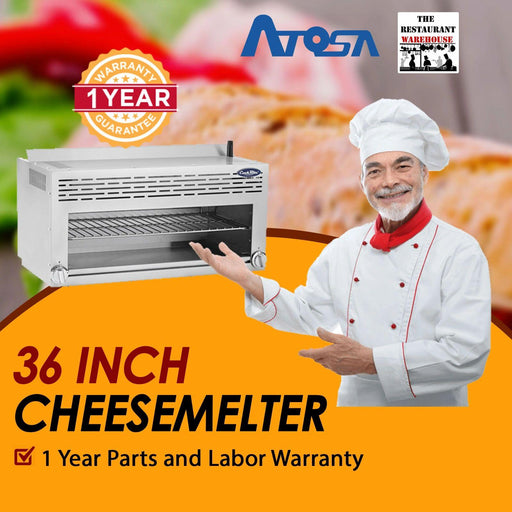
Atosa USA ATCM-36 36" Cheesemelter
Atosa
Original price
$1,775.00
Original price
$1,775.00
-
Original price
$1,775.00
Original price
$1,775.00
Current price
$1,279.00
$1,279.00
-
$1,279.00
Current price
$1,279.00
Atosa USA ATCM-36 36-Inch Gas Cheesemelter The Atosa ATCM-36 Cheesemelter is a professional 36-inch gas specialty broiler designed for finishing d...
View full details
Original price
$1,775.00
Original price
$1,775.00
-
Original price
$1,775.00
Original price
$1,775.00
Current price
$1,279.00
$1,279.00
-
$1,279.00
Current price
$1,279.00
Save 28%
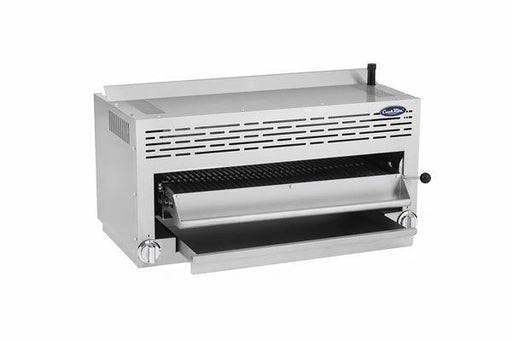
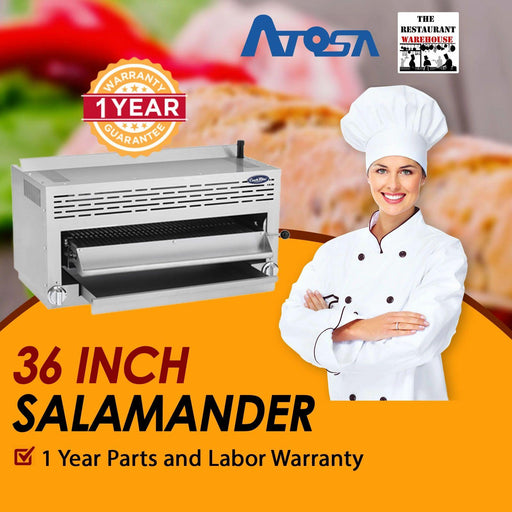
Atosa USA ATSB-36 36 inch Salamander Broiler
Atosa
Original price
$2,065.00
Original price
$2,065.00
-
Original price
$2,065.00
Original price
$2,065.00
Current price
$1,488.00
$1,488.00
-
$1,488.00
Current price
$1,488.00
Atosa USA ATSB-36 36-Inch Gas Salamander Broiler The Atosa ATSB-36 Salamander Broiler is a professional 36-inch overhead gas broiler designed for ...
View full details
Original price
$2,065.00
Original price
$2,065.00
-
Original price
$2,065.00
Original price
$2,065.00
Current price
$1,488.00
$1,488.00
-
$1,488.00
Current price
$1,488.00
Save 28%
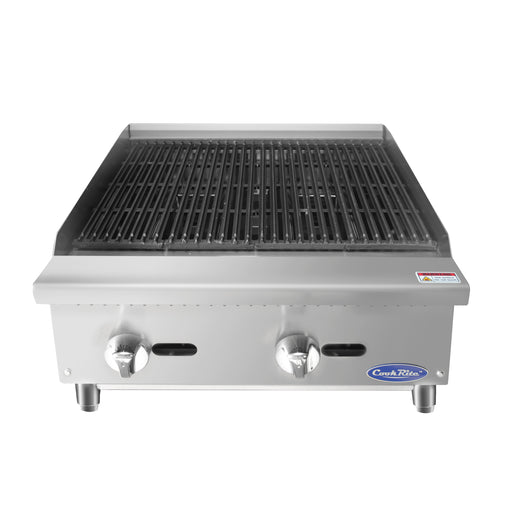
Atosa USA ATCB-24 24-Inch Lava Rock Charbroiler - Natural Gas
Atosa
Original price
$1,280.00
-
Original price
$1,280.00
Original price
$1,280.00
$1,280.00
-
$1,280.00
Current price
$1,280.00
Atosa USA ATCB-24 24-Inch Lava Rock Charbroiler – Natural Gas The Atosa ATCB-24 Lava Rock Charbroiler is built for operators who want bold grille...
View full details
Original price
$1,280.00
-
Original price
$1,280.00
Original price
$1,280.00
$1,280.00
-
$1,280.00
Current price
$1,280.00
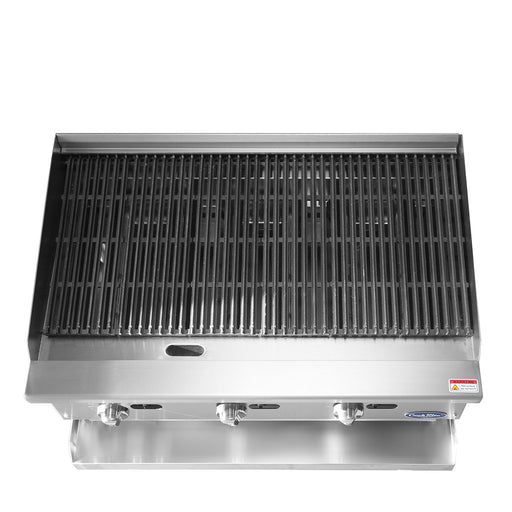
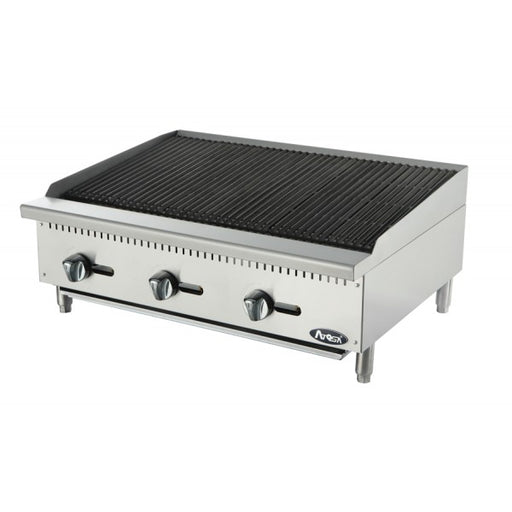
Atosa USA ATCB-36 36-Inch Lava Rock Charbroiler - Natural Gas
Atosa
Original price
$1,718.00
-
Original price
$1,718.00
Original price
$1,718.00
$1,718.00
-
$1,718.00
Current price
$1,718.00
Atosa USA ATCB-36 36-Inch Lava Rock Charbroiler – Natural Gas The Atosa ATCB-36 Lava Rock Charbroiler is built for commercial kitchens that deman...
View full details
Original price
$1,718.00
-
Original price
$1,718.00
Original price
$1,718.00
$1,718.00
-
$1,718.00
Current price
$1,718.00
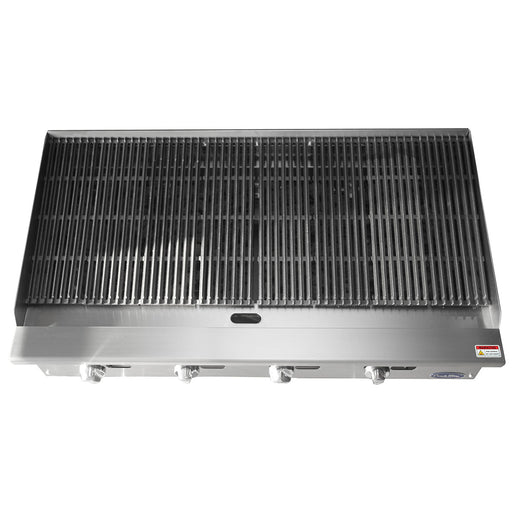
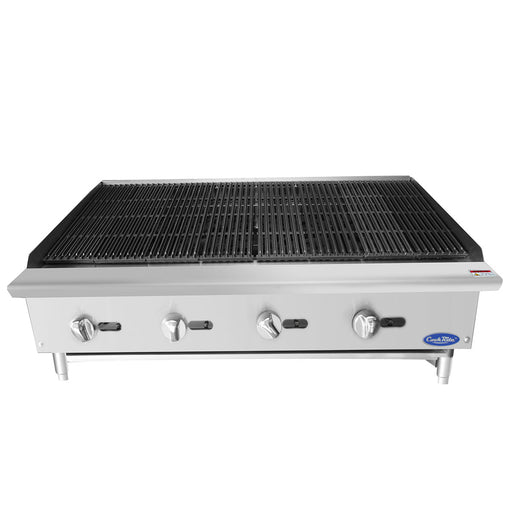
Atosa USA ATCB-48 48-Inch Lava Rock Charbroiler - Natural Gas
Atosa
Original price
$2,155.00
-
Original price
$2,155.00
Original price
$2,155.00
$2,155.00
-
$2,155.00
Current price
$2,155.00
Atosa USA ATCB-36 36-Inch Lava Rock Charbroiler – Natural Gas The Atosa ATCB-36 Lava Rock Charbroiler is engineered for commercial kitchens that ...
View full details
Original price
$2,155.00
-
Original price
$2,155.00
Original price
$2,155.00
$2,155.00
-
$2,155.00
Current price
$2,155.00

Atosa 21208001048 Wall Mount Kit for Cheese Melter and Salamander
Atosa Parts
Original price
$150.00
-
Original price
$150.00
Original price
$150.00
$150.00
-
$150.00
Current price
$150.00
Atosa 21208001048 Wall Mount Kit for Cheese Melter and Salamander The Atosa 21208001048 Wall Mount Kit is designed to securely mount your Atosa AT...
View full details
Original price
$150.00
-
Original price
$150.00
Original price
$150.00
$150.00
-
$150.00
Current price
$150.00

Axis AX-VB3 3 Burner Vertical Gyro Broiler
MVP3 Burner Vertical Gyro Broiler Created with the intention of establishing a pioneer movement in the time-honored food service industry, Axis Equip...
View full details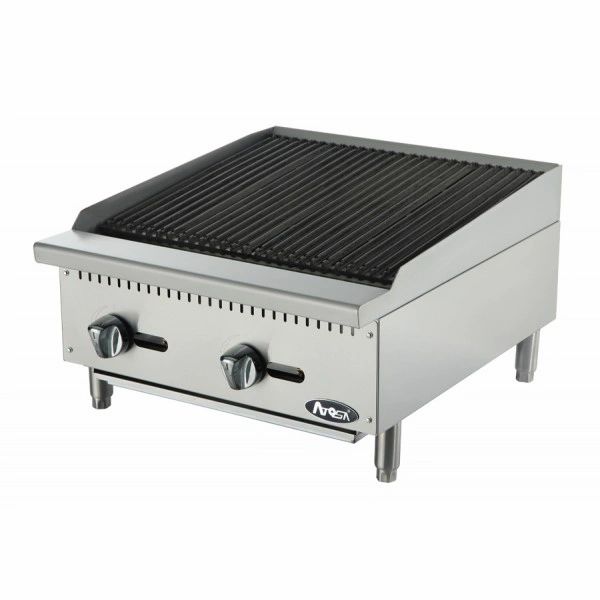
Commercial Charbroilers, Broilers and Hot Plates: Buyer's Guide
A commercial charbroiler cooks food on open grates above a heat source. The hot grates create sear marks while radiant heat cooks steaks, burgers, chicken, seafood, and vegetables. Drippings that reach the hot surfaces below contribute grilled aroma and smoke; managing those drippings is part of running the station safely.
This selection also includes overhead salamander broilers, cheese melters, and gyro or vertical broilers. Compare the cooking methods below to build a line that supports grilling, pan cooking, finishing, and spit-roasted specialties without confusing one appliance with another.
Compare two complementary countertop cooking tools in one collection: charbroilers for open-grate cooking and commercial hot plates for pots and pans. The guide below brings together Atosa options, equipment sizing, fuel choices, setup, and care.
Use this guide to choose between Atosa radiant and lava-rock models, compare 24-, 36-, and 48-inch widths, match natural gas or propane to your installation, and plan cleaning and ownership costs. Start with your busiest service and your available utilities, not simply the largest appliance that fits on the counter.
How a Commercial Charbroiler Works
A gas charbroiler combines burners, a heat-distribution system, and cooking grates. The burner input rating describes the fuel energy supplied to the appliance; it does not by itself guarantee a particular number of meals per hour. Grate area, food thickness, loading pattern, preheating, and the operator's workflow all affect the result.
The Heat Source and Distribution Layer
In a radiant model, metal radiants sit between the burners and food. A rock-style model instead uses the manufacturer's specified rock or briquette bed and its supporting components. These are different appliance configurations: do not add rocks to a radiant unit or improvise a conversion without the manufacturer's explicit approval.
The Cooking Grates
Cast iron grates store heat and transfer it where they touch food. Atosa's ATRC grates are reversible and adjustable at multiple levels, giving the cook another way to manage grate position and drainage. The manual describes a grease-trough side and a flat side; choose the orientation specified for your cooking needs rather than assuming the two sides are interchangeable in every situation.
The Science of Searing and Smoke
Browning develops as food heats and moisture leaves its surface. The Maillard reaction contributes browned flavors on many proteins and other foods, while contact with the grate creates the characteristic line pattern. This is different from assuming that dark grill marks prove the center is cooked; verify food temperatures with an appropriate food thermometer.
Drippings can create smoke when they reach hot surfaces below the grates. The heat-distribution system, food's fat content, marinades, and cleaning condition influence that smoke. Persistent flare-ups, soot, or excessive smoke are not performance features to encourage; follow the appliance's operating instructions and have abnormal combustion checked.
Charbroiler vs Griddle vs Grill vs Broiler
- Charbroiler - radiant heat from below through grates; direct flame contact zones between grates; used for burgers, steaks, chicken, vegetables, seafood, anything that benefits from sear marks and smoke
- Griddle - solid flat cooking surface; heat conducts through the plate to the food; used for eggs, pancakes, bacon, hash browns, smashburgers, anything that benefits from uniform surface contact
- Salamander broiler - overhead radiant heat, food sits below; used for finishing, browning tops of casseroles, melting cheese
- Cheesemelter: overhead heat for melting and finishing; compare the actual model ratings rather than assuming a lower output.
- Outdoor grill: a separate category; confirm the appliance's commercial listing and approved location rather than treating it as an indoor charbroiler substitute.
Radiant Charbroilers: Atosa ATRC Series
The Atosa ATRC series uses radiant plates beneath heavy cast iron grates. The radiants distribute burner heat and are removable for cleaning and inspection. This makes the ATRC line a practical starting point for an operator who wants a grill-marked finish without maintaining a loose rock bed.
Compare the radiant layout with the food you cook most often. A burger station, mixed-protein line, or kitchen training several cooks benefits from a repeatable setup and a clear cleaning routine. That does not mean every part of the grate has an identical temperature or that radiant construction eliminates flare-ups.
Lava Rock Charbroilers: Atosa ATCB Options
Lava-rock charbroilers heat a bed of approved material below the grates. Rock condition and placement become part of routine care alongside the burners, grates, and catch tray. Consider this style when a rock-bed cooking system fits your menu and your team is prepared to inspect and maintain it.
The store's natural-gas ATCB selection includes ATCB-24, ATCB-36, and ATCB-48 models. The rock-style option is not limited to 24 inches. Confirm the exact configuration and availability on the product page before ordering; do not assume that every fuel variant mentioned in an older guide is currently listed.
What Lava Rocks Do in a Countertop Charbroiler
Lava rock is a volcanic material, but its job in a charbroiler is heat distribution, not providing a countertop work surface. The rock bed absorbs and retains heat from the gas burners, then transfers heat toward the cooking grates. Atosa's ATCB-36 description explains that the rocks also catch drippings, contributing smoke and grilled aroma.
The practical benefit is a rock-bed cooking environment for open-grate grilling. The trade-off is another component to inspect and maintain: drippings and flare-ups must be managed, and the rock material is not a permanent, maintenance-free surface. Follow the exact appliance instructions for rock quantity, placement, care and replacement instead of assuming that more rocks will improve performance.
Do not confuse porous charbroiler rocks with glazed lava-stone slabs. Claims that an enameled countertop is nonporous or needs no sealing do not describe the rock bed beneath your cooking grates. Use only the material approved for the charbroiler, not countertop offcuts, landscaping stone or an improvised substitute. Choose the cooking system around your menu and your staff's maintenance routine, not broad claims that all volcanic stone behaves the same way.
Radiant vs. Lava Rock: The Practical Trade-Off
| Buying consideration | Radiant | Lava rock |
|---|---|---|
| Heat-distribution components | Metal radiants that can be removed and inspected | Approved rock bed with supporting rack or screen |
| Cleaning plan | Inspect radiant seating, grease buildup, and wear | Inspect rock condition, placement, and supporting components |
| Consumables budget | Allow for replacement grates and radiants as condition requires | Also allow for replacement rock material as specified by the manufacturer |
| Menu decision | Compare searing results, control layout, and routine care | Compare the desired cooking character against the added rock-bed care |
There is no universal cleaning-time saving, replacement interval, or percentage fuel saving that applies to every kitchen. Compare both options using your actual menu, hours of operation, staffing, and service requirements.
Sizing a Commercial Charbroiler by Line Volume
Measure the available installation space, then estimate how many portions must cook at the same time during the busiest ticket window. Include room to turn food and keep different cooking tasks organized. Average daily covers alone can hide a short, intense rush that overwhelms a small grill station.
24-Inch Charbroilers
A 24-inch unit can suit a compact line, a secondary grilling station, or a menu with limited grilled items. Before choosing it to save space, check the usable grate dimensions and lay out a realistic batch of your own portions. Do not rely on a promised burger count that ignores patty diameter, spacing, and doneness.
36-Inch Charbroilers
The ATRC-36 adds working width and a third independently controlled burner compared with the ATRC-24. That can help separate cooking tasks across the station, such as starting proteins in one area and cooking vegetables in another. Manual burner zones are not thermostat-controlled holding zones, so safe food holding needs its own procedure.
48-Inch Charbroilers
A 48-inch unit provides more space for simultaneous orders and a fourth ATRC burner zone. Choose it when the menu and peak demand justify the additional footprint, gas load, and cleaning area. A larger appliance should not crowd the cook's access, a neighboring prep station, or the required installation clearances.
Preheat and Recovery Are Different
Preheating brings a cold appliance to cooking condition; recovery is how it responds after food is loaded. A unit that heats quickly from cold can still struggle when too much chilled food is loaded together. Atosa's ATRC manual calls for approximately 15–20 minutes of preheating before broiling, with a separate first-use procedure; follow the manual rather than the shorter estimates in older reviews.
Compare Charbroiler Options by Type and Fuel
The former brand, fuel, and heat-style guides are brought together here so you can compare the full decision in one place. Use the sections below rather than choosing between several overlapping collections.
- Atosa charbroilers and model specifications
- Radiant charbroilers
- Lava rock charbroilers
- Natural gas charbroilers
- Propane charbroilers
- Commercial griddles for flat-top cooking
Atosa Charbroilers: Compare the ATRC Lineup
The ATRC-24, ATRC-36, and ATRC-48 share stainless steel construction, stainless steel burners with standby pilots, independent manual controls, reversible cast iron grates, and adjustable legs. The manufacturer's specification sheet lists one 35,000-BTU burner per 12-inch section, giving the following model-specific ratings.
| Model | Nominal width | Burners | Total input, BTU/h | Shop fuel configuration |
|---|---|---|---|---|
| ATRC-24 | 24 inches | 2 | 70,000 | Natural gas / Propane |
| ATRC-36 | 36 inches | 3 | 105,000 | Natural gas / Propane |
| ATRC-48 | 48 inches | 4 | 140,000 | Natural gas / Propane |
Verify the usable cooking area, overall depth and height, clearances, and weight instead of treating the nominal width as the complete footprint. The Atosa ATRC specification sheet documents these ratings and features; the product listings provide current pricing and availability.
Choosing Between the ATRC-24 and ATCB-24
Both belong in a 24-inch shopping comparison, but the heat-distribution system is the key distinction: ATRC is radiant and ATCB is rock-style. First match the fuel supply and the manufacturer's installation requirements, then compare the cooking system and its care needs. A low purchase price is not a substitute for the right configuration.
Natural Gas Charbroilers
Natural gas is worth considering for a fixed restaurant with a suitable building supply. It avoids cylinder-refill logistics, but the installer still needs to check the added load against the rest of the cooking line. Compare local rates and installation costs rather than assuming natural gas is always cheaper in every location.
Choose the exact NG model and have a licensed technician verify the supply, regulator, pressure, and connections. Appliance inlet size alone does not establish the correct pipe size for a long or shared gas run.
Propane Charbroilers
Propane can suit a site without natural gas or an approved mobile-kitchen installation. Plan fuel storage, supply capacity, and service logistics with the installer before ordering. A compact footprint does not, by itself, make an appliance suitable for a particular food truck.
Propane fuel does not make an indoor charbroiler an outdoor appliance. Atosa's ATRC manual says not to use the equipment outdoors. Follow the installation manual and local requirements for the actual appliance and location, and have any permitted fuel conversion carried out by an authorized licensed technician.
Electric and Solid-Fuel Alternatives
Electric and solid-fuel appliances have different utility and installation requirements. Do not infer that an electric grill is ventilation-exempt, or that a gas charbroiler can accept charcoal. This collection's active Atosa choices are gas models; compare another format only after confirming that the exact product and its approved installation meet your needs.
Food That Belongs on a Charbroiler
Anything that benefits from high heat, surface searing, and smoke character.
- Beef - steaks of every cut, burgers, kebabs, skirt and flank for fajitas, short ribs
- Pork - chops, tenderloin medallions, sausages, ribs (finishing after smoke), pork belly
- Poultry - boneless chicken breasts, thighs, wings, half chickens (with care to manage flare-ups), turkey cutlets, duck breast
- Seafood - salmon, tuna, swordfish, halibut, shrimp skewers, scallops, octopus, lobster tails; delicate fish benefits from the finer side of a reversible grate
- Vegetables - bell peppers, zucchini, eggplant, asparagus, onions, mushrooms, corn on the cob, romaine for grilled Caesar
- Fruit - pineapple slices, peach halves, watermelon steaks for plated salads
- Bread - bruschetta toasts, panini, grilled flatbreads, garlic bread
The throughline is the same across every category: anything that benefits from a sear and a touch of smoke is a candidate. Foods that need uniform surface contact rather than line-pattern searing belong on a commercial griddle.
What "Charbroiled" Means on a Menu
On a menu, “charbroiled” usually describes a grilled preparation with grate marks and a charred or smoky finish. Use language that reflects your actual cooking method. A menu description does not replace proper cooking, temperature checks, or safe holding.
Commercial Tabletop Grills: Define the Cooking Surface First
“Commercial tabletop grill” can describe several different appliances. Before comparing models, decide whether you need open-grate grilling, a solid flat-top cooking surface, or a purpose-designed guest-operated cooking system. Similar countertop dimensions do not make these products interchangeable.
- Countertop charbroiler: Open grates support the food above the heat source. Compare the grate layout, radiant or lava-rock system, grease collection, usable cooking area, and fuel configuration.
- Flat-top grill or griddle: A solid plate supports food directly. Plate construction and grease channels belong to a griddle comparison, not a substitute specification for open-grate charbroiling. See commercial griddles for that cooking format.
- Restaurant dining-table grill: A system intended for guest cooking needs its own equipment and installation assessment. Do not assume a kitchen charbroiler is approved for placement on a customer table.
For a compact kitchen station, evaluate the complete operating space rather than the cabinet footprint alone. Include space for loading food, handling utensils, removing grease trays, cleaning, and reaching controls. Confirm the support surface or equipment stand, appliance weight, heat exposure, and required clearances with the manufacturers and installer.
Compare usable cooking area and your menu's cooking times instead of choosing solely by width or total BTU input. A dedicated station may suit one repeated task, but a larger menu can require separate working areas and a plan for raw and cooked food. Allow room for safe transfers between preparation, cooking, and plating.
Guest-Operated Tabletop Cooking Is a Separate Application
Korean barbecue, yakiniku, and other cook-at-the-table concepts require planning beyond buying a compact grill. Confirm that the selected system is designed for the intended guest-operated use, and have the installation reviewed for applicable ventilation, fire protection, utility, and building requirements. Electric power alone does not establish ventless approval or suitability for an ordinary dining table.
A heated serving stone is also different from the lava-rock heat-distribution bed inside a charbroiler. Do not remove charbroiler rocks for tabletop service or interpret a lava-rock model as approval for hot-stone dining. Use equipment specifically intended for the proposed service method.
Plan staff supervision, safe access around hot surfaces, separation of raw and cooked foods, dedicated utensils, and procedures for verifying appropriate cooking. Guest instructions should support the restaurant's food-safety controls, not replace them. Include cleaning between parties, equipment cooling, and safe handling in the service plan.
This collection's kitchen charbroilers, broilers, and hot plates should be selected for their documented applications. Do not infer that a listed model is approved for guest-operated tabletop cooking, outdoor use, or installation without the required ventilation.
Build the Charbroiler Station Around Your Menu
A charbroiler can support a menu built around grill-marked proteins and vegetables, while a griddle supports breakfast foods, loose sandwich fillings, and full-surface browning. Some kitchens need both; others are better served by one well-used station. Choose equipment around the finish customers expect and the work the cook must complete during a rush.
Plan the flow from refrigerated ingredients to cooking, checking doneness, and plating. Protect nearby cold storage from heat and leave space for utensils, access to the grease tray, and safe handling. If considering a refrigerated chef base, verify its load rating, heat protection, dimensions, and compatibility rather than relying on matching width alone.
Budget for Ownership, Not Just the Appliance
Compare the appliance price together with installation, a suitable support, gas work, ventilation requirements, delivery arrangements, cleaning labor, and service parts. For a rock-style appliance, include the approved rock material in your consumables plan. Avoid fixed ten-year cost promises that depend on unknown utility rates and operating hours.
Keep the model and serial number, installation paperwork, and maintenance records available for service. Confirm current warranty coverage and exclusions before buying; grates, radiants, burners, and other components should be assessed by condition and manufacturer guidance, not an assumed replacement birthday.
If spreading the cost would help, compare restaurant equipment financing and lease-to-own options with equipment rental options. Availability, approval, and terms depend on the program and equipment; an application is not a completed purchase.
Installation, Ventilation, and Gas Supply
Have a qualified installer review the exact appliance, its location, ventilation and fire-protection requirements, and the applicable local rules before purchase. A charbroiler produces heat, grease, and smoke; do not assume that an existing ventilation system is suitable merely because it spans the appliance.
Gas Connection Is Not Gas-Line Sizing
The ATRC specification sheet lists a 3/4-inch NPT rear gas connection. That is the appliance connection, not a universal instruction to run 3/4-inch pipe from the meter. The installer must evaluate pipe length, pressure, fittings, total connected demand, and local requirements, and check pressure under operating conditions.
Support, Clearance, and Service Access
Use the noncombustible support and supplied legs specified in the manual, level the appliance, and preserve combustion-air openings. Verify side, rear, bottom, and service clearances against the current installation instructions. Leave room to remove the catch tray and access the control panel without obstructing the working aisle.
The Atosa ATRC operating and installation manual provides the manufacturer's installation, gas-conversion, first-use, and cleaning instructions. Keep that document with the equipment and let the installer resolve any conflict between a general buying guide and the requirements for your particular site.
Cleaning, Seasoning, and Long-Term Care
Clean grates, unobstructed drainage, and sound heat-distribution components are part of dependable daily service. The former cleaning and seasoning guides supplied the checklist below, but the exact shutdown, cooling, lubrication, and reheating procedure must follow the manufacturer. Do not use a generic internet routine in place of the appliance manual.
Daily Cleaning Checklist
- Follow the shutdown procedure and allow the appliance to cool before cleaning or disassembly. Wear appropriate protective equipment when handling parts.
- Remove food residue and grease from the grates with the tools permitted by the manufacturer. Check the cleaning tool and cooking surface for loose debris before returning to service.
- Empty and clean the catch tray at the frequency specified for the load; do not allow it to overfill. Reinstall it correctly before operation.
- Clean exterior stainless surfaces with approved mild cleaning products and avoid corrosive or abrasive treatments that damage the finish.
- Dry and care for cast iron as instructed, reinstall components in their proper positions, and follow the lighting instructions before the next service.
Seasoning Cast Iron Grates
Proper grate care helps limit rust and sticking. Start with clean, dry grates and use the food-grade lubricant or oil permitted by the manufacturer. Apply a light, even coating rather than pooling oil or allowing it to drip onto burners. Follow the manual's treatment and reheating sequence, which may differ from a general cast-iron pan routine.
Inspect for rust, flaking deposits, persistent sticking, or damaged grate surfaces. Those signs call for cleaning, approved re-treatment, or replacement as appropriate. Do not automatically apply cast-iron seasoning methods to stainless steel, coated surfaces, or other appliance components.
Radiants and Rock Beds Need Different Care
On a radiant appliance, inspect the radiants for damage and correct seating. On a rock-style appliance, inspect the approved rock material and supporting components according to its own manual. Do not wash, rearrange, add, or substitute material using directions meant for a different appliance.
The ATRC manual does not prescribe keeping an inch of water in the catch tray. Do not add water to hot grease or follow that generic “trick” without explicit instructions for the exact unit. Likewise, do not cover grates, wrap radiants, block airflow with foil, or hose down the appliance as a shortcut.
When to Call for Service
Unexpected soot, persistent abnormal flames, ignition problems, a gas odor, or damaged gas components need qualified attention, not an improvised operator adjustment. Take unsafe equipment out of service and follow the manufacturer's emergency guidance. For a suspected gas leak, leave the affected area and contact the gas supplier or emergency service from a safe location.
Record changes such as uneven cooking or slower performance and share them with the service technician. If performance changes when other gas equipment runs, mention that as well so the supply can be checked. The ATRC manual calls for a comprehensive inspection by an authorized licensed technician at least annually; follow any more frequent requirements applicable to your installation.
For detailed model-specific procedures, use the Atosa ATRC manual, including its cleaning and maintenance section. Keep a simple log of cleaning, inspections, replacement parts, and service visits so the next shift and technician can see what has already been done.
Charbroiler Accessories and Related Cooking Equipment
- Salamander broilers - overhead radiant, complementary to a charbroiler
- Commercial griddles
Before You Order: Charbroiler Checklist
- Match the menu and busiest simultaneous load to usable grate space.
- Confirm radiant or lava-rock construction and the exact fuel configuration.
- Check overall dimensions, support load rating, required clearances, and access for cleaning.
- Have the installer confirm utilities, ventilation, and local approval requirements.
- Check delivery access, receiving arrangements, current warranty terms, and service support.
- Budget for installation and upkeep as well as the equipment itself.
Not sure which configuration fits? Contact The Restaurant Warehouse with the model you are considering, your menu, and the fuel available at your location. We can help compare the listed equipment; your installer confirms the site-specific requirements.
Commercial Hot Plates and Countertop Ranges
A commercial hot plate adds burners for pots and pans without the footprint of a full-size range. Use it to boil, sauté, simmer, or run a separate sauce station while the main cookline handles other orders. It complements a charbroiler rather than replacing it: food sits in cookware on a hot plate and directly on the cooking grates of a charbroiler.
Start with the task that is slowing service. A dedicated burner for sauce, soup, or a sauté pan can be more useful than adding another grill surface. Conversely, if the missing capacity is grill-marked chicken or steaks, choose a charbroiler. Match the appliance to the menu, the available utilities, and the space the cook actually needs to work.
Atosa Hot Plates: Two, Four, and Six Burners
The Atosa hot plates in this selection are gas countertop units in 12-, 24-, and 36-inch widths, with two, four, and six burners respectively. Natural gas and propane configurations are listed separately. These are not electric plug-in appliances, even though electric and induction hot plates are other options in the broader equipment category.
The product listings use ACHP model names and also reference the corresponding ATHP designation. Compare the full model, fuel configuration, and current specification sheet rather than ordering from a shortened model name alone. Stainless steel construction, cast iron grates, independent manual controls, and removable collection trays are useful features to check when comparing the listed units.
| Atosa size and model family | Burners | Planning use | Choose fuel configuration |
|---|---|---|---|
| 12-inch ACHP-2 / ATHP-12-2 | 2 | Supplemental sauce, sauté, or small-batch station where counter width is limited | Natural gas / Propane |
| 24-inch ACHP-4 / ATHP-24-4 | 4 | Several simultaneous pan tasks without committing to a full-size range | Natural gas / Propane |
| 36-inch ACHP-6 / ATHP-36-6 | 6 | A larger sauté or prep station when the menu needs more concurrent pots and pans | Natural gas / Propane |
Nominal width is not the complete installation footprint. Check overall depth, working height, support requirements, clearances, gas connection, and access to the controls and removable tray. Use the current model specifications and rating plate for the gas-load calculation; do not assume that similarly named models or different fuel versions have identical ratings.
Choose Burner Count Around Your Actual Cookware
Count the pots and pans needed at the same time during your busiest service, not just the number of dishes on the menu. Then check their diameters against the grate layout. A six-burner appliance does not guarantee room for six oversized stockpots, and large pan handles can interfere with nearby burners or the cook's reach.
A two-burner unit may be enough for a dedicated sauce and finishing station. Four burners provide more flexibility for simultaneous sauté and prep tasks. Six burners make sense when the additional pan positions will be used and the installation can support the larger connected load. Leave a safe landing area for hot cookware rather than filling every available inch with equipment.
Natural Gas Hot Plates
A natural gas hot plate is a practical option for a fixed kitchen with an appropriate building supply. The benefit is a permanent fuel connection without cylinder-refill logistics. Have the installer evaluate the hot plate together with the charbroiler and the rest of the cooking line, since simultaneous demand matters more than a single appliance's inlet size.
Independent manual burner controls let the cook adjust separate pans for different tasks. Test the control range against the menu, especially if delicate sauces or extended simmering are important. A large BTU rating alone does not describe low-heat control or guarantee faster service with every pan and recipe.
Propane Hot Plates
A propane hot plate can provide pan-cooking capacity where an approved propane installation is available. Plan cylinder or tank location, regulator and supply capacity, refill access, and ventilation with a qualified installer. Select the LP product configuration rather than assuming an NG model can be connected to propane as supplied.
For a food truck or concession operation, confirm that the appliance and its installation are approved for the intended use. Account for securing the equipment, working clearances, vehicle load, and service access. Propane does not automatically mean outdoor-rated, portable, or safe to move while connected or operating.
Gas vs. Electric vs. Induction Hot Plates
These are three different ways to heat cookware. The gas Atosa products above belong to the first group; the other two are comparison options, not a claim that electric or induction models are included in this selection.
| Type | How it fits a kitchen | Check before choosing |
|---|---|---|
| Gas | Open burners support a range of pot-and-pan cooking tasks with manual flame adjustment | Exact fuel, connected gas demand, ventilation, approved cookware sizes, and low-heat control |
| Conventional electric | A heated element or solid surface transfers heat into suitable cookware | Voltage, amperage, plug and circuit requirements, pan contact, and response when heat is reduced |
| Induction | A compatible magnetic pan is heated by an electromagnetic field | Cookware compatibility, allowed pan diameter, electrical capacity, controls, and ventilation requirements |
Do not assume that every commercial electric appliance works on a standard outlet. Confirm the nameplate requirements and have an electrician check the circuit where necessary. For induction, a magnet sticking to the base is a useful preliminary check, but the appliance manufacturer's pan-size and compatibility guidance still applies. Aluminum, copper, and some stainless steel pans need an induction-compatible base.
Compare the complete operating setup, not a blanket claim that one fuel is always cheaper or faster. Cooking load, controls, utility rates, installation work, and existing cookware all affect the result. An electric appliance is not automatically exempt from ventilation or fire-protection requirements.
Hot Plate vs. Range, Griddle, and Charbroiler
A hot plate makes sense when you need additional burners but not another oven. A full commercial range can combine burners and an oven in one footprint, which may be more useful if both are needed. A countertop hot plate needs a suitable support and installation; it should not be treated as a no-installation substitute for a range.
- Hot plate: pot-and-pan cooking for sauces, soups, sautéed dishes, boiling, and small-batch preparation.
- Charbroiler: open-grate cooking for steaks, grilled chicken, vegetables, and other menu items where grill marks are part of the presentation.
- Griddle: a continuous flat surface for eggs, pancakes, smash burgers, and chopped sandwich fillings. Compare the commercial griddle selection when food needs full-surface contact.
- Range: a combined cooking station when both burner capacity and an integrated oven fit the operation.
Food Trucks, Catering, and Supplemental Stations
For a mobile menu, identify which foods need a pan, a flat plate, or open grates before choosing appliances. Breakfast and smash-burger service usually calls for a griddle surface; sauces and sauté work need cookware on burners. Grilled proteins can justify a charbroiler if the approved installation, menu demand, and available space support it.
Caterers also need to confirm each venue's utility supply and equipment rules. A countertop appliance intended for a professionally installed cookline is not interchangeable with a portable demonstration unit. Plan safe transport, setup, cooling, and storage, and use separate approved holding equipment where cooked food needs to be kept ready for service.
Hot Plate Installation, Cleaning, and Ownership Costs
Compare total installed cost: equipment, suitable support, gas or electrical work, required ventilation, cookware, delivery, and access for future service. Check the model's current commercial safety and sanitation listings, warranty, and parts availability rather than assuming that all countertop appliances carry the same approvals. Certification does not eliminate site-specific inspection requirements.
Keep the appliance level on the support specified by its manufacturer, with clear space for controls, pan handles, ventilation openings, and routine cleaning. Confirm clearance requirements in the exact manual instead of using a universal distance from an older buying guide. Have any approved gas conversion performed by a qualified technician using the manufacturer's procedure and parts.
Daily Care and Service Checks
- Follow the shutdown procedure and allow the unit to cool before cleaning.
- Remove food and spills using approved tools and cleaners; clean removable grates and trays only as the appliance manual permits.
- Keep liquid out of controls, gas components, and electrical openings. Do not hose down, immerse, or pressure-wash equipment unless its specific instructions expressly allow it.
- Dry and correctly reinstall cleaned parts before returning the appliance to service.
- Have persistent ignition problems, abnormal flames, damaged controls, or gas-system issues assessed by qualified service personnel.
Budget for daily cleaning and keep model, serial-number, and service records accessible. A sturdy countertop unit can be a useful long-term investment, but no general guide can promise its lifespan or a fixed payback period. Compare purchase, lease-to-own financing, and rental options against the actual terms offered for your equipment and business.
Charbroiler and Griddle Combos: One Unit or Two?
A breakfast-through-dinner menu may need a flat plate for eggs and smash burgers as well as open grates for steaks or grilled chicken. A combined appliance and two separate countertop units are different ways to provide those surfaces. Compare the usable area assigned to each task rather than judging either approach by overall width alone.
Separate units let you choose each surface's width and controls independently, and may let one station remain available when the other needs service. A combination unit can simplify the physical arrangement, but its fixed division of cooking space must suit the menu. Confirm controls, grease collection, service access, fuel configuration, and the manufacturer's installation requirements before specifying either layout.
Plan the Whole Cooking Line
Measure the appliances, required clearances, support footprint, and space needed to remove grease trays. Have the installer assess the combined utility load and ventilation arrangement, rather than simply placing two units beneath an existing hood. A refrigerated base also needs the correct load rating and heat protection; equal widths do not establish compatibility.
For a griddle, compare plate material and thickness alongside burner layout, input, and manual or thermostatic controls. A thicker plate stores more heat, but thickness alone does not establish recovery time or an hourly production promise. For a charbroiler, compare usable grate area and radiant or rock-style construction. Test the combination against realistic peak orders, not an unsupported burgers-per-hour estimate.
In a mobile kitchen, have the installation reviewed for the intended vehicle, fuel storage, ventilation, secure mounting, and safe movement. Recheck leveling and equipment condition after transport as instructed. Use the menu to decide whether one cooking surface, two surfaces, or an added hot plate is the most useful use of the available space.
Commercial Broilers: Choose the Heat Direction for Your Menu
“Broiler” describes a family of cooking equipment, not one interchangeable appliance. A charbroiler applies heat from below an open grate; a salamander or cheese melter applies overhead heat; a vertical broiler places a rotating spit beside the heat source. Start with how the food must cook and the finish you want, then choose the configuration.
| Equipment | Cooking arrangement | Typical menu task | Selection priority |
|---|---|---|---|
| Charbroiler | Open cooking grates above the heat source | Grill-marked steaks, chicken, burgers, and vegetables | Usable grate area, radiant or rock-style construction, and fuel |
| Salamander broiler | Food on a rack beneath overhead heat | Broiling, gratinating, browning, and finishing | Rack adjustment, usable opening, heat controls, and mounting |
| Cheese melter | Overhead heat directed at dishes below | Melting toppings, toasting, and finishing prepared dishes | Dish fit, controls, intended cooking tasks, and mounting |
| Gyro or vertical broiler | Rotating meat cone beside a vertical heat source | Gyros, shawarma, döner, and appropriate al pastor preparations | Rated load, cone dimensions, heat adjustment, and motor requirements |
| Hot plate | Pots and pans above burners | Sautéing, boiling, and simmering | Burner count, cookware fit, and utility capacity |
A broiler in a conventional oven can also apply overhead heat, but a separate finishing station may keep those tasks from interrupting roasting or baking. Compare the actual rack area, controls, access, and service workflow. Avoid assuming every salamander produces a fixed multiple of an oven broiler's heat or that every cheese melter has a lower input rating.
Salamander Broilers for Browning and Finishing
A commercial salamander directs heat downward onto food supported by a rack. Adjusting the rack changes the distance between the food and the heat source, giving the operator another control besides burner output. This is useful when dishes need different finishes, from gently melting a topping to quickly browning a gratin.
Common applications include French onion soup, casseroles, baked pasta, toasted breadcrumbs, and a final sear on appropriately prepared proteins. Use broiler-safe dishes and the rack position suited to the food and appliance. A browned surface is not proof that the center has reached a safe cooking temperature, and a finishing broiler is not a substitute for a validated cooking or hot-holding process.
Atosa ATSB-36 Salamander Broiler
The Atosa ATSB-36 is a 36-inch gas infrared salamander. Its specification sheet lists two 21,500-BTU ceramic infrared burners, 43,000 BTU/h total input, independent manual controls, and four rack positions. Check the usable opening and your actual pans rather than assuming the nominal 36-inch width equals the space available for dishes. See the ATSB-36 specification sheet for model details.
Gas and electric describe the energy supply; infrared describes a way of delivering radiant heat and is not a third fuel type. When comparing appliances, separate the fuel decision from the burner or element design. Match the exact configuration to the kitchen's utilities and installation requirements.
Size and Position the Finishing Station
Count how many plates or pans need finishing together during the busiest ticket window. Measure dish diameter, height, and handle clearance, and leave a safe place to set hot dishes. A compact unit can still become a bottleneck when several orders need the same rack position at once.
Countertop, wall, and range mounting have different support and clearance requirements. Confirm the approved mounting method and the exact hardware needed for the appliance and supporting structure. Mounting above another appliance does not automatically make the combination compatible, and wall mounting does not remove ventilation or fire-protection obligations.
Commercial Cheese Melters
A cheese melter is an overhead finishing appliance for melting toppings and browning prepared food. It can be useful in a pizza operation, sports bar, or restaurant serving nachos, topped sandwiches, baked pasta, and gratins. Its value is a dedicated finishing position that fits the menu and keeps plated food moving toward service.
The Atosa ATCM-36 cheesemelter is listed with a 36-inch format, independent controls, adjustable rack positions, and removable components for cleanup. Confirm the current fuel configuration, mounting arrangement, and included hardware before ordering. Use the model's instructions rather than assuming that all appliances sold as cheese melters work identically.
Salamander vs. Cheese Melter
Choose around the jobs you need to perform, not the label alone. Cheese melters are generally marketed around topping and finishing tasks, while salamanders are marketed for broader broiling and finishing use. Those labels do not establish a universal power difference: the store's ATSB-36 and ATCM-36 listings both specify 43,000 BTU/h total input.
Compare rack travel, usable cooking space, controls, manufacturer-approved uses, and installation details side by side. If the need is melting cheese on prepared dishes, focus on how many dishes fit and how easily the operator can monitor them. If primary broiling is also required, confirm that the exact appliance and cooking procedure support it rather than treating a cheese melter as a general-purpose oven.
Mounting and Service Access
The Atosa 21208001048 wall-mount kit is listed for the ATCM-36 and ATSB-36. Check whether it is needed for your specific equipment and installation; do not assume that every mounting method requires the same kit. Have the installer verify structural support, clearances, working height, and access to trays and controls.
Gyro Machines and Vertical Broilers
A gyro machine holds a cone or stack of meat on a vertical spit beside a heat source. Rotation exposes the outer surface to the heat, and the operator slices cooked portions as service progresses. A sound motor, secure spit support, controllable heating zones, and a removable drip tray are important parts of this station.
“Gyro machine,” “shawarma machine,” and “vertical broiler” often describe the same general cooking arrangement. Recipes, meat preparation, loading requirements, and service procedures differ. Confirm that the exact equipment is suitable for the product you plan to serve instead of assuming every vertical broiler supports every cone size or preparation.
Size by Demand, Not Maximum Load Alone
Start with peak orders, portion size, service duration, and the cooking procedure for your meat product. Rated cone capacity is a maximum supported load, not a guaranteed hourly output. A machine can be physically large enough for a cone yet still fail to meet your slicing pace; oversizing the cone can also create avoidable waste when demand is low.
Check the manufacturer's limits for cone weight and dimensions, spit clearance, and loading. Do not exceed the rated load or extend the spit with improvised parts. Look at how the machine adjusts food-to-heat distance and whether separate burner controls let the operator manage the cooking zone as the cone changes size.
Axis AX-VB3 Vertical Gyro Broiler
The Axis AX-VB3 is the active vertical-broiler model in this selection. Its specification sheet lists three burners, 34,140 BTU/h total input, and an 88-pound capacity. The dual-rail arrangement allows adjustment toward or away from the heat source. Confirm the complete setup using the Axis AX-VB specification sheet and the product listing.
A gas-fired gyro machine may still need electricity for the rotating motor. The AX-VB3 specification calls for a 120-volt cord-and-plug connection with a NEMA 5-15P plug for rotation. Plan both utilities; do not assume that a gas appliance can operate its motor without an electrical supply.
Gas vs. Electric Vertical Broilers
Gas and electric designs should be compared against the site's utilities, approved installation, and required cooking load. A gas model needs the correct fuel configuration and adequate supply. An electric model needs the specified voltage and circuit capacity, while either arrangement requires review of heat, grease, and ventilation needs. Electric does not automatically mean ventilation-exempt.
Include fuel or electrical work, a suitable support, delivery access, service parts, and cleaning labor in the purchase decision. Assess motor access and parts support as well as burner count. A lower equipment price may not produce the lower total cost if installation or service needs differ.
Build a Safe Slicing and Service Workflow
Allow space for loading, carving, catching sliced meat, and assembling orders without crossing raw-food preparation areas. Use separate clean utensils and follow the meat supplier's instructions, the appliance manual, and the food-safety procedure approved for your operation. Do not rely on exterior color alone to judge whether meat is ready to serve.
Validate cooking, slicing, any required finishing step, hot holding, and end-of-service handling with the appropriate food-safety authority. There is no universal instruction to leave a partially cooked cone overnight and restart it the next day. Staff need a defined procedure for interruptions, low demand, and unsold product before service begins.
Cleaning and Caring for Overhead and Vertical Broilers
Follow the exact appliance shutdown and cooling procedure before cleaning. Remove crumbs, grease, and drippings before they build up, and clean removable racks, trays, spits, and food-contact parts using the manufacturer's approved method. Keep cleaning chemicals and water away from burners, pilots, controls, and motors, and do not immerse or pressure-wash an appliance unless its instructions expressly permit it.
Check rack supports, spit alignment, secure mounting, and the movement of adjustable parts. On a vertical broiler, investigate irregular rotation or a struggling motor before loading it for another service. Gas odors, ignition faults, damaged components, or abnormal flames call for qualified attention rather than improvised adjustments.
Train staff to monitor food closely under intense finishing heat and to handle hot dishes and removable parts safely. Keep the manuals, model and serial numbers, and maintenance records accessible. The useful question is not how long a generic broiler should last, but whether the specific appliance is correctly installed, maintained, and supported for the work your kitchen needs.
Frequently Asked Questions About Charbroilers, Broilers and Hot Plates
What is a commercial charbroiler?
A commercial charbroiler cooks on open grates over a heat source, creating grate marks and a grilled finish. Radiant and rock-style gas appliances use different components to distribute heat beneath those grates.
What size commercial charbroiler do I need?
Match usable cooking area to your busiest simultaneous load, food size, and workflow. Compare 24-, 36-, and 48-inch options against installation space and utility capacity rather than relying on a universal meals-per-hour claim.
What is the difference between Atosa ATRC and ATCB?
ATRC is the radiant charbroiler series, while the ATCB products in this collection are lava-rock models. Compare the cooking system, approved fuel configuration, and maintenance requirements for the exact model.
How many BTU do the Atosa ATRC models have?
The ATRC-24 has two burners and 70,000 BTU/h total input; the ATRC-36 has three and 105,000 BTU/h; the ATRC-48 has four and 140,000 BTU/h. These are manufacturer input ratings, not guaranteed food-output rates.
Should I choose natural gas or propane?
Match the model to the available fuel supply and approved installation. Natural gas avoids cylinder logistics at a suitably supplied site; propane needs a properly designed storage and supply arrangement. Have any permitted conversion completed by an authorized licensed technician.
Can I use an Atosa ATRC charbroiler outdoors?
No. The ATRC operating manual says not to use the appliance outdoors. A propane configuration does not change that restriction.
What is the difference between a charbroiler and a griddle?
A charbroiler uses open grates; a griddle uses a continuous flat cooking plate. Charbroilers suit a grill-marked finish, while griddles support eggs, pancakes, loose fillings, and full-surface browning.
How often should I clean and season the grates?
Follow the exact appliance manual and your use level. Atosa specifies daily or as-needed grate care and cleaning the catch tray per use. Season or lubricate only the components and in the manner the manufacturer permits.
Can I add lava rocks to a radiant charbroiler?
Do not improvise a conversion or add rocks without the manufacturer's explicit approval. Select the appliance designed for the heat-distribution system you want.
Do I need a special gas line or ventilation system?
A qualified installer must assess both for the appliance and site. A 3/4-inch appliance inlet does not determine the correct size of the whole gas run, and existing ventilation must be checked for the new cooking load.
Is a hot plate the same as a charbroiler?
No. A hot plate heats pots and pans, while a charbroiler cooks food on open grates. Choose burners for sauces, boiling, and sauté work; choose a charbroiler for a grilled finish.
What sizes of Atosa hot plates are listed?
The selection includes two-burner 12-inch, four-burner 24-inch, and six-burner 36-inch gas hot plates, with natural gas and propane product configurations. Check the exact product dimensions and installation requirements.
Are these Atosa hot plates electric or induction?
The Atosa hot plates listed here are gas appliances. Electric and induction options are discussed for comparison, not represented as part of the gas product selection.
How do I choose between two, four, and six burners?
Plan the pots and pans needed at the same time, check their diameters against the grate layout, and allow room for handles and safe landing space. Confirm the available utilities before increasing burner capacity.
How is a salamander broiler different from a charbroiler?
A salamander directs heat downward onto food on a rack. A charbroiler heats food from below through open grates. Choose overhead heat for appropriate broiling and finishing tasks, and a charbroiler when the menu calls for open-grate cooking.
Is a cheese melter always less powerful than a salamander?
No. Compare exact models rather than assuming a universal difference. The store's Atosa ATSB-36 and ATCM-36 listings both specify 43,000 BTU/h; intended use, rack arrangement, controls, and installation still need to be checked.
Is a gyro machine the same as a vertical broiler?
Gyro machine, shawarma machine, and vertical broiler often describe the same general vertical-spit arrangement. Confirm the exact machine's load limits and the approved cooking procedure for the meat product and menu.
Does a gas gyro machine also need electricity?
Some do. The Axis AX-VB3 needs a 120-volt cord-and-plug connection for motor rotation in addition to its gas supply. Verify both utilities before ordering.