
Propane Deep Fryer
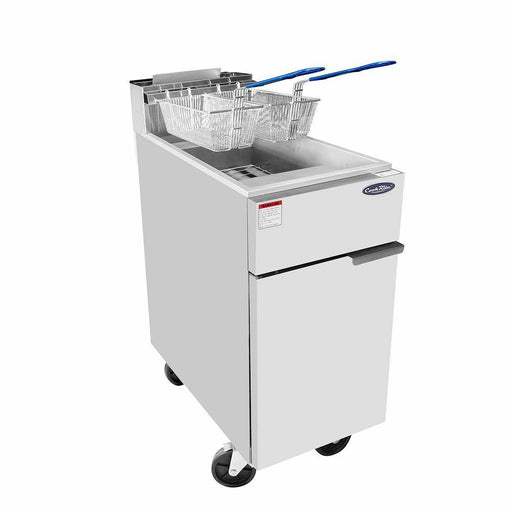
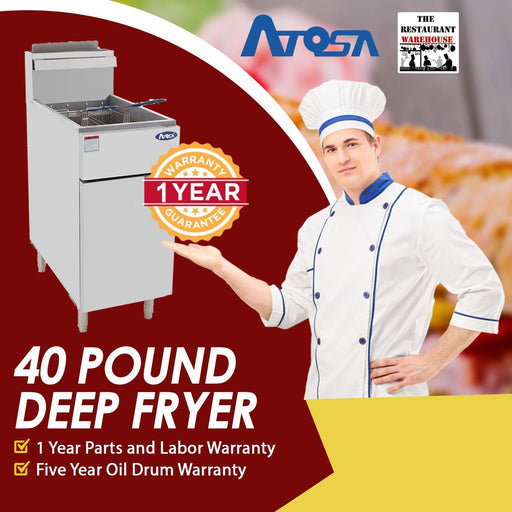
Atosa ATFS-40 Heavy Duty 40 LB Stainless Steel Deep Fryer - Propane
Atosa
Original price
$1,481.00
Original price
$1,481.00
-
Original price
$1,481.00
Original price
$1,481.00
Current price
$1,068.00
$1,068.00
-
$1,068.00
Current price
$1,068.00
Atosa ATFS-40 40 lb Commercial Propane Deep Fryer Reliable frying power for busy kitchens and food trucks. The Atosa ATFS-40 Propane Deep Fryer ...
View full details
Original price
$1,481.00
Original price
$1,481.00
-
Original price
$1,481.00
Original price
$1,481.00
Current price
$1,068.00
$1,068.00
-
$1,068.00
Current price
$1,068.00
Save 28%
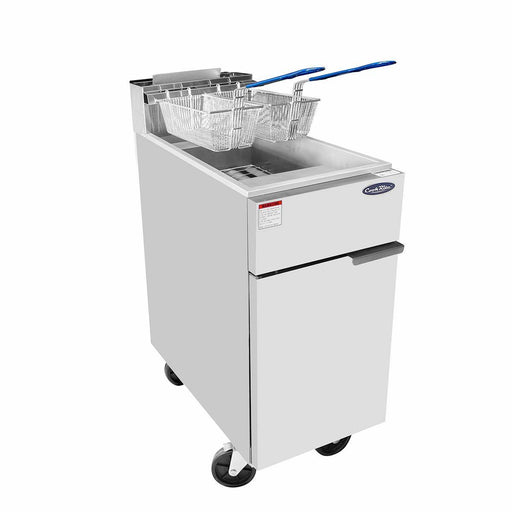
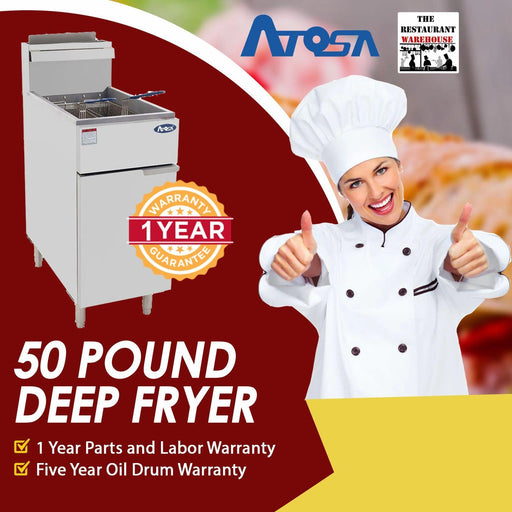
Atosa ATFS-50 Heavy Duty 50 LB Stainless Steel Deep Fryer - Propane
Atosa
Original price
$1,861.00
Original price
$1,861.00
-
Original price
$1,861.00
Original price
$1,861.00
Current price
$1,341.00
$1,341.00
-
$1,341.00
Current price
$1,341.00
Atosa ATFS-50 50 lb Commercial Propane Deep Fryer Built for serious frying power in food trucks and commercial kitchens. The Atosa ATFS-50 Propa...
View full details
Original price
$1,861.00
Original price
$1,861.00
-
Original price
$1,861.00
Original price
$1,861.00
Current price
$1,341.00
$1,341.00
-
$1,341.00
Current price
$1,341.00
Save 28%
Atosa ATFS-75 Heavy Duty 75 LB Stainless Steel Deep Fryer - Propane
Atosa
Original price
$2,182.00
Original price
$2,182.00
-
Original price
$2,182.00
Original price
$2,182.00
Current price
$1,573.00
$1,573.00
-
$1,573.00
Current price
$1,573.00
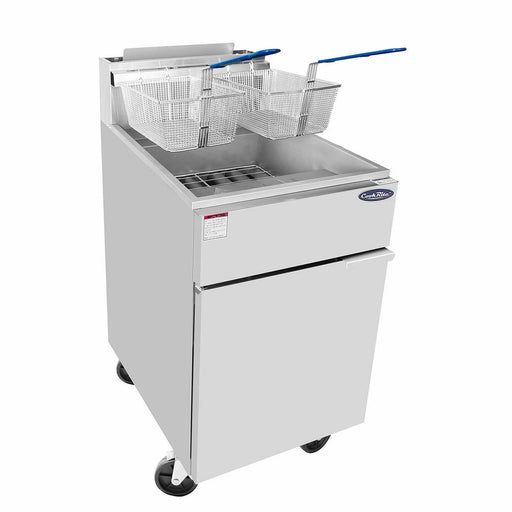
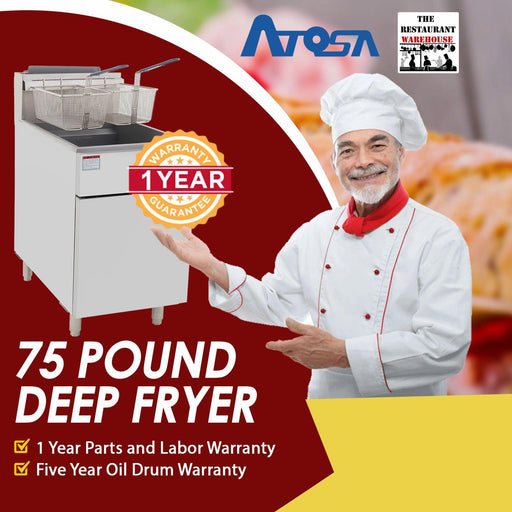
Atosa ATFS-75 75 lb Commercial Propane Deep Fryer Maximum output for high-volume kitchens. The Atosa ATFS-75 Propane Gas Deep Fryer is built for...
View full details
Original price
$2,182.00
Original price
$2,182.00
-
Original price
$2,182.00
Original price
$2,182.00
Current price
$1,573.00
$1,573.00
-
$1,573.00
Current price
$1,573.00
Save 28%

Atosa 21101001047 Fryer Splash Guard for ATFS Series
Atosa Parts
Original price
$88.00
-
Original price
$88.00
Original price
$88.00
$88.00
-
$88.00
Current price
$88.00
Atosa 21101001047 Fryer Splash Guard for ATFS Series The Atosa 21101001047 Fryer Splash Guard is designed to enhance safety and cleanliness in com...
View full details
Original price
$88.00
-
Original price
$88.00
Original price
$88.00
$88.00
-
$88.00
Current price
$88.00

Atosa FP-1324-5 Filter Paper for FPOF-50, 13-1/2"x24" (100 Sheets/Box)
Atosa Parts
Original price
$125.00
-
Original price
$125.00
Original price
$125.00
$125.00
-
$125.00
Current price
$125.00
Atosa FP-1324-5 Fryer Filter Paper for FPOF-50 (13-1/2" x 24") – 100 Sheets per Box The Atosa FP-1324-5 Filter Paper is designed for efficient oil...
View full details
Original price
$125.00
-
Original price
$125.00
Original price
$125.00
$125.00
-
$125.00
Current price
$125.00
Atosa FP-1728-5 Filter Paper for FPOF-50, 17-1/2"x28" (100 Sheets/Box)
Atosa Parts
Original price
$150.00
-
Original price
$150.00
Original price
$150.00
$150.00
-
$150.00
Current price
$150.00
Atosa FP-1728-5 Fryer Filter Paper for FPOF-50 (17-1/2" x 28") – 100 Sheets per Box Keep your fryer oil cleaner, longer with Atosa FP-1728-5 Filte...
View full details
Original price
$150.00
-
Original price
$150.00
Original price
$150.00
$150.00
-
$150.00
Current price
$150.00

Atosa 21201001019 Fryer Cover for ATFS-40/50 with Stainless Steel Handle
Atosa Parts
Original price
$93.00
-
Original price
$93.00
Original price
$93.00
$93.00
-
$93.00
Current price
$93.00
Atosa 21201001019 Fryer Cover for ATFS-40 / ATFS-50 The Atosa 21201001019 Fryer Cover is designed to protect the oil in your ATFS-40 and ATFS-50 c...
View full details
Original price
$93.00
-
Original price
$93.00
Original price
$93.00
$93.00
-
$93.00
Current price
$93.00
Atosa 21201003015 Fryer Cover for ATFS-75 with Stainless Steel Handle
Atosa Parts
Original price
$119.00
-
Original price
$119.00
Original price
$119.00
$119.00
-
$119.00
Current price
$119.00
Atosa 21201003015 Fryer Cover for ATFS-75 with Stainless Steel Handle The Atosa 21201003015 Fryer Cover is designed specifically for the ATFS-75 c...
View full details
Original price
$119.00
-
Original price
$119.00
Original price
$119.00
$119.00
-
$119.00
Current price
$119.00

Atosa ATTAB1 Fryer Boil Out Tabs (50/Pail)
Atosa Parts
Original price
$350.00
-
Original price
$350.00
Original price
$350.00
$350.00
-
$350.00
Current price
$350.00
Atosa ATTAB1 Fryer Boil Out Tabs (50 Tablets per Pail) Atosa ATTAB1 Fryer Boil Out Tabs are specially formulated cleaning tablets designed to deep...
View full details
Original price
$350.00
-
Original price
$350.00
Original price
$350.00
$350.00
-
$350.00
Current price
$350.00

Atosa 21101001046 Fryer Connector Strip for ATFS Series
Atosa
Original price
$61.00
-
Original price
$61.00
Original price
$61.00
$61.00
-
$61.00
Current price
$61.00
Atosa 21101001046 Fryer Connector Strip for ATFS Series The Atosa 21101001046 Fryer Connector Strip is designed to securely connect two Atosa ATFS...
View full details
Original price
$61.00
-
Original price
$61.00
Original price
$61.00
$61.00
-
$61.00
Current price
$61.00
Commercial Propane Deep Fryers: The Complete LP Buyer's Guide
Propane deep fryers do what electric and natural gas cannot: run a full commercial fry station anywhere a 20-lb tank fits. Food trucks, concession trailers, festival stands, fish fries, catering rigs, and permanent kitchens without an NG line all rely on LP for the same reason. Propane carries roughly 2.5 times the BTU per cubic foot of natural gas, which means the same burner delivers more heat per second and recovers faster after a heavy basket drop. Faster recovery translates directly to crispier food, higher throughput, and lower oil absorption on your busiest shift.
Every fryer in this collection is a factory-configured LP unit from Atosa, NSF rated, and built for continuous commercial use under a Type 1 hood. The lineup covers three oil capacities: the 40-lb ATFS-40 LP for the average food truck and single-station kitchen, the 50-lb ATFS-50 LP for dedicated fry menus, and the 75-lb ATFS-75 LP floor model for catering, banquet, and high-throughput operations. All three carry cast iron tube burners, stainless construction, 1.5-inch full-port drains, standing pilot ignition, and a 1-year parts-and-labor warranty backed by a 5-year oil drum warranty.
Three Questions That Drive Every Propane Fryer Decision
Before you compare BTU numbers, answer these three questions. They determine size, burner count, and whether propane is even the right fuel.
- How central is the fryer to your menu? A burger-and-fries operation where fries are a side runs on 40 lb of oil. A wings, fish, or fried-chicken concept where the fryer is the whole show needs 50 lb minimum. A fried-dough stand or a state-fair concession needs 75 lb or two 50-lb tanks banked together.
- Where does the fryer operate? Food trucks, trailers, and remote-site catering run propane because tanks travel. Permanent kitchens with an NG line already plumbed usually pick natural gas. Kitchens with neither should compare LP against a commercial electric fryer.
- What is your peak-window volume? Size the fryer for your busiest 20-minute rush, not your daily average. A fryer running at 60 to 70 percent of capacity at peak lasts longer and produces better product than one pinned at 100 percent every shift.
Commercial vs Residential: Why a Backyard Turkey Fryer Fails Inspection
The single biggest mistake in outdoor and mobile frying is treating a residential propane turkey fryer as a commercial unit. Backyard turkey fryers have no NSF or ETL Sanitation listing, no UL commercial gas listing, no high-limit safety cutoff, and no commercial warranty. Health inspectors and insurance underwriters reject them every day. Using one in a paid foodservice context can void your liability insurance, shut down your truck, and disqualify your concession permit.
A real commercial propane fryer carries NSF/ANSI 4 sanitation certification, a UL or CSA commercial gas listing, and a separate high-limit thermostat that cuts gas flow if oil climbs past roughly 450 degrees F. Every Atosa LP fryer in this collection carries all three. The high-limit switch is what stands between a normal shift and an oil fire if the operating thermostat fails, and it is what your insurance carrier requires you to have on any fryer running commercially.
Propane vs Natural Gas vs Electric for Commercial Frying
The three fuels solve three different problems. Fuel choice is dictated by your venue, not preference.
| Fuel | Best for | Regulator pressure | Portability | Operating cost |
|---|---|---|---|---|
| Propane (LP) | Food trucks, trailers, festivals, kitchens without NG | 11 in W.C. | Full — tank goes where you go | Higher per BTU than NG, competitive vs electric |
| Natural gas (NG) | Permanent kitchens with a metered NG line | 3.5 to 4 in W.C. | None — hardwired to building | Typically the lowest per BTU |
| Electric | Small trucks on generator, no-hood installs | N/A (120V or 240V) | Limited by power source | Highest in most regions |
Propane and LP (liquefied petroleum) and LPG (liquefied petroleum gas) are three names for the same fuel. A "propane deep fryer," an "LP deep fryer," and an "LPG deep fryer" are the same machine, ordered with the same orifice and regulator. Natural gas is a different fuel entirely and requires a different orifice, so an NG fryer cannot run on LP without a manufacturer-approved conversion kit.
Atosa Propane Fryer Lineup: 40, 50, and 75 lb
Atosa is the primary commercial LP brand in this collection because the build quality, parts availability, and warranty hold up against units that cost twice as much. Every model in the lineup ships factory-configured for LP with the correct orifice and regulator, so there is no field conversion and no lost warranty.
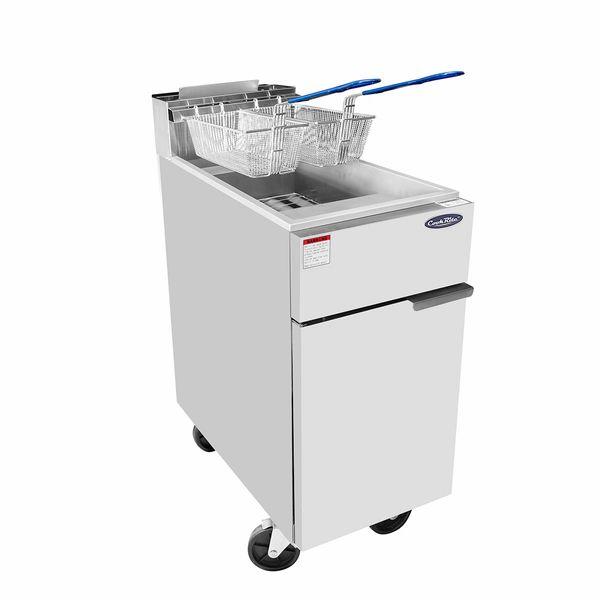
ATFS-40 LP: 40 lb, 102,000 BTU, 3 Burners
The workhorse single-tank model. Three cast iron tube burners, 102,000 BTU input, 40-lb oil capacity, 1.5-inch full-port drain, stainless front, sides, and tank. The 3/4-inch NPT gas intake matches every standard commercial regulator. The right size for the average food truck, small diner, fish-and-chip shop, or any kitchen running a single dedicated fryer station where frying is part of a varied menu. Recovery target: 50 degrees F in under three minutes after a normal basket drop. Compare every 40-lb LP option on the 40-pound deep fryer collection.
ATFS-50 LP: 50 lb, 122,000 BTU, 4 Burners
Bigger oil capacity for longer service runs without changing oil mid-shift. 122,000 BTU input across four cast iron burners climbs faster after heavy drops. The right call when you specialize in fried staples (chicken wings, fish and chips, dedicated fry stations) and need to turn over baskets every few minutes without dropping oil temperature. Handles a 200-guest catering event on a single tank when the menu is split between fries and one non-fried protein. See every 50-lb option on the 50-pound deep fryer collection.
ATFS-75 LP: 75 lb, 168,000 BTU, 5 Burners
High-volume floor model. 168,000 BTU across five cast iron burners and 75-lb oil capacity put it in catering, banquet, fried-dough stands, and high-throughput operations where the fryer is the entire business model and you need to hold 350 degrees F under continuous heavy loads. Built-in lower cabinet base. The right choice for festival stands serving 500-plus guests in a peak window, or as one half of a two-fryer bank paired with an ATFS-50 LP for menu separation (one tank for fish, one for fries). Compare 75-lb models on the 75-pound deep fryer collection.
BTU Sizing: Match Burner Output to Oil Capacity
The rule of thumb for commercial LP fryers is 2,500 to 3,000 BTU per pound of oil capacity. Below that range, recovery suffers. Above it, you burn fuel without gaining real throughput and put extra stress on the burners and oil.
| Oil capacity | Target BTU range | Atosa model | Typical use |
|---|---|---|---|
| 40 lb | 100,000 to 120,000 | ATFS-40 LP (102,000) | Food trucks, small diners, single fry stations |
| 50 lb | 120,000 to 150,000 | ATFS-50 LP (122,000) | Dedicated fry menus, mid-size trailers, 200-guest catering |
| 75 lb | 165,000 to 200,000 | ATFS-75 LP (168,000) | Catering, banquet, festival stands, high-volume floor installs |
Faster recovery translates to three things on the bottom line: crispier food (food sears immediately and locks oil out instead of soaking it in), higher throughput (next basket drops sooner), and lower oil cost (food absorbs less oil so levels stay topped up longer). On a busy Friday night with 20 people in line, the difference between a 60-second recovery and a three-minute recovery is the difference between fried food and greasy food.
The Cold Zone: The Feature That Doubles Oil Life
The cold zone is the cooler section at the bottom of the fry tank below the burner line, typically 50 to 100 degrees F cooler than the cooking zone. It is one of the most important and most overlooked technical features on a commercial propane fryer. Burners sit slightly above the tank floor, and the oil at the very bottom stays cool. When breading and food particles drop off product mid-fry, they sink past the burners into the cold zone and stop cooking.
In a flat-bottomed pot, those crumbs keep cooking, carbonize, and turn the oil bitter (this is why donuts end up tasting like the calamari from two hours ago). A real cold zone doubles oil life and protects flavor across menu items. Operators using fryers with effective cold zones report up to 70 percent longer oil life in high-particulate menus like breaded chicken, fish, and fries. Every Atosa LP fryer in this collection has a proper cold zone engineered into the tank.
Food Truck and Concession Trailer Setup
Roughly half the propane fryers we ship go into food trucks, trailers, food carts, and built-in concession stands. The setup rules for mobile operations are different from a brick-and-mortar kitchen.
Type 1 Hood Requirement
A food truck or trailer with a Type 1 commercial hood (the kind required for grease-producing equipment) qualifies as an indoor commercial install for NSF and code purposes. That is why an NSF-rated Atosa LP fryer works in a truck. Without a Type 1 hood, you cannot legally run a deep fryer in an enclosed mobile kitchen, period. Every commercial gas fryer requires Type 1 hood ventilation even when the unit operates "outdoors." The hood can be the food truck's hood, the trailer's hood, or a permanent hood at a concession stand.
Tank Sizing and 20-lb Propane Tank Hours
A 20-lb propane tank (the same size as a backyard grill tank) holds 4.7 gallons of LP and delivers about 430,000 BTU when full. A typical ATFS-40 LP running at 102,000 BTU cycles roughly 40 to 60 percent of service time once oil is at temperature. That works out to six to nine hours of fryer operation per 20-lb tank during real service. Most food trucks carry two 20-lb tanks minimum so you can swap mid-service without going down. Size up to a 30-lb or 40-lb tank if your runs go past nine hours. Built-in trailers often step up to 40-lb tongue-mounted tanks (12 to 16 hours of fryer time), and festival operators sometimes run 100-lb tanks for full-weekend events.
Fire Suppression and Transit Protection
UL 300 fire suppression is the standard for trucks and trailers and requires semi-annual inspection by a licensed contractor. Keep a Class K fire extinguisher within 30 feet of every fryer. Before driving, drain hot oil (or wait for it to cool under 100 degrees F if you are draining cold), secure the fryer with hold-down hardware, and clip a purpose-built transit cover over the tank to prevent dust and road grit from contaminating oil between services.
Essential Propane Fryer Safety Rules
A 40-lb tank of 350-degree oil is a serious hazard if you cut corners. The good news is that propane fryer safety comes down to a small list of rules that, followed every shift, keep you out of trouble.
- Soapy-water leak test every shift. Mix a few drops of dish soap in water. With the tank valve open and the fryer valve closed, spray every fitting from the tank up through the regulator, hose, and manifold. Bubbles mean a leak. No bubbles, no leak. Thirty seconds prevents the failure mode that causes most propane fryer fires.
- Never overfill. Oil expands when hot and overflows onto burners. Keep oil at or below the maximum fill line on the inside of the tank.
- Never drop wet food. Water flashes to steam and ejects oil out of the tank.
- Never bypass the high-limit switch. If it keeps tripping, the operating thermostat is failing and oil is overheating. Replace the thermostat, not the high limit.
- Class K extinguisher only. Grease fires require potassium-based agents that saponify hot oil. Standard ABC extinguishers can spread the fire. Class K must be within 30 feet of every fryer and inspected annually.
- Clearances. Minimum 6 inches to combustibles on the sides and back, at least 24 inches above (more if your manual specifies it).
Choosing the Right Oil for a Propane Fryer
Use a refined oil with a smoke point of 400 degrees F or higher. Peanut oil (450 degrees F) is the gold standard for flavor and stability. Refined canola (400 degrees F) is the most common cost-effective commercial choice. High-oleic sunflower (450 degrees F) lasts longer than canola at high temperatures. Avoid extra virgin olive oil (325 to 375 degrees F) and butter, which break down at frying temperatures.
Hold oil between 325 and 375 degrees F depending on food: fries at 350, chicken at 325 to 350, fish at 360 to 375, donuts at 365. Drop food in small batches relative to oil volume. A basket weighing more than 10 percent of oil capacity craters the temperature and produces greasy product. For 40 lb of oil, that is a 4-lb maximum drop.
Daily Operation, Cleaning, and Boil-Out
The fryer that lasts ten years and the fryer that dies in two get used the same number of hours. The difference is daily care.
Every service: pre-shift soapy-water leak test, oil level check, high-limit reset verified, pilot lit per the manufacturer's procedure, oil brought to 350 degrees F, surface skimmed to remove dust or pollen.
Every day: filter or skim oil. Crumbs and breading burn into oil and form acrolein and other compounds that ruin flavor and shorten oil life. A daily skim with a spider strainer takes 60 seconds. A weekly full filter (pump the oil out, strain through filter paper, return clean oil) doubles oil life.
Every two weeks: boil-out. Drain the oil, fill the tank with water and a commercial fryer boil-out solution, and run the burners on low for 20 to 30 minutes to lift carbonized residue off the tank walls and burner tubes. Drain, rinse, refill with fresh oil. Skipping boil-outs is the single biggest cause of off-flavor oil and short fryer life.
Off-season storage: drain all oil, clean the tank to bare metal, dry completely, apply a thin coat of food-grade mineral oil to prevent rust, disconnect and store the propane tank outdoors upright in shade, and cover the fryer with breathable canvas rather than plastic (which traps moisture). Inspect and replace the gas hose before next season.
Ordering, Freight, and Warranty
Every Atosa LP fryer in this collection ships nationwide via freight from regional warehouses, with most US addresses receiving delivery in three to seven business days. All models carry a 1-year parts-and-labor warranty from ship date, a 5-year warranty on the oil drum, and an optional 5-year extended warranty covering the full fryer. Commercial mobile use is covered under the standard warranty as long as the fryer is operated within manufacturer specifications. For a freight quote on a specific model and ZIP code, contact us before checkout and we will confirm the delivered total.
Frequently Asked Questions
What is the best propane deep fryer for a food truck?
For most food trucks running fries plus one other fried item (chicken or fish), the 40-lb Atosa ATFS-40 LP at 102,000 BTU is the right size and price. If your menu is fryer-heavy or high volume, step up to the ATFS-50 LP. The 75-lb model is oversized for a truck and takes too much floor space; that one is for trailers and brick-and-mortar.
How many hours will a 20-lb propane tank run a deep fryer?
Six to nine hours during real service for a 100,000 to 122,000 BTU commercial fryer. The exact number depends on how hard you are running the fryer (continuous heavy drops cycle the burner more) and ambient temperature. Always carry a backup tank.
How many BTU do I need for a commercial propane deep fryer?
Roughly 2,500 to 3,000 BTU per pound of oil capacity. A 40-lb fryer needs 100,000 to 120,000 BTU. A 50-lb fryer needs 120,000 to 150,000. A 75-lb fryer needs 165,000 to 200,000. The Atosa LP lineup hits these targets exactly.
Can I use a propane fryer indoors in a restaurant?
Yes, if your kitchen has a Type 1 commercial hood with fire suppression. Atosa LP fryers are NSF rated and designed for indoor commercial installation under hood. The same fryer in a residential setting (no hood, no make-up air) is not legal and not safe.
Is a food truck considered outdoor for fryer purposes?
The truck operates outdoors, but the fryer sits inside the truck under the truck's Type 1 hood, which satisfies commercial ventilation requirements. That is why a commercial NSF-rated fryer like the ATFS-40 LP is the correct answer for a food truck even though its manual specifies "indoor under-hood use." The truck's hood is the indoor environment from a code perspective.
Is there a difference between propane, LP, and LPG deep fryers?
No. Propane, LP (liquefied petroleum), and LPG (liquefied petroleum gas) are three names for the same fuel. A propane deep fryer, an LP deep fryer, and an LPG deep fryer are the same machine, ordered with the same orifice and regulator.
Can I convert a natural gas fryer to propane?
Sometimes. The conversion requires swapping the burner orifices, the regulator spring or full regulator, and the pilot orifice, then adjusting air shutters and running a full soapy-water leak test. It is a job for a qualified gas technician and requires a manufacturer-specific conversion kit. Field-converting without the kit voids the warranty and the gas safety certification. The easier path is to order the LP version of the fryer directly, which every Atosa model in this collection ships as.
What is the recovery time on a commercial propane fryer?
For a quality commercial unit like the ATFS-40 LP, expect 50 degrees F recovery in under three minutes after a normal basket drop. If recovery is taking longer than five minutes, the burner is undersized for the oil volume, the thermostat is out of calibration, or the orifice is partially clogged.
How often should I change the oil?
Based on look, smell, and foaming, not a calendar. Heavy chicken or seafood operations change every two to three days. Fries-only operations stretch to five to seven days with daily filtering. Mobile and outdoor operations run shorter cycles (four to seven days) because dust, pollen, and breading particles load oil faster than indoor service.
What kind of fire extinguisher does a propane fryer need?
A Class K fire extinguisher specifically rated for cooking-oil and grease fires. Standard ABC dry-chemical extinguishers are not sufficient and can spread a grease fire. Class K contains potassium-based agents that saponify hot oil and smother the flame. The extinguisher must be within 30 feet of the fryer and inspected annually.
Can I run multiple propane fryers off one tank?
Yes, with a properly sized regulator and manifold. A standard 20-lb tank with a high-flow regulator can run two 100,000 BTU fryers for a few hours, but a 40-lb tank is more practical and a 100-lb tank is standard for permanent multi-fryer banks. For permanent installations, plumb to a 100-lb refillable tank or a stationary LP supply with a two-stage regulator.
What warranty comes with an Atosa commercial propane deep fryer?
Every new Atosa LP fryer carries a 1-year parts-and-labor warranty from ship date, plus a 5-year warranty on the oil drum. A 5-year extended warranty is available for the full fryer. Commercial mobile use in food trucks, trailers, and concession stands is covered under the standard warranty as long as the fryer is operated within manufacturer specifications.
Ready to Order
The Atosa LP lineup covers every common operation: ATFS-40 LP for the average food truck or single-station kitchen, ATFS-50 LP for higher-volume mixed menus, and ATFS-75 LP for catering and high-throughput floor installs. All three propane deep fryers carry full NSF certification, cast iron tube burners, stainless construction, 3/4-inch NPT gas intake, standing pilot ignition, and 1.5-inch full-port drains. Compare every model above by BTU, oil capacity, and freight pricing, or browse related sizes and fuel types:
- All commercial deep fryers — parent category with gas, electric, countertop, and floor models
- Natural gas deep fryers — for permanent kitchens with an NG line
- Electric deep fryers — for trucks on generator and no-hood installs
- 40-lb deep fryers — every 40-lb option side by side
- 50-lb deep fryers — every 50-lb option side by side
- 75-lb deep fryers — every 75-lb option side by side
- Atosa deep fryers — full brand lineup across every fuel and size
- Food truck equipment — hood, sinks, refrigeration, and the rest of the build-out