
Griddles
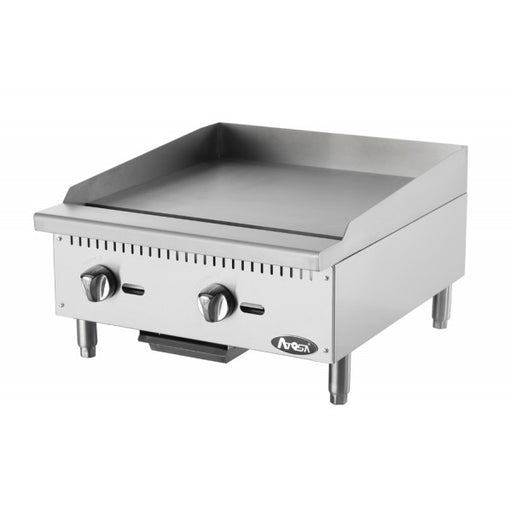
Atosa USA ATMG-24 Heavy Duty Stainless Steel 24-Inch Manual Griddle - Natural Gas
Atosa
Original price
$1,164.00
Original price
$1,164.00
-
Original price
$1,164.00
Original price
$1,164.00
Current price
$839.00
$839.00
-
$839.00
Current price
$839.00
Atosa USA ATMG-24 24-Inch Heavy Duty Manual Griddle – Natural Gas The Atosa ATMG-24 Natural Gas Manual Griddle is a compact, commercial-grade coun...
View full details
Original price
$1,164.00
Original price
$1,164.00
-
Original price
$1,164.00
Original price
$1,164.00
Current price
$839.00
$839.00
-
$839.00
Current price
$839.00
Save 28%
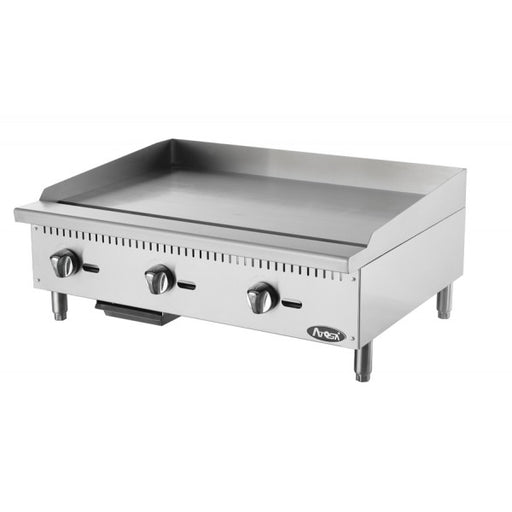
Atosa USA ATMG-36 Heavy Duty Stainless Steel 36-Inch Manual Griddle - Natural Gas
Atosa
Original price
$1,543.00
Original price
$1,543.00
-
Original price
$1,543.00
Original price
$1,543.00
Current price
$1,112.00
$1,112.00
-
$1,112.00
Current price
$1,112.00
Atosa USA ATMG-36 36-Inch Heavy Duty Manual Griddle – Natural Gas The Atosa ATMG-36 Natural Gas Griddle is built for busy commercial kitchens that...
View full details
Original price
$1,543.00
Original price
$1,543.00
-
Original price
$1,543.00
Original price
$1,543.00
Current price
$1,112.00
$1,112.00
-
$1,112.00
Current price
$1,112.00
Save 28%

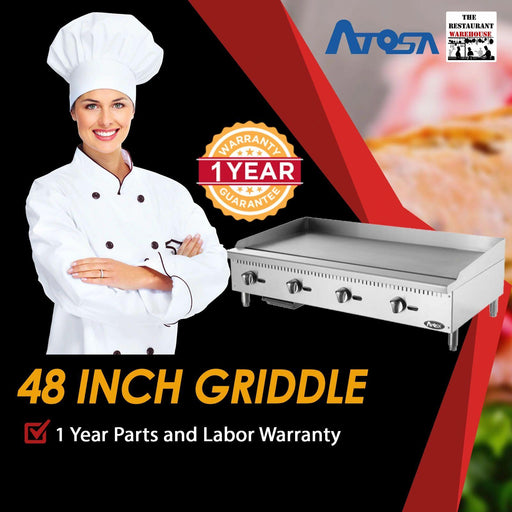
Atosa USA ATMG-48 Heavy Duty Stainless Steel 48-Inch Manual Griddle - Natural Gas
Atosa
Original price
$2,038.00
Original price
$2,038.00
-
Original price
$2,038.00
Original price
$2,038.00
Current price
$1,469.00
$1,469.00
-
$1,469.00
Current price
$1,469.00
Atosa USA ATMG-48 Heavy Duty 48-Inch Manual Griddle – Natural Gas The Atosa ATMG-48 Natural Gas Manual Griddle delivers the professional perf...
View full details
Original price
$2,038.00
Original price
$2,038.00
-
Original price
$2,038.00
Original price
$2,038.00
Current price
$1,469.00
$1,469.00
-
$1,469.00
Current price
$1,469.00
Save 28%
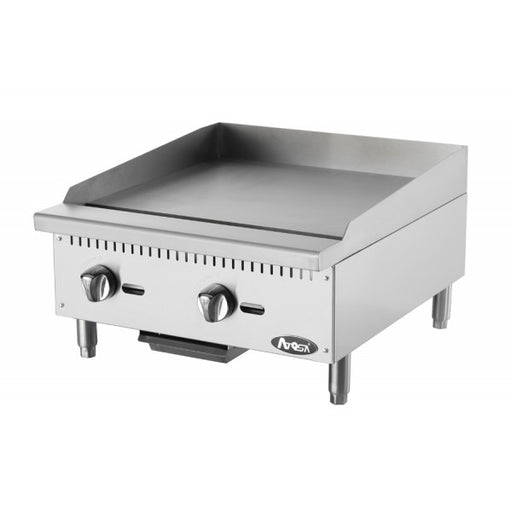
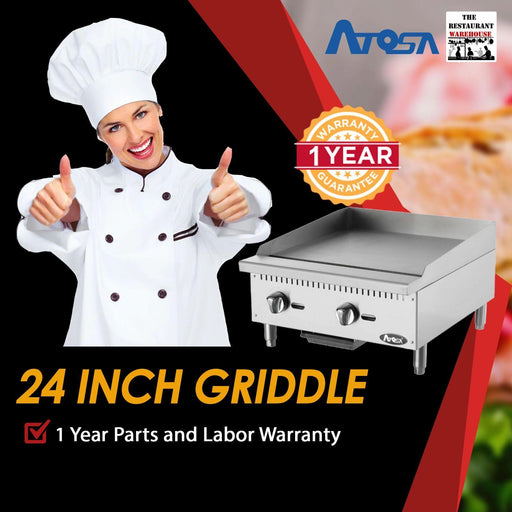
Atosa USA ATMG-24 Heavy Duty Stainless Steel 24-Inch Manual Griddle - Propane
Atosa
Original price
$1,164.00
Original price
$1,164.00
-
Original price
$1,164.00
Original price
$1,164.00
Current price
$839.00
$839.00
-
$839.00
Current price
$839.00
Atosa USA ATMG-24 Heavy Duty 24-Inch Manual Griddle – Propane The Atosa ATMG-24 Commercial Manual Griddle delivers reliable propane-powered p...
View full details
Original price
$1,164.00
Original price
$1,164.00
-
Original price
$1,164.00
Original price
$1,164.00
Current price
$839.00
$839.00
-
$839.00
Current price
$839.00
Save 28%
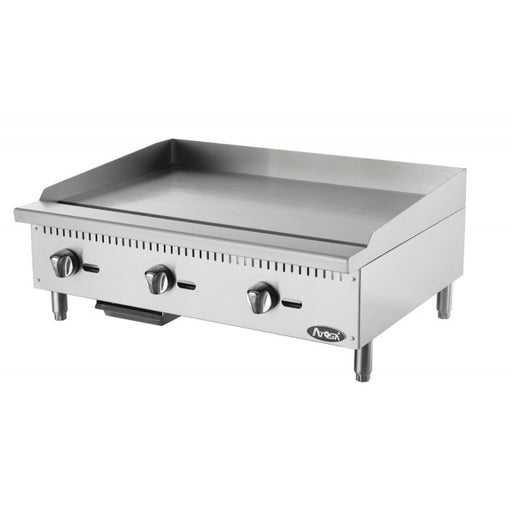
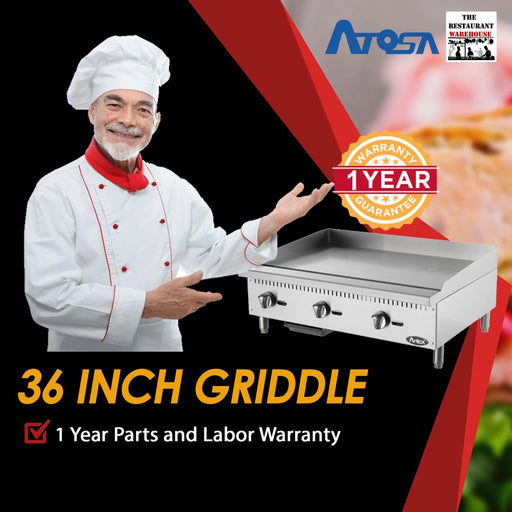
Atosa USA ATMG-36 Heavy Duty Stainless Steel 36-Inch Manual Griddle - Propane
Atosa
Original price
$1,543.00
Original price
$1,543.00
-
Original price
$1,543.00
Original price
$1,543.00
Current price
$1,112.00
$1,112.00
-
$1,112.00
Current price
$1,112.00
Atosa USA ATMG-36 Heavy Duty 36-Inch Manual Griddle – Propane The Atosa ATMG-36 Commercial Manual Griddle is built for kitchens that demand durabi...
View full details
Original price
$1,543.00
Original price
$1,543.00
-
Original price
$1,543.00
Original price
$1,543.00
Current price
$1,112.00
$1,112.00
-
$1,112.00
Current price
$1,112.00
Save 28%
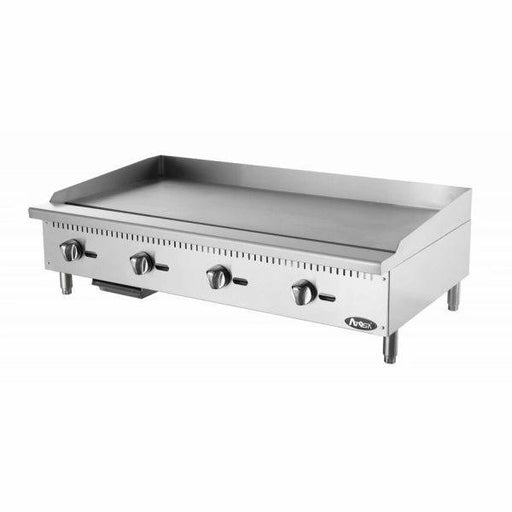
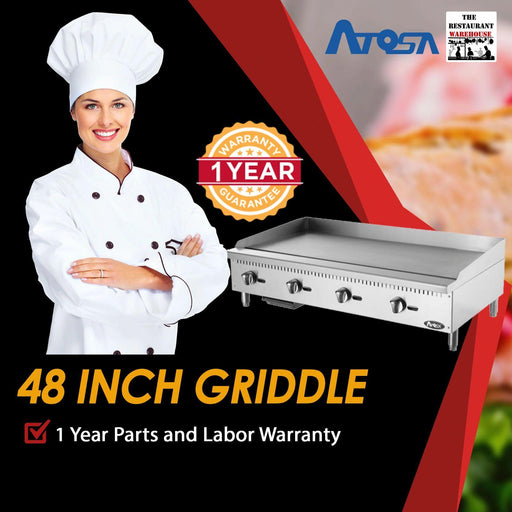
Atosa USA ATMG-48 Heavy Duty Stainless Steel 48-Inch Manual Griddle - Propane
Atosa
Original price
$2,038.00
Original price
$2,038.00
-
Original price
$2,038.00
Original price
$2,038.00
Current price
$1,469.00
$1,469.00
-
$1,469.00
Current price
$1,469.00
Atosa USA ATMG-48 Heavy Duty 48-Inch Manual Griddle – Propane The Atosa ATMG-48 Manual Griddle is a commercial-grade propane griddle engineered fo...
View full details
Original price
$2,038.00
Original price
$2,038.00
-
Original price
$2,038.00
Original price
$2,038.00
Current price
$1,469.00
$1,469.00
-
$1,469.00
Current price
$1,469.00
Save 28%
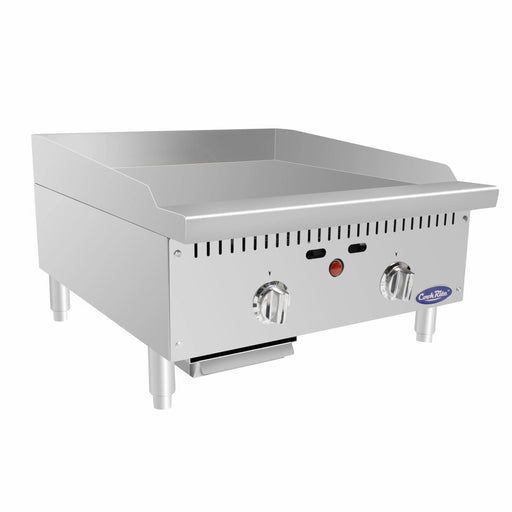
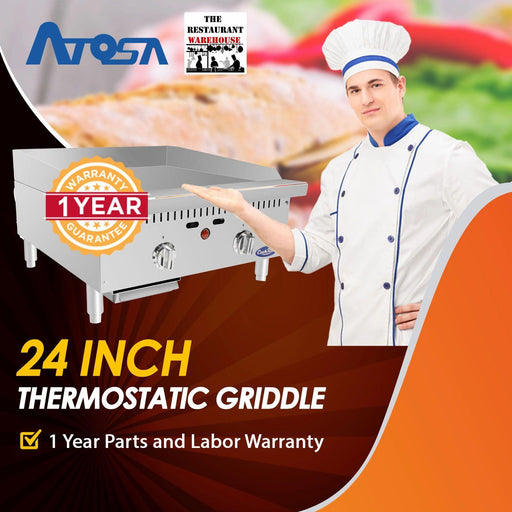
Atosa USA ATTG-24 24-Inch Thermostatic Controlled Griddle Natural Gas, NG
Atosa
Original price
$2,045.00
Original price
$2,045.00
-
Original price
$2,045.00
Original price
$2,045.00
Current price
$1,474.00
$1,474.00
-
$1,474.00
Current price
$1,474.00
Atosa USA ATMG-24T 24-Inch Thermostatically Controlled Griddle - Natural Gas Fast, consistent, dialed-in heat—without babysitting the knobs. The...
View full details
Original price
$2,045.00
Original price
$2,045.00
-
Original price
$2,045.00
Original price
$2,045.00
Current price
$1,474.00
$1,474.00
-
$1,474.00
Current price
$1,474.00
Save 28%
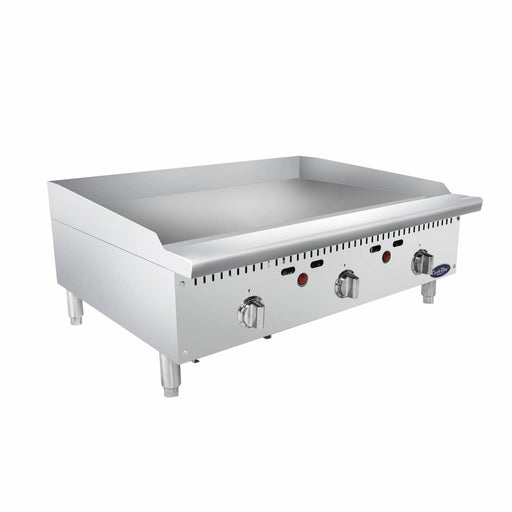
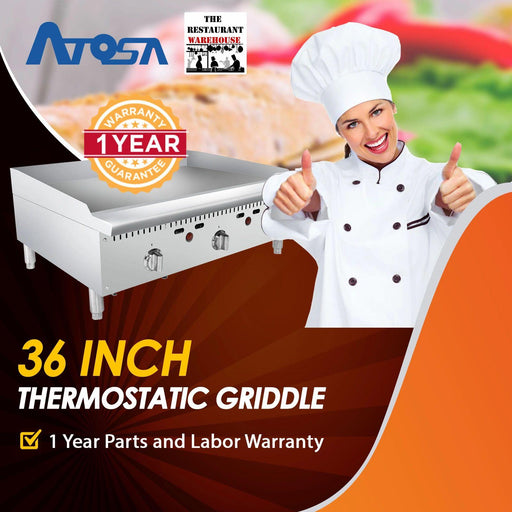
Atosa USA ATTG-36 36-Inch Thermostatic Controlled Griddle LP
Atosa
Original price
$2,938.00
Original price
$2,938.00
-
Original price
$2,938.00
Original price
$2,938.00
Current price
$2,117.00
$2,117.00
-
$2,117.00
Current price
$2,117.00
Atosa USA ATTG-36 / ATMG-36T 36-Inch Thermostatically Controlled Griddle - Propane The Atosa ATMG-36T Propane Thermostatic Griddle delivers precis...
View full details
Original price
$2,938.00
Original price
$2,938.00
-
Original price
$2,938.00
Original price
$2,938.00
Current price
$2,117.00
$2,117.00
-
$2,117.00
Current price
$2,117.00
Save 28%
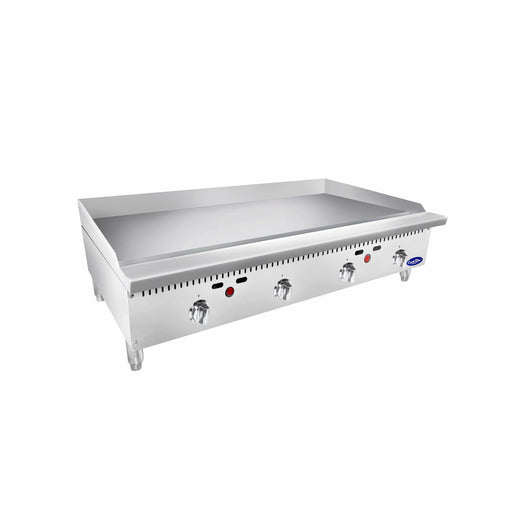
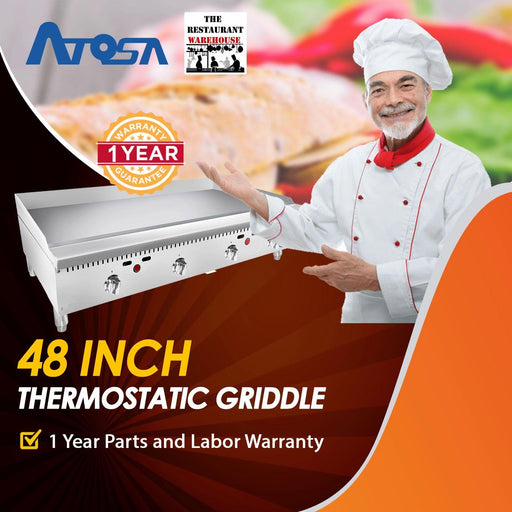
Atosa USA ATTG-48 48-Inch Thermostatically Controlled Griddle NG
Atosa
Original price
$3,450.00
Original price
$3,450.00
-
Original price
$3,450.00
Original price
$3,450.00
Current price
$2,486.00
$2,486.00
-
$2,486.00
Current price
$2,486.00
Atosa USA ATMG-48T 48-Inch Thermostatically Controlled Griddle – Natural Gas The Atosa ATMG-48T Natural Gas Thermostatic Griddle is built for high...
View full details
Original price
$3,450.00
Original price
$3,450.00
-
Original price
$3,450.00
Original price
$3,450.00
Current price
$2,486.00
$2,486.00
-
$2,486.00
Current price
$2,486.00
Save 28%
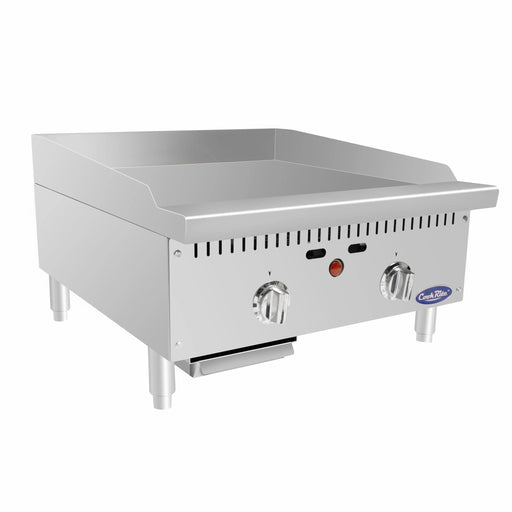
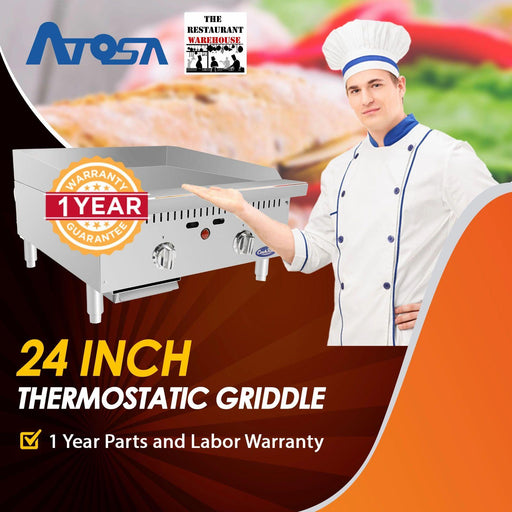
Atosa USA ATTG-24 24-Inch Thermostatic Controlled Griddle Propane, LP
Atosa
Original price
$2,045.00
Original price
$2,045.00
-
Original price
$2,045.00
Original price
$2,045.00
Current price
$1,474.00
$1,474.00
-
$1,474.00
Current price
$1,474.00
Atosa USA ATTG-24 / ATMG-24T 24-Inch Thermostatically Controlled Griddle - Propane The Atosa ATMG-24T Propane Thermostatic Griddle delivers prec...
View full details
Original price
$2,045.00
Original price
$2,045.00
-
Original price
$2,045.00
Original price
$2,045.00
Current price
$1,474.00
$1,474.00
-
$1,474.00
Current price
$1,474.00
Save 28%
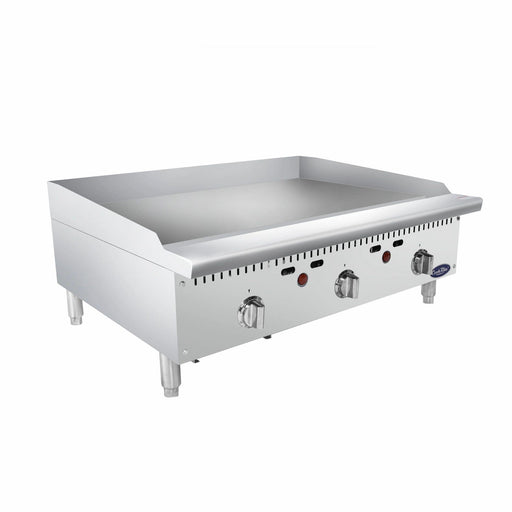
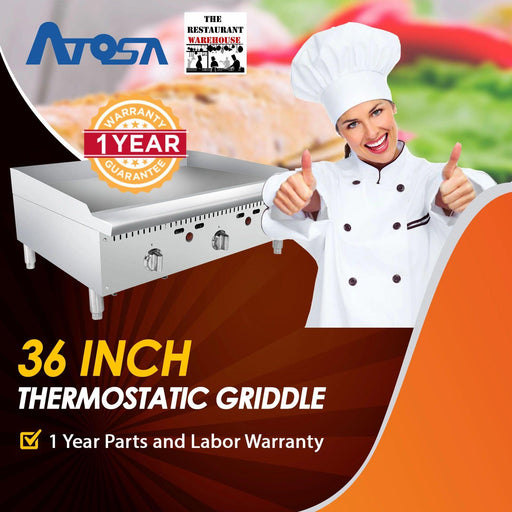
Atosa USA ATTG-36 36-Inch Thermostatic Controlled Griddle NG
Atosa
Original price
$2,938.00
Original price
$2,938.00
-
Original price
$2,938.00
Original price
$2,938.00
Current price
$2,117.00
$2,117.00
-
$2,117.00
Current price
$2,117.00
Atosa USA ATTG-36 / ATMG-36T 36-Inch Thermostatically Controlled Griddle – Natural Gas The Atosa ATMG-36T Natural Gas Thermostatic Griddle deliver...
View full details
Original price
$2,938.00
Original price
$2,938.00
-
Original price
$2,938.00
Original price
$2,938.00
Current price
$2,117.00
$2,117.00
-
$2,117.00
Current price
$2,117.00
Save 28%
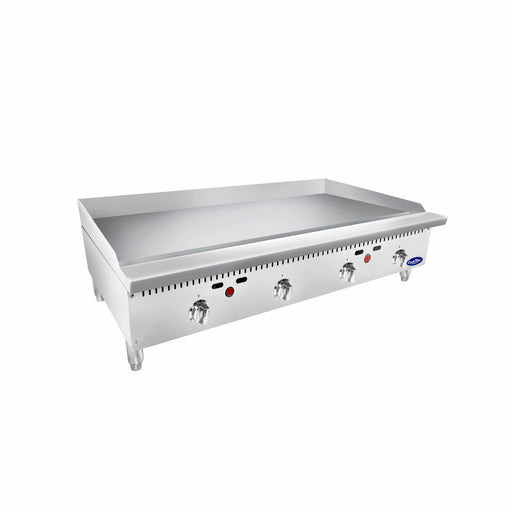
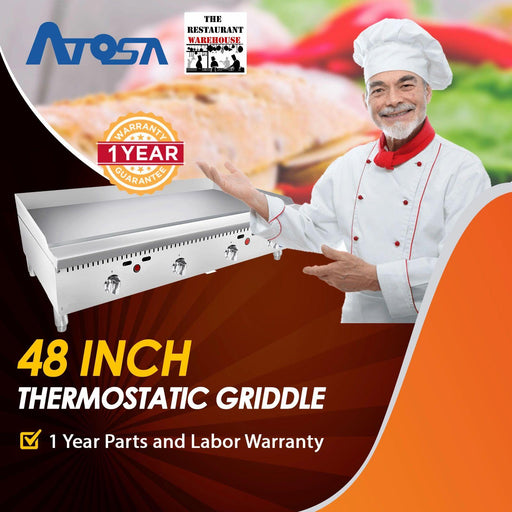
Atosa USA ATTG-48 48-Inch Thermostatically Controlled Griddle LP
Atosa
Original price
$3,450.00
Original price
$3,450.00
-
Original price
$3,450.00
Original price
$3,450.00
Current price
$2,486.00
$2,486.00
-
$2,486.00
Current price
$2,486.00
Atosa USA ATTG-48 / ATMG-48T 48-Inch Thermostatically Controlled Griddle - Propane The Atosa ATMG-48T Propane Thermostatic Griddle is built for hi...
View full details
Original price
$3,450.00
Original price
$3,450.00
-
Original price
$3,450.00
Original price
$3,450.00
Current price
$2,486.00
$2,486.00
-
$2,486.00
Current price
$2,486.00
Save 28%

Winco SCRP-12 Griddle Scraper
Winco
Original price
$21.01
-
Original price
$21.01
Original price
$21.01
$21.01
-
$21.01
Current price
$21.01
Winco SCRP-12 Griddle Scraper - Economy Compact Tool for Light-Duty Griddle Cleaning The Winco SCRP-12 is a compact economy griddle scraper built ...
View full details
Original price
$21.01
-
Original price
$21.01
Original price
$21.01
$21.01
-
$21.01
Current price
$21.01

Atosa ATGC101 High Temp Griddle Cleaner (40 x 5oz/Case)
Atosa
Original price
$350.00
-
Original price
$350.00
Original price
$350.00
$350.00
-
$350.00
Current price
$350.00
Atosa ATGC101 High Temp Griddle Cleaner – Case of 40 (5oz Bottles) The Atosa ATGC101 High Temp Griddle Cleaner is specially formulated for pro...
View full details
Original price
$350.00
-
Original price
$350.00
Original price
$350.00
$350.00
-
$350.00
Current price
$350.00

Winco SCRP-14 Griddle Scraper
Winco
Original price
$90.51
-
Original price
$90.51
Original price
$90.51
$90.51
-
$90.51
Current price
$90.51
Winco SCRP-14 Griddle Scraper - Heavy-Duty 6 Inch Blade for 36 and 48 Inch Griddles The Winco SCRP-14 is a heavy-duty commercial griddle scraper b...
View full details
Original price
$90.51
-
Original price
$90.51
Original price
$90.51
$90.51
-
$90.51
Current price
$90.51

Winco SCRP-16 Griddle Scraper
Winco
Original price
$79.66
-
Original price
$79.66
Original price
$79.66
$79.66
-
$79.66
Current price
$79.66
Winco SCRP-16 Griddle Scraper - Stainless Steel Blade Precision Tool for 60 and 72 Inch Griddles The Winco SCRP-16 is a heavy-duty commercial grid...
View full details
Original price
$79.66
-
Original price
$79.66
Original price
$79.66
$79.66
-
$79.66
Current price
$79.66

Winco GBK-348 Griddle Brick - 12 count
Winco
Original price
$106.49
-
Original price
$106.49
Original price
$106.49
$106.49
-
$106.49
Current price
$106.49
Winco GBK-348 Grill Brick - 8 Inch Abrasive Cleaning Block for Commercial Griddles The Winco GBK-348 is a sacrificial abrasive cleaning block desi...
View full details
Original price
$106.49
-
Original price
$106.49
Original price
$106.49
$106.49
-
$106.49
Current price
$106.49

Winco SCRP-5B Grill Scraper Blade Only 5" blade for SCRP-16 aluminum
Winco
Original price
$12.94
-
Original price
$12.94
Original price
$12.94
$12.94
-
$12.94
Current price
$12.94
Winco SCRP-5B 5 Inch Replacement Blades - 6 Pack for SCRP-16 Griddle Scraper The Winco SCRP-5B is a 5-inch high-strength tempered steel replacemen...
View full details
Original price
$12.94
-
Original price
$12.94
Original price
$12.94
$12.94
-
$12.94
Current price
$12.94

WInco SCRP-4B Grill Scraper Blade Only 4" blade for SCRP-12 Aluminum - 10 pack
Winco
Original price
$13.76
-
Original price
$13.76
Original price
$13.76
$13.76
-
$13.76
Current price
$13.76
Winco SCRP-4B 4 Inch Replacement Blades - 10 Pack for SCRP-12 Griddle Scraper The Winco SCRP-4B is a 4-inch hardened stainless steel replacement b...
View full details
Original price
$13.76
-
Original price
$13.76
Original price
$13.76
$13.76
-
$13.76
Current price
$13.76

Winco SCRP-6B Replacement 6" Blade for SCRP-14 - 6 count
Winco
Original price
$56.64
-
Original price
$56.64
Original price
$56.64
$56.64
-
$56.64
Current price
$56.64
Winco SCRP-6B 6 Inch Replacement Blades - 6 Pack for SCRP-14 Griddle Scraper The Winco SCRP-6B is a 6-inch heavy-duty stainless steel replacement ...
View full details
Original price
$56.64
-
Original price
$56.64
Original price
$56.64
$56.64
-
$56.64
Current price
$56.64

Winco GSH-1 Griddle Screen Holder, 5" x 2-3/4"
Winco
Original price
$11.15
-
Original price
$11.15
Original price
$11.15
$11.15
-
$11.15
Current price
$11.15
Winco GSH-1 Griddle Screen Holder - Cast Aluminum Pad Holder for Commercial Griddle Cleaning The Winco GSH-1 is a reusable cast aluminum griddle s...
View full details
Original price
$11.15
-
Original price
$11.15
Original price
$11.15
$11.15
-
$11.15
Current price
$11.15

Winco GSN-4 Griddle Screen - 20 ct
Winco
Original price
$6.94
-
Original price
$6.94
Original price
$6.94
$6.94
-
$6.94
Current price
$6.94
Winco GSN-4 Griddle Cleaning Screens - 20 Pack Silicon Carbide Pads for Commercial Flat Tops The Winco GSN-4 is a resin-bonded silicon carbide gri...
View full details
Original price
$6.94
-
Original price
$6.94
Original price
$6.94
$6.94
-
$6.94
Current price
$6.94

Winco GBH-2 Griddle Brick Holder, 7" x 3-1/2"
Winco
Original price
$12.36
-
Original price
$12.36
Original price
$12.36
$12.36
-
$12.36
Current price
$12.36
Winco GBH-2 Grill Brick Holder - Cast Aluminum Handle for GBK-348 Brick Compatibility The Winco GBH-2 is a reusable cast aluminum grill brick hold...
View full details
Original price
$12.36
-
Original price
$12.36
Original price
$12.36
$12.36
-
$12.36
Current price
$12.36
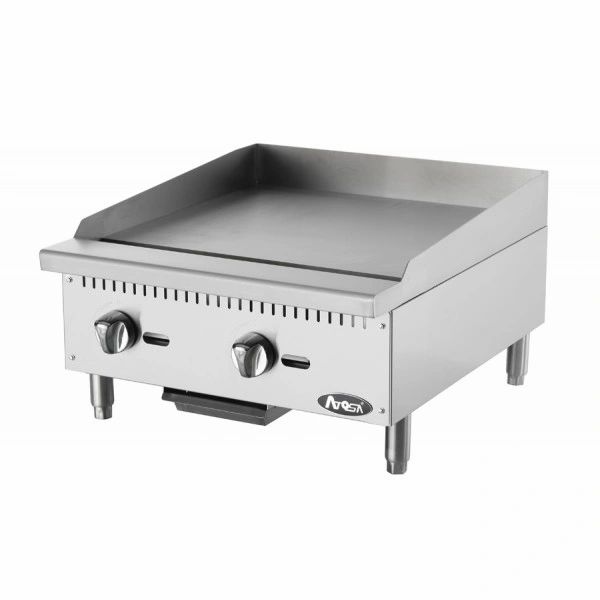
Commercial Griddles: The Complete Buyer's Guide
A commercial griddle (also called a flat top grill) is the workhorse of any cook line running eggs, burgers, pancakes, bacon, hash browns, or smashed patties. The right unit holds a stable setpoint zone by zone through a rush, recovers fast after a raw-protein load, and cleans up predictably at end of shift. The wrong one turns into a hot spot, cold spot, warped-plate problem that drags every ticket on the line.
This page consolidates our complete commercial griddle buying guidance: plate metallurgy, thickness deep dive, manual vs thermostatic controls, size class by cover volume, gas vs electric, BTU per inch, hood and gas line sizing, install and clearance, throughput math, decision frameworks for the 24 vs 36 vs 48 vs 60 inch question, and the daily cleaning and bricking routine that keeps a plate flat for a decade.
What "Stainless Steel Griddle" Actually Means
When operators search for a stainless steel griddle, most picture a shiny cooking surface. Here is what will sharpen your buying decision immediately: the cooking surface on virtually every commercial griddle is not stainless steel. It is polished steel, cold-rolled steel, or chrome. Stainless steel refers to the exterior construction of the unit: housing, front panel, side panels, splash guards, and grease drawer. Understanding this distinction is the foundation for choosing the right griddle and caring for it correctly.
Body vs. Plate: Two Different Material Assemblies
The cooking plate is the flat surface food touches. It is engineered for thermal conductivity, mechanical stiffness at temperature, and hardness for spatula wear. Common materials are polished cold-rolled steel (SAE 1018 or 1020), chrome-finished steel, or in specialty applications, cast iron. Stainless steel is not used for the cooking plate because it has lower thermal conductivity than carbon steel and a coefficient of thermal expansion that leads to warping over repeated heat cycles.
The body is everything else: the cabinet, front panel, side panels, splash guards, grease trough, and drawer. This is where stainless steel does its job. It resists corrosion from acidic food splash and alkaline degreasers, it wipes clean, it passes health-department inspection year after year, and it stays structurally rigid in a hot, humid kitchen.
304 vs 430 Stainless: Which Alloy Is on the Griddle
The two alloys used in commercial griddle bodies are 304 and 430.
- 304 stainless (18/8) - 18% chromium, 8% nickel, austenitic, superior corrosion resistance, non-magnetic, higher cost. Used in front panels, splash guards, high-exposure zones on quality builds.
- 430 stainless - 17% chromium, no nickel, ferritic, magnetic, lower cost, adequate corrosion resistance in low-chloride environments. Used in cabinet backs, side panels, non-visible structural components on most builds.
The best commercial griddle bodies use 304 in high-exposure and food-contact zones and 430 in structural back-of-cabinet locations. A build that uses 430 across the entire body will show discoloration and pitting sooner in coastal or chloride-heavy environments (dishwash rooms, seafood kitchens, high-humidity climates).
Weld Engineering and Sanitary Seams
Two griddles that look identical on the spec sheet can perform very differently in year 3. The difference is welds. Continuous TIG welds along splash-guard seams and grease-trough joints create a sealed, sanitary surface that resists grease infiltration and passes NSF sanitation criteria. Spot welds and skipped seams create pockets where grease, water, and food particles collect, degrade, and drive corrosion from the inside out. Look for smooth continuous seams on grease-trough transitions, splash-guard corners, and drawer channels.
Plate Thickness: Why 1 Inch Beats 3/4 Inch on a Real Line
Commercial griddle plates come in three standard thicknesses: 1/2 inch, 3/4 inch, and 1 inch. Plate thickness drives thermal mass, which drives recovery time and hot-spot resistance.
- 1/2 inch plate - light, heats fast, cools fast, warps under aggressive thermal cycling. Fine for low-volume breakfast counters, food trucks running low order counts, and secondary station use. Not appropriate for a primary cook line above 100 covers.
- 3/4 inch plate - the middle ground. Enough thermal mass for a mid-volume line, still heats up in reasonable time from a cold start. Appropriate for most independent restaurants at 100-175 covers per peak hour.
- 1 inch plate - the professional-line standard. Highest thermal mass, best hot-spot resistance, best recovery under a raw-protein load. Longer preheat (20-30 minutes from cold). Appropriate for any operation above 150 covers per peak hour, high-volume brunch, smashburger concepts, and volume breakfast diners.
The Atosa ATTG series uses a 1-inch polished plate. The Atosa ATMG series uses a 1-inch polished plate. Both fall into the pro-line category for thermal mass on the cook surface.
Manual vs Thermostatic Controls
The second major spec decision after plate thickness is control type.
Manual Controls (Atosa ATMG Line)
Manual gas valves feed the burners directly. The operator sets the flame height on each zone with a knob and reads plate temperature by feel, timing, or a laser thermometer. Manual griddles are less expensive up front (typically $300-$600 less than thermostatic in the same size), have fewer parts to fail (no thermocouple, no gas modulating valve, no electronic control board), and are the standard choice for high-throughput operations where cooks work at a consistent temperature all shift and rely on repetition rather than dial-in precision.
Thermostatic Controls (Atosa ATTG Line)
Thermostatic griddles use a temperature probe under the plate that cycles the gas valve to hold a setpoint. Each zone can be dialed into a specific temperature (typically 200 to 550°F) and the plate holds it within about ±15°F. Thermostatic controls are the right choice for menus with multiple temperature targets across the plate at once (breakfast lines running eggs at 300, pancakes at 375, bacon at 400, home fries at 425), for concept restaurants that need consistent product across shifts and cooks, and for operations where operator skill varies.
Manual vs Thermostatic Decision
| Factor | Manual (ATMG) | Thermostatic (ATTG) |
|---|---|---|
| Menu with mixed temperature zones | Harder to hold precisely | Ideal, each zone dialed in |
| Single-item high volume (smashburgers) | Preferred, faster, fewer parts | Overspec |
| Multiple cook shifts, varying skill | Requires trained operator | Ideal, consistency built in |
| Long-term reliability | Fewer parts, simpler service | More parts (thermocouple, modulating valve) |
| Cost | Lower | $300-$600 higher |
Sizing a Commercial Griddle by Line Volume
Size a commercial griddle by cover count during the peak hour. The number that matters is not total covers but griddle covers: how many of those orders touch the flat top in the peak hour.
- 24 inch griddles - 2 burner zones, 40-60 covers per peak hour, food trucks, breakfast counters, secondary station on a cook line. Compact, low BTU footprint, easiest to fit in tight kitchens.
- 36 inch griddles - 3 burner zones, 60-100 covers per peak hour, standalone diners and small independent restaurants. The most common single-station size on the US market.
- 48 inch griddles - 4 burner zones, 100-200 covers per peak hour, mid-volume workhorse. Fits a 4-foot run of counter, supports four simultaneous temperature targets, handles smashburger rushes, breakfast egg stations, and high-volume lunch sandwich lines.
- 60 inch griddles - 5 burner zones, 200+ covers per peak hour, high-volume brunch, breakfast diners, banquet operations.
- 72 inch griddles - 6 burner zones, ballroom kitchens, chain-restaurant cook lines, high-throughput banquet cooking.
Why the 48 Inch Griddle Is the Mid-Volume Workhorse
The 48-inch class hits its sweet spot at 100-200 covers per peak hour where griddle-cooked items represent a meaningful share of the menu. It gives one line cook four independent 12-inch zones to cook against, it spans a 4-foot run of counter that fits inside a standard kitchen layout, and it produces enough surface area to handle a smashburger rush, a breakfast egg station, or a high-volume lunch sandwich line without bottlenecking the rest of the kitchen.
A breakfast operation running eggs at 300°F on zone one, pancakes at 375°F on zone two, bacon at 400°F on zone three, and home fries at 425°F on zone four uses the 48-inch format fully. Below 100 covers, a 36-inch is usually enough. Above 200 covers, a 60-inch pulls ahead.
BTU Per Inch, Recovery, and Why It Matters
The BTU rating on a griddle spec sheet only means something when normalized against plate width. The industry benchmark is 25,000-30,000 BTU per foot of griddle width for a mid-duty gas commercial griddle, and 30,000-35,000 BTU per foot for a heavy-duty spec.
- Atosa ATMG-24 - 60,000 BTU across 2 burners (30,000 BTU per burner, per foot). Heavy-duty spec.
- Atosa ATMG-36 - 90,000 BTU across 3 burners.
- Atosa ATMG-48 - 120,000 BTU across 4 burners.
- Atosa ATTG-24 - 60,000 BTU thermostatic, 2 zones.
- Atosa ATTG-36 - 90,000 BTU thermostatic, 3 zones.
- Atosa ATTG-48 - 120,000 BTU thermostatic, 4 zones.
Recovery time is the seconds it takes the plate zone to return to setpoint after a raw-protein load. On a properly sized 48-inch griddle with 1-inch plate and 30,000 BTU per burner, expect 45-75 second recovery after a 12-patty smashburger drop. Underpowered griddles (below 20,000 BTU per foot) take 3-5 minutes and turn a Saturday lunch rush into a bottleneck.
Gas vs Electric Commercial Griddles
Gas griddles (natural gas or propane) run 25,000-35,000 BTU per foot, recover fast, and dominate the market. Electric griddles use resistive heating elements welded to the underside of the plate, deliver more uniform surface temperature (fewer visible burner shadow zones), require no gas line, no combustion, and no hood in many jurisdictions when configured with a ventless system.
- Gas griddles - natural gas or propane, highest BTU output, fastest recovery, cook-line standard
- Electric griddles - precise temperature, no gas required, uniform surface, secondary station or ghost kitchen
- Combo grill and griddle units
Featured Commercial Griddle Models
- Atosa ATMG-24 Natural Gas 24 inch Manual Griddle - 60,000 BTU, 2 zones, 1 inch plate
- Atosa ATMG-24 Propane 24 inch Manual Griddle
- Atosa ATMG-36 Natural Gas 36 inch Manual Griddle - 90,000 BTU, 3 zones
- Atosa ATMG-36 Propane 36 inch Manual Griddle
- Atosa ATMG-48 Natural Gas 48 inch Manual Griddle - 120,000 BTU, 4 zones
- Atosa ATMG-48 Propane 48 inch Manual Griddle
- Atosa ATTG-24 Natural Gas 24 inch Thermostatic Griddle
- Atosa ATTG-24 Propane 24 inch Thermostatic Griddle
- Atosa ATTG-36 Natural Gas 36 inch Thermostatic Griddle
- Atosa ATTG-36 Propane 36 inch Thermostatic Griddle
- Atosa ATTG-48 Natural Gas 48 inch Thermostatic Griddle
- Atosa ATTG-48 Propane 48 inch Thermostatic Griddle
Hood Sizing and Gas Line Requirements
Every gas commercial griddle requires a Type I grease hood with a CFM rating sized to the appliance BTU output. For a 48-inch griddle running 120,000 BTU, expect a hood sized for 300-400 CFM per linear foot of hood width, plus makeup air. Consult a mechanical engineer or hood manufacturer for the specific jurisdiction and layout.
Gas Line Sizing
- 24 inch griddle (60,000 BTU) - 3/4 inch black iron gas line minimum from meter
- 36 inch griddle (90,000 BTU) - 3/4 inch minimum, 1 inch preferred if line run exceeds 25 feet
- 48 inch griddle (120,000 BTU) - 1 inch minimum, especially if shared with other gas equipment on the same branch
- 60 inch griddle (150,000 BTU) - 1 inch dedicated branch
Undersized gas lines starve the burners and drop measured BTU output by 20-40%, which shows up as slow recovery and cold spots during peak service. Any operator who says the griddle "runs cold" should have gas line pressure and diameter checked before assuming an appliance defect.
Clearance Requirements
Commercial griddles require the following clearances from combustible surfaces (drywall, wood cabinetry):
- Rear: 6 inches typical
- Sides: 6 inches typical
- Above: per hood spec, typically 24 inches to hood filter face
Zero clearance to non-combustible surfaces (stainless backsplash, tile, brick) is generally allowed but always verify with local code. On countertop models with 4 inch legs, keep 4 inches of open air below unless the unit is listed for zero clearance to a stainless countertop.
Certifications and What They Cover
| Cert | Scope | Why It Matters |
|---|---|---|
| ETL Listed | Electrical safety per UL standards | Required for AHJ acceptance |
| ETL Sanitation | Food-contact sanitation per NSF | Required for health-department pass |
| ANSI Z83.11 | Gas-fired commercial equipment safety | Required for gas-fired units |
| NSF/ANSI 4 | Commercial cooking equipment | Required for food safety code |
Daily and Weekly Cleaning
End-of-Shift Cleaning Sequence
The end-of-shift sequence on any commercial griddle is: drop plate temperature to 250-300°F, scrape the plate front-to-back zone by zone with a Winco SCRP-14 14 inch scraper, apply ATGC101 griddle cleaner to dissolve carbonized grease, scrub with a griddle screen or non-abrasive pad, squeegee the chemistry slurry into the front trough, rinse with water, dry with heat, and apply a thin oil coat for overnight protection. Total time on a 48-inch surface is 15-25 minutes; 10-18 minutes for a 36-inch.
Weekly Deep Clean with Bricking
The weekly deep clean adds a grill brick pass. After the daily chemistry step, the brick is run lane-by-lane across the full plate width in a vertical pass and then a horizontal pass, smoothing the chemistry-exposed plate surface into a uniform low-friction seasoning film. Bricking removes micro-scratches from spatula wear, closes surface pores where grease and food particles collect, and restores the polished finish that makes the daily scrape effective.
Griddle Screens for Between-Shift Refresh
A quick between-shift refresh uses Winco GSN-4 griddle screens to clear light residue and reset the surface without full chemistry.
Heat Tint on Stainless Griddle Bodies
Operators frequently see blue, gold, yellow, or rainbow coloration on stainless body panels near the cooking surface or on splash guards. This is heat tint, and it is not rust. It forms when stainless steel is heated in air above about 260°C (500°F). At elevated temperature, the chromium oxide passive layer thickens and creates interference colors through thin-film optical effects, the same physics as the color on a soap bubble.
Heat tint near the cooking plate edge and on splash guards is normal in a working commercial griddle. The stainless is not failing. Light heat tint can be removed with a citric-acid or non-chloride oxalic-acid stainless cleaner, wiping with the grain of the brushed finish. Do not use chlorinated cleaners: they will worsen the surface condition.
Heat tint versus rust: heat tint is uniform, iridescent, and does not transfer a powdery residue onto a cloth. Rust is brown to orange, powdery, and will transfer. If wiping leaves no residue and the surface is still smooth, it is heat tint.
Griddle Accessories and Consumables
- Winco SCRP-14 Griddle Scraper
- Winco SCRP-12 Griddle Scraper
- Winco SCRP-16 Griddle Scraper
- Winco GSN-4 Griddle Screens
- Atosa ATGC101 High-Temp Griddle Cleaner
Griddle Buying Resources
- The Definitive Guide to Commercial Griddle Options
- How to Clean a Commercial Griddle
- Bricking the Griddle
- Best Electric Griddles
- Atosa Griddle Guide
Frequently Asked Questions About Commercial Griddles
What size commercial griddle do I need?
Size by peak-hour griddle covers. 24 inch handles 40-60 covers, 36 inch handles 60-100, 48 inch handles 100-200, 60 inch handles 200+. Count only the covers that actually touch the flat top.
What is the difference between manual and thermostatic griddle controls?
Manual controls set flame height directly with a knob; the operator manages plate temperature by feel and timing. Thermostatic controls use a temperature probe to hold each zone at a setpoint within ±15°F. Thermostatic is ideal for multi-temperature menus and concept restaurants; manual is preferred for high-throughput single-item operations.
How thick should a commercial griddle plate be?
1-inch polished steel is the professional-line standard for volume above 150 covers per hour. 3/4-inch works for mid-volume operations. 1/2-inch is only appropriate for low-volume counters, food trucks, and secondary stations.
Is a commercial griddle really stainless steel?
The body is stainless. The cooking plate is almost always polished carbon steel, cold-rolled steel, or chrome, not stainless. Stainless steel has too low thermal conductivity and warps under thermal cycling for cook-surface use.
Gas vs electric commercial griddle: which is better?
Gas griddles deliver higher BTU output (25,000-35,000 BTU per foot) and faster recovery for high-volume kitchens. Electric griddles offer more uniform surface temperature, no gas line required, and simpler installation for lower-volume sites, secondary stations, or hoodless applications with a ventless system.
How much BTU do I need for a commercial griddle?
The industry benchmark is 25,000-30,000 BTU per foot of griddle width for a mid-duty spec and 30,000-35,000 for heavy-duty. A 48-inch griddle should run 120,000-140,000 BTU total. Anything under 20,000 BTU per foot will bottleneck under real service.
Do I need a hood over a commercial griddle?
Yes for any gas griddle: a Type I grease hood with fire suppression is required. Electric griddles may operate without a hood in some jurisdictions when configured with a UL 710B ventless system.
How often should a commercial griddle be cleaned?
Daily end-of-shift scrape with chemistry and re-seasoning. Weekly bricking to restore surface finish. Monthly deep clean under the plate and burner inspection.
How long does a commercial griddle last?
A properly sized, maintained commercial griddle with 1-inch plate lasts 10-15 years. Underpowered or thin-plate units warp within 2-3 years and need plate replacement or full unit swap.
Can I convert a natural gas griddle to propane?
Yes, using a manufacturer conversion kit and a qualified gas technician. All Atosa ATMG and ATTG models come in dedicated natural gas or propane configurations from the factory; buy the correct fuel version rather than converting when possible.