
Top Mount Compressor Freezer

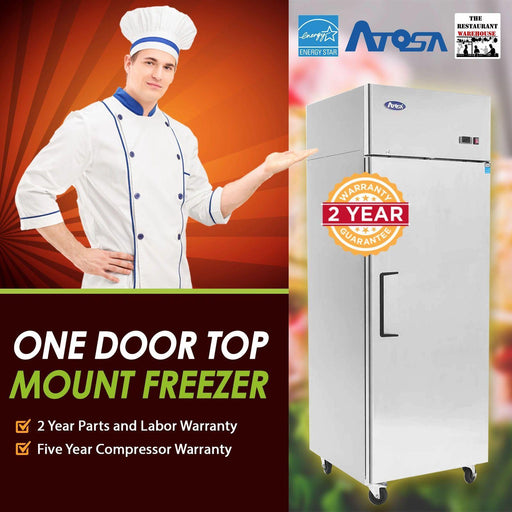
Atosa MBF8001GR 29-Inch 21.4 cu. ft. Commercial Freezer
Atosa
Original price
$3,396.00
Original price
$3,396.00
-
Original price
$3,396.00
Original price
$3,396.00
Current price
$2,447.00
$2,447.00
-
$2,447.00
Current price
$2,447.00
Atosa MBF8001GR Commercial Reach-In Freezer for Sale – Solid Door Atosa MBF8001GR commercial reach-in freezer for sale is designe...
View full details
Original price
$3,396.00
Original price
$3,396.00
-
Original price
$3,396.00
Original price
$3,396.00
Current price
$2,447.00
$2,447.00
-
$2,447.00
Current price
$2,447.00
Save 28%
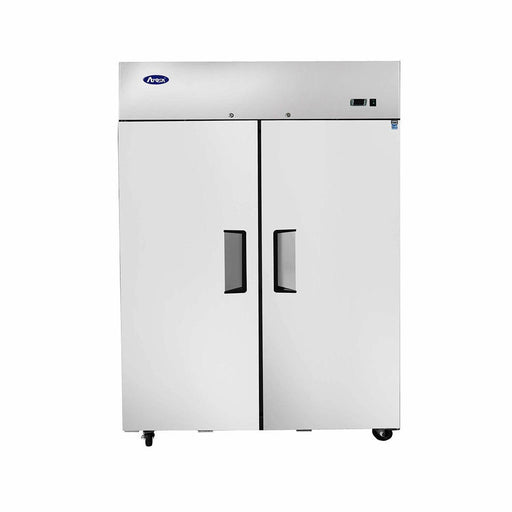
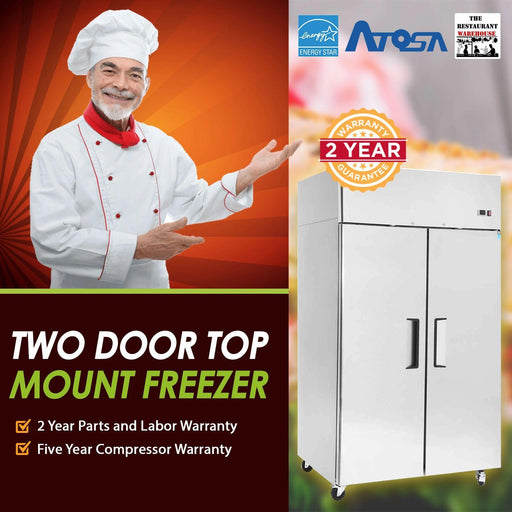
Atosa MBF8002GR 52-Inch Two Door 43.2 cu. ft. Commercial Freezer
Atosa
Original price
$5,206.00
Original price
$5,206.00
-
Original price
$5,206.00
Original price
$5,206.00
Current price
$3,751.00
$3,751.00
-
$3,751.00
Current price
$3,751.00
Atosa MBF8002GR 52-Inch Two-Door Commercial Reach-In Freezer In stock and built for daily commercial use. The Atosa MBF8002GR co...
View full details
Original price
$5,206.00
Original price
$5,206.00
-
Original price
$5,206.00
Original price
$5,206.00
Current price
$3,751.00
$3,751.00
-
$3,751.00
Current price
$3,751.00
Save 28%
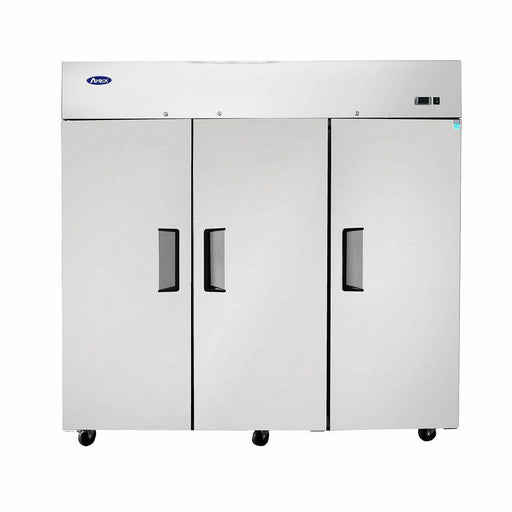
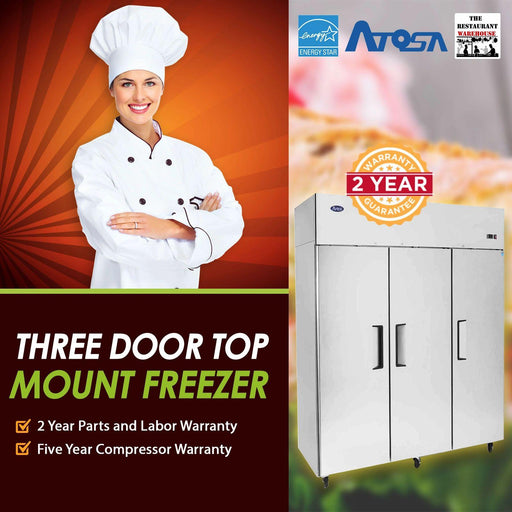
Atosa MBF8003GR 78-Inch Three Door 64.9 cu. ft. Commercial Freezer
Atosa
Original price
$7,356.00
Original price
$7,356.00
-
Original price
$7,356.00
Original price
$7,356.00
Current price
$5,300.00
$5,300.00
-
$5,300.00
Current price
$5,300.00
Atosa MBF8003GR 3-Door Commercial Reach-In Freezer – 64.9 Cu Ft Built for high-volume commercial kitchens that need maximum frozen storage an...
View full details
Original price
$7,356.00
Original price
$7,356.00
-
Original price
$7,356.00
Original price
$7,356.00
Current price
$5,300.00
$5,300.00
-
$5,300.00
Current price
$5,300.00
Save 28%
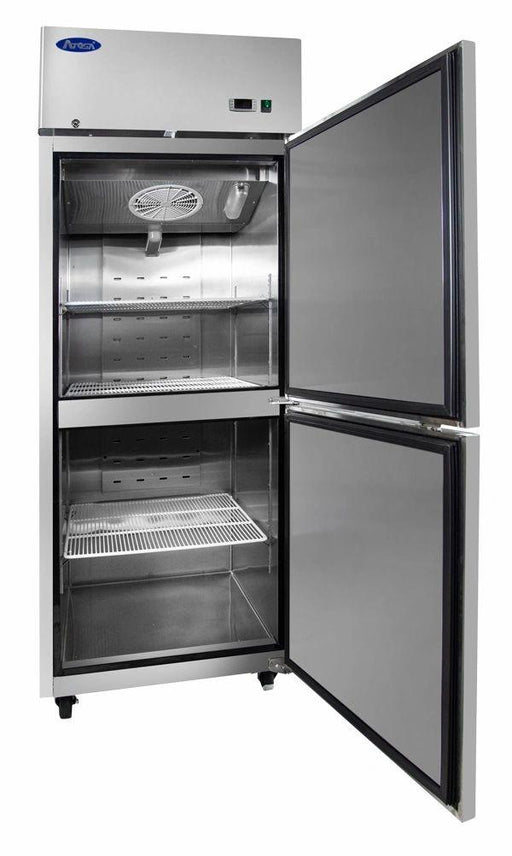
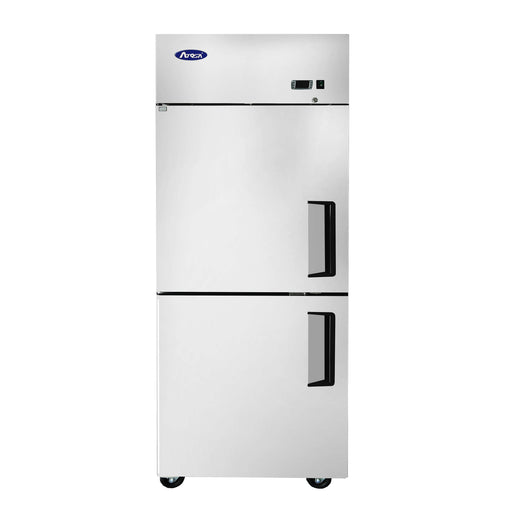
Atosa MBF8007GR 29-Inch Two Split Door Upright Freezer
Atosa
Original price
$3,680.00
Original price
$3,680.00
-
Original price
$3,680.00
Original price
$3,680.00
Current price
$2,652.00
$2,652.00
-
$2,652.00
Current price
$2,652.00
Atosa MBF8007GR 29-Inch Split-Door Commercial Freezer for Sale (ENERGY STAR®) Atosa MBF8007GR commercial reach-in freezer for sal...
View full details
Original price
$3,680.00
Original price
$3,680.00
-
Original price
$3,680.00
Original price
$3,680.00
Current price
$2,652.00
$2,652.00
-
$2,652.00
Current price
$2,652.00
Save 28%


Atosa MBF15FSGR 18-Inch Slimline Commercial Freezer, 13 Cu. Ft.
Atosa
Original price
$5,400.00
Original price
$5,400.00
-
Original price
$5,400.00
Original price
$5,400.00
Current price
$3,891.00
$3,891.00
-
$3,891.00
Current price
$3,891.00
Atosa MBF15FSGR 18-Inch Slimline Commercial Freezer for Sale The Atosa MBF15FSGR slimline commercial freezer for sale is built for prof...
View full details
Original price
$5,400.00
Original price
$5,400.00
-
Original price
$5,400.00
Original price
$5,400.00
Current price
$3,891.00
$3,891.00
-
$3,891.00
Current price
$3,891.00
Save 28%


Atosa MBF15FSGRL 18-inch Slimline Commercial Freezer Left Hinge
Atosa
Original price
$5,400.00
Original price
$5,400.00
-
Original price
$5,400.00
Original price
$5,400.00
Current price
$3,891.00
$3,891.00
-
$3,891.00
Current price
$3,891.00
Atosa MBF15FSGRL 18-Inch Slimline Commercial Freezer (Left Hinge) In stock and ready to ship. The Atosa MBF15FSGRL is a commer...
View full details
Original price
$5,400.00
Original price
$5,400.00
-
Original price
$5,400.00
Original price
$5,400.00
Current price
$3,891.00
$3,891.00
-
$3,891.00
Current price
$3,891.00
Save 28%


Atosa MBF8008GR Four Solid Half Door Reach In Freezer
Atosa
Original price
$6,200.00
Original price
$6,200.00
-
Original price
$6,200.00
Original price
$6,200.00
Current price
$4,468.00
$4,468.00
-
$4,468.00
Current price
$4,468.00
Atosa MBF8008GR 2-Section Reach-In Commercial Freezer with Four Half Doors Built for high-volume kitchens and ready for daily commercial use. ...
View full details
Original price
$6,200.00
Original price
$6,200.00
-
Original price
$6,200.00
Original price
$6,200.00
Current price
$4,468.00
$4,468.00
-
$4,468.00
Current price
$4,468.00
Save 28%

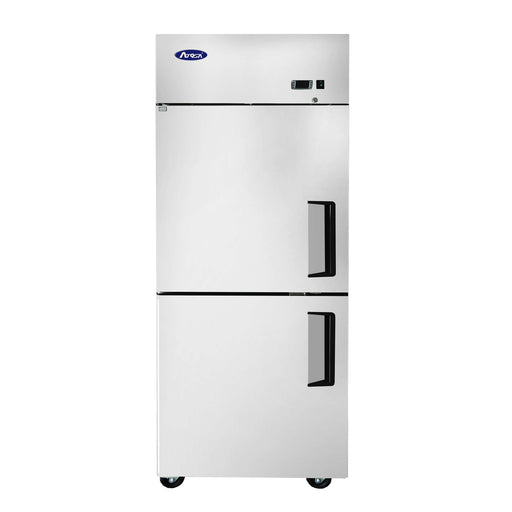
Atosa MBF8007GRL 29-Inch Two Half Door Freezer - Left Hinge 21.4 cu. ft.
Atosa
Original price
$3,680.00
Original price
$3,680.00
-
Original price
$3,680.00
Original price
$3,680.00
Current price
$2,652.00
$2,652.00
-
$2,652.00
Current price
$2,652.00
Atosa MBF8007GRL 29-Inch Split-Door Commercial Freezer for Sale (Left Hinge, ENERGY STAR®) Atosa MBF8007GRL commercial reach-in f...
View full details
Original price
$3,680.00
Original price
$3,680.00
-
Original price
$3,680.00
Original price
$3,680.00
Current price
$2,652.00
$2,652.00
-
$2,652.00
Current price
$2,652.00
Save 28%
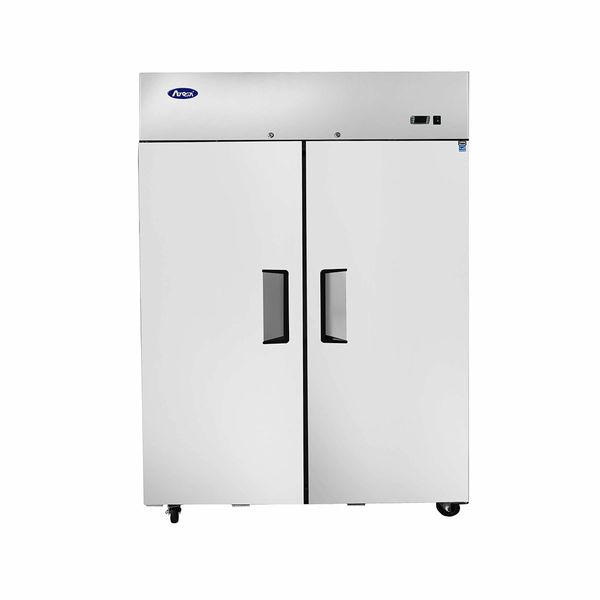
Top Mount Commercial Freezers: Find the Right Cabinet for Your Kitchen
A top mount commercial freezer places its compressor and condensing equipment above the refrigerated storage cabinet. That keeps the refrigeration assembly farther from floor-level dust and spilled ingredients, but it also makes overhead space, surrounding heat and service access part of your buying decision.
Start with the frozen inventory you need to hold and the space where the freezer will work. Then compare cabinet width, full or half doors, electrical requirements and access for maintenance. A freezer that fits your menu and kitchen layout is more useful than one chosen by door count alone.
When Does a Top Mount Freezer Make Sense?
Top mounting is worth considering in dry preparation and storage areas where debris collects near the floor. A bakery, for example, may want the condensing equipment away from spilled ingredients. That does not make the equipment immune to airborne flour, grease or dust: the condenser still needs inspection and cleaning.
Look at the actual installation point rather than assuming every kitchen favors the same design. Heat can collect higher in a room, and locating the refrigeration system above the cabinet can make cleaning and repairs less convenient. A position beside a hot cooking line is not automatically suitable just because the compressor is on top.
These are commercial frozen-storage cabinets, not residential refrigerator-freezer combinations. If you are still choosing between upright storage, display and other formats, start with our commercial freezer collection.
Top Mount vs. Bottom Mount: Compare the Working Conditions
Neither compressor position is the right answer for every restaurant. Compare both designs against your floor conditions, room temperature and maintenance access before deciding.
| Consideration | Top mount | Bottom mount |
|---|---|---|
| Floor-level debris | Elevated equipment is farther from debris on the floor; airborne contaminants still matter. | Lower equipment requires attention where floor dust or spilled ingredients accumulate. |
| Surrounding heat | May encounter warmer air higher in the room. | May draw cooler air lower in the room, depending on the installation. |
| Maintenance access | Plan safe access to the refrigeration assembly above the cabinet. | Lower components can be more convenient to reach for routine service. |
| Lowest storage area | Check the actual shelf height and how staff will reach the bottom of the cabinet. | A raised cabinet floor can reduce bending when accessing the lowest storage area. |
Compare our bottom mount compressor freezers if lower service access is a priority. Compressor position alone does not establish which model uses less electricity; compare the exact equipment and its operating conditions.
Compare Atosa Top Mount Freezer Models
The standard full-door models below cover one-, two- and three-section storage needs. Width classes are rounded shopping references, not installation measurements. Use the exact model specification sheet for cabinet dimensions, clearances and electrical planning.
| Model | Layout | Nominal width class | Listed capacity | Electrical supply |
|---|---|---|---|---|
| MBF8001GR | One section, one full door | 29 inches | 21.4 cu. ft. | 115V, 60Hz, single phase |
| MBF8002GR | Two sections, two full doors | 52 inches | 43.2 cu. ft. | 115V, 60Hz, single phase |
| MBF8003GR | Three sections, three full doors | 78 inches | 64.9 cu. ft. | 208–230/115V, 60Hz, single phase; verify the required circuit and connection |
Specifications are based on Atosa’s top mount freezer specification sheet. That sheet lists R290 refrigerant, electronic temperature control, a -8°F to 0°F temperature range, interior lighting, magnetic door gaskets, pre-installed casters and three shelves per section for this model family. Confirm the current specifications before ordering.
One full door for a focused storage job
The MBF8001GR is a starting point when you need a single upright cabinet for a station or a smaller frozen inventory. Check the size of your food cases and storage containers against the usable shelf space. A cubic-foot figure does not tell you how many of your particular containers will fit.
Two or three sections for a larger inventory
The MBF8002GR and MBF8003GR give you more room to organize menu categories and backup stock. Plan which ingredients belong in each section so staff can find what they need without opening every door. Multiple sections do not, by themselves, mean independently controlled temperature zones.
The three-door MBF8003GR has different electrical requirements from the smaller 115V models. Do not assume it can replace a one-door freezer on the same outlet; have a qualified electrician check the supply, circuit and connection before delivery.
Full Doors, Half Doors and Slimline Cabinets
Half-door freezers: count sections as well as doors
A split-door layout divides access into upper and lower openings. Compare the MBF8007GR and left-hinge MBF8007GRL for a one-section cabinet with two half doors. The MBF8008GR has two sections and four half doors.
This distinction matters when comparing listings: two half doors are not the same storage layout as two full-height doors. Consider where frequently used ingredients will sit and whether your largest packages can pass easily through the individual openings. Do not assume each door has its own temperature control.
Slimline freezers: narrower does not mean shallower
The MBF15FSGR and left-hinge MBF15FSGRL offer slimline alternatives when available wall width is limited. Atosa lists the MBF15FSGR at 13 cubic feet and approximately 17.7 inches wide, 37 inches deep and 81.3 inches high in the model-family specification sheet.
That narrower footprint comes with more depth than the standard full-door models in the same sheet. Check aisle space, door swing and the receiving route rather than treating an “18-inch” description as a complete fit check. Verify the exact hinge variant’s specifications and installation instructions before ordering.
Size the Freezer Around Deliveries and Daily Service
Build your storage plan around the busiest period between deliveries, not just an average day. List the frozen proteins, vegetables, desserts and backup ingredients you need to hold, then measure the actual cases or containers. Include enough organization space to see labels and rotate stock without repeatedly unloading a shelf.
- Delivery pattern: Compare regular deliveries with the extra stock needed for weekends, events or supplier interruptions.
- Package fit: Check shelf dimensions, spacing and load limits for your containers.
- Access: Choose full or half doors around the items staff retrieve most often.
- Air circulation: Follow the model’s loading instructions and keep air passages clear.
If compressor placement is not yet your deciding factor, compare the broader reach-in freezer collection. Choose a cabinet that solves your storage problem without crowding the kitchen or relying on an unrealistic loading plan.
Check Overhead Space, Delivery Access and Power
A top mount freezer needs a workable installation area, not just a gap as wide as the cabinet. Measure overall height with the specified casters or legs, and identify soffits, shelves, pipes and other obstructions. Keep the refrigeration area unobstructed rather than using the top as storage.
Do not apply a generic clearance measurement to every model. Use the manufacturer’s current installation instructions for ventilation, ambient conditions and service access, and plan how the cabinet can be reached or moved when maintenance is needed.
- Receiving route: Measure doorways, turns, ramps and overhead openings from delivery point to final position.
- Working aisle: Allow for loading and door movement without blocking kitchen traffic.
- Utilities: Verify voltage, phase, circuit capacity and receptacle requirements for the exact model.
- Delivery responsibilities: Confirm unloading arrangements and who will move the equipment inside.
- Startup: Follow the model’s instructions for positioning, startup and temperature checks before loading food.
Keep Frozen Storage Reliable
Plan routine checks for cabinet temperature, door closure, gaskets and condenser condition. A top-mounted condenser is farther from floor debris, but it still needs care. Set inspection and cleaning intervals using the manufacturer’s guidance and the conditions in your kitchen, rather than assuming one schedule suits every installation.
Arrange safe access for elevated maintenance, follow the manual’s electrical-safety instructions and use qualified service personnel where required. Our Atosa condenser-cleaning guide provides supporting background; the exact equipment manual remains the reference for the procedure.
Choose a reach-in for frozen storage, not as a substitute for equipment designed to rapidly chill hot food. Keep temperature monitoring and food-handling procedures in place, and investigate unusual temperature changes rather than relying only on the displayed setting.
Buying, Renting or Leasing to Own
Compare the complete setup cost: equipment, delivery arrangements, any electrical work, operating costs and maintenance access. If energy use is part of the decision, compare current model-specific figures and certifications rather than assuming every top mount freezer has the same rating.
You can also explore restaurant equipment rental and equipment financing and lease-to-own options. Ask us which options are available for the freezer you are considering; eligibility and terms depend on the equipment, provider and application.
Tell us what you need to store, the space you have and when you need the freezer. Include your delivery ZIP code and any access restrictions so we can help narrow the options and confirm the next step.
Request my top mount freezer quote
Top Mount Freezer Questions
What does top mount mean on a commercial freezer?
It describes a freezer with its compressor and condensing equipment above the storage cabinet. It does not mean a residential refrigerator with a freezer compartment on top.
Is a top mount freezer better for a bakery?
It can be worth considering where floor-level debris is a concern. Airborne flour, surrounding heat, cleaning requirements and safe service access still need to be evaluated at the installation point.
Is a two-half-door freezer the same as a two-door reach-in?
Not necessarily. The MBF8007GR has one section with two half doors, while the MBF8002GR has two sections with two full doors. Compare section count and interior layout, not door count alone.
Will a slimline freezer take up less aisle space?
Not necessarily. A cabinet can be narrow but relatively deep. Check depth and door swing as well as width; the MBF15FSGR specification sheet lists approximately 37 inches of depth.
Can the three-door MBF8003GR use the same outlet as a smaller freezer?
Do not assume so. Atosa lists 208–230/115V, 60Hz, single-phase power for the MBF8003GR, versus 115V for the MBF8001GR and MBF8002GR. Have an electrician verify the exact connection and circuit requirements.
How much clearance does a top mount freezer need?
Use the exact model’s installation instructions rather than a universal clearance figure. Allow the specified ventilation space and practical access to the refrigeration equipment above the cabinet.
Can I rent or lease to own a top mount freezer?
Ask us about rental and lease-to-own availability for your selected model. Options depend on the equipment, provider and application; we can help you identify the next step.