
Pizza Prep Tables
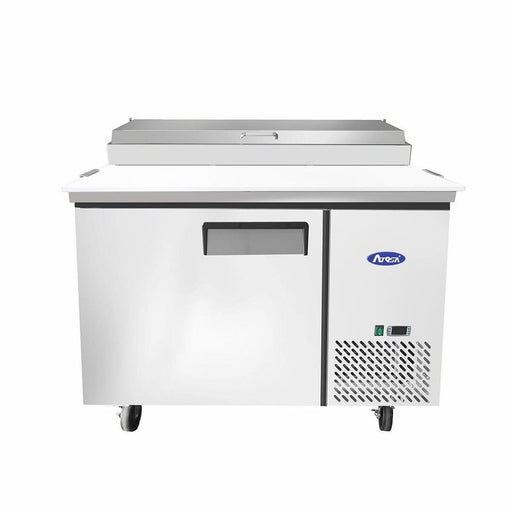
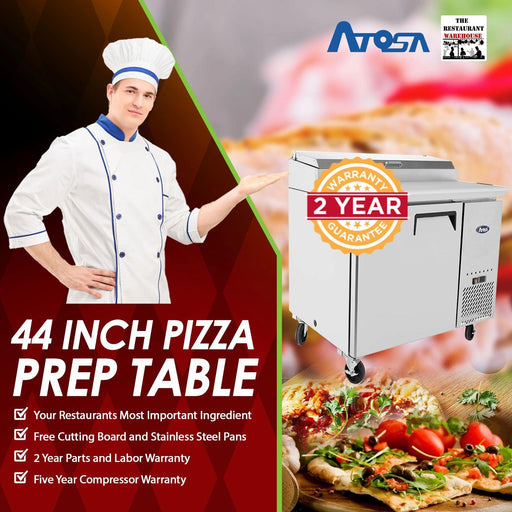
Atosa MPF8201GR 44 inch Pizza Prep Table
Atosa
Original price
$3,737.00
Original price
$3,737.00
-
Original price
$3,737.00
Original price
$3,737.00
Current price
$2,693.00
$2,693.00
-
$2,693.00
Current price
$2,693.00
Atosa USA MPF8201GR Stainless Steel Pizza Prep Table 44-Inch One Door Refrigerator Build pizzas faster and keep toppings cold and organized with ...
View full details
Original price
$3,737.00
Original price
$3,737.00
-
Original price
$3,737.00
Original price
$3,737.00
Current price
$2,693.00
$2,693.00
-
$2,693.00
Current price
$2,693.00
Save 28%
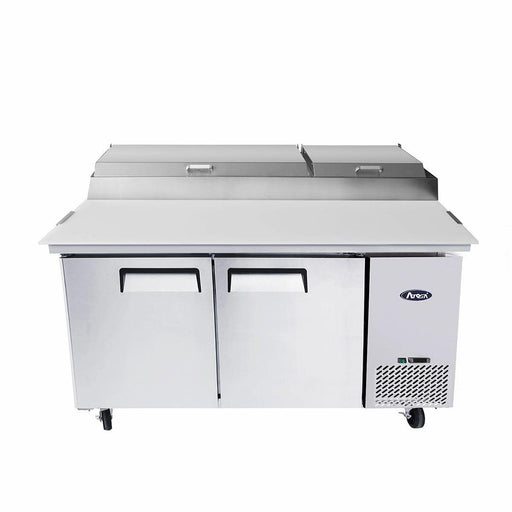
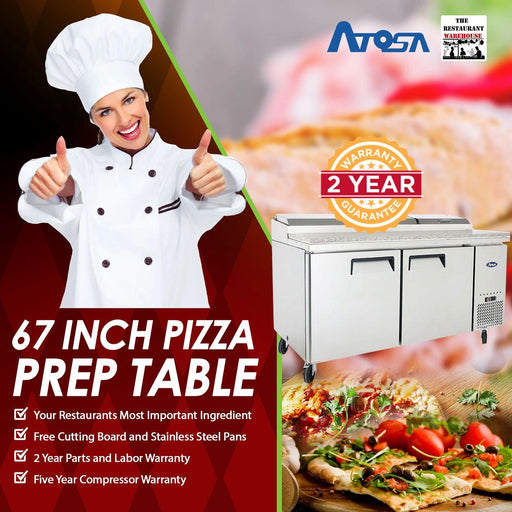
Atosa MPF8202GR 67 inch Pizza Prep Table
Atosa
Original price
$5,262.00
Original price
$5,262.00
-
Original price
$5,262.00
Original price
$5,262.00
Current price
$3,792.00
$3,792.00
-
$3,792.00
Current price
$3,792.00
Atosa MPF8202GR Two Door Pizza Prep Table – 67 Inch The Atosa MPF8202GR 67-inch pizza prep table is built for high-volume pizzerias and sandwich ...
View full details
Original price
$5,262.00
Original price
$5,262.00
-
Original price
$5,262.00
Original price
$5,262.00
Current price
$3,792.00
$3,792.00
-
$3,792.00
Current price
$3,792.00
Save 28%
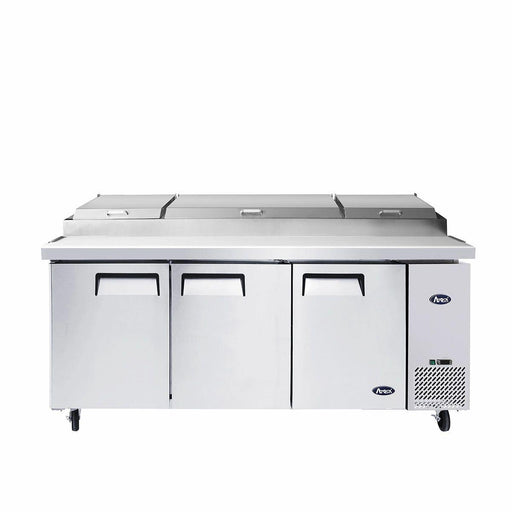
Atosa MPF8203GR 93 Inch Pizza Prep Table
Atosa
Original price
$6,621.00
Original price
$6,621.00
-
Original price
$6,621.00
Original price
$6,621.00
Current price
$4,771.00
$4,771.00
-
$4,771.00
Current price
$4,771.00
Atosa MPF8203GR 93-Inch Pizza Prep Table Refrigerator The Atosa MPF8203GR 93-inch pizza prep table is a high-capacity refrigerated prep station...
View full details
Original price
$6,621.00
Original price
$6,621.00
-
Original price
$6,621.00
Original price
$6,621.00
Current price
$4,771.00
$4,771.00
-
$4,771.00
Current price
$4,771.00
Save 28%
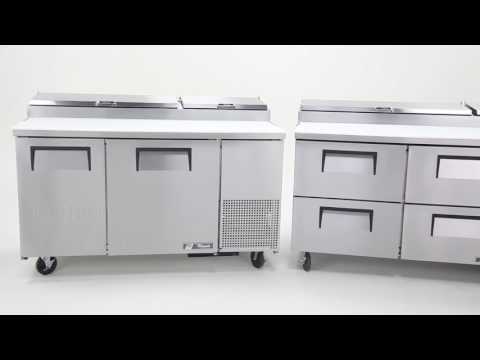

True TPP-AT-44-HC 44-inch Pizza Prep Table
True RefrigerationTrue TPP-AT-44-HC 44 inch Pizza Prep Table True Pizza Prep Table For over 70 years, True has been an industry leader in commercial refrigeration ...
View full details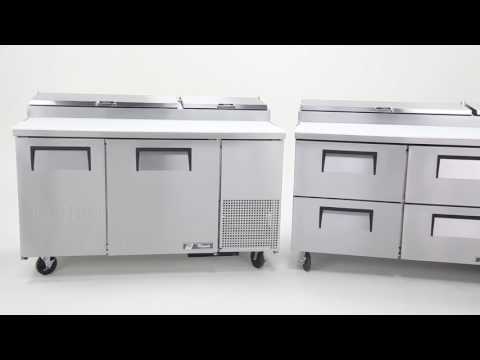

True TPP-AT-60-HC 60 inch Pizza Prep Table
True RefrigerationTrue TPP-AT-60-HC 60-inch Pizza Preparation Refrigerator True Pizza Prep Table For over 70 years, True has been an industry leader in commercial ...
View full details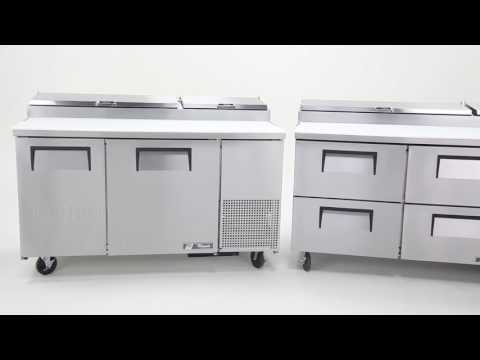

True TPP-AT-67-HC 67 inch Pizza Prep Table
True RefrigerationTrue TPP-AT-67-HC Pizza Preparation Refrigerator True Pizza Prep Table For over 70 years, True has been an industry leader in commercial refriger...
View full details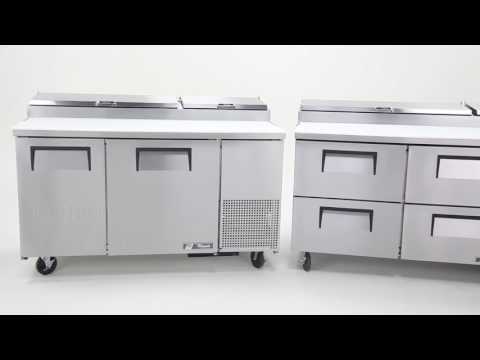

True TPP-AT-93-HC 93 inch Pizza Prep Table
True RefrigerationTrue TPP-AT-93-HC Pizza Preparation Refrigerator True Pizza Prep Table For over 70 years, True has been an industry leader in commercial refriger...
View full details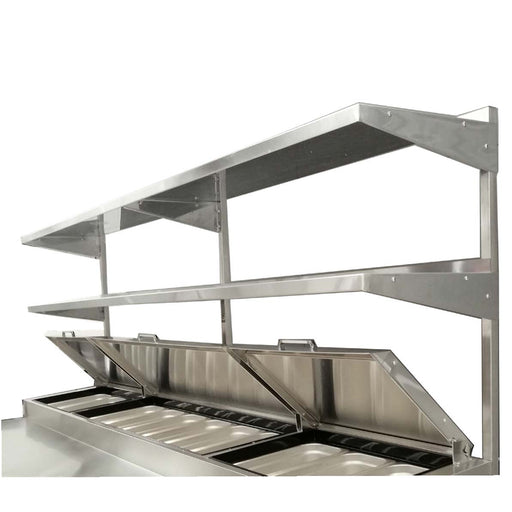
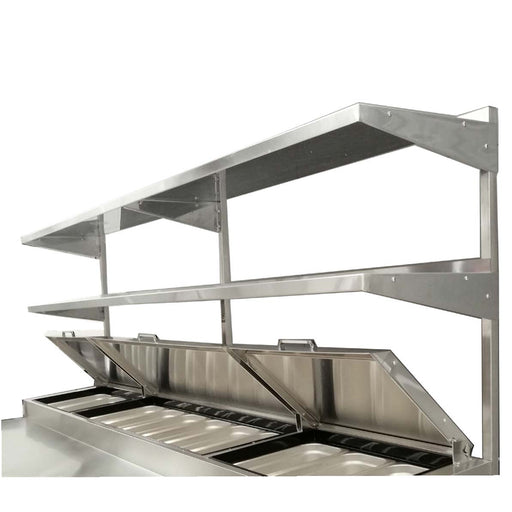
Atosa MROS-44P 44 inch Pizza Prep Table Shelf
Atosa
Original price
$444.00
-
Original price
$444.00
Original price
$444.00
$444.00
-
$444.00
Current price
$444.00
Atosa 44" Pizza Prep Table Double Overshelf Enhance your prep station with the Atosa 44-inch Pizza Prep Table Double Overshelf. Designed to f...
View full details
Original price
$444.00
-
Original price
$444.00
Original price
$444.00
$444.00
-
$444.00
Current price
$444.00
Atosa MROS-67P 67 inch Pizza Prep Table Shelf
Atosa
Original price
$533.00
-
Original price
$533.00
Original price
$533.00
$533.00
-
$533.00
Current price
$533.00
Atosa MROS-67P 67-Inch Pizza Prep Table Double Overshelf Improve organization and workflow with the Atosa MROS-67P 67-inch Pizza Prep Table Do...
View full details
Original price
$533.00
-
Original price
$533.00
Original price
$533.00
$533.00
-
$533.00
Current price
$533.00
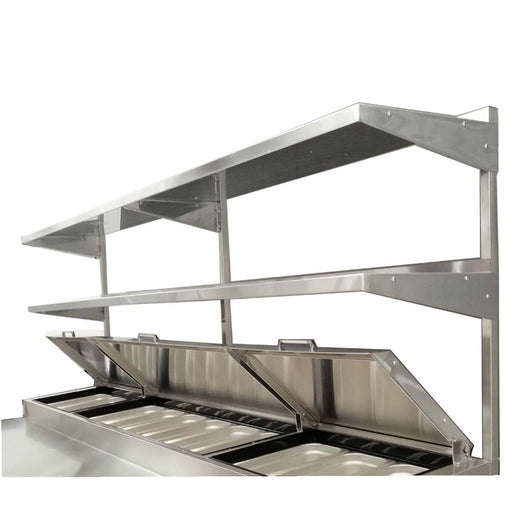
Atosa MROS-93P 93 inch Pizza Prep Table Shelf
Atosa
Original price
$591.00
-
Original price
$591.00
Original price
$591.00
$591.00
-
$591.00
Current price
$591.00
Atosa 93" Pizza Prep Table Double Overshelf Maximize workspace efficiency with the Atosa 93-inch Pizza Prep Table Double Overshelf. Designed ...
View full details
Original price
$591.00
-
Original price
$591.00
Original price
$591.00
$591.00
-
$591.00
Current price
$591.00

Infrico IRT-MPG1490-COMBO 59 inch Granite Pizza Prep Table
InfricoThe Infrico IRT-MPG1490-COMBO 59 inch Granite Pizza Prep Table is engineered for professional pizzerias seeking durability and efficiency. Its expa...
View full details
Infrico IRT-MPG1980-COMBO 78 inch Granite Pizza Prep Table
InfricoThe Infrico IRT-MPG1980-COMBO 80 inch Granite Pizza Prep Table is engineered for professional pizzerias seeking durability and efficiency. Its expa...
View full details
Infrico IRT-MR119EN 119 inch Pizza Prep Table
InfricoThe Infrico IRT-MR119EN is a professional-grade refrigerated pizza prep table featuring a spacious 37.0 cu. ft. capacity with four self-closing, lo...
View full details
Infrico IRT-MR67-GTCOMBO 67 inch Granite Pizza Prep Table
InfricoThe Infrico IRT-MR67-GTCOMBO is a professional-grade 67-inch granite pizza prep table designed for optimal food preparation and storage. It feature...
View full details
Commercial Pizza Prep Tables
A commercial pizza prep table, also called a pizza make table, pizza prep refrigerator, or refrigerated pizza prep station, is the cornerstone workstation of any pizzeria that plans to build pies quickly, hold ingredients at food-safe temperatures, and get pizzas into the oven without wasted motion. The unit combines three things into one cabinet: a refrigerated ingredient rail sized for 1/3-size pans of sauce, cheese, and toppings, an extra-deep polyethylene, marble, or granite work surface (typically 19 to 20 inches deep) sized to stretch and top an 18-inch New York style pie, and a refrigerated base cabinet that stores dough boxes, backup pans, sauce buckets, and pre-portioned toppings behind doors or drawers.
At The Restaurant Warehouse we offer pizza prep tables across three critical sizes (44-inch, 67-inch, 93-inch) plus a matching set of Atosa MROS stainless overshelves. Most units in this category are designed to hold food safely in the 33°F to 41°F range under NSF-7 conditions and ship free to the contiguous 48 states from one of our twelve US warehouses in 1 to 3 business days. Compare Atosa and Infrico head to head below, then click through to the size guide that matches your peak-hour pizza count.
Shop Pizza Prep Tables by Size
| Size | Peak Volume | Ideal Use | Shop |
|---|---|---|---|
| 44" | Up to ~30 pizzas/hr | Cafes, food trucks, ghost kitchens, gluten-free secondary lines | Shop 44" & full guide |
| 67" | 45 to 60 pizzas/hr | The workhorse size for most independent pizzerias | Shop 67" & full guide |
| 93" | 75+ pizzas/hr | High-volume shops, chains, catering, entertainment venues, dual-operator lines | Shop 93" & full guide |
Shopping by brand? Browse our Atosa pizza prep table collection for the three-model MPF lineup with spec sheets, warranty details, and free shipping. Comparing True to alternatives? Start at our True pizza prep table page for a factual value comparison against in-stock Atosa equivalents. Need service parts? See the Atosa pizza prep table parts & manuals for OEM part numbers by model.
What a Pizza Prep Table Actually Does
A commercial pizza prep table is a refrigerated worktable engineered around three integrated components: a refrigerated rail on top that holds 1/3-size stainless pans of sauce, cheese, meats, and vegetables at food-safe temperatures, a heavy polyethylene, marble, or granite work surface running the full width of the unit, and a refrigerated base cabinet with epoxy-coated wire shelves or drawers for dough boxes, sauce buckets, and pre-portioned backup pans. One refrigeration system, one compressor, one thermostat keeps both zones cold. Operators sometimes call this a pizza make table, a pizza make line, or a refrigerated pizza station; the equipment is the same.
The point of the design is workflow. In a properly organized pizza prep table, the pizzaiolo stands in one spot with the cutting board directly in front, reaches forward and up for sauce, mozzarella, pepperoni, mushrooms, peppers, and other toppings from the rail, and reaches down and forward into the base cabinet for backup pans, spare dough boxes, and bulk cheese. Nobody has to walk to the walk-in during a rush. On a busy Friday night, that difference is worth minutes per hour and dollars per shift, and it is measurable on your ticket time report the following week.
How Pizza Prep Tables Differ From Sandwich Prep Tables
A pizza prep table and a sandwich prep table look alike from ten feet away. Both are stainless steel refrigerated worktables with a top rail and a base cabinet. The differences are small but decisive, and using the wrong tool for the job costs you speed, product, and staff morale every service.
| Criteria | Pizza Prep Tables | Sandwich / Salad Prep Tables |
|---|---|---|
| Cutting Board Depth | Extra-deep, typically 19 to 20+ inches | Standard depth, typically 8 to 12 inches |
| Standard Pan Size | Larger 1/3-size food pans | Smaller 1/6-size food pans |
| Rail Design | Raised rail to accommodate deep pans and airflow | Flat or recessed rail for smaller pans |
| Work Surface Options | HDPE polyethylene, marble, or granite | HDPE polyethylene almost exclusively |
| Primary Use | Stretching dough and building 12 to 20 inch pies | Sandwich, wrap, and salad assembly |
| Ergonomics | Broad, sweeping motions for sauce and cheese | Precise, localized moves for pickles, onions, meats |
The most decisive difference is cutting board depth. A large New York style pizza is 18 inches. A pizza prep table gives you a 19 or 20 inch deep board so the dough never hangs off the edge during stretching. A sandwich prep table caps the board depth at about 11 inches, and the moment you start stretching an 18-inch skin the dough drapes over the front edge, picks up contaminants, and falls apart. The 1/3-pan rail matters just as much: pizza toppings move in volume (mozzarella, pepperoni, sauce) so 1/3 pans mean fewer trips to the walk-in for refills. Sandwich rails use 1/6 pans because sandwich menus are ingredient-diverse but per-ticket quantity is low.
Anatomy of a Pizza Prep Table
The Refrigerated Rail
The rail sits at the back of the work surface and holds the pizza topping pans. Most pizza prep tables ship with a full set of stainless 1/3-size pans and an insulated hinged lid that closes over the whole rail when the station is not in active production. The lid drops energy consumption meaningfully during slower afternoon hours and overnight, keeps airborne particles off the toppings, and helps the cabinet hold set point on the pans that face the ambient kitchen air. A well-designed rail holds 6 pans on a 44-inch unit, 9 pans on a 67-inch, and 12 pans on a 93-inch, all in 1/3 size with divider bars that let you sub in 1/6 or 1/9 pans for lower-volume specialty toppings.
The Cutting Board or Work Surface
Three material families dominate pizza prep table work surfaces, each with distinct handling characteristics for dough:
- HDPE polyethylene: The foodservice standard. Food-grade, non-porous, easy to clean, and durable. Susceptible to deep knife cuts over time, and those grooves can harbor bacteria, so boards should be replaced before scarring gets severe. Airflow-dependent rail designs typically cap useful pan depth at approximately 6 inches.
- Marble (Carrara is the classic choice): Naturally stays cool, which artisan pizza makers prefer for slow, careful dough handling. The cool surface means less flour is needed during stretching, which prevents the bitter scorching that excess flour creates when it falls onto a 600°F oven deck. Marble is porous and stains from acidic sauces, so use only pH-neutral cleaners, re-seal the surface every 6 to 12 months, and never cut directly on marble. Lay HDPE on top for cutting.
- Granite: Harder and less porous than marble. The lowest-maintenance natural stone option. Maintains an even lower surface temperature than stainless or marble. The thermal conductivity of granite slows dough warming during stretching, reducing sticking and the need for excess flour. Granite tops typically measure 30mm thick and are designed for a working height of 34 to 36 inches for ergonomic dough stretching. Infrico IRT-MR67-GTCOMBO at $11,499 is the granite premium in our 67-inch guide.
The Refrigerated Base
The base cabinet is the workhorse cold storage under the cutting board. Capacity runs from about 9 cubic feet on a 44-inch unit up to 20+ cubic feet on a 93-inch. This is where dough boxes, sauce buckets, backup topping pans, and bulk cheese blocks live during service. Shelves are almost always epoxy-coated wire that resists corrosion from tomato sauce acidity, and shelves are adjustable to accommodate different dough box sizes and half or full hotel pans. Configuration matters: doors give you large open cabinets that fit bulky dough boxes; drawers give you organized, precise access to portioned toppings and lose less cold air per open. Many operators run a hybrid: drawers on the rail-access side for portioned toppings that swap into the rail during service, doors on the opposite side for bulk dough and sauce.
The Compressor and Condenser
Most modern pizza prep tables use a side-mounted compressor in a front-breathing design. That means the compressor sits on one side of the cabinet but draws intake air and exhausts hot air through a front grille, which lets you install the unit flush against a back wall without starving the compressor of airflow. Front-breathing matters more on a pizza line than almost anywhere else in a commercial kitchen because pizza prep tables routinely sit inches from 500°F+ deck ovens and conveyor ovens. A rear-breathing unit installed against a wall behind a hot oven line will overheat, cycle constantly, and burn out its compressor early. Front-breathing units draw cooler air from the front of the line and last measurably longer in that environment.
Cooling System Taxonomy: Four Designs Compared
The way a refrigerator stays cold is simple. The way a pizza prep table stays cold with the rail lid open during a Friday rush is not. Four cooling architectures are used across the category, each with distinct trade-offs.
| System | How It Works | Best For | Trade-offs |
|---|---|---|---|
| Forced-Air | A fan circulates cold air across and around the pan openings, giving rapid temperature recovery when lids open | High-volume operations with frequent lid-open cycles; the most common design | Moving air can dry delicate fresh toppings over time; slightly higher noise; pan depth capped at about 6 inches |
| Cold-Wall (Conductive) | Refrigerant lines embedded in the rail walls cool by conduction. No fan in the rail. | Vegetable-heavy menus where drying is a concern; overnight energy savings (rail can shut down independently of the base) | Temperatures near the walls can drop low enough to partially freeze delicate items; slower recovery after long lid-open periods |
| Liquid Glycol | Chilled propylene glycol pumps through channels under the pan wells. Frost-free. | High-precision temperature control; accommodates deeper pans up to 8 inches; upscale or open-kitchen formats | Highest initial cost; most complex to service; requires glycol maintenance in addition to standard refrigeration upkeep |
| Single-Cavity | The base cools the rail by convection only, no dedicated rail refrigeration | Very low-volume supplemental use | Inconsistent rail temperature; often base too cold (freezing dough) while rail too warm; spills fall into the base creating sanitation risk; not recommended for primary pizza production |
For most independent pizzerias, forced-air remains the best balance of performance, cost, and serviceability. Every Atosa MPF model in this collection uses a forced-air rail design.
Compare the Best Pizza Prep Tables at The Restaurant Warehouse
Here is the head-to-head across our top eight in-stock pizza prep tables plus the matching overshelves. Prices are current, all units ship free.
| Model | Width | Pans | Doors | Price | Best For |
|---|---|---|---|---|---|
| Atosa MPF8201GR | 44" | 6 | 1 | $2,693 | Best entry-price 44" for cafes, trucks, small shops |
| Atosa MPF8202GR | 67" | 9 | 2 | $3,792 | Our value pick and industry standard for independent pizzerias |
| Infrico IRT-MR67-GTCOMBO | 67" | 9 | 2 | $11,499 | Premium granite-top station for artisan Neapolitan programs |
| Atosa MPF8203GR | 93" | 12 | 3 | $4,771 | Best value in the 93" heavy-volume class |
| Atosa MROS-44P Overshelf | 44" | N/A | N/A | $444 | Stainless overshelf for ticket rail and dry storage above any 44" |
| Atosa MROS-67P Overshelf | 67" | N/A | N/A | $533 | Stainless overshelf for 67" tables |
| Atosa MROS-93P Overshelf | 93" | N/A | N/A | $591 | Stainless overshelf for 93" tables |
If price is the deciding factor, the Atosa MPF8201GR at $2,693 is the fastest way to get a real 44-inch pizza prep table on your line. If you run a typical independent pizzeria between 45 and 60 pies an hour, the Atosa MPF8202GR at $3,792 is the industry standard and our most-shipped 67-inch unit. If you want the granite work surface for a slow-hydration Neapolitan program, the Infrico IRT-MR67-GTCOMBO at $11,499 pairs a full stone top with a two-door refrigerated base. If you break 75 pies an hour or run a dual-operator line, the Atosa MPF8203GR at $4,771 is the best 93-inch value on the page.
How to Choose the Right Pizza Prep Table
Sizing a pizza prep table is a four-step exercise. Work through it in order and you will not buy the wrong equipment.
Step 1: Count Your Peak-Hour Pizzas
Track your hourly pizza count for two to four weeks and find your true peak hour, then add a 20 to 25 percent buffer for seasonal spikes and future growth. As a calibration benchmark, one trained pizzaiolo handles 60 to 90 pizzas per hour on a well-organized station. If your peak hour regularly exceeds 90 pies with a single operator, you need either a larger station, a second station, or both. A 44-inch unit fits up to about 30 pizzas per hour. A 67-inch handles 45 to 60. A 93-inch handles 75 or more, or 60+ per operator with two operators sharing the line.
Step 2: Count the Toppings You Need on the Line
Write out every sauce, cheese, meat, and vegetable your menu uses. Count the ones that must be within arm's reach during service. If the number is 6 or fewer, a 44-inch rail works. If it is 8 to 9, look at 67-inch. If it is 10 to 12+, look at 93-inch. Specialty pizzas that pull from the same base ingredient set do not need dedicated pans; a specialty menu that pulls unique ingredients per pie does.
Step 3: Measure the Footprint and Confirm Oven Clearance
Measure the space on your line where the table will sit. Leave at least 3 inches of rear clearance on rear-breathing units and confirm the door swing on adjacent equipment does not conflict with the pizza prep table's doors or drawers. Critically, verify the table's ambient temperature rating on the spec sheet if you plan to place it near a deck oven. Pizza kitchens run hot; look for a 100°F ambient rating and prefer front-breathing designs when oven proximity is unavoidable.
Step 4: Confirm Electrical and Delivery Access
44-inch and 67-inch pizza prep tables run on a standard 115V/60Hz outlet with a NEMA 5-15P plug. 93-inch units typically also run on 115V but at higher amperage and are strongly recommended on a dedicated 20-amp circuit. Confirm your delivery access can accommodate an LTL freight liftgate. Pizza prep tables ship on pallets 46 to 100 inches wide depending on model.
What to Look For in a Pizza Prep Table
- Pan capacity and layout: match your menu, plan for peak topping counts, and confirm the rail accepts 1/3-size pans with divider bars for 1/6 and 1/9 subs
- Cutting board or work surface: HDPE for standard operations, marble for artisan, granite for premium Neapolitan or long-hydration programs
- Temperature consistency: a digital controller with a lit display and NSF-7 rail compliance so the rail holds 41°F for at least 4 hours with the lid open at 86°F ambient
- Sneeze guard: a hinged, insulated lid that closes over the entire rail during slower periods to reduce cold loss and airborne contamination
- Base storage: refrigerated cabinet sized to hold a full shift of dough boxes, sauce, and backup pans
- Door versus drawer configuration: doors cheaper and larger; drawers give organized precise access with less cold-air loss per open; a hybrid combination is common on high-volume lines
- Mobility: heavy-duty locking casters for cleaning behind and under the line
- Warranty: at minimum 2 years parts and labor with 5 years on the compressor
- Refrigerant and compressor: R290 hydrocarbon refrigerant with a commercial-grade Embraco or equivalent compressor rated for 100°F ambient
- Stainless spec: Type 304 stainless food-contact interior and 400-series exterior, with coved (rounded) interior corners for easy cleaning; galvanized or aluminum back panel is acceptable
- Variable-capacity compressor: modulates output based on real refrigeration demand and can cut energy consumption by up to 40 percent compared to fixed-speed compressors
- Front-breathing design: critical when the unit will sit within a few feet of a deck or conveyor oven
Refrigerant and Efficiency: The R290 Advantage
The type of refrigerant in your pizza prep table matters for both your monthly utility bill and your regulatory exposure over the next decade. Every Atosa MPF model in this collection uses R290 hydrocarbon refrigerant. R290 carries a Global Warming Potential (GWP) of 3 and zero Ozone Depletion Potential. Legacy HFC refrigerants like R404A and R134a carry a GWP of 3,900 or higher, which is more than 1,000 times more climate-impactful per kilogram emitted, and EPA regulations are progressively tightening restrictions on high-GWP refrigerants. Buying R290 today is regulatory future-proofing. Beyond the environmental case, R290's thermodynamic properties translate into real energy savings: the compressor runs for shorter periods and consumes less electricity to hold set point, and R290 units typically cost less to service over their operational life.
Certifications and Warranty Basics
Every pizza prep table sold by The Restaurant Warehouse is NSF-certified for foodservice sanitation, meets the electrical safety standards of UL, ETL, or cETL, and complies with current DOE energy efficiency requirements. For the refrigerated rail specifically, verify NSF-7 compliance on the spec sheet: NSF-7 requires the rail to hold food at 41°F or below for at least 4 hours with the lids wide open in an 86°F ambient. This is the specific benchmark that proves a rail can maintain food safety temperatures in a real kitchen, not just a sealed laboratory.
Warranty terms vary by manufacturer, but the industry standard on pizza prep tables is 2 years parts and labor plus 5 years on the compressor. Compare compressor warranties specifically when cross-shopping brands. The compressor is the most expensive part to replace and the one most likely to fail past year two.
Pizza Prep Table Pricing and Value
Pizza prep tables are priced primarily by width and secondarily by work-surface material. Here is the expected range for a new, in-warranty unit shipped free to the contiguous 48.
- 44-inch: $2,600 to $3,200 (Atosa MPF8201GR $2,693)
- 67-inch: $3,800 to $4,400 for HDPE polyethylene work surface (Atosa MPF8202GR $3,792); $11,000+ for full granite (Infrico IRT-MR67-GTCOMBO $11,499)
- 93-inch: $4,700 to $5,500 (Atosa MPF8203GR $4,771)
- Matching overshelves: $444 to $591 depending on width (Atosa MROS-44P, MROS-67P, MROS-93P)
Buying too big is the most common mistake operators make on a refrigerated pizza table purchase. All units in this collection ship free to the contiguous 48 states with 1 to 3 day delivery from a US warehouse. Financing is available at checkout with same-day soft-pull approval and zero credit impact.
Mise en Place and Workflow at the Pizza Station
The equipment alone does not produce efficient pizza service. The way your team organizes and uses the station determines whether the hardware reaches its potential.
The Three-Zone Board Layout
A three-zone board system divides the cutting board into functional areas that eliminate wasted motion and let two operators share a 93-inch station during peak service. Most pizza makers are right-handed. Starting dough on the left lets you pull the ball, stretch it, and move it to the center for saucing in one fluid motion.
- Left zone (dough and dusting): The dough ball lands here for hand-stretching or rolling. Flour or semolina lives at this end. This zone stays dry and flour-ready throughout service.
- Center zone (sauce and cheese): Once stretched, the skin moves to center for saucing and cheese distribution. The largest pans on the rail should be positioned directly above this zone for fastest access. Use a spoodle to portion sauce. A consistent 4 oz or 6 oz pour every time protects your margins by eliminating over-saucing waste.
- Right zone (toppings and quality control): Specialty toppings, finish ingredients, and the final visual check happen here before the pizza moves to the oven. This is also the handoff point to the oven operator.
This linear flow means the pizza travels one direction, left to right, with no backtracking. During a rush, a second operator can begin stretching a new skin on the left while the first is finishing a pizza on the right, effectively doubling throughput on a single 93-inch station.
Allergen Control on the Rail
The topping rail is also your first line of allergen defense. Allergen-risk toppings belong at the far end of the rail (or in a designated allergen drawer), physically separated from standard toppings and handled with dedicated utensils. Color-coded pan lids and handles reinforce this separation for the whole team. Post a par-level chart at the station marking minimum fill levels per shift. When a pan drops below par, it gets flagged for refill before the rush, not during it. Keep a HACCP temperature log clipped to the station and note corrective actions whenever readings approach 41°F.
Cold Storage Discipline
The rail and the base are not long-term storage; they are working storage. The FDA mandates 41°F or below for refrigerated ready-to-eat foods. The USDA 2-hour rule applies any time perishable ingredients sit above 41°F (1 hour above 90°F, a real risk in a busy pizzeria). Prepped items have a 3 to 4 day refrigerated shelf-life at proper temperature. Hold cheese at 33 to 38°F; whole-block cheese stays fresher longer than pre-grated because pre-grated cellulose anti-caking powder pulls moisture. Use perforated pan inserts for high-moisture toppings (mushrooms, sliced tomatoes, fresh basil, peppers) so condensation drains through to a lower catch pan rather than pooling and accelerating spoilage. Label every pan and dough container with date, time prepped, and initials. First-in first-out at every level.
Pizza Prep Table Setup by Pizza Style
Rail depth, pan count, and base cabinet capacity all change with the pizza style you plan to sell. Match the table to the pie:
- New York-style: 8 to 12 ingredient pans on the rail, base cabinet loaded with cold-fermented dough balls held at 38°F. A 60-inch or 67-inch table handles most single-oven slice shops; 93-inch for high volume.
- Chicago deep-dish: fewer but deeper pans on the rail to hold larger volumes of Italian sausage, vegetables, and chunky tomato. Add pan-storage racks next to the table for the deep-dish pans themselves. A 93-inch table with a deeper rail is worth the footprint.
- California-style: more topping SKUs on the rail (fresh produce, artisanal cheeses, specialty proteins). Prioritize a wider table with a full ingredient rail and tight FIFO rotation on delicate ingredients.
- Detroit and Sicilian pan pizza: a flat work surface wide enough to handle full pans without crowding the rail. 67-inch minimum, 93-inch preferred, plus staging room next to the table.
- Neapolitan: 44-inch or 60-inch is usually sufficient since the topping variety is intentionally limited. Fresh mozzarella needs tight FIFO on the rail with pans changed out throughout service.
Style also drives oven choice — see commercial pizza ovens for the full bake-temperature and oven-format guide by pizza style.
Getting the Most Out of a Pizza Prep Table
Load the Rail Below the Fill Line
Every rail pan has a stamped fill line, usually about two-thirds up. Overfilled pans push product above the cold-air curtain that flows across the rail, and the top layer starts to warm past the 41°F food-safety threshold. Overfilled pans and lids-off operation are the two most common reasons pizza prep tables fail a health inspection. Load below the line, keep the rail lid closed between orders, and use a probe thermometer in the pan (not just the airspace) to spot-check during service.
Pre-Chill Product Before Loading the Rail
The rail is engineered to hold 41°F under NSF-7 conditions, not to pull warm product down to safe temperature. Loading a 70°F bin of mozzarella into a rail will spike rail temperature for hours and put adjacent pans at food-safety risk. Chill in the walk-in first, then transfer to the rail.
Clean the Condenser Coil Every 30 Days
Dust and grease buildup on the condenser coil is the single most common cause of premature compressor failure on commercial pizza prep tables, and coil cleaning is not covered by any warranty. Five minutes a month with a coil brush or shop vacuum prevents the most expensive repair bill you can get on this equipment. In a high-grease pizza kitchen, clean the coil every two to three weeks. Set a recurring calendar reminder.
Watch the Evaporator for Frost Buildup
Frost on the evaporator (the cold-side coil inside the cabinet) is a diagnostic signal that either airflow is restricted (blocked grille, overpacked cabinet) or the defrost cycle has failed. It is not normal operation. If you see frost, verify the defrost cycle is firing at correct intervals, unpack the cabinet to restore airflow around the evaporator, and call for service if it recurs.
Keep Flour Off the Gaskets
Flour and cornmeal are the enemies of pizza prep table door gaskets. When flour sits in the folds of the rubber, it acts like sandpaper and slowly tears the seal, causing slow temperature drift and rising energy bills. Clean gaskets weekly with warm soapy water; skip harsh chemicals. Perform the dollar-bill test monthly: close a dollar bill in the door or drawer seal and tug; if it slides out easily, replace the gasket.
Run FIFO on Dough and Pans
Use first-in first-out for everything in the base and on the rail. Newer dough goes behind older dough. Every container gets a date label. Rail pans rotate at the start of each shift. Operators who skip FIFO commonly throw out 10 to 15 percent of perishable inventory every month.
Ways to Acquire a Pizza Prep Table
Not every operator wants to write a check on day one. The Restaurant Warehouse offers three paths.
Buy outright. The simplest path. Order online, ship in 1 to 3 days, own the table on day one. Right for operators with capital who want the depreciation benefit at tax time.
Finance the purchase. For operators who want to preserve working capital. Fixed monthly payments over 24 to 60 months, with quick approval for most established businesses. See our equipment financing options page.
Rent the equipment. For pop-ups, catering operators, seasonal businesses, and operators who want equipment without a long-term commitment. Rental terms are flexible and include maintenance. See our equipment rental program.
Delivery, Installation, and Lead Time
Every pizza prep table in this collection ships from a US warehouse via LTL freight with liftgate service to the address on your order. Standard transit time is 1 to 3 business days from ship date, tracking provided at every step. Delivery is curbside; the driver lowers the pallet with the liftgate but does not bring the unit inside.
Installation is straightforward: uncrate, level, plug into the specified 115V/60Hz outlet on a dedicated circuit, let the refrigeration settle for at least 4 hours before loading with product, and confirm both base and rail hit their setpoint before service. Most pizza prep tables come factory-set to hit 36°F to 38°F out of the box. Inspect the crate at delivery, note any external damage on the driver's paperwork before you sign, and photograph everything.
Related Equipment for a Pizza Line
Shopping by brand? Browse our Atosa pizza prep table collection for the full MPF lineup with warranty, spec sheets, and free shipping. Comparing True to what actually ships? See our True pizza prep table page for a straight value comparison. Shopping across categories? Cross-shoppers frequently look at sandwich prep tables for cold-side prep on adjacent menu categories.
A pizza prep table is the anchor of the pizza line, but a working pizzeria needs more equipment around it. A quality pizza oven is the obvious companion; deck ovens, conveyor ovens, and countertop ovens each fit different volume and menu profiles. A dough mixer sized to your daily flour throughput saves labor at every morning prep. Dedicated reach-in refrigerators hold bulk dough and pre-portioned toppings so the prep table base stays available for daily operating stock. And a set of extra 1/3, 1/6, and 1/9 stainless pans plus a spare polyethylene cutting board keeps the line moving when one goes out for a deep clean.
For broader kitchen planning, browse our full prep tables selection and our refrigeration collection to round out the cold side of your line.
Pizza Prep Table FAQ
What is a pizza prep table?
A pizza prep table is a refrigerated worktable with a top rail sized for 1/3-size stainless topping pans, an extra-deep 19 to 20 inch cutting board (or marble or granite top) sized for stretching an 18 inch pie, and a refrigerated base cabinet for dough boxes, sauce, and bulk toppings. It is also called a pizza make table, pizza make line, pizza prep refrigerator, or pizza make station.
What temperature should a pizza prep table hold?
Cold ingredients should be held at 33°F to 41°F, safely under the FDA 41°F food-safety threshold. The operational sweet spot for cheese, dough, and meats is 36°F to 38°F. For NSF-7 rated rails, the unit must hold 41°F or below for at least 4 hours with the lid open at 86°F ambient.
How much does a pizza prep table cost?
Expect roughly $2,600 to $3,200 for a 44-inch (Atosa MPF8201GR $2,693), $3,800 to $4,400 for a 67-inch polyethylene (Atosa MPF8202GR $3,792), and $4,700 to $5,500 for a 93-inch (Atosa MPF8203GR $4,771). Granite-top premium units run over $11,000 (Infrico IRT-MR67-GTCOMBO $11,499).
What size pizza prep table should I buy?
67-inch is the industry standard for independent pizzerias running 45 to 60 pies an hour. Choose 44-inch for cafes, food trucks, and secondary gluten-free lines under 30 pies an hour. Choose 93-inch for high-volume shops, chains, catering, and dual-operator lines running 75+ pies an hour. Count your peak-hour pizzas, add a 20 to 25 percent buffer, and size to that number.
How is a pizza prep table different from a sandwich prep table?
The cutting board is deeper (19 to 20 inches versus 8 to 12) so you can stretch an 18 inch pie without dough hanging off the front edge. The rail holds 1/3-size pans instead of 1/6-size pans, which means fewer restocks during service for high-volume ingredients like mozzarella and pepperoni. Some pizza prep tables also offer marble or granite work surfaces for artisan dough handling; sandwich prep tables use polyethylene almost exclusively.
How long does a pizza prep table last?
A pizza prep table that is installed correctly and maintained on a regular schedule will typically last 10 to 15 years. Monthly condenser cleaning is the single biggest driver of compressor longevity and can add 5 to 7 years to unit life. Gasket inspection every 6 months and controller calibration annually round out the preventive maintenance list.
What warranty comes with a pizza prep table?
Standard warranties are 2 years parts and labor plus 5 years on the compressor. Terms vary by manufacturer, so verify on each product page. Register the unit with the manufacturer within 30 days of install to keep extended coverage valid.
What refrigerant do pizza prep tables use?
Modern pizza prep tables use R290 hydrocarbon refrigerant, which carries a Global Warming Potential of 3 versus 3,900+ for legacy R404A and R134a. R290 units cost less to operate, recover faster after door openings, and are regulatory future-proof as EPA phase-out rules tighten on high-GWP refrigerants.
What is NSF-7 and why does it matter?
NSF-7 is the standard that governs refrigerated food display and storage equipment, including the pizza prep rail. It requires the unit to hold food at 41°F or below for at least 4 hours with the lids wide open at 86°F ambient. This is the specific benchmark that proves a rail can maintain food safety temperatures in a real kitchen. Verify NSF-7 compliance on the spec sheet before purchase.
Do I need a dedicated electrical circuit?
44-inch and 67-inch pizza prep tables typically run on a standard 115V/60Hz outlet with a NEMA 5-15P plug and are strongly recommended on a dedicated 15 or 20-amp circuit so the compressor does not share power with an oven, fryer, or dishwasher. 93-inch units typically also run on 115V but at higher amperage and should always be on a dedicated 20-amp circuit. Confirm with your electrician before install.
Marble, granite, or polyethylene? Which work surface should I choose?
HDPE polyethylene is the standard: durable, easy to clean, and cost-effective. Marble stays cool for artisan dough handling but is porous and stains from acidic sauces, so treat it gently and never cut directly on it. Granite is harder and less porous than marble, delivers the coolest work surface for slow-hydration Neapolitan dough, and is the lowest-maintenance stone option; the Infrico IRT-MR67-GTCOMBO at $11,499 is our granite-top pick.
What is a front-breathing compressor and why does it matter for pizza kitchens?
Front-breathing means the compressor draws intake air and exhausts hot air through a grille on the front of the unit, letting you install the table flush against a back wall. This matters more on a pizza line than almost anywhere else because pizza prep tables sit inches from 500°F+ deck ovens. Front-breathing units draw cooler air from the front of the line instead of the pooled hot air at the back, and they run cooler and last longer as a result.
Do these units come with pans and shelves?
Every Atosa MPF pizza prep table ships with a full set of stainless 1/3-size food pans, adjustable epoxy-coated wire shelves, and heavy-duty casters. Confirm what is included on each specific product page before ordering.
Can I use a pizza prep table for sandwiches or salads?
You can, and some operators do use a pizza prep table as a hybrid station for high-volume complex sandwich menus that benefit from the deeper board and larger pan sizes. That said, the pan configuration is optimized for pizza toppings in 1/3-pan volume, not for the 1/6-pan diversity that a dedicated sandwich prep table gives you. If your primary menu is sandwiches, buy the sandwich unit; if it is pizza, buy the pizza unit.
Can I rent a pizza prep table?
Yes. The Restaurant Warehouse rents pizza prep tables to pop-ups, catering operators, seasonal pizzerias, and any operator who wants equipment without a long-term commitment. Rental terms are flexible and include maintenance. See our equipment rental program for details.
Do you carry True Refrigeration pizza prep tables?
Our True pizza prep table page is set up to help operators comparing True to available alternatives. We can quote comparable stocked equipment from Atosa and Infrico that ships in 1 to 3 days and typically costs 30 to 50 percent less than the equivalent True model. Contact us for a specific comparison.