
Worktop Refrigerators
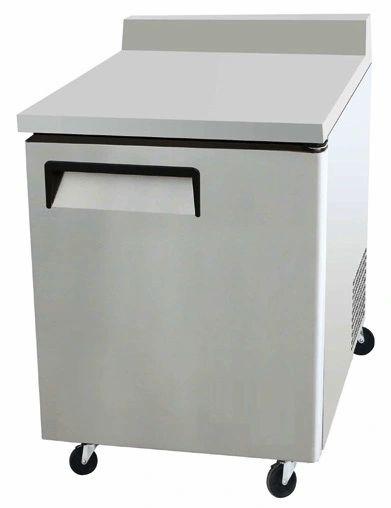
Atosa MGF8408GR 27" Worktop Refrigerator
Atosa
Original price
$2,039.00
Original price
$2,039.00
-
Original price
$2,039.00
Original price
$2,039.00
Current price
$1,470.00
$1,470.00
-
$1,470.00
Current price
$1,470.00
Atosa MGF8408GR Stainless Steel 27-Inch Worktop Refrigerator – ENERGY STAR Rated The Atosa MGF8408GR worktop refrigerator is a space-efficient, d...
View full details
Original price
$2,039.00
Original price
$2,039.00
-
Original price
$2,039.00
Original price
$2,039.00
Current price
$1,470.00
$1,470.00
-
$1,470.00
Current price
$1,470.00
Save 28%
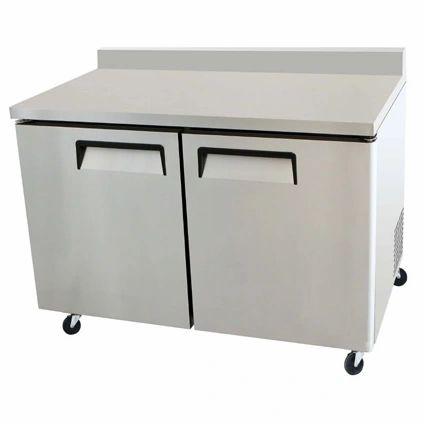
Atosa MGF8409GR 48" Worktop Refrigerator
Atosa
Original price
$2,940.00
Original price
$2,940.00
-
Original price
$2,940.00
Original price
$2,940.00
Current price
$2,119.00
$2,119.00
-
$2,119.00
Current price
$2,119.00
Atosa MGF8409GR 48-Inch Stainless Steel Worktop Refrigerator The Atosa MGF8409GR 48-inch worktop refrigerator is a commercial-grade prep refrigera...
View full details
Original price
$2,940.00
Original price
$2,940.00
-
Original price
$2,940.00
Original price
$2,940.00
Current price
$2,119.00
$2,119.00
-
$2,119.00
Current price
$2,119.00
Save 28%

Atosa MGF8423GR 27-inch Worktop Refrigerator with Drawers
Atosa
Original price
$2,900.00
Original price
$2,900.00
-
Original price
$2,900.00
Original price
$2,900.00
Current price
$2,090.00
$2,090.00
-
$2,090.00
Current price
$2,090.00
Atosa MGF8423GR 27-Inch Worktop Refrigerator with Drawers The Atosa MGF8423GR worktop refrigerator with drawers is designed for fast-paced commer...
View full details
Original price
$2,900.00
Original price
$2,900.00
-
Original price
$2,900.00
Original price
$2,900.00
Current price
$2,090.00
$2,090.00
-
$2,090.00
Current price
$2,090.00
Save 28%
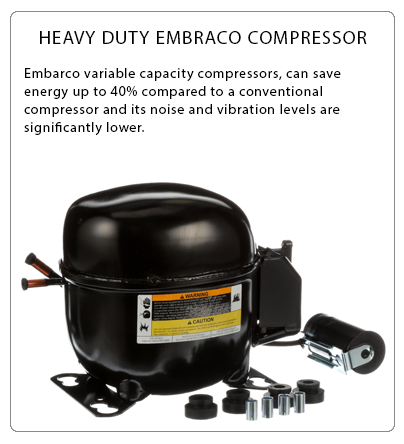
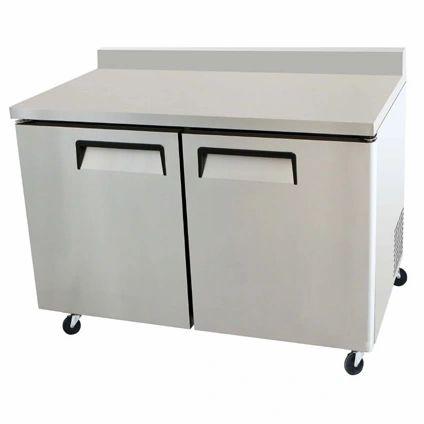
Atosa MGF8410GR 60" Worktop Refrigerator
Atosa
Original price
$3,558.00
Original price
$3,558.00
-
Original price
$3,558.00
Original price
$3,558.00
Current price
$2,564.00
$2,564.00
-
$2,564.00
Current price
$2,564.00
Atosa MGF8410GR 60-Inch Stainless Steel Worktop Refrigerator The Atosa MGF8410GR 60-inch worktop refrigerator is a commercial-grade prep refrigera...
View full details
Original price
$3,558.00
Original price
$3,558.00
-
Original price
$3,558.00
Original price
$3,558.00
Current price
$2,564.00
$2,564.00
-
$2,564.00
Current price
$2,564.00
Save 28%


Atosa MGF44GR 44-inch Worktop Refrigerator
Atosa
Original price
$3,300.00
Original price
$3,300.00
-
Original price
$3,300.00
Original price
$3,300.00
Current price
$2,378.00
$2,378.00
-
$2,378.00
Current price
$2,378.00
Atosa MGF44GR 44-Inch Worktop Refrigerator The Atosa MGF44GR 44-inch worktop refrigerator is a space-efficient commercial prep refrigerator des...
View full details
Original price
$3,300.00
Original price
$3,300.00
-
Original price
$3,300.00
Original price
$3,300.00
Current price
$2,378.00
$2,378.00
-
$2,378.00
Current price
$2,378.00
Save 28%


Atosa MGF67GR 67-inch Worktop Refrigerator
Atosa
Original price
$4,300.00
Original price
$4,300.00
-
Original price
$4,300.00
Original price
$4,300.00
Current price
$3,099.00
$3,099.00
-
$3,099.00
Current price
$3,099.00
Atosa MGF67GR 67-Inch Worktop Refrigerator The Atosa MGF67GR 67-inch worktop refrigerator is a high-capacity, commercial-grade refrigeration so...
View full details
Original price
$4,300.00
Original price
$4,300.00
-
Original price
$4,300.00
Original price
$4,300.00
Current price
$3,099.00
$3,099.00
-
$3,099.00
Current price
$3,099.00
Save 28%
Choose a Worktop Refrigerator Around Your Station
The right worktop refrigerator should fit the way your staff prepares food, not simply the empty space along a wall. Think about what happens at the station, which ingredients need refrigeration, and how often staff will reach into the cabinet during service.
A worktop can serve a preparation area, sandwich assembly station, bakery, café, or another operation that needs chilled storage beneath a working surface. It may also complement a larger reach-in: bulk inventory stays in the main refrigerator while ingredients needed at the station remain close at hand.
Start with three questions: What will you do on the surface? What will you store below it? Can staff access both without blocking another task? Those answers are more useful than choosing by exterior width alone.
What Is a Worktop Refrigerator?
A worktop refrigerator is a refrigerated cabinet with a top intended for the working uses specified by its manufacturer. It brings storage and workspace together, but the refrigerated cabinet does not mean the top itself is a chilled food-holding surface.
Do not confuse a flat worktop with a refrigerated ingredient rail or pan-well prep table. Those are different arrangements for holding and accessing ingredients. Likewise, use an appropriate cutting board for cutting tasks rather than assuming the cabinet top should serve as one.
Backsplash design, top construction, storage layout, controls, and included accessories vary by model. Compare the actual specification sheet rather than assuming every refrigerator described as a “prep refrigerator” has the same features.
Worktop, Undercounter, Prep Table, or Chef Base?
Choose the cabinet format that solves the station’s main problem. Similar-looking equipment can have different installation requirements and intended uses.
| Equipment | Start here when you need… | What to check |
|---|---|---|
| Worktop refrigerator | A working surface with refrigerated storage below | Usable top area, backsplash, storage layout, and permitted surface use |
| Undercounter refrigerator | Refrigeration beneath an existing counter | Exact height and depth, ventilation, access, and whether the model suits that installation |
| Sandwich prep table | Refrigerated ingredient-pan access for assembly | Pan configuration, preparation area, cabinet storage, and menu fit |
| Chef base | Refrigeration beneath supported cooking equipment | Manufacturer-approved equipment load, heat protection, and installation requirements |
| Reach-in refrigerator | More vertical refrigerated storage | Shelf layout, container fit, aisle access, and placement relative to the station |
A worktop is not automatically a substitute for a chef base. Do not place a griddle, fryer, charbroiler, or other heavy or heat-producing appliance on it unless the refrigerator manufacturer expressly permits that equipment and installation.
Size the Storage Before Choosing the Width
List the ingredients and containers that need to be inside the cabinet during a busy service period. Include packaged ingredients, covered food pans, bowls, and larger containers rather than considering only the cabinet’s advertised capacity.
Next, think about replenishment. A station supplied frequently from a nearby reach-in may need a different storage arrangement from one expected to hold an entire service period’s ingredients. Larger is not automatically better if the extra width restricts the aisle or displaces essential equipment.
Check internal dimensions, shelf adjustment, door opening, and drawer compatibility against the containers you actually use. A container that fits inside an empty cabinet still needs enough room to slide out without moving everything around it.
Compare Atosa Worktop Refrigerator Sizes
The collection includes the following Atosa models. Widths below are nominal shopping labels, not installation measurements; use each product’s current specification sheet for exact dimensions and clearances.
| Nominal width | Model | Selection point |
|---|---|---|
| 27 inches | Atosa MGF8408GR | Compare when a narrow cabinet suits the station |
| 27 inches | Atosa MGF8423GR with drawers | Compare drawer access and organization at the same nominal width |
| 44 inches | Atosa MGF44GR | Include this option when comparing the available floor space |
| 48 inches | Atosa MGF8409GR | Compare the work area and storage arrangement with the 44-inch option |
| 60 inches | Atosa MGF8410GR | Consider when the station needs a wider working surface |
| 67 inches | Atosa MGF67GR | Check whether the additional width fits without restricting access |
Do not stop at width. Measure cabinet depth, the working-surface height, and overall height including any backsplash. Check the delivery route as well as the final location: doorways, turns, thresholds, and access to the preparation area all matter.
Doors Versus Drawers
Door-style storage is worth comparing when you need flexibility for different container shapes and shelf arrangements. Check shelf spacing and the opening itself, especially if your station uses tall or bulky containers.
Drawers can make it easier to assign ingredients to specific locations and access them without reaching to the back of a shelf. The collection’s MGF8423GR provides a drawer option to compare, but pan compatibility and usable interior space should be confirmed for that exact model.
Neither arrangement is automatically the higher-capacity or better-performing choice. Consider how far doors or drawers extend into the aisle, where staff stand while opening them, and whether access conflicts with an adjacent refrigerator or work station.
Plan the Installation, Not Just the Footprint
A refrigerator that fits on a floor plan may still be awkward to use or service. Before ordering, review the complete placement with these checks:
- Working height: Compare the actual surface height with neighboring counters and the tasks performed there.
- Backsplash fit: Check overall height and how the backsplash relates to shelves, outlets, wall fixtures, and nearby equipment.
- Access: Allow room for doors or drawers to open and for staff to remove containers safely.
- Airflow and heat: Follow the model’s ventilation requirements and placement instructions, including separation from heat sources.
- Electrical supply: Confirm voltage, receptacle, circuit requirements, and connection location from the actual model documentation.
- Service access: Keep the manufacturer’s required access to components and cleaning areas available.
If a model has casters, account for them when checking height and follow the installation instructions for positioning and securing the unit. Do not use a generic category height or clearance figure in place of the model specifications.
Worktop Refrigerators in Food Trucks and Small Kitchens
In a tight kitchen, a preparation surface above refrigerated storage can reduce the need for separate pieces of equipment. The benefit depends on placement: the cabinet should support the cooking and service flow rather than create a bottleneck.
For a food truck, plan the refrigerator alongside cooking equipment, ingredient replenishment, preparation, and the service window. Check whether an open door or drawer would block the aisle and whether staff can work at the surface while another person accesses storage.
Mobile installation requires additional checks. Confirm the manufacturer’s suitability requirements, securing method, electrical supply, operating environment, and applicable local requirements before selecting a unit. A refrigerator’s compact size alone does not establish that it is suitable for a food truck.
For the broader equipment layout, explore our food truck equipment collection. Use the worktop as one part of the station plan, not as a reason to overlook the rest of the installation.
Worktop Refrigeration for Cafés and Bar Service
A café or bar may need refrigerated food storage, beverage storage, preparation space, or some combination of these. Decide which job the cabinet must perform before treating a kitchen worktop and an underbar refrigerator as interchangeable.
Check the exact counter height, available depth, backsplash arrangement, and access needed during service. If the cabinet will sit beneath an existing counter, make sure the planned installation follows the manufacturer’s instructions.
When the primary requirement is beverage service rather than a preparation surface, compare bar refrigeration. When it is chilled ingredients at a food-preparation station, compare the worktop’s storage layout with the containers and tasks involved.
Compare the Full Purchase Cost
The purchase price is only one part of selecting a refrigerator. Compare the equipment, delivery arrangements, installation work, included accessories, maintenance access, and written warranty terms for the actual unit.
If you are weighing a used refrigerator against a new one, inspect door seals, hinges, drawer movement, interior surfaces, corrosion, and available service history. Confirm that the cabinet can be evaluated in operation and that any warranty or service support is documented. A lower asking price is not enough to establish the better overall choice.
For any model, compare available energy information and verify certification claims against the exact model number. Do not assume that every cabinet in a brand or size range has the same energy rating, features, or operating cost.
Want to consider alternatives to paying the full purchase price at once? Review restaurant equipment financing and lease-to-own options or restaurant equipment rental, then ask about availability and terms for the equipment you need.
Keep the Cabinet Organized and Accessible
Give frequently used ingredients defined locations and arrange containers so staff can retrieve them without unnecessary handling. Keep the manufacturer’s internal air paths clear rather than packing every available gap.
Include surfaces, door seals, drawer tracks where fitted, and accessible cleaning areas in the routine maintenance plan. Use the cleaning methods and service intervals specified for the model, including its condenser-care instructions.
Monitor food-storage temperatures under your food-safety procedures rather than relying only on how cold the cabinet feels. A damaged seal, obstructed airflow, or an access problem is easier to address when staff notice it early.
Worktop Refrigerator Questions
Is the worktop itself refrigerated?
The cabinet below provides refrigerated storage; a standard worktop should not be treated as a chilled ingredient-holding surface. If you need refrigerated pan access above the cabinet, compare an appropriate prep-table configuration.
What is the difference between a worktop and an undercounter refrigerator?
A worktop provides a surface intended for the manufacturer’s specified working uses, while an undercounter refrigerator is selected for placement beneath a counter. Exact designs can overlap, so compare the individual model’s top, height, ventilation, and installation instructions.
How tall is a commercial worktop refrigerator?
There is no single height to use for every model. Check both the working-surface height and overall height, including any backsplash and the specified legs or casters.
Which size should I choose?
Choose around your containers, inventory needs, working area, and installation space. The Atosa models listed above span nominal widths from 27 to 67 inches; confirm exact dimensions before ordering.
Are drawers better than doors?
Drawers can suit organized ingredient access, while a door-and-shelf layout may better accommodate a changing mix of containers. Compare actual usable space, container compatibility, and aisle clearance rather than assuming one arrangement is always better.
Can a worktop refrigerator replace a sandwich prep table?
Only when the station does not need the prep table’s specialized ingredient-pan arrangement. A flat surface with refrigerated storage below serves a different function from an integrated refrigerated pan rail.
Can I put cooking equipment on top?
Do not assume a worktop supports heavy or heat-producing appliances. Confirm explicit manufacturer approval for the intended equipment and installation, or compare a properly specified chef base.
Can I use one in a food truck?
That depends on the exact model and installation. Verify mobile-use suitability, secure placement, electrical supply, operating conditions, and local requirements before purchase.
Find the Right Refrigerator for Your Kitchen
Tell us what you prepare, the space you have available, and whether you prefer doors or drawers. We can help you narrow the worktop options and identify the model details to check before ordering.
Still comparing formats or brands? Browse all commercial refrigerators, or review Atosa versus True, Atosa versus Turbo Air, Atosa versus Beverage-Air, and Atosa versus Traulsen.