
Milk Cooler


Atosa AMC-3401 34-inch Milk Cooler-Single Access
Atosa
Original price
$3,700.00
Original price
$3,700.00
-
Original price
$3,700.00
Original price
$3,700.00
Current price
$2,666.00
$2,666.00
-
$2,666.00
Current price
$2,666.00
Atosa AMC-3401 34-Inch Single-Sided Milk Cooler The Atosa AMC-3401 34-inch Milk Cooler is engineered for restaurants, cafés, bakeries, school...
View full details
Original price
$3,700.00
Original price
$3,700.00
-
Original price
$3,700.00
Original price
$3,700.00
Current price
$2,666.00
$2,666.00
-
$2,666.00
Current price
$2,666.00
Save 28%

Atosa AMC-3402 34-inch Milk Cooler-Double Access
Atosa
Original price
$5,700.00
Original price
$5,700.00
-
Original price
$5,700.00
Original price
$5,700.00
Current price
$4,107.00
$4,107.00
-
$4,107.00
Current price
$4,107.00
Atosa AMC-3402 34-Inch Double-Sided Milk Cooler The Atosa AMC-3402 34-inch Milk Cooler is built for restaurants, cafés, school cafeterias, an...
View full details
Original price
$5,700.00
Original price
$5,700.00
-
Original price
$5,700.00
Original price
$5,700.00
Current price
$4,107.00
$4,107.00
-
$4,107.00
Current price
$4,107.00
Save 28%


Atosa AMC-4901 9-inch Milk Cooler-Single Access
Atosa
Original price
$4,500.00
Original price
$4,500.00
-
Original price
$4,500.00
Original price
$4,500.00
Current price
$3,243.00
$3,243.00
-
$3,243.00
Current price
$3,243.00
Atosa AMC-4901 49-Inch Single-Sided Milk Cooler The Atosa AMC-4901 49-inch Milk Cooler is designed for restaurants, cafés, convenience stores...
View full details
Original price
$4,500.00
Original price
$4,500.00
-
Original price
$4,500.00
Original price
$4,500.00
Current price
$3,243.00
$3,243.00
-
$3,243.00
Current price
$3,243.00
Save 28%


Atosa AMC-4902 49-inch Milk Cooler-Double Access
Atosa
Original price
$6,400.00
Original price
$6,400.00
-
Original price
$6,400.00
Original price
$6,400.00
Current price
$4,612.00
$4,612.00
-
$4,612.00
Current price
$4,612.00
Atosa AMC-4902 49-Inch Double-Sided Milk Cooler The Atosa AMC-4902 49-inch Milk Cooler is engineered for busy restaurants, cafeterias, and food...
View full details
Original price
$6,400.00
Original price
$6,400.00
-
Original price
$6,400.00
Original price
$6,400.00
Current price
$4,612.00
$4,612.00
-
$4,612.00
Current price
$4,612.00
Save 28%

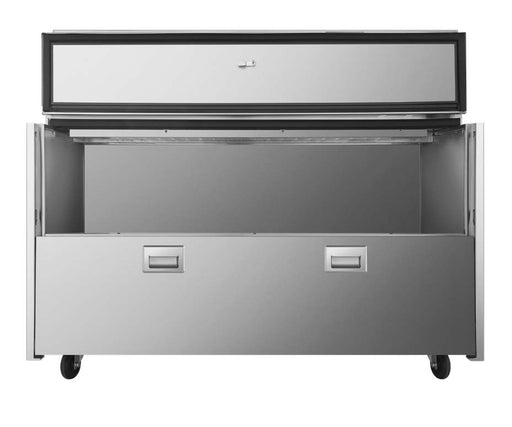
Atosa AMC-5801 58-inch Milk Cooler-Single Access - 16 crate capacity
Atosa
Original price
$3,747.00
-
Original price
$3,747.00
Original price
$3,747.00
$3,747.00
-
$3,747.00
Current price
$3,747.00
Atosa AMC-5801 58-Inch Single-Sided Milk Cooler The Atosa AMC-5801 58-inch Milk Cooler is built for schools, restaurants, cafeterias, and hig...
View full details
Original price
$3,747.00
-
Original price
$3,747.00
Original price
$3,747.00
$3,747.00
-
$3,747.00
Current price
$3,747.00


Atosa AMC-5802 58-inch Milk Cooler-Double Access
Atosa
Original price
$7,200.00
Original price
$7,200.00
-
Original price
$7,200.00
Original price
$7,200.00
Current price
$5,188.00
$5,188.00
-
$5,188.00
Current price
$5,188.00
Atosa AMC-5802 58-Inch Double-Sided Milk Cooler The Atosa AMC-5802 58-inch Milk Cooler is engineered for high-volume foodservice operations t...
View full details
Original price
$7,200.00
Original price
$7,200.00
-
Original price
$7,200.00
Original price
$7,200.00
Current price
$5,188.00
$5,188.00
-
$5,188.00
Current price
$5,188.00
Save 28%

Choose a Milk Cooler Around Your Service Line
A school milk cooler has a different job from a general-purpose refrigerator. It keeps packaged cartons organized in crates and accessible during a concentrated serving period. The right choice depends on how much milk you need between replenishment runs, where people approach the cabinet and how staff will load it.
Start with your busiest breakfast or lunch period, not simply your total enrollment or daily customer count. Estimate the cartons needed before staff can restock, then compare that quantity with your supplier’s crate arrangement. A cabinet that handles a whole delivery may be larger than the space or service line requires; a smaller cabinet may work when nearby refrigerated stock and reliable replenishment are available.
This collection contains six Atosa AMC models. The 34-inch pair holds eight crates, the 49-inch pair holds twelve and the 58-inch pair holds sixteen. Each pair gives you a choice of single- or double-sided access without changing its listed crate capacity.
Atosa Milk Cooler Model Comparison
Use the actual exterior dimensions to check the installation. Atosa lists the following capacities for 13-by-13-inch milk crates; a different crate size or package arrangement can change what fits.
| Model | Access | Milk-crate capacity | Width × depth × height |
|---|---|---|---|
| AMC-3401 | Single-sided | 8 crates | 34 × 32⅛ × 47⅛ inches |
| AMC-3402 | Double-sided | 8 crates | 34 × 34¼ × 47⅛ inches |
| AMC-4901 | Single-sided | 12 crates | 49 × 32⅛ × 47⅛ inches |
| AMC-4902 | Double-sided | 12 crates | 49 × 34¼ × 47⅛ inches |
| AMC-5801 | Single-sided | 16 crates | 58 × 32⅛ × 47⅛ inches |
| AMC-5802 | Double-sided | 16 crates | 58 × 34¼ × 47⅛ inches |
Dimensions and crate ratings above follow Atosa’s AMC-series specification sheet. Confirm current model specifications before finalizing a layout or ordering, particularly when replacing an older unit.
Single-Sided or Double-Sided Access?
Choose single-sided access when one service face fits the operation. It can suit a perimeter station or a line where customers approach from one direction, provided the required ventilation and service access remain available. A single-sided cabinet is not permission to push the unit flush against a wall.
Double-sided access is useful when the layout genuinely needs access from opposing sides. Examples include a central serving island or a station where staff can replenish without using the same face as the customer queue. Walk through that arrangement before purchasing: both sides need usable working space, and a second access point is only helpful if it does not create crossing traffic.
The double-access models are 34¼ inches deep compared with 32⅛ inches for single-access versions. At each width, both versions have the same listed crate capacity. Choose double access for the workflow, not because you expect it to hold more milk.
For school installations, review reach, supervision and accessibility requirements with the people responsible for the serving area. Cabinet height alone does not establish that a particular layout is appropriate for every student or user.
Translate Crate Capacity Into Your Actual Milk Supply
An eight-crate cooler does not have one universal carton count. The usable quantity depends on carton size, the supplier’s packing pattern, crate dimensions and the permitted loading arrangement. Ask your milk supplier how many cartons are in the crates you actually receive.
Use a practical sizing calculation: crates needed between replenishment runs × cartons in your actual crate arrangement gives a planning quantity for that service window. Check the result against the manufacturer’s loading instructions rather than assuming every carton or bottle format packs identically.
Include the mix of products you serve. Separate crate positions may be needed for different milk types or other packaged beverages. Maintain the loading and airflow arrangement rather than crowding loose containers into every remaining gap. Plan accessible stock rotation so older eligible product is used first without concealing dates or damaged packaging.
If a station needs more volume than the display cabinet can hold, compare a replenishment plan with additional commercial refrigerator storage. Do not leave reserve milk unrefrigerated beside the cooler while waiting for space.
Forced-Air Refrigeration and Temperature Checks
The AMC models in this collection use top-mount forced-air refrigeration and a digital temperature controller. They are not presented here as cold-wall models. Keep the ventilation paths and loading arrangement clear so the cabinet can operate as intended.
Atosa’s linked specification sheet recommends a refrigerator setting between 35°F and 38°F for food preservation. That recommendation is a setpoint guideline, not proof that every carton is at the correct temperature during a busy service period. Follow the current unit instructions, applicable food-safety requirements and your operation’s temperature-monitoring procedures.
Check temperatures with an appropriate method under actual service conditions. Repeated openings, replenishment and the installation environment all belong in that assessment. If milk cannot be maintained at its required holding temperature, follow your food-safety procedure and arrange qualified equipment service.
The manufacturer’s manual identifies these coolers for packaged products. Use them for the intended storage and display application, not as bulk dairy tanks, dispensers or equipment for rapidly cooling warm milk. Load properly chilled product and do not treat a cabinet’s available thermostat range as a food-safety target.
Construction That Supports Crate Handling
Atosa lists stainless steel interiors and exteriors, heavy-duty reinforced floors and dunnage racks across this series. The racks support the intended loading arrangement; retain them and follow the equipment instructions rather than treating the cabinet as an unrestricted bin.
The series also lists metal handles, standard door locks, snap-in gaskets and a floor drain with a plug. Include these details when comparing how staff will secure the cabinet, inspect seals and manage cleaning. A lock does not replace supervision or the site’s access procedures.
The current linked series sheet lists four-inch casters for all six models. Casters help with positioning and cleaning access, but they do not make the cooler a cart for moving loaded stock between buildings. Follow the manufacturer’s handling instructions, secure the unit as required and protect the electrical connection.
Measure the Location and Delivery Route
Measure more than the cabinet’s width. Check the depth for the chosen access style, the room needed to open and use the access panels, staff loading space and the paths used by customers. Do not consume a required aisle or emergency route to fit a larger cooler.
Atosa’s manual calls for a cool, well-ventilated installation away from heat sources and direct sunlight. Obtain the current model’s clearance requirements before placing it in a tight recess or incorporating it into a serving line. The exterior dimensions in the comparison table do not include the whole working area around the unit.
Check the delivery route before ordering: exterior access, thresholds, interior doorways, corners, elevators and final placement. Confirm packed shipment dimensions and unloading arrangements separately. A cooler that fits its intended position may still need a different route through the building.
Electrical Requirements and Installation Planning
The linked series specifications list 115V, 60Hz, single-phase power and a NEMA 5-15P plug for all six models. Rated current is 2.2 amps for the two 34-inch units and 3.0 amps for the 49- and 58-inch units.
Have the available electrical supply checked against the current nameplate and installation instructions. Do not assume an outlet is suitable because the plug fits, and do not plan the installation around an extension cord. Place the unit so routine operation and cleaning do not strain or damage the supply cable.
The series uses R290 refrigerant. Leave refrigeration-system work to qualified technicians and follow the safety instructions for the specific unit. Before stocking, complete the required setup and confirm that the cooler is operating at the appropriate conditions.
Cleaning, Gaskets and Condenser Care
Build cleaning around the school or foodservice operation’s sanitation procedures and the equipment manual. Address spilled milk promptly, protect the remaining product and move it to suitable refrigerated storage when necessary. Disconnect power before cleaning operations as directed by Atosa.
Use suitable cleaning products and non-abrasive methods for stainless surfaces. Clean the access areas and inspect gaskets so doors close properly. Keep labels, packaging and cleaning materials out of ventilation paths, and reinstall any removed racks correctly before loading.
A floor drain with a plug is a listed feature, but that does not establish that the entire cabinet can be pressure-washed. Follow the manufacturer’s cleaning method and protect electrical components. Keep the condenser maintained and have damaged seals, abnormal temperatures or persistent operational problems assessed rather than simply changing the controller setting.
For replacement components, use the model and serial number to confirm compatibility through our Atosa parts collection. Refer to the AMC Milk Coolers Manual for equipment-specific instructions.
Compare Purchase Cost With Operational Fit
Start with the capacity and access configuration you need, then compare the current product prices. Consider delivery, electrical preparation, placement, routine care and staff handling along with the purchase price. A larger cabinet is not automatically the better value if it obstructs service or holds far more than the station needs.
If your school or institution requires an energy-efficiency certification, rebate qualification or a particular specification, verify the exact model against the program’s current requirements before ordering. Do not assume every commercial milk cooler has the same certification.
Review restaurant equipment financing if you want to explore payment options. You can also ask about equipment rental options, with model eligibility, availability and agreement terms confirmed for the particular equipment.
Milk Cooler Questions
What is a commercial milk cooler?
A commercial milk cooler is a refrigerated cabinet designed for organized access to packaged milk and similar approved packaged products. The Atosa AMC models in this collection accommodate milk crates and offer single- or double-sided access for school cafeterias and foodservice stations.
How many milk crates can these Atosa coolers hold?
The 34-inch models are rated for eight crates, the 49-inch models for twelve and the 58-inch models for sixteen. Those ratings use 13-by-13-inch milk crates; confirm the fit of your actual crates and follow the manufacturer’s loading instructions.
Does double-sided access provide more capacity?
No. At each width, the single- and double-access versions have the same listed crate capacity. Double-sided access changes how you reach the product and increases the cabinet depth from 32⅛ to 34¼ inches.
How many half-pint cartons will fit?
There is no single carton count that applies to every packing arrangement. Confirm how many cartons fit your supplier’s actual crates, then compare the needed crate quantity with the cooler’s rated capacity and permitted loading arrangement.
What temperature should I set an Atosa milk cooler to?
The linked Atosa series specification sheet recommends a setting between 35°F and 38°F for food preservation. Follow the current equipment instructions and applicable food requirements, and verify product holding temperatures rather than relying only on the controller display.
Are these forced-air or cold-wall milk coolers?
The six AMC models shown here use top-mount forced-air refrigeration with digital temperature control. They are not listed as cold-wall models.
Do I need different electrical service for the larger models?
All six are listed for 115V, 60Hz, single-phase service with a NEMA 5-15P plug. Rated current is 2.2 amps for the 34-inch models and 3.0 amps for the 49- and 58-inch models; have the actual supply checked against the current unit requirements.
Can I use a milk cooler for unpackaged food or warm milk?
The manufacturer’s manual specifies packaged products for storage and display. Do not assume these cabinets are suitable for exposed food, bulk liquid storage or rapid cooling of warm milk; confirm the intended application and load properly chilled products.