

Sink Smart – Choosing the Perfect Commercial Kitchen Hand Wash Sink
Why Commercial Kitchen Hand Wash Sinks Are Critical for Food Safety Success
Why Hand Sinks Are the Unsung Heroes of Food Safety
Picture this: your kitchen is humming along perfectly. Orders are flying out, customers are happy, and then disaster strikes. A health inspector walks in and finds your staff washing their hands in the prep sink. Game over.
Your commercial kitchen hand wash sink might not be the star of your kitchen, but it's absolutely the MVP of food safety. While your fancy new grill gets all the attention, that humble hand sink is quietly preventing the kind of contamination that could shut you down faster than you can say "foodborne illness."
The science backs this up. The CDC reports that proper hand hygiene can slash foodborne illness rates by up to 50%. That's not just a nice-to-have statistic - that's the difference between a thriving business and a closed one. When your team washes their hands correctly and frequently, they're actively minimizing cross-contamination before it becomes a problem.
Think about all those critical moments throughout a shift. Your cook finishes breaking down chicken and needs to prep vegetables. Your server clears a messy table and heads back to grab plates. Someone returns from a bathroom break. Each of these moments is a potential disaster waiting to happen - or a victory for food safety, depending on whether you've made handwashing convenient and accessible.
Here's the thing about employee health: one sick staff member can take down your entire team faster than dominoes. Regular handwashing at dedicated stations isn't just about the food - it's about keeping your workforce healthy during your busiest periods.
Don't underestimate the customer confidence factor either. Today's diners are savvy about food safety. They notice when staff use proper handwashing stations, and it builds trust in your operation. For a complete approach to kitchen safety, our Commercial Kitchen Safety Checklist covers all the bases.
The High Cost of Cutting Corners
We've heard this story too many times: "We'll save money by using the prep sink for handwashing." Then the health inspector shows up, and suddenly that "savings" becomes the most expensive mistake ever made.
Health code violations related to handwashing facilities hit hard and fast. Point deductions, follow-up inspections, and in the worst cases, temporary closure orders can devastate your business. The average violation costs between $200 and $2,000 per incident - and that's before you factor in lost revenue during closures.
The reputation damage might hurt even more. In our Instagram-everything world, a health code violation can go viral overnight. Years of building customer trust can evaporate with a single bad inspection report posted online.
Then there's the legal liability angle. If contaminated food from your kitchen makes someone sick, inadequate handwashing facilities become evidence of negligence in court. The operational shutdowns that follow can stretch for weeks while you fix violations and prove compliance.
Do the math: a proper hand sink costs a few hundred dollars. The cost of cutting corners? We're talking tens of thousands in fines, lost revenue, and legal fees.
Building a Culture of Cleanliness
Installing the right commercial kitchen hand wash sink is just step one. The real magic happens when handwashing becomes as automatic as turning on the lights.
Start with comprehensive staff training that goes beyond the basics. Every team member needs to understand not just when to wash their hands, but how to do it effectively. That 20-second rule isn't suggestions - it's the minimum time needed to eliminate harmful bacteria. Promoting proper hand hygiene requires consistent education and reinforcement.
Visual cues work wonders for compliance. Clear signage reminding staff to wash hands, strategically placed mirrors that create natural accountability, and well-lit handwashing areas all boost usage rates. Some smart operators place hand sinks in highly visible locations where the entire team can see who's following protocol.
Leading by example sets the tone for everything else. When management consistently demonstrates proper handwashing, it becomes part of the kitchen culture rather than just another rule to follow. Team members notice when you practice what you preach.
The key is making handwashing convenient and accessible. If your hand sink is tucked away in a corner or lacks proper supplies, compliance drops dramatically. For detailed guidance on creating effective handwashing stations, check out our Clean Hands, Happy Guests: Catering Hand Wash Sink Buying Guide for specific recommendations across different foodservice environments.
Decoding the Details: Key Features for Your Commercial Kitchen Hand Wash Sink
When you're shopping for a commercial kitchen hand wash sink, it's easy to assume that all sinks are basically the same. That's a costly mistake. The difference between a sink that promotes good hygiene and one that becomes a daily headache lies in the details that aren't always obvious at first glance.
Think of it this way: your hand sink will get used hundreds of times per day, face harsh cleaning chemicals, and endure constant temperature changes. The features that matter most are the ones that keep working flawlessly under these demanding conditions.
Material quality should be your starting point because everything else depends on it. Design elements like coved corners aren't just fancy touches - they're the difference between a sink that stays clean and one that harbors bacteria. Functionality needs to drive every decision, because a beautiful sink that's difficult to use will quickly become a liability.
The goal is simple: find equipment that makes proper handwashing the easiest choice for your staff. When handwashing is convenient, it happens more often. When it's a hassle, compliance suffers. For a deeper dive into commercial kitchen materials, our Commercial Kitchen Stainless Steel Guide covers everything you need to know.
Material and Construction: Built to Last
Stainless steel dominates commercial kitchens for good reason, but here's what most people don't realize: not all stainless steel is created equal. The difference between Type 304 and Type 430 stainless steel could save you thousands in replacement costs.
Type 304 contains 8% nickel, making it significantly more resistant to corrosion and staining than Type 430, which relies on 16% chrome content but contains no nickel. For hand sinks that face constant water exposure, soap residue, and cleaning chemicals, Type 304 is absolutely worth the investment.
Gauge thickness is another detail that separates quality equipment from bargain-basement alternatives. Here's the counterintuitive part: lower gauge numbers mean thicker steel. An 18-gauge sink is thicker and more durable than a 20-gauge model. While thicker steel costs more upfront, it resists denting, maintains its appearance longer, and handles the daily abuse of a busy kitchen.
Coved corners are non-negotiable if you're serious about sanitation. These rounded interior corners eliminate the sharp angles where bacteria love to hide and make thorough cleaning actually possible. Flat corners might save a few dollars initially, but they create ongoing sanitation challenges that will frustrate your staff and worry health inspectors.
NSF certification isn't just a nice-to-have feature - it's often required by local health departments and always required by smart operators. NSF-rated sinks must meet specific standards for materials, construction, and cleanability. They feature radius seams, coved corners, and integrally welded components that make effective sanitation possible. Learn more about why certified equipment matters in our NSF Rated Equipment guide.
Size, Placement, and Regulatory Rules
Standard hand sink bowls measure 10 inches by 14 inches by 5 inches deep - dimensions that aren't arbitrary. This size accommodates proper handwashing technique while fitting into most kitchen layouts without wasting valuable space.
Space-saver models at 9 inches by 9 inches by 5 inches work well for tight spaces, but consider your peak usage times. During busy periods, the smaller size might feel cramped and discourage proper handwashing.
Sink height typically ranges from 34 to 36 inches, designed for ergonomic comfort while meeting accessibility guidelines. This height reduces back strain during frequent use and ensures compliance with ADA requirements - important considerations for staff comfort and legal compliance.
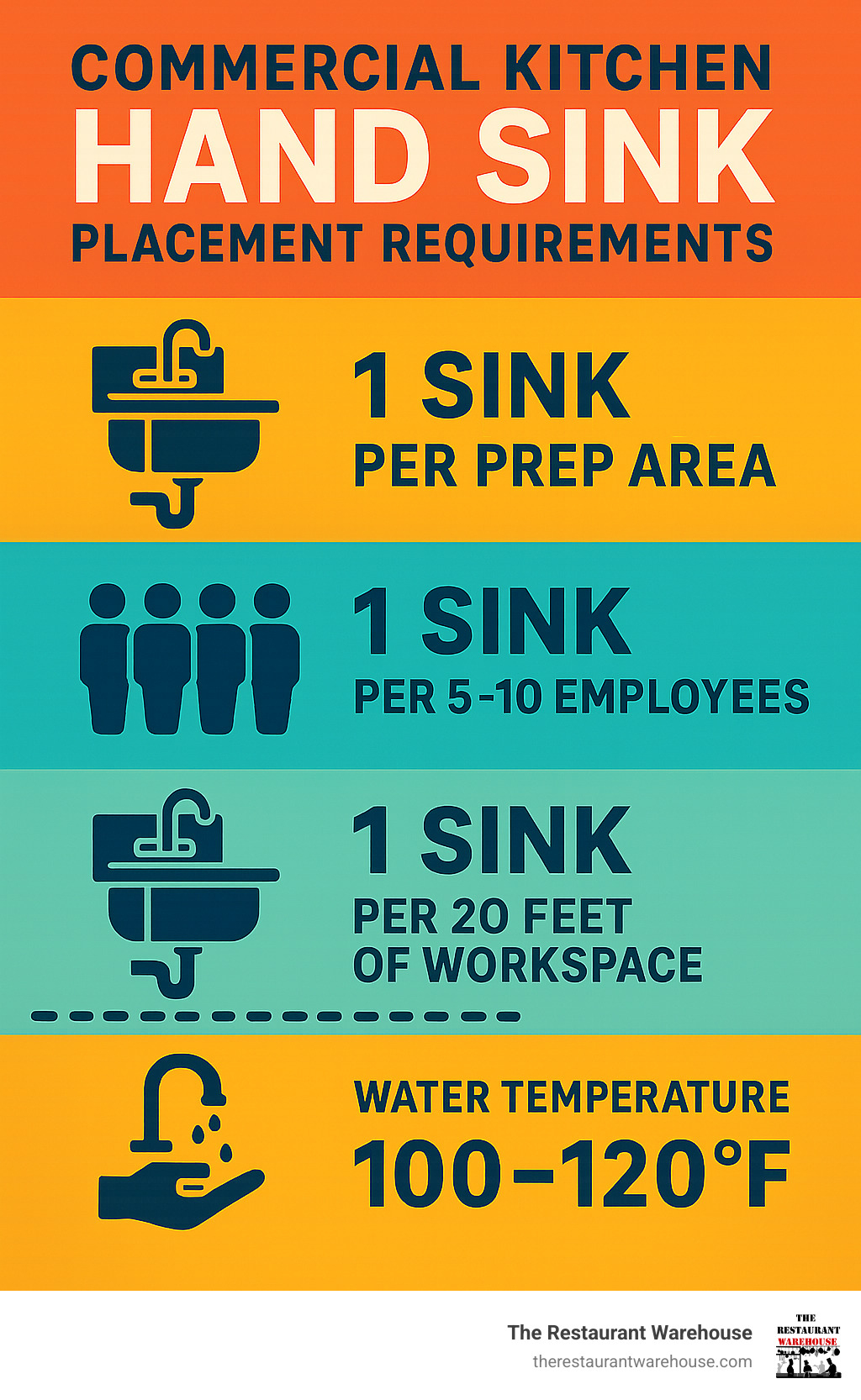
Placement rules vary by jurisdiction, but common requirements include one hand sink per food preparation area, one for every 5-10 employees, and one for every 20 feet of radial workspace. The underlying principle is convenience - staff should never have to walk more than a few steps to reach a handwashing station.
Water temperature regulations are surprisingly specific: hot water must be between 100°F and 120°F, while cold water should be below 85°F. These ranges ensure effective cleaning without scalding risks. For comprehensive regulatory guidance, this Guide to Handwashing Sinks provides detailed requirements.
Faucets and Fixtures: The Hands-On (or Off) Components
Gooseneck faucets provide the clearance needed for proper handwashing, allowing staff to wash thoroughly without touching the sink basin. The curved design also makes cleaning the faucet itself much easier - a detail that matters during deep cleaning sessions.
Hands-free operation represents the gold standard for hygiene, and the technology keeps getting better. Motion sensors, knee valves, or foot pedals eliminate the need to touch potentially contaminated surfaces. While these systems cost more initially, they significantly reduce cross-contamination risks and often pay for themselves through improved compliance.
Wrist blade handles offer a smart middle-ground solution - they can be operated without using hands while being more affordable than fully automated systems. These lever-style handles respond to pressure from wrists or forearms, making them ideal for budget-conscious operations that still prioritize hygiene.
Splash guards and backsplashes serve a purpose beyond keeping walls dry. They prevent water from splashing onto nearby food contact surfaces, maintaining the separation between handwashing and food preparation areas that health codes require. This separation is crucial for preventing cross-contamination.
Essential Accessories for Your Commercial Kitchen Hand Wash Sink
A complete handwashing station requires more than just a sink and faucet to function effectively. Integrated soap dispensers ensure soap is always available and prevent bottles from cluttering the workspace. Wall-mounted or deck-mounted options work best for maintaining a clean, organized appearance.
Paper towel dispensers are required by most health codes since single-use towels are the only acceptable drying method. Automatic dispensers reduce waste and contamination while ensuring towels are always available when needed.
Trash receptacles positioned near the sink encourage proper disposal of used towels. Hands-free waste bins work best, allowing staff to dispose of towels without touching potentially contaminated surfaces.
Clear signage serves as a constant reminder of proper handwashing technique and timing. Handwashing reminders and step-by-step instructions help maintain compliance even during busy periods when shortcuts become tempting.
Hand sanitizer dispensers provide an additional hygiene layer, though they're not a replacement for proper handwashing. They're particularly useful for quick touch-ups between handwashing sessions.
Knee or foot valve systems enable hands-free operation when budget allows, representing one of the best investments for reducing cross-contamination in busy kitchens.
Finding Your Perfect Match: Types of Sinks and Their Applications
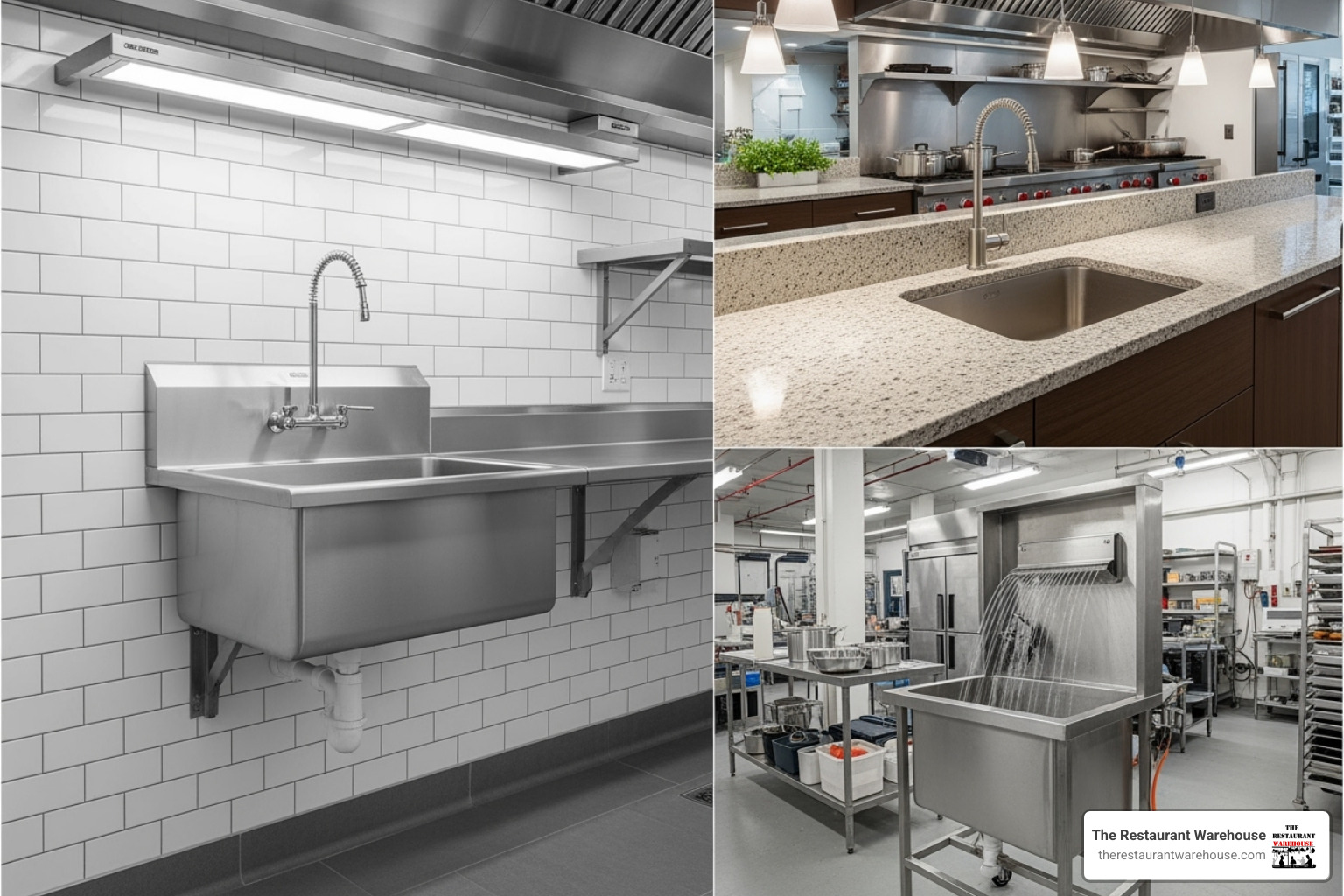
Finding the perfect commercial kitchen hand wash sink is like finding the right pair of shoes - it needs to fit your space, match your style, and work hard without complaining. Your kitchen layout, available space, and daily workflow all play starring roles in this decision.
The beauty of modern commercial sinks lies in their variety. Whether you're working with a postage-stamp prep area or a sprawling hotel kitchen, there's a handwashing solution that fits. The trick is understanding how each type performs in real-world conditions.
Some operators fall in love with sleek wall-mounted units, while others swear by the flexibility of portable systems. The right choice depends on your specific needs, not what looks coolest in the catalog. For comprehensive guidance on commercial sink selection, our Commercial Sinks for Restaurants Made Simple guide covers everything from prep sinks to specialty applications.
| Sink Type | Pros | Cons | Ideal Application |
|---|---|---|---|
| Wall-Mounted | Space-saving, easy to clean under | Requires sturdy wall support | Small kitchens, tight spaces, high-traffic areas |
| Drop-In/Counter-Mounted | Seamless look, integrated into workstations | More complex installation | Prep stations, custom countertops |
| Freestanding/Pedestal | Easy to place anywhere, sturdy | Larger footprint | Large kitchens, areas without wall support |
| Portable/Mobile | Flexible, self-contained | Limited capacity, requires refilling | Food trucks, catering, outdoor events |
Choosing the Right Type of Commercial Kitchen Hand Wash Sink
Wall-mounted sinks are the space-saving champions of the commercial kitchen world. These clever units float above the floor, creating precious room underneath while making cleanup a breeze. No more mopping around sink legs or dealing with mysterious spills that hide in hard-to-reach corners.
The compact 17x12.8-inch models practically disappear into tight spaces, while larger versions handle the rush of a busy prep area without breaking a sweat. Just remember that these units need solid wall support - they typically weigh 30-50 pounds when filled with water, so that drywall-only installation won't cut it.
Drop-in sinks are the chameleons of the handwashing world. They blend seamlessly into custom countertops and prep stations, creating a clean, integrated look that doesn't interrupt your workflow. When you want handwashing capability built right into your work area, this is your go-to choice.
The installation requires more finesse - precise cutouts, proper sealing, and careful attention to detail. But the payoff is a professional appearance that makes your kitchen look like it was designed by someone who actually knows what they're doing.
Freestanding pedestal sinks offer the ultimate in placement flexibility. These self-supporting units can go anywhere you have plumbing access, making them perfect for large kitchens or areas where wall mounting just isn't practical. They're the reliable workhorses that don't need special support or custom installation.
The trade-off is footprint - these units take up more floor space than their wall-mounted cousins. In cramped quarters, that extra real estate might be better used for storage or equipment.
Portable and mobile sinks solve problems that traditional plumbing can't touch. Food trucks, catering operations, and outdoor events all benefit from these self-contained units that bring handwashing capability wherever it's needed. They include fresh water tanks, waste water collection, and often battery-powered pumps for true independence.
Capacity limitations mean you'll need to plan for refilling and emptying, but the convenience factor is best. For mobile foodservice operations, our Food Truck Sinks Guide provides specific recommendations for choosing the right portable handwashing solution.
Installation and Upkeep: A Clean Sink is a Safe Sink

Your commercial kitchen hand wash sink is only as good as its installation and maintenance. We've seen too many operators invest in quality equipment only to have problems later because of shortcuts during setup or neglect during daily operations.
Think of installation as the foundation of your food safety program. Get it wrong, and you'll face ongoing headaches with inspectors, staff frustration, and potential equipment failure. Get it right, and your sink becomes a reliable workhorse that protects your business for years.
The good news is that proper installation and maintenance aren't complicated - they just require attention to detail and consistency. Once you establish good routines, maintaining your hand sink becomes as automatic as any other kitchen task.
For a complete approach to equipment care, our Restaurant Kitchen Cleaning Checklist covers everything you need to keep your entire operation spotless.
Installation Best Practices
Getting your commercial kitchen hand wash sink installed correctly starts with understanding that local codes aren't suggestions - they're requirements that inspectors will check. Most areas require commercial sinks to connect directly to the main drainage system, not through floor drains or indirect connections.
The drainage system needs to handle busy periods without backing up. We've seen kitchens where poor drainage planning created standing water during rush times, turning hand sinks into breeding grounds for bacteria instead of hygiene stations.
Water temperature delivery is where many installations fall short. Your sink must provide consistent hot water between 100°F and 120°F, which might mean installing a dedicated mixing valve or upgrading your water heater. Cold water should stay below 85°F to meet health department standards.
Securing the sink properly prevents wobbling and premature wear. Wall-mounted units need solid structural support - remember, these sinks will see heavy daily use. Freestanding models must be level and properly anchored to prevent shifting during busy periods.
Don't forget about shutoff valves for maintenance access. You'll thank yourself later when you need to service the faucet or clean the lines without shutting down water to the entire kitchen.
The Commercial Kitchen Sink Guidelines | Mise Designs resource provides detailed technical specifications that can help ensure your installation meets professional standards.
Creating a Cleaning and Maintenance Routine
Daily cleaning is your first line of defense against problems. After each shift, staff should wipe down all surfaces with appropriate sanitizers, paying special attention to faucet handles, soap dispensers, and the sink basin. This prevents soap residue and water spots that can harbor bacteria.
Weekly deep cleaning goes beyond surface wiping. Remove mineral deposits from faucets and aerators - these buildups can affect water flow and create hiding spots for contaminants. Clean and refill soap and towel dispensers, and check that water temperatures still meet requirements.
Monthly inspections catch problems before they become expensive repairs. Look for signs of corrosion, loose fittings, or changes in water pressure that might indicate developing issues. Check that all accessories like soap dispensers and towel holders are secure and functioning properly.
Quarterly maintenance should include professional-level service for complex systems like sensor-operated faucets or integrated water heating. Keep detailed maintenance records - they're valuable during health inspections and help identify patterns that might indicate equipment problems.
The key is making maintenance routine rather than reactive. A few minutes of daily care prevents hours of deep cleaning and costly repairs down the road. For comprehensive equipment maintenance strategies, our Clean Restaurant Equipment guide provides systematic approaches to keeping your entire operation running smoothly.
Frequently Asked Questions about Commercial Hand Sinks
How many hand wash sinks does a commercial kitchen need?
The magic number isn't really magic at all - it depends on your kitchen's size, layout, and what your local health department requires. But here's the thing: most health codes follow some pretty standard guidelines that make sense when you think about it.
You'll typically need one hand sink per food preparation area, plus one for every 5-10 employees working during your busiest shifts. Many jurisdictions also require one sink for every 20 feet of workspace. These aren't random numbers - they're based on real-world research showing that if staff have to walk more than 20 feet to wash their hands, they're much less likely to do it.
Think about your kitchen's workflow when planning placement. That expediting station where servers grab plates? It probably needs easy access to handwashing. The pastry corner tucked away from everything else? It might need its own dedicated commercial kitchen hand wash sink even if it technically falls within the distance requirements.
Always check with your local health department for specific requirements. Some areas have stricter standards, especially in high-risk food preparation environments. What works in one city might not fly in another, and it's much cheaper to get it right the first time than to retrofit later.
Can I use a compartment sink for handwashing?
This is a hard no, and health inspectors take this rule seriously. You cannot use prep sinks, dishwashing stations, or utility sinks for handwashing - period. The separation isn't just bureaucratic red tape; it's about preventing the exact contamination that handwashing is supposed to eliminate.
Here's why this matters: that three-compartment sink where you wash dishes? It's been exposed to food particles, grease, and potentially harmful bacteria from dirty plates and utensils. Even after cleaning, using it for handwashing defeats the entire purpose of getting your hands clean.
The rule works both ways too. Your dedicated commercial kitchen hand wash sink can't moonlight as a dish-washing station or vegetable rinse area. Health codes require this separation to maintain the integrity of your hygiene practices.
We've seen restaurants get written up for this violation more often than you'd think. It usually happens during busy periods when staff take shortcuts, but inspectors don't care about your excuses. Dedicated means dedicated.
What does NSF-rated mean for a sink?
NSF certification is like a gold seal of approval for commercial kitchen equipment. The National Sanitation Foundation puts sinks through rigorous testing to make sure they meet specific standards for public health and safety. It's not just a marketing badge - it's proof that your sink can handle the demands of commercial food service.
For hand sinks, NSF rating means the equipment meets strict requirements for materials, construction, and design. The sink must be made from approved materials that won't harbor bacteria or react badly with cleaning chemicals. Those coved corners we mentioned earlier? They're required for NSF certification because they eliminate hiding spots for contaminants.
The testing process is thorough. They check durability, how easy the sink is to clean, and whether the materials are safe for food service environments. NSF-rated sinks must have radius seams, integrally welded drain boards, and other features that make effective sanitization possible.
While NSF certification isn't legally required everywhere, many health departments prefer or require it. More importantly, it gives you confidence that you're investing in equipment that will pass inspections and serve your kitchen well for years to come. It's one of those cases where spending a little more upfront saves headaches down the road.
Conclusion
Your commercial kitchen hand wash sink isn't just another piece of equipment - it's the quiet hero working behind the scenes to protect everything you've built. Every time a staff member washes their hands properly, your sink is preventing potential disasters that could shut down your operation overnight.
The smart money goes toward NSF-rated 304 stainless steel construction with those all-important coved corners. Size matters too - standard 10"x14"x5" bowls work for most operations, while 9"x9"x5" space-savers fit tight spots without sacrificing functionality. Wall-mounted units save precious floor space, while freestanding models offer placement flexibility.
Hands-free operation costs more upfront, but the investment pays off every single day. When your staff can wash hands without touching contaminated surfaces, you're cutting cross-contamination risks dramatically. It's the kind of upgrade that makes health inspectors smile and keeps your operation running smoothly.
At The Restaurant Warehouse, we've seen too many operators try to save a few hundred dollars on handwashing equipment, only to face thousands in fines and lost revenue later. That's why we focus on getting you commercial-grade equipment at wholesale prices - because cutting corners on safety equipment is never worth the risk.
Here's the thing about quality equipment: it works when you need it most. During the dinner rush when everyone's moving fast, during health inspections when every detail matters, and during those stressful moments when one mistake could cost you everything. The right commercial kitchen hand wash sink handles it all without breaking a sweat.
Whether you're setting up a new kitchen, replacing worn-out equipment, or expanding your operation, handwashing stations deserve top priority. The math is simple - proper equipment costs hundreds, while health code violations and contamination events cost thousands.
Ready to make the smart choice? Explore our complete commercial kitchen equipment guide to see how the right equipment choices work together to create safer, more efficient operations.
Your customers trust you with their health every time they walk through your doors. Make sure your handwashing stations are worthy of that trust.
About The Author

Sean Kearney
Sean Kearney is the Founder of The Restaurant Warehouse, with 15 years of experience in the restaurant equipment industry and more than 30 years in ecommerce, beginning with Amazon.com. As an equipment distributor and supplier, Sean helps restaurant owners make confident purchasing decisions through clear pricing, practical guidance, and a more transparent online buying experience.
Connect with Sean on LinkedIn, Instagram, YouTube, or Facebook.