

Pre-Loved and Powerful – Top Picks for Used Food Truck Appliances
Why Used Food Truck Appliances are the Smart Choice for Budget-Conscious Entrepreneurs
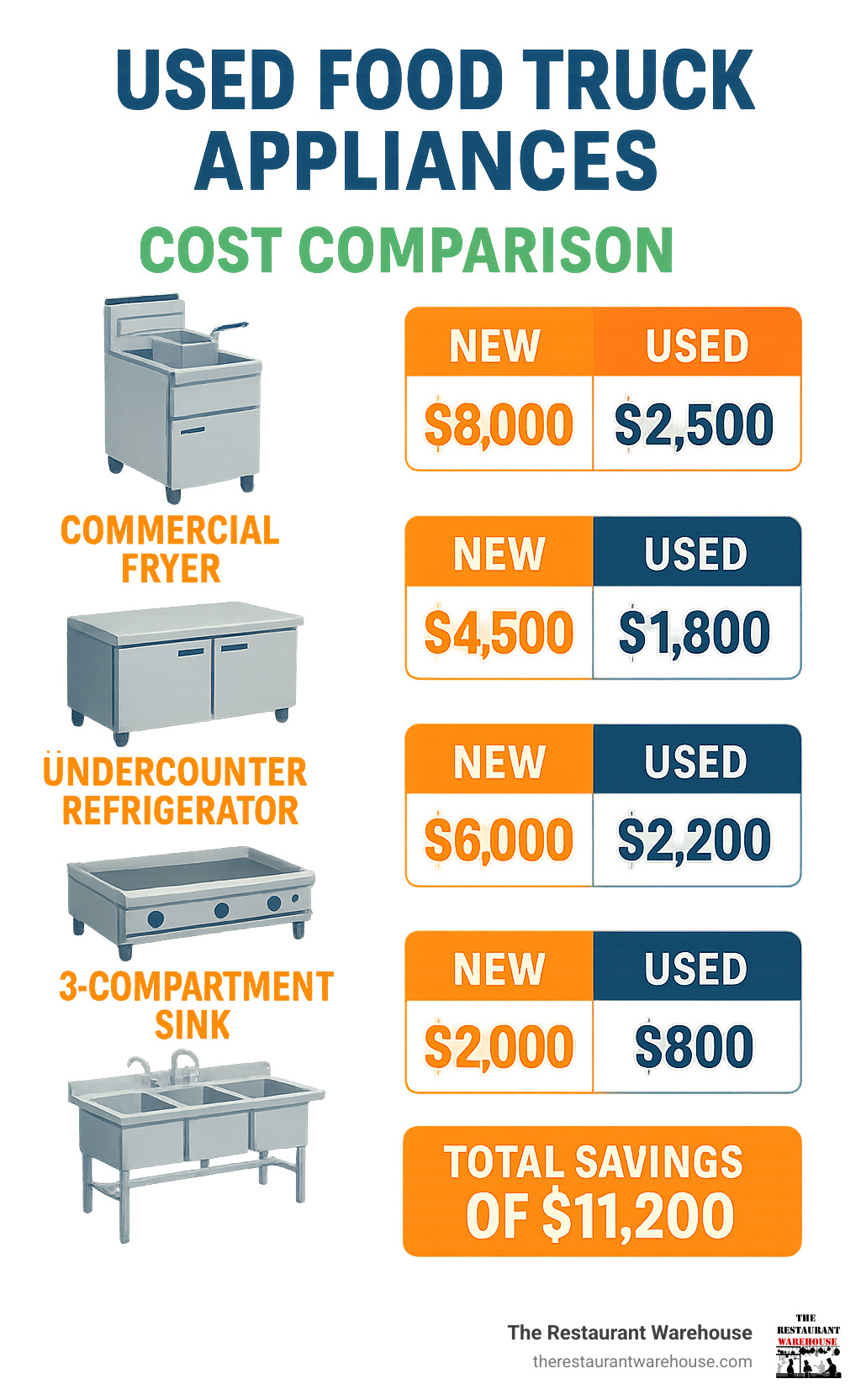
Used food truck appliances offer substantial savings of up to 75% compared to new equipment, delivering the same functionality you need to launch your mobile food business successfully.
Quick Answer for Used Food Truck Appliance Buyers:
- Top Savings: 40-75% off new equipment prices
- Essential Items: Commercial griddles, fryers, refrigeration, prep tables, 3-compartment sinks
- Key Checks: NSF certification, working condition, maintenance history
- Best Sources: Local restaurant equipment dealers, The Restaurant Warehouse, closing restaurant sales
- Critical Tip: Always inspect in person and test all functions before buying
The food truck industry is booming, but starting a business can cost anywhere from $50,000 to $200,000. Equipment alone can consume 30-40% of that budget. This is where smart entrepreneurs turn to the used equipment market.
Quality used appliances from premium brands like Hobart, Vulcan, and True are available at a fraction of their retail cost. A used commercial griddle can perform just as well as its brand-new counterpart—the difference is depreciation, not functionality. Buying used lowers your initial investment, reduces financial pressure, and helps you reach profitability faster, which is crucial in the competitive mobile food scene.
Related content about used food truck appliances:
- concession trailer cooking equipment
- food trailer electrical
- craigslist used food trucks for sale under $5000 near me
The Smart Start: Why Buying Used Food Truck Appliances Makes Financial Sense
Opting for used food truck appliances is a strategic financial move for any new mobile food business. It's not about settling for less; it's about making your startup capital work smarter.
Quality used commercial equipment typically costs 40% to 75% less than new. For a complete food truck kitchen, this can mean savings of $15,000 to $30,000. That's capital you can redirect to cover permits, insurance, marketing, or high-quality ingredients.
These savings create a positive domino effect on your finances. Lower initial investment means less debt and more available cash flow for daily operations. This makes achieving profitability faster a realistic goal. When your overhead is lower, you can break even with fewer sales, reducing stress and allowing you to focus on growth.
The financial benefits extend beyond the initial purchase. Used equipment often comes from established restaurants that have already worked through any initial manufacturing defects or design flaws. You're essentially getting battle-tested equipment that has proven its reliability in real-world commercial environments.
Consider the depreciation factor: new commercial equipment loses 20-30% of its value the moment it's installed. By purchasing used, someone else has already absorbed this depreciation hit, allowing you to acquire premium equipment at its true functional value rather than its inflated retail price.
Buying used also has environmental benefits, keeping functional equipment out of landfills and reducing the demand for new manufacturing. It's a sustainable choice that also boosts your bottom line. This circular economy approach resonates with environmentally conscious customers who increasingly support businesses that demonstrate sustainability values.
Furthermore, the used market provides access to premium brands like Vulcan, Hobart, and True that might otherwise be out of your budget. These brands are built for durability, and a well-maintained used unit can offer many years of reliable, professional-grade performance at a fraction of the original cost.
The cash flow advantages are particularly crucial in the food truck industry, where seasonal fluctuations and weather dependencies can impact daily revenue. Having lower fixed costs from equipment purchases means you can weather slow periods more effectively and invest in business growth opportunities when they arise.
With the food truck industry growing rapidly, starting with lower equipment costs gives you the financial flexibility to stand out. The Restaurant Warehouse helps countless entrepreneurs launch by providing quality used equipment at wholesale prices, making the dream of owning a food truck more attainable.
For deeper insights into maximizing your equipment budget, explore our comprehensive guide on Kitchen Gear On A Budget: Finding Quality Used Food Equipment. If you're considering financing options, our Restaurant Equipment Financing Options article provides valuable strategies.
The Essential Used Food Truck Appliances: A Curated Roundup
In a food truck, every square inch counts. Your mobile kitchen must pack maximum functionality into a minimal footprint. Choosing the right used food truck appliances is key to an efficient operation that doesn't break the bank.
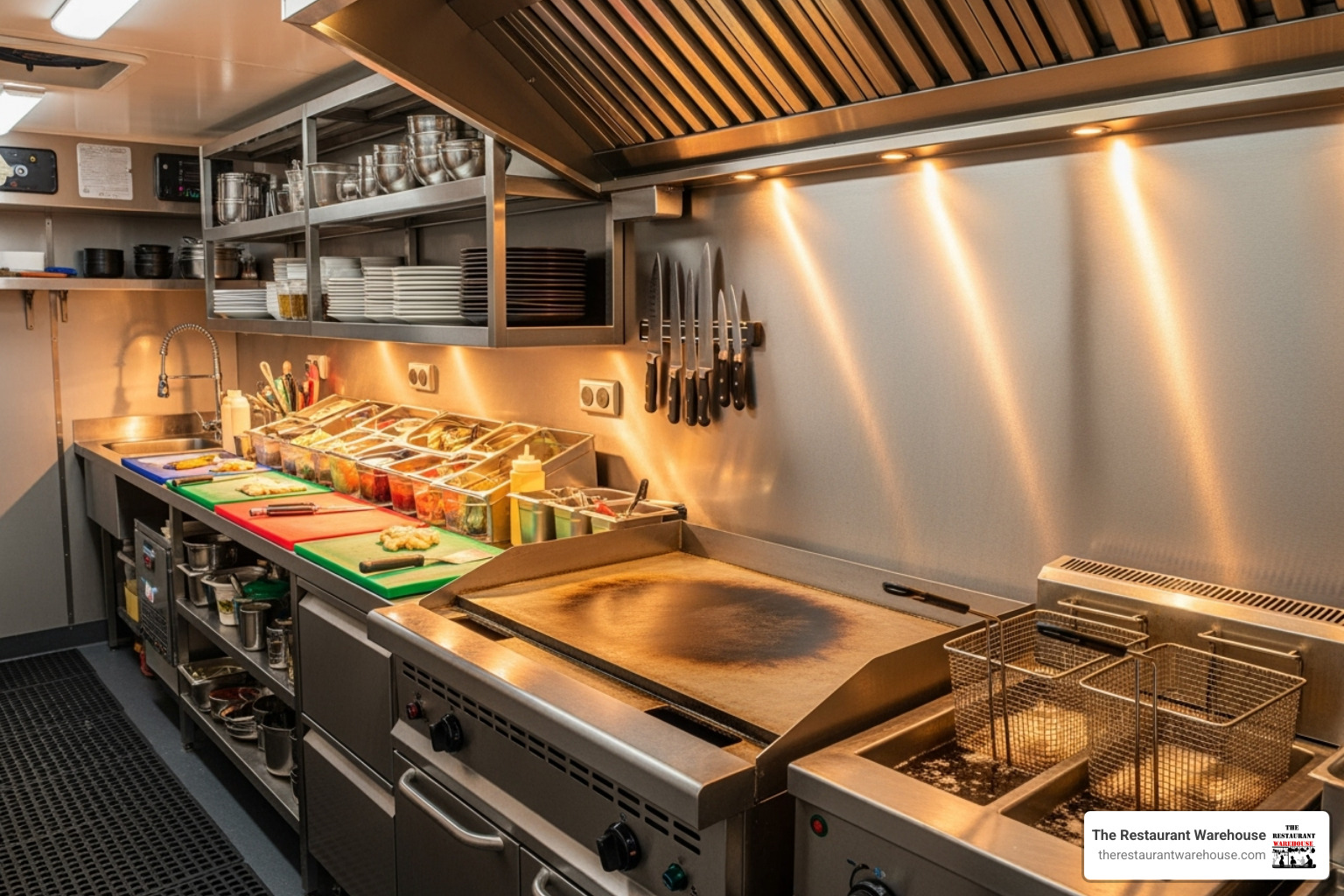
Space optimization is an art form in food truck design. You'll need to think vertically and look for multi-functional appliances that can serve multiple purposes. Your menu should be your primary guide—a taco truck's needs differ greatly from a dessert trailer's requirements. The key is creating a workflow that minimizes steps and maximizes efficiency during peak service hours.
When planning your equipment layout, consider the "kitchen triangle" concept adapted for mobile kitchens. Your cooking, prep, and storage areas should be positioned to minimize movement while maintaining food safety protocols. This becomes even more critical when working in the confined space of a food truck.
For comprehensive guidance on equipment selection and layout optimization, see our Buyers Guide: Best Food Truck Equipment For 2025.
Cooking Powerhouses: Griddles & Fryers
Your griddle and fryer are the heart of your kitchen, and finding quality used models can save you thousands while delivering professional results.
Griddles are workhorses for burgers, breakfast items, sandwiches, and countless other menu staples. Countertop models save precious floor space while still providing ample cooking surface. Gas griddles offer instant heat control and faster temperature recovery, making them ideal for high-volume service. Electric models provide more even heat distribution and are often easier to install in food trucks with limited gas connections.
When shopping for used griddles, look for models with thick steel plates that retain heat well and provide even cooking. Chrome-plated surfaces are easier to clean and maintain, while grooved plates can add attractive grill marks to your food. Charbroilers are excellent used finds that add distinct grilled flavor and visual appeal to your menu offerings, helping differentiate your food from competitors.
Fryers are essential for everything from french fries to funnel cakes, chicken wings to onion rings. Look for used dual-tank fryers that allow you to cook different items simultaneously without flavor transfer. This versatility is crucial for food trucks serving diverse menu items throughout the day.
For electric fryer models, fast heat recovery time is crucial to maintain oil temperature during busy periods. Gas fryers typically offer faster heating and lower operating costs, but require proper ventilation and gas line installation. Consider the BTU output when selecting a gas fryer—higher BTU ratings mean faster recovery times and better performance during rush periods.
Oil filtration systems, whether built-in or portable, extend oil life and improve food quality. Many used fryers come with these systems already installed, providing additional value. Programmable controls on newer used models can help maintain consistency and reduce training time for staff.
For more detailed information, see our articles on High Efficiency Fryers and Food Truck Fryers.
Chilling & Storing: Refrigeration & Freezers
Reliable and efficient refrigeration is absolutely non-negotiable in food service. Your choices in used food truck appliances must prioritize durability, energy efficiency, and space-conscious design.
Undercounter Refrigerators are space-saving champions that slide under prep counters, keeping ingredients within arm's reach while maximizing floor space. These units typically offer 2-8 cubic feet of storage and are perfect for frequently used items like condiments, dairy products, and prepared ingredients.
Chef Bases are refrigerated drawers specifically designed to support cooking equipment like griddles or charbroilers. This dual-purpose design maximizes efficiency by combining equipment support with cold storage, making them excellent investments for space-constrained food trucks.
Sandwich and Salad Prep Tables combine refrigerated storage below with a workspace and ingredient pans on top. These units are particularly valuable for trucks serving sandwiches, salads, or assembly-line style items. The refrigerated rail keeps ingredients at safe temperatures while providing easy access during service.
Compact Chest Freezers offer an energy-efficient solution for maximizing frozen storage in a small footprint. They typically use less energy than upright freezers and maintain temperature better when opened frequently, making them ideal for mobile operations.
Reach-in Refrigerators and Freezers provide maximum storage capacity and are essential for trucks with higher volume needs. Look for models with solid doors to improve energy efficiency, or glass doors if you need to quickly identify contents.
When shopping for used refrigeration equipment, prioritize Energy Star ratings to reduce fuel and electricity costs—a critical consideration for mobile operations. Ensure your layout allows for proper ventilation around refrigeration units to prevent them from overworking in the confined space of a food truck.
Temperature monitoring systems, whether built-in or aftermarket, help ensure food safety compliance and can alert you to potential equipment failures before they become costly problems. Many used commercial refrigeration units come with these systems already installed.
Our Used Commercial Kitchen Equipment Guide offers additional tips for selecting reliable refrigeration equipment.
Prep & Sanitation: Sinks & Workstations
Meeting health department regulations is mandatory, and non-compliance can shut down your operation. Used stainless steel sanitation equipment is often an excellent value due to its exceptional durability and longevity.
Three-Compartment Sinks are required by most health codes for the wash, rinse, and sanitize process. These sinks must be large enough to accommodate your largest pots and pans, with each compartment meeting minimum size requirements set by local health departments. Look for units with built-in drainboards to maximize efficiency in your limited space.
Hand-Washing Sinks must be separate from dishwashing areas and fully stocked with soap, paper towels, and waste receptacles. These sinks require hot and cold running water and must be easily accessible to all food handling areas. Some jurisdictions require multiple hand sinks depending on your truck's size and layout.
Stainless Steel Work Tables form the durable backbone of your prep area. Look for heavy-duty construction with reinforced legs and undershelf storage. Adjustable feet help level tables on uneven surfaces, while casters on some models provide flexibility for cleaning and reorganization.
Wall Shelves and Storage Systems are essential for vertical storage in your space-constrained environment. Stainless steel wire shelving allows air circulation around stored items and is easy to clean. Solid shelving provides more storage density but requires more frequent cleaning.
Pot Sinks may be required in addition to three-compartment sinks, depending on your menu and local regulations. These larger, deeper sinks accommodate oversized cookware and equipment cleaning.
These sanitation items rarely have complex mechanical parts that can fail, making them particularly safe and reliable used purchases. The stainless steel construction typical in commercial applications can last decades with proper care.
For specific requirements and selection guidance, consult our Food Truck Sinks Guide and our comprehensive guide on Used Food Prep Equipment.
Your Pre-Purchase Inspection Checklist: How to Spot a Gem, Not a Lemon
When buying used food truck appliances, a thorough inspection separates a great deal from a costly mistake. Never buy equipment sight unseen; online photos don't reveal hidden problems like a cracked heating element or faulty wiring.
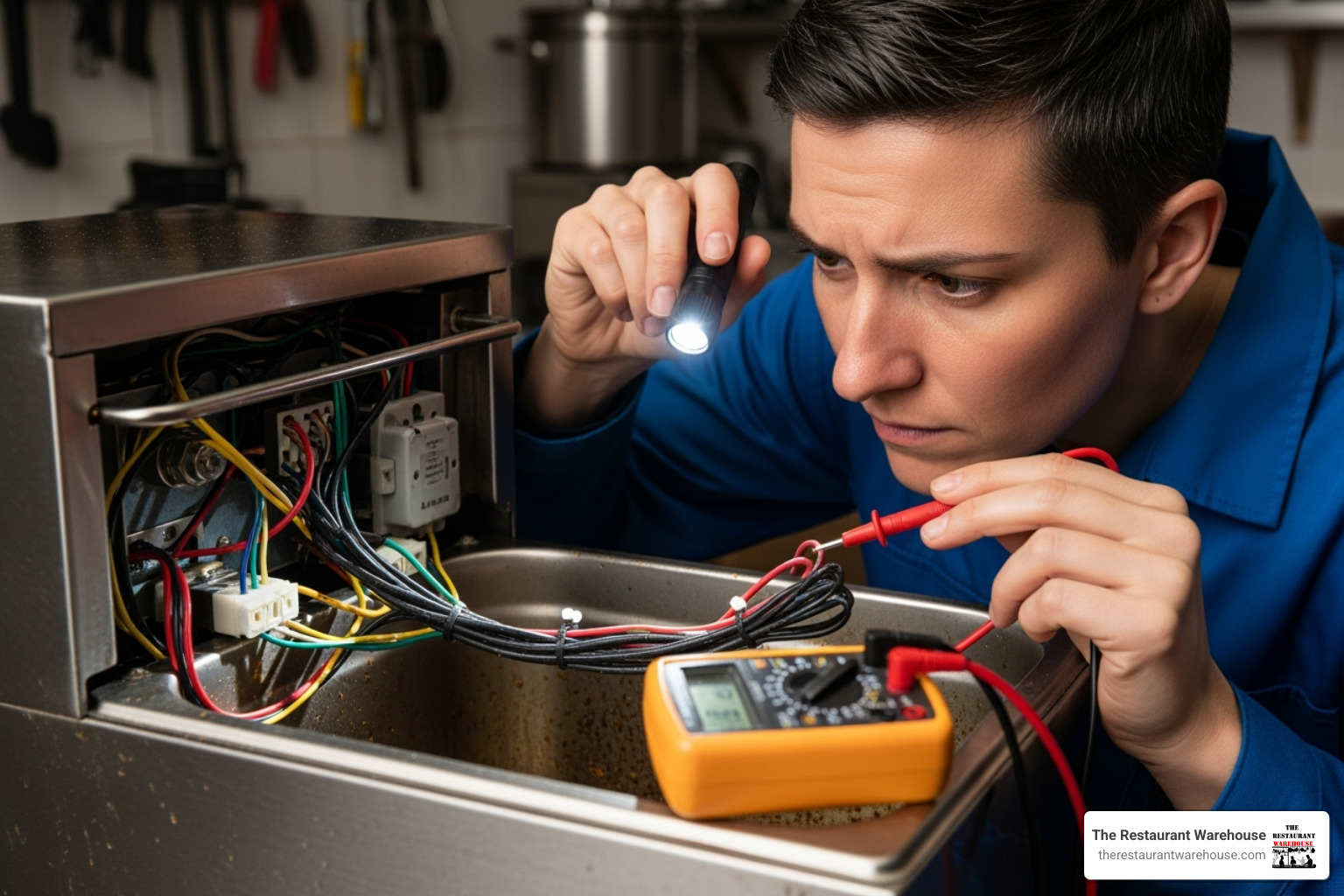
An in-person inspection protects your investment and ensures your kitchen runs smoothly from day one. For more tips on navigating the used market, see our guide on How To Lease Used Restaurant Equipment Without Getting Served A Lemon.
The Physical Once-Over
Start with a visual inspection. Look for these red flags:
- Dents and Dings: Minor cosmetic issues are fine, but deep dents on doors or control panels can indicate serious damage.
- Rust and Corrosion: Pay close attention to areas where water collects. Extensive corrosion can signal structural problems.
- Wiring: Frayed wires, exposed connections, or makeshift electrical tape repairs are major safety hazards.
- Gaskets and Seals: On refrigeration, damaged seals lead to energy waste and temperature issues. On cooking units, they affect performance and safety.
- Cleanliness: Excessive grease or food residue suggests poor maintenance, which may extend to internal components.
The Functional Test Drive
Always test the equipment before you buy:
- Power On: The unit should start smoothly. Listen for unusual grinding, squealing, or humming sounds.
- Temperature Accuracy: Use an independent thermometer to verify that refrigerators get cold enough and cooking equipment heats to the set temperature.
- Listen Carefully: Unusual noises like rattling compressors or struggling fans are immediate red flags.
- Check Gas Lines: On gas equipment, inspect lines and connectors for damage or corrosion. Any smell of gas is a deal-breaker.
- Test Controls: Ensure every knob, button, and switch works correctly. Digital displays should be clear and responsive.
Digging into the Details: Maintenance History and Brand Reputation
Become an equipment detective to understand its history:
- Service Records: Ask the seller for any maintenance logs or repair receipts. These provide valuable insight into the unit's past.
- Brand Reputation: Research the brand and model. Well-known commercial brands are typically built to last.
- Parts Availability: Before buying, confirm that replacement parts for the model are still available and affordable. An initial bargain can become expensive if parts are hard to find.
Decoding the Deal: Where to Find Reliable Used Food Truck Equipment
Finding quality used food truck appliances requires a strategic approach and knowledge of the best sources. The most successful equipment buyers use a combination of online research and local relationship building to find the best deals.
Where to Look for Used Equipment
Specialized Dealers & Online Marketplaces are often your best starting point. Reputable dealers, both local and online, maintain large inventories with detailed specifications and often provide reconditioned equipment with limited warranties. These dealers understand commercial equipment and can provide valuable guidance on selection and installation requirements.
The Restaurant Warehouse maintains a carefully curated selection of pre-owned commercial appliances specifically chosen to help entrepreneurs get started. Our team inspects each piece of equipment and provides honest assessments of condition and remaining useful life.
Restaurant Equipment Auctions can provide excellent opportunities, particularly when established restaurants are closing or upgrading their equipment. These auctions often feature high-quality equipment at competitive prices, but require cash payment and immediate pickup. Online auction platforms have expanded access to auctions nationwide, though shipping costs must be factored into your budget.
Closing Sales & Liquidations offer some of the best deals available. Keep an eye out for local restaurants that are closing, relocating, or undergoing major renovations. These situations often create motivated sellers willing to negotiate on price. Government surplus auctions can also be sources for commercial-grade equipment, particularly from institutional kitchens.
Direct from Restaurants can yield excellent deals and valuable insights. Many restaurant owners are willing to sell equipment directly to avoid auction fees or dealer commissions. This approach also allows you to speak directly with the previous users about the equipment's history, maintenance needs, and performance characteristics.
Online Classifieds and Marketplaces like Craigslist, Facebook Marketplace, and specialized restaurant equipment sites can offer good deals, but require more careful vetting. Always insist on in-person inspection and testing before committing to purchase.
Networking within the Industry often produces the best opportunities. Connect with other food truck and restaurant owners through industry associations, social media groups, and local events. The foodservice community is generally supportive, and operators often share information about available equipment or upcoming sales.
Leasing Company Returns can be excellent sources for nearly-new equipment at significant discounts. When restaurants close or default on leases, leasing companies often sell returned equipment at attractive prices to recover their investments quickly.
When you're ready to explore your options, you can Buy Used Restaurant Equipment directly from our inventory, backed by our commitment to value and reliability.
The Value of "Reconditioned" vs. "As-Is"
Understanding the difference between these terms is crucial for making smart purchasing decisions and managing your risk appropriately.
As-Is Equipment is sold in its current state with no warranty, guarantees, or representations about condition or functionality. The price is typically the lowest you'll find, but it comes with significant risk of hidden problems, missing parts, or immediate failure after purchase. This option is best suited for buyers with technical expertise to diagnose problems and perform repairs themselves, or those with sufficient budget to handle unexpected repair costs.
As-is purchases require thorough inspection and testing before buying. You should budget an additional 20-30% of the purchase price for potential repairs and missing accessories. However, for buyers with mechanical skills, as-is equipment can provide exceptional value.
Reconditioned Equipment has been professionally inspected, cleaned, repaired, and tested by qualified technicians. Worn components like gaskets, control knobs, heating elements, and filters are typically replaced with new parts. The equipment is cleaned inside and out, calibrated to proper operating specifications, and tested under actual operating conditions.
Most reconditioned used food truck appliances come with limited warranties ranging from 30 days to one year, providing peace of mind and protection against immediate failure. This warranty coverage can save thousands in repair costs and lost revenue from equipment downtime.
For most food truck operators, the reliability and warranty protection of reconditioned equipment justifies the higher investment. The reduced risk of unexpected failures and repair costs makes reconditioned equipment particularly valuable for businesses that cannot afford extended downtime.
Certified Pre-Owned represents the highest grade of used equipment, typically featuring comprehensive reconditioning, extended warranties, and sometimes even upgrade installations. While more expensive than standard reconditioned equipment, certified pre-owned appliances often perform like new units at 40-50% savings.
Staying Compliant: Navigating Regulations for your Used Food Truck Appliances
Operating a food truck means adhering to strict health and safety regulations. When buying used food truck appliances, you must be extra vigilant to ensure every piece of equipment is compliant to avoid fines and protect your customers.
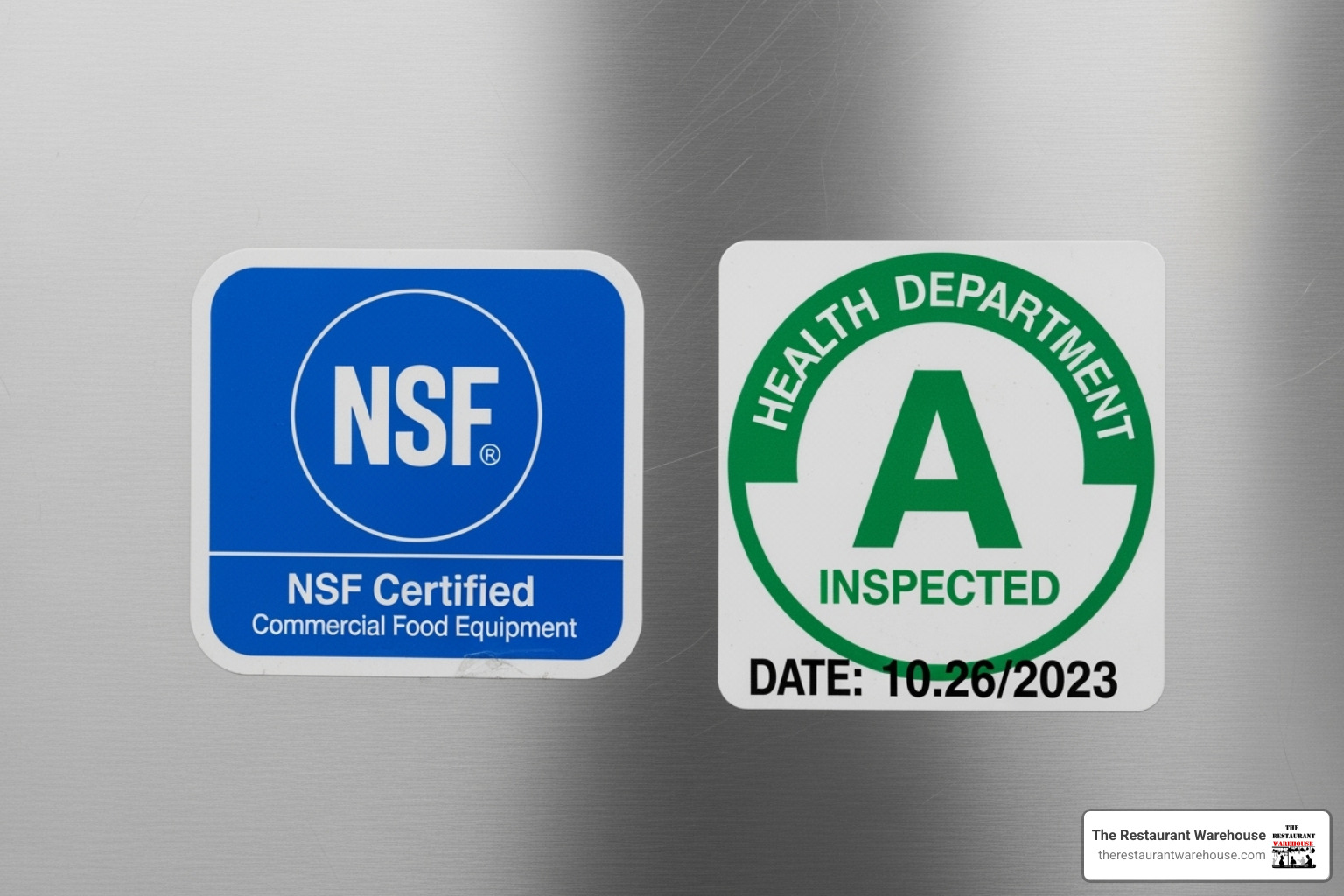
Unlike new equipment, used items may have missing certification labels or unapproved modifications. Knowing what to look for is essential before you buy.
Key Certifications to Look For
Certifications are an appliance's passport to legal operation. Look for these marks:
- NSF (National Sanitation Foundation): This is often required by health departments. It certifies that the equipment is made from food-safe materials and is designed for easy and thorough cleaning.
- UL (Underwriters Laboratories) or ETL Sanitation Mark: These marks indicate the equipment has been tested for electrical safety, protecting against shock and fire hazards.
Crucially, local health department codes can vary. What passes in one city might not in another. Always check your local regulations before purchasing any used equipment to ensure it will pass inspection.
Special Considerations for Gas and Electrical
Gas and electric systems carry significant safety risks and are heavily regulated.
Gas Appliances: Gas lines, connections, and shut-off valves must be installed and inspected by a certified professional. Budget for this cost when buying used gas equipment. A proper ventilation and hood system is non-negotiable for removing dangerous fumes, and your fire suppression system must be correctly sized for your cooking lineup.
Electrical Appliances: Always verify that an appliance's voltage and amperage requirements match your truck's electrical system. A great deal on a 240V griddle is useless if your truck only has 120V service. Overloading circuits is a serious fire hazard. Our Wired For Success: Top Electrical Gear For Food Trailers guide can help you understand these requirements.
Regulations evolve, so even if an older appliance was compliant when new, it may not meet today's standards. Staying current on safety codes is a key part of running a successful mobile business.
Top 5 Mistakes to Avoid When Purchasing Used Food Truck Appliances
Buying used food truck appliances is a smart move, but some common pitfalls can turn a great deal into a costly nightmare. By avoiding these five mistakes, you can ensure your investment pays off.
Forgetting to Measure Your Space Twice A food truck has no room for error. Measure your available floor space, counter height, and door widths before you shop. An appliance that doesn't fit is useless, no matter the price.
Ignoring Power & Utility Needs This is a devastatingly expensive mistake. Ensure the voltage and amperage of electric appliances match your truck's system. For gas equipment, confirm it uses the correct fuel type (propane vs. natural gas). Mismatched utilities can lead to costly electrical upgrades or plumbing work.
Skipping the In-Person Inspection and Test Never buy used equipment sight unseen. Online photos can't show a failing compressor or uneven heating. Always power the unit on, test all functions, and listen for unusual noises. If a seller won't let you test it, walk away.
Overlooking Necessary Certifications Health departments require certifications like NSF for sanitation and UL for electrical safety. Using uncertified equipment can lead to failed inspections, fines, or even a shutdown order. Verify that all necessary certification marks are present and legible.
Buying "As-Is" Without a Budget for Repairs An "as-is" price is a gamble. Unless you have the technical skills and a budget set aside for potential repairs, that cheap appliance could become your most expensive one. Often, paying slightly more for a reconditioned unit with a warranty is the better long-term value.
For those exploring financing, our guide on Used Food Truck Leasing can help you manage your cash flow effectively.
Frequently Asked Questions about Used Food Truck Appliances
When starting a food truck, a few key questions about equipment always come up. Here are clear, concise answers to help you make confident decisions about used food truck appliances.
Is it better to buy used or new appliances for a food truck?
This depends on your budget and risk tolerance. New appliances offer the latest tech and full warranties but come at a premium price that can strain a startup budget. Used appliances provide the most strategic value for most new entrepreneurs. The significant savings (40-75%) free up capital for other critical business needs, allowing you to acquire professional-grade equipment and reach profitability faster with less financial pressure.
How much can I realistically save by buying used food truck appliances?
The savings are substantial. You can realistically expect to save between 40% and 75% compared to the price of new equipment. For a complete kitchen setup, this can easily translate to $15,000 to $25,000 or more. This is not just a small discount; it's business-critical capital that can be reinvested into marketing, inventory, or an emergency fund, giving your new venture a much stronger financial foundation.
What's the most important piece of used equipment to invest in?
While this depends on your specific menu, two categories are universally critical:
Your Primary Cooking Appliance: This is the heart of your operation, whether it's a griddle for a burger truck or a fryer for a fried chicken concept. Its reliability directly impacts your food quality and service speed. When this goes down, your business stops.
Reliable Refrigeration: This is non-negotiable for food safety and health code compliance. Consistent, correct temperatures protect your ingredients and your reputation.
When shopping for these core used food truck appliances, prioritize quality, reliability, and proper NSF/UL certification. Investing in a reconditioned unit with a warranty for these items is a wise decision that protects you from costly downtime.
Conclusion: Gear Up for Success on a Budget
The path to a successful food truck business doesn't require a massive equipment budget. As we've explored, used food truck appliances offer a strategic advantage, allowing you to launch your dream on a realistic budget.
By choosing quality used equipment, you're making a savvy business decision. The savings of 40% to 75% provide critical breathing room, freeing up funds for marketing, permits, and inventory. You can afford the reliable, professional-grade brands you need to produce great food consistently.
Remember the keys to success: inspect every piece of equipment thoroughly, verify all necessary safety and sanitation certifications (NSF, UL), and understand the value of reconditioned appliances. These steps protect your investment and prevent future headaches.
At The Restaurant Warehouse, we're committed to helping entrepreneurs succeed. We've seen countless food truck dreams become thriving businesses by starting with affordable, reliable equipment. Our goal is to help you hit the road with a mobile kitchen that's equipped for success, without breaking the bank.
Ready to take the next step? To ensure you have every piece of equipment covered, explore our complete restaurant kitchen equipment checklist. It's time to gear up and get cooking!
About The Author

Sean Kearney
Sean Kearney is the Founder of The Restaurant Warehouse, with 15 years of experience in the restaurant equipment industry and more than 30 years in ecommerce, beginning with Amazon.com. As an equipment distributor and supplier, Sean helps restaurant owners make confident purchasing decisions through clear pricing, practical guidance, and a more transparent online buying experience.
Connect with Sean on LinkedIn, Instagram, YouTube, or Facebook.