


Commercial Gas Cooktops: Is a 6-Burner Configuration Right for Your Kitchen?
How to Choose the Right Burner Layout
Why Choosing the Right Commercial Gas Cooktop Configuration Matters
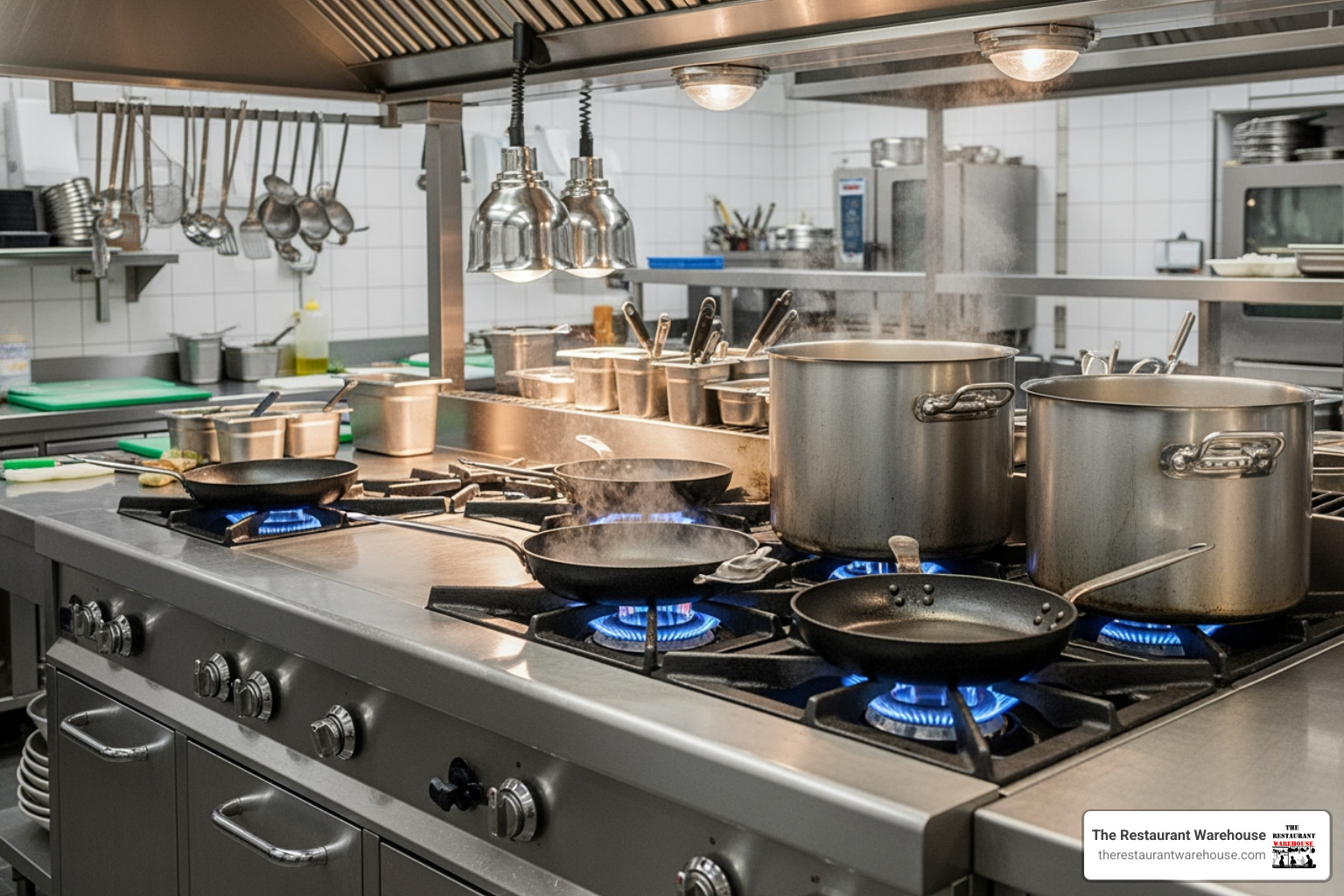
A commercial gas cooktop is one of the most relied-upon pieces of equipment in a professional kitchen. The burner configuration you choose affects how efficiently your team works, how well your menu flows during service, and how much flexibility you have during peak hours.
While six-burner cooktops are among the most common configurations, they aren’t automatically the best choice for every operation. Kitchen size, menu complexity, cooking volume, and workflow all play a role in determining whether a 4-, 6-, or 8-burner setup makes the most sense.
Quick answer: The right commercial gas cooktop burner configuration depends on your kitchen volume, menu, and cooking techniques. Six-burner cooktops are popular in mid- to high-volume kitchens because they balance capacity and space, while smaller or larger configurations may better suit lighter or higher-output operations.
Why 6-Burner Commercial Gas Cooktops Are So Common
Six-burner commercial gas cooktops are widely used because they provide enough cooking zones to handle multiple techniques at once without taking up excessive space. During a busy service, it’s common for cooks to be searing proteins, simmering sauces, boiling pasta, and finishing sides at the same time.
A six-burner layout allows this kind of multitasking without constant pan shuffling. It supports faster ticket times, better pacing, and more consistent execution during rush periods.
Gas cooktops are also favored in commercial kitchens for their immediate heat response. Adjusting a flame delivers instant temperature changes, which is critical for precision cooking tasks like sauce work, sautéing, and finishing proteins.
For a broader overview of professional cooking equipment options, see our Commercial Gas Stove Guide .
Comparing Commercial Gas Cooktop Burner Configurations
| Burner Count | Best For | Typical Use Cases |
|---|---|---|
| 4 Burner | Lower-volume kitchens | Cafés, food trucks, prep kitchens |
| 6 Burner | Mid-volume kitchens | Full-service restaurants, diners, bistros |
| 8+ Burner | High-volume operations | Hotels, institutional kitchens, catering facilities |
Key Features to Evaluate in a Commercial Gas Cooktop
Beyond burner count, performance and durability depend on how a cooktop is built and how it functions day to day. Understanding these features helps avoid under- or over-buying.
Burner Power and BTU Output
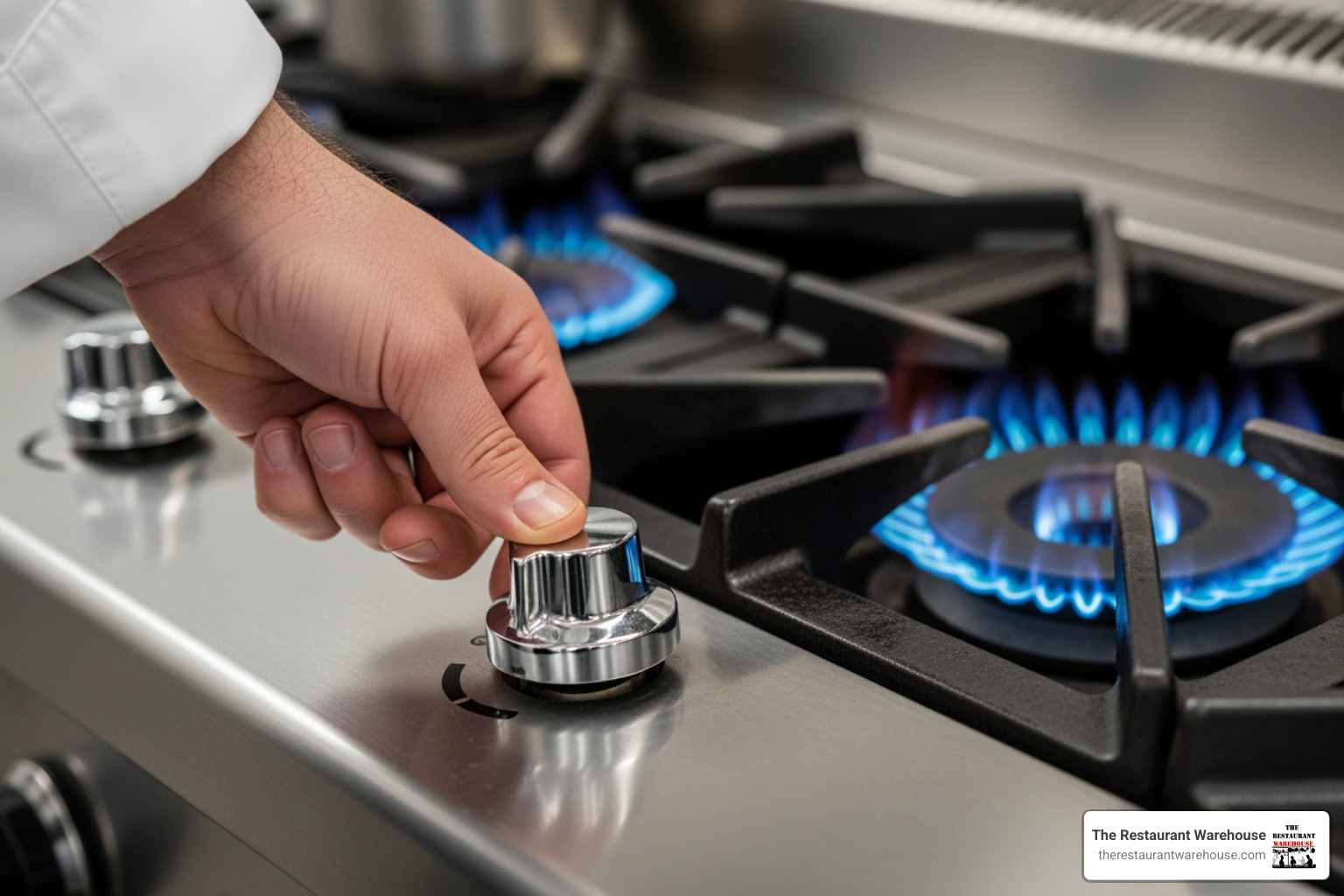
Burner output is measured in BTUs (British Thermal Units). Higher BTU burners recover heat faster and perform better for high-heat cooking, while lower BTU burners are essential for controlled simmering.
- High-output burners (28,000–33,000 BTU): searing, rapid boiling, heavy sauté
- Lower-output burners (5,000–12,000 BTU): sauces, reductions, gentle holding
Some cooktops include dual-ring or dual-flame burners that allow both high heat and low simmer from the same burner, adding flexibility without increasing burner count.
Construction and Durability
Commercial kitchens are demanding environments. Durable construction helps equipment withstand heat, grease, moisture, and constant use.
- Stainless steel fronts, sides, and ledges
- Fully welded frames for structural stability
- Heavy cast iron grates designed for large stockpots
- Metal control knobs and robust valves
These features reduce long-term maintenance issues and help keep equipment in service longer.
Cleaning and Maintenance
Ease of cleaning affects both labor time and sanitation compliance. Well-designed cooktops typically include:
- Lift-off cast iron grates
- Removable burner heads
- Pull-out crumb or drip trays
Daily wipe-downs combined with regular deep cleaning help maintain consistent flame performance and extend equipment life.
Common Mistakes When Choosing a Burner Configuration
- Choosing maximum BTUs on every burner without considering simmer needs
- Overlooking ventilation capacity until after installation
- Underestimating cleaning and maintenance requirements
Installation and Safety Considerations
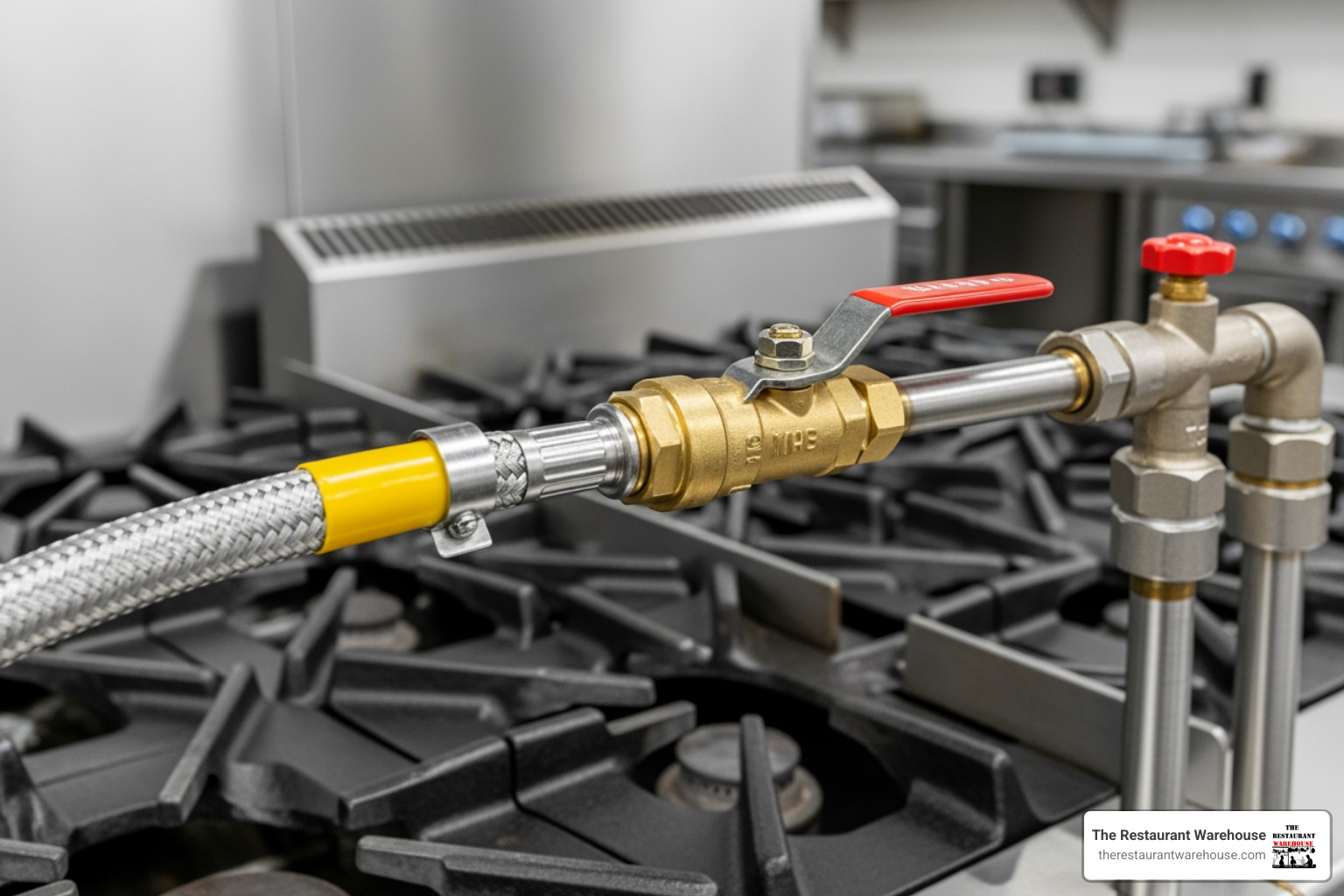
Commercial gas cooktops must be installed by qualified professionals to meet code requirements and operate safely.
- Confirm gas supply capacity and connection size
- Verify fuel type (Natural Gas or Liquid Propane)
- Ensure proper ventilation and hood coverage
- Look for commercial certifications such as NSF and ETL Sanitation
For fire protection and ventilation standards commonly referenced in commercial kitchens, review NFPA 96 .
Price, Value, and Warranty Considerations
Pricing varies based on burner output, construction quality, and configuration. While upfront cost matters, long-term reliability and serviceability often determine overall value.
Warranty coverage typically ranges from one to two years for parts and labor. Always review installation requirements and intended-use clauses, as improper installation can affect coverage.
Frequently Asked Questions
What’s the difference between commercial and commercial-style cooktops?
Commercial cooktops are built for continuous professional use and carry required safety and sanitation certifications. Commercial-style units are designed for residential use and are not intended for commercial kitchens.
Do high-BTU burners require special cookware?
Heavy-gauge cookware performs best. Thin pans can warp or heat unevenly under intense heat.
How often should a commercial gas cooktop be serviced?
Annual professional servicing is common, with more frequent inspections recommended for high-volume operations.
Conclusion
Choosing the right commercial gas cooktop burner configuration comes down to matching equipment capacity with real-world kitchen demands. Six-burner cooktops work well for many professional kitchens, but understanding performance, construction, maintenance, and installation requirements ensures the best long-term fit.
To explore how cooktops integrate into different professional kitchen layouts, see Commercial Ranges .
About The Author

Sean Kearney
Sean Kearney is the Founder of The Restaurant Warehouse, with 15 years of experience in the restaurant equipment industry and more than 30 years in ecommerce, beginning with Amazon.com. As an equipment distributor and supplier, Sean helps restaurant owners make confident purchasing decisions through clear pricing, practical guidance, and a more transparent online buying experience.
Connect with Sean on LinkedIn, Instagram, YouTube, or Facebook.
Leave a comment