

Power Up Your Kitchen with These Electric Catering Oven Picks
Why Electric Catering Ovens Are Changing Modern Kitchens
An electric catering oven is a powerful appliance using electricity to generate heat for baking, roasting, and cooking. Key types and benefits include:
Main Types:
- Convection Ovens - Fan-assisted for even heat distribution.
- Combi Ovens - Combine steam and convection for versatility.
- Deck Ovens - Radiant heat ideal for bread and pizza.
- Countertop Models - Compact units for smaller kitchens.
Key Benefits:
- Precise temperature control for consistency.
- Ventless models available, no hood required.
- Safer operation with no open flames.
- Energy efficient with even heat distribution.
- Easy installation in any location.
Modern kitchens are shifting toward electric equipment. As many U.S. cities commit to carbon-neutral energy and some ban natural gas in new buildings, electric ovens are becoming essential for modern kitchens.
Electric ovens offer best precision that gas can't match. They maintain consistent temperatures, eliminate hot spots, and provide the control needed for delicate pastries and perfectly roasted meats.
A key innovation is the ventless electric oven. Producing minimal grease-laden effluents (well below EPA limits), they can be installed anywhere without expensive ventilation systems. This makes them ideal for food courts, historic buildings, or spaces where ductwork is impossible.
Electric ovens offer the reliability, efficiency, and versatility that today's demanding kitchens demand.
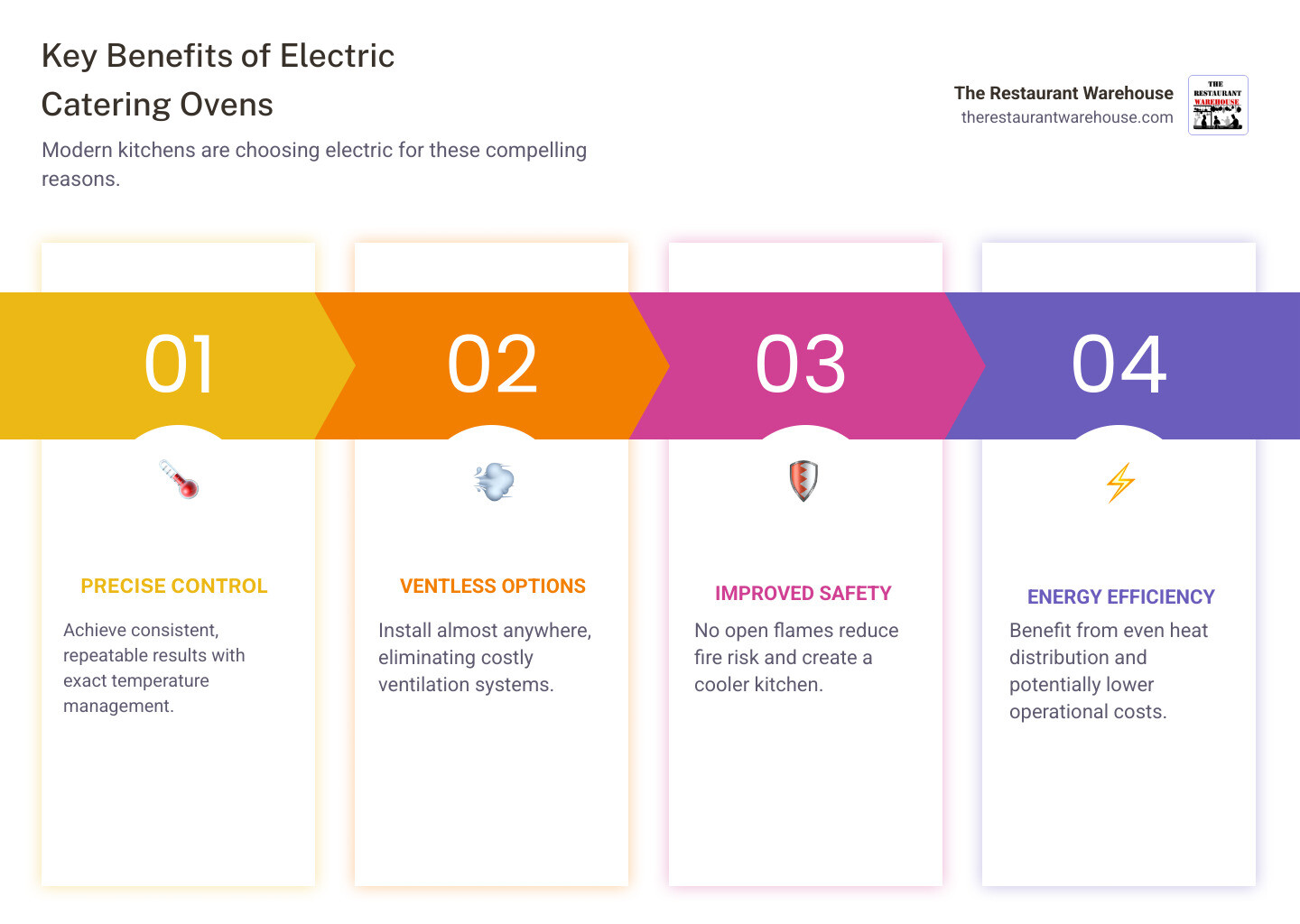
Electric catering oven terms at a glance:
Understanding the Main Types of Electric Catering Ovens
Choosing the right electric catering oven means matching the oven type to your menu, workflow, and kitchen space. Each type excels at specific tasks, so understanding their strengths is key to making a smart choice for your operation.
For a comprehensive look at all your options, check out our A Practical Guide to Comparing Oven Options.
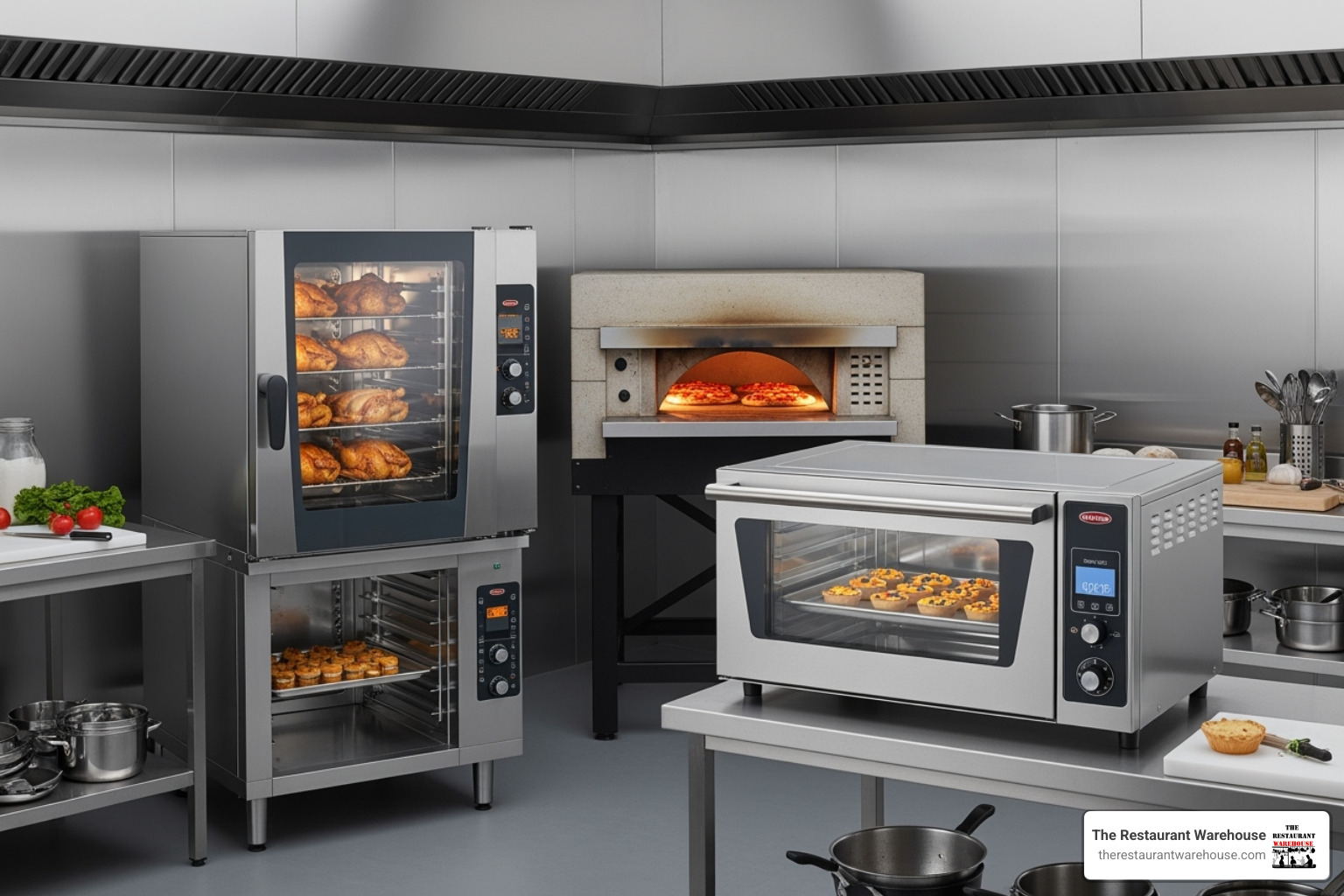
Convection Ovens: The All-Rounder
The electric convection oven is a versatile workhorse. It uses fan-assisted cooking for constant air movement, ensuring even heat distribution and eliminating hot spots. This results in reduced cooking times, even browning, and consistent results. Convection ovens are ideal for baking, roasting large cuts of meat, and browning casseroles. Their circulating air allows for multi-rack cooking with uniform results. For kitchens with limited space, countertop convection models offer professional power in a compact footprint.
Want to dive deeper into what makes these ovens tick? Our Convection Ovens Guide covers everything you need to know.
Combi Ovens: The Ultimate in Versatility
Electric combi ovens combine convection heat with a steam function, offering incredible versatility and precise moisture control in a single unit. This flexibility allows you to switch between dry heat, moist steam, or a combination of both. The benefits include faster cooking times and the ability to cook delicate proteins without drying them out, steam vegetables to retain nutrients, and reheat food to taste freshly made. A major advantage is the ability to cook different items simultaneously without flavor transfer. Combi ovens can handle up to 95% of typical cooking tasks, reducing the need for multiple pieces of equipment.
Learn more about these kitchen powerhouses in our guide: Catering Ovens: Your Kitchen's New Best Friend.
Deck Ovens: For Perfect Crusts and Breads
For artisan breads and pizzas with perfect crusts, electric deck ovens are essential. They use intense, radiant heat from heated stone decks, transferring heat directly to the product. This mimics traditional brick ovens, creating the high-temperature environment needed for superior bread development and crisp crusts. The stone decks retain and distribute heat evenly, making them indispensable for bakeries and pizzerias. Multiple deck configurations allow you to maximize output with independent temperature controls for each deck.
If baking is central to your success, our Industrial Ovens for Baking: Your Recipe for Bakery Success guide will help you make the right choice.
Countertop & High-Speed Ovens: Power in a Small Package
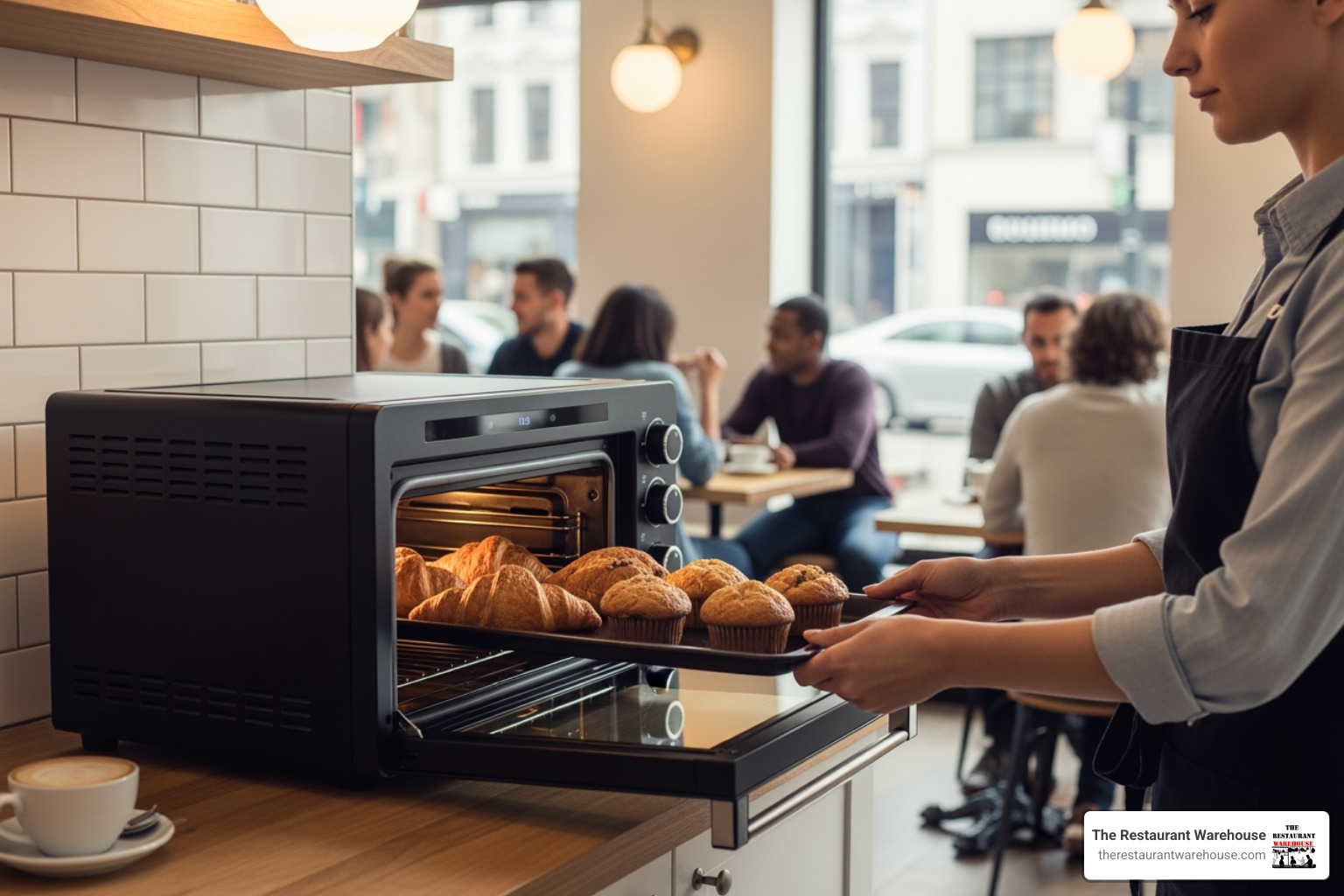
Electric countertop ovens and high-speed models offer powerful cooking performance in a compact footprint, ideal for quick-service restaurants, cafes, and any space-conscious operation. Countertop models provide plug-and-play convenience for small-batch baking or warming. High-speed ovens use rapid cooking technology, combining multiple heating methods to dramatically reduce cooking times. They can produce perfectly melted paninis or crispy pizzas in minutes, delivering the quick turnaround times that keep customers happy.
Key Features to Look for in an Electric Catering Oven
Choosing an electric catering oven involves understanding key technical features to make a smart, long-term investment. Prioritizing features based on your kitchen's needs is crucial for success. For a comprehensive overview, our Electric Ovens Guide offers excellent insights.
Capacity, Size, and Configuration
First, determine how much food you need to cook and where the oven will fit. Consider pan capacity (e.g., full-size, half-size), interior volume for your typical batch sizes, and the oven's external dimensions. Measure your space carefully, including doorways. Double-stack configurations offer twice the capacity on a smaller footprint, while countertop models are perfect for smaller operations or as backup units.
Power, Voltage, and Energy Efficiency
Your oven needs the right electrical setup. Wattage (kW) indicates heating power and speed. Higher wattage generally means faster preheating and recovery. It is critical to match the oven's voltage requirements (e.g., 120V, 208V, 220-240V) and phase (single-phase vs. three-phase) to your building's electrical supply. Always consult a qualified electrician. For lower operating costs, look for ENERGY STAR certified models and quality insulation to retain heat and reduce energy waste.
For a deeper dive into the cost-effectiveness of electric over gas, check out our guide on Electric or Gas Restaurant Equipment.
Controls, Programmability, and Ease of Use
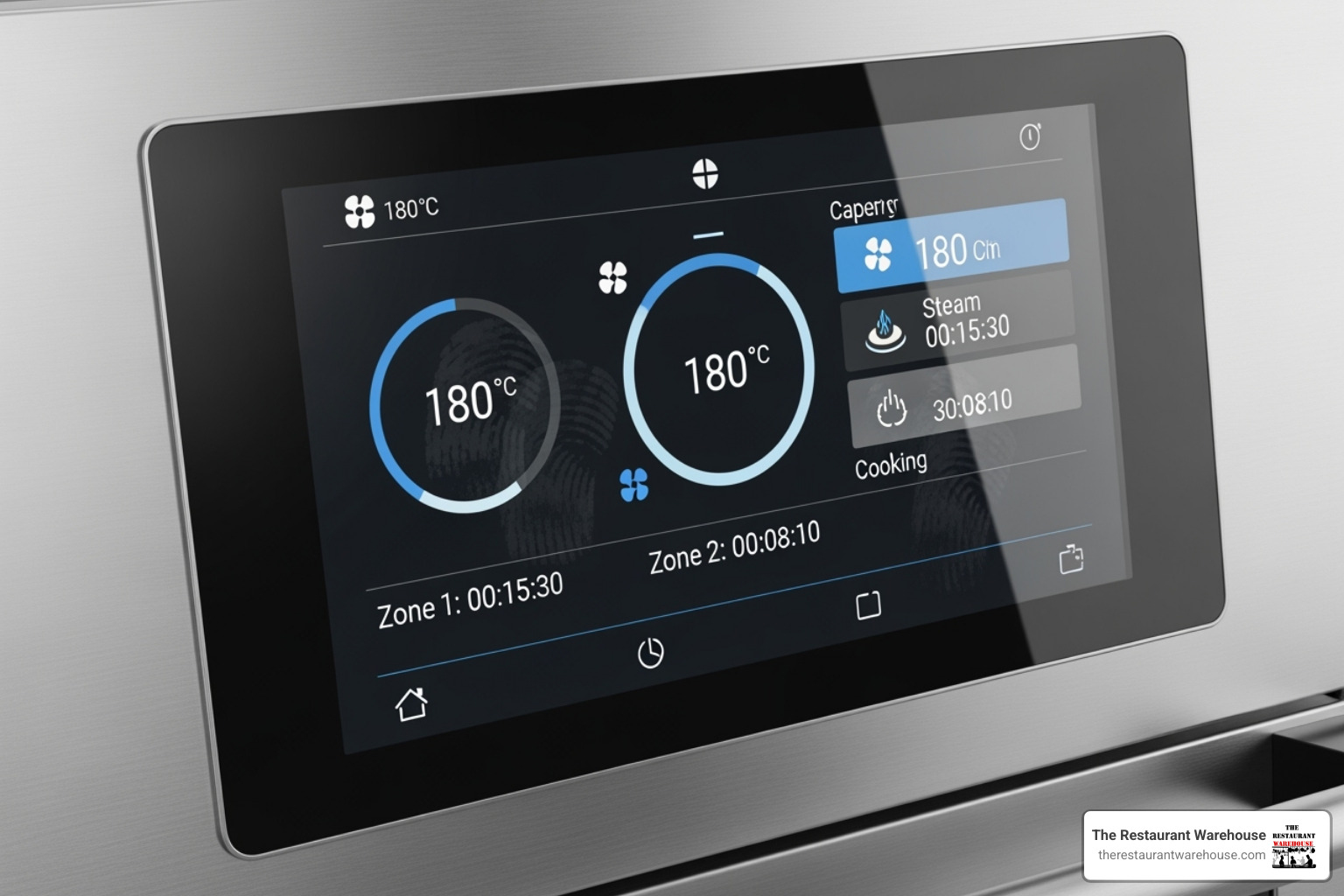
The control system is your daily interface with the oven. Manual dials are straightforward and reliable. Digital touchscreens offer precision and programmability, allowing you to store programmable recipes for consistency across your menu, regardless of the operator. Essential features like built-in timers and temperature probes help manage cooking accurately and prevent overcooking. The best user-friendly interface is one your entire team can master quickly.
Construction and Durability
An oven's construction quality determines its longevity and performance. Stainless steel construction is the industry standard, as it resists corrosion and is easy to clean. Double-pane glass doors provide insulation and allow staff to monitor cooking without opening the door, saving energy. Interior lighting is another practical feature for monitoring food. Easy-to-clean porcelain interiors simplify daily maintenance, while robust door hinges ensure long-term reliability in a busy kitchen. Finally, look for safety features like door interlocks and auto-stop functions to protect staff and your investment.
The Winning Advantages of Going Electric
Beyond specific features, an electric catering oven offers overarching benefits that improve your kitchen environment, food quality, and operational flexibility.
Best Precision and Consistency
Electric catering ovens provide superior temperature management, offering precision within a few degrees of the set point—a level of control gas ovens cannot match. This consistent heat distribution eliminates hot spots, ensuring every item cooks evenly. This precision is crucial for delicate pastries and for roasting meats to exact temperatures for food safety. The result is consistent product quality that customers can rely on.
The Unique Edge of Ventless Technology
Ventless electric catering ovens are a game-changer. Using catalytic converter technology to break down grease and odors, these ovens eliminate the need for expensive ventilation hood systems. This means massive cost savings and incredible installation flexibility. You can place these ovens in locations previously impossible for high-volume cooking, such as historic buildings, food courts, or high-rise structures. The reduced costs extend beyond installation to energy savings from not running large exhaust fans.
For a closer look at how this technology works, check out this Example Ventless Oven Brochure.
Improved Safety and a Cooler Kitchen
Electric catering ovens create a safer work environment by eliminating the risks of open flames, gas leaks, and flare-ups. Many models include safety features like double-stage safety door locks and automatic shut-offs. Electric ovens also produce less ambient heat than gas alternatives, contributing to a cooler kitchen. This improves working conditions, boosts staff productivity, and can lower air conditioning costs.
Purchasing, Installation, and Upkeep
Investing in an electric catering oven is a strategic decision that requires planning for long-term ownership, installation, and maintenance. For essential tips on outfitting your kitchen, explore our Catering Equip Essentials.
How to choose the right electric catering oven for your needs
To choose the perfect electric catering oven, start by analyzing your cooking style and the dishes you prepare most often. A kitchen focused on baking may need a convection oven's precision, while one specializing in pizza requires a deck oven's intense heat. Next, consider your cooking volume to determine the right capacity. Plan for future growth; a slightly larger oven might be a wise investment. Matching your oven type to your food items is the key to success. For insights into selecting the right conventional oven, read Plug and Bake: Electric Conventional Ovens Worth Your Dough.
Installation and Setup Checklist
Correct installation is critical for safety and performance. The most important step is ensuring your kitchen meets the oven's electrical requirements; always use a qualified electrician. Verify space and clearance needs for ventilation and cleaning access. Combi ovens will also require a water line connection for steam, including supply, drainage, and filtration. Finally, check local code compliance for any specific placement rules.
Smart Budgeting for Your Investment
A quality electric catering oven is a significant investment. Create a budget that includes the purchase price, installation, and any necessary upgrades. Financing options can be helpful for managing a large purchase and spreading out the cost. When deciding, consider the return on investment (ROI) from energy savings, reduced food waste, and increased productivity. Focus on long-term value by choosing durable equipment with solid warranties to ensure reliability and minimize downtime.
To understand how to acquire equipment without financial strain, check out our guide on Financing Your Catering Equipment.
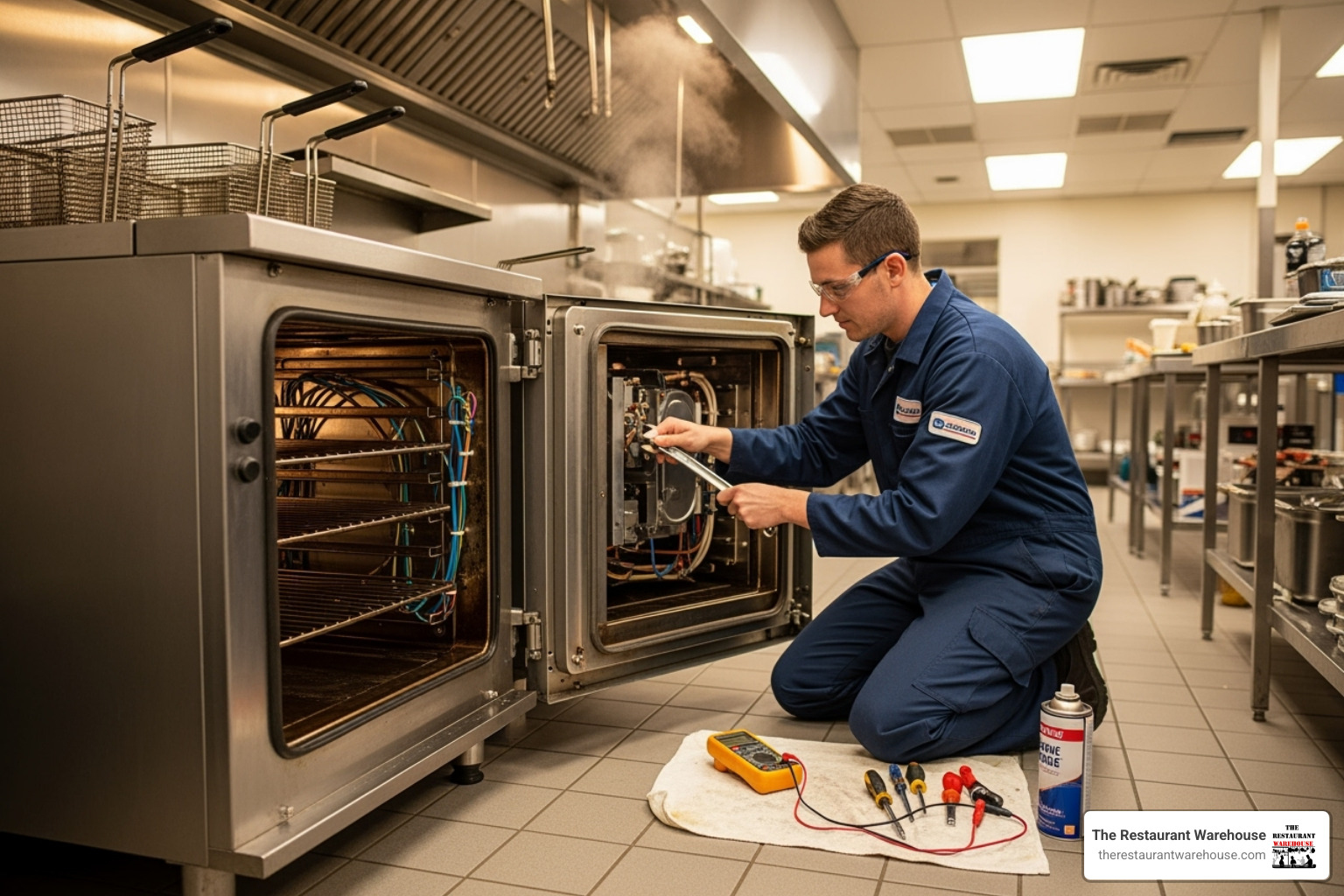
Simple maintenance for your electric catering oven
Consistent care will keep your electric catering oven in peak condition. Daily cleaning of interior and exterior surfaces prevents grease buildup. Regularly perform a gasket inspection on door seals and replace them if they are cracked or worn to prevent heat loss. Schedule regular professional servicing to catch potential issues early. For combi ovens, descaling is crucial to prevent mineral buildup in the steam generator. These practices will significantly extend your equipment's life.
Conclusion: Find the Perfect Electric Oven for Your Kitchen
Electric catering ovens are revolutionizing modern kitchens with unparalleled precision, versatility, and efficiency. They eliminate temperature guesswork and hot spots, ensuring consistent results for every dish. Whether you need a convection, combi, or deck oven, there is an electric model to fit your menu.
The efficiency and safety benefits are significant. Ventless technology offers incredible installation flexibility and cost savings, while the absence of open flames creates a cooler, safer kitchen. Modern features like digital controls and durable stainless steel construction ensure these ovens provide long-term value.
We understand that the right equipment is crucial for success. We are committed to providing top-quality kitchen equipment at great prices, cutting out middleman markups. We believe every kitchen deserves access to professional-grade equipment without the premium price tag.
The right electric catering oven can be a cornerstone of your culinary success, offering faster cooking, consistent results, and improved safety. It's an investment in your kitchen's future.
Ready to take your kitchen to the next level? Explore our complete oven guide to find your perfect match and find how the right equipment can transform your culinary operation.
About The Author

Sean Kearney
Sean Kearney is the Founder of The Restaurant Warehouse, with 15 years of experience in the restaurant equipment industry and more than 30 years in ecommerce, beginning with Amazon.com. As an equipment distributor and supplier, Sean helps restaurant owners make confident purchasing decisions through clear pricing, practical guidance, and a more transparent online buying experience.
Connect with Sean on LinkedIn, Instagram, YouTube, or Facebook.