

Commercial Catering Ovens – Your Kitchen's New Best Friend
Content Removed
This article has been deprecated as part of our decision to retire the commercial oven content cluster.
Decoding the Types of Commercial Ovens
When you step into commercial kitchen equipment, you'll quickly find that ovens aren't just ovens. Each type serves a specific purpose, much like how a chef's knife differs from a bread knife. The variety exists because every kitchen has unique needs, different menu items, and distinct cooking methods that require specialized equipment.
Understanding these differences is crucial for making the right investment in your kitchen. To help you steer the broader equipment landscape, we've put together a comprehensive Restaurant Kitchen Equipment Checklist.
Let's explore the main types of commercial catering ovens you'll encounter and what makes each one special.
Convection Ovens
Think of a convection oven as your kitchen's reliable workhorse. These ovens use a fan circulation system to move hot air throughout the cooking chamber, creating even heat distribution that eliminates those frustrating hot spots you might find in standard ovens.
This constant air movement does more than just heat evenly - it actually reduces cooking time by up to 25%. That means faster service and higher productivity during busy periods. Whether you're roasting a batch of vegetables or baking dozens of dinner rolls, convection ovens deliver consistent results every time.
The beauty of convection ovens lies in their versatility. They excel at everything from delicate pastries to hearty casseroles, making them perfect for restaurants with diverse menus. Many models offer different depth options to accommodate various pan sizes, and some even include gentle bake modes for more sensitive items.
For a detailed look at how these ovens can transform your kitchen efficiency, check out our Convection Ovens Guide.
Combi Ovens
If convection ovens are the workhorses, then combi ovens are the Swiss Army knives of commercial kitchens. These remarkable appliances combine three cooking methods in one unit: steam, convection heat, and dry heat. The real magic happens when you use them in combination cooking mode.
This versatility means you can steam vegetables to perfection, then switch to convection mode for roasting a chicken, and finish with baking desserts - all in the same oven. The combination mode is particularly impressive, cooking up to 50% faster than traditional methods while keeping food moist and flavorful.
Modern combi ovens often feature programmable controls that let you save your favorite cooking profiles. This consistency is invaluable when you need to reproduce the same dish multiple times during service. The ability to inject precise amounts of steam also means you can reheat foods without drying them out.
Our Combined Oven Guide dives deeper into how these versatile units can streamline your kitchen operations.
Pizza Ovens
When pizza is on your menu, nothing beats a dedicated pizza oven. These specialized units are designed to reach and maintain the high temperatures necessary for creating that perfect crispy crust and beautifully melted cheese.
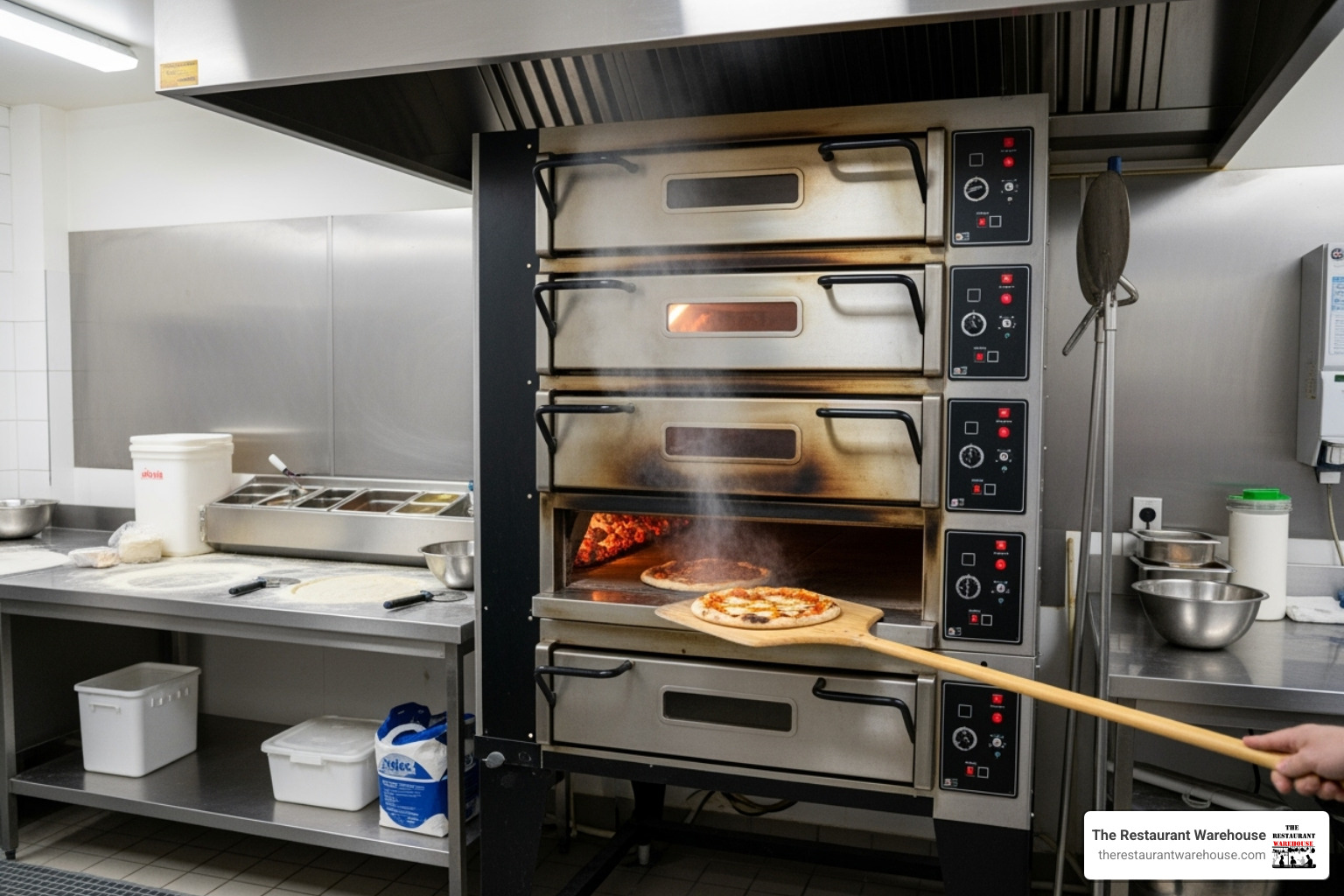
Deck ovens are ideal for artisan-style pizzas, where the dough sits directly on a hot stone surface. This direct contact creates that signature crispy bottom that pizza lovers crave. Conveyor ovens, on the other hand, are perfect for high-volume operations where consistency and speed matter most.
The choice between deck and conveyor depends on your operation's style and volume. Deck ovens give you more control over each pizza, while conveyor ovens ensure consistent results with minimal labor. Both types can handle the intense heat needed for authentic pizza making.
Ready to lift your pizza game? Our guide Deck Out Your Pizza Game With These Commercial Pizza Ovens covers everything you need to know.
Commercial Ranges
A commercial range combines the best of both worlds: a powerful cooktop with multiple burners and an oven base underneath. This space-saving design makes it an all-in-one unit that's perfect for kitchens where every square foot counts.
The cooktop handles your sautéing and boiling needs, while the oven base takes care of baking and roasting. This setup allows your kitchen staff to work more efficiently, preparing multiple components of a dish simultaneously.
Commercial ranges come in various sizes and configurations, from compact 24-inch models perfect for smaller operations to expansive 60-inch units that can handle high-volume cooking. You can choose between gas and electric models, depending on your kitchen's infrastructure and cooking preferences.
For a comprehensive look at how ranges can anchor your kitchen setup, visit Restaurant Cooking Ranges Made Easy: Heat Up Your Kitchen Game.
Commercial Microwave Ovens
While they might not be the stars of the show, commercial microwave ovens are the unsung heroes of kitchen efficiency. These units excel at rapid heating, reheating, steaming, and defrosting - tasks that would otherwise slow down your kitchen workflow.
Commercial microwaves are built differently than home models. They feature high-wattage power and robust construction designed for continuous use. This durability means they can handle the demands of a busy kitchen without breaking down.
From quickly heating soup portions to steaming vegetables or defrosting ingredients, these units save precious time during service. They're particularly valuable in operations where speed is crucial, like cafeterias or quick-service restaurants.
To understand how these efficient units can fit into your kitchen workflow, check out our Understanding Microwave Ovens guide.
Each type of commercial catering oven serves a specific purpose in creating an efficient, productive kitchen. The key is understanding your menu, volume requirements, and cooking methods to choose the right combination of equipment for your operation.
How to Choose the Perfect Commercial Catering Oven
Selecting the right commercial catering oven is a critical decision that impacts your operational efficiency, food quality, and ultimately, your bottom line. It's not just about picking the biggest or most expensive model; it's about finding the perfect fit for your specific business needs, available kitchen space, menu items, and budget. To guide you through this process, we recommend starting with our general Buy Restaurant Equipment Guide, and if financing is a concern, explore Restaurant Equipment Financing Options.
Matching the Oven to Your Business
The type of food service establishment you operate will heavily influence your oven choice:
- Bakeries: If you're a bakery, your oven is your lifeblood. You'll likely need convection ovens, specifically those with deep/bakery depth interiors, to accommodate large sheet pans. Precision is key for delicate baking, ensuring uniform goldening and crispness across all your products. Our Industrial Ovens for Baking: Your Recipe for Bakery Success digs into this further.
- Restaurants: Restaurants often benefit most from versatile ovens like combi ovens for high-volume cooking that requires both speed and moisture retention. Convection ovens are also essential for general baking and roasting. The ability to handle diverse cooking tasks efficiently is paramount.
- Pizza Places: As discussed, a specialized pizza oven (deck or conveyor) is a must. The choice between them depends on your volume and desired pizza style.
Consider your peak hours and anticipated volume. Do you need a single-deck oven, or will a double-deck model be necessary to keep up with demand? Think about the type of food you'll be cooking most frequently. A general-purpose oven might suffice for a varied menu, but a specialized oven will yield superior results for your signature dishes.
Gas vs. Electric: What's the Right Fuel for Your Commercial Catering Oven?
The choice between gas and electric power for your commercial catering oven is a fundamental decision with implications for cost, performance, and kitchen infrastructure. Both have their advantages, and the best choice depends on your specific circumstances.
Here's a comparison to help clarify:
| Feature | Gas Commercial Ovens | Electric Commercial Ovens |
|---|---|---|
| Cost | Often lower operational costs (natural gas can be cheaper) | Can have higher operational costs depending on electricity rates |
| Performance | Provide moist heat, often preferred for roasting and some baking. Quick heat recovery. | Offer very even, dry heat, excellent for consistent baking and precise temperature control. |
| Temperature Control | Can be slightly less precise due to flame fluctuations, but modern controls mitigate this. | Generally offer superior temperature consistency and precision. |
| Installation | Requires gas line hookup and proper ventilation (hood system). | Requires appropriate electrical wiring and circuit capacity. |
| Heat Up Time | Generally faster initial heat-up. | Can have slower initial heat-up, but consistent once hot. |
| Energy Efficiency | Modern gas ovens are very efficient, but electric can be more efficient in specific applications. | Often seen as more energy-efficient for precise temperature control. |
When making this choice, consider your existing utility hookups. Does your kitchen already have a robust gas line, or is your electrical infrastructure better suited for high-wattage appliances? That gas ovens often provide a moist heat that some chefs prefer for roasting, while electric ovens are renowned for their incredibly even heat distribution, making them ideal for delicate baking. For more insights, our guides on Electric or Gas Restaurant Equipment and Commercial Gas Stoves Guide offer further details.
The Rise of the Ventless Commercial Catering Oven
Perhaps one of the most exciting innovations in the commercial catering oven market is the advent of ventless ovens. This technology is a game-changer for many businesses, particularly those with limitations on traditional ventilation systems.
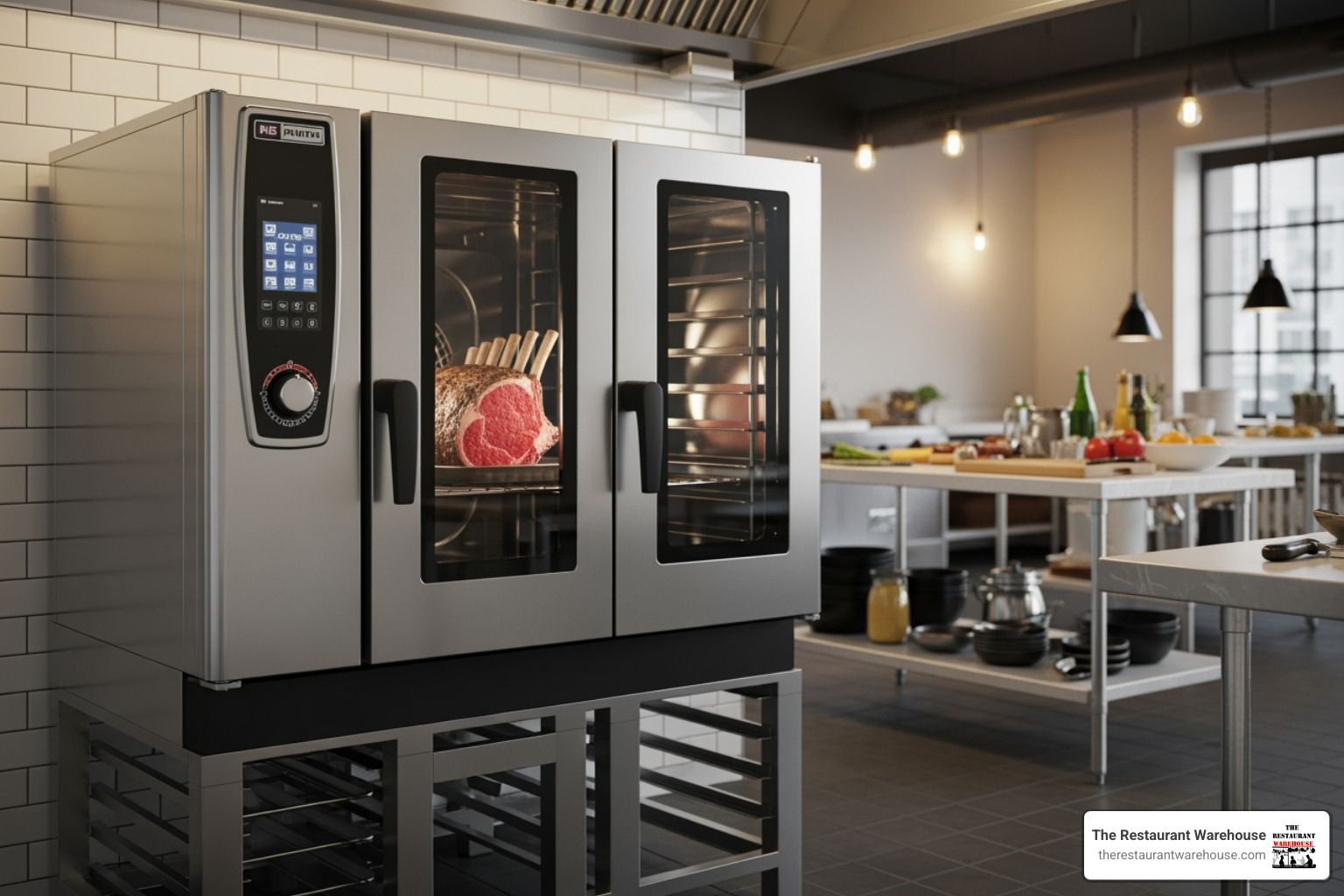
What is a ventless oven? Simply put, it's an oven that doesn't require a traditional exhaust hood system. This is achieved through sophisticated catalyst technology that eliminates grease-laden vapors and odors internally, converting them into harmless water and carbon dioxide. Imagine the flexibility this offers!
Why choose ventless? The benefits are substantial:
- Installation Flexibility: You can place these ovens almost anywhere, freeing you from the constraints of existing ductwork. This means no additional utilities or space required for a bulky hood.
- Cost Savings: Eliminating the need for a costly hood system, installation, and ongoing maintenance (like filter cleaning) can lead to significant savings.
-
Ideal for Challenging Locations: Ventless ovens are a perfect solution for:
- Historic buildings or older structures where modifying the building for a traditional hood is restricted or impossible.
- Leased premises where landlords may not permit extensive kitchen modifications.
- Non-traditional spaces like shopping centers, food courts, air terminals, high-rise structures, stadiums, and arenas where complex ductwork is prohibitively expensive or impractical.
- Expanding Capacity: If your kitchen is already maxed out on hood space, a ventless oven allows you to expand cooking capacity without costly renovations.
How does the ventless technology work? These ovens use a unique catalyst design, often made of specialized stainless steel foil coated with materials, positioned above and below the oven fan. As air recirculates, the coated fins react with VOCs (Volatile Organic Compounds) and grease vapor on a molecular level, converting them into H2O and CO2. This technology is incredibly effective; for instance, some ventless ovens have been tested to produce only 1.17 mg/m3 of grease-laden effluents, far exceeding the EPA's allowable limit of 5mg/m3.
This innovation truly allows you to "retro fit new and existing models at any time," providing unparalleled flexibility. To learn more about this technology, check out our No Vent, No Problem: Your Guide to Ventless Hood Systems for Restaurants and this helpful Ventless Oven Brochure.
Boosting Kitchen Performance and Longevity
Getting the most out of your commercial catering oven goes far beyond just picking the right model. Think of it as a long-term partnership - you want to maximize every bit of performance while ensuring your investment keeps paying dividends for years to come. It's about creating a kitchen that runs like a well-oiled machine, where efficiency and productivity become second nature.
How Ovens Drive Kitchen Productivity
Your commercial catering oven is like having a boostd assistant that never takes a break. The difference in productivity between a well-chosen commercial oven and a basic residential unit is honestly night and day.
Faster preheat times mean you're not standing around waiting for your oven to get ready during the morning rush. Commercial ovens are built to heat up quickly and maintain that heat consistently, so you can start cooking almost immediately. When every minute counts during peak service, this speed advantage translates directly into more orders fulfilled and happier customers.
The high-capacity racks in these ovens are where the magic really happens. Picture this: some models offer 11-position rack guides that can hold full-size sheet pans. Whether you choose a single-deck or double-deck model (with options like 13 single-deck and 11 double-deck models available from leading manufacturers), you can cook massive batches simultaneously. That's the difference between baking two dozen cookies and two hundred dozen cookies in the same timeframe.
Modern programmable controls have revolutionized how kitchens operate. From improved LED displays to fully programmable systems, these features let you save recipes and automate cooking processes. Your morning baker can program the perfect croissant cycle, and your evening chef can replicate it exactly. Even basic analog dial controls offer reliable performance, but the advanced options eliminate guesswork entirely.
The beauty of consistent results cannot be overstated. Even heat distribution and precise temperature control mean less food waste, fewer remakes, and staff who can focus on creativity rather than troubleshooting. Some ovens even feature overnight slow-cook modes that reduce manual oversight, freeing up your team for other important tasks.
Best Practices for Cleaning and Maintenance
Here's the truth about commercial kitchen equipment: treat it well, and it'll be your faithful companion for decades. Neglect it, and you'll be shopping for replacements sooner than you'd like. The good news is that proper care for your commercial catering oven doesn't require a PhD in engineering.
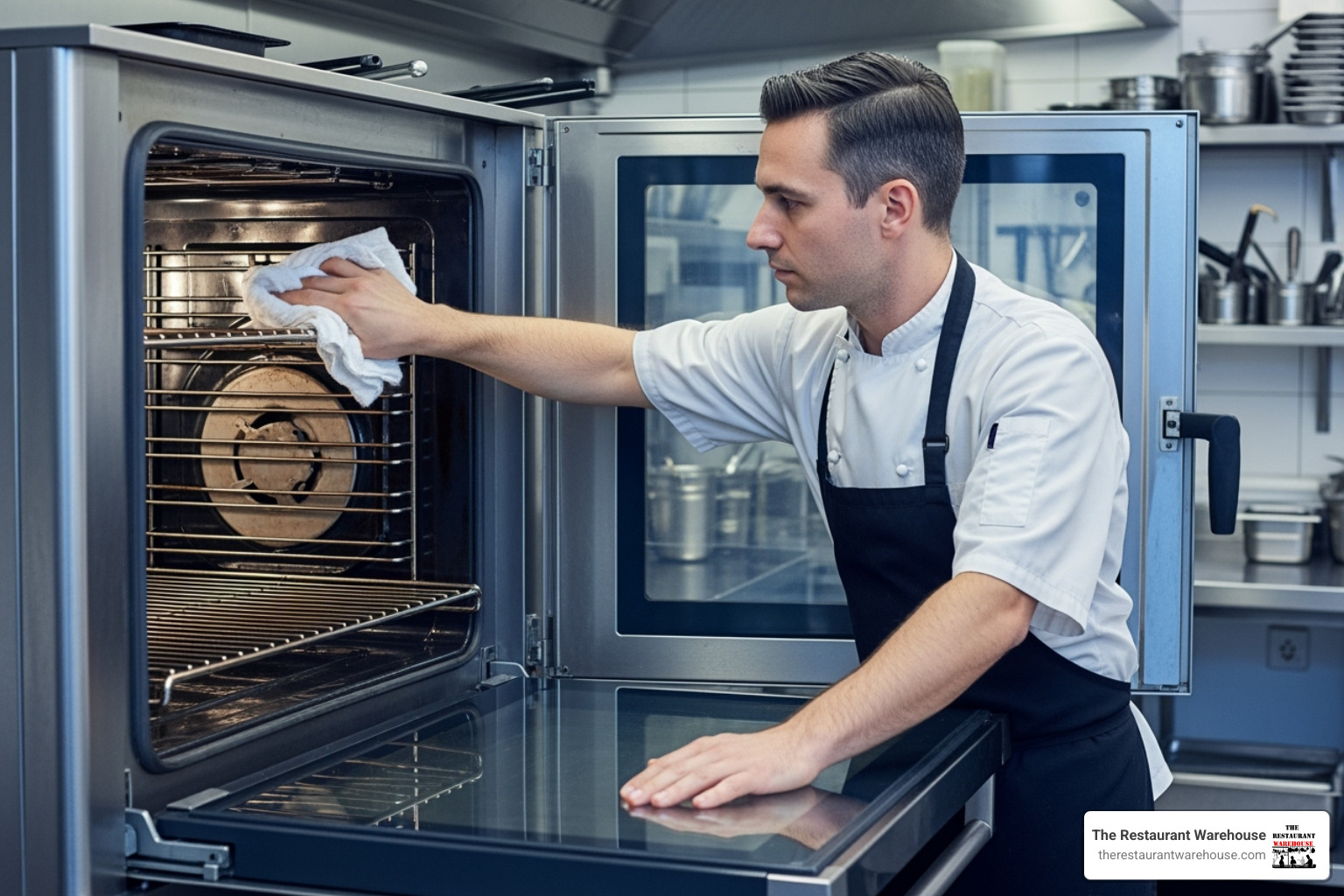
Daily cleaning should become as routine as turning on the lights. Brush out crumbs and food debris regularly - it takes two minutes but prevents hours of scrubbing later. Wipe down the interior with a non-abrasive sponge or cloth, and clean spills immediately before they become baked-on nightmares.
Monthly deep cleaning is where you show your oven some real love. Soak those racks in soapy water while you tackle the interior with commercial oven cleaner. Just remember to protect electrical components like control boxes from liquids during cleaning - water and electronics don't play nicely together.
Gasket care might sound boring, but these door seals are crucial for maintaining temperature and energy efficiency. Inspect and clean them regularly, and replace damaged gaskets promptly. A worn gasket is like leaving your front door open while running the air conditioning.
For pizza ovens with stones, never use water or cleaning solution directly on hot stones - they'll crack faster than you can say "pepperoni." Simply brush off crumbs and scrape away baked-on residue. Some advanced convection models even come with patented, award-winning dishwasher-safe removable doors, making cleaning surprisingly easy.
Preventing grease buildup isn't just about cleanliness - it's about safety. Accumulated grease can become a fire hazard and seriously impact your oven's performance. For more detailed maintenance guidance, check out our Confection Oven Tips.
The Importance of Energy Efficiency
In today's commercial kitchen, energy efficiency isn't just about being environmentally conscious - though that's certainly important. It's about keeping more money in your pocket every month while running a more sustainable operation.
ENERGY STAR® certification is your best friend when shopping for ovens. This label means the appliance meets strict energy efficiency guidelines set by the EPA. Some manufacturers proudly offer over 20 ENERGY STAR® certified models, and the numbers speak for themselves: certified convection ovens are approximately 20 percent more energy efficient than standard models, while combination ovens are about 30 percent more efficient.
The reduced utility bills from these certified ovens add up quickly. ENERGY STAR certified gas convection ovens can save an estimated $1,700 over their lifetime, while electric models can save up to $7,300. That's real money that stays in your business instead of going to the utility company.
Heat recovery systems and improved insulation are the technical wizardry that makes this efficiency possible. These systems capture and reuse heat that would otherwise be wasted, while superior insulation and high-quality gaskets keep the heat where it belongs - inside the oven cooking your food.
The environmental benefits are impressive too. Outfitting an entire kitchen with ENERGY STAR certified equipment could prevent about 42,000 pounds of greenhouse gas emissions annually. That's like taking several cars off the road for a year, all while saving money on your energy bills.
Choosing energy-efficient equipment proves that doing right by the planet and doing right by your bottom line aren't mutually exclusive goals.
Conclusion
Your journey to finding the perfect commercial catering oven doesn't have to be overwhelming. With this guide, we've aimed to provide the definitive and final word on the topic, covering everything from oven types to maintenance. Think of this as the last resource you'll need when choosing a trusted partner for your kitchen – one that will work alongside you through busy lunch rushes, late-night baking sessions, and everything in between.
We've walked through the essential considerations together: matching your oven type to your specific business needs, whether you're running a cozy bakery that needs precise temperature control or a busy restaurant requiring versatile cooking capabilities. The choice between gas and electric power sources, the exciting possibilities of ventless technology, and the importance of proper maintenance all play crucial roles in your decision.
The right commercial catering oven is an investment in your business's success. It's about more than just cooking food – it's about efficiency that keeps your kitchen running smoothly, versatility that adapts to your menu changes, and reliable performance that your customers can taste in every dish.
Maintenance might not be the most exciting topic, but it's what transforms a good oven into a great long-term partner. Regular cleaning, energy-efficient operation, and proper care will keep your oven performing at its best for years to come.
At The Restaurant Warehouse, we understand that every kitchen has unique needs and budget considerations. That's why we focus on providing quality commercial restaurant equipment at wholesale pricing, cutting out the middleman to bring you better value. We're not just selling equipment – we're helping you build the foundation for culinary success.
Whether you're opening your first restaurant or upgrading an existing kitchen, the right oven choice will pay dividends in productivity, food quality, and customer satisfaction. Take your time, consider your specific needs, and remember that we're here to help you make the best decision for your business.
Ready to take the next step? Find the perfect oven for your kitchen in our complete restaurant ovens for sale guide and let's get your kitchen equipped for success.
About The Author

Sean Kearney
Sean Kearney is the Founder of The Restaurant Warehouse, with 15 years of experience in the restaurant equipment industry and more than 30 years in ecommerce, beginning with Amazon.com. As an equipment distributor and supplier, Sean helps restaurant owners make confident purchasing decisions through clear pricing, practical guidance, and a more transparent online buying experience.
Connect with Sean on LinkedIn, Instagram, YouTube, or Facebook.