

Plug and Bake: Electric Conventional Ovens Worth Your Dough
Why Electric Conventional Ovens Are Perfect for Budget-Conscious Kitchens
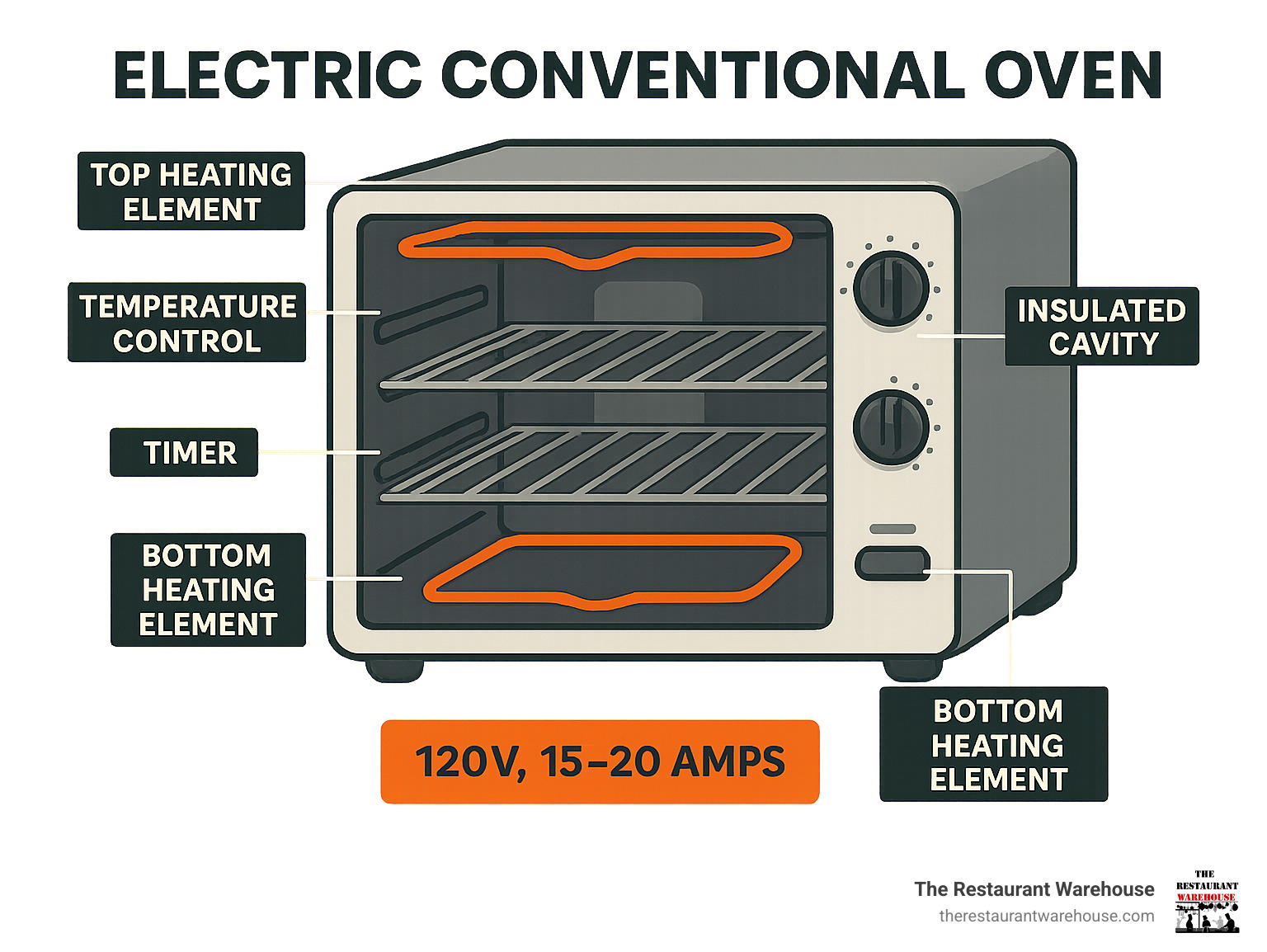
An electric conventional oven uses top and bottom heating elements to cook food with radiant heat - no fans, no fancy circulation, just reliable baking that works with every recipe you know. Here's what makes them worth considering:
Key Benefits: - Budget-friendly - Cost less than convection models - Recipe-ready - Most recipes are written for conventional ovens - Simple operation - Basic controls, fewer parts to break - Reliable results - Predictable heating for roasts and casseroles
Common Sizes: - Countertop: 0.8-1.2 cu ft - Wall mount: 2.3-2.7 cu ft
- Range style: 5.3-6.3 cu ft
Power Requirements: - Small units: 120V, 15-20 amps - Full-size ovens: 240V, 20-30 amps
These workhorses heat up in 7-10 minutes and maintain steady temperatures without the complexity of convection fans. They're especially good for businesses just starting out or upgrading from older equipment.
The biggest advantage? Simplicity. When your kitchen staff can focus on cooking instead of learning complicated oven settings, service runs smoother and food comes out consistent.
Electric conventional oven helpful reading: - commercial ovens - commercial deck oven - commercial smoker oven
Why This Guide Matters
We've researched hundreds of models, compared specs, and talked to countless kitchen operators to bring you this comprehensive roundup. Whether you're opening your first restaurant or replacing aging equipment, this guide will help you make an informed purchase decision without getting overwhelmed by marketing fluff.
Our step-by-step approach covers everything from basic operation to installation requirements, so you can choose the right oven for your specific needs and budget.
Electric Conventional Oven 101: How They Heat, Cook, and Differ
What Exactly Is an Electric Conventional Oven?
Think of an electric conventional oven as the reliable friend who always shows up when you need them. It's built around a simple but effective design: two heating elements (one at the top, one at the bottom) that create radiant heat to cook your food. No fancy fans whirring around, no complex air circulation systems - just straightforward heat that gets the job done.
The magic happens when electricity flows through those coils, heating them until they glow red-hot. The bottom element handles most of your baking and roasting, while the top element kicks in for broiling and that perfect golden-brown finish on casseroles. This creates what we call "static air" cooking - the hot air stays put instead of being pushed around by fans.
Here's the beautiful part: when your grandmother's recipe calls for "350°F for 30 minutes," that's exactly what you set. No guesswork, no conversions, no wondering if your food will cook faster or slower than expected. Most recipes were developed using conventional ovens, so you're working with the same conditions the recipe writer had in mind.
The heating elements typically require amp requirements of 20-30 amps for full-size units, running on 240-volt power. Smaller countertop models can get by with standard 120-volt outlets, making them perfect for kitchens with limited electrical capacity.
Conventional vs. Convection: Heat-Circulation Showdown
The big difference between conventional and convection ovens comes down to one thing: air movement. Convection ovens add a fan and often a third heating element to keep hot air circulating throughout the oven cavity. This moving air speeds up cooking by about 25% and can cook at temperatures 25°F lower than conventional ovens.
But here's what many people don't realize - that extra speed isn't always better. Electric conventional ovens excel at dishes that benefit from gentle, even heat. Think slow-roasted meats that need time to develop flavor, or delicate custards that can curdle if cooked too quickly.
The energy use difference is worth considering too. While convection ovens cook faster (which can save energy), conventional ovens use simpler technology with fewer moving parts. That means lower upfront costs and fewer maintenance headaches down the road.
| Feature | Conventional | Convection |
|---|---|---|
| Air circulation | Static | Fan-assisted |
| Cooking time | Standard | 25% faster |
| Temperature | Recipe standard | 25°F lower |
| Energy use | Moderate | More efficient |
| Price | Lower | Higher |
| Recipe compatibility | Perfect | Needs adjustment |
For most home cooks and small food service operations, conventional ovens hit the sweet spot between performance and simplicity. You get reliable results without having to learn new cooking techniques or invest in expensive equipment.
Want to dive deeper into the convection side? Check out our Convection Ovens Guide for a complete comparison.
Buying Checklist: Features That Matter Before You Plug and Bake
When you're shopping for an electric conventional oven, it's easy to get caught up in flashy features and forget the basics. But here's the thing - the fundamentals matter more than the bells and whistles. Let's walk through what actually makes a difference in your daily operations.
Capacity, Controls, and Smart Extras
Capacity should be your starting point, not an afterthought. Think about your busiest service periods and what you'll realistically need to cook at once. A compact 0.9 cubic foot countertop unit works perfectly for coffee shops doing pastries and light fare. If you're running a full restaurant, you'll want something in the 5.3 to 6.3 cubic foot range that can handle multiple sheet pans or large roasts.
Wall-mount units typically offer 2.3 to 2.7 cubic feet - that sweet spot for dedicated baking stations where you need serious capacity without taking up floor space.
Controls come down to durability versus features. Traditional knob controls are nearly bulletproof and your staff can learn them in about five minutes. They're also cheap to fix when something goes wrong. Digital touchscreen controls offer more precision and programmable cooking cycles, but they cost more upfront and more to repair down the road.
Here's where it gets interesting - smart extras aren't just marketing fluff anymore. Wi-Fi connectivity lets you monitor cooking from the dining room or office, which is genuinely useful during busy periods. Features like air fry add-ons and no-preheat options can speed up service without requiring separate equipment.
Self-cleaning cycles with delay timers are worth considering if you're running lean on staff. Schedule the cleaning cycle to run after closing, and you'll come in to a spotless oven.
Power, Venting, and Clearance Basics
Let's talk about the unglamorous but absolutely critical stuff - power requirements. Most full-size ovens need 240-volt power and a dedicated 20-amp breaker. This isn't optional, and it's not something you can work around with adapters or extension cords.
Smaller countertop units run on standard 120-volt outlets but still pull serious power - usually 15 to 20 amps. That means they need their own circuit too, or you'll be tripping breakers during your lunch rush.
Amp requirements vary, but here's what we typically see: countertop units draw 12-15 amps at 120V, wall ovens need 20-25 amps at 240V, and range-style ovens can pull 25-30 amps at 240V.
Venting is where many installations go wrong. Modern ovens use dual venting systems to keep exterior surfaces from getting dangerously hot, but only if you give them proper clearance gaps. Plan for at least 2 inches on the sides and 4 inches at the back for built-in models.
ENERGY STAR certification might seem like an environmental nice-to-have, but it's really about your bottom line. Certified models use about 20% less energy, which translates to roughly $165 per year in savings for a typical oven. Over a five-year lifespan, that's real money.
Before you make any final decisions, take a look at our Practical Guide to Comparing Commercial Oven Options for more detailed comparisons.
The Electric Conventional Oven Roundup: Models Worth Your Dough

After testing dozens of models and talking to kitchen operators across the country, we've narrowed down the field to these standout performers. Each one tackles different needs and budgets, but they all share one thing: reliable performance when you need it most.
The key is matching the right oven to your specific situation. A busy coffee shop has different needs than a full-service restaurant, and your budget plays a big role too. Let's break down what actually works in real kitchens.
Countertop Workhorse for Small Spaces
When floor space is tight but you still need serious cooking power, compact countertop units deliver surprising results. These electric conventional ovens typically offer 0.9 cubic feet of capacity and plug right into standard outlets - no electrician required.
The sweet spot for power sits around 1,400-1,600 watts, which gives you quick 5-minute preheating without overloading your electrical system. Look for models with multiple rack positions and removable crumb trays that actually come out easily (you'd be surprised how many don't).
What impressed us most during testing was consistency. A local bakery owner showed us how her countertop unit handles 40 croissants per batch with even browning across all positions. The secret? Good insulation and dual-pane glass doors that hold heat without creating dangerous exterior temperatures.
The best models include 60-minute timers with auto shutoff - a safety feature that's saved more than one kitchen from disaster when things get hectic during rush periods.
Wall-Mount Wonder for Serious Bakers
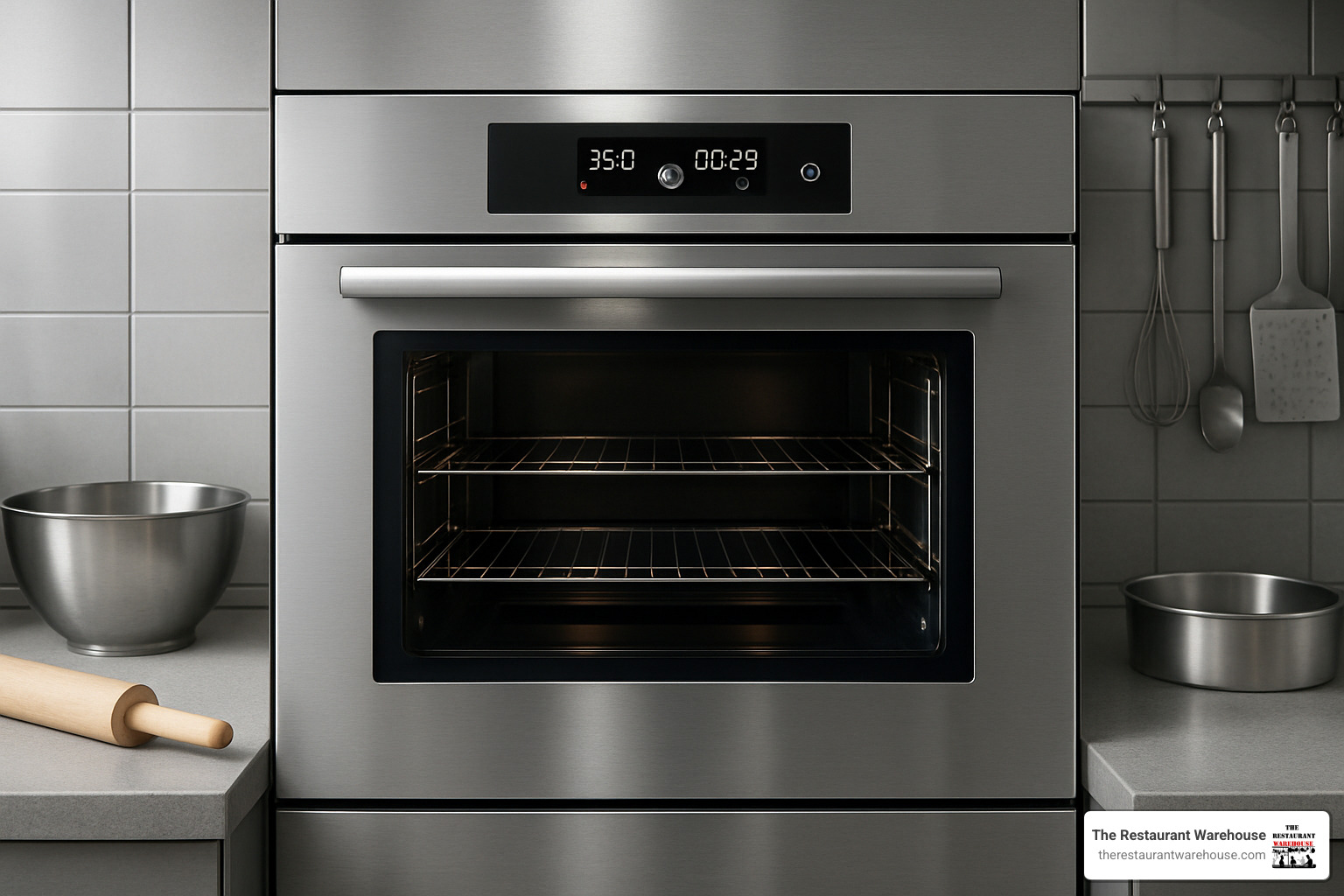
For dedicated baking operations, wall-mount units offer the perfect balance of capacity and convenience. These electric conventional ovens fit into standard 24-inch niches and provide true full-size cavity space without eating up valuable floor real estate.
The installation requires 240-volt power and proper clearances, but the payoff is huge. If you’re worried about the upfront investment, financing an electric oven can make it much more attainable for bakeries scaling up or replacing aging gear. You get 5-6 rack positions that can handle multiple sheet pans simultaneously, plus porcelain enamel interiors that wipe clean with minimal effort.
What sets the best wall-mount models apart is their dual heating zones. The top and bottom elements can be controlled separately, letting you brown tops while keeping bottoms from overcooking. This feature alone has revolutionized how many bakeries handle delicate pastries.
Professional bakers consistently tell us these units excel at batch consistency. Once you learn the hot spots (every oven has them), you can produce identical results batch after batch. The key is rotating pans halfway through longer bakes and understanding how your specific unit behaves.
Double-Deck Dynamo for High-Volume Kitchens
When you need serious production capacity, stackable double-deck units change the game completely. These powerhouses typically draw 12.5 kW per deck and include programmable menu settings that take the guesswork out of complex cooking schedules.
The beauty of double-deck systems lies in their flexibility. You can run different temperatures in each cavity, letting you bake bread on top while slow-roasting meats below. The independent controls mean one deck can be cleaning itself while the other stays in production.
High-volume operators love the programmable menus that store exact time and temperature combinations for signature dishes. Train your staff once, program the settings, and get consistent results regardless of who's running the oven.
Smart Range All-Rounder with Built-In Air Fry
Modern slide-in ranges combine traditional electric conventional oven reliability with features that make daily operations smoother. Wi-Fi connectivity lets you monitor cooking progress through smartphone apps, while no-preheat air fry settings handle appetizers and sides without waiting for full preheating.
The large viewing windows with interior lighting reduce heat loss from door openings - a small detail that adds up to real energy savings over time. Built-in air fry modes give you convection-style results when you need them, while keeping conventional mode as your reliable default.
What impressed us most was the steam-assist cleaning feature. Instead of harsh chemicals or high-heat self-cleaning cycles that can damage oven components, these units use steam to loosen baked-on food for easy wiping.
For complete specifications and pricing across all categories, check out our Restaurant Ovens for Sale Guide.
Care, Cleaning & Safety: Keep Your Oven Baking for Years
Quick-Clean Hacks You'll Actually Use
The secret to keeping your electric conventional oven running smoothly isn't complicated - it's consistency. A few minutes of daily care beats hours of scrubbing later, and your oven will thank you with years of reliable service.
Daily maintenance is surprisingly simple. While your oven is still warm after service, take a damp cloth and wipe down the interior surfaces. Those little spills and splatters come off easily when they haven't had time to turn into concrete-hard deposits. It's like the difference between washing dishes right after dinner versus letting them sit overnight - we all know which one is easier.
The enamel interior in most modern ovens is designed to make this process painless. Unlike older models with rough surfaces that trapped grease, today's smooth finishes wipe clean with minimal effort.
Weekly deep cleaning doesn't have to be a dreaded chore. Pull out the rack removal system (most racks slide out completely) and give them a good wash in hot, soapy water. While they're soaking, tackle the interior with your oven's steam-assist feature if it has one. Just add water to the designated reservoir, and the steam loosens baked-on residue without harsh chemicals.
For ovens without steam assist, a simple trick works wonders: place a shallow pan of water on the bottom rack during your messiest cooking sessions. The steam prevents splatters from sticking and makes cleanup much easier later.
Self-clean cycles are tempting, but use them wisely. Yes, they'll blast away stubborn buildup at temperatures over 800°F, but that intense heat can stress your oven's components over time. When you do run a self-clean cycle, make sure your kitchen ventilation is running full blast and plan for 2-4 hours of downtime while the cycle completes and the oven cools down.
The cool-touch door technology in newer models helps with safety during cleaning, but always let the oven cool completely before attempting any manual cleaning.
Safety First: From Installation to Daily Use
Your electric conventional oven is a powerful piece of equipment that deserves respect. Proper safety practices protect both your staff and your investment, starting with correct installation and continuing through daily operation.
Electrical safety begins before your oven even arrives. Every full-size unit needs a grounded outlet with the correct amperage rating - typically 20-30 amps at 240 volts. This isn't optional or negotiable. Using undersized circuits or extension cords creates fire hazards and voids warranties. When in doubt, have a qualified electrician perform a circuit check before installation.
Daily operation safety becomes second nature with proper training. Always use gloves and mitts when handling hot items - those door handles can reach 123°F during operation, hot enough to cause burns. The door latch mechanisms on modern ovens include safety features, but they only work if staff uses them correctly.
Child lock features aren't just for home kitchens. In busy restaurant environments, accidental temperature changes or timer resets can ruin entire batches of food. Enable these locks during peak service hours to prevent costly mistakes.
Installation requirements go beyond just electrical connections. Maintain proper clearances - typically 2 inches on the sides and 4 inches at the back for built-in models. These gaps aren't suggestions; they're essential for proper ventilation and preventing dangerous heat buildup.
Know your emergency procedures before you need them. Locate your electrical panel and practice shutting off power to the oven quickly. Keep appropriate fire extinguishers nearby (Class K for grease fires), and remember that water and electrical fires don't mix - ever.
Regular maintenance checks should include inspecting door seals for wear or damage. A compromised seal doesn't just waste energy; it can create hot spots on exterior surfaces that pose burn risks to staff.
For additional maintenance strategies that work across different oven types, check out our Convection Oven Tips guide.
Frequently Asked Questions about Electric Conventional Ovens
Do I need a dedicated electrical circuit?
Absolutely, and this is one question you don't want to guess about. Any electric conventional oven drawing more than 15 amps needs its own dedicated circuit - no sharing allowed.
Most countertop units require their own 20-amp, 120V circuit, while full-size ovens need dedicated 240V circuits rated anywhere from 20 to 50 amps depending on the specific model you choose. This isn't just some manufacturer's suggestion to make your life difficult - it's actually required by electrical codes for safety reasons.
Here's what happens when you try to cut corners: sharing circuits with other appliances will cause breakers to trip right in the middle of your dinner rush. Even worse, it can void your warranty and create serious fire hazards. The upfront cost of proper electrical installation typically runs $200-500 for new circuit installation, but this one-time expense prevents ongoing headaches and keeps your kitchen running safely.
Think of it as insurance for your investment. A properly installed dedicated circuit means your oven gets the clean, consistent power it needs to maintain accurate temperatures and reliable performance.
What foods cook best in a conventional setting?
This is where electric conventional ovens really shine, and the answer might surprise you. The "old-fashioned" still-air cooking method actually produces superior results for many kitchen staples.
Roasted meats are absolutely perfect in conventional ovens. The still air allows for controlled browning while keeping the interior moist and tender. You get that beautiful caramelized exterior without drying out expensive cuts of beef or poultry.
Casseroles and stews benefit from the even, gentle heat that prevents scorching of delicate cream sauces or cheese toppings. The stable temperature zones mean your lasagna cooks evenly from edge to center without those frustrating burnt corners.
Bread and pastries develop proper crust texture thanks to predictable heat distribution. Professional bakers often prefer conventional ovens because they can count on consistent results batch after batch.
Large items like whole turkeys, prime rib roasts, and full sheet pan meals work beautifully because the stable temperatures give you complete control over the cooking process.
Some foods need a little extra attention but still work great. Cookies might need pan rotation halfway through for perfectly even browning, and pizza works best on the bottom rack for crispy crusts. When you're cooking multiple items at once, just plan for slightly longer cooking times.
How do I convert convection recipes to conventional?
Here's some good news: you probably won't need to convert many recipes at all. Most cookbooks, online recipes, and even professional kitchen manuals are written for conventional ovens because they're still the most common type in kitchens everywhere.
But when you do encounter a convection recipe, the conversion is straightforward. Increase the temperature by 25°F and extend the cooking time by 25%. So if a convection recipe calls for 325°F for 20 minutes, you'd use 350°F for 25 minutes in your conventional oven.
The key is to check for doneness about 5 minutes before your adjusted time is up. Every oven has its own personality, and factors like altitude, humidity, and even the age of your heating elements can affect timing slightly.
For even browning, especially with cookies or multiple pans, rotate everything halfway through the cooking time. This simple step ensures that hot spots don't create unevenly cooked food.
The beauty of conventional ovens is their predictability. Once you get to know your specific unit's quirks, you'll be able to cook by sight, smell, and experience rather than constantly adjusting for different cooking methods.
Conclusion
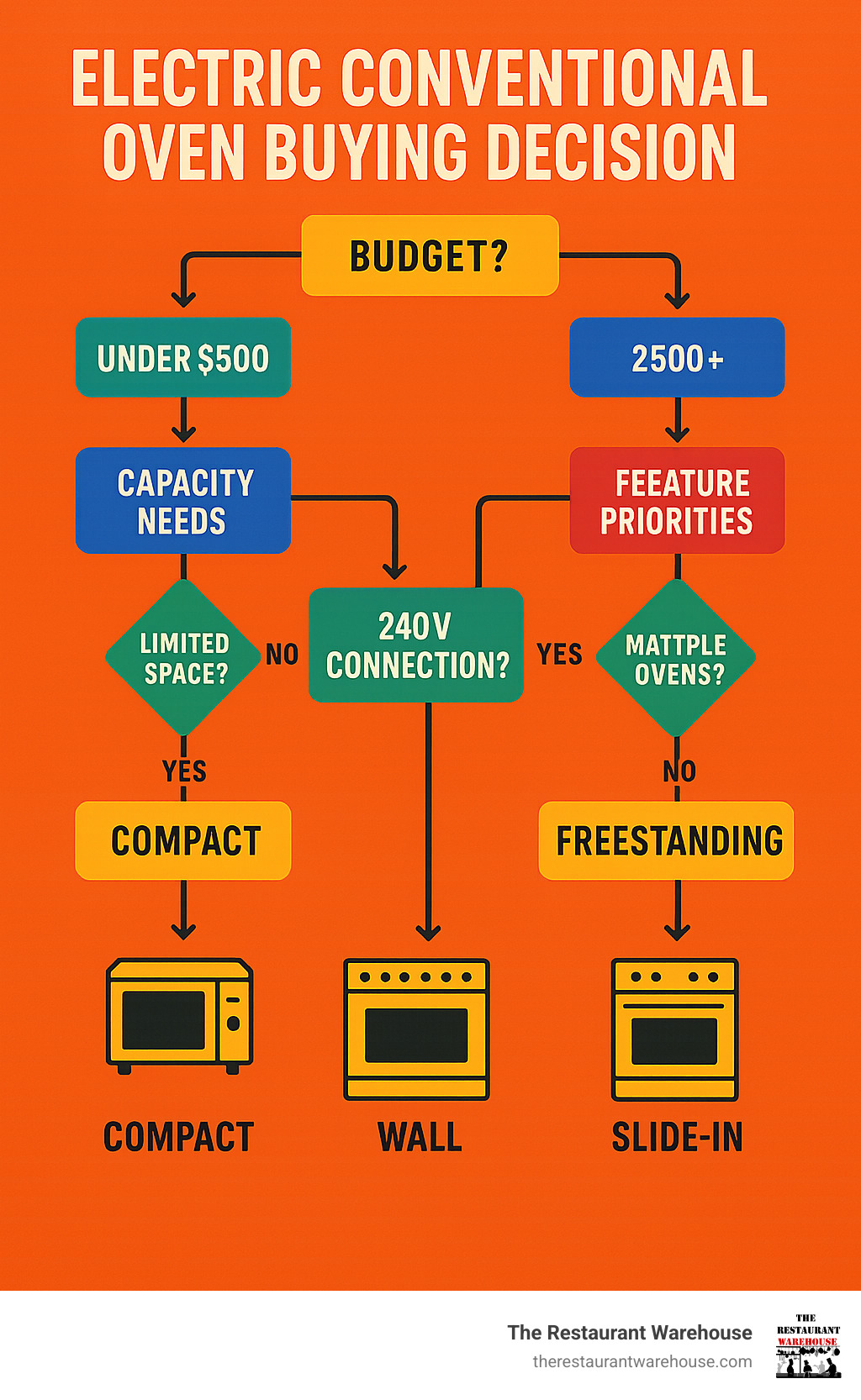
Choosing the right electric conventional oven doesn't have to be overwhelming. These reliable workhorses have been the foundation of successful kitchens for decades because they simply work. No fancy features to break down, no complicated settings to confuse your staff - just consistent, predictable cooking that delivers the results your customers expect.
The beauty of conventional ovens lies in their simplicity. When you're running a busy kitchen, the last thing you need is equipment that requires a manual to operate. Your electric conventional oven will heat up when you turn it on, maintain the temperature you set, and cook food exactly like the recipes expect. That's the kind of reliability that keeps your operation running smoothly.
We've seen too many restaurant owners get caught up in the latest bells and whistles, only to realize that what they really needed was solid, dependable equipment that works day after day. Whether you're starting with a compact countertop unit or investing in a full-size range, you're making a smart choice that will serve your kitchen for years to come.
At The Restaurant Warehouse, we believe great equipment shouldn't break the bank. That's why we work directly with manufacturers to bring you wholesale pricing without the retail markup. When you're already investing in your kitchen's future, every dollar saved on equipment is a dollar you can put toward growing your business.
Your perfect oven is out there, and it's probably simpler than you think. Start with your capacity needs and available space, then work backward to features. Most operators find that basic models with solid construction and reliable heating elements serve them better than complex units with features they never use.
The best investment is one that keeps working. When you choose quality equipment at fair prices, you're not just buying an oven - you're buying peace of mind. Your staff can focus on creating great food, and you can focus on running your business.
Ready to find your next electric conventional oven? Browse our complete selection of restaurant equipment and find why thousands of operators trust us for their equipment needs. We're here to help you make the right choice for your kitchen and your budget.
About The Author

Sean Kearney
Sean Kearney used to work at Amazon.com and started The Restaurant Warehouse. He has more than 10 years of experience in restaurant equipment and supplies. He graduated from the University of Washington in 1993. He earned a BA in business and marketing. He also played linebacker for the Huskies football team. He helps restaurants find equipment at a fair price and offers financing options. You can connect with Sean on LinkedIn or Facebook.
Leave a comment