
Commercial Kitchen Hoods

Commercial Hanging Ventless Hood System
The Restaurant Warehouse
Out of stock
Get a Custom Quote in 1 Business Day. Fill out the hood questionnaire below and email it to info@therestaurantwarehouse.com, or use the form on th...
View full details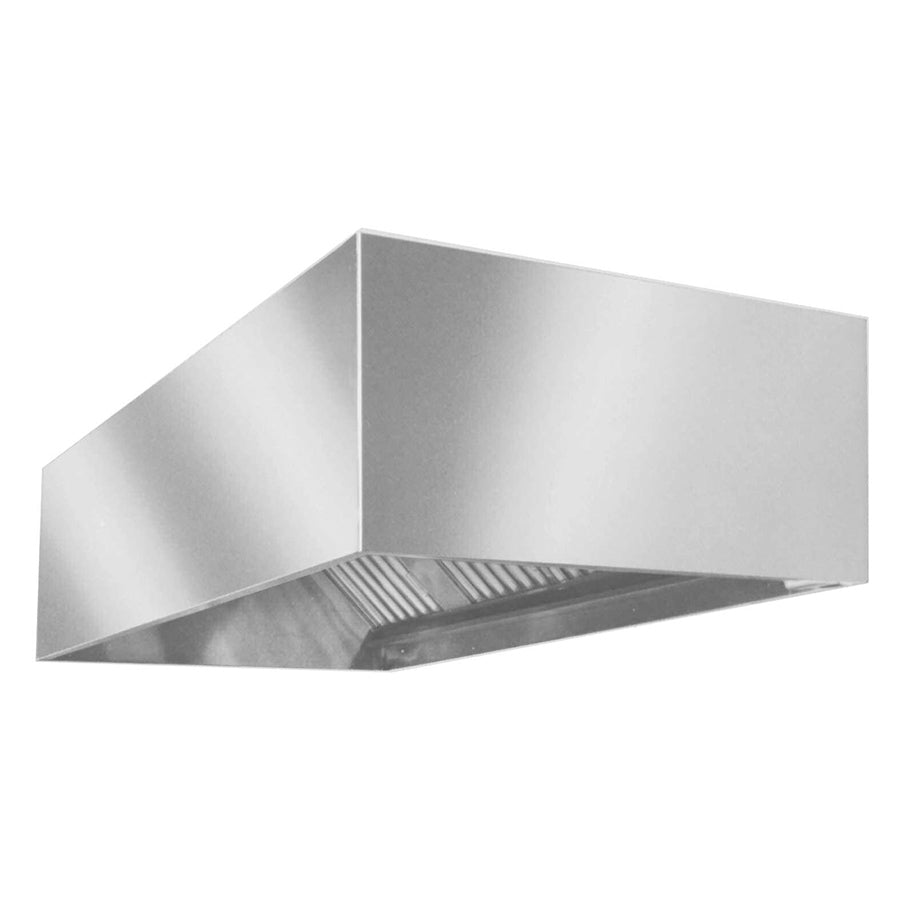
Commercial Kitchen Hood Buying Guide
Choose a commercial kitchen hood around the appliances, cooking process and building, not simply the length of the cooking line. A restaurant exhaust system must address capture, filtration, airflow, fire protection and service access together. For locations where an outside duct route is difficult, a listed ventless system may be an option for specified compatible equipment, subject to local approval.
Start with our Commercial Hanging Ventless Hood System if you are evaluating the currently offered electric-appliance option. The sections below also explain conventional ducted hoods and other planning choices; they do not imply that every system discussed is available in this collection. Confirm the exact package, approved appliance schedule and installation requirements before ordering.
Type I and Type II Commercial Hoods
Match the hood to the cooking emissions. Grease-producing cooking and steam-only processes create different ventilation needs, and an appliance's fuel or name alone does not determine the correct system. Review the actual menu and operating conditions with the designer and approving authority.
| Hood classification | Purpose | What to establish before selecting |
|---|---|---|
| Type I grease hood | Capture grease-laden vapors and smoke from the applicable cooking process | Approved appliance duty, grease removal, exhaust or listed system arrangement, and required fire protection |
| Type II heat or condensate hood | Address heat or moisture from applicable non-grease-producing processes | Whether the equipment and menu qualify, how condensate is handled, and applicable exhaust requirements |
Do not substitute a Type II hood for a grease-producing cookline. UL's commercial cooking guidance distinguishes Type I grease capture from Type II heat and steam removal, and explains that an appliance requiring Type I protection controls the classification where appliances share a hood (UL commercial cooking guide).
Electric cooking equipment can still produce grease and smoke. A general room exhaust fan or residential-style range hood is not automatically an approved alternative for commercial cooking. Likewise, a stock-pot stove or oven should be assessed by its actual use rather than assumed exempt because it is not a fryer.
Ducted Exhaust Versus Ventless Hood Systems
A conventional ducted system moves captured air outside through the specified exhaust arrangement. A recirculating system filters the captured airstream and returns it to the room. This is a separate selection question from grease versus heat-only service; “ventless” is not a third hood classification that bypasses the cooking hazard.
| Planning issue | Ducted system | Listed ventless or recirculating system |
|---|---|---|
| Air path | Approved duct route and exterior discharge | Recirculation through the specified filtration system |
| Building work | Review duct access, penetrations, supports, discharge location and replacement air | Review mounting, electrical service, room ventilation, heat load and filter access |
| Appliance compatibility | Design around the exact appliance schedule and applicable cooking duty | Use only the appliances and cooking applications permitted by the system listing |
| Ongoing care | Maintain the hood, grease-removal devices, fan and duct system as applicable | Maintain each filter stage, controls, interlocks and integral protection as specified |
| Approval | Coordinate the complete installation with the local authorities | Confirm acceptance of the specific listed arrangement before purchase |
UL identifies UL 710 with commercial exhaust hoods and UL 710B with commercial recirculating systems. Its guidance describes separate ductless hoods for specified listed electric cooking appliances as well as appliances with integral recirculating ventilation. A generic “ventless” label is not evidence that an arbitrary fryer, griddle or range is compatible (UL listing and recirculation guidance).
What Ventless Does Not Mean
Ventless does not mean installation anywhere, no permits, no fire protection or no building ventilation. The room still needs an appropriate ventilation, heating and cooling design. Heat and moisture loads, cooking odors, occupancy and the approved operating environment remain part of the review even when a dedicated outside exhaust duct is not used.
Do not assume every recirculating hood includes HEPA filtration, identical odor control or the same interlocks. Obtain the exact filter schedule, permitted cooking load, replacement requirements and service instructions. Compare ongoing filter costs and availability rather than relying on a universal replacement interval or an advertised percentage saving.
The Currently Offered Hanging Ventless Hood
The Commercial Hanging Ventless Hood System listing describes an electric-only application with wall and island configurations. Use that product page to begin the quote process, then request the current approved drawing and written confirmation of the proposed appliances. Do not interpret a general electric-oven description as approval for every electric appliance or for a gas-fired food-truck cookline.
Confirm model identification, listing documentation, mounting, electrical requirements, clearances and the scope of included fire-protection work in the written quote. If published dimensions or clearance statements differ, resolve them against the approved documentation before planning construction. Pre-installed or pre-piped components do not establish that site commissioning and approval are complete.
Hood Size, CFM and Capture Performance
List the exact appliances under the hood, their dimensions, fuel, rated input, cooking surfaces and intended menu. Include oven-door openings, fryer vats, open-flame equipment and any planned future additions. Hood length alone cannot describe the capture requirement, and kitchen floor area alone is not a dependable exhaust-sizing method.
The hood listing and installation documents may specify appliance restrictions, overhang, mounting height, minimum airflow and other conditions. Greenheck directs installers to the hood's label for these details and to the authority having jurisdiction for surrounding clearances. Use the requirements for the actual hood rather than transferring a generic six-inch overhang or a fixed CFM-per-foot rule to every project (Greenheck installation guidance).
Wall Canopy, Island and Close-Coupled Arrangements
Compare the mounting arrangement with the cooking line and surrounding air movement. A wall layout, an island exposed on multiple sides and a close-coupled oven arrangement are not interchangeable simply because their nominal widths match. Allow access to filters, controls, suppression components and equipment service points in the final layout.
Review doors, service windows, supply diffusers and other sources of cross-drafts that could disturb capture. The designer should evaluate exhaust flow with duct resistance and fan performance where applicable. A fan's advertised free-air capacity is not a substitute for the required performance of the installed system.
Makeup Air and Building Balance
For ducted systems, coordinate replacement air with kitchen exhaust, other building exhaust and the existing HVAC system. Too little replacement air can create excessive negative pressure; poorly directed supply air can also disturb the hood's capture zone. Greenheck's installation guidance addresses total kitchen exhaust and replacement air as a combined balance, not a universal percentage applied independently of the building (kitchen air-balance guidance).
Have the design team determine whether and how replacement air must be conditioned for the location. A hood package should not be purchased on a blanket promise that tempered makeup air is never needed. Review noise, staff comfort and interaction with adjacent dining areas alongside the required capture performance.
Commercial Kitchen Fire Suppression
Ventilation and fire suppression perform different jobs. A grease hood captures cooking emissions, while the specified automatic extinguishing system protects the cooking hazards and the associated areas identified by its design. Neither a grease filter nor a portable extinguisher replaces an automatic system where one is required.
UL's commercial cooking guidance describes automatic protection for Type I hood systems under the model fire code, with UL 300 or applicable equivalent evaluation and installation according to the system listing. Select protection for the exact appliances and arrangement rather than assuming one brand, tank size or nozzle layout suits every kitchen (UL fire-extinguishing system guidance).
What to Confirm in the Fire-Protection Scope
- Protected hazards: Identify the appliances and any hood, plenum or duct areas covered by the design.
- Detection and manual actuation: Confirm the approved detection arrangement and accessible manual activation point.
- Energy shutdown and interlocks: Have the installer document the required fuel or electrical shutdown and the designed fan/control behavior.
- Portable extinguishers: Confirm the appropriate type, placement and training separately from the fixed system.
- Commissioning and records: Identify who completes installation, testing, certification, local sign-off and recurring service.
Wet-chemical systems are used for appropriate commercial cooking-oil hazards, but purchase decisions must follow the evaluated system and qualified designer's recommendation. Do not select a generic dry-chemical industrial system as an assumed equivalent. Likewise, “Ansul equipped” or another brand reference is not a substitute for the actual design and completion documents.
Greenheck distinguishes factory-coordinated or pre-piped fire-protection work from final hookups, testing and certification by a certified installer. Ask what remains to be done on site and include that work in the budget. Never move nozzles, substitute components or bypass an interlock to accommodate a changed appliance layout (fire-system completion requirements).
Food Truck and Concession Trailer Hood Planning
A mobile kitchen combines a confined cooking area with transport, changing service locations and limited utilities. Plan the hood, appliance layout, fire protection, structural supports and fuel or electrical systems together. A residential exhaust fan, an open service window or an electric appliance is not an automatic exemption from the approved ventilation plan.
For a food-truck fryer, supply the designer with the exact model, fuel, oil-vat arrangement and neighboring equipment. For ranges, hot plates and stock-pot cooking, identify both the equipment and the menu. Do not carry broad burner-output recommendations, gas-pipe sizes or clearance numbers from a general food-truck article into the hood design.
Fryer proximity to open flames, combustible wall construction and the location of the cooking line all need review against applicable requirements and appliance instructions. A stainless-steel wall covering does not by itself establish the rating of the construction behind it. Obtain approval for any proposed protective arrangement instead of improvising a shield.
NFPA's food-truck guidance calls for fire-extinguishing protection for appliances producing grease-laden vapors, appropriate portable extinguishers, operation of exhaust systems during cooking and regular grease removal. It also emphasizes worker training in emergency response and fuel shutdown; apply the requirements of the jurisdictions where the truck will operate (NFPA food-truck safety guidance).
After transport or changes to the cooking line, follow the approved checks for equipment position, clearances, suppression coverage and visible damage. Refer loose supports, damaged piping or altered appliance positions to the appropriate service professional before operation. Keep service records and approved plans available rather than assuming a stationary-kitchen installation transfers unchanged to a trailer.
Cleaning, Inspection and Service Planning
Make maintenance access part of selection before the hood is ordered. Staff need the permitted access to grease filters and collection points, while technicians need access to the system components they service. A difficult-to-reach filter or inaccessible duct section can become a continuing operational problem.
| Workstream | Planning requirement | Keep distinct from |
|---|---|---|
| Routine operator checks | Use the manual's checks for filters, grease collection, indicators and abnormal operation | Internal repairs or changes to safety controls |
| Grease-system inspection and cleaning | Set the schedule around cooking activity, observed accumulation and adopted requirements | A promise that every kitchen needs the same monthly or annual cleaning interval |
| Ventless filtration maintenance | Follow the exact cleaning and replacement instructions for each filter stage | Assuming all filters are washable or interchangeable |
| Fire-suppression service | Arrange qualified inspection, testing and maintenance under the adopted requirements and system instructions | Hood cleaning or a staff visual check |
Inspection frequency and the need for grease removal are related but not identical. Keep records of the condition found and work completed, and do not treat a clean visible canopy as proof that the entire exhaust system is clean. UL's guidance separates grease-system cleaning from fire-extinguishing-system service and describes at least six-monthly fire-system service or inspection and service after activation under the model requirements; confirm the applicable schedule with your provider and authority (UL maintenance guidance).
Smoke escaping from the capture area, unusual fan noise, persistent odors, damaged filters or an interlock warning deserve investigation. Follow the manufacturer's shutdown guidance and arrange service rather than increasing fan speed, removing filters or defeating controls as an improvised fix. Changes to the menu or equipment can also require the original design to be reassessed.
If a fire occurs, follow the emergency plan, evacuate and contact emergency services. Do not use water on a cooking-oil fire or attempt to reset a discharged suppression system yourself. NFPA advises immediate evacuation of a food truck and limits extinguisher use to small fires by trained people; return affected equipment to service only after the required professional assessment and restoration (NFPA emergency guidance).
Prepare a Complete Hood Quote
Send the same project information to each supplier so quotes can be compared on equivalent scope. A low canopy price may omit the exhaust fan, ductwork, controls, replacement-air equipment, fire-system completion or installation. For recirculating equipment, include approved appliance compatibility, replacement filters and building-system review in the comparison.
| Information to provide | Why it matters |
|---|---|
| Site address and approving jurisdiction | Identifies the applicable plan-review and permit process |
| Appliance model list and menu | Defines cooking emissions, fuel, load and listing compatibility |
| Dimensioned layout and photographs | Shows hood location, nearby surfaces, ceiling conditions and service access |
| Duct route or ventless proposal | Allows review of discharge, penetrations or the recirculating-system application |
| Electrical, fuel and HVAC information | Supports coordinated utilities, interlocks and building air balance |
| Fire-protection scope | Separates supplied components from installation, testing and approval work |
| Delivery and project constraints | Identifies access, lifting, lease restrictions and required scheduling |
Review the hanging ventless hood product page for the quote-request process and questionnaire. Confirm final pricing, lead time, included components and responsibilities in writing. Avoid budgeting around guaranteed energy savings, universal installation prices or an assumed exemption from permits.
Compare Restaurant Hood Costs Beyond the Canopy
Separate the purchase into equipment, installed-project cost and ongoing ownership cost. Two quotes can look similar while assigning very different work to the buyer. Ask each supplier to identify included items, exclusions and the contractor responsible for completing each part of the system before comparing totals.
| Budget category | Questions to ask |
|---|---|
| Equipment package | Does the quote include the specified hood, filters, fan, controls, lighting and any applicable replacement-air or suppression components? Which items are supplied separately? |
| Building and installation work | Who prices supports, lifting, electrical work, approved penetrations and any required duct route? Are access constraints or landlord approvals still unresolved? |
| Project completion | Who coordinates permits, inspections, system testing, air balancing where applicable, fire-protection completion and operator handover? |
| Recurring expenses | What cleaning, filter replacement, inspection and service work does this exact system require? Obtain local service quotes rather than applying one annual allowance to every restaurant. |
| Support after purchase | Which warranty applies to each component, who handles a service call, and how are replacement filters or other service parts obtained? |
Give bidders the same appliance schedule and site information. If one proposal changes the hood arrangement or uses recirculation instead of outside exhaust, compare the complete approved installation and operating requirements, not just the lower equipment price. Keep any future appliance additions visible in the design discussion; extra hood length alone is not permission to change the cookline later.
Questions About Energy Controls and Operating Hours
Ask whether the proposed system uses constant-volume operation or an approved demand-controlled kitchen ventilation arrangement. For example, Greenheck's kitchen controls documentation describes systems that monitor cooking temperature and adjust exhaust and supply fan speeds as the cooking load changes. This is a design option to discuss, not a feature promised for every hood in this collection.
Request an operating-cost comparison using your actual service hours, cooking pattern, utility rates and any heating or cooling required for replacement air. Have the designer explain the controls, minimum operating conditions and safety interlocks. Do not assume a variable-speed switch alone creates a suitable demand-control system or reduce airflow manually to pursue a projected saving.
Check Filter and Service Access Before Ordering
Ask how staff will remove, handle and reinstall the specified grease filters and empty collection points using the manufacturer's procedure. Confirm the filter identification, replacement source and approved cleaning method. A washable metal filter and a disposable filtration stage do not necessarily share the same care instructions.
Review the service-access plan against the finished kitchen, including nearby shelves, ceiling features and equipment. Ask the installer to show how the applicable fan, duct access points, controls and protection components will remain reachable for qualified service. Resolving access on the drawing is preferable to discovering after installation that routine work requires moving other equipment.
Commercial Kitchen Hood Questions
Can a ventless hood be used over a propane fryer or gas range?
The currently offered hanging ventless product is described for electric appliances, not propane or natural gas. UL's recirculating-system guidance also specifies electric-appliance applications; obtain written compatibility confirmation for the exact system and equipment rather than making a substitution (UL ductless hood guidance).
Does a UL listing guarantee approval in every city?
No. The listing establishes evaluated conditions for the product, while the installation must also meet the applicable code and approval requirements. Review the listing, appliance schedule and proposed site with the authority having jurisdiction before ordering (UL installation and approval guidance).
How much CFM does my restaurant hood need?
Obtain a design based on the appliances, cooking duty, hood configuration, listing, air distribution and duct system where applicable. Use the manufacturer's documented requirements and installed-system evaluation, not a universal CFM-per-foot shortcut (manufacturer airflow guidance).
Does built-in fire suppression mean the system is ready to operate?
Not necessarily. Confirm the remaining site connections, testing, commissioning and approval work with the qualified installer, even when components are supplied or pre-piped (fire-system installation guidance).
Can I replace or move an appliance under an existing hood?
Have the changed layout reviewed before operation. The new appliance or position can affect capture, required clearances and fire-suppression coverage; preserve the approved arrangement until the necessary changes are designed and completed.
Can a Type II hood serve a grease-producing cooking line?
No. A heat or condensate hood is not the substitute for the required grease-capture arrangement. Evaluate the actual cooking process and the requirements for every appliance sharing the hood (UL Type I and Type II guidance).