

Fry Me to the Moon – A Guide to Food Truck Fryer Setups
Why Food Truck Fryers Are the Heart of Mobile Success
A food truck with fryers opens up a world of profitable menu possibilities, from classic french fries to gourmet loaded options that command premium prices. Success lies in choosing the right fryer setup for your space, power, and production needs.
Quick Guide to Food Truck Fryer Essentials:
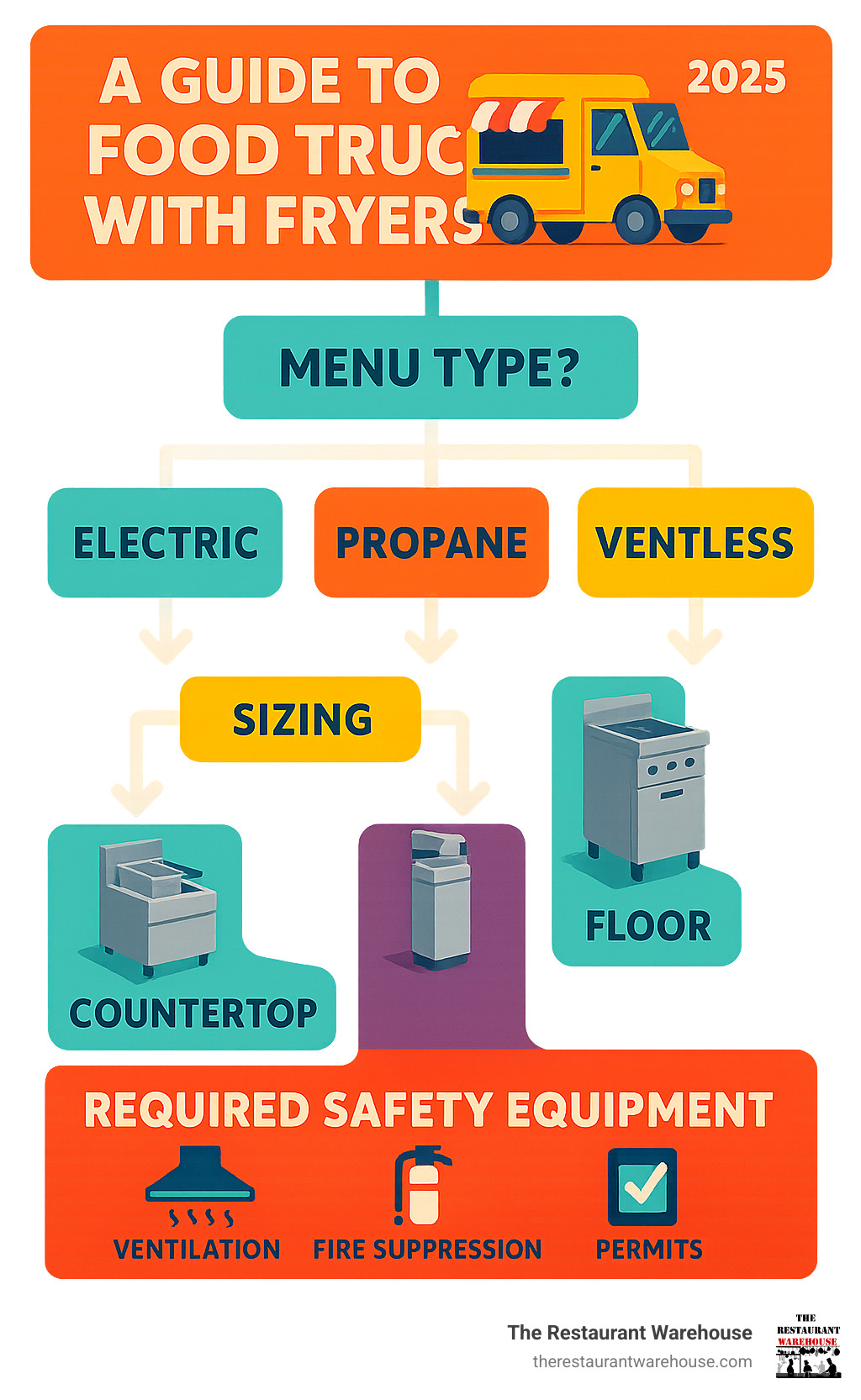
- Electric Fryers: Best for consistent temperature control and plug-and-play setup
- Propane Fryers: Ideal for high-volume operations with faster heat-up times
- Ventless Fryers: Perfect for flexible placement with built-in filtration systems
- Countertop Models: Space-saving option for limited menus and smaller trucks
- Floor Models: High-capacity choice for fry-focused operations
The food truck industry has exploded, and fried food specialists are leading the charge. Successful operators prove that a well-designed fryer setup is the foundation of a thriving mobile business.
However, getting your fryer setup wrong can sink your operation. Too little capacity means angry customers, too much power draw trips your generator, and poor ventilation can fail health inspections.
With the right knowledge, you can build a safe, efficient, and profitable fryer station. This guide will walk you through everything you need to know to serve perfect fries, tenders, and more.
Terms related to food truck with fryers:
Choosing Your Weapon: A Breakdown of Commercial Fryer Types
Choosing your fryer is a critical decision for your food truck with fryers operation. The right choice means golden, crispy perfection; the wrong one leads to power outages, angry customers, and failed health inspections. There's no one-size-fits-all fryer. Your perfect match depends on your menu, power setup, and space. A fry-focused truck needs different equipment than one serving fried items as a side.
Let's break down your options. For a full deep-dive, check our guide on How to Choose a Commercial Deep Fryer.
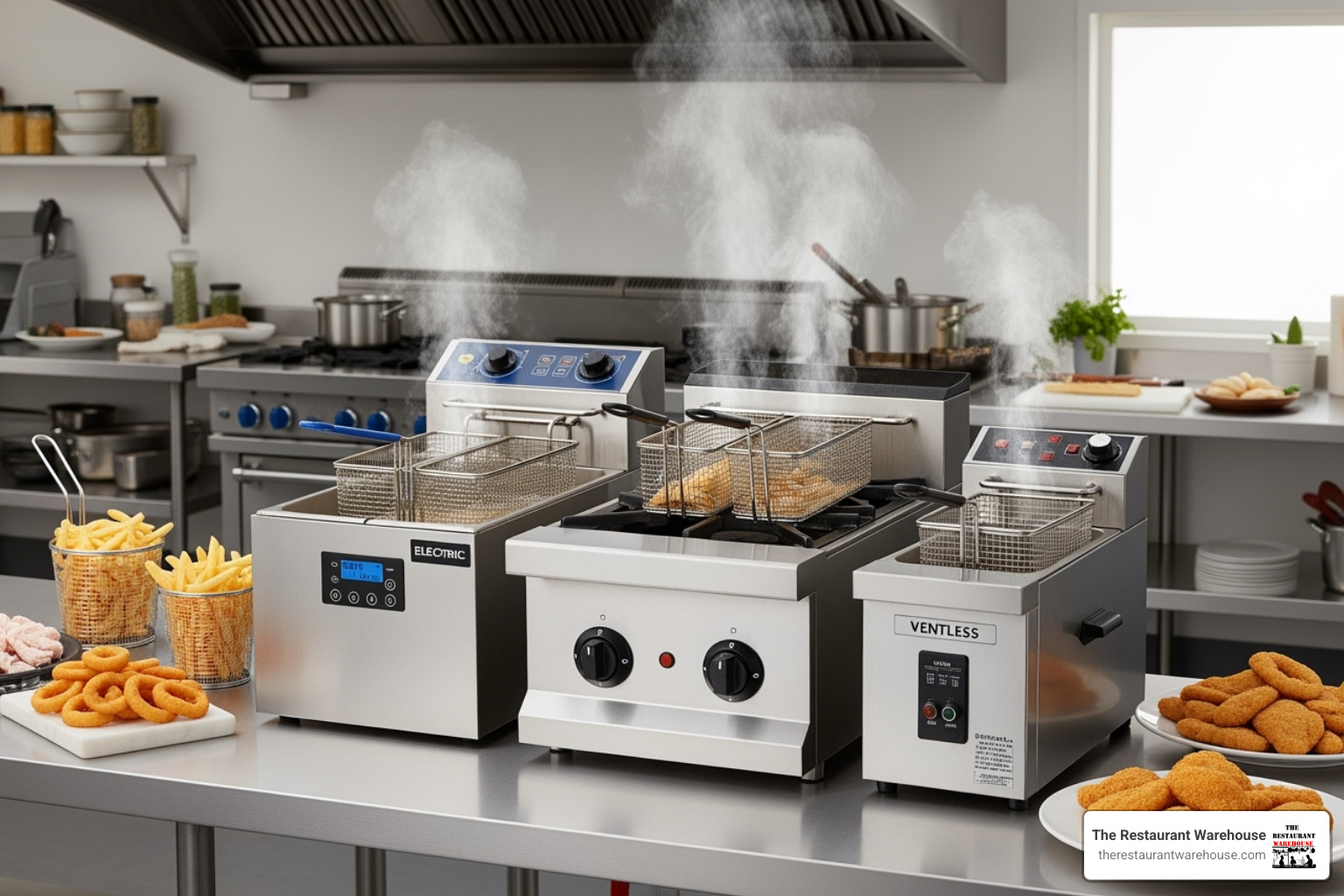
Here's how the three main types stack up for food truck use:
| Fryer Type | Heat-Up Time | Recovery Time | Installation | Cost (Initial & Operational) | Best Use Case for Food Truck |
|---|---|---|---|---|---|
| Electric | Moderate | Fast | Simple (plug-in, if power permits) | Moderate (initial), Moderate (operational) | Consistent output, lower heat emission, good for varied menus |
| Gas (Propane) | Fast | Fast | Complex (gas line, ventilation, professional install) | Higher (initial), Lower (operational due to propane cost) | High-volume frying, faster throughput, fry-centric menus |
| Ventless | Moderate | Moderate | Simple (plug-in, no external hood) | High (initial), Moderate (operational) | Limited space, strict ventilation rules, flexible placement |
Electric Fryers: Plug-and-Play Power
Electric fryers are a reliable choice for many food truck operators. Their superpower is consistent temperature control, ensuring your food comes out perfectly cooked every time. Another huge win is faster recovery time; the oil temperature bounces back quickly after you drop in frozen food, which is crucial during peak hours. Electric fryers are also typically lighter and easier to secure. However, you must plan for wattage considerations. A powerful electric fryer needs a generator that can handle the load. Our Electric Deep Fryer Guide covers electrical planning details.
Gas (Propane) Fryers: Raw Heat for High Volume
For high-volume operations where fried food is the main event, propane fryers bring the heat. Their high heat output (90,000 BTU or more) can handle heavy loads without the oil temperature dropping. Faster heat-up times mean you're ready to serve sooner. Propane also typically costs less than electricity, lowering operating costs. But gas fryers demand a proper setup. Professional installation is required for safety, ventilation needs are more demanding, and you'll need to manage propane tank storage safely. For more on gas fryers, see our Propane Deep Fryer guide.
Ventless Fryers: The Modern Alternative
Ventless fryers are a game-changer for space-constrained food trucks. Built-in filtration systems capture grease and odors internally, so you don't need a large overhead hood. This offers incredible placement flexibility, allowing you to design your kitchen for workflow efficiency. They also offer reduced fire risk due to advanced safety features. A surprising benefit is lower oil costs, as their filtration systems keep oil cleaner for longer. While the upfront investment is higher, the savings on ventilation and operational benefits often make them a worthwhile choice. Our guide to Ventless Hood Systems for Restaurants explains this technology further.
Sizing It Up: Countertop vs. Floor Models for Your Food Truck with Fryers
In a food truck's limited space, every inch counts. Choosing between a countertop and floor fryer for your food truck with fryers means matching equipment to your menu and production needs.
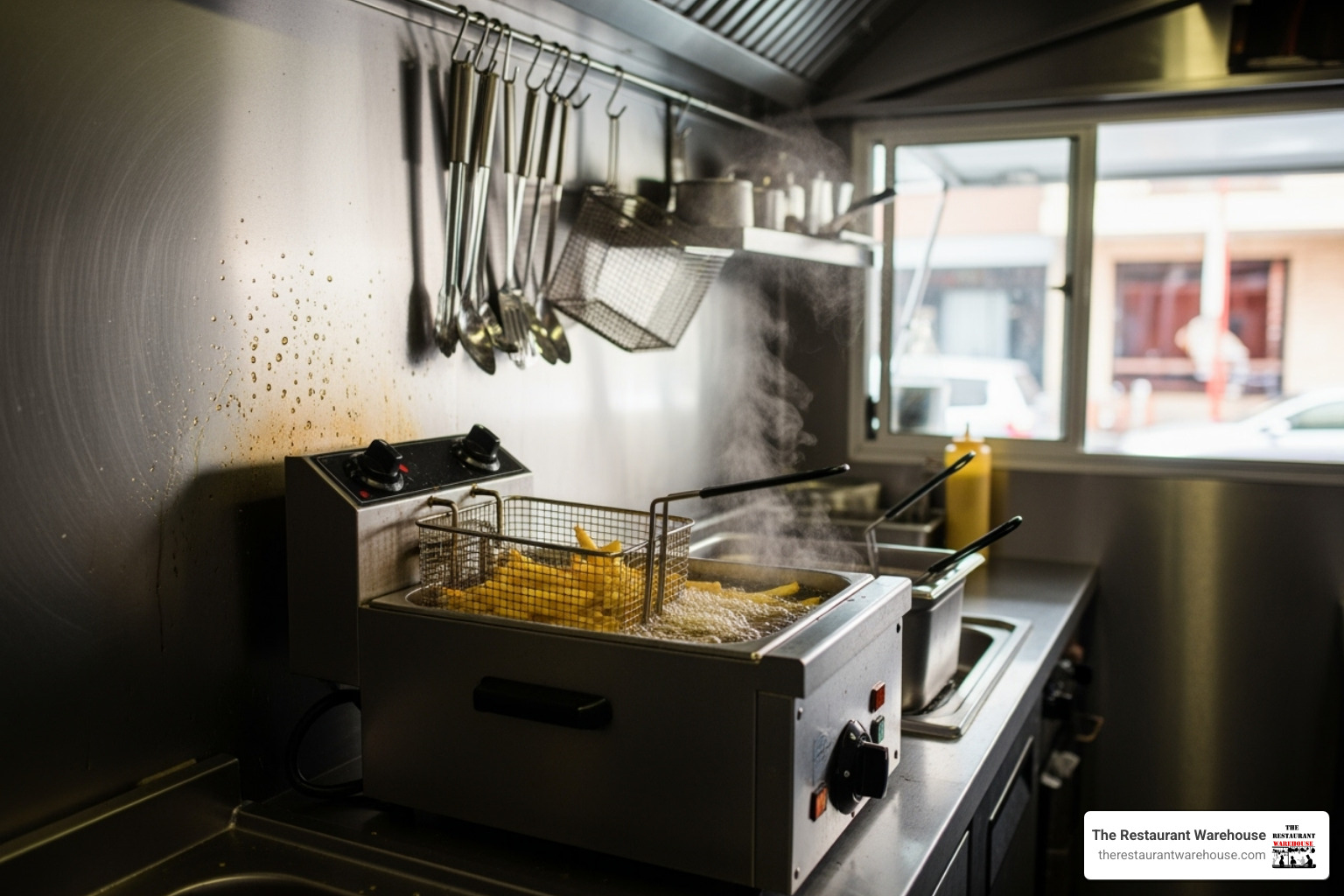
Oil capacity determines how much you can fry at once, while production volume dictates how many orders you can serve per hour. Getting this wrong leads to long waits or wasted energy. Can your fryer handle a lunch rush of 50+ orders? These questions are the difference between profit and frustration. Find equipment designed for mobile operations in our Food Truck Fryers selection.
Countertop Fryers: The Space-Saving Champion
Countertop fryers are perfect when fried foods are a supporting item on your menu. These compact units sit on your counter, saving valuable floor space for other essentials. Their key advantages are portability and easier installation. The trade-off is lower capacity, meaning you'll work in smaller batches. For new concepts or menus with only a few fried items, this can be an advantage, as you'll use less oil and keep startup costs down. Our guide to Concession Trailer Equipment for Sale: Your Mobile Kitchen Awaits includes many space-efficient options.
Floor Fryers: The High-Volume Workhorse
If your food truck with fryers is a dedicated fry or chicken concept, floor fryers are your best bet. These units are built for cranking out massive quantities of food, fast. High capacity and faster recovery times mean you can handle festival crowds without breaking a sweat. However, floor fryers demand dedicated space, generate more heat, and require robust ventilation. You'll also face higher energy consumption. If 80% of your menu is fried, the efficiency gains from a floor model can transform your operation. Explore our Sample Food Truck Menu Ideas for inspiration.
Building a Safe & Compliant Fry Station
Safety and compliance are crucial for a food truck with fryers. You're managing hot oil, high-powered equipment, and flammable gases in a compact, mobile space. Don't cut corners.
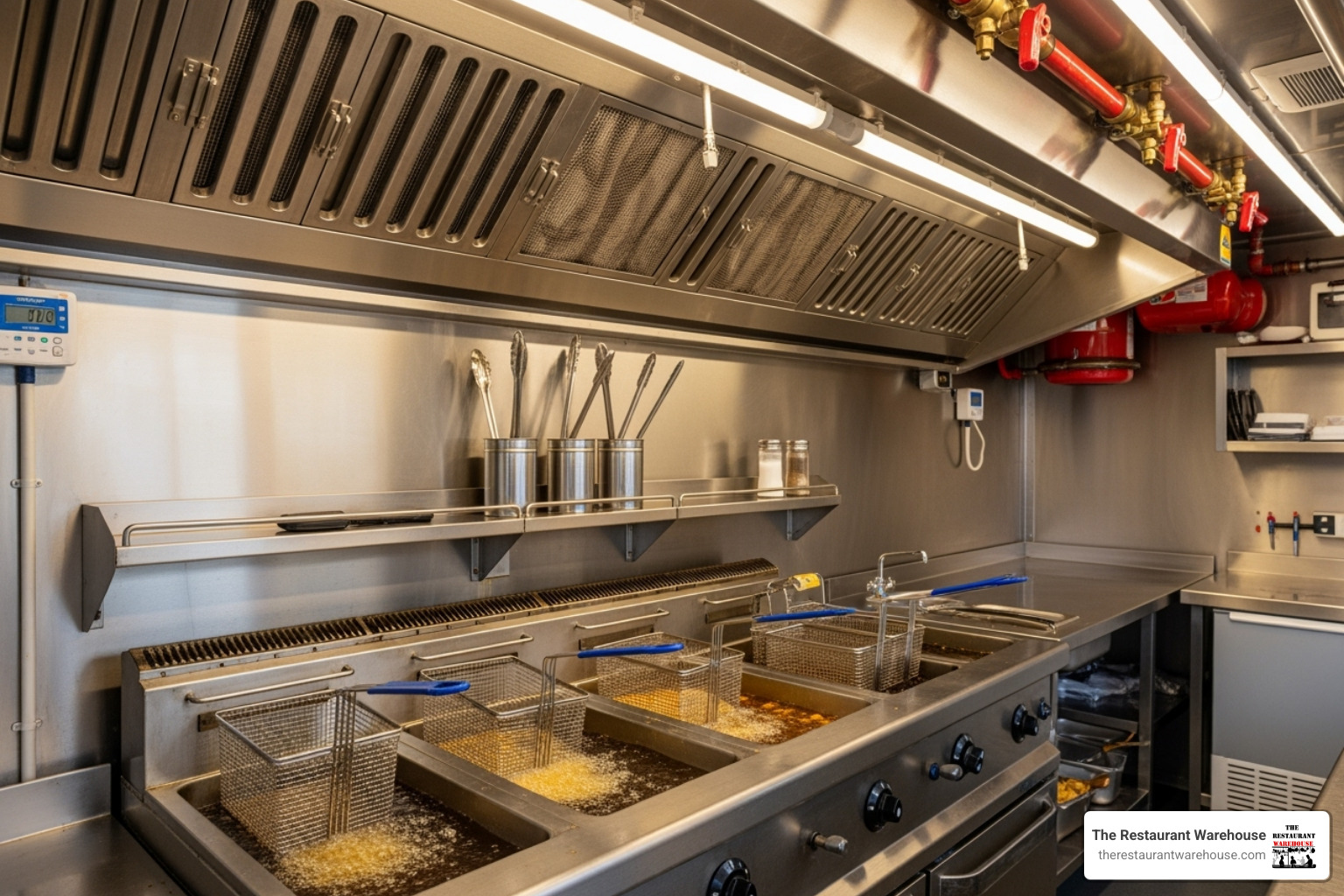
Mobile kitchens face unique challenges like movement and limited space. Building a compliant fry station protects your investment, customers, and yourself. For a comprehensive look, see our guide on Food Truck Regulations.
Ventilation and Fire Suppression: Non-Negotiables
Ventilation and fire suppression are non-negotiable lifelines. A Type I Hood is essential for removing heat, smoke, and grease-laden vapors, and it must meet NFPA 96 standards. Your fire suppression system, often an Ansul system, is your last line of defense. These systems use wet chemical agents to smother grease fires and include automatic shut-offs for fuel and power. Both systems require regular inspections by certified professionals to remain compliant. For more details, see our Commercial Kitchen Exhaust Hood Guide.
Powering Your Fryers: Generators and Propane
Proper power management is critical. For electric fryers, you must calculate your total power load to avoid tripping breakers during a rush. Generator sizing should be done professionally to account for all equipment. For gas fryers, propane tank mounting must be secure, often in safety cages. All gas lines require professional installation to ensure leak-free, safe operation. Our Buyers Guide: Best Food Truck Equipment for 2025 covers power considerations in detail.
Permits and Health Codes
Operating a food truck with fryers requires navigating a complex web of permits and regulations that vary by location. You'll need approval from the local health department and the fire marshal. You will also need a mobile food vendor license and potentially a HACCP plan outlining your food safety procedures. Start the process early and work with local officials to ensure you meet all requirements, such as those detailed in our Food Truck Sinks Guide.
Designing for Efficiency: Layouts and Workflow
A thoughtfully designed food truck with fryers is key during a lunch rush. When your crew moves like a well-oiled machine, orders fly out, customers are happy, and you're making money. In a food truck, efficiency isn't a luxury; it's essential for survival.
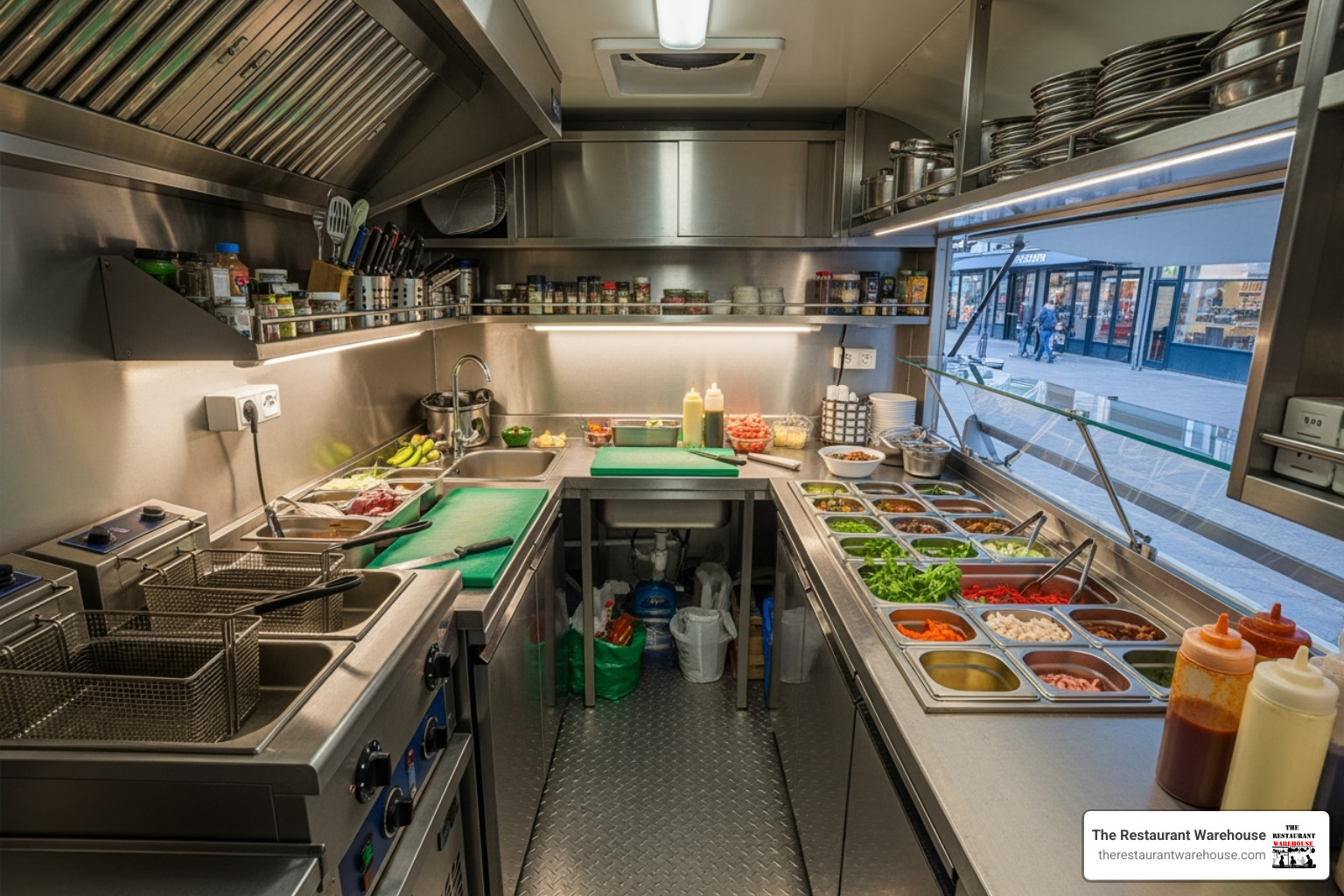
Adapt the classic "work triangle" concept for your mobile kitchen. The flow between your fryer, prep station, and service window should be seamless to minimize steps and obstacles. For comprehensive planning tools, check out our Sample Food Truck Business Plan.
Don't forget essential accessories that boost efficiency:
- Multiple fry baskets
- Skimmers
- Oil filtration machine
- Dump station with heat lamps
- Proper cleaning tools
Optimizing Workflow in a Food Truck with Fryers
The secret to a smooth operation is a linear workflow. Raw ingredients should enter at one end, move through prep and cooking, and exit through the service window. This assembly-line style minimizes crisscrossing paths and collisions. Consider if there's enough space for your crew to work without interference. Every step saved is time gained. Some larger trucks are even designed with multiple fryers to handle massive festival crowds, which requires precise workflow planning. Also, position your fryers to minimize heat buildup in the main work areas to keep your staff comfortable and efficient.
Managing Your Oil and Cleaning Routines
The secret to delicious fried food and a long-lasting fryer is proper oil management and a solid cleaning routine. Daily oil filtration is your best friend, removing food particles that degrade oil quality. This extends the oil's life, saves money, and keeps food tasting fresh. When it's time to change the oil, proper disposal is a legal and environmental requirement. Store used oil in sealed containers and arrange for pickup by a licensed rendering company. Never pour oil down a drain. Your daily cleaning should include skimming debris and wiping down the exterior. Periodically, perform a "boil-out" deep clean to remove built-up grease. Our Essential Daily Cleaning Guide for Commercial Fryers provides step-by-step instructions.
Frequently Asked Questions about Food Truck Fryers
Running a food truck with fryers brings up plenty of questions. Here are the answers to the three most common ones.
What is the most popular type of fryer for a food truck?
There is no single "best" fryer, as the ideal choice depends on your specific needs.
- Electric countertop fryers are a popular go-to for smaller operations or those with varied menus. They are simple to install and offer consistent results.
- Propane gas fryers are the choice for high-volume, fry-centric trucks. They heat up fast and handle large batches, making them ideal for festivals and busy rushes.
- Ventless fryers are a modern, flexible solution. Their built-in filtration and safety features allow them to be placed almost anywhere, which is a huge advantage in a tight space.
The best fryer is the one that fits your menu, space, and business goals.
How many fryers do I need for my food truck?
The number of fryers you need depends on three key factors:
- Your Menu: A dedicated fry truck will need more fryer capacity than a burger truck that only offers fries as a side.
- Your Volume Expectations: Plan for your busiest days. You need enough capacity to handle peak rushes without long customer waits.
- Your Truck's Space: Physical limitations are the final decider. Most standard food truck with fryers setups use one or two well-chosen fryers. Larger trucks may accommodate more for high-volume service.
Start with what you need now, but plan for future growth.
How do I safely transport and dispose of used cooking oil from a food truck?
Handling used cooking oil properly is essential for safety and compliance.
- Cool Down: Always let the oil cool completely before moving it to prevent dangerous burns.
- Use Proper Containers: Transfer cooled oil into sturdy, sealed containers designed for used cooking oil to prevent spills.
- Store Safely: Keep the sealed containers in a designated, secure spot on your truck, away from food prep areas.
- Use Professional Collection: Arrange for a commercial rendering or recycling company to pick up your used oil. They dispose of it properly and in an environmentally friendly way.
Always check your local regulations, as rules for oil disposal can vary by location.
Conclusion
Building a successful food truck with fryers requires the right equipment, smart design, and a commitment to safety. By focusing on the key elements, you can create a thriving mobile kitchen.
- Safety is your foundation. Never compromise on ventilation, fire suppression, or regulatory compliance. A single oversight can shut you down.
- Smart design drives efficiency. An optimized workflow, centered on the relationship between your fryer, prep station, and service window, is your secret to fast service.
- Choose your equipment wisely. Whether you select an electric, propane, or ventless fryer, ensure it matches your menu, volume, and space. The right fryer is the heart of your operation.
Your dream of serving the best fries on the block is within reach. At The Restaurant Warehouse, we understand that every mobile kitchen is unique. We're here to help you find the perfect commercial restaurant equipment and food service supplies at wholesale pricing, without the retail overhead that inflates startup costs.
Ready to turn your mobile culinary vision into a crispy, golden reality? Get started with our complete restaurant kitchen equipment checklist and take the first step toward building your successful food truck with fryers.
About The Author

Sean Kearney
Sean Kearney is the Founder of The Restaurant Warehouse, with 15 years of experience in the restaurant equipment industry and more than 30 years in ecommerce, beginning with Amazon.com. As an equipment distributor and supplier, Sean helps restaurant owners make confident purchasing decisions through clear pricing, practical guidance, and a more transparent online buying experience.
Connect with Sean on LinkedIn, Instagram, YouTube, or Facebook.