

Concession Trailer Equipment for Sale – Your Mobile Kitchen Awaits!
Your Mobile Kitchen Revolution Starts Here
Concession trailer equipment for sale has never been more in demand, with the mobile food industry exploding across America. Whether you're dreaming of serving BBQ at local festivals or brewing coffee at farmers markets, the right equipment can turn your food truck vision into reality.
Quick Equipment Essentials for Concession Trailers: - Cooking Equipment: Commercial ranges, griddles, fryers, charbroilers - Refrigeration: Sandwich prep tables, undercounter fridges, ice machines
- Plumbing: 3-compartment sink, water heater, fresh/grey water tanks - Electrical: 30-50 amp service, generators, LED lighting - Safety: Fire suppression systems, exhaust hoods, NSF-approved surfaces - Specialty Gear: Menu-specific equipment (smokers, espresso machines, soft-serve)
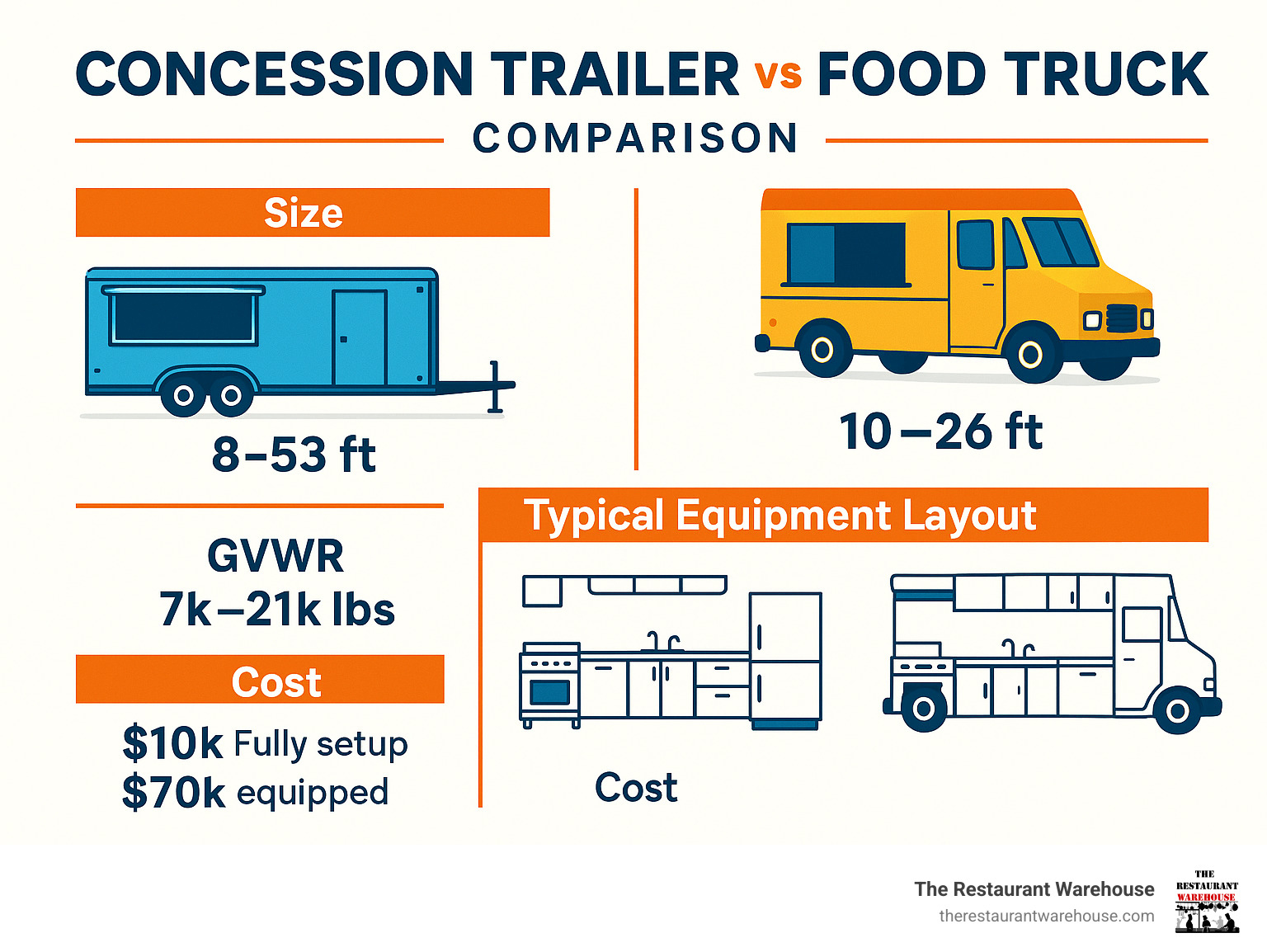
Concession trailers range from 8 to 53 feet long and offer significantly more storage and cooking space than traditional food trucks. With over 500 active listings on eBay alone, prices span from basic $10,000 setups to fully loaded $70,000 mobile kitchens.
The equipment inside matters more than the trailer itself. A standard cargo trailer becomes a money-making machine only when outfitted with the right commercial-grade gear that meets health codes and handles high-volume service.
Lower upfront costs than food trucks, easier customization, and the flexibility to upgrade your kitchen without buying a whole new vehicle. Plus, that extra storage space means you can prep more, serve faster, and turn higher profits per event.
Key terms for concession trailer equipment for sale: - commercial countertop fryers - food trailer electrical - food truck equipment
Concession Trailer vs. Food Truck: Know the Difference
When browsing concession trailer equipment for sale, the first decision is whether to go with a trailer or a food truck. It's a bigger choice than most people realize.
Food trucks are all-in-one mobile restaurants - the kitchen and vehicle rolled into one package. Think of those step-vans you see at lunch spots, typically running 10 to 26 feet long. Everything's built right into the vehicle, so you can drive up, park, and start cooking immediately.
Concession trailers are dedicated mobile kitchens that you tow behind a separate vehicle. They range from tiny 8-foot units perfect for coffee stands all the way up to massive 53-foot operations that rival brick-and-mortar restaurants. The standard width is 8.5 feet.
That size difference isn't just about space, it's about profit potential. A 20-foot concession trailer gives you nearly double the kitchen area of most food trucks. More space means more equipment, better workflow, and higher daily sales volumes.
| Feature | Concession Trailers | Food Trucks |
|---|---|---|
| Length Range | 8-53 feet | 10-26 feet (typically 16-18 ft) |
| Width | Standard 8.5 feet | Varies by vehicle base |
| GVWR | 2,990-21,000 lbs | Varies by chassis |
| Mobility | Requires tow vehicle | Self-propelled |
| Setup Time | Longer (unhitching, stabilizing) | Immediate |
| Storage Space | Superior | Limited |
| Customization | Easier to modify | More complex |
The licensing situation varies by location. Food trucks often require commercial driver's licenses, especially for larger units. Concession trailers? In most states, you can tow them with your regular license (though always check your local GVWR limits).
Why Many Operators Choose Trailers
The storage advantage is huge. We're talking about 30-40% more inventory space in most cases. That means buying ingredients in bulk, prepping larger batches, and serving more customers before you need to restock.
Lower upfront costs make the math work better. Quality used concession trailers start around $10,000-15,000, while comparable food trucks often begin at $40,000-60,000. That's the difference between launching your business this year or waiting another two years to save up.
Kitchen upgrades become simple projects instead of major headaches. Want to add a second fryer when business picks up? Easy. Need a bigger griddle for those weekend festivals? No problem. You're not fighting with a vehicle's electrical system or trying to squeeze equipment into spaces that weren't designed for it.
Best Concession Trailer Equipment for Sale: Essential Gear Checklist
Shopping for concession trailer equipment for sale can feel overwhelming when you're staring at empty trailer walls. The good news? Every successful concession operation needs the same fundamental equipment - and getting this foundation right saves you thousands in retrofitting costs later.
Your cooking equipment forms the heart of any mobile kitchen. Commercial ranges with multiple burners give you flexibility to prepare different menu items simultaneously, while flat-top griddles become your workhorse for everything from breakfast hash browns to smash burgers. Deep fryers - whether countertop or floor models - open up entire menu categories from funnel cakes to chicken wings.
Bain maries are heated holding wells that keep your chili, cheese sauce, or pulled pork at safe serving temperatures throughout your busy lunch rush. Charbroilers deliver that authentic flame-kissed flavor that keeps customers coming back.
The refrigeration side keeps everything safe and fresh. Sandwich prep refrigerators with rail systems maximize your limited counter space while keeping ingredients at proper temperatures. Undercounter refrigerators handle your backup inventory, while ice machines or storage bins keep drinks cold and seafood fresh.
Every health department requires a 3-compartment sink for washing, rinsing, and sanitizing your cookware. You'll also need a separate hand-wash sink dedicated solely to handwashing. Your water heater needs at least 2.5 gallons capacity, though 6-10 gallons serves you better during busy periods. Don't forget your fresh water tank (typically 40-100 gallons) and grey water tank (plan for 20% larger than your fresh tank).
Most setups need 30-50 amp electrical service capability, plus a reliable generator for events without shore power. LED lighting throughout your workspace reduces your electrical load significantly. The exhaust hood with fan system and fire suppression system are required by virtually every jurisdiction.
One non-negotiable rule: NSF approval on every piece of equipment. These National Safety Foundation certifications ensure your gear meets health codes nationwide.
More info about electrical setups
Core Cooking Equipment for Concession Trailer Equipment for Sale
Flat-top griddles earn their reputation as mobile kitchen workhorses. They handle incredible volume while taking up minimal space. Look for models with at least 3/4-inch thick steel plates - thinner surfaces create hot spots that burn food. The choice between propane and electric often comes down to your power situation.
Charbroilers open up premium menu options that command higher prices. Nothing beats the flavor of flame-grilled food, and that authentic taste justifies the extra equipment cost through higher profit margins.
Deep fryers transform your menu possibilities instantly. Countertop models work perfectly for smaller operations, while floor models handle the lunch rush at busy festivals without breaking a sweat.
NSF approval isn't bureaucratic nonsense - it's your insurance policy against failed health inspections. Every piece of cooking equipment must carry this certification.
Plumbing & Electrical Needs for Concession Trailer Equipment for Sale
Your water heater needs at least 2.5-gallon capacity to meet health codes, but 6-10 gallons serves you much better during busy periods. Size your fresh water tank based on your menu and expected volume - coffee operations might manage with 40 gallons, while full-service kitchens need 75-100 gallons.
Plan your grey water tank at 120-150% of your fresh water capacity. This extra capacity handles all your wastewater without creating overflow situations.
Most concession trailers require 30-50 amp electrical service - this isn't about plugging into your neighbor's household outlet. You need dedicated circuits that handle multiple appliances running simultaneously.
When shore power isn't available, your generator becomes your lifeline. Calculate your total electrical load and add 20% for safety margin. Most operations need 6.5-12kW capacity.
That 3-compartment sink isn't optional - health codes mandate it for washing, rinsing, and sanitizing. Size requirements vary by jurisdiction, but plan for sinks that accommodate your largest pots and pans.
Menu-Specific Gear: BBQ, Coffee, Ice Cream & More
Choosing concession trailer equipment for sale that matches your culinary vision drives every equipment decision you'll make. Your menu isn't just about what you love to cook; it determines your entire setup.
Think of your trailer as having distinct workflow zones: prep area, cooking station, assembly line, and service window. The most successful operators design these zones so staff can move efficiently without bumping into each other during the lunch rush.
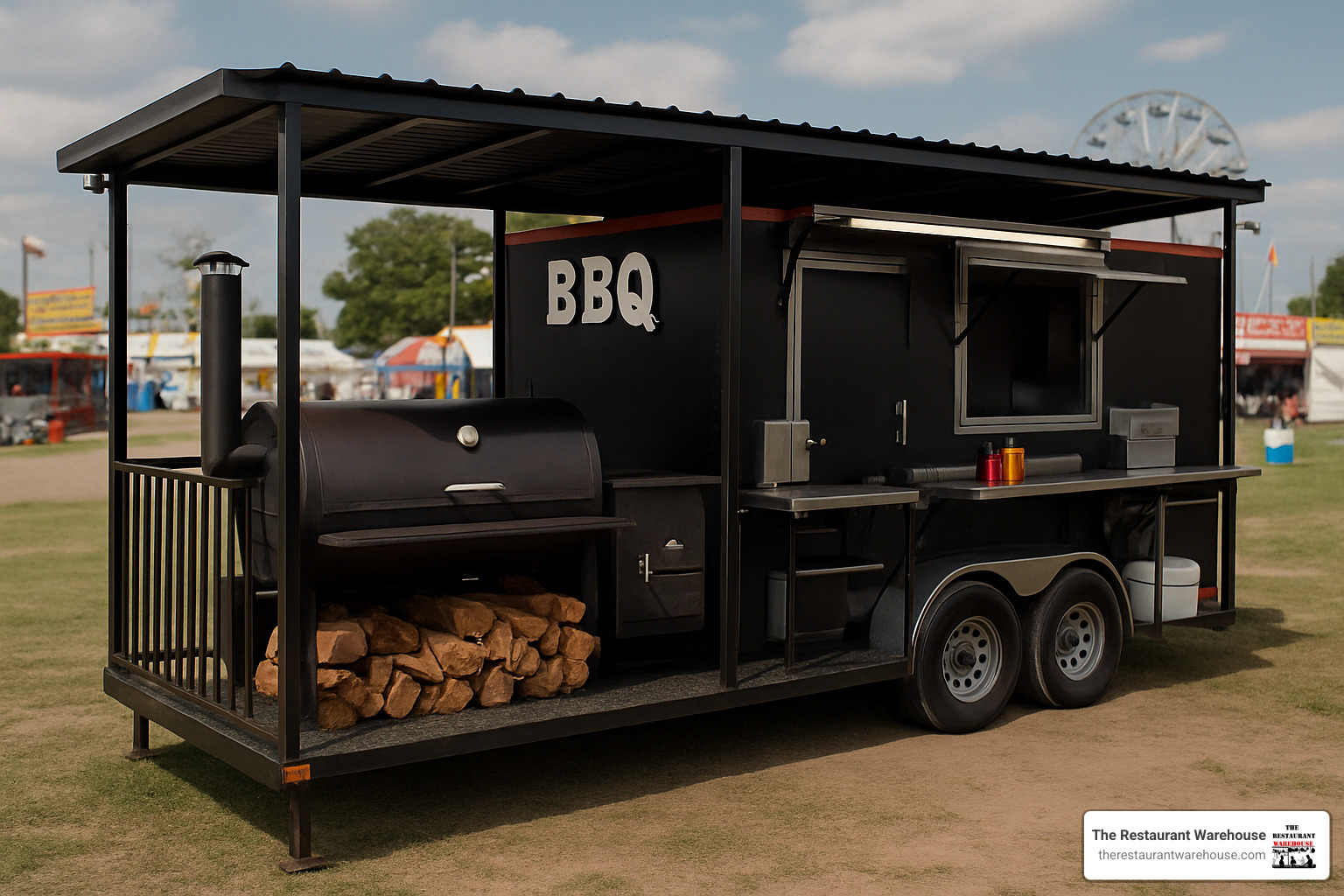
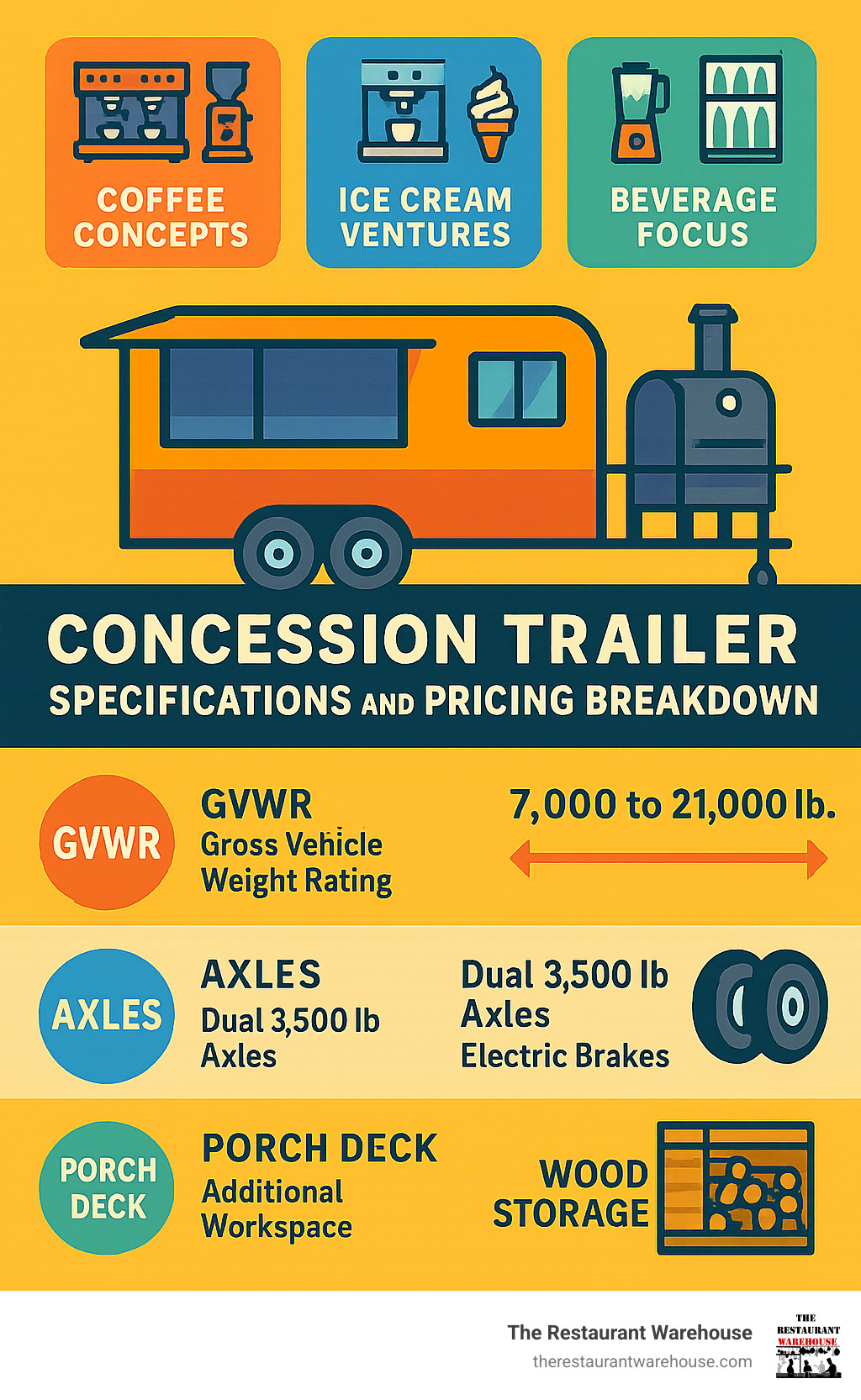
BBQ operations need completely different setups than coffee concepts. A BBQ trailer might feature offset smokers and porch decks for wood storage, while a coffee operation focuses on espresso machines and refrigerated display cases. Ice cream ventures require soft-serve freezers and dipping cabinets.
Ergonomic layout planning is the secret sauce. Place your most-used items within arm's reach of your main cooking position. Create clear pathways so your team doesn't play bumper cars during busy periods. Always separate hot and cold zones.
BBQ & Smoker Setups
BBQ trailers represent some of the most specialized concession trailer equipment for sale on the market. Offset smokers remain the gold standard for authentic barbecue, but installing one safely requires serious trailer modifications and professional expertise.
Porch trailers solve multiple problems at once. That extended deck gives you precious space for wood storage, prep work, and customer interaction. Nothing beats the theater of a pitmaster working the smoker while customers watch and smell that amazing smoke.
Porch decks need proper safety features - non-slip surfaces, sturdy railings that meet local codes, and clear emergency exit plans. Wood storage deserves special attention. Wet wood ruins your cook times and creates inconsistent results.
Don't forget holding equipment either. Your brisket might be perfect at 2 PM, but it needs to stay food-safe and delicious until closing time.
Frozen & Beverage Concepts
Frozen dessert and beverage operations flip the script on traditional food service equipment needs. Temperature control becomes absolutely critical - one degree off can mean the difference between perfect soft-serve and expensive waste.
Batch freezers and soft-serve machines demand substantial electrical capacity. Plan for 220V service and ensure adequate ventilation for heat dissipation.
Dipping cabinets serve double duty - showcasing your frozen treats while maintaining proper storage temperatures. Energy-efficient models reduce the load on your generator and keep operating costs manageable.
Beverage specialties like nitro cold-brew systems create premium products with impressive profit margins. However, they require CO2 or nitrogen tanks and specialized dispensing equipment.
The make-or-break factor? Consistent temperatures. Whether you're keeping coffee at the perfect serving temperature or maintaining ice cream at exactly the right consistency, temperature control directly impacts both product quality and customer satisfaction.
Buying Guide: New vs. Used, Specs & Pricing
Shopping for concession trailer equipment for sale means understanding the specs that actually matter to your bottom line.
GVWR (Gross Vehicle Weight Rating) tops the list of critical specifications. This number - ranging from 7,000 to 21,000 pounds - determines what you can legally tow and whether you need special licensing. Most operators find the sweet spot around 14,000-16,000 pounds GVWR.
The dual 3,500-pound axles with electric brakes configuration has become the industry standard. When choosing between torsion and spring axles, torsion systems cost more upfront but deliver smoother towing and need less maintenance.
Interior height makes or breaks your daily comfort. That difference between 7-foot and 8-foot ceilings might seem minor, but after a 12-hour festival day, your back will remind you why the extra foot matters.
Door sizing affects your entire operation. Standard service windows measure 36x36 inches, but your menu might demand larger openings. Entry doors need sufficient width for equipment installation and emergency egress.
The pricing landscape spans a wide range. Basic used trailers start around $10,000-25,000 but often need substantial equipment investment. Mid-range equipped units in the $25,000-45,000 range offer better value for operators ready to start service quickly. Fully loaded new trailers can reach $45,000-70,000 or more.
Well-maintained units with quality commercial equipment hold their value significantly better than bare-bones cargo conversions. The equipment inside often matters more than the trailer itself for resale value.
When inspecting used trailers, prioritize the frame, axles, brakes, and electrical systems first. Kitchen equipment can be replaced, but structural problems create expensive headaches.
Financing, Warranty & Insurance
Low-documentation loans specifically designed for mobile food businesses often require less financial history than traditional business loans. Many lenders understand the mobile food industry's unique needs.
Equipment leasing presents an attractive alternative for operators who want to preserve cash flow. The trade-off? Total lease costs typically exceed purchase prices over time.
Equipment warranties vary dramatically between manufacturers. Quality trailer builders offer 6-year frame warranties, while kitchen equipment typically comes with 1-3 year coverage.
Insurance requirements stack up quickly for mobile food operations. Commercial auto insurance covers towing and liability, while general liability protects against customer claims. Equipment coverage protects your investment against theft, damage, and breakdown.
Where to Find Concession Trailer Equipment for Sale
Finding the right concession trailer equipment for sale feels overwhelming when you're starting out, but knowing where to look makes all the difference.
Dealer networks remain the traditional go-to for many operators. These established businesses offer warranties, financing options, and after-sale support. When your fryer breaks down on a busy Saturday, having a dealer relationship can be a lifesaver. The trade-off? You'll typically pay 15-30% more than other sources.
Online marketplaces have revolutionized how we shop for mobile kitchen equipment. With over 500 active listings on platforms like eBay and Facebook Marketplace, you'll find everything from bare-bones cargo trailers to fully loaded gourmet kitchens. The selection is incredible, but buyer beware - you're often buying sight unseen.
Going factory direct cuts out the middleman markup entirely, which can save thousands on a major purchase. The downside? You might sacrifice some local support, and warranty service could mean dealing with distant customer service departments.
Auction sites occasionally offer hidden gems, especially government surplus auctions where parks departments or schools sell off their concession equipment. These "as-is" sales require cash and immediate pickup, but savvy buyers sometimes score incredible deals.
Don't overlook local classifieds and regional publications. Sometimes the best deals come from retiring operators who've built relationships with their equipment over years of successful service.
More info about carnival trailers
Pros & Cons: Fully Equipped vs. DIY Build
Turnkey operations get you rolling fast. Walk in, sign papers, and you're potentially serving customers within weeks. These complete packages often include training, proven equipment combinations, and financing that covers everything in one bundle.
But that convenience comes at a premium. You'll pay more upfront, and customization options are limited to what the seller offers.
DIY builds offer complete control over every detail. Want a specific fryer brand? No problem. Need extra prep space? Design it yourself. Smart DIY builders often save 20-40% compared to turnkey pricing.
The flip side? DIY projects take significantly longer to complete, require coordinating multiple vendors, and demand serious planning expertise.
Turnkey works best for operators who want to start serving customers quickly, while DIY suits those who have specific visions and don't mind the extra complexity.
The Restaurant Warehouse specializes in helping DIY builders source quality equipment at wholesale prices, cutting out the retail markup that can make custom builds expensive.
Setup Tips, Upgrades & Compliance
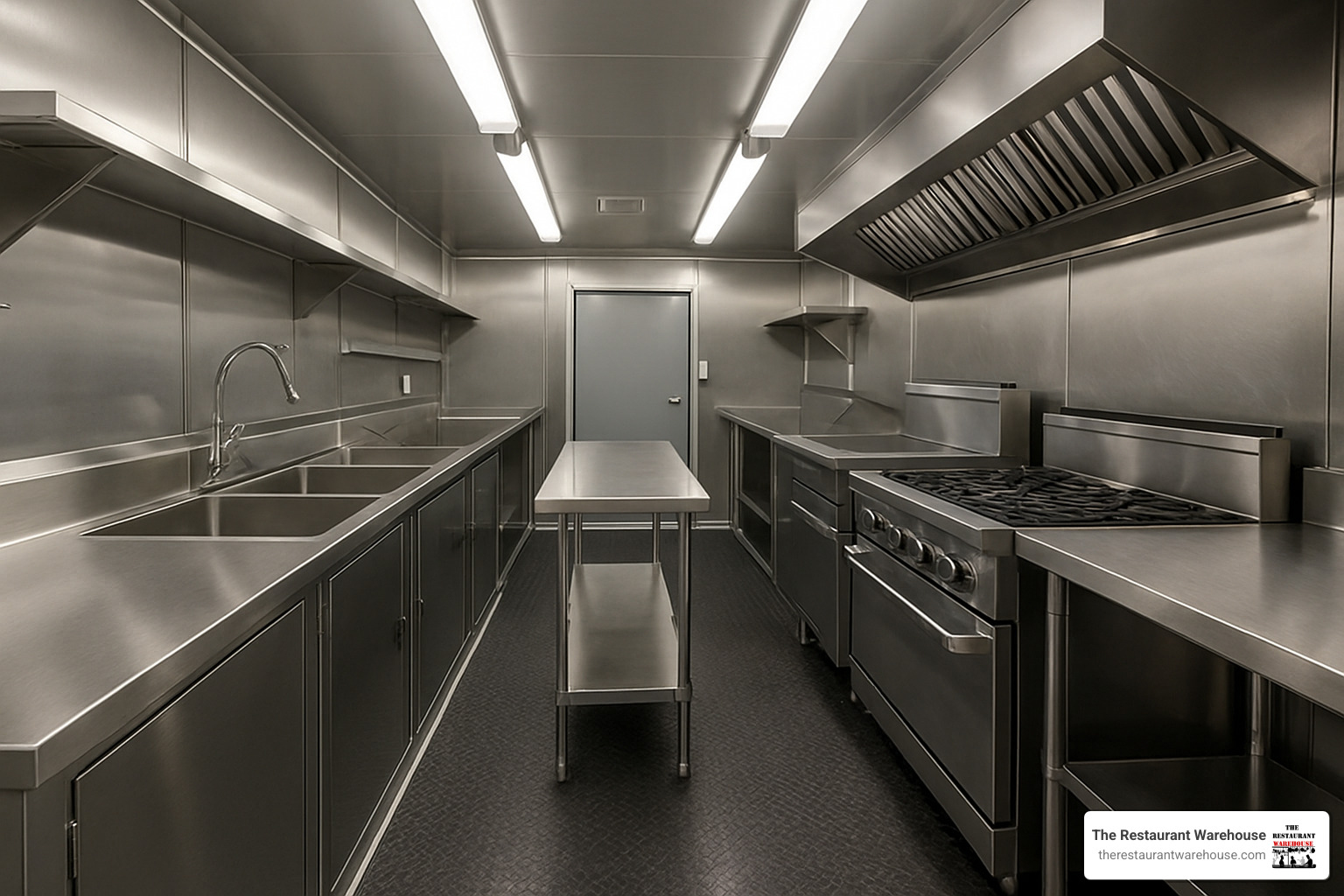
Proper setup transforms a basic trailer into an efficient money-making machine. The workflow triangle concept - positioning sink, storage, and cooking areas for minimal movement - applies even in compact spaces.
Essential Setup Considerations: - NSF Surfaces: All food contact surfaces must be NSF-approved stainless steel or equivalent - Non-Slip Flooring: Safety flooring prevents accidents in often-wet conditions - LED Lighting: Energy-efficient lighting reduces generator load while providing excellent visibility - Ventilation: Proper exhaust prevents condensation and maintains comfortable working conditions
Popular Upgrades: - AC Units: Climate control improves working conditions and equipment performance - Window Awnings: Weather protection extends service capabilities - Fire Suppression: Automatic systems provide safety and may reduce insurance costs - Point-of-Sale Systems: Modern POS systems streamline orders and improve customer experience
Compliance Essentials: Health codes vary by jurisdiction, but common requirements include: - Hand-wash sinks with hot water - Thermometers in all refrigeration units - Sanitizer test strips and thermometer calibration - Proper waste disposal systems - Current health department permits
Frequently Asked Questions about Concession Trailer Equipment
What power generator size do I need?
Most new operators underestimate their power needs and end up with a generator that can't handle their equipment load.
Start by calculating your total electrical load by adding up the amp draw of every piece of equipment that might run simultaneously. Your refrigeration units will pull 8-12 amps continuously. Cooking equipment hits hardest during peak service, drawing 15-30 amps when everything's firing at once. Don't forget lighting, fans, and POS systems that add another 7-11 amps.
Add 20% to your total for a safety margin. Convert amps to watts using: amps × volts = watts. Most concession trailer equipment for sale operations end up needing 6.5-12kW generators, with 8kW being the sweet spot.
Better to have power you don't need than need power you don't have.
How do I keep up with changing health codes?
Subscribe to your local health department's email updates - most departments send notifications when codes change. Join mobile food vendor associations in your area for real-world experiences with code changes.
Schedule annual equipment inspections even when they're not required. This proactive approach catches potential issues before they become violations.
Maintain relationships with equipment suppliers who understand current codes. When shopping for concession trailer equipment for sale, work with vendors who stay current on NSF requirements.
Can I finance both trailer and equipment together?
Package financing is not only possible - it's often the smartest approach for new operators. Many lenders specialize in mobile food businesses and offer financing that covers both your trailer and all the equipment inside.
Package financing typically provides: a single monthly payment instead of juggling multiple loans, potentially better interest rates than separate financing, and a simplified approval process.
Most operators find package financing works best when they're buying turnkey operations or have a clear equipment list.
Conclusion
Your journey into the mobile food world doesn't have to be overwhelming. The concession trailer equipment for sale market is booming, and with the right knowledge, you can turn your culinary dreams into a profitable reality.
Trailers offer more space, lower costs, and greater flexibility than traditional food trucks. Whether you're planning a BBQ operation with a smoker setup or dreaming of serving artisan coffee at farmers markets, the key is starting with quality, NSF-approved equipment.
With trailers ranging from $10,000 for basic setups to $70,000 for fully loaded kitchens, there's an entry point for every budget. But remember, the equipment inside matters more than the trailer itself. A cargo trailer becomes a money-making machine only when it's outfitted with commercial-grade gear that passes health inspections and handles high-volume service.
At The Restaurant Warehouse, we've seen too many operators struggle because they tried to cut corners on essential equipment. Our wholesale pricing eliminates the retail markup that can add thousands to your startup costs. Our team understands the unique challenges of mobile food operations - from calculating generator loads to ensuring your three-compartment sink meets local health codes.
Single-source shopping saves you time, money, and headaches. Instead of coordinating with multiple vendors and hoping everything works together, we provide launch-ready solutions that are tested and proven in real mobile kitchens across the country.
Your mobile kitchen revolution starts with one decision: invest in quality equipment from day one. If upfront cost is a concern, flexible financing options can help you equip your trailer with commercial-grade gear while spreading payments over time.The extra money you spend on proper refrigeration, reliable cooking equipment, and adequate electrical systems pays for itself in avoided downtime, passed inspections, and satisfied customers.
Ready to stop dreaming and start serving? We're here to help you build a mobile kitchen that works as hard as you do.
About The Author

Sean Kearney
Sean Kearney is the Founder of The Restaurant Warehouse, with 15 years of experience in the restaurant equipment industry and more than 30 years in ecommerce, beginning with Amazon.com. As an equipment distributor and supplier, Sean helps restaurant owners make confident purchasing decisions through clear pricing, practical guidance, and a more transparent online buying experience.
Connect with Sean on LinkedIn, Instagram, YouTube, or Facebook.