

Roll Up, Roll Up and Buy: Carnival Concession Trailers for Sale
Why Carnival Concession Trailers Are Your Ticket to Mobile Food Success
Carnival concession trailers for sale give entrepreneurs a proven path to mobile food profits with eye-catching designs and crowd-pulling appeal. These specialized kitchens blend midway nostalgia with commercial-grade equipment, turning impulse cravings into steady sales.
Quick answers for buyers:
- Price Range: $6,000-$177,000 (used: $6k-$110k, new: $25k-$177k)
- Popular Sizes: 12-20 ft, suitable for 2-5 workers
- Key Features: Fire suppression, dual serving windows, generator power
- Best-Selling Foods: Funnel cakes, cotton candy, corn dogs, sno cones, fried dough
- Where to Buy: Online classifieds, regional dealers, or manufacturer direct
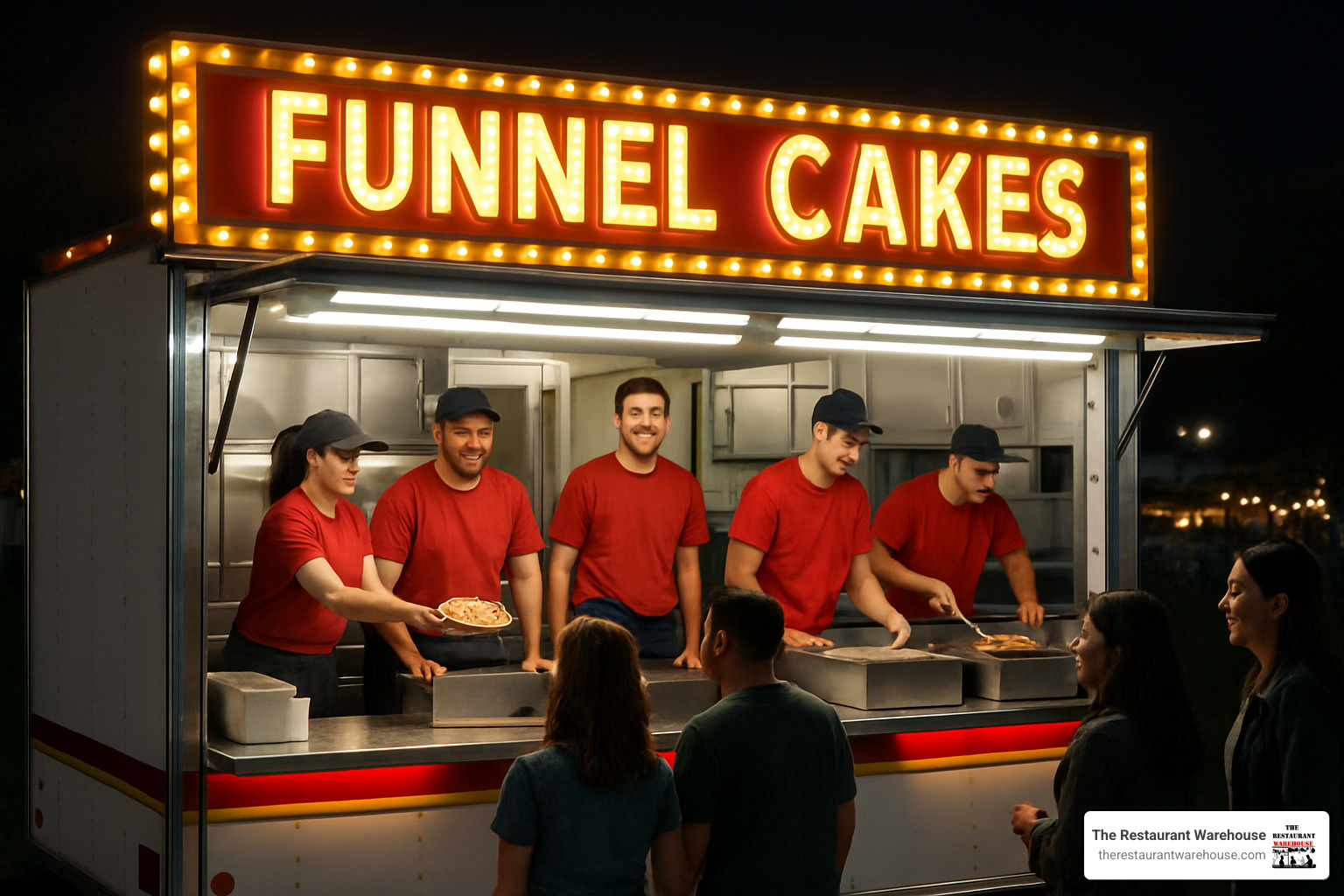
Unlike standard food trucks, carnival trailers are built for sensory theatre—bright LED marquees, fold-out counters, and workflow layouts that let operators serve 100+ customers per hour. The psychology is simple: carnival foods tap childhood memories. When visitors see a lit-up funnel-cake window and catch that sweet aroma drifting across the midway, they’re buying an experience—not just a snack.
Carnival concession trailers for sale basics:
Best Carnival Concession Trailers for Sale in 2025
Three styles dominate today’s market: food trailers, game trailers, and clever hybrids that mix snacks with entertainment. The sweet spot is a 12-20 ft trailer—large enough for volume yet light enough to tow with a full-size pickup. Most units now ship with factory-installed fire suppression systems, stainless worktops, and at least two service windows.
Turnkey vs. shell remains the big decision. Turnkey trailers arrive fully equipped, so you can book events immediately, but expect to pay 40-60 % more than a bare shell. Shell units cost less up front and let you choose your own gear, though build-out time can push your opening day back by weeks or even months.
Price trends (new vs. used):
| Category | New | Used |
|---|---|---|
| Basic Shell (12-16 ft) | $25k-$45k | $6k-$25k |
| Mid-range Equipped (16-20 ft) | $45k-$85k | $20k-$55k |
| Premium Turnkey (20 ft +) | $85k-$177k | $40k-$110k |
Top Food-Focused Picks
- Funnel-cake trailers – deep fryers, batter dispensers, sugar stations; optimized to keep one operator moving fast.
- Cotton-candy trailers – LED-lit spinning heads double as live theatre for the queue.
- Corn-dog / fried-dough trailers – stick-insertion or dough-portion stations built into the line.
- Sno-cone trailers – high-capacity shavers and multi-flavor LED syrup towers.
Game & Hybrid Highlights
- Water-race games generate top earnings per square foot.
- Duck ponds and coin-dozers keep kids busy while parents order snacks.
- Prize counters with glass displays turn winners into instant repeat customers.
Pricing & Financing: What to Expect Before You Buy
New carnival shells start near $25,000 and premium turnkey rigs can top $177,000. Used deals begin around $6,000 for older shells and rise toward $110,000 for lightly used, fully equipped models.
Key pricing drivers:
- Size – every extra foot raises material and equipment costs.
- Equipment level – a bare shell vs. the same shell fully outfitted can differ by $40k-$50k.
- Condition – check generator hours, not just the odometer, because trailers often sit running all day at events.
- Season – prices peak Feb-Apr and dip Oct-Dec.
Typical monthly payments (5-7 yr terms):
- $30k trailer: $470-$600
- $60k trailer: $940-$1,200
- $100k trailer: $1,570-$2,000
Down-payments range 10-25 %. For financing guidance, see our Restaurant Equipment Loans article.
Where to Find Trailers
- Online classifieds – large inventories refreshed daily.
- Manufacturer direct – custom options and factory warranties, but longer lead times.
- Regional dealers – hands-on inspection and local support.
- Auctions – great prices if you can inspect thoroughly before bidding.
Financing Options
- Low-doc equipment loans
- 3-5 yr operating leases with buyouts
- SBA microloans up to $50k
- Occasional zero-percent manufacturer promos
Inspection, Compliance & Customization Checklist
When you're shopping for carnival concession trailers for sale, a thorough inspection can save you thousands in unexpected repairs and headaches down the road. Think of it as your trailer's health checkup - you want to catch problems before they become expensive surprises.
Frame integrity forms the backbone of your investment. Run your hands along the frame looking for stress cracks, previous accident damage, or signs of poor repairs. The tongue and hitch areas take the biggest beating, so pay extra attention there. Quality trailers use either 3-inch tubular steel or 6-inch I-beam construction - anything lighter might struggle with daily use.
Your axle weight ratings need to handle more than just the trailer's empty weight. Factor in equipment, supplies, propane tanks, and a full water tank. Overloaded axles don't just wear out tires faster - they create dangerous handling issues that could put you and other drivers at risk.
Don't let good-looking tires fool you. Even tires with plenty of tread can be dangerous if they're over five years old. Check the DOT date codes on the sidewalls and make sure the load ratings match your trailer's requirements. Tire failure on the highway isn't just expensive - it's scary.
Food-grade interior surfaces aren't optional for food service operations. Stainless steel is the gold standard, but food-grade FRP (fiberglass reinforced plastic) works too. If you see damaged or questionable interior surfaces, factor replacement costs into your offer. Health inspectors won't give you a pass on this one.
NSF-certified sinks are required by most health departments, and the requirements vary by location. Some areas accept three-compartment sinks while others demand four-compartment systems. Our Food Truck Sinks Guide breaks down the specific requirements to help you stay compliant.
Here's something many buyers miss: generator hours often tell a bigger story than the odometer. Carnival trailers can rack up serious generator time while sitting stationary at events. High-hour generators might need immediate service or complete replacement - budget $3,000 to $8,000 for a new generator if needed.
Propane line safety deserves serious attention. Look for proper fittings, adequate line support, and current certification tags. Most jurisdictions require annual propane system inspections, so outdated certifications mean immediate expenses.
Local health codes vary dramatically between areas. A trailer that passes inspection in one county might fail in the next. Research your local requirements before buying, especially for window heights, ventilation specifications, and equipment requirements. It's much cheaper to know the rules upfront than to find them during your first inspection.
Fire code compliance, particularly Code 17A requirements, is absolutely non-negotiable for food service trailers. Check that fire suppression systems are current and properly tagged. If the system needs updates, budget $2,000 to $5,000 for compliance work.
ADA window height requirements affect how you serve customers. Newer installations must meet accessibility standards, which might require modifications to older units. It's worth checking local requirements before finalizing your purchase.
Branding and graphics can transform a plain trailer into a crowd magnet. Modern vinyl wraps run $3,000 to $8,000 but the visual impact is dramatic. A well-branded trailer doesn't just look professional - it draws customers from across the fairgrounds.
Menu-specific equipment requirements vary dramatically by what you plan to serve. Funnel cake operations need specialized batter dispensers, cotton candy requires specific spinning equipment, and sno cone trailers need high-capacity ice shavers. Make sure existing equipment matches your menu plans.
Water quality matters more than many operators realize. Proper water system maintenance and testing protects both your customers and your business reputation. Understanding water safety requirements helps you maintain safe operations.
Used Trailer Red-Flags & Deal-Makers
Rust tells you everything about how a trailer was maintained. Surface rust on non-structural parts can be manageable, but structural rust on frames or axles is a deal-breaker. When rust reaches the bones of your trailer, repair costs quickly exceed the trailer's value.
Roof leaks create expensive problems that keep spreading. Look for water stains, soft spots in the ceiling, or that musty smell that screams moisture damage. Roof repairs often run $5,000 to $15,000, and water damage can ruin expensive equipment.
Outdated wiring creates both safety hazards and compliance headaches. Aluminum wiring, insufficient electrical capacity, or amateur installation work needs immediate attention. Complete rewiring runs $3,000 to $8,000, but it's not optional if safety is compromised.
Expired fire suppression tags signal deferred maintenance and potential compliance issues. System recertification might only cost $500 to $1,500, but major repairs can hit $5,000 or more if the system wasn't properly maintained.
On the positive side, transferable warranties add real value to used purchases. Equipment warranties on expensive items like generators or refrigeration systems can save thousands in repair costs. Always ask about warranty transferability during negotiations.
Spare parts availability varies dramatically by manufacturer and trailer age. Popular brands maintain parts inventory for older units, while obscure manufacturers might leave you searching for discontinued parts. Research parts availability before buying, especially for older or unusual units.
How Customizable Are Carnival Units?
Paint and vinyl graphics offer the biggest bang for your customization buck. Professional wraps completely transform a trailer's appearance and typically cost $3,000 to $8,000 depending on design complexity. The visual impact is immediate and dramatic.
LED marquee systems have revolutionized carnival trailer marketing. Modern programmable systems cost $2,000 to $6,000 but create eye-catching displays visible across busy fairgrounds. Animated messages and bright colors draw customers like magnets.
Fold-out stages and serving areas expand your operational space while creating impressive visual presentations. These modifications run $5,000 to $15,000 but justify premium pricing and dramatically improve customer experience. The "wow factor" alone often pays for the investment.
Sliding glass windows provide weather protection while maintaining customer visibility. These systems cost $1,500 to $3,000 per window but extend your operating season and improve working conditions during bad weather.
Climate control systems are becoming standard in premium units. Air conditioning and heating extend operating seasons into shoulder months and create better working conditions for staff. Budget $3,000 to $8,000 for complete climate control, but the improved comfort and extended season often justify the investment.
Upselling equipment like automated drink dispensers or digital menu boards can increase your average transaction values. These additions typically pay for themselves within one operating season by encouraging larger orders and impulse purchases.
Running a Profitable Carnival Concession Business
Event booking requires advance planning and relationship building. Successful operators book 70-80% of their season by February, securing prime dates and locations. Fair circuits often run the same dates annually, making multi-year planning possible.
POS systems designed for mobile operations improve efficiency and provide valuable sales data. Modern systems integrate with inventory management and can process various payment types including contactless payments increasingly preferred by customers.
Staff training is crucial for high-volume operations. Cross-training employees on multiple stations prevents bottlenecks during peak periods. Safety training is mandatory, particularly for propane and fryer operations.
Peak-hour preparation separates successful operators from struggling ones. Pre-batching ingredients, pre-heating equipment, and organizing workspace can double throughput during busy periods.
Portion control directly impacts profitability. Standardized portions ensure consistent quality while controlling costs. Over-portioning can eliminate profit margins on high-volume items.
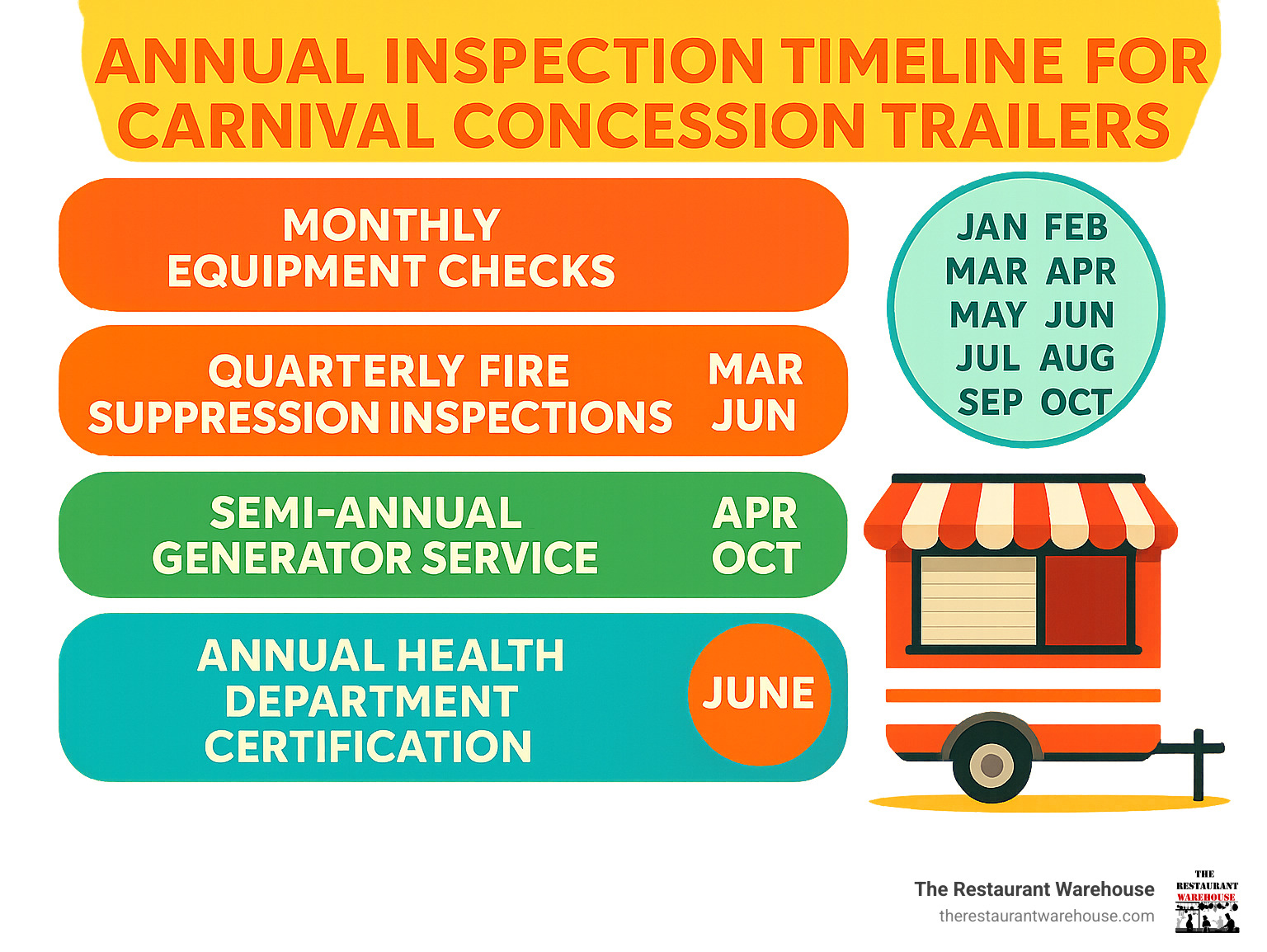
Preventative maintenance prevents costly breakdowns during peak earning periods. Regular generator service, equipment cleaning, and system checks are essential for reliable operation.
Off-season storage affects equipment longevity and next-season startup costs. Proper winterization and secure storage prevent damage and theft. Many operators budget $200-$500 monthly for storage costs.
For comprehensive operational guidance, review our Food Truck Tips covering daily operations and best practices.
Menu engineering maximizes profitability by promoting high-margin items. Carnival foods typically offer 60-80% gross margins, but ingredient costs and waste can dramatically impact net profits.
Upselling combos increases average transaction values. Simple combinations like "funnel cake and drink" can increase sales by 25-30% while improving customer satisfaction.
Eco-friendly disposables are increasingly important for event bookings. Many fairs now require sustainable packaging, and customers increasingly prefer environmentally responsible options.
Meeting Licensing, Safety & Sanitation Rules
ServSafe certification is required for food service managers in most jurisdictions. This training covers food safety, temperature control, and sanitation procedures essential for mobile food operations.
HACCP logs document food safety procedures and are required by most health departments. These logs track temperatures, cleaning schedules, and critical control points throughout operations.
Grease disposal must follow local environmental regulations. Many operators contract with waste management companies for proper disposal, typically costing $50-$200 per service.
Grey-water management varies by location. Some jurisdictions allow grey-water discharge to approved systems, while others require containment and proper disposal.
State variance applications may be required for certain menu items or preparation methods. These applications can take 30-90 days for approval, requiring advance planning.
Insurance bundles often provide better coverage and rates than individual policies. Comprehensive coverage should include liability, property, and business interruption insurance.
Frequently Asked Questions about Carnival Concession Trailers
What permits and health inspections are required?
Getting your carnival concession trailers for sale legally operational involves navigating a maze of permits that varies dramatically by location. Most operators need at least three types of permits: business licenses from their home jurisdiction, health department permits for food service, and fire department approvals for propane and cooking equipment.
Here's where it gets tricky - you don't just need permits for your home base. Mobile food vendors typically need permits for every jurisdiction where they plan to operate. That county fair three hours away? You'll likely need their permits too. Smart operators research permit requirements during their booking process to avoid last-minute scrambles.
Annual health inspections are standard, but many areas also require pre-event inspections before you can serve your first customer. These inspections cover everything from hand-washing stations to proper food storage temperatures. Some inspectors are sticklers for details like thermometer calibration and cleaning chemical storage.
The inspection process usually takes 1-2 hours and costs $50-$200 depending on your location. Failed inspections mean delayed openings and lost revenue, so preparation is crucial.
How much does insurance cost for a carnival concession trailer?
Insurance for carnival concession trailers for sale typically runs $2,000-$6,000 annually, but the exact cost depends on several factors that insurance companies scrutinize carefully. Your coverage levels, operating locations, and claims history all impact pricing significantly.
Liability coverage is non-negotiable - most events require $1-2 million in coverage before you can even set up. This protects you if a customer gets injured or sick from your food. General liability usually costs $1,500-$4,000 annually for typical carnival operations.
Property insurance adds another $500-$1,500 annually to cover your trailer and equipment. This protects against theft, fire, and weather damage. Given that a fully-equipped trailer can represent a $50,000+ investment, this coverage pays for itself if disaster strikes.
Many operators bundle their policies to get better rates and simpler management. Commercial auto coverage, business interruption insurance, and product liability can often be packaged together for savings of 10-20% compared to individual policies.
Can I operate year-round in cold climates?
Year-round operation with carnival concession trailers for sale is absolutely possible in cold climates, but it requires smart planning and the right equipment modifications. Successful winter operators focus on insulation, heating systems, and cold-weather equipment that can handle sub-freezing temperatures.
The key is shifting your venue strategy during winter months. While summer means outdoor fairs and festivals, winter operations typically focus on indoor events like trade shows, hockey games, holiday markets, and shopping mall events. These venues provide climate control and steady foot traffic during the coldest months.
Revenue expectations need adjustment for winter operations. Most operators report 60-80% revenue drops during winter months compared to peak summer season. However, operating costs often drop too - less fuel for travel, lower ingredient spoilage, and reduced staff needs.
Equipment modifications for cold weather include tank heaters for propane systems, insulated water lines to prevent freezing, and auxiliary heating for prep areas. These modifications typically cost $2,000-$5,000 but enable profitable winter operations.
The most successful winter operators we've talked to treat it as relationship-building season. They use slower periods to book next summer's events, maintain equipment, and develop new menu items for the upcoming season.
Conclusion
Your journey into the carnival concession trailers for sale market starts with smart shopping and ends with sweet profits. These colorful mobile kitchens offer something special that regular food trucks simply can't match - that magical combination of nostalgia, sensory appeal, and impulse-buying psychology that turns casual fairgoers into eager customers.
The numbers tell the story. Whether you're eyeing a $6,000 fixer-upper shell or ready to invest in a $177,000 turnkey operation, success comes down to three key factors: thorough inspection, realistic budgeting, and understanding your total investment beyond just the trailer price.
Buying the trailer is just your first step. The real magic happens when you outfit it with quality equipment that can handle the high-volume demands of carnival crowds. That's where proper commercial kitchen equipment makes all the difference between smooth operations and frustrated customers waiting in long lines.
Smart buyers factor in these often-overlooked costs:
- Customization and branding (typically $5,000-$15,000)
- Compliance upgrades for local health codes
- Quality commercial equipment that won't break down during peak season
- Working capital for inventory and initial marketing
At The Restaurant Warehouse, we've seen too many new operators struggle because they skimped on equipment quality to save a few dollars upfront. Our wholesale pricing helps you get professional-grade gear without the retail markup, so you can invest in reliability from day one.
The carnival food business taps into something deeper than hunger - it's about creating experiences and memories. When customers smell that funnel cake batter hitting hot oil or watch cotton candy spinning under bright LED lights, they're not just buying food. They're buying a piece of childhood magic.
Your success depends on delivering that experience consistently, which means having equipment you can count on when the crowds are three-deep at your serving window.
Ready to turn your carnival dreams into reality? Our Commercial Kitchen Equipment Guide walks you through everything you need to outfit your new trailer with professional equipment at wholesale prices.
The carnival circuit is calling, and with the right trailer, quality equipment, and attention to that special carnival magic, you'll be ready to answer with profits that'll make you smile as wide as your customers.
About The Author

Sean Kearney
Sean Kearney is the Founder of The Restaurant Warehouse, with 15 years of experience in the restaurant equipment industry and more than 30 years in ecommerce, beginning with Amazon.com. As an equipment distributor and supplier, Sean helps restaurant owners make confident purchasing decisions through clear pricing, practical guidance, and a more transparent online buying experience.
Connect with Sean on LinkedIn, Instagram, YouTube, or Facebook.