

Don't Get Cooled By a Lemon: A Guide to Used Prep Coolers
Why Used Prep Coolers Are Smart Business Investments
A used prep cooler can save your restaurant 30-60% compared to buying new while delivering the same food safety and efficiency. Here's a quick overview:
Key Benefits:
- Cost Savings: Used units typically cost $800-$4,500 versus $2,000-$8,000+ for new models.
- Quality Options: Access premium brands and high-quality models at budget-friendly prices.
- Immediate ROI: Lower upfront costs mean a faster return on your investment.
- Energy Efficiency: Many used models feature modern, efficient R290 refrigerant systems.
What to Look For:
- Physical condition (dents, rust, gasket wear)
- Refrigeration system functionality
- NSF/ETL certifications
- Proper size for your kitchen
- A reputable seller offering testing or a warranty
In the high-stakes, low-margin world of the restaurant business, every dollar counts. Managing initial startup costs and ongoing operational expenses is a constant balancing act, and equipment purchases represent one of the largest capital outlays. Smart purchasing decisions, like buying quality used equipment, are therefore not just helpful—they are game-changers for your cash flow and long-term viability. Used prep coolers offer an ideal balance of affordability and functionality, keeping ingredients safe while providing essential prep space. However, the used market requires careful navigation, as not all equipment is created equal. Some units are well-maintained gems, while others are costly problems in disguise. This guide will walk you through evaluating used prep coolers like a pro, helping you spot quality units, avoid common pitfalls, and find reliable sellers who stand behind their products.
The Smart Chill: Why a Used Prep Cooler is a Savvy Investment
A used prep cooler is a secret weapon for any new or budget-conscious restaurant, offering professional-grade performance without the high price tag. The financial benefits are significant. A quality used prep cooler typically costs 30% to 60% less than a new one, freeing up thousands of dollars that can be reinvested into other critical areas like ingredients, staff, or marketing.
This lower upfront cost leads to a faster return on investment. Your equipment starts paying for itself sooner, helping you reach profitability more quickly. Beyond the immediate financial advantages, choosing used equipment is an environmentally responsible decision. By giving a functional, well-built unit a second life, you are actively reducing waste that would otherwise end up in a landfill. This practice diverts tons of metal, plastic, and chemical refrigerants from the waste stream. Furthermore, it conserves the significant energy and raw materials required to manufacture a new piece of equipment from scratch. You are participating in the circular economy, a sustainable model that prioritizes reuse and refurbishment over disposal. This is a powerful story to tell, a move that resonates with an increasingly eco-conscious customer base that values businesses committed to sustainability.
The used market also provides access to higher-quality models from premium, industry-leading brands that might be unaffordable when new. These top-tier manufacturers are known for their robust construction and durability, so even a pre-owned unit can deliver professional results for years.
Furthermore, modern energy-efficiency is not exclusive to new units. Many used prep coolers feature advanced, energy-saving technologies like efficient R290 refrigerants and improved insulation, which help keep utility bills low. A used prep cooler that was top-of-the-line a few years ago still offers reliable, efficient performance at a fraction of its original cost.
To learn more about what features to look for, see our guide on Freshness on Demand: Top Commercial Prep Fridge Options. A used prep cooler is a strategic investment that delivers maximum functionality, proven reliability, and significant savings.
Know Your Cool: A Breakdown of Prep Cooler Types
When shopping for a used prep cooler, you'll find a family of specialized refrigerated worktables, each designed for a specific kitchen workflow. Understanding the differences is crucial for making a smart purchase that will boost your team's efficiency rather than create bottlenecks.
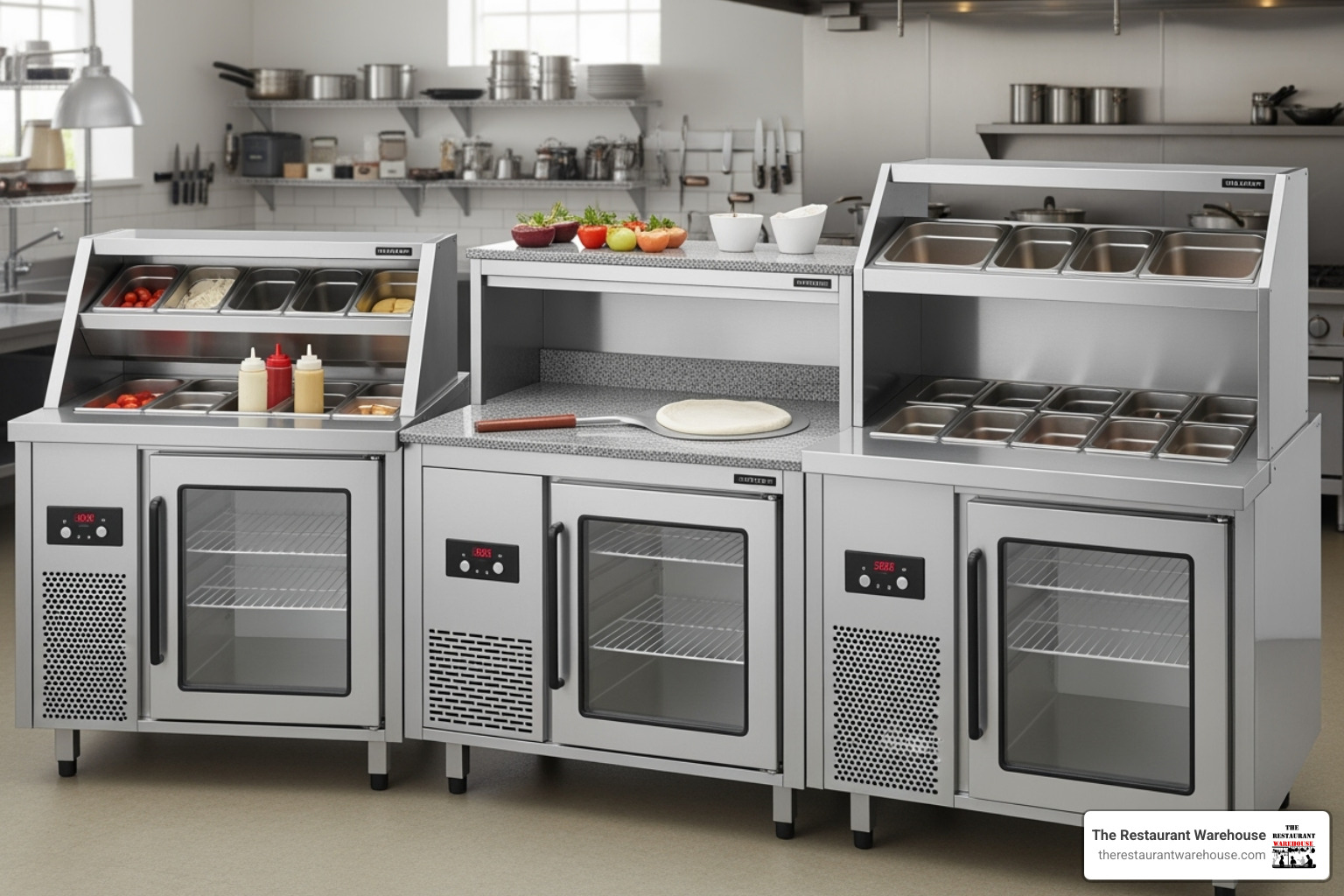
The main differences between prep cooler types relate to functionality and kitchen workflow. Some are built for sandwich assembly, others for pizza making, and some for high-volume operations.
Here's a comparison of the most common types:
| Feature/Type | Sandwich Prep Tables | Pizza Prep Tables | Mega Top Tables |
|---|---|---|---|
| Cutting Board Depth | Standard (8-10 inches) for slicing meats/cheeses | Extra deep (19+ inches) for large doughs | Standard to slightly deeper |
| Pan Capacity | Typically 8-18 (1/6 size) pans in 1-2 rows | Typically 6-12 (1/3 or 1/2 size) pans in 1 row | Increased (up to 3 rows of pans), 12-30+ pans |
| Pan Rail Design | Flat or slightly raised, often with hinged lid | Raised, often without a lid, for easy access | Raised, often with hinged lid, for maximum pan space |
| Refrigerated Base | Doors or drawers for bulk ingredient storage | Doors for bulk ingredient storage | Doors or drawers for bulk ingredient storage |
| Common Uses | Sandwiches, salads, wraps, general cold prep | Pizzas, calzones, large dough work | High-volume sandwiches, salads, buffet lines |
| Airflow/Cooling | Designed for consistent cooling of smaller pans | Stronger airflow to prevent dough from warming | Efficient cooling for high pan density |
Sandwich and Salad Prep Tables
These are the workhorses for delis, cafés, and any operation making sandwiches and salads. Their key features include a long, narrow cutting board and a pan rail holding multiple 1/6 size food pans for chilled ingredients. The refrigerated base below provides bulk storage via doors or drawers. For more details, see our guides on Sandwich Prep Tables, our general Sandwich Prep Table Guide, and specifics like the 48 Inch Sandwich Prep Table.
Pizza Prep Tables
A pizza prep table used prep cooler is engineered for pizzerias. Its standout feature is an extra-deep cutting board (19+ inches) to accommodate large pizza dough. The raised pan rail holds larger 1/3 or 1/2 size pans for easy access to toppings. The cooling system is also more robust to handle the demands of a busy pizza line. Learn more from our Pizza Prep Table Guide or about specific models of pizza prep tables.
Mega Top Prep Tables
For high-volume kitchens, a mega top used prep cooler is the MVP. These are improved sandwich prep tables with increased pan capacity. The defining feature is three rows of pans, holding 12 to 30+ pans of ingredients. This versatility is ideal for busy sandwich shops or salad bars needing a wide variety of chilled items for rapid assembly. A 48 Inch Sandwich Salad Prep in a mega top configuration can dramatically boost output.
Undercounter and Worktop Models
When floor space is limited, undercounter and worktop used prep cooler models are space-saving heroes. Their space-saving design allows them to fit under existing counters, while worktop models offer a dual-purpose solution with a work surface and refrigerated storage. They are perfect for adding supplemental refrigeration and prep space in smaller kitchens. For more ideas, see our Prep Table Kitchen Guide and general advice on Restaurant Prep Table options.
Your Pre-Purchase Checklist: 7 Factors for Your Used Prep Cooler
You've decided a used prep cooler is a smart choice. Now comes the crucial part: ensuring you don't buy a lemon. A thorough inspection is essential to avoid costly repairs and guarantee the unit will perform safely and efficiently. This checklist will guide you through the inspection process. For a broader perspective, our Restaurant Prep Table Guide offers more valuable insights.
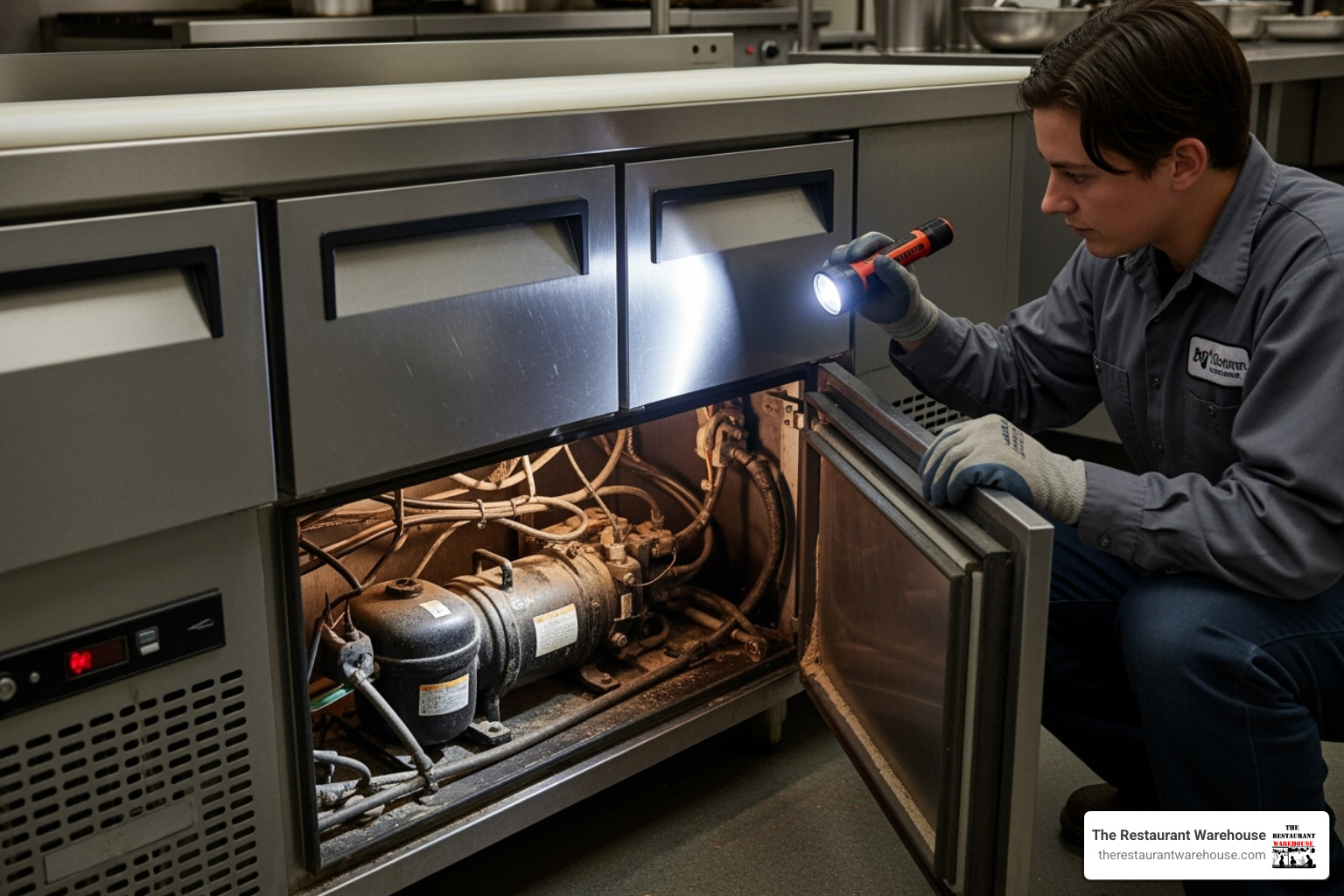
Here are seven essential factors to consider:
1. Physical Condition: More Than Just Scratches
Look beyond superficial scratches for signs of heavy wear that could impact function. Stainless steel is durable but not indestructible.
- Dents and Dings: Large dents, especially on corners or near doors, can indicate structural compromise.
- Rust: Check for rust around welds and seams, as it can weaken the material.
- Damaged Gaskets: Door gaskets are critical. Check for tears, cracks, or hardening. A bad seal wastes energy and strains the compressor. Test the seal by closing a dollar bill in the door; if it pulls out easily, the seal is weak.
- Door Alignment: Doors should close smoothly and seal tightly. Sagging doors indicate worn hinges.
- Interior Condition: Look for cracks, holes, excessive condensation, or mold inside. Check the interior shelving and supports. Are they bent, rusted, or missing? Replacing them can be an unexpected extra cost.
- Cutting Board Wear: Heavily scored or discolored cutting boards can harbor bacteria and may need replacement.
- Caster Quality: Ensure casters roll smoothly and lock securely. A prep table that drifts during a busy service is a safety hazard.
A thorough physical assessment indicates how well the unit was maintained. Our Preparation Table Kitchen Guide can also be helpful.
2. The Heart of the Unit: Inspecting the Refrigeration System
This is the most critical component. A faulty refrigeration system makes the unit a very expensive cabinet.
- Compressor Inspection: Listen for unusual noises like rattling or grinding. Check for oil leaks.
- Condenser Coils: These should be clean. Coils caked with dust or grease suggest neglect and cause the unit to work harder, consume more energy, and risk failure.
- Evaporator Fan: The fan inside should run quietly and consistently.
- Temperature Test: If possible, plug the unit in and let it run. Use a thermometer to verify it holds a food-safe temperature between 33°F and 41°F (0.5°C to 5°C). When performing a temperature test, don't just check it once. Monitor it over a period of at least 30-60 minutes to see if it cycles correctly and maintains a stable temperature. A unit that gets cold initially but then struggles to hold its temperature has a problem. Also, ask the seller about the unit's history. Was it used in a high-heat environment, like next to a fryer line? This can put extra strain on the compressor over its lifetime.
- Refrigerant Type (R290): Modern, energy-efficient units often use R290 refrigerant. Ensure the unit uses a common refrigerant, as older types can be difficult and expensive to service.
If the refrigeration system is questionable, walk away. For brand-specific insights, consider reading about brand-specific sandwich prep tables.
3. Size, Capacity, and Layout
Before you shop, measure your available kitchen space. A used prep cooler must fit without obstructing workflow.
- Measure your space: Account for width, depth, height, and clearance for doors or drawers.
- Kitchen footprint: Visualize how the unit will fit into your prep line to ensure a smooth workflow.
- Pan capacity: Determine how many ingredient pans you need accessible.
- Door vs. drawer configuration: Doors offer bulk storage, while drawers provide easier access to specific items. Choose what best suits your operation. Think about the ergonomics of your kitchen staff. Will a drawer configuration reduce bending and reaching compared to a door model, potentially speeding up service and reducing worker fatigue? Consider the height of the work surface. Is it comfortable for your team? A unit that is too high or too low can lead to strain over long shifts.
Understanding your spatial needs is key, whether you need a Best 27 Inch Prep Tables, are Choosing 27 Prep Table, or require a larger 72 Inch Sandwich Prep Table.
4. Brands and Build Quality
Focusing on reputable, well-established manufacturers increases your chances of getting a durable unit. These industry-leading brands are known for quality construction, reliable performance, and engineering that stands up to the rigors of a commercial kitchen.
- Reputable manufacturers: Look for units from industry leaders known for their longevity and robust build quality. Some brands offer an excellent balance of quality and value, making them popular choices in both new and used markets.
- Stainless steel construction: Verify the unit is made of durable, hygienic stainless steel.
- Parts availability: Popular brands have readily available parts, making repairs easier and less costly. Research the general reputation of different manufacturers online. Look for discussions in professional forums about which brands tend to have better part availability or are easier for technicians to service. A unit from a well-known manufacturer is more likely to have accessible replacement parts, from gaskets to fan motors, which is a critical consideration for long-term ownership.
- User reviews: Research reviews for the specific model to learn about common issues and reliability. An a 48-inch sandwich prep table review or research on a 27-inch sandwich prep table from a quality brand can provide valuable feedback.
5. Certifications: The Stamp of Approval
Certifications are non-negotiable for commercial kitchen equipment. They confirm the unit meets strict safety and sanitation standards.
- NSF certification: Look for the NSF mark. NSF International sets public health and safety standards, ensuring a unit is designed to be easily cleaned and sanitized.
- ETL Sanitation Listed: Similar to NSF, this indicates compliance with food sanitation requirements.
- UL certification: This mark from Underwriters Laboratories indicates the electrical components meet safety standards.
Always verify these certifications are present and legible on the unit's data plate. Health inspectors are trained to look for these certification marks. A non-certified piece of refrigeration can result in a failed inspection, forcing you to remove the unit immediately and find a replacement under pressure. It's a non-negotiable aspect of commercial kitchen compliance that protects both your business and your customers.
6. Decoding the Price Tag for a Used Prep Cooler
The primary benefit of a used prep cooler is cost savings. While new units range from $2,000 to over $8,000, a reliable used unit typically costs between $800 and $4,500. The price depends on age, brand, condition, and size. Aim for a 30-60% saving compared to new. If a used unit is only marginally cheaper, a new one with a full warranty might be a better value. To get a better idea of pricing, you can See examples of used prep table listings.
7. Finding a Reliable Seller for a Used Prep Cooler
Where you buy is as important as what you buy. A reputable seller provides peace of mind.
- Reputable dealers: These sellers often inspect, service, and refurbish used equipment. They may offer short-term warranties (e.g., 90 days), which is a significant advantage.
- Online marketplaces & Auctions: These can offer great deals but come with higher risks, as items are often sold "as-is" with no warranty or opportunity for thorough inspection.
- Warranty: Always ask about a warranty. It shows the seller's confidence in their product.
- Testing and Transparency: A good seller will be transparent about the unit's condition and any testing performed.
Connecting with a seller who offers transparency and support is key. When you Explore local listings for used equipment, prioritize sellers who stand behind their products.
Keeping It Cool: Essential Maintenance for Your Prep Cooler
Think of your used prep cooler as a hardworking team member that needs regular care to perform at its best. Proper maintenance maximizes longevity, ensures peak performance, and keeps energy bills down, helping you avoid surprise breakdowns during busy service hours.
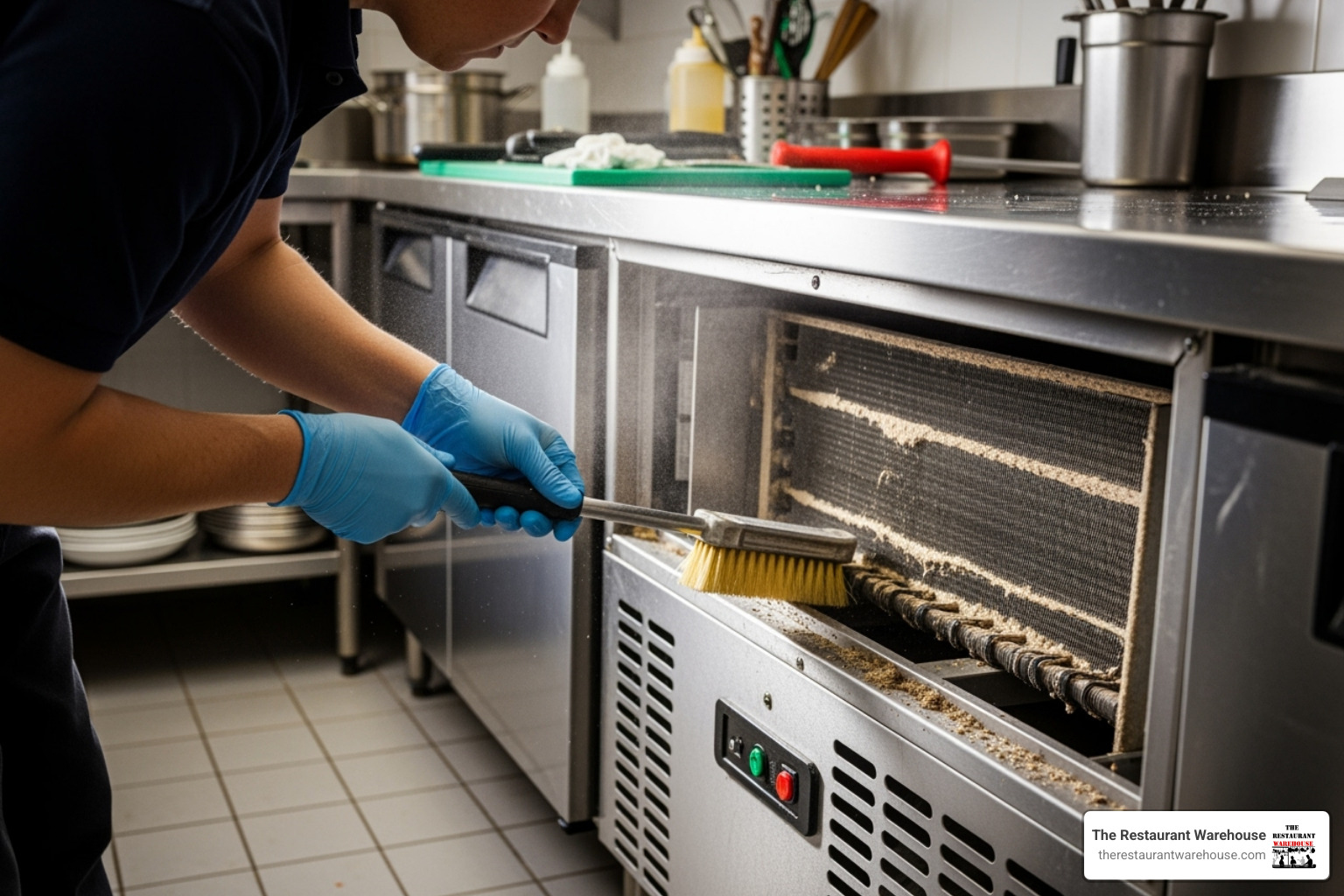
Here are the essential maintenance tasks for your prep cooler:
Clean Condenser Coils (Monthly/Quarterly): These coils dissipate heat but attract dust and grease. Clogged coils force the unit to work harder, wasting energy and risking compressor failure. This is arguably the single most important maintenance task you can perform. The condenser is the unit's radiator, and when it's clogged with dust, grease, and kitchen debris, the compressor has to run longer and harder to dissipate heat. This not only leads to skyrocketing energy bills but is also the leading cause of premature compressor failure, the most expensive repair a refrigeration unit can have. Simply vacuum or brush them clean.
Check Door Gaskets (Weekly): Gaskets seal in cold air. Check for tears, cracks, or hardening. Clean them with warm, soapy water. Test the seal with a dollar bill; if it pulls out easily when the door is closed, the gasket needs replacing. Think of a worn gasket as a constant leak. It allows cold air to escape and warm, moist air to enter, forcing the compressor to cycle more frequently. This constant battle to maintain temperature also introduces excess moisture into the cabinet, which can lead to icing on the evaporator coil and potential drainage problems.
Perform Daily Cleaning: Wipe down interior and exterior stainless steel surfaces with mild, food-safe cleaners. This prevents food buildup, maintains sanitation, and helps prevent rust and corrosion.
Monitor Temperature (Daily): Use an independent thermometer to verify internal temperatures remain between 33°F and 41°F. Fluctuations can signal system issues that need immediate attention, preventing food spoilage.
Clear Drain Lines (Monthly): Flush drain lines with warm water to prevent clogs from food debris or mold, which can cause water backup and sanitation problems.
Check Fan Motors (Quarterly): Listen for grinding or squealing from the evaporator and condenser fans. Strange noises can indicate worn bearings or impending failure.
Ensure Proper Leveling: An unlevel unit can affect door seals and drainage. Use a spirit level and adjust the feet or casters as needed.
Incorporating these simple tasks into your routine protects your equipment, ensures food quality, and optimizes energy use.
Frequently Asked Questions about Used Prep Coolers
Investing in a used prep cooler can bring up some questions. Here are answers to the most common concerns from restaurant owners.
How long does a used prep cooler typically last?
A quality commercial prep cooler is built to last 10 to 15 years. A well-maintained used unit can still have a long, productive life. The actual lifespan depends on three key factors:
- Brand Quality: Units from reputable, top-tier manufacturers are engineered with heavy-duty components designed for the demands of a commercial environment, ensuring greater longevity.
- Previous Usage: A unit from a low-volume café will have less wear than one from a 24-hour diner.
- Maintenance History: A regularly serviced unit will outlast a newer, neglected one. This is why your own maintenance routine is so important.
Realistically, a well-chosen used prep cooler can serve your kitchen reliably for another 5 to 8 years, or even longer. Inconsistent temperatures or strange noises are signs it may be nearing the end of its life. Other signs that a unit may be nearing the end of its operational life include excessive condensation on the interior or exterior, the compressor running constantly without cycling off, or the unit failing to recover its temperature quickly after the doors have been opened. If you notice several of these symptoms, especially in an older unit, it may be more cost-effective to invest in a different used model than to risk ongoing repair bills.
What's the difference between a sandwich prep table and a pizza prep table?
While both are types of used prep cooler, they are designed for different tasks. The main differences are:
- Cutting Board Depth: Sandwich tables have a standard 8-10 inch deep board. Pizza tables have an extra-deep board (19+ inches) to accommodate large pizza doughs.
- Pan Rail Design: Sandwich tables use smaller pans, often with a lid. Pizza tables use larger pans, often without a lid for faster access to toppings during a rush.
Essentially, a sandwich prep table is a versatile workhorse for delis and cafes, while a pizza prep table is a specialist tool optimized for pizzerias. For more details, our 27 Inch Sandwich Prep Table Guide explores these differences.
Can I get a warranty on a used unit?
Yes, it's possible, but it depends on the seller. When buying from private sellers (e.g., on classified sites), equipment is typically sold "as-is," meaning you assume all risk.
Reputable dealers, on the other hand, often offer limited warranties on their used inventory. A 90-day warranty is a common industry standard that provides significant peace of mind. This period allows you to test the unit in your kitchen and identify any hidden issues. When inquiring about a warranty, be sure to ask what it covers. Does it include both parts and labor? Is there a deductible? Understanding the specific terms of the warranty is just as important as having one. A warranty, even a short-term one, is a crucial safety net that protects your investment and provides a window to ensure the equipment functions correctly under the real-world stress of your kitchen's daily operations.
Some dealers also sell refurbished equipment. These are used units that have been inspected, repaired, and cleaned by certified technicians, and they often come with more comprehensive warranties. A seller offering a warranty on a used prep cooler is a strong signal that they stand behind their product. Always ask about warranty options before you buy.
Conclusion: Make a Smart, Cool Investment
Choosing a used prep cooler is a strategic decision that boosts your kitchen's efficiency while protecting your budget. The 30-60% savings are just the beginning. This investment gives you access to premium, durable brands and the right tool for your specific workflow, whether it's a sandwich table, pizza station, or a high-capacity mega top unit.
By using our inspection checklist, you can confidently evaluate a unit's physical condition, refrigeration system, and certifications to make a smart purchase. Once in your kitchen, simple, consistent maintenance—like cleaning coils and checking gaskets—will ensure your used prep cooler serves you reliably for years, multiplying your initial savings over time.
At The Restaurant Warehouse, we are committed to providing quality commercial restaurant equipment at wholesale prices. We believe great equipment shouldn't require great debt. Your kitchen deserves equipment that works as hard as you do, and a quality used prep cooler delivers reliable performance and food safety compliance.
Armed with this knowledge, you are ready to find a used prep cooler that will be a valuable asset to your business. When you're ready to browse, you can Find the perfect sandwich prep table for your kitchen with us. Here's to making cool, smart investments for your success.
About The Author

Sean Kearney
Sean Kearney is the Founder of The Restaurant Warehouse, with 15 years of experience in the restaurant equipment industry and more than 30 years in ecommerce, beginning with Amazon.com. As an equipment distributor and supplier, Sean helps restaurant owners make confident purchasing decisions through clear pricing, practical guidance, and a more transparent online buying experience.
Connect with Sean on LinkedIn, Instagram, YouTube, or Facebook.