

Your Complete Guide to Restaurant Equipment Parts
After years in this industry, I’ve seen the same frustrating scenario play out countless times. A chef orders a part online, waits two days for it to arrive, and discovers it’s the wrong one. The kitchen is still down, and the process starts all over again. Sourcing restaurant equipment parts shouldn't be this difficult. The secret isn't just finding a supplier; it's knowing how to get the right part on the first try. This guide is your insider playbook. I’ll share the simple steps for identifying your equipment’s model and serial number, what to look for in a reliable supplier, and how to avoid common ordering mistakes.
Why a Local Supplier for Restaurant Equipment Parts is a Game-Changer
When your walk-in cooler dies during a dinner rush or your high-temperature dishwasher fails mid-service, every minute counts. A search for a restaurant equipment parts supply near me is one of the most urgent a foodservice operator will ever make. Equipment downtime directly translates to lost revenue, frustrated customers, and stressed staff.
Quick Answer: Where to Find Restaurant Equipment Parts Near You
- Search online for "restaurant equipment parts" + your city.
- Check same-day shipping suppliers like The Restaurant Warehouse.
- Call local service technicians for recommendations.
- Visit nearby restaurant supply stores for in-person pickup.
- Join industry groups on social media for local advice.
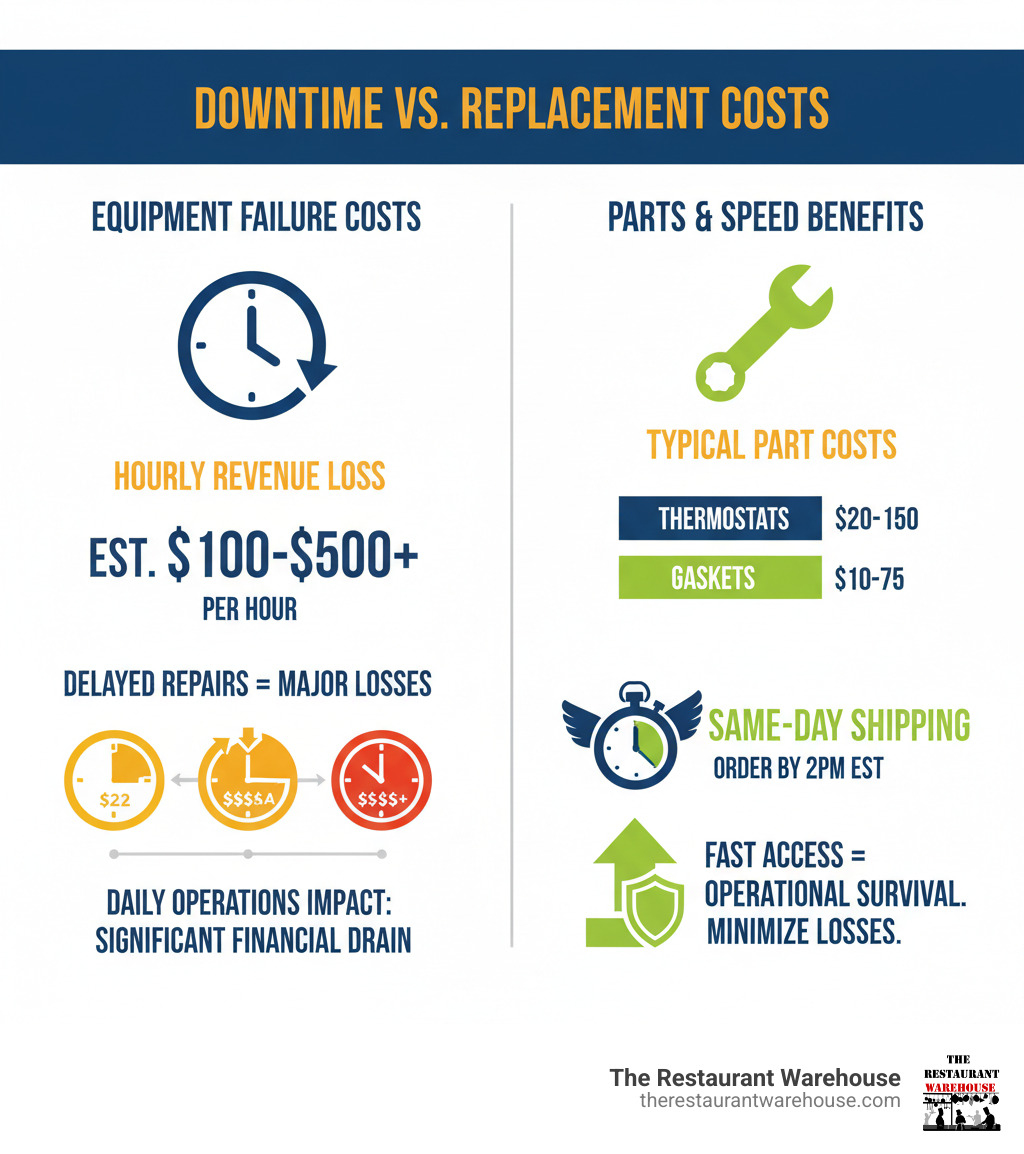
The math is simple: a broken piece of equipment can cost a restaurant hundreds or even thousands of dollars per day, while most replacement parts are a fraction of that cost. Fast access to the right part matters more than almost anything else when equipment fails.
Finding a reliable local or fast-shipping parts supplier isn't just about convenience; it's about operational survival. Suppliers offering same-day shipping or local pickup options can eliminate costly delays. For restaurants operating on thin margins, this speed can mean the difference between a minor hiccup and a business-threatening crisis.
I'm Sean Kearney TRW, and my years in the industry have taught me that sourcing parts quickly is critical. This guide will share insider knowledge on how to find what you need and build relationships with suppliers who understand the urgency of your business.
The Cost-Saving Power of Repair vs. Replace
When a critical piece of equipment like a freezer or deep fryer fails, the immediate pressure to get back online can make buying a brand-new unit feel like the only option. Before you make that major capital investment, consider the numbers. A replacement part often costs just a fraction of a new appliance's price. The real financial damage comes from downtime, which can cost your business hundreds or even thousands of dollars each day your service is disrupted. Choosing to repair helps you keep your existing appliances running longer, saving significant money compared to a full replacement. Getting your hands on the right part quickly is the key to minimizing that financial hit. While a full replacement isn't always avoidable, repairing is almost always the most cost-effective first step before you start shopping for new restaurant equipment.
Why Speed Matters for Restaurant Equipment Parts
When critical equipment fails, the clock starts ticking on your losses. A busy restaurant can lose hundreds or thousands of dollars per day when a key appliance goes down. Since most replacement parts are relatively inexpensive, the math is clear: speed matters more than almost anything else.
A lost weekend of sales due to a part that won't arrive until Tuesday can be devastating. This is why operational efficiency isn't just a buzzword—it's the difference between staying afloat and going under. Beyond the immediate financial impact, your reputation is at stake. In an age of instant online reviews, equipment downtime that forces you to limit your menu or turn away reservations can cause long-term damage to your customer base. Customer satisfaction depends on your ability to deliver consistently, which requires working equipment.
Every hour your equipment is broken is an hour of lost opportunity. Minimizing this disruption is paramount. If you need professional help diagnosing recurring issues, our guide on Kitchen Nightmares? Call the Pros for Restaurant Equipment Service can point you in the right direction.
How Same-Day Shipping Minimizes Downtime
When you know what part you need, the question becomes: how fast can you get it? This is where same-day shipping becomes a business-saving necessity. Placing an order before the daily cutoff time (typically around 2:30 PM EST) means the part ships that day, potentially arriving by the next morning. This service dramatically reduces wait times for immediate needs.
Smart suppliers maintain high stock availability for common failure items like thermostats, door gaskets, heating elements, and fan motors. They understand you can't wait for backorders. Some suppliers even offer 24/7 service for placing orders online, ensuring your request is first in line to ship when business hours resume. This flexibility is invaluable for busy operators.
Ready to get your equipment back up and running? Contact us today to check parts availability and same-day shipping options.
Get Your Part Today with Local Pickup
Sometimes, even overnight shipping isn't fast enough. In a true emergency situation, you need the part in your hands immediately. A local parts supplier with a pickup option is critical in these moments, as it eliminates all shipping variables and delays.
Another huge benefit is verifying parts in person. Ordering the wrong part online means starting the process all over again. With local pickup, you can compare the old part to the new one on the spot, ensuring it's a perfect match. This peace of mind is priceless, and you also save on no shipping costs.
Perhaps the most underrated benefit is building supplier relationships. When you're a regular face, the staff gets to know you and your equipment. They can offer helpful advice and solutions you might not have considered. For operators using specific brands, having a local source is a game-changer. Our guide on Find Atosa parts near you can help you locate options for that brand.
The Most Common Restaurant Equipment Parts You'll Need
When you're searching for a restaurant equipment parts supply near me, it helps to know what you're looking for. Certain parts are prone to failure due to constant use, friction, or stress from temperature cycles. Understanding these predictable weak points helps you anticipate problems before they shut you down.
These parts are typically high-wear components, moving parts, electronic components, or sealing and insulation elements that degrade over time. Knowing what they are is the first step toward proactive maintenance and minimizing downtime.
Keeping Cool: Essential Refrigeration Parts
Refrigeration failure is a top concern for any foodservice operation, as it puts thousands of dollars of expensive inventory at immediate risk. These parts are among the most frequently ordered for emergencies, and understanding their function is key to quick diagnosis.
- Compressor: Often called the heart of the refrigeration system, the compressor is the motor that circulates refrigerant to remove heat. When it fails, all cooling stops. Signs of a failing compressor include a unit that won't turn on, a constant buzzing or humming noise, or the circuit breaker repeatedly tripping. Due to their complexity and importance, replacing a compressor is a job for a certified technician, and using an OEM part is critical for maintaining energy efficiency and system longevity.
- Thermostats: These components regulate the internal temperature, cycling the compressor on and off to maintain the set point. A faulty thermostat can cause the unit to run constantly (freezing products and wasting energy) or not run enough (leading to unsafe temperatures and food spoilage). Digital thermostats offer precise control, while analog versions can sometimes be recalibrated. If you suspect a thermostat issue, it's a relatively inexpensive part that can save your inventory.
- Door Gaskets: These flexible magnetic seals are the primary barrier preventing warm, moist air from entering the refrigerated cabinet. Over time, they become brittle, cracked, or torn, creating gaps. A poor seal forces the compressor to overwork, dramatically increasing energy costs and causing premature wear on other components. You can test a gasket by closing a dollar bill in the door; if it pulls out easily, the seal is weak. Our guide, Seal the Deal: Finding the Right Atosa Door Gasket, can help with selection and replacement.
- Evaporator and Condenser Fan Motors: These two motors are crucial for heat exchange. The evaporator fan circulates cold air inside the unit to ensure even cooling across all shelves. The condenser fan, located near the compressor, blows air over the condenser coils to dissipate heat removed from the cabinet. A failure in either motor can lead to poor cooling and compressor overheating. A loud rattling noise or a fan blade that won't spin are clear signs of failure.
- Shelving: While not a mechanical part, damaged or missing shelves severely impact storage capacity, organization, and food safety. Overloaded or broken shelves can collapse, causing product loss and potential injuries. Proper shelving also ensures correct airflow within the unit, which is vital for consistent temperatures. For more on this, see our Atosa Commercial Refrigerator Shelves: The Ultimate Guide to Parts.
We stock a full range of refrigeration components. For more details, visit our resource on All about Atosa Refrigerator Parts. Contact us today to stock up on essential refrigeration parts.
Must-Have Parts for Prep Tables and Dishwashers
Your prep and dishwashing areas are the backbone of your kitchen's workflow. A breakdown here can create an immediate bottleneck, compromising sanitation, slowing down service, and bringing operations to a grinding halt.
- Cutting Boards: Essential for food prep, cutting boards are a high-wear item that must be regularly maintained and replaced for hygiene and safety. Deep grooves and cuts can harbor bacteria that are difficult to remove. Many health departments require boards to be smooth and cleanable. Replacing them is a simple and cost-effective way to ensure food safety.
- Faucets and Spray Valves: Constant use in a high-volume environment leads to wear and tear on faucets and pre-rinse spray valves. Common failures include leaks from worn-out O-rings and gaskets, or broken handles and triggers. A leaking faucet not only wastes a significant amount of water and money but can also create hazardous slippery floors.
- Dishwasher Pumps: Commercial dishwashers rely on powerful pumps to function. The wash pump circulates hot, soapy water to clean dishes, while the drain pump evacuates dirty water. A failing wash pump results in poor cleaning performance and potential health code violations. A failing drain pump can cause the machine to back up and flood.
- Wash and Rinse Arms: These arms spin and spray water over the dishes. The small nozzles can easily become clogged with food debris or mineral deposits (lime scale), leading to uneven water distribution and ineffective cleaning. Regular removal and cleaning of these arms is a critical maintenance task.
- Water Inlet Valves: This electronic valve controls the flow of fresh water into the dishwasher. If it fails to open, the machine won't fill. If it gets stuck open, it can cause the machine to overfill and flood the dish pit. It's a common point of failure that can stop your entire warewashing process.
For guidance on maintaining prep tables with built-in refrigeration, see our guide: Fix Your Fridge: Essential Atosa Prep Table Parts Where to Find Them.
Parts for Cooking and Specialty Equipment
The cooking line is where the magic happens, but it's also where equipment endures the most intense conditions. High temperatures, grease, and constant use mean that parts for your fryers, ovens, and ranges will inevitably wear out. Similarly, your specialty equipment—the blenders, coffee makers, and other small appliances that complete your menu—are just as critical. When one of these goes down, it can disrupt your entire service. Knowing the common failure points for this equipment helps you stay prepared and find the right replacement parts without delay.
Fryer, Oven, and Range Components
Your cooking equipment is the heart of your kitchen, and its components are built to withstand extreme heat and heavy use. However, even the toughest parts need replacing eventually. For commercial deep fryers, common failure points include thermostats that lose accuracy, leading to improperly cooked food, and heating elements that burn out from the constant temperature cycles. In ovens and ranges, igniters are often the first part to fail, preventing the burners from lighting. Burners can also become clogged or warped over time, resulting in uneven heating. Keeping a spare igniter or thermostat on hand for your most critical pieces of equipment is a smart move that can save you from a disastrous service.
Parts for Blenders, Coffee Makers, and More
While smaller, your specialty and beverage equipment are essential for rounding out your menu and driving profits. A high-performance blender is vital for smoothies and sauces, but its blades will dull over time, and the motor can wear out from crushing ice and tough ingredients. Coffee makers are another daily workhorse where parts like brew baskets and carafes can break from constant handling. Even more specialized equipment, like hot dog rollers or popcorn machines, have specific heating elements and motors that can fail. Having a reliable source for these smaller, specific parts ensures you can continue serving every item on your menu without interruption.
Where to Find Restaurant Equipment Parts Near You
When equipment breaks, your first instinct is to search online for a restaurant equipment parts supply near me—and that's the right move. Knowing how to search effectively can make the difference between getting back up and running in hours versus days.
Start with targeted online searches. Combine "restaurant equipment parts" with your specific city or neighborhood. If you know the brand, add it to your search (e.g., "Atosa parts Seattle"). Don't overlook local business directories, as they may list specialized suppliers that don't appear in general searches.
Your service technicians are also a goldmine of information. They work with parts suppliers daily and know who is reliable. If you have a relationship with a repair tech, ask them for recommendations. Industry forums and social media groups for restaurant owners can also point you toward trusted local suppliers.
Of course, The Restaurant Warehouse specializes in this exact need, offering same-day shipping and an extensive inventory. We understand that when you're searching for parts, you need solutions fast.
What to Look For in a Reliable Parts Supplier
Not all parts suppliers are created equal. In an emergency, you need a dependable partner. Here’s what to look for:
- Customer Reviews and Ratings: A supplier with a high rating from hundreds of reviews is consistently delivering. Read reviews to see if customers praise fast shipping, knowledgeable staff, and fair prices.
- Warranty Policies: A reputable supplier stands behind their parts with a clear, easy-to-understand warranty. Vague policies are a red flag.
- Staff Expertise: When you call in a panic, you need an expert who can help you identify the right part quickly. Experienced staff can often troubleshoot over the phone and provide valuable advice.
- In-Stock Availability: The best suppliers maintain deep stock of common parts because they understand the urgency. Ask directly about inventory levels before ordering.
While used equipment might seem like a cost-saving measure, it comes with risks. Our guide Don't Get Burned By A Lemon: A Guide to Used Prep Coolers covers important considerations.
Ready to work with a supplier who understands your urgency? Contact us today.
Broad Brand Compatibility
Your kitchen is likely a mix of different brands, each with its own specific parts. A great supplier understands this and offers broad brand compatibility. You shouldn't have to juggle multiple vendors just to maintain your equipment. Look for a supplier who stocks parts for a wide range of well-known brands, from Hobart to Bunn to Atosa. This versatility saves you valuable time and simplifies your repair process. When you can make one call or visit one website to find a thermostat for your freezer and a gasket for your oven, you streamline your entire maintenance workflow. This kind of comprehensive inventory is a hallmark of a supplier who is serious about serving the needs of a professional kitchen.
Modern Customer Service and Support
In a high-pressure situation, you need more than just a part; you need a partner. Modern customer service goes beyond a simple transaction. It means having access to a knowledgeable team that can help you confirm you're ordering the right component. Look for suppliers who offer real-time updates on your order status and stock availability, so you're never left guessing. The best suppliers aim to be a complete resource, focusing on excellent service and fast delivery because they understand the cost of downtime. When a supplier invests in award-winning support, it shows they are committed to your success, not just their sales figures. This level of support can be a lifeline during an equipment emergency.
Beyond Parts: One-Stop Shop Offerings
While finding the right part is your immediate need, a supplier who offers more can become an invaluable long-term partner. A true one-stop shop provides everything from replacement parts to brand-new deep fryers and commercial refrigerators. This is a huge advantage. When your supplier also sells new equipment, their team has a deeper understanding of how the machinery works, which translates to better advice for you. Furthermore, building a relationship with a single, reliable source for all your restaurant equipment needs simplifies purchasing, helps you secure better pricing on larger orders, and ensures you have a trusted contact for everything from a simple repair to a full kitchen upgrade.
How to Find Parts in Any City
Whether you're in a major city or a smaller town, your strategy for finding parts will differ slightly.
In major metropolitan areas, you'll likely find larger inventories and more competition, which often leads to better service and faster shipping options, including same-day couriers. You may also find suppliers who specialize in certain brands or equipment types, which can be helpful for specific needs.
In smaller towns or rural areas, building local relationships is even more critical. Your options may be more limited, so you'll need to be strategic. Generalist suppliers can be valuable connectors, and you may need to plan for longer ordering lead times. In these situations, consider ordering a backup of critical parts to keep on hand.
Regardless of your location, The Restaurant Warehouse serves foodservice operators nationwide with competitive shipping rates and a crucial same-day shipping option. We work to get you the parts you need as quickly as possible, because we know your business can't afford to wait.
How to Get the Right Restaurant Part on the First Try
One of the most frustrating experiences in equipment repair is waiting for a part, only to find it's the wrong one. You've lost time and money, and your equipment is still broken. This scenario is avoidable with the right approach.
The key to success when searching for a restaurant equipment parts supply near me is ensuring you get the correct part on the first try. This requires a bit of simple detective work.
Where to Find the Right Part Number
Think of your equipment's data plate as its birth certificate. This small metal tag, typically found on the back, side, or inside the door, holds all the information you need.
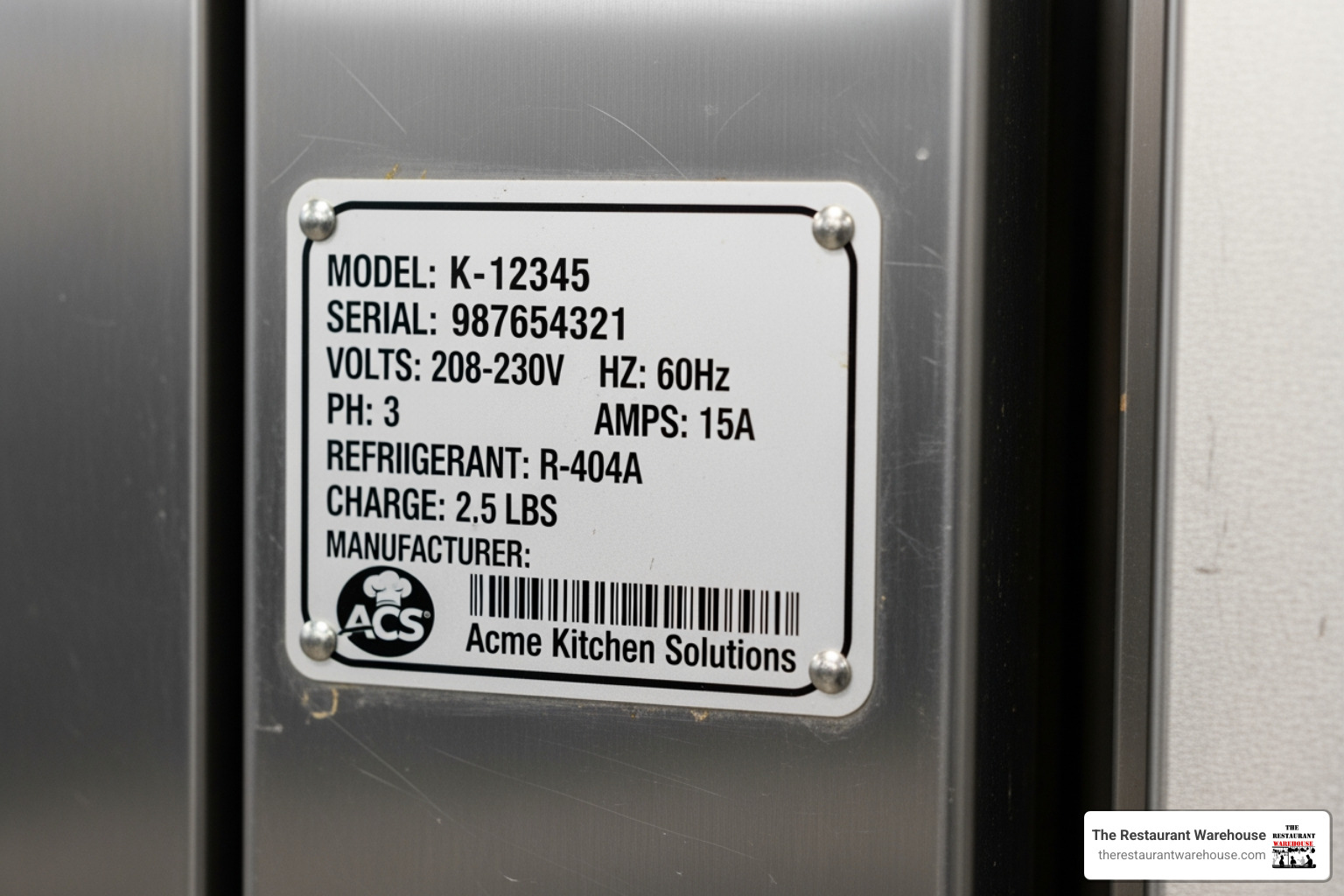
The data plate contains the manufacturer, model number, and serial number. These numbers are your golden ticket. Without them, even the most knowledgeable supplier is guessing. If you have the manufacturer's manual, it will often include parts diagrams with corresponding numbers. When possible, take clear photos of the broken part from multiple angles, capturing any markings.
Our team of experts is ready to help. When you contact us with your model and serial number, we can cross-reference our databases to pinpoint what you need. Our guide, Don't Get Left in the Cold: How to Find Any Atosa Part, walks you through this process.
Need help identifying the right part? Contact us today with your model and serial number.
Using Supplier Websites to Find Your Part
Once you have your model and serial number, the supplier's website is your next stop. The best online suppliers have designed their sites to be powerful tools for busy operators like you. They understand that you don't have time to scroll through endless pages of irrelevant items. Instead of just being a simple catalog, a good supplier website functions as a search engine specifically for your needs, helping you pinpoint the exact component required to get your kitchen back in business. Knowing how to use these features effectively can turn a stressful search into a quick, successful transaction.
Advanced Search and Reordering Tools
Modern supplier websites offer much more than a basic search bar. You can typically find what you need by searching with the part number, the brand name of your equipment, or even just a description of the part. Many top suppliers use smart, AI-powered search functions that can help identify the correct item even with partial information. This is incredibly helpful when you're dealing with an older machine or a worn-out data plate. Furthermore, look for features like one-click reordering. Once you've purchased a part for a specific machine, the system remembers it, allowing you to quickly buy it again without repeating the search. This is a huge time-saver for common wear items like gaskets and thermostats. When you shop restaurant equipment parts, these tools are designed to reduce your stress and downtime.
Benefits of Creating a Customer Account
It might seem like an extra step, but creating a customer account on your supplier's website is one of the smartest things you can do. An account gives you access to your complete order history, which is an invaluable resource. Instead of trying to remember which fan motor you bought for the walk-in cooler last year, you can simply look it up. This eliminates guesswork and prevents costly ordering mistakes. Many suppliers also offer better pricing or exclusive deals to account holders. You can often create custom lists of parts for the specific equipment in your kitchen, making it easy to restock essential components. It streamlines the entire process, saving your information for faster checkouts and making it easier to manage financing options for larger purchases.
OEM vs. Aftermarket Parts: What's the Difference?
You'll encounter two types of parts: OEM and aftermarket. Understanding the difference is crucial.
OEM (Original Equipment Manufacturer) parts are made by the same company that built your equipment. They are guaranteed to fit, maintain safety standards, and preserve efficiency. They also typically come with warranty protection. Using OEM parts restores your equipment to its original factory condition.
Aftermarket parts are made by third-party companies. While sometimes cheaper, their quality varies wildly. A poor-quality part can lead to premature failure, reduced performance, or even damage to your equipment. The few dollars saved rarely justify the risk of another breakdown. At The Restaurant Warehouse, we prioritize high-quality OEM parts because we know reliability is paramount.
Considering Exclusive or Private-Label Parts
Beyond OEM and generic aftermarket options, you might come across exclusive or private-label parts. These are components sold under a supplier's own brand name. Think of them as a curated aftermarket option. A reputable supplier won't put their name on a low-quality part, so these can offer a reliable middle ground between the higher cost of OEM and the gamble of a generic part. The supplier has vetted the manufacturer and is staking their reputation on its performance, sometimes even offering better warranties as a result.
The key is trust. When you buy a private-label part, you're trusting the supplier's expertise. For simpler, high-wear items, this can be a smart, cost-effective choice. However, for complex or critical components in your main restaurant equipment, sticking with OEM is often the safest bet to ensure perfect compatibility and performance. A trustworthy parts partner will be transparent about your options and help you decide when a private-label part makes sense and when an OEM part is non-negotiable for protecting your investment.
What's a Fair Price for Common Restaurant Parts?
Understanding typical costs helps you budget. Prices vary, but here are some general ranges for common OEM replacement parts:
- Door Gaskets: $20 - $150
- Thermostats: $50 - $250
- Evaporator Fan Motors: $100 - $400
- Dishwasher Pumps: $150 - $500
- Faucets and Spray Valves: $75 - $300
Even at the higher end, the cost of a part is almost always less than the revenue lost from a single day of downtime. When you factor in fast shipping, the math is clear: getting the right part quickly is the most cost-effective solution.
Finding Discounts and Special Offers
In the restaurant industry, every dollar saved on overhead goes straight to your bottom line. Finding discounts on essential parts isn't just about being frugal; it's a smart business strategy that helps you manage costs without sacrificing quality. Many suppliers have dedicated clearance sections on their websites where you can find excellent deals on everything from gaskets to fan motors. It's always worth checking these pages regularly, as new items are added all the time. Another great way to stay ahead of savings is by signing up for email newsletters from your favorite suppliers. This often gives you first access to special sales and exclusive offers you won't find anywhere else.
Beyond temporary sales, some companies, like us at The Restaurant Warehouse, focus on providing everyday low prices on high-quality equipment and parts, ensuring you get a fair deal without having to wait for a promotion. This approach provides consistent value you can rely on for your budget. For larger repairs or equipment upgrades that come with a bigger price tag, exploring financing options can also help you manage cash flow effectively, allowing you to get what you need now without a massive upfront cost.
Stay Ahead of Repairs with a Maintenance Plan
The best time to find a restaurant equipment parts supply near me is before you need one. Planned maintenance is like insurance for your kitchen. Proactive check-ups, cleaning, and timely parts replacement prevent the panic-inducing breakdowns that always seem to happen at the worst possible moment.
Regular maintenance significantly reduces the need for emergency repairs. Your equipment runs more efficiently, uses less energy, and lasts longer. A well-maintained kitchen is a happier, more productive, and safer environment for your staff. Restaurants that invest in preventative care spend far less on emergency repairs over time and maximize their uptime. For more insights, check out our guide on Restaurant Equipment Repair.
How to Build a Simple Maintenance Checklist
A consistent maintenance checklist is your best tool for prevention. It doesn't need to be complicated. Focus on these key areas:
- Daily Tasks: Wipe down surfaces, clean accessible filters, and check for obvious issues like leaks or unusual noises.
- Weekly Inspections: Examine high-wear components like door gaskets for cracks or hardening. Catching a worn gasket early can save you from a major failure. Our article on How to Install a Door Gasket on Commercial Refrigerators and Freezers can guide you.
- Monthly Deep Cleans: Clean interior components like condenser coils and clear drain lines to maintain peak efficiency.
- Professional Servicing: Schedule regular check-ups with certified technicians for complex systems like refrigeration. They can spot potential failures before they happen.
Actionable Maintenance Tips to Prevent Breakdowns
A little bit of prevention goes a long way. Simple, consistent maintenance tasks can dramatically extend the life of your equipment and save you from costly emergency calls. These tips focus on the highest-impact areas, helping you keep your kitchen running smoothly and efficiently. By incorporating these routines, you can catch small problems before they become major disasters, ensuring your equipment is always ready for service. This proactive approach not only saves money but also reduces stress for you and your entire team.
Refrigerator and Freezer Maintenance
Your refrigeration units are some of the hardest-working pieces of equipment in your kitchen, and they need regular attention. One of the most important tasks is cleaning the condenser coils. Dust and dirt act like an insulator, forcing the unit to work harder to release heat, which wastes energy and can lead to compressor failure. Also, regularly inspect your door gaskets. A poor seal allows cold air to escape, forcing the compressor to overwork and increasing your energy bills. A simple test is to close a dollar bill in the door; if it slides out easily, it's time for a replacement. Keeping these core components of your refrigerators and freezers clean and sealed is your first line of defense against breakdowns.
Stainless Steel Care and Cleaning
Prep tables and dishwashers are the foundation of a clean and efficient kitchen. For prep tables, pay close attention to your cutting boards. Over time, they develop deep grooves that can harbor bacteria, creating a food safety risk. Replacing cutting boards is a simple, low-cost way to maintain a hygienic workspace. For your dishwasher, the wash and rinse arms are critical. Food debris and mineral buildup can clog the spray nozzles, resulting in poorly cleaned dishes and potential health code violations. Regularly removing and cleaning these arms ensures your machine is cleaning effectively and keeps your entire operation running smoothly.
How Preventative Maintenance Saves You Money
Planned maintenance is smart financial management. The benefits are clear:
- Reduced Emergency Costs: A small, planned repair is always cheaper than a catastrophic failure.
- Lower Energy Consumption: A well-maintained unit can use 15-20% less energy, according to sources like the Energy Star program. Those savings add up.
- Maximized Uptime: Every hour your equipment runs is an hour you're generating revenue.
- Improved Employee Morale: Reliable equipment reduces stress and improves productivity.
Contact us today to build your maintenance plan! We can help you identify critical spare parts to keep on hand and ensure you have a reliable supplier when you need one.
Frequently Asked Questions about Restaurant Parts
We hear from foodservice operators every day who are searching for a restaurant equipment parts supply near me. Here are answers to some of the most common questions we receive.
What's the first step if a piece of my equipment breaks down?
First, ensure safety by immediately disconnecting power to the unit. This protects your staff and prevents further damage. Next, try to identify the problem—is it making a noise, not cooling, or completely dead? Finally, locate the equipment's data plate (usually on the back or inside the door) and write down the model and serial number. Having this information ready when you call a supplier will make the process much faster and more accurate.
Can I install a replacement part myself?
It depends on the part. Simple components like shelving, knobs, or some door gaskets can often be installed by a handy staff member. However, for anything involving electrical components, gas connections, or sealed refrigeration systems, we strongly recommend hiring a certified technician. Attempting these repairs yourself can void warranties, cause more expensive damage, and create serious safety hazards. When in doubt, call a professional. For more information on available parts, you can Find out more about Atosa Parts.
How do I know if a part is under warranty?
Check your original purchase documents for the equipment's warranty terms, which vary by manufacturer. That OEM parts installed during a professional repair often come with their own separate warranty, even if the equipment's original warranty has expired. If you're unsure about your coverage, we can help. Contact us with your equipment's model and serial numbers, and we can assist in verifying your warranty status, potentially saving you hundreds of dollars.
Keeping Your Kitchen Running Smoothly
When you're frantically searching for a restaurant equipment parts supply near me, you're not alone. Every foodservice operator faces equipment breakdowns. The difference between a minor hiccup and a major crisis is having a reliable partner who understands the urgency.
This guide has covered the essentials: how to identify parts using the data plate, the benefits of OEM components, the value of fast shipping, and the power of proactive maintenance. The real secret to success, however, is building a relationship with a supplier who truly gets your business—someone who knows you need solutions immediately, not in a few business days.
At The Restaurant Warehouse, this is what we do. We've built our business around wholesale pricing and expert service, passing savings and efficiency directly to you. When you call us with a model number, we're not just selling a part; we're helping you get back to serving customers as quickly as possible.
Ready to establish a partnership that protects your business from costly downtime? Contact us today to discuss your parts needs or set up a preventative maintenance plan. For a comprehensive overview, explore our Atosa Parts Department: Everything You Need to Know guide. We're here to help you succeed.
Key Takeaways
- Focus on Fast Solutions to Minimize Losses: Remember that lost revenue from a broken machine almost always costs more than the part itself. Choosing a supplier with same-day shipping or local pickup is a critical business decision that protects your bottom line.
- Know Your Model and Serial Number Before You Call: To avoid costly delays and wrong orders, always locate the data plate on your equipment first. These numbers are essential for any supplier to find the exact part you need quickly and accurately.
- Shift from Reactive Repairs to Proactive Maintenance: Create a simple maintenance checklist and stock a few critical spare parts for high-wear items. A small amount of planning prevents major breakdowns, saves money on emergency calls, and keeps your kitchen running smoothly.
Related Articles
About The Author

Sean Kearney
Sean Kearney is the Founder of The Restaurant Warehouse, with 15 years of experience in the restaurant equipment industry and more than 30 years in ecommerce, beginning with Amazon.com. As an equipment distributor and supplier, Sean helps restaurant owners make confident purchasing decisions through clear pricing, practical guidance, and a more transparent online buying experience.
Connect with Sean on LinkedIn, Instagram, YouTube, or Facebook.