

What is a Prep Sink: what is a prep sink for efficient kitchens
A prep sink is one of the unsung heroes of a commercial kitchen. Think of it as a dedicated station just for preparing ingredients—a culinary clean zone that’s kept completely separate from where you wash dirty dishes or scrub your hands. This specialized sink creates a sanitary starting point for every single dish, making sure your raw produce and proteins are handled correctly from the get-go.
Defining the Prep Sink's Crucial Kitchen Role
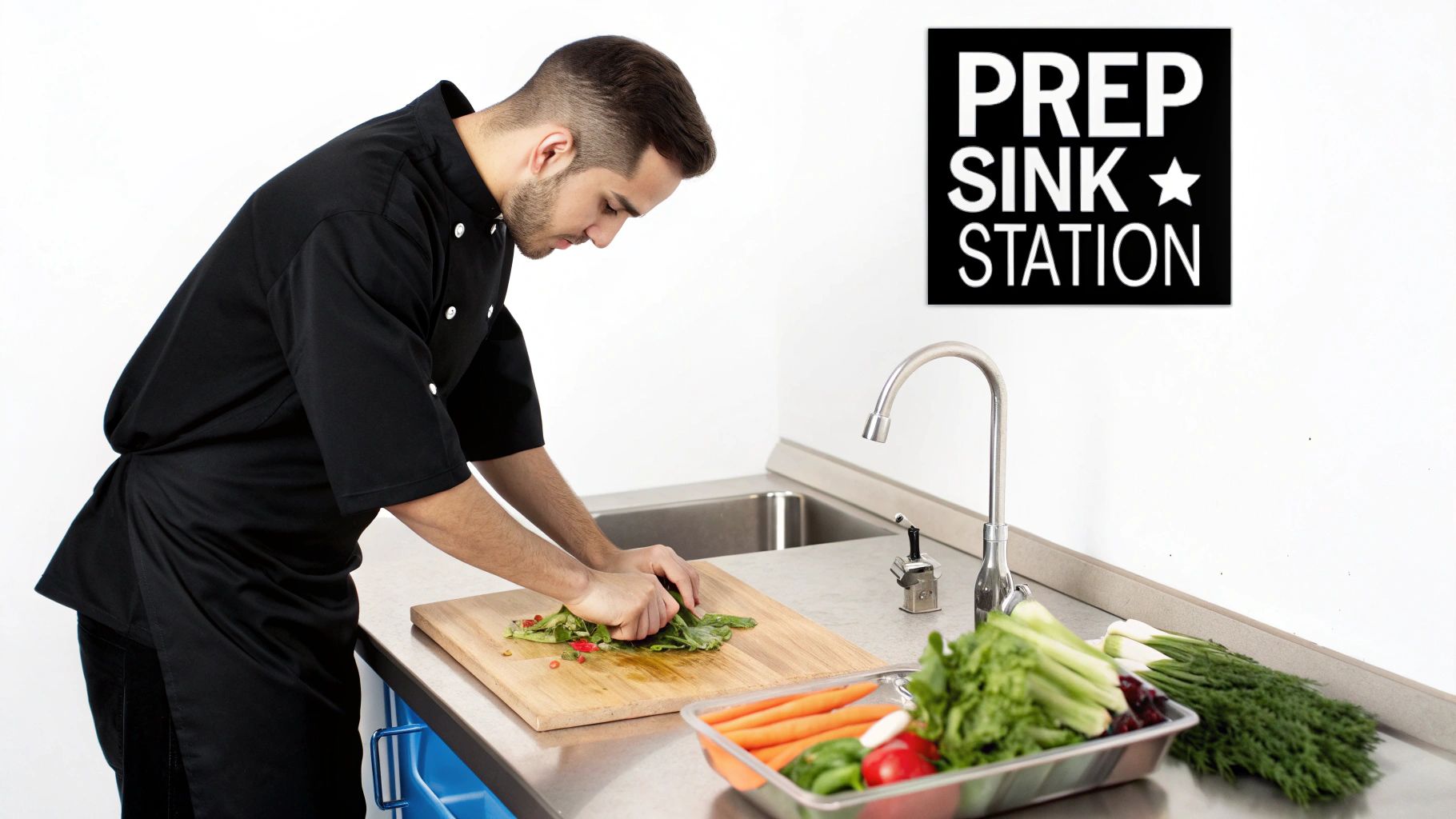
Picture a bustling restaurant during the dinner rush. A line cook needs to wash and chop vegetables for an order that just came in, but at the same time, the dishwasher is scrubbing a stack of greasy pans from the last service. If they had to share a sink, the risk of cross-contamination would be sky-high. You could easily transfer harmful bacteria from those dirty dishes to fresh, ready-to-eat produce. This is exactly the problem a prep sink solves.
Simply put, a prep sink is a basin—usually stainless steel—designed specifically for washing, rinsing, and prepping fresh ingredients before they hit the cooking line. It's a key piece of equipment that keeps the "clean" work of food prep separate from the "dirty" work of dishwashing. For anyone running a high-volume kitchen, these sinks are essential for maintaining hygiene standards. You can get a better sense of industry norms by exploring insights on the commercial sink market.
The Foundation of Food Safety
At its core, the main job of a prep sink is to create a physical barrier between clean and dirty tasks. This separation is a cornerstone of food safety protocols and, in most places, it's actually required by local health codes. By setting aside one area strictly for ingredient preparation, you dramatically reduce the chances of foodborne illness making its way to your customers.
A dedicated prep sink isn't a luxury; it's a non-negotiable tool for operational hygiene. It acts as the first line of defense in a professional kitchen, guaranteeing that every ingredient starts its journey on a clean slate.
Streamlining Your Kitchen Workflow
Beyond just safety, a prep sink is a master of efficiency. It helps create a logical, assembly-line-style flow where ingredients move seamlessly from storage to preparation to the cooking line. This organized process gets rid of bottlenecks and allows multiple chefs to work at once without tripping over each other.
To get a quick overview of how a prep sink fits into the bigger picture of a commercial kitchen, this table breaks down its role compared to other essential sinks.
At a Glance: Prep Sink vs. Other Commercial Sinks
| Sink Type | Primary Function | Typical Location | Health Code Role |
|---|---|---|---|
| Prep Sink | Washing & rinsing raw ingredients (produce, proteins) | Food preparation areas, near the cooking line | Prevents cross-contamination between raw foods and dirty dishes |
| Hand Sink | Hand washing only for staff | Throughout the kitchen, restrooms | Prevents the spread of germs from hands to food |
| 3-Compartment Sink | Washing, rinsing, and sanitizing dishes & cookware | Dishwashing area ("dish pit") | Ensures proper sanitation of all food contact surfaces |
| Utility/Mop Sink | Filling mop buckets, cleaning chemical disposal | Janitorial closets, back-of-house areas | Separates cleaning activities from food handling areas |
As you can see, each sink has a distinct and mandatory job. The prep sink's role is crystal clear: it's the clean starting point for all your ingredients. Key benefits include:
- Preventing Cross-Contamination: It keeps raw meats, poultry, and fish safely separated from fresh vegetables and other ready-to-eat items.
- Improving Efficiency: A clear, designated workstation for all initial food handling speeds up service and keeps the line moving.
- Meeting Health Code Requirements: It ensures your kitchen layout is compliant with local health department regulations that mandate sink separation.
So, What Sink Are We Talking About, Exactly?
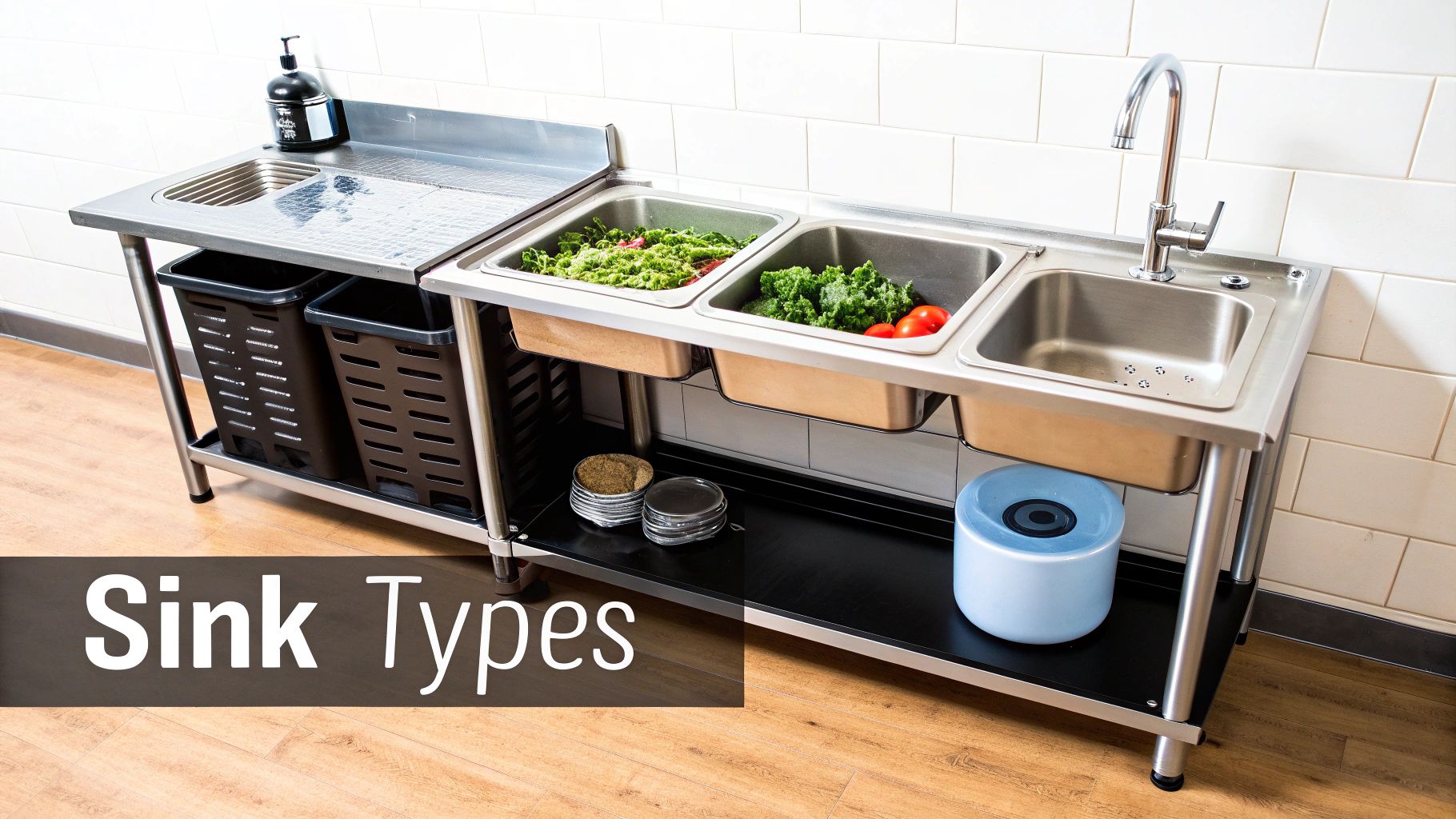
Step into any professional kitchen, and you’ll notice it’s a world of specialized stations. Not all sinks are created equal here; each one is a specialist with a very specific, non-negotiable job. To really get why a prep sink is so vital, you have to see where it fits in the kitchen's ecosystem. You'll almost always find three main players: the prep sink, the three-compartment sink, and the handwashing sink.
Think of these sinks as different zones in a highly organized workshop. Each zone has a single, dedicated purpose to make sure the final product—your delicious food—is both safe and top-quality. Trying to use one sink for another's job? That's a classic recipe for cross-contamination and a visit from the health inspector.
The Prep Sink: Your Culinary Clean Zone
A prep sink has one job and one job only: preparing food. This is the designated spot where your team will be washing vegetables, rinsing fruit, thawing proteins under cool running water, and doing any other initial cleaning of ingredients before they hit the cutting board.
You’ll notice its design is built for this exact purpose. Prep sinks are often shallower than their dishwashing cousins and are usually paired with a tall, gooseneck faucet. That high-arc design gives you plenty of room to wash bulky items like a whole head of lettuce or a big bunch of kale without crushing or bruising them.
The Three-Compartment Sink: The Dishwashing Powerhouse
This is the undisputed heavy-lifter of the dish pit. It's built for the classic three-step cleaning process that every health department loves: wash, rinse, and sanitize. Each of the three basins is dedicated to one of these critical steps, making sure every plate, pot, and pan gets thoroughly cleaned and is safe for reuse.
Just imagine trying to rinse delicate microgreens in a basin that was just used to scrub a greasy, caked-on stockpot. The risk of transferring grease, old food bits, and bacteria is sky-high. This is precisely why a three-compartment sink must be kept completely separate from any food prep areas.
A well-run kitchen operates on a simple principle: separation. By creating distinct zones for food prep, dishwashing, and hand hygiene, you build a rock-solid foundation of safety and efficiency that protects both your staff and your customers.
The Handwashing Sink: The Hygiene Guardian
The smallest sink in the kitchen is arguably the most important one: the dedicated handwashing station. Health codes are incredibly strict about this. These sinks are for handwashing only and must be placed conveniently throughout the kitchen and in the restrooms.
They are never, ever to be used for prepping food, dumping out liquids, or washing a stray utensil. Their entire purpose is to give your staff a clean, accessible spot to wash their hands and stop the spread of germs. Trying to wash hands in a prep sink could transfer germs directly onto food, completely defeating the purpose of having a clean prep zone in the first place. For a deeper dive, check out our guide on commercial sinks for restaurants made simple.
Getting these distinctions right is the first step toward designing a kitchen that’s compliant, efficient, and truly safe—a place where every task has its proper station.
What Makes a Great Prep Sink?
Not every stainless steel basin is created equal. When you're looking for a prep sink, the small details in its design and construction make a world of difference in a fast-paced kitchen. Paying attention to these key features helps you invest in a piece of equipment that not only keeps the health inspector happy but also stands up to the daily grind and makes your team's job easier.
The heart and soul of any good prep sink is its material. Stainless steel is the undisputed champion in commercial kitchens for a reason. Its non-porous surface is tough against corrosion and, more importantly, gives bacteria nowhere to hide. This makes it incredibly simple to clean and sanitize—a non-negotiable for any surface that touches food.
Material Grade and Durability
The thickness of the stainless steel, known as its gauge, is a huge factor in how long your sink will last. The rule here is simple, even if it feels backward: the lower the gauge number, the thicker and tougher the steel.
- 16-Gauge Steel: This is the premium stuff, built for high-volume kitchens that are tough on their equipment. It’s thicker, more robust, and highly resistant to dents from heavy stock pots or the chaos of a busy service.
- 18-Gauge Steel: While a bit thinner, 18-gauge is still a solid, budget-friendly choice for kitchens with more moderate use. It offers plenty of durability without the higher price point of the 16-gauge models.
Choosing a lower gauge means your investment is better protected against the inevitable bumps and scrapes of a commercial kitchen.
Design Elements Built for Efficiency and Safety
Beyond the metal itself, a few smart design features directly impact how your team uses the sink day in and day out. A well-designed prep sink isn’t just a basin; it’s an integrated workstation built for safety and speed. For instance, rolled edges (also called marine edges) are a must-have. This smooth, rounded finish prevents nasty cuts and scrapes while also doing a great job of containing spills and splashes.
Another game-changer is a high backsplash. This built-in guard protects your walls from water damage, making cleanup way faster and preventing moisture from seeping into drywall, which can lead to mold.
A prep sink serves as the frontline hub for food preparation, featuring shallow basins and high-gooseneck faucets optimized for scrubbing vegetables and portioning meats. For multi-unit operators, NSF-certified sinks are essential, with regulations requiring them in 95% of inspected facilities to combat pathogens. Discover more insights about U.S. kitchen sink market trends.
Finally, look for features that create a complete, functional workspace. An integrated drainboard gives you a dedicated, sloped surface for placing washed produce or tools, letting them air dry without cluttering up your valuable counter space. Pair that with a tall gooseneck faucet—which gives you plenty of clearance for washing bulky items like stock pots or whole heads of lettuce—and you’ve turned a simple sink into a highly efficient culinary station.
How to Choose the Right Prep Sink Configuration
Picking out the right prep sink isn't just about filling a space; it's a strategic decision that can make or break your kitchen's entire flow. Think of it like choosing the perfect knife for a specific task—the right tool makes all the difference. The configuration you land on, whether it's a single, double, or even a triple-bowl setup, should be a direct reflection of your daily operations, your kitchen's footprint, and the food you're prepping day in and day out.
For instance, a cozy food truck is going to get the most out of a compact, space-saving single-bowl sink. But a high-volume restaurant might need a double-bowl setup to create clear, separate zones for washing vegetables on one side while trimming proteins on the other, which is a simple and effective way to minimize any risk of cross-contamination.
Evaluating Your Kitchen's Needs
Before you pull the trigger on a purchase, get out the tape measure. You need to account for more than just the sink basin itself; think about the "landing space" you'll need around it for ingredients and tools. An integrated drainboard can be an absolute game-changer here, creating a seamless prep area where you can wash produce and let it dry without eating up precious counter space.
Take a good look at your menu. A café that primarily churns out salads and sandwiches will have very different prep needs than a steakhouse. Mapping out your most common prep tasks will quickly tell you if a single, dedicated basin is sufficient or if a multi-bowl setup would better support your team's rhythm and efficiency. When planning your layout, checking out different farm kitchen design ideas and practical layouts can spark some great inspiration for a practical and efficient workflow.
Single-Bowl vs Multi-Bowl Sinks
The single-bowl prep sink is the most common choice, and for very good reasons. They’re versatile, don't take up a lot of room, and are perfect for focused, single-step tasks. In fact, research shows that single-bowl prep sinks account for a massive 51.0% of market revenue, mostly because their space-saving design is a perfect fit for smaller kitchens like those in food trucks.
These small but mighty sinks can handle up to 80% of daily produce washing tasks while fitting into a footprint as small as 18x24 inches. For independent restaurant owners, a durable single-bowl sink can also trim installation costs by 20-30% compared to their larger, multi-bowl cousins.
Pro Tip: If your workflow demands separating different food types—like keeping raw poultry far away from fresh greens—a double-bowl prep sink is a smart investment. It creates an immediate physical barrier that reinforces your food safety protocols right at the prep station.
This decision tree gives you a great visual breakdown of the key feature choices—from material and gauge to faucet type—to help you map out your ideal prep sink configuration.
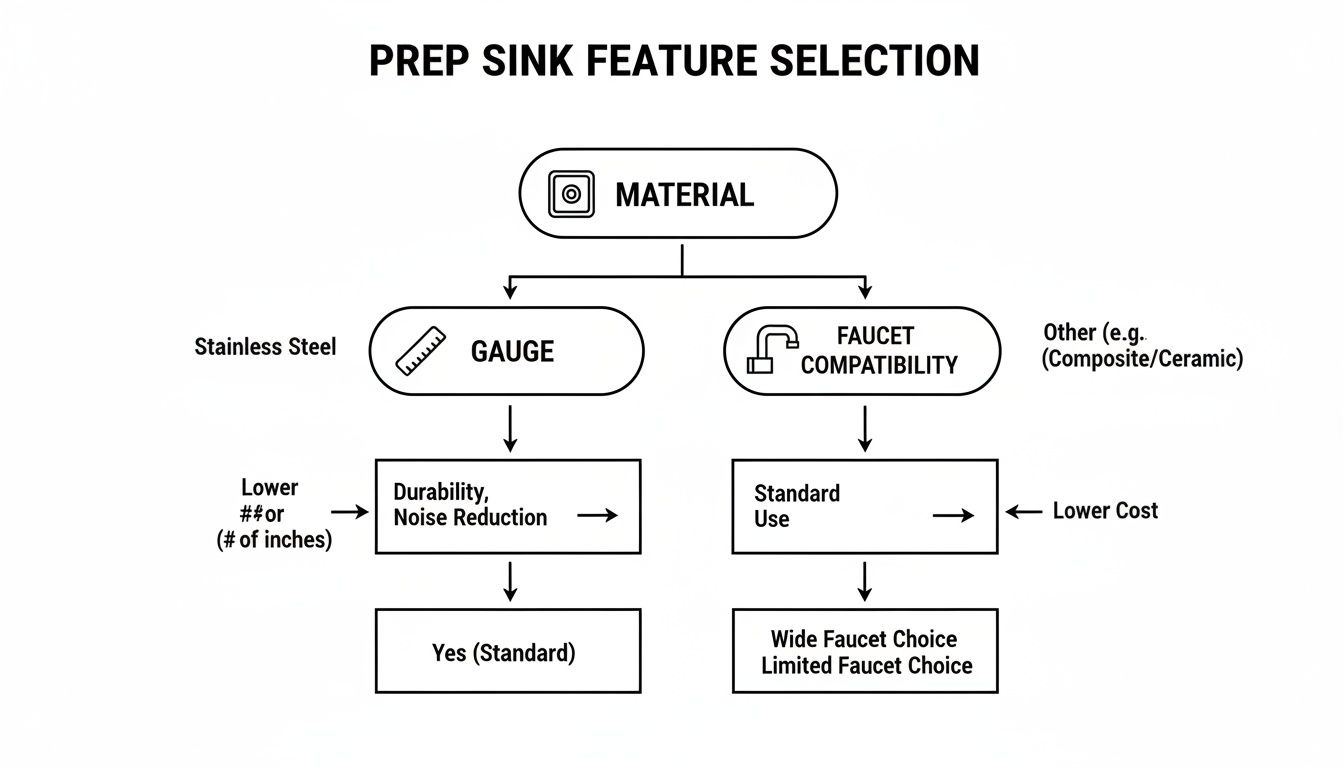
As you can see, each choice builds on the last, guiding you from the foundational material all the way to the functional faucet that best suits your kitchen's daily grind.
To simplify your choice, this table matches common business types with the prep sink configuration that typically works best for them.
Prep Sink Configuration Guide for Your Business
| Business Type | Recommended Configuration | Key Benefit |
|---|---|---|
| Food Truck or Small Café | Single-Bowl with Drainboard | Maximizes limited space while providing a dedicated drying area. |
| Mid-Size Restaurant | Double-Bowl Sink | Allows for safe separation of tasks, like washing produce and thawing meat. |
| High-Volume Kitchen | Triple-Bowl or Two Separate Sinks | Offers maximum flexibility for multiple prep cooks working simultaneously. |
| Bakery or Pizzeria | Large Single-Bowl Sink | Accommodates oversized mixing bowls, trays, and other bulky equipment. |
Ultimately, the best configuration is the one that removes friction from your team's daily prep tasks, keeping them safe, efficient, and ready for service.
Health Code Compliance and Strategic Placement
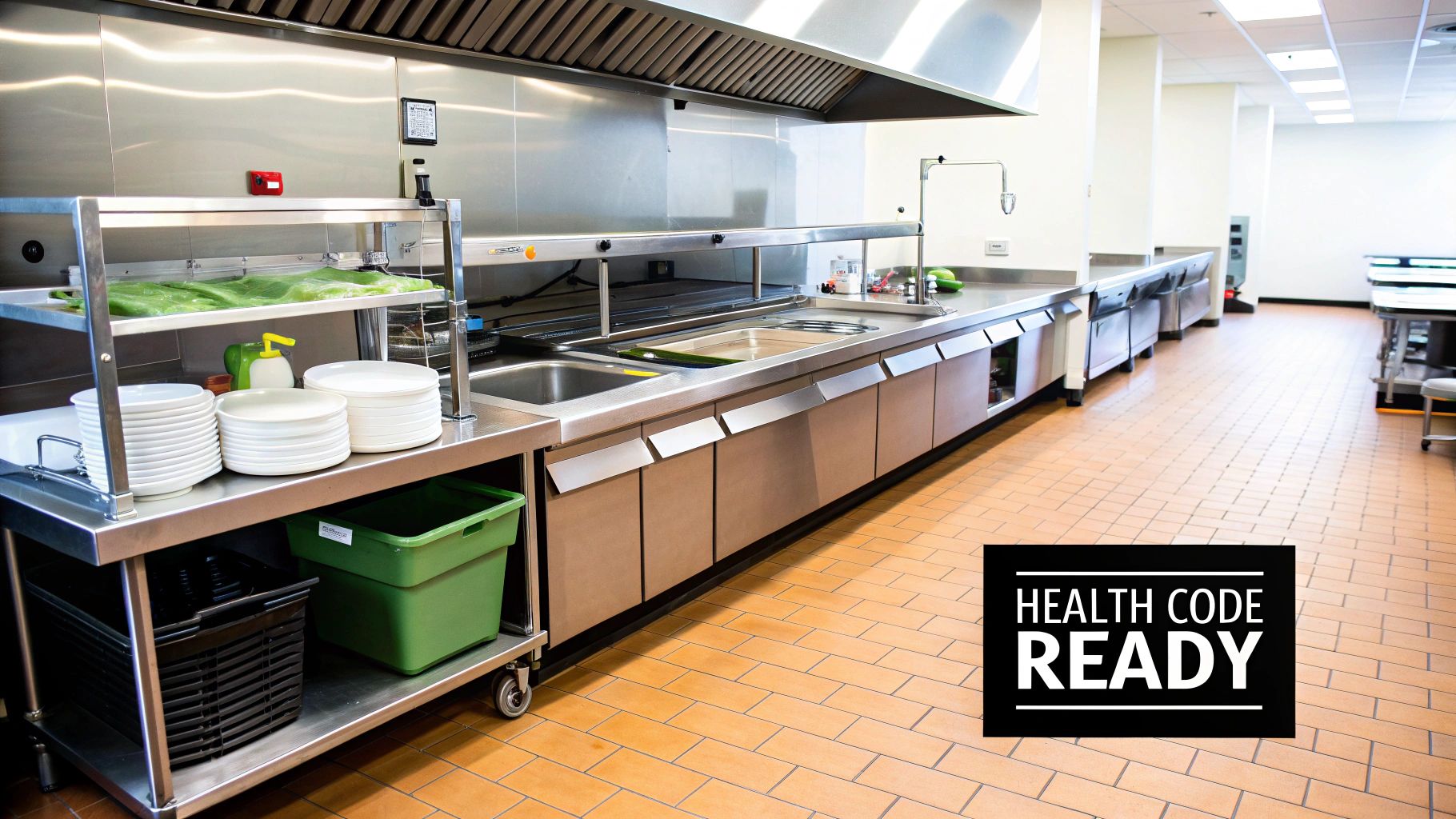
Deciding where to put your prep sink is just as important as picking the right model. Local health departments are strict about sink placement for one big reason: preventing cross-contamination. A thoughtfully placed sink is your first and best line of defense against foodborne illness, keeping both your staff and your customers safe.
Think of your kitchen's layout like a highway system for food. Health codes require separate sinks to create clear, one-way streets for your ingredients. Raw chicken should never share the same sink—or even the same path—as ready-to-eat lettuce. A dedicated prep sink makes this separation a reality. This isn’t just a friendly suggestion; it’s a non-negotiable rule for passing your health inspection.
Creating a Safe and Efficient Workflow
For the smoothest and safest kitchen flow, your prep sink should be part of a logical "work triangle." This just means placing it right between your refrigerators and your main prep counters. A cook should be able to grab ingredients from the cooler, wash them at the prep sink, and move to the cutting board in just a handful of steps.
This kind of setup cuts down on wasted motion and keeps the prep process contained in a clean, designated zone. Most importantly, this area must be distinctly separate from your main dishwashing station. Keeping a good distance prevents dirty water, food scraps, and chemicals from ever splashing onto your fresh ingredients. To get a better handle on kitchen hygiene, it's worth exploring effective strategies for preventing cross-contamination.
Understanding NSF Certification
When you’re shopping for a prep sink, you'll see the NSF certification mark everywhere. This isn't just a sticker; it's your guarantee that the sink meets tough public health and safety standards. An NSF-approved sink is made from non-porous, corrosion-resistant materials that are a breeze to clean and sanitize.
Health inspectors look for that NSF mark as a key sign of compliance. Investing in certified equipment is an absolute must. It shows you're serious about food safety and helps you sidestep costly fines or even a shutdown.
The entire commercial kitchen sink market, valued at USD 3,761.1 million, is built around these principles of safety and efficiency. It’s projected to hit USD 4,781.4 million by 2030, showing just how much the industry is focused on smart, compliant kitchen design. Just like a three-compartment sink has its own specific job, understanding the rules for an NSF-approved 3 compartment sink gives you valuable insight for setting up your entire kitchen.
Installation and Maintenance for Long-Term Value
Once you've picked out the perfect prep sink, getting the installation and aftercare right is what protects your investment and makes sure it serves your kitchen for years to come. A proper setup from day one is your best defense against future headaches like leaks, water damage, or the kind of bacteria buildup that can put food safety at risk.
The first step is always securing the plumbing connections. You'll want to make sure every fitting is good and tight and that the drains have the correct slope. This prevents standing water, which can quickly become a breeding ground for germs. Next, it’s absolutely vital to properly seal all the edges where the sink meets the countertop with a high-quality, waterproof caulk. This simple step stops moisture from seeping underneath, protecting your counters and cabinetry from rot and damage.
Creating a Routine for Lasting Hygiene
A simple, consistent maintenance schedule is your best friend when it comes to fighting wear and tear. Sticking to a routine not only keeps your prep sink looking pristine but is also non-negotiable for staying on the right side of the health inspector.
Here’s a simple but effective cleaning plan to follow:
- Daily Cleaning: At the end of every single shift, give the basin a thorough rinse to wash away any food debris. Then, wash it down with a mild detergent and warm water, using a soft cloth or sponge. Steer clear of abrasive stuff like steel wool, which will absolutely scratch up the stainless steel surface.
- Weekly Sanitization: Once a week, it's time for a deep clean with a food-safe sanitizer. This is the step that kills any lingering bacteria, ensuring your prep station stays a hygienic zone for handling all your fresh ingredients.
Following these steps is just part of a bigger picture of smart upkeep. You can find even more tips for cleaning restaurant equipment to build out a complete maintenance program for your whole kitchen.
Don't ever overlook the small stuff. A slow drain or a dripping faucet might seem like a minor annoyance, but they can quickly snowball into bigger, more expensive problems. Address these common issues the moment you spot them to keep your kitchen efficient and avoid disruptions during service.
The widespread adoption of stainless steel after WWII completely changed the game for kitchen hygiene, making sanitization so much easier in high-turnover spots. Today, a whopping 85.6% of facilities report seeing efficiency gains from well-maintained equipment just like prep sinks. You can learn more about the evolution and impact of modern kitchen sinks.
Frequently Asked Questions About Prep Sinks
Even after you've got a good handle on what a prep sink is, a few practical questions always pop up when you're in the planning stages. Let's tackle those common head-scratchers right now. Getting these details sorted out will help you feel confident you're making the right choice for your kitchen's workflow, budget, and layout.
Think of this as your quick-fire guide to the most common sticking points operators run into. From health code quirks to material choices, nailing these details is key.
Can I Use a Bar Sink as a Prep Sink?
It’s a common question because, at a glance, they can look pretty similar. But in a commercial kitchen, a bar sink is definitely not a substitute for a true prep sink.
Bar sinks are designed for lighter duty—rinsing glasses, a bit of handwashing, maybe dumping ice. They're typically smaller and much shallower. A real prep sink, on the other hand, is built deeper and tougher to handle the messy reality of washing bulky vegetables and meeting strict health codes for food handling. Trying to swap one for the other is a shortcut that can get you into hot water with your health inspector.
What Is the Best Material for a Prep Sink?
For a commercial kitchen, this one’s a no-brainer: 16-gauge or 18-gauge stainless steel is the undisputed champ. It’s incredibly durable, non-porous, and stands up to the constant abuse of a busy kitchen without rusting or corroding.
Most importantly, it's a breeze to clean and sanitize, which is non-negotiable for preventing bacteria from finding a place to hide. While other materials might exist for residential sinks, none come close to offering the blend of hygiene, longevity, and value that a professional kitchen demands.
The number one priority is always food safety. Choosing a material like NSF-certified stainless steel means you're meeting the highest public health standards and giving your team a surface that's simple to keep clean and safe.
How Much Does a Commercial Prep Sink Cost?
The price for a prep sink can swing quite a bit, depending on what you’re looking for. A basic, small single-bowl model might only set you back a few hundred dollars. But if you need a larger, multi-bowl unit with built-in drainboards and thicker steel, you could be looking at over a thousand.
Here’s what moves the price tag:
- Size and Configuration: More bowls and drainboards mean a higher cost. A simple single-bowl sink will always be the most budget-friendly.
- Stainless Steel Gauge: Thicker 16-gauge steel is more durable and more expensive than the standard 18-gauge.
- Brand and Features: Sinks that come packaged with faucets, backsplashes, and other accessories will naturally have a higher upfront cost.
It’s usually worth it to invest in a quality sink from the get-go. It’ll save you a lot of headaches and money on repairs or replacements down the road.
Ready to find the perfect sink that meets your kitchen's demands and budget? The Restaurant Warehouse offers a wide selection of durable, NSF-certified prep sinks designed for professional kitchens. Explore our prep sink inventory and get fast, reliable shipping.
About The Author

Sean Kearney
Sean Kearney is the Founder of The Restaurant Warehouse, with 15 years of experience in the restaurant equipment industry and more than 30 years in ecommerce, beginning with Amazon.com. As an equipment distributor and supplier, Sean helps restaurant owners make confident purchasing decisions through clear pricing, practical guidance, and a more transparent online buying experience.
Connect with Sean on LinkedIn, Instagram, YouTube, or Facebook.