

Trailer Talk: Finding Your Ideal 18 Ft Concession Trailer
Why 18 Ft Concession Trailers Hit the Sweet Spot
An 18 ft concession trailer offers an ideal balance of workspace and mobility for food entrepreneurs. It's large enough for a full kitchen but small enough to remain maneuverable.
Key Features:
- Dimensions: 8.5 ft wide × 18 ft long × 7-7'10" interior height
- Capacity: Comfortable for 2-3 staff members
- Price Range: $12,325 (basic shell) to $48,500+ (fully equipped)
- Towing: Requires a heavy-duty truck (F-250/Ram 2500 equivalent)
- Equipment: Space for a full commercial kitchen setup
With low operational costs, mobile food businesses can be highly profitable. An 18 ft trailer is a popular choice, avoiding the menu limitations of a 12 ft model and the parking difficulties of a 24 ft trailer. You get serious kitchen space without the logistical headaches.
A basic 18 ft shell with a finished interior starts around $12,325, while a fully equipped model can run $48,500 or more—still a fraction of a brick-and-mortar restaurant's cost. Most feature tandem 3,500 lb torsion axles and a 7-foot interior height, providing a robust and comfortable workspace. An 18 ft concession trailer gives you room to grow your business, whether it's a taco truck, coffee trailer, or full-service mobile kitchen.
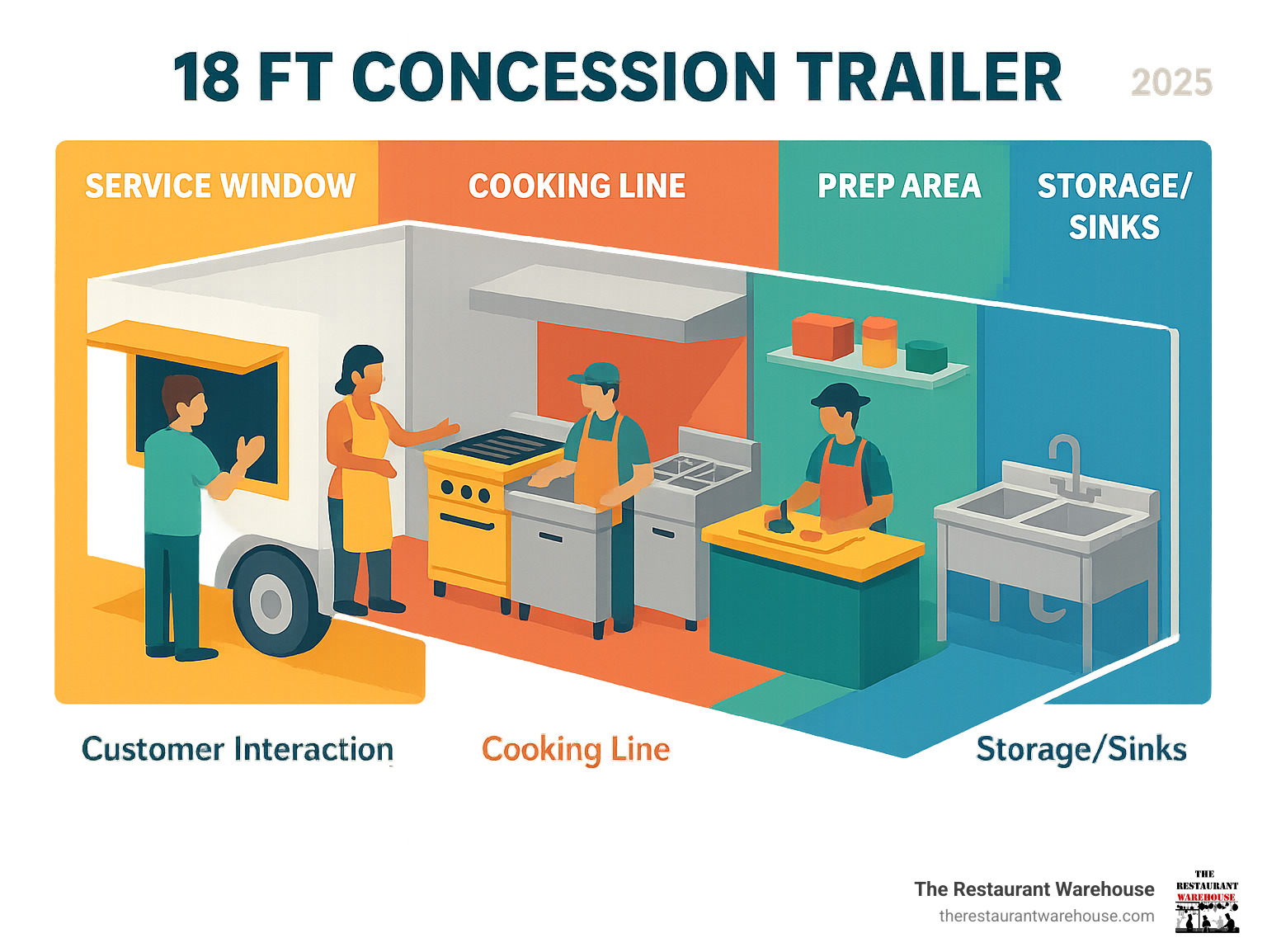
18 ft concession trailer glossary:
The Blueprint: Anatomy of an 18 ft Concession Trailer
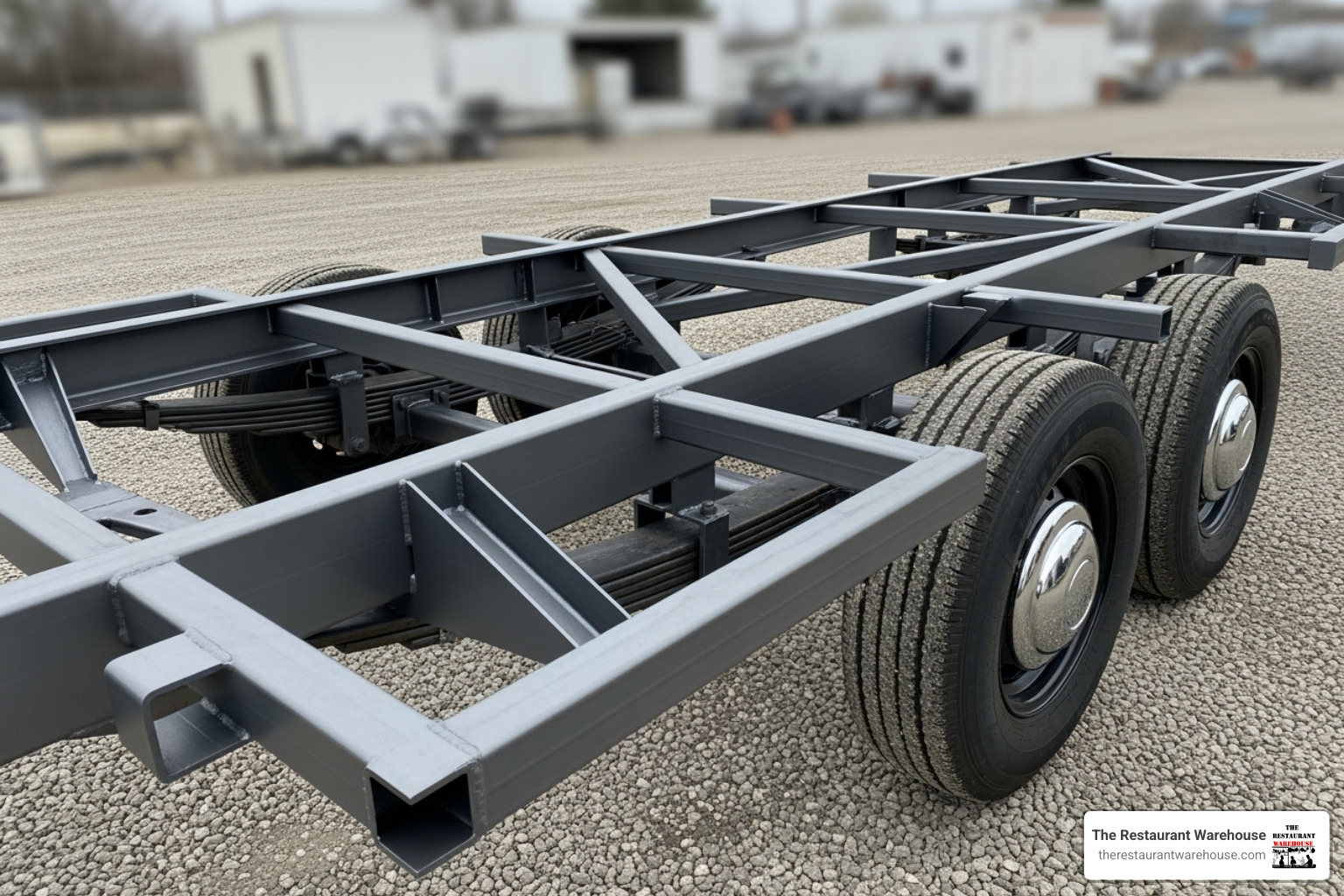
The construction of your 18 ft concession trailer is the foundation of your mobile business. Understanding its anatomy ensures you can focus on creating great food while your trailer handles the demands of daily operation.
Standard Dimensions and Common Types
An 18 ft concession trailer typically measures 8.5 feet wide with an interior height from 7 feet to 7'10". These dimensions provide ample headroom for most operators while maintaining a manageable profile for towing and parking. The V-nose design is increasingly popular, improving towing aerodynamics and adding valuable interior storage space that can house supplies, paperwork, or backup equipment.
Porch models are also common configurations, expanding your cooking options significantly. A typical porch layout includes a 12-foot enclosed area for prep and cooking, plus a 6-foot covered porch area perfect for a large grill, flat-top griddle, or additional prep space. This design keeps smoke and heat outside the main workspace, improving comfort for your crew and allowing for specialized cooking methods that require outdoor ventilation.
Service windows are usually around 40x64 inches with sliding glass panels, screens for ventilation, and a sturdy serving shelf for smooth customer transactions. The window placement is critical for workflow efficiency, typically positioned to allow easy access from your primary service station. Secure, weather-tight RV-style doors (usually 36 inches wide) provide reliable access for staff and equipment loading. These doors feature heavy-duty hinges and weatherstripping to maintain interior climate control.
The overall length varies with V-nose or porch configurations, but the 18-foot designation refers to the primary workspace. Some manufacturers measure differently, so always verify the actual interior dimensions when comparing trailers. Additional exterior features like generator boxes, propane storage, and utility connections can add to the overall length.
The Unseen Strength: Frame, Axles, and Flooring
A trailer's structural integrity comes from a robust tubular steel frame, typically constructed with 4-inch or 6-inch square tubing for maximum strength. This framework must support not only the trailer's weight but also the substantial load of commercial equipment, water tanks, and supplies. Quality manufacturers use computer-aided design to optimize frame strength while minimizing weight.
Most quality trailers use tandem torsion axles, each rated at 3,500 lbs, for better weight distribution and smoother towing compared to leaf spring systems. Torsion axles provide independent wheel suspension, reducing road shock and improving tire wear. Electric brakes are essential for safely stopping a fully loaded trailer, with brake controllers allowing the tow vehicle driver to adjust braking force based on load and road conditions.
Heavy-duty flooring often consists of 1 1/8" hardwood or marine-grade plywood supported by 12" on-center cross members. This robust system can handle the concentrated weight of commercial fryers, walk-in coolers, and heavy prep tables without flexing or sagging. Some builders use aluminum or composite flooring materials for weight savings and moisture resistance.
R13 insulation in the walls and ceiling helps manage temperature and energy costs, crucial for maintaining comfortable working conditions and reducing HVAC loads. Proper insulation also helps with noise reduction, making the workspace more pleasant during busy periods. Vapor barriers prevent moisture infiltration that could lead to mold or structural damage.
The aluminum exterior (.030 to .040 gauge) is lightweight, durable, and rust-proof, providing a clean canvas for branding while standing up to years of weather exposure. Some builders offer semi-screwless exteriors for a sleek, professional look that also reduces potential leak points. These elements combine to create a mobile kitchen built for years of daily commercial use.
Powering Your Profit: Essential Utility Systems
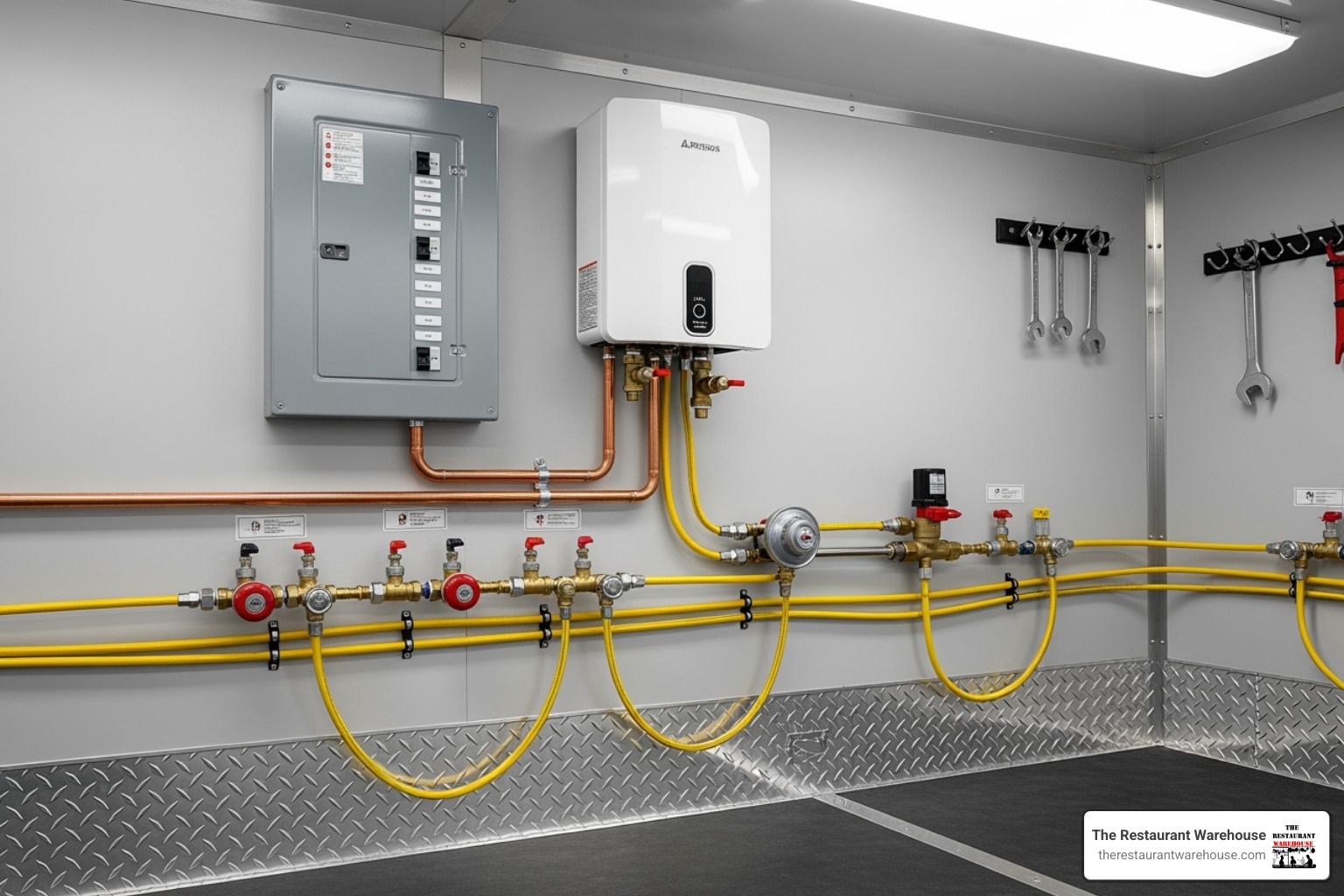
A well-designed 18 ft concession trailer operates as a self-sufficient restaurant on wheels, with a network of utilities making it all possible. Every wire, pipe, and gas line must be planned and installed to commercial standards.
Electrical Systems: From Shore Power to Outlets
The electrical system must power everything from refrigeration to cooking appliances. Most 18 ft concession trailers come with 50 Amp or 100 Amp service.
A 50 Amp setup is sufficient for many operations, including a panel box with about six outlets and a GFCI outlet for outdoor safety. Power is supplied via a 25-foot shore power cord.
A 100 Amp service is essential for more demanding equipment loads. This upgrade typically includes a 125 Amp, 24-circuit breaker panel, numerous 110V outlets, and a generator transfer switch. LED lighting is standard, providing bright illumination with low power draw. For more details, see our guide on Top Electrical Gear For Food Trailers.
Plumbing and Water Works
Health departments have strict water system regulations. The core of the system is the 3-compartment sink (typically 15"x15"x12" bowls) for washing, rinsing, and sanitizing, plus a separate hand washing sink.
A fresh water tank usually holds 37-42 gallons, while the gray water tank must be larger, typically 60-93 gallons (at least 1.5 times the fresh water capacity). An on-demand water heater (around 10 gallons) provides hot water, and a water pump ensures consistent pressure. A city water connection allows for direct hookup when available. Our Food Truck Sinks Guide has more information.
Gas Lines and HVAC for Comfort and Cooking
Propane powers most mobile kitchens. A standard setup includes two 100 lb propane cages connected through a commercial-grade 400,000 BTU regulator and a 3/4" propane supply line to fuel multiple appliances.
Ventilation is critical. A 10-foot vent hood with a 3/4 hp exhaust upblast fan removes grease and heat. Some systems include make-up air ventilation to maintain air circulation. For climate control, a 28k BTU rear wall AC unit or a 15,000 BTU roof-mounted air conditioner keeps the workspace comfortable.
Designing Your Mobile Kitchen: Layouts and Equipment
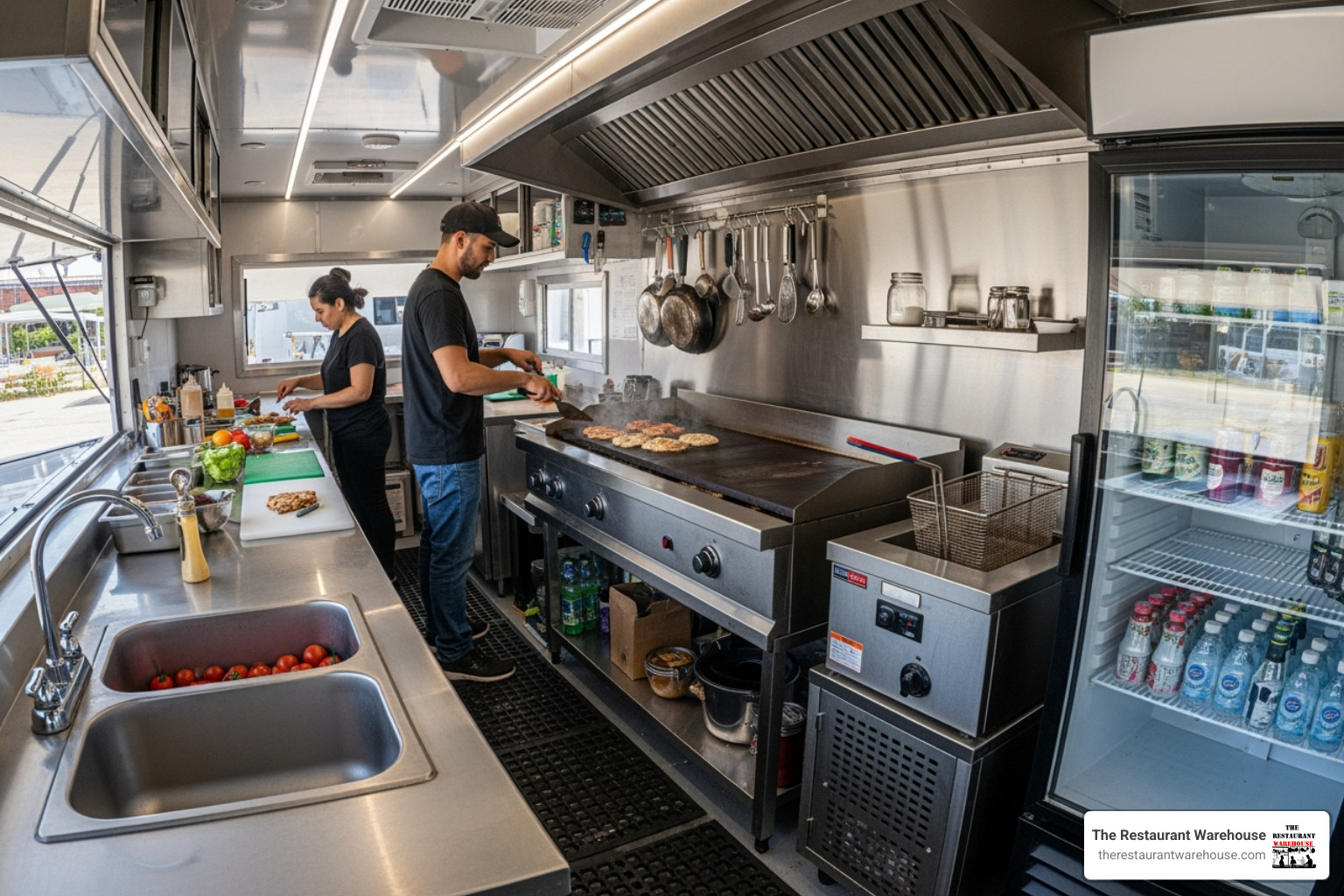
The interior of your 18 ft concession trailer is where smart design creates an efficient, profit-generating machine. The layout should create a natural workflow that allows your team to operate smoothly even during the busiest rush periods.
Optimizing Workflow in an 18 ft Concession Trailer
An 18 ft concession trailer comfortably accommodates a 2 to 3 person crew, allowing for role specialization that dramatically improves efficiency: one person cooking, one prepping and restocking, and one handling customer service and orders. This division of labor keeps the workflow smooth during busy periods and prevents the bottlenecks that plague smaller operations.
Maximizing space efficiency requires creating distinct but connected work zones that follow the natural flow of food preparation:
Prep Station: Stainless steel counters and refrigerated prep tables keep ingredients fresh and accessible. This area should be positioned near refrigeration units and include adequate cutting board space, ingredient storage, and easy access to the hand-washing sink. Consider prep tables with refrigerated drawers underneath for maximum space efficiency.
Cooking Line: The heart of the trailer, where primary equipment like griddles, fryers, and charbroilers are arranged logically to match your menu's preparation flow. Hot equipment should be grouped together under the ventilation hood, with adequate counter space between units for plating and temporary holding.
Service Area: Located strategically near the service window, this zone should remain clear and organized for quick access to condiments, packaging materials, beverages, and POS systems. Include warming equipment like heat lamps or steam tables to keep finished items at proper serving temperatures.
Storage Solutions: Well-planned shelving, cabinets, and under-counter storage prevent clutter and ensure backup supplies, cleaning materials, and paperwork are readily accessible but out of the way during service.
Sanitation Zone: The required 3-compartment sink and hand-washing station should be positioned for easy access from all work areas while not interfering with the main workflow.
This zone-based planning transforms your trailer into an efficient culinary machine that can handle high-volume service. For a complete equipment checklist, see our Food Truck Equipment List.
Essential Cooking and Cooling Equipment
Your equipment choices directly define your menu capabilities and operational efficiency. An 18 ft concession trailer can house an impressive array of commercial-grade appliances while maintaining proper spacing for safety and workflow.
Refrigeration is non-negotiable for food safety and quality. Single-door reach-in refrigerators (around 23 cu. ft.) provide ample cold storage for daily ingredients, while 27-inch sandwich and salad prep tables combine refrigerated storage with convenient work surfaces. These units typically feature stainless steel construction, digital temperature controls, and efficient compressors designed for mobile applications.
Commercial freezers are essential for frozen goods, with single-door upright models offering easy access or 7 cu. ft. chest freezers providing maximum storage capacity in a compact footprint. Consider your menu needs when choosing between upright convenience and chest freezer efficiency.
Deep fryers are profit centers for many mobile operations. Two 50-pound capacity fryers provide serious production capability for high-volume items like french fries, chicken, and fish. Modern fryers feature precise temperature controls, energy-efficient heating systems, and easy-clean designs that reduce maintenance time.
Griddles offer incredible versatility, with a 48-inch model handling everything from burgers to breakfast items, while smaller 24-inch or 36-inch options fit specialized menus or space-constrained layouts. Look for models with even heat distribution and easy-to-clean surfaces.
Stock pot burners and hotplates expand your cooking capabilities beyond fried and grilled items. An 18-inch stock pot burner is perfect for soups, sauces, and pasta, while multi-burner hotplates provide stovetop flexibility for sautéing and sauce preparation.
Steam tables keep prepared foods at safe serving temperatures while maintaining quality. A 2-pan or 3-well steam table fits most trailer layouts and provides the holding capacity needed for busy service periods.
Explore our specialized guides on Commercial Refrigeration For Your Restaurant, Commercial Fryer Guide, and Griddles to make informed equipment decisions. For mobile-specific advice, see our comprehensive guide on Concession Trailer Cooking Equipment Essentials.
From Shell to Standout: Cost, Customization, and Safety
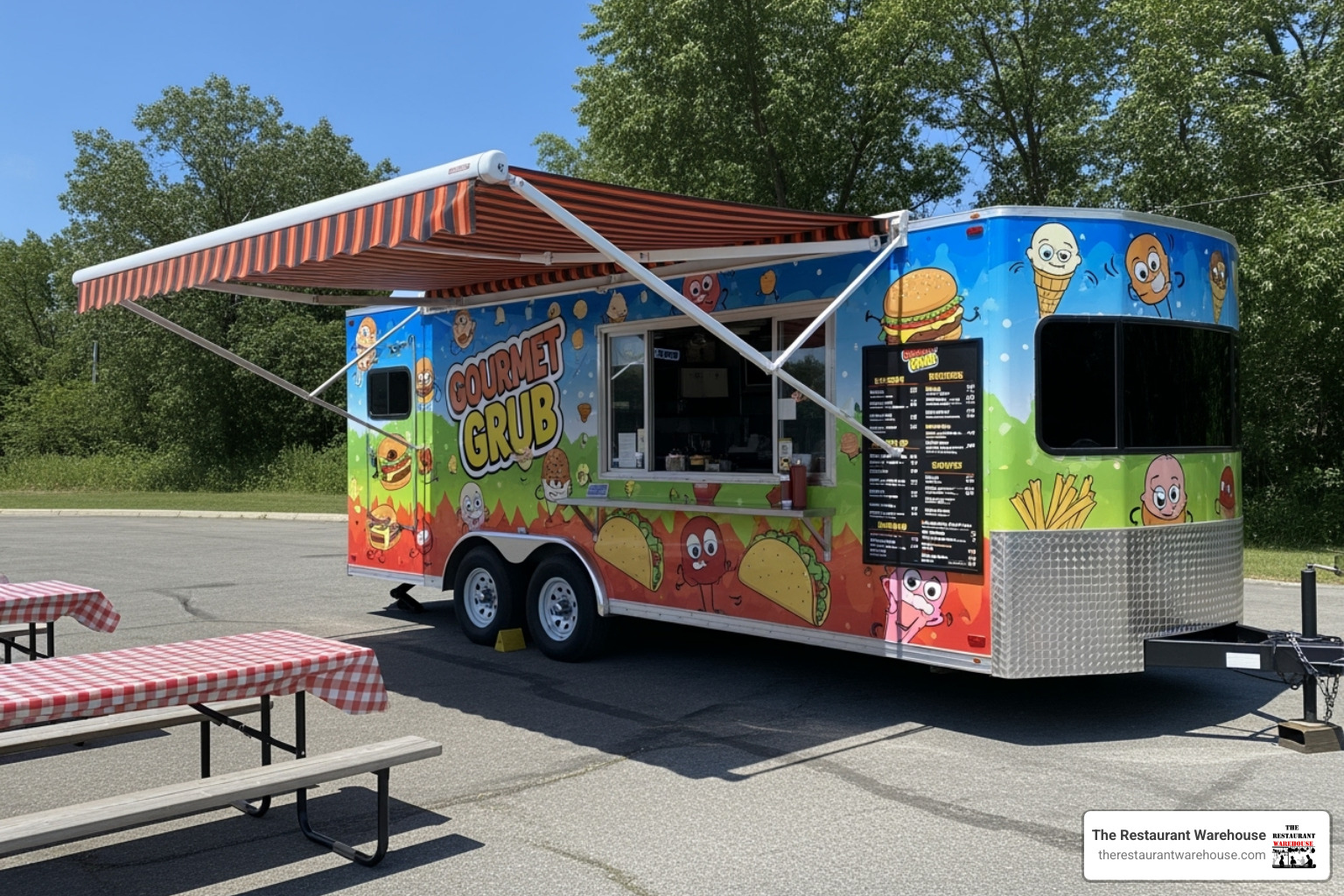
Investing in an 18 ft concession trailer is the foundation of your mobile food business. It's important to understand the costs, customization options, and non-negotiable safety features.
Decoding the Price Tag of an 18 ft Concession Trailer
The price of an 18 ft concession trailer varies based on its features. A basic shell trailer starts around $12,325. This includes a solid foundation with finished walls, insulation, basic electrical, and flooring, ready for you to install your own equipment.
Fully equipped trailers start around $48,500 and can go much higher. These turnkey solutions include a complete commercial kitchen, from cooking appliances to plumbing and HVAC. The main price drivers are the quality and quantity of equipment, system upgrades (like 100 Amp service), and custom features.
| Basic Shell (~$12,325) | Fully-Equipped (~$48,500+) |
|---|---|
| Finished walls, floor, insulation | Complete commercial kitchen setup |
| Basic 50 Amp electrical service | 100 Amp service with transfer switch |
| Plumbing rough-in only | 3-compartment sink, hand sink, tanks, water heater |
| No cooking equipment | Fryers, griddles, refrigeration, freezer |
| Basic ventilation | Professional vent hood, exhaust fan, AC unit |
| Requires significant build-out | Ready for health department inspection |
A well-designed trailer is an investment with strong earning potential that can quickly pay for itself.
Branding and Customization for Your Business
Your trailer is your mobile billboard.
- Custom Wraps: A professional wrap is your most effective visual tool, attracting customers with bold colors and clear messaging.
- Logo Placement: Ensure your logo is visible from all sides and near the service window to build brand recognition.
- Awnings: Provide shade for customers and offer additional space for branding.
- Exterior Lighting: LED lighting creates ambiance and keeps your brand visible at night.
- Menu Boards: Clear, well-lit menu boards help customers decide quickly, increasing throughput.
Non-Negotiable Safety Features
Safety is paramount in a mobile kitchen.
- Fire Suppression Systems: Automatic systems are essential and often required by law to protect your investment and staff.
- Emergency Exits: A clearly marked emergency exit ensures a quick escape route.
- DOT-Required Lighting: Proper tail lights, brake lights, and turn signals are necessary for safe transport.
- Breakaway Kits & Safety Chains: These provide backup protection if the trailer disconnects from the tow vehicle.
- NSF-Certified Equipment: Ensures your appliances meet public health standards for cleanability and safety.
- System Certifications: Look for ETL and UL listings on electrical and gas systems, which indicate they meet rigorous safety standards. For more information on safety standards, resources like the National Fire Protection Association (NFPA) provide essential guidelines for mobile food vendors.
For more on compliance, see our guide on Food Truck Regulations.
The Road to Ownership: Financing and Final Considerations
Launching your business with an 18 ft concession trailer requires a solid plan, from financing to daily operations. A detailed Food Truck Business Plan is your roadmap to success.
Securing Your Investment: Financing Options
An 18 ft concession trailer is a significant investment, with prices from around $12,325 for a shell to $48,500+ for a fully equipped model. Fortunately, financing options are available for food entrepreneurs.
- Equipment Loans: The trailer itself serves as collateral, making these loans a common and straightforward option.
- Traditional Business Loans: These offer more flexibility, allowing you to cover the trailer plus other startup costs like permits and inventory.
- Leasing Options: Leasing can help preserve cash flow in the early stages, with an option to purchase at the end of the term.
Established trailer builders often have financing partnerships that can streamline the process.
Key Advantages of an 18 ft Trailer
Choosing an 18 ft concession trailer offers a strategic balance of capability and practicality.
- Versatility: The space allows for diverse and complex menus, so you can adapt to customer tastes and event types.
- Manageable Towing: While requiring a heavy-duty truck (F-250/Ram 2500), it's easier to maneuver and park than larger trailers, giving you access to more locations.
- Ample Workspace: There is enough room for a 2-3 person crew to work efficiently, maximizing productivity during peak hours.
- Lower Overhead: Compared to a brick-and-mortar restaurant, you save on rent, property taxes, and utility bills, creating a clearer path to profitability.
- Location Flexibility: You have the freedom to test different markets, follow seasonal opportunities, and go where the customers are.
These advantages directly impact your daily success. For more real-world advice, check out our Food Truck Tips guide.
Frequently Asked Questions about 18 ft Concession Trailers
Here are answers to the most common questions about investing in an 18 ft concession trailer.
How many people can work comfortably in an 18 ft trailer?
An 18 ft concession trailer is the perfect size for a 2 to 3 person crew. This allows for distinct roles—cooking, prep, and customer service—which maximizes efficiency and prevents the workspace from feeling cramped during busy periods. This setup helps maintain a smooth workflow and avoids the logistical challenges of smaller or larger trailers.
What kind of vehicle do I need to tow an 18 ft concession trailer?
You must use a vehicle with a towing capacity that exceeds the trailer's Gross Vehicle Weight Rating (GVWR), which is the total weight of the trailer plus all equipment, supplies, and water. A heavy-duty truck, such as a Ford F-250, Ram 2500, or an equivalent model, is required. Using an undersized vehicle is dangerous, can void your insurance, and violates DOT regulations.
What's the difference between a basic shell and a turnkey trailer?
This choice depends on your budget, timeline, and how hands-on you want to be.
A basic shell is an empty, insulated trailer with finished walls, flooring, and basic utility hookups. It's a blank canvas that gives you the flexibility to install your own equipment and customize the layout. This can be a cost-effective approach if you want to spread out your investment or have specific equipment needs.
A turnkey trailer is a fully equipped, move-in-ready solution. It includes all necessary cooking appliances, refrigeration, sinks, and safety systems, professionally installed and ready for inspection. While it costs more upfront, a turnkey trailer gets you to market much faster.
Conclusion
An 18 ft concession trailer hits the sweet spot for mobile food entrepreneurs. It offers the versatility to create diverse menus, a manageable size for easy towing and parking, and significantly lower overhead than a traditional restaurant. This combination provides a clear path to profitability.
Investing in an 18 ft concession trailer is an investment in freedom—the freedom to be your own boss, to chase the best locations, and to build a business on your own terms. Whether you start with a basic shell or a fully equipped turnkey model, you are entering a dynamic and profitable segment of the food industry.
At The Restaurant Warehouse, we understand that your trailer is only as good as the equipment inside it. We supply commercial restaurant equipment and food service supplies at lower prices by cutting out the middleman. Our wholesale pricing means more of your money stays in your pocket.
The mobile food industry is thriving. Your 18 ft concession trailer is the foundation, but the right equipment is what will make your business a success. From fryers to refrigeration, we're here to help you outfit your mobile kitchen without breaking your budget.
Ready to take the next step? Get organized with Your complete restaurant kitchen equipment checklist. Your culinary dreams are waiting.
About The Author

Sean Kearney
Sean Kearney is the Founder of The Restaurant Warehouse, with 15 years of experience in the restaurant equipment industry and more than 30 years in ecommerce, beginning with Amazon.com. As an equipment distributor and supplier, Sean helps restaurant owners make confident purchasing decisions through clear pricing, practical guidance, and a more transparent online buying experience.
Connect with Sean on LinkedIn, Instagram, YouTube, or Facebook.