

Don't Get Burned: How to Pick the Best Restaurant Equipment Maintenance in Your Area
Why Restaurant Equipment Maintenance Matters More Than You Think
As a restaurant owner, searching for restaurant equipment maintenance near me is one of the most critical tasks you'll face. When your walk-in cooler fails on a Friday night, you don't have time to waste. Equipment breakdowns can cost thousands in lost revenue, spoiled food, and emergency repairs. The difference between a minor hiccup and a business-threatening crisis often comes down to one thing: regular maintenance.
Most owners wait until something breaks to think about upkeep, but that's a costly mistake. A malfunctioning fryer can halt half your menu, and a broken dishwasher can bring your entire operation to a standstill. The good news is that most of these failures are preventable. Regular maintenance extends the life of your appliances, reduces energy costs, and saves you from expensive emergency calls.
At The Restaurant Warehouse, we've seen how proper maintenance can make or break a foodservice operation. Success isn't just about buying quality units—it's about maintaining them properly. Here's a quick guide to finding the right service:
Quick Answer: Finding Restaurant Equipment Maintenance Services
- Search Local Directories - Use Google Maps and industry-specific directories to find certified repair services.
- Seek Certified Technicians - Look for technicians with recognized industry certifications to ensure quality service.
- Verify 24/7 Availability - Choose providers offering emergency service to minimize downtime.
- Check Factory Training - Ensure technicians are trained by manufacturers for expert repairs.
- Read Reviews - Look for providers with proven track records in commercial appliance repair.
- Compare Response Times - Local service is crucial when an appliance fails during peak hours.
The Critical Role of Regular Maintenance for Your Restaurant's Health
Imagine your dining room is packed on a Saturday night when your walk-in cooler suddenly goes silent. Within hours, thousands of dollars in fresh ingredients could be lost, and your weekend revenue takes a massive hit. This nightmare scenario is often preventable. Regular maintenance isn't just another task—it's the difference between a thriving restaurant and one constantly fighting fires.
Properly maintaining your appliances dramatically increases their lifespan. A well-cared-for commercial refrigerator can last 15-20 years, protecting an investment of thousands of dollars. It also slashes your energy bills. When a refrigerator's condenser coils are dirty, the compressor works overtime, guzzling electricity. Regular cleaning can reduce energy consumption by 15-20%, putting real money back in your pocket.
Food quality and safety are also at stake. Temperature fluctuations in refrigeration create a breeding ground for bacteria, while inconsistent cooking temperatures can lead to undercooked food. Well-maintained appliances also ensure a safer work environment for your team, reducing the risk of injuries from malfunctioning fryers or dishwashers. Most importantly, you prevent catastrophic breakdowns. Emergency repairs cost far more than scheduled maintenance, not to mention the lost revenue from downtime and spoiled inventory.
Neglecting maintenance invites disaster. Food spoilage can wipe out your weekly food cost overnight. Grease buildup in ventilation systems creates serious fire hazards. Malfunctioning units can lead to health code violations, resulting in fines or even forced closures. For comprehensive guidance on keeping your units in top shape, check out our resource on cleaning restaurant equipment.
Common Equipment Requiring Consistent Upkeep
Certain workhorses in your kitchen need regular care to keep your operation running smoothly. Focus your attention on these critical pieces:
- Refrigeration Units and Freezers: These run 24/7 to keep ingredients safe. Walk-in coolers, reach-in refrigerators, and prep tables all need consistent attention to prevent food spoilage. Our guide on walk-in cooler maintenance offers detailed steps.
- Ice Machines: These units are prone to mineral deposits and biological growth. Regular cleaning and descaling are necessary to produce clean, clear ice and ensure food safety.
- Fryers: Hot oil and constant use stress every component. Daily filtration and regular deep cleaning are essential for food quality and fire prevention. Our essential daily cleaning guide for commercial fryers walks you through the process.
- Dishwashers: These units battle mineral deposits and food debris. Clogged spray arms and worn seals can compromise sanitation and waste energy.
- Food Slicers and Mixers: Moving parts require regular cleaning to prevent cross-contamination and proper lubrication to extend motor life.
Creating a Proactive Maintenance Schedule
A structured maintenance schedule helps you catch small issues before they become expensive disasters. Your program should include tasks for different time intervals:
- Daily Tasks: Part of the closing routine, such as wiping surfaces and checking temperatures.
- Weekly Checks: Deeper cleaning, like clearing drip pans and inspecting electrical cords.
- Monthly Servicing: More intensive tasks like cleaning condenser coils and descaling ice machines.
- Quarterly & Annual Professional Visits: Bring in certified technicians for comprehensive inspections, calibrations, and tune-ups.
Keeping detailed service logs for each appliance creates a valuable maintenance history, helping you spot patterns and prove compliance during health inspections. This structured approach gives you control over your equipment's health.
| Task | Daily | Weekly | Monthly | Quarterly | Annually |
|---|---|---|---|---|---|
| Wipe exterior and interior | ✓ | ||||
| Check and record temperature | ✓ | ||||
| Clean door gaskets | ✓ | ||||
| Clean condenser coils | ✓ | ||||
| Check refrigerant levels (professional) | ✓ | ||||
| Calibrate thermostat (professional) | ✓ |
Ready to protect your investment and avoid costly downtime? Contact us today to discuss how proper maintenance can save your restaurant thousands.
Warning Signs: When to Call a Professional for Repairs
Even with diligent maintenance, equipment can develop unexpected issues. The key is to catch the warning signs early. Your appliances communicate problems through changes in performance; you just have to listen.
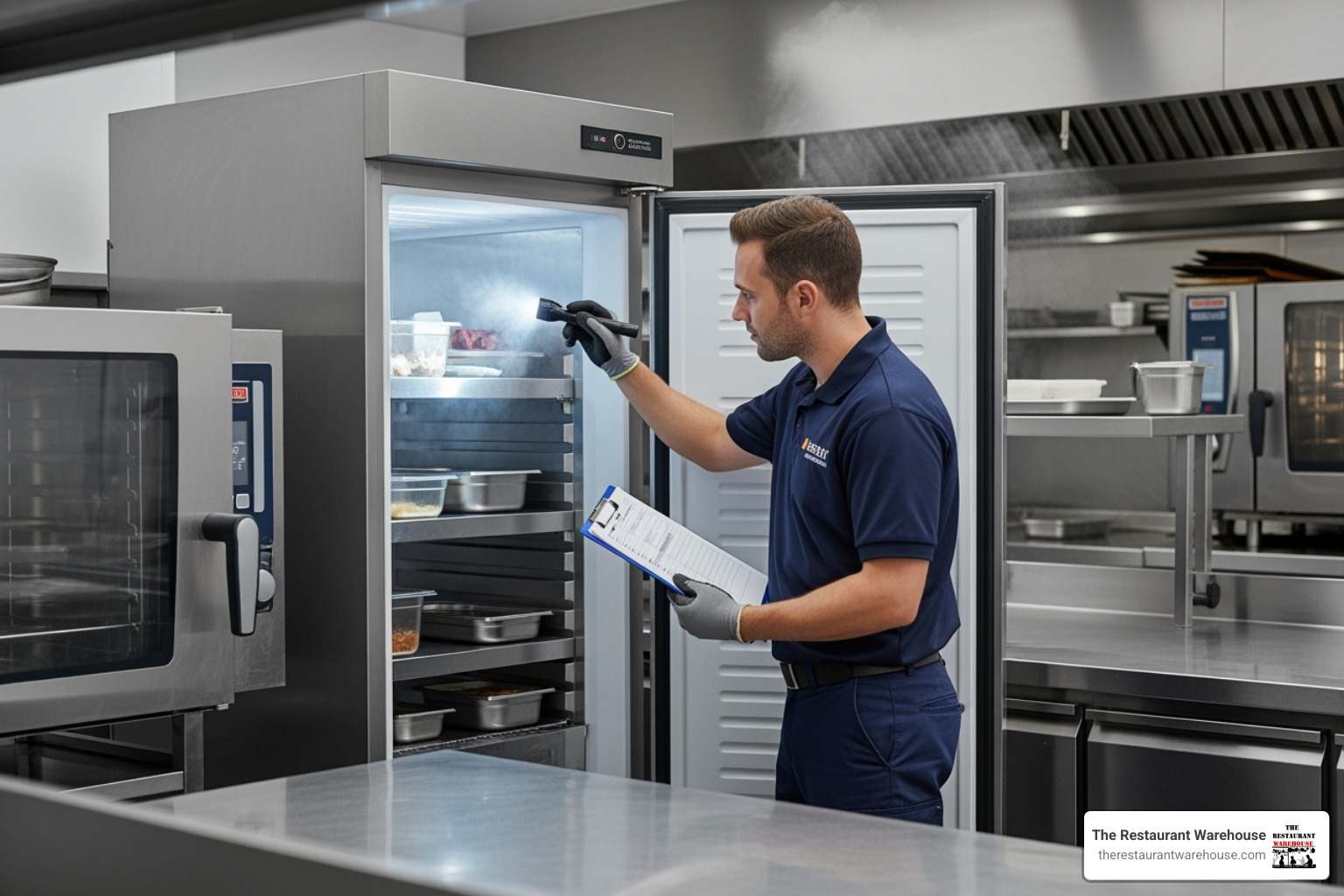
Pay attention to these common red flags:
- Strange Noises: A sudden grinding, rattling, or high-pitched squeal from a motor or fan is a clear cry for help. These sounds often indicate a failing bearing or a loose part.
- Leaks and Puddles: Water pooling around an ice machine, refrigerator, or dishwasher signals a problem. It could be a cracked line, a loose connection, or a clogged drain, all of which require professional attention.
- Inconsistent Temperatures: If your cooler or freezer struggles to maintain its set temperature, you're risking food safety. According to the FDA Food Code, perishable foods must be held at 41°F or below. Temperature fluctuations can result from dirty coils, a failing thermostat, or low refrigerant.
- Increased Energy Bills: A sudden spike in your utility costs can mean an appliance is working overtime to compensate for a mechanical issue. This inefficiency is a sign of a developing problem.
- Malfunctioning Controls: Unresponsive buttons, flickering displays, or dials that do nothing suggest an electrical or mechanical failure that can make equipment unsafe to operate.
- Visible Wear and Tear: Frayed cords, rusted components, or excessive vibrations are clear signs that a unit is nearing the end of its life or needs immediate repair.
Trust your instincts. If something seems off, it probably is. Calling a technician for a minor issue is always better than waiting for a catastrophe.
Troubleshooting Your Refrigeration and Freezers
When your refrigeration and freezer units act up, you need to act fast. Many common problems have telltale signs. If you notice temperature fluctuations, first check for blocked airflow or a door that isn't sealing properly. If the basics are fine, you may have a faulty thermostat or dirty condenser coils. For more tips, see our guide to Maintain commercial refrigerators.
Excessive frost buildup in freezers often points to a bad door gasket letting in warm, humid air. A torn or loose gasket forces your unit to work constantly. You can test the seal by closing the door on a dollar bill; if it pulls out easily, the gasket needs replacing. Our Atosa refrigerator and freezer maintenance instructions can help.
If the motor runs constantly, it's a major red flag. This is often caused by dirty condenser coils, low refrigerant, or a failing fan, all of which put enormous stress on the expensive compressor. For more expert advice, check out our articles on expert commercial freezer repair and maintenance and mastering your commercial freezer.
Identifying Issues with Fryers and Ice Machines
Fryers and ice machines can bring service to a halt when they fail. With fryers, a common issue is when the oil won't heat or has slow recovery times. This often points to a failing heating element or a faulty thermostat. For gas models, a clogged burner or bad thermocouple could be the culprit. These issues result in soggy, greasy food and need immediate attention. For tips on keeping your fryer in top shape, see our guide on how to properly boil out your gas fryer.
With ice machines, look out for small or cloudy ice, which often indicates mineral buildup or a dirty evaporator plate. Low ice production can stem from a clogged water filter or a dirty condenser. Water leaks are also common and are usually caused by a clogged drain line. For help with these issues, review our guide to the best ice machine cleaning solutions.
How to Find the Best "Restaurant Equipment Maintenance Near Me"
When an appliance goes down, you need to find reliable, swift, and expert service. The search for "restaurant equipment maintenance near me" becomes urgent, but a methodical approach will help you find a long-term partner.
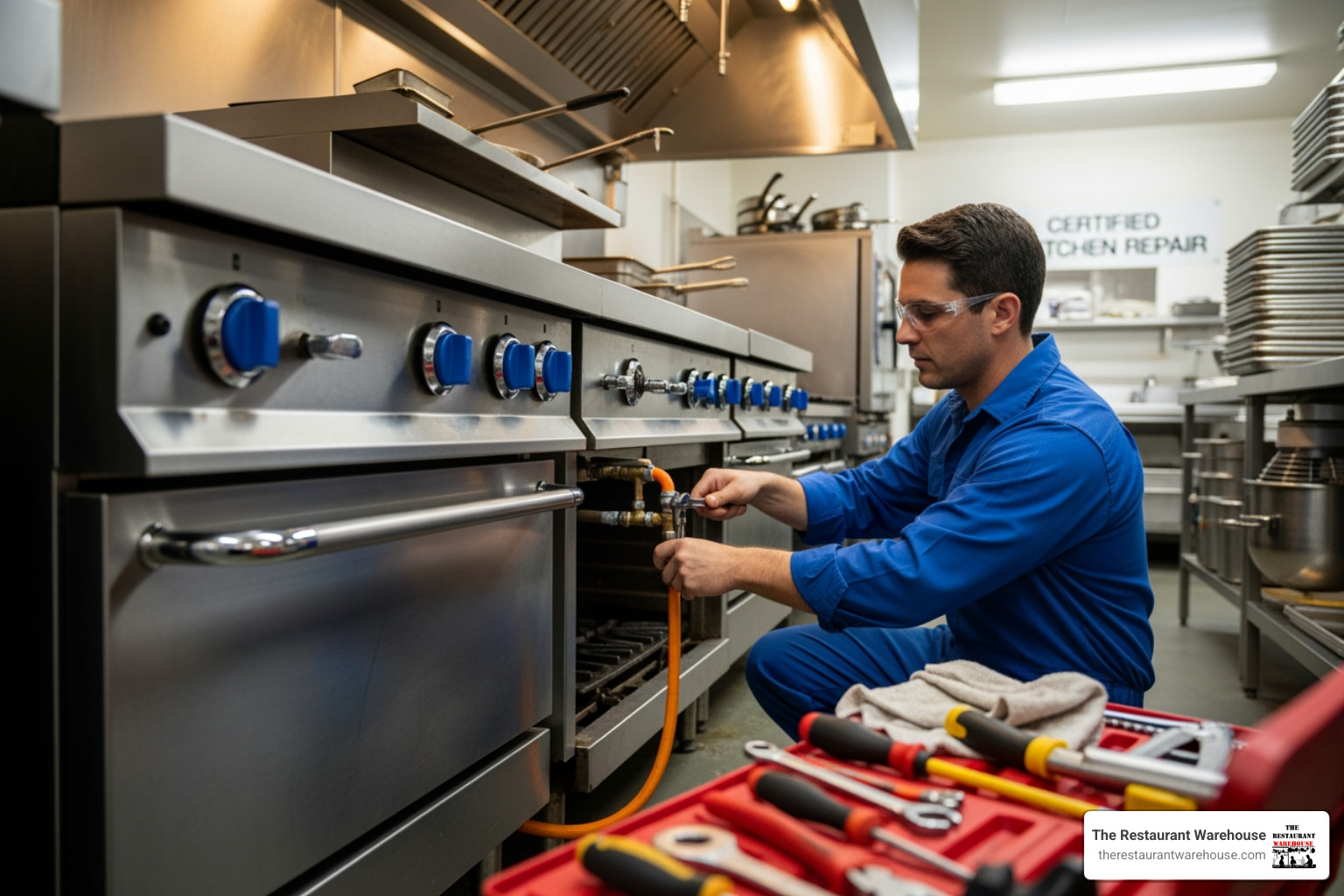
Start with online searches and local directories like Google Maps, but also seek out industry referrals. Other restaurant owners in your area can provide invaluable word-of-mouth recommendations about which companies are reliable and which to avoid.
Once you have a shortlist, it's time to vet the technicians. A reputable provider will be transparent about their credentials, including licensing and insurance. Read reviews on multiple platforms to look for patterns in customer feedback, paying attention to how the company responds to negative comments. Don't hesitate to ask for references from other restaurant clients to get direct insight into their reliability and expertise.
What to Look for in a Repair Service
When evaluating potential services, you're looking for a partner who understands the urgency of your business. Here are the key qualities to seek:
- 24/7 Emergency Availability: Breakdowns don't happen on a 9-to-5 schedule. You need a provider who can respond quickly, day or night, to minimize downtime.
- Certified and Factory-Trained Technicians: Look for technicians with verifiable certifications and training. This ensures they follow industry best practices for safety and effectiveness. Manufacturer training is also crucial for diagnosing and repairing specific brands correctly.
- OEM Parts Inventory: Using Original Equipment Manufacturer (OEM) parts ensures compatibility and longevity. A service that stocks common parts can perform repairs much faster. If you need specific components, you can Explore our selection of Atosa parts.
- Transparent Pricing: A trustworthy company will provide a clear breakdown of costs—labor, parts, and fees—before work begins.
- Service Guarantees: A warranty on parts and labor shows confidence in their work and gives you peace of mind.
Using certified professionals ensures adherence to safety standards, provides technical expertise, and helps you maintain compliance with health regulations. For help finding specific components, we have resources to help you Find essential Atosa prep table parts.
When you're evaluating service providers, always ask about their certifications and training. It's one of the most reliable ways to separate the professionals from the amateurs. Contact us at The Restaurant Warehouse if you need guidance on finding qualified service or are considering replacement options.
DIY Maintenance: Tasks You Can Handle In-House
While professional maintenance is essential for complex repairs, your team can handle a surprising amount of routine upkeep in-house. Empowering your staff to perform simple tasks saves money on service calls and builds a culture of ownership where everyone is invested in keeping the kitchen running smoothly.
Basic but vital tasks include:
- Regular Cleaning: Wiping down surfaces, emptying crumb trays, and scrubbing food residue from mixers and slicers prevents bacteria growth and operational issues.
- Gasket Inspection: The rubber seals on refrigeration doors are critical for energy efficiency. A quick visual check for cracks or stiffness can identify a gasket that needs replacement—a simple but high-impact DIY job.
- Clearing Drains: Ice machines, dishwashers, and refrigeration units have drains that can clog with debris. Regular flushing prevents water backups and slip hazards. A related task is Cleaning a grease trap, which is crucial for kitchen safety.
- Changing Water Filters: Clogged filters in ice machines and beverage dispensers affect quality and strain the appliance. Changing them every 3-6 months is a simple task that makes a huge difference.
- Calibrating Thermometers: Use the ice bath test (a thermometer in ice water should read 32°F) to ensure your readings are accurate for food safety and health code compliance.
When a piece of equipment is truly beyond repair, we've got you covered. Browse our extensive inventory of new equipment and contact us today for a quote on affordable replacements.
Essential DIY for Refrigeration and Ice Machines
Your in-house efforts can have the biggest impact on refrigeration and ice machines. For your refrigeration units, the most important DIY task is cleaning condenser coils. These coils attract dust and grease, forcing the unit to work harder. A 15-minute cleaning with a brush and vacuum every month or two can add years to your equipment's life. For a complete guide, see our resource on how to Maintain commercial refrigerators.
Also, regularly inspect and wipe down door gaskets. If they are cracked or stiff, they need to be replaced to prevent cold air loss. For specific models, our Atosa refrigerator and freezer maintenance instructions can guide you.
For ice machines, safety is paramount. Sanitizing ice machine bins weekly or bi-weekly with a food-safe sanitizer prevents mold and bacteria growth. You must also descale the unit regularly to remove mineral buildup, which affects ice production and quality. Follow the manufacturer's instructions for this process. For detailed steps, see our guide on Atosa ice machine maintenance.
Understanding the Cost of Professional Service
When you need to call a professional, it's helpful to understand the factors that influence the final cost. The price for restaurant equipment maintenance near me isn't one-size-fits-all.
Costs are typically influenced by:
- Type of Equipment: Repairing a complex walk-in cooler will cost more than fixing a simple food warmer due to the specialized knowledge and tools required.
- Severity of the Issue: A minor adjustment is far less expensive than a major system failure, like a compressor replacement.
- Technician's Hourly Rate: Rates vary based on experience, certifications, and location. A highly trained technician may charge more per hour but can often diagnose and fix problems faster, saving you money in the long run.
- Parts Needed: Original Equipment Manufacturer (OEM) parts cost more but ensure a proper fit, longevity, and warranty compliance.
- Emergency Service Fees: Expect to pay a premium for after-hours, weekend, or holiday service. This fee reflects the immediate, unscheduled response required to prevent greater losses from spoilage and downtime.
Always get a written quote before authorizing major work. A reputable provider will break down all costs. It's also wise to compare preventative maintenance plans, which bundle regular inspections with discounted repair rates and can be more cost-effective than paying for emergency calls. Proactive maintenance is almost always cheaper than reactive crisis management. Is your equipment beyond repair? Shop our collection of affordable replacement units before you face another costly breakdown.
Finding Emergency Restaurant Equipment Maintenance Near Me
Even with a great maintenance plan, emergencies happen. That's why having a plan for emergency restaurant equipment maintenance near me is crucial. Create a contact list of reliable local providers who offer 24/7 service and post it where your staff can easily find it.
When building this list, ask about their typical response time for emergencies and understand their emergency fees upfront. This preparation helps you minimize downtime during a crisis. Every hour your refrigeration is down or your dishwasher is broken costs you money in spoiled inventory and lost sales. Building a relationship with a local provider before you need them can also lead to faster, prioritized service when disaster strikes. For more insights, Learn more about restaurant equipment repair.
Weighing Repair vs. Replacement
Eventually, every owner faces the tough question: repair or replace? There's no single right answer, but considering these factors can lead to a smart financial decision.
- Age of the Equipment: If a unit is approaching or has exceeded its expected lifespan (typically 10-15 years for refrigeration), replacement is often the wiser choice.
- Cost of Repair: A common rule of thumb is if a repair costs more than 50% of a new unit's price, replacement makes more sense.
- Frequency of Breakdowns: An appliance that needs service every few months is a money pit. The cumulative cost of repairs and operational disruptions adds up quickly.
- Energy Efficiency: New models are often significantly more energy-efficient. The monthly savings on your utility bill can help a new unit pay for itself over time.
- Warranty Considerations: New equipment comes with a manufacturer's warranty, providing peace of mind and protection against defects. A repair typically only guarantees the specific part that was replaced.
When you're ready to explore new options, we're here to help. Discover the best restaurant equipment suppliers and see how we can support your success with quality appliances at wholesale prices.
Conclusion
One truth stands out above all others: proactive maintenance is the difference between a thriving restaurant and a struggling one. We've explored how regular upkeep extends the life of your appliances, slashes energy costs, protects food quality, and prevents the nightmare breakdowns that cripple a business during peak hours.
This guide has walked you through creating a maintenance schedule, spotting warning signs, and finding the right restaurant equipment maintenance near me service. We've covered what to look for in a technician—such as proper certification and 24/7 availability—and highlighted the power of simple DIY tasks your team can handle to prevent countless problems.
We also tackled the tough repair vs. replace decision, showing how to weigh factors like age, repair costs, and energy efficiency to make a smart investment in your restaurant's future. Sometimes, the best choice isn't fixing what's broken but upgrading to something better.
At The Restaurant Warehouse, we understand the pressures you face. We supply commercial restaurant appliances and foodservice supplies at wholesale prices, cutting out the middleman markup that drains your budget. Whether you need an affordable replacement unit or guidance on maintaining what you have, we are here to be your partner.
Don't wait for disaster to strike. Implement a proactive maintenance plan, build relationships with qualified service providers, and empower your team to catch small issues before they become big problems. Your equipment is the backbone of your operation—treat it well, and it will serve you faithfully for years to come.
Ready to upgrade your equipment or need expert advice? Contact us today for personalized recommendations and wholesale pricing that fits your budget.
About The Author

Sean Kearney
Sean Kearney is the Founder of The Restaurant Warehouse, with 15 years of experience in the restaurant equipment industry and more than 30 years in ecommerce, beginning with Amazon.com. As an equipment distributor and supplier, Sean helps restaurant owners make confident purchasing decisions through clear pricing, practical guidance, and a more transparent online buying experience.
Connect with Sean on LinkedIn, Instagram, YouTube, or Facebook.