

Find Your Perfect Pour: Commercial Glass Washer Machines for Every Business
Why Sparkling Glassware Is Your Secret Weapon
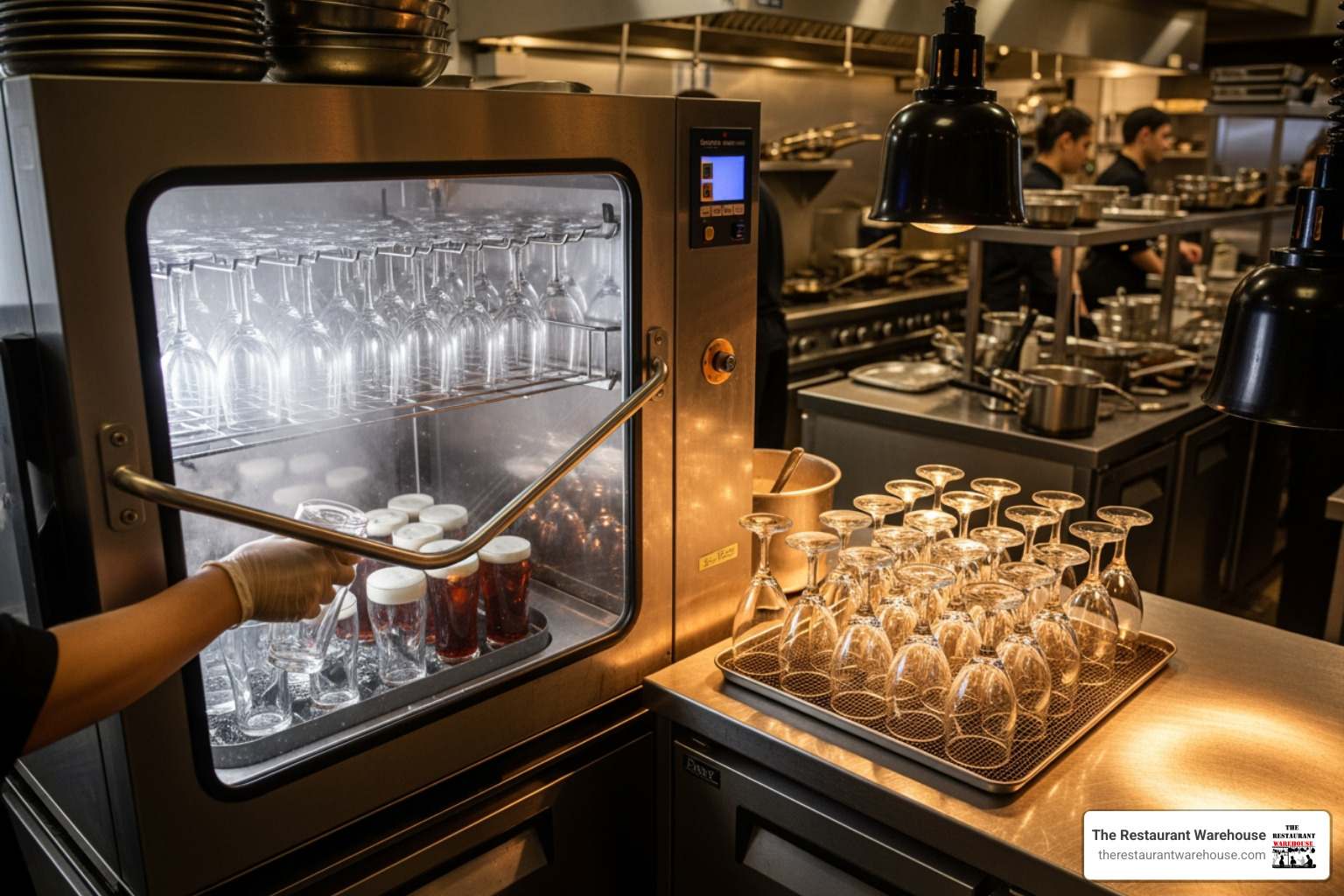
When you buy commercial glass washer equipment, you're investing in more than just clean cups—you're investing in customer experience, operational efficiency, and your bottom line. Here's what you need to know:
Quick Guide to Buying a Commercial Glass Washer:
- Determine Your Volume - Small cafes need 20-30 racks/hour; busy bars require 40+ racks/hour
- Choose Your Type - Undercounter (space-saving), pass-through (high-volume), or carousel (maximum throughput)
- Select Sanitization Method - High-temp (180°F rinse, chemical-free) or low-temp (chemical sanitizer, lower energy)
- Budget for Installation - Account for electrical (typically 208-240V), water pressure (2-4 Bar), and drainage
- Calculate Total Cost - Machines range from $800 to $19,000+ depending on capacity and features
Picture this: A customer sits down at your bar, ready to enjoy a craft beer or signature cocktail. You bring them water in a glass that's cloudy, spotted, or worse—smells like yesterday's detergent. That first impression? Gone. According to the research, "bringing water to a customer reading the menu" or "pouring a beer while serving a burger and fries" should showcase spotless glassware that's "free of contaminants that can spoil drinks."
Manual washing simply can't keep up during rush hour. It ties up valuable staff time, leads to inconsistent results, and increases the risk of chipping and breakage. A commercial glass washer changes everything—cleaning and sanitizing up to 1,000 glasses per hour with just the push of a button, maintaining consistent 180°F sanitizing rinse temperatures, and using as little as 0.65 gallons of water per rack.
The right glass washer reduces labor costs, ensures hygiene standards are met every time, and keeps your operation running smoothly even when you're slammed. Whether you're running a cozy neighborhood cafe or a high-volume nightclub, there's a glass washer designed specifically for your needs.
I'm Sean Kearney from The Restaurant Warehouse, and I've spent years helping restaurant owners and bar operators buy commercial glass washer equipment that fits their budget and workflow. My experience from understanding customer needs in sales has taught me that the right equipment investment pays for itself through efficiency gains and reduced breakage.
Buy commercial glass washer terms at a glance:
- commercial dishwashers
- energy star commercial dishwasher
- second hand commercial dishwashers for sale
The Unseen Hero: Why Your Business Needs a Commercial Glass Washer
In the busy world of hospitality, every detail contributes to the overall customer experience and, ultimately, your bottom line. Sparkling clean glassware isn't just about aesthetics; it's a cornerstone of hygiene, efficiency, and customer satisfaction. When you decide to buy commercial glass washer equipment, you're not just purchasing a machine; you're investing in an unseen hero that will tirelessly work behind the scenes to lift your operation.
Let's break down the significant advantages a commercial glass washer brings to your business:
Operational Efficiency: Imagine the frantic pace of a Saturday night bar service or a busy lunch rush at a restaurant. Manual washing simply cannot keep up with the demand for clean glasses. A commercial glass washer can clean and sanitize up to 1,000 glasses per hour, while other models can handle 30 racks per hour or even up to 1,440 glasses per hour. This incredible speed ensures a continuous supply of pristine glassware, preventing bottlenecks and allowing your staff to focus on serving customers rather than scrubbing glasses. This directly contributes to faster table and bar seat turnover, maximizing your revenue potential during peak hours.
Labor Cost Savings: Time is money, especially in the foodservice industry. Automating the glass washing process significantly reduces the labor hours dedicated to this task. Instead of assigning multiple staff members to manually wash and polish glasses, one person can efficiently load and unload a commercial glass washer. The simple, one-button operation of many models means employees of any skill level can operate these machines, freeing up skilled bartenders and servers for more customer-facing roles. This re-allocation of labor translates into substantial savings on your operational budget.
Reduced Glassware Breakage: Chipping and breakage are inevitable consequences of manual washing, especially in a environment. Commercial glass washers are specifically designed to handle delicate glassware with care. Many models feature specialized racks or carousel conveyors that prevent glasses from knocking against each other, significantly reducing the risk of damage. This means fewer replacement costs and a longer lifespan for your valuable glassware inventory.
Water Conservation: Modern commercial glass washers are engineered with efficiency in mind. Compared to the continuous running water often used in manual washing, these machines optimize water usage. For instance, some models use as little as 0.53 gallons of water per cycle or 0.62 gallons per rack for high-temperature machines, and 1.14 gallons per rack for low-temperature options. ENERGY STAR® qualified models, which we will discuss further, push these savings even higher, contributing to lower utility bills and more sustainable operations.
Consistent, Professional Results: The human element in manual washing introduces variability. Some glasses might be cleaner than others, and streaks or spots can be common. Commercial glass washers provide consistent, professional results every single time. They ensure that each glass is thoroughly washed, rinsed, and sanitized, leaving them sparkling and ready for use. This consistency is crucial for maintaining your establishment's reputation for quality and attention to detail.
Improved Hygiene and Safety: This is perhaps the most critical advantage. Achieving proper sanitization manually is challenging and often inconsistent. Commercial glass washers, particularly high-temperature models, reach and maintain precise temperatures (like a consistent 180°F sanitizing rinse) that effectively kill bacteria and viruses. Low-temperature models use chemical sanitizers to achieve the same hygienic standards. This ensures that every glass served to your customers is not only visually clean but also hygienically safe, protecting both your patrons and your business from potential health risks. This commitment to hygiene is paramount in today's world.
A commercial glass washer is truly an indispensable asset for any business that relies on serving beverages. It streamlines operations, cuts costs, and lifts the customer experience by ensuring every pour is served in a perfectly clean glass. To dig deeper into how these machines specifically benefit your bar, check out our Bar Glass Washing Machine Guide.
Finding Your Perfect Fit: Types of Commercial Glass Washers
When you're ready to buy commercial glass washer equipment, understanding the different types available is crucial. The ideal machine for your business will depend heavily on your available space, the volume of glassware you need to process, and how it integrates into your existing workflow. There's no one-size-fits-all solution, but rather a perfect fit waiting for your unique operational needs.
Undercounter Models: The Space-Saving Solution
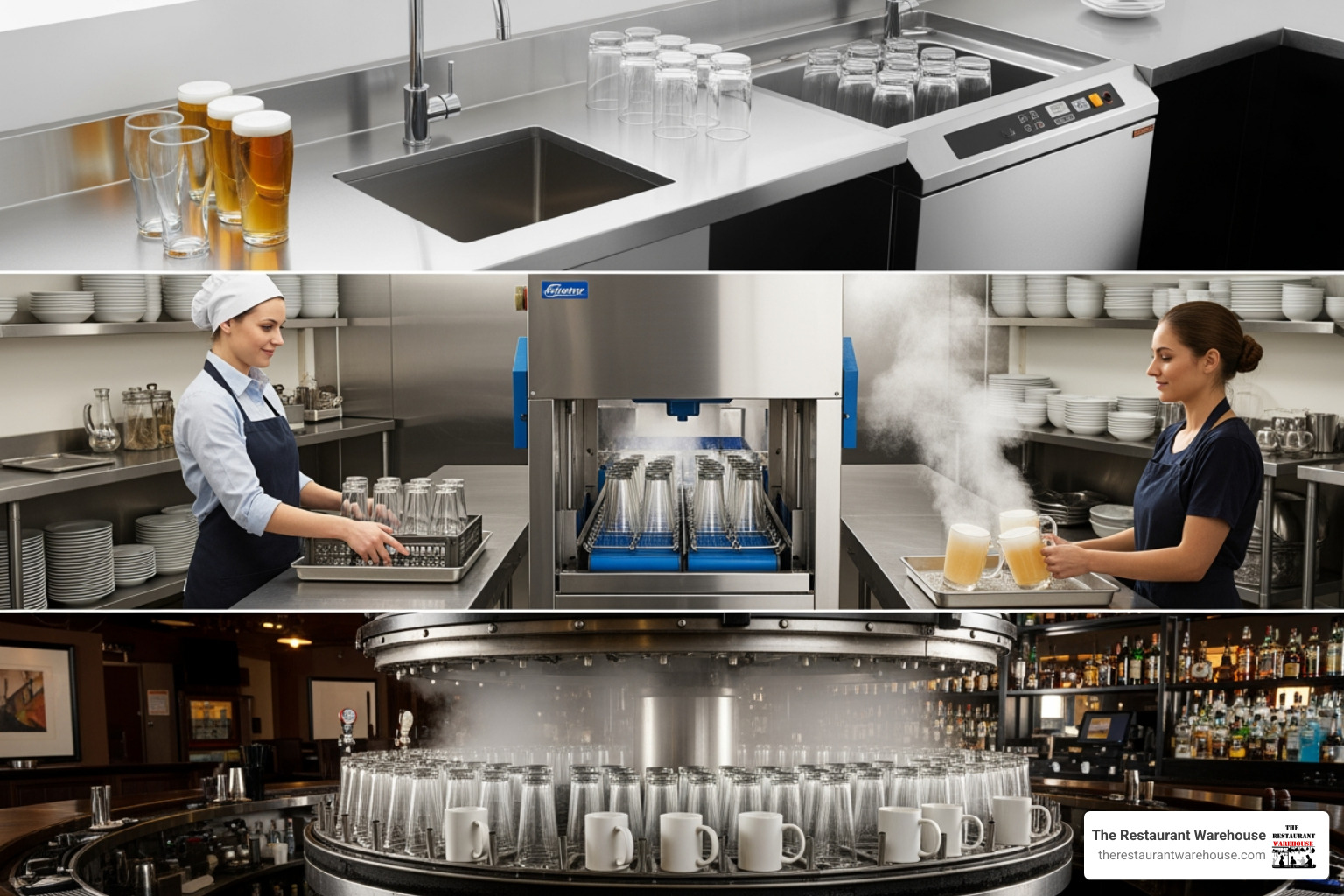
Undercounter glass washers are the compact champions for busy service areas. As the name suggests, these units are designed to fit neatly under a bar or countertop, making them an excellent choice for establishments with limited space. "High-volume bars and restaurants don’t always have room for large glasswasher machines, and our undercounter dishmachine models provide space-saving solutions," as highlighted in our research.
These models are ideal for:
- Small cafes: Where space is at a premium and a steady supply of clean coffee mugs and water glasses is essential.
- Bars: Offering point-of-use convenience, allowing bartenders to quickly wash glasses without leaving their station.
- Smaller restaurants: Supplementing larger dishwashers or handling glassware specifically.
Undercounter units typically have a rack capacity of 40 x 40 cm or 20" x 20" and can process a respectable number of racks per hour, often ranging from 20 to 30. This makes them suitable for low to medium-volume needs, ensuring quick access to clean glasses right when you need them. They are a popular choice for their efficiency and their ability to integrate seamlessly into existing layouts. For more insights and to see our selection, you can explore our range of undercounter models.
Pass-Through Models: The High-Volume Workhorse
For businesses with a higher volume of glassware and a dedicated dishwashing area, pass-through (or hood-style) glass washers are often the answer. These machines are designed for ergonomic workflow, allowing staff to load dirty racks on one side and unload clean racks on the other, creating a continuous washing process.
Pass-through models are best suited for:
- Busy restaurants: Where a constant flow of plates and glasses needs to be processed quickly.
- Event venues: Handling large quantities of varied tableware and glassware during peak events.
- Cafeterias: Ensuring a rapid turnaround of trays and glasses.
These units offer higher capacity than undercounter models and are typically integrated into a larger dish pit setup. Their design improves efficiency by minimizing handling and maximizing throughput, making them a true workhorse for high-demand environments.
Carousel & Rotary Models: For Maximum Throughput
When your operation demands the absolute highest volume of clean glasses per hour, carousel or rotary glass washers are the ultimate solution. These specialized machines are designed for continuous loading and unloading, often featuring a circular conveyor system that moves racks through the wash and rinse cycles. Some models boast impressive capacities, capable of cleaning and sanitizing up to 1,200 or even 1,440 glasses per hour.
These powerhouse machines are perfect for:
- Large bars and nightclubs: Where thousands of drinks are served over a few hours.
- Banquet halls and catering operations: Handling immense volumes of glassware for large events.
- High-volume breweries or tasting rooms: Ensuring a rapid supply of clean tasting glasses.
The continuous nature of carousel models significantly reduces labor and, crucially, minimizes glassware chipping due to their precise handling mechanisms. If your business experiences extreme peaks in glassware demand, a carousel or rotary model will ensure you never run out of sparkling clean glasses. Feeling overwhelmed by the options? Contact our equipment specialists today for a free consultation to find the perfect glass washer for your needs.
Key Features to Consider When You Buy Commercial Glass Washer
Choosing the right commercial glass washer involves more than just picking a size. It requires a thoughtful evaluation of features that directly impact performance, efficiency, and ultimately, your return on investment. When you decide to buy commercial glass washer equipment, consider these critical factors:
High-Temperature vs. Low-Temperature Sanitization
This is one of the most fundamental decisions you'll make, as it affects operational costs, drying times, and the chemicals you'll use.
- High-Temperature Sanitizing: These machines use extremely hot water, typically a final rinse temperature of 180°F (82°C), to sanitize glassware. Many high-temp units come with a built-in booster heater to ensure this critical temperature is consistently met. Some advanced models, for example, use smart sensor technology to ensure a safe and consistent 180°F sanitizing rinse. The primary advantage here is chemical-free sanitization, which means no chemical taste or odor left on glasses, preserving the integrity of your beverages. The intense heat also promotes faster air drying, reducing the need for manual polishing. However, they generally consume more energy to heat the water.
- Low-Temperature Sanitizing: These glass washers use chemical sanitizers (such as chlorine or iodine) in the final rinse cycle, typically at lower water temperatures (around 120-140°F). The advantage is lower energy consumption since less water heating is required. However, it's crucial that these systems include a potable water rinse after the chemical sanitizer to wash away any residue, ensuring glasses are free of chemical taste or odor. Some models, for instance, feature specialized post-rinse technology for this purpose. Glasses from low-temp machines may also be cooler to the touch immediately after washing.
Both methods are effective at meeting health code standards, but your choice will depend on your priorities for energy costs, chemical usage, and taste integrity. Always refer to local health regulations and FDA Food Code sanitization guidelines to ensure compliance.
What to Look for When You Buy a Commercial Glass Washer for Your Bar
The specific needs of a bar, restaurant, or cafe will dictate the capacity and speed requirements of your glass washer.
- Racks per hour / Glasses per hour: This metric is key to matching the machine's output to your business volume. We've seen models capable of 30 racks per hour, 40 racks per hour, or even 1,000 glasses per hour. A busy bar might need a machine that can clean 1,200 glasses per hour, while a smaller cafe might be perfectly served by one that does 600 glasses per hour.
- Cycle Time: This refers to how long a full wash and rinse cycle takes. Many commercial glass washers offer rapid cycle times, often ranging from 90 to 120 seconds. Faster cycles mean quicker access to clean glassware, especially critical during peak hours.
- Rack Size: Commercial glasswashers commonly have a rack capacity of 40 x 40 cm (approximately 15.75" x 15.75") or 20" x 20". Ensure the rack size accommodates your most frequently used glassware.
- Glass Clearance: If you serve tall stemware, pint glasses, or mugs, check the machine's glass clearance height. Some models offer 11-3/4" or even 12" clearance to accommodate taller items without risk of breakage.
- Peak Hour Demand Calculation: Don't just consider your average daily needs. Calculate your peak hour demand for glassware to ensure your chosen machine can keep up when you're busiest. Running out of clean glasses during a rush is a nightmare scenario.
Maximizing ROI: Energy and Water Efficiency
In an era where operational costs are constantly scrutinized, the energy and water efficiency of your commercial glass washer can significantly impact your long-term ROI.
- ENERGY STAR Certified Models: Always look for models that are ENERGY STAR® qualified. These appliances meet strict energy efficiency guidelines set by the U.S. Environmental Protection Agency. Choosing a brand with a long-standing commitment to energy efficiency, often demonstrated by multiple ENERGY STAR Partner of the Year awards, is a strong indicator of quality and long-term savings. You can learn more about these savings in our guide Beyond Clean: How Energy Star Commercial Dishwashers Boost Your Bottom Line.
- Gallons per Rack (GPR): This metric indicates how much water the machine uses per rack washed. Lower GPR values mean greater water conservation. Some highly efficient models use as little as 0.65 gallons per rack.
- Heat Recovery Systems: These advanced systems capture waste heat and water vapor from the wash cycle and use it to pre-heat incoming cold water. This reduces the energy needed to bring the water up to sanitizing temperatures, leading to substantial energy savings.
- Automatic Detergent/Rinse Aid Dispensers: While not directly an energy-saving feature, these ensure optimal chemical usage, preventing waste and ensuring consistent cleaning without overuse, which can indirectly save water by avoiding re-washes.
- Smart Touchscreens and Connectivity: Features like smart touchscreens and Wi-Fi connectivity allow for precise cycle control, diagnostics, and monitoring through dedicated apps, helping to optimize performance and identify potential inefficiencies.
- Energy Recovery Systems: Some sophisticated models integrate energy recovery systems that further reduce energy consumption by recycling heat.
Investing in an efficient commercial glass washer is a smart move that benefits both your budget and the environment.
Installation, Maintenance, and Budgeting
Acquiring a commercial glass washer is a significant investment, and understanding the complete picture—from installation to long-term maintenance and budgeting—is essential for smooth operation and maximum value. When you buy commercial glass washer equipment, you're looking for a partner in efficiency, not a headache.
Preparing for Installation
Proper installation is critical for the optimal performance and longevity of your glass washer. It's not as simple as just plugging it in!
- Power Supply Requirements: Commercial glass washers require specific electrical connections. This typically means a dedicated circuit with appropriate voltage (e.g., 208-240 Volts), phase (single or three-phase), and amperage. Always consult the machine's specifications and have a licensed electrician ensure your setup meets these requirements.
- Water Connection: You'll need a cold water supply with adequate pressure, usually between 2-4 Bar (approximately 29-58 PSI). The inlet water temperature is also important, with a minimum of 120°F (140°F recommended) for some high-temp models. A 3/4" water connection is common.
- Drainage Options: Most glass washers offer either gravity drain or require a drain pump. Gravity drain systems are simpler but need the machine to be liftd above the drain. If your drain is higher than the machine's outlet, or if you need to pump water a distance, a model with a built-in drain pump is necessary.
- Space and Ventilation Needs: Ensure you have enough space not just for the machine itself but also for door clearance (if applicable), loading/unloading racks, and proper ventilation. High-temperature machines produce steam, and while some have steam elimination technology, proper airflow is always beneficial.
- Water Treatment (Softener): Water hardness varies significantly by region. Hard water can lead to limescale buildup, affecting machine performance, hygiene, and lifespan. It's highly recommended to test your domestic water hardness. If your water is hard, installing a water softener (manual or automatic) or a reverse osmosis device is a wise investment to protect your machine and ensure spot-free results.
Always ensure installation is within 1 meter of suitable existing services for optimal setup.
Keeping It Clean: Maintenance and Longevity
Regular maintenance is key to prolonging the life of your commercial glass washer and ensuring it consistently delivers sparkling results. Think of it as a vital health routine for your hardest-working employee.
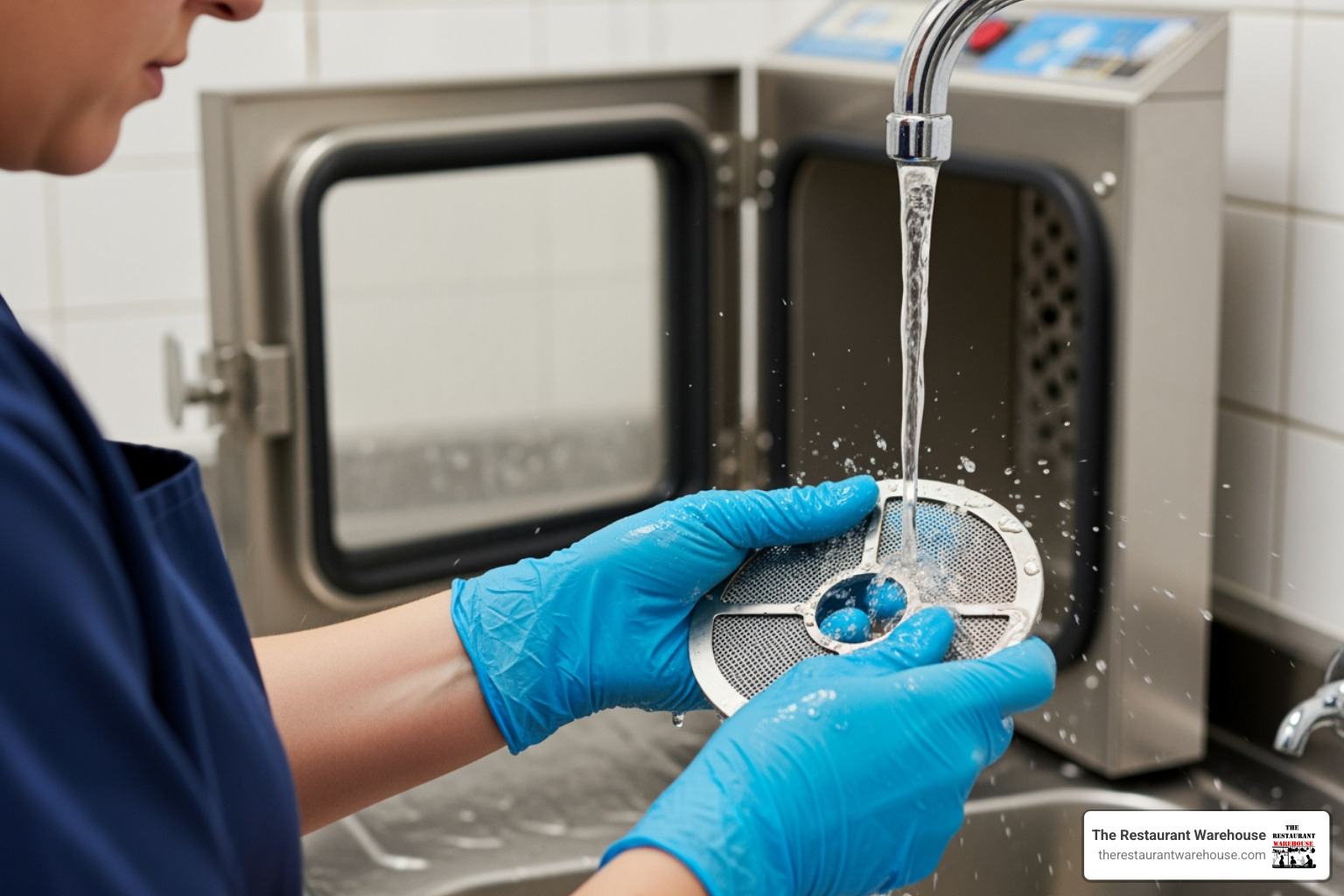
- Daily Cleaning Procedures: At the end of each shift or day, simple cleaning steps are crucial. This typically includes wiping down the interior and exterior, clearing the drain screens, and inspecting wash arms for clogged jets. Many machines have easily removable filters for quick cleaning.
- Cleaning Wash Arms and Filters: Over time, food debris and mineral deposits can accumulate in wash arm jets and filters, impairing cleaning performance. Regularly remove and clean these components according to the manufacturer's instructions.
- Regular Descaling Schedule: Limescale buildup from hard water is the enemy of any warewashing machine. Establish a regular descaling schedule using commercial descaling agents to prevent mineral deposits from impacting heating elements, pumps, and spray jets. If you've invested in a water softener, this will be less frequent but still necessary.
- Professional Service and Support: Even with diligent daily maintenance, your glass washer benefits from periodic professional servicing. This can catch potential issues before they become major problems, ensure all components are functioning correctly, and extend the machine's lifespan. Consider models from brands that offer responsive service teams and comprehensive warranty options. For guidance on selecting the right support, refer to our Don't Get Washed Up: How to Choose the Best Commercial Dishwasher Service.
- Warranty and After-Sales Support: Always inquire about the warranty period (e.g., 1-year parts and labor is common, with options for extended warranties) and the availability of spare parts. A readily available supply of spare parts ensures quick repairs and minimizes downtime.
How to Buy a Commercial Glass Washer That Fits Your Budget
The price of commercial glass washers can vary widely, from around $800 for basic models to over $19,000 for high-capacity, feature-rich units. Understanding the factors that influence cost and exploring different purchasing strategies will help you make a financially sound decision when you buy commercial glass washer equipment.
-
Typical Price Ranges:
- Undercounter (basic to mid-range): $800 - $5,000
- Undercounter (advanced features, high-temp): $5,000 - $10,000
- Pass-through/Hood-type: $8,000 - $15,000+
- Carousel/Rotary (high-capacity): $15,000 - $25,000+ Factors like brand, sanitization method, capacity, energy efficiency ratings, construction materials (e.g., 304 stainless steel), and advanced features (e.g., smart controls, heat recovery) all play a role in pricing.
Upfront Cost vs. Total Cost of Ownership (TCO): Don't just look at the purchase price. Consider the TCO, which includes the initial cost, installation expenses, ongoing utility costs (water, electricity), chemical costs (for low-temp models), maintenance, and potential repair costs. An ENERGY STAR certified model, while potentially having a higher upfront cost, can offer significant savings in utilities over its lifespan, leading to a lower TCO.
New vs. Second-Hand Considerations: Buying second-hand can offer substantial upfront savings. However, it comes with risks. When considering second-hand models, be aware that they are often sold without any warranty, and there's a higher risk of breakdowns shortly after purchase. If considering used equipment, thorough inspection and understanding the seller's return policy are crucial. For insights on finding used equipment, explore Pub Perfect: Top Spots for Second-Hand Glasswashers and Industrial Strength Savings: Where to Buy Second-Hand Dishwashers.
Leasing vs. Buying Benefits: If a large upfront purchase isn't feasible, leasing can be an attractive option. Leasing allows you to acquire the glass washer you need without tying up working capital, often with manageable weekly or monthly payments. It can also offer tax advantages and the flexibility to upgrade your machine more frequently. Many suppliers offer lease-to-buy options. For more information on flexible financing for your new glass washer, learn about our financing and leasing options.
By carefully weighing these financial considerations, you can make an informed decision that aligns with your budget and long-term business goals.
Conclusion: Lift Your Service with the Right Glass Washer
In the competitive landscape of hospitality, every detail matters. From the moment a customer steps through your door to their final sip, the quality of their experience can define your reputation. Investing in the right commercial glass washer is not merely a purchase; it's a strategic decision that underpins your establishment's hygiene, efficiency, and customer satisfaction. When you buy commercial glass washer equipment, you're preparing your business for success.
We've explored the diverse world of commercial glass washers, from the compact undercounter units perfect for cozy cafes to the high-capacity carousel models designed for busy nightclubs. We've dissected critical features like high-temperature versus low-temperature sanitization, emphasizing the importance of a consistent 180°F rinse for chemical-free sparkle or the efficiency of chemical sanitizers. We've highlighted the crucial metrics of racks per hour and glass clearance, ensuring your machine can keep pace with your busiest moments and accommodate all your unique glassware.
Beyond the initial purchase, we've stressed the importance of energy and water efficiency, guiding you towards ENERGY STAR certified models that offer long-term savings and promote sustainable practices. And finally, we've walked through the practicalities of installation, the necessity of diligent maintenance, and the various budgeting strategies that ensure your investment is both sound and sustainable.
The goal is to consistently deliver perfectly clean, sanitized glassware that improves every drink, every meal, and every customer interaction. This commitment to quality lifts your service, boosts operational efficiency, and contributes directly to your profitability.
At The Restaurant Warehouse, we understand the unique challenges and demands of the foodservice industry. We are dedicated to supplying warewashing equipment and food service supplies at lower prices, avoiding high commissions and retail overhead to offer you affordable, wholesale pricing. We believe that investing in a quality glass washer shouldn't break the bank.
Are you ready to find the perfect commercial glass washer that will revolutionize your operation? Explore our complete collection of commercial glass washers to make an informed decision.
Contact us today for a personalized quote and expert advice. Let us help you lift your service and ensure every pour is perfect.
About The Author

Sean Kearney
Sean Kearney is the Founder of The Restaurant Warehouse, with 15 years of experience in the restaurant equipment industry and more than 30 years in ecommerce, beginning with Amazon.com. As an equipment distributor and supplier, Sean helps restaurant owners make confident purchasing decisions through clear pricing, practical guidance, and a more transparent online buying experience.
Connect with Sean on LinkedIn, Instagram, YouTube, or Facebook.