

Pub Perfect: Top Spots for Second Hand Glasswashers
Why Quality Glassware Management Matters for Your Bar's Success
In the competitive world of hospitality, success is built on details. While the quality of your beverages and the skill of your staff are paramount, the vessel in which a drink is served is the first thing a customer touches and sees. A cloudy, spotted, or lipstick-stained glass can instantly undermine the entire experience, suggesting a lack of care that can tarnish your reputation. This is where a reliable, high-performance glasswasher becomes not just a piece of machinery, but a guardian of your brand's quality perception. For savvy business owners, finding the right second hand commercial glass washer is a strategic move that can save your business thousands of dollars while delivering the pristine, professional results your patrons expect and deserve.
The pre-owned market offers a gateway to significant financial advantages, with typical savings ranging from 30% to 70% compared to new models. This isn't about settling for less; it's about accessing more. These savings allow you to acquire premium, industry-leading brands like Hobart, Jackson, and CMA—names synonymous with durability and performance—that might otherwise be financially out of reach. Many of these units come from establishments that have closed or upgraded, meaning they have been professionally restored, rigorously tested, and are ready for years of continued, reliable service.
Quick Guide to Second Hand Commercial Glass Washer Options:
- Undercounter Models: Compact and efficient, perfect for small bars, tasting rooms, and cafes. Typically handle 20-30 racks per hour.
- Pass-Through Units: The workhorses for busy restaurants and pubs, designed for ergonomic workflow and processing 40-90 racks per hour.
- Conveyor Systems: The ultimate solution for high-volume operations like hotels and event centers, providing continuous washing for a constant supply of clean glassware.
- Key Savings: Expect to save 30-70% off the retail price of a new machine, with many refurbished models including a 90-day warranty for peace of mind.
- Top Brands: Hobart, Jackson, CMA, and Winterhalter are highly sought-after on the used market for their proven longevity and parts availability.
- Where to Buy: Your primary sources are specialized used equipment dealers, online marketplaces, and liquidation auctions.
For budget-conscious operators, buying a used glasswasher is a decision that pays dividends far beyond the initial savings. Professional restoration processes ensure these machines not only meet but often exceed health code requirements, delivering the sparkling, crystal-clear results that elevate your customers' experience. Making smart equipment choices is a direct driver of both customer satisfaction and healthier profit margins, proving that you don't have to compromise on quality to protect your bottom line.
Why a Second Hand Commercial Glass Washer is a Smart Investment
A second hand commercial glass washer is one of the most intelligent financial decisions a foodservice operator can make. The economic argument is compelling and immediate: you are looking at substantial savings of 30-70% compared to buying a new machine. To put that in perspective, a high-performance glasswasher that might retail for $8,000 new could be acquired as a professionally refurbished used model for anywhere between $2,400 and $5,600. That represents thousands of dollars in freed-up capital that can be strategically reinvested into other critical areas of your business, such as expanding your marketing efforts, enhancing staff training programs, or upgrading your point-of-sale system.
These significant savings also democratize quality, providing access to premium brands that might otherwise be prohibitively expensive. This is your opportunity to equip your establishment with industry giants like Hobart, CMA, and Jackson—names that are trusted and revered for their exceptional durability, engineering, and consistent performance in the most demanding commercial environments. When you buy a quality used unit, you're not just saving money; you're investing in a higher tier of machinery. This often means you can afford high-end features—such as advanced multi-stage filtration, energy-saving standby modes, and rapid, high-temperature sanitizing cycles—without shouldering the premium price tag associated with them.
Beyond the financial benefits, choosing a second hand commercial glass washer is a powerful and practical step towards environmental responsibility. Every time you opt for a refurbished machine, you are actively participating in the circular economy, diverting tons of valuable, functional machinery from landfills. It's sustainability in action—a tangible way to reduce waste, conserve the resources required for new manufacturing, and lower your business's overall carbon footprint. This is more than just a cost-saving measure; it's an operational choice that aligns your brand with the environmentally responsible values that an increasing number of customers appreciate and support.
The market for used warewashing units is robust and constantly replenished. Business closures, upgrades, and relocations create a steady and reliable stream of high-quality machines. These are not untested newcomers; they are proven performers that have already demonstrated their capability and reliability in real-world, high-pressure settings. The most reputable used equipment dealers take these proven machines and elevate them, conducting comprehensive inspections, servicing all mechanical parts, and often providing warranties on their refurbished units. This ensures you receive a machine that is not only affordable but is also certified ready and built to last for years to come.
Want to explore more about how used warewashing solutions can transform your operation? Check out our detailed guide on used dishwashing machines to see the full range of possibilities.
Key Considerations Before You Buy Your Second Hand Commercial Glass Washer
Acquiring a second hand commercial glass washer is an excellent business strategy, but it demands diligent research and a thorough evaluation to prevent future headaches. A meticulous assessment acts as your insurance policy, ensuring you invest in a reliable asset rather than inheriting someone else's problem. This careful approach is fundamental to guaranteeing your customers always receive impeccably clean glassware, cycle after cycle.
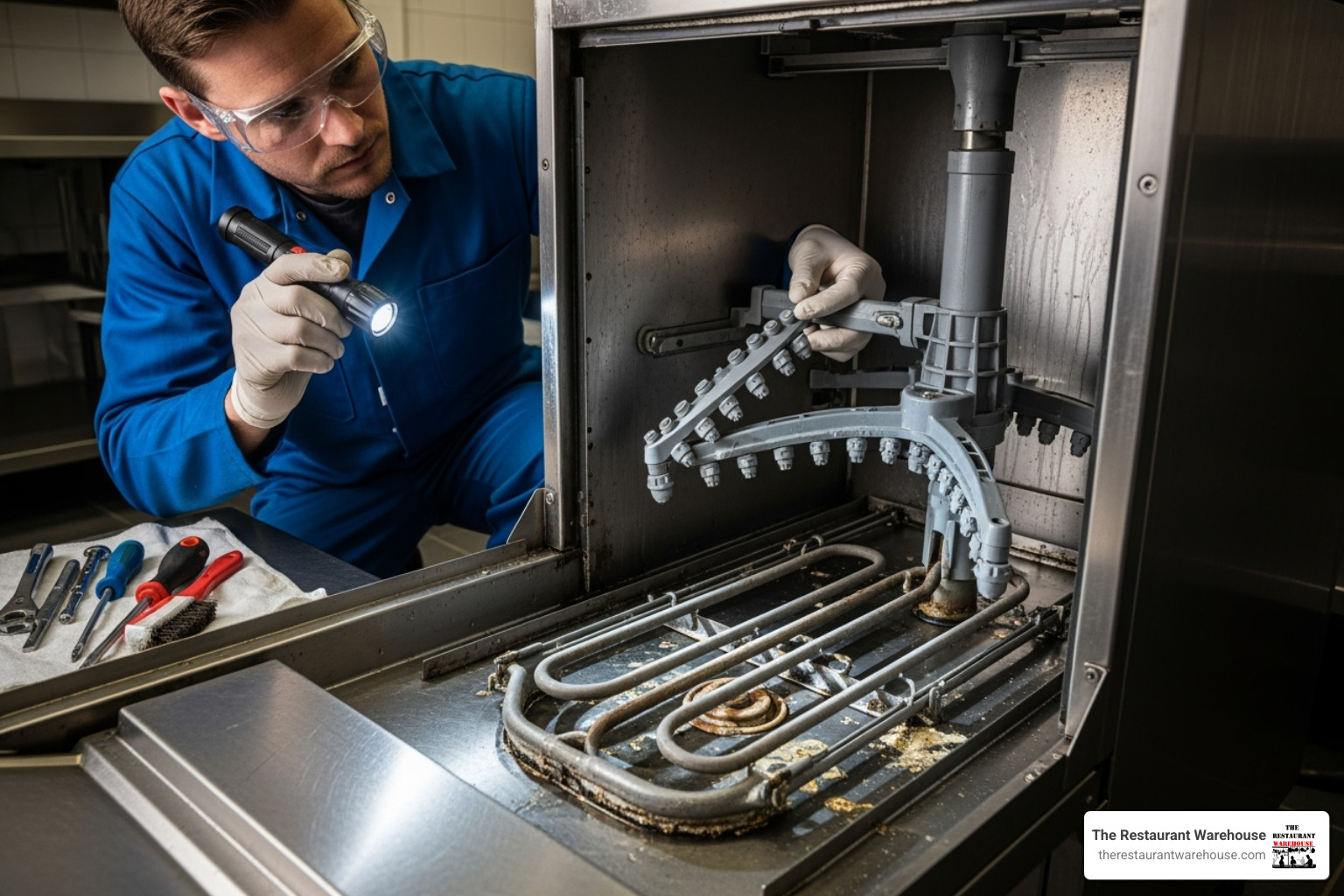
Assessing the Machine's Condition and History
Your physical inspection must be comprehensive and systematic. Start with the exterior, looking for significant red flags like deep dents, pervasive rust, or corrosion, especially around the base and connection points. While minor cosmetic scratches are expected, major structural damage could indicate mishandling or internal issues. Pay close attention to the door seals and gaskets; they must be soft and pliable. If they are cracked, brittle, or hardened, they will fail to create a proper seal, leading to leaks and pressure loss.
Next, interact with the machine. Test the control panel functionality by methodically pressing every button, turning every dial, and ensuring all indicator lights and digital displays are working correctly. Open the door and conduct a thorough internal inspection. Examine critical components like the spray arms, filters, and nozzles. The arms should rotate smoothly and without obstruction. Check the nozzles for any clogs from food debris or mineral buildup, as this will severely impact cleaning performance. The filters should be intact and easy to remove for cleaning. Most importantly, you must insist on watching the machine run a full cycle. This is non-negotiable. During the test, verify that it fills correctly, heats the water to the proper temperature (if possible to measure), washes and rinses without issue, and drains completely and smoothly. Listen intently for any unusual noises like grinding, rattling, or loud humming, which could signal worn bearings, a failing pump, or other imminent mechanical failures.
Finally, become an investigator. Ask pointed questions about the machine's usage history and maintenance. Inquire about the age of the unit, its previous operating environment (e.g., a quiet cafe vs. a high-volume bar), and any available service or maintenance records. A well-documented history of professional service is a strong positive indicator. A five-year-old unit from a small, low-traffic establishment is often a much better buy than a two-year-old machine that was run relentlessly in a bustling nightclub.
Choosing the Right Brand and Model for a second hand commercial glass washer
In the pre-owned market, brand reputation is a proxy for reliability. Reputable brands like Hobart, CMA, and Jackson are engineered for commercial-grade longevity, and their widespread use means that parts availability is generally excellent. This is a critical factor for long-term ownership, as it ensures you can easily find replacement parts for maintenance and repairs down the line.
Consider the sanitizing method that best suits your operational needs and local health codes. High-temperature sanitizing models use a booster heater to raise the final rinse water to 180°F or higher, effectively killing bacteria with heat. This method results in flash-drying, which leaves glasses sparkling and ready for use faster. Low-temperature chemical sanitizing machines use a chemical solution (typically chlorine or iodine) in the final rinse. They consume less energy but require diligent monitoring of chemical levels. Both methods are effective, but you must verify your local health department's specific requirements. For federal standards, you can consult the FDA guidelines on sanitization temperatures for warewashing for compliance information.
Water hardness in your area is another crucial consideration. Hard water is rich in minerals like calcium and magnesium, which can leave a cloudy film on glassware and build up as scale on heating elements, spray jets, and internal components, leading to inefficiency and eventual failure. If your establishment is in a hard water area, investing in a machine with an integrated water softener or planning for an external softener is not a luxury—it's essential for protecting your investment and ensuring spotless results. Additionally, determine your plumbing setup. Do you need a drain pump to expel water to a higher drain, offering flexible placement, or will a simpler and more reliable gravity drain suffice? Lastly, confirm the machine's power requirements (voltage, amperage, and phase) and ensure they match your building's electrical service to avoid the surprise and expense of hiring an electrician for a costly panel upgrade.
Essential Questions to Ask the Seller of a second hand commercial glass washer
Asking the right questions can reveal more about the machine's true condition than a visual inspection alone.
- What is the specific reason for selling the unit? (Restaurant closures or fleet upgrades are generally better signs than "it stopped working right.")
- Is there any warranty coverage, even a short-term one, or a return policy? (A 30-day warranty shows the seller's confidence in the machine.)
- Can you provide any maintenance records or service history? (Documentation is a strong indicator of proper care.)
- What specific accessories are included? (Confirm that racks, hoses, and any necessary chemical pumps are part of the sale.)
- What is the service and repair history? (Ask if it has ever had major components like the pump, motor, or control board replaced.)
- Can you provide the serial and model number? (This allows you to research the age and specifications yourself.)
Hesitation, vague answers, or a refusal to let you test the machine are major red flags. You are making a significant investment in your business's operational success, so be thorough and demand transparency. For more tips, check out our commercial dishwasher guide.
Types of Used Glasswashers: Finding Your Perfect Match
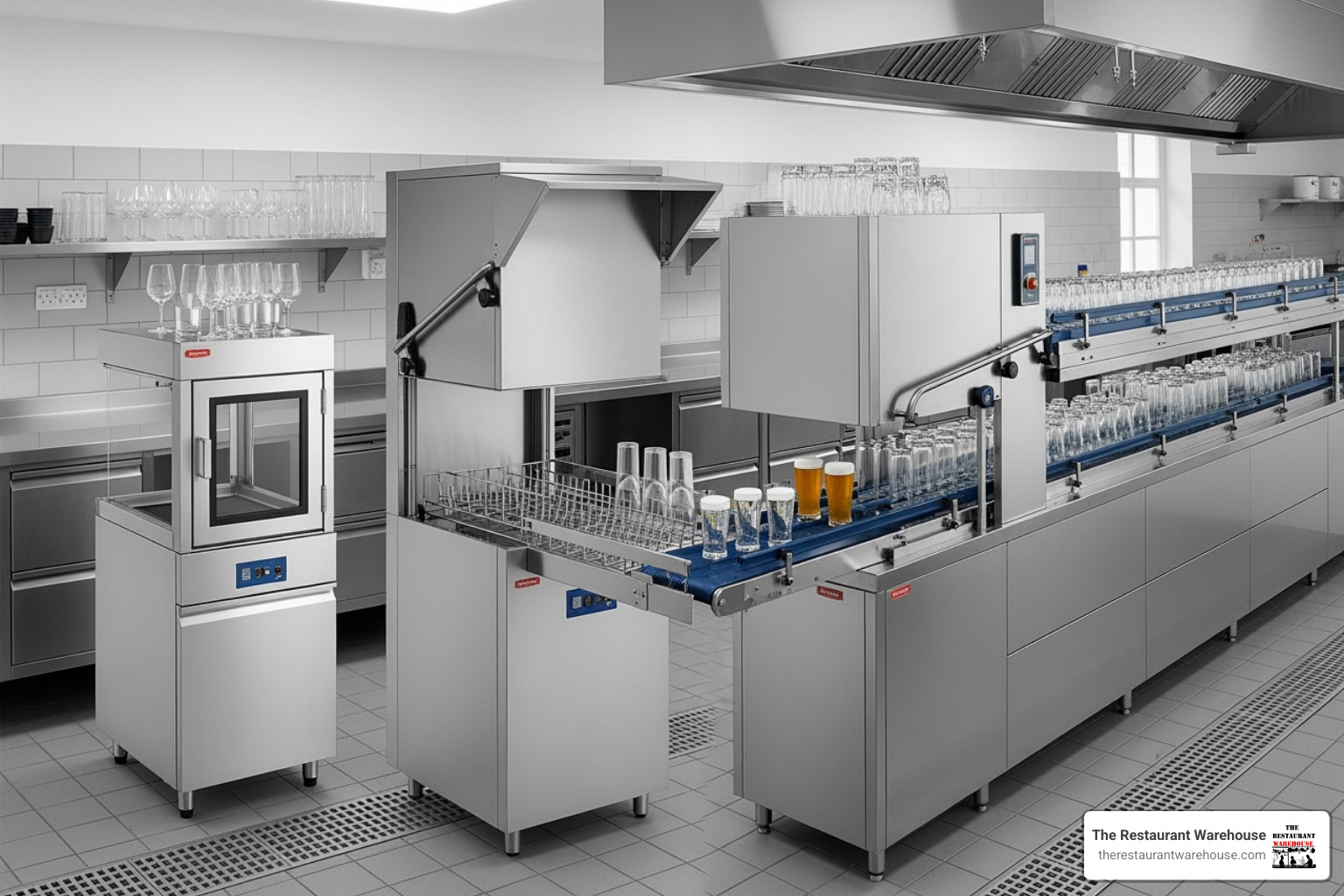
Just as every bar, pub, and cafe has its own unique character and pace, every second hand commercial glass washer is designed to meet different operational demands. Understanding the three primary types available on the used market is the first step in matching a machine to your specific volume, spatial constraints, and workflow. Selecting the right type is crucial for maximizing efficiency, managing labor costs, and ensuring your service never slows down due to a shortage of clean glassware.
Undercounter Glasswashers
These compact, front-loading powerhouses are the go-to solution for establishments where every square foot of space is valuable. As their name suggests, undercounter glasswashers are designed to slide neatly beneath a standard 36-inch high counter, integrating seamlessly into your bar or service area. This makes them the ideal choice for small bars, cozy cafes, wine tasting rooms, and boutique coffee shops. Their unobtrusive design helps maintain a clean, open workspace while still providing the power and speed of a dedicated commercial cleaning unit, far surpassing the capabilities of any residential dishwasher.
Most undercounter models are capable of washing 20 to 30 racks per hour, with each cycle typically lasting just two to three minutes. This capacity is more than sufficient for low to medium-volume operations, ensuring a steady supply of clean glasses even during moderately busy periods. Because they are so common, undercounter units are the most frequently found type on the used market, which means buyers benefit from a wide selection and highly competitive pricing. When evaluating a used undercounter model, pay special attention to features like built-in chemical pumps for detergent and rinse aid, and be sure to confirm its drain type (a gravity drain requires a floor drain, while a pump drain offers more flexible installation).
Pass-Through (Hood-Type) Glasswashers
For busier establishments that have outgrown the capacity of an undercounter unit, the pass-through glasswasher (also known as a hood-type) is the logical next step. These machines are engineered for higher volume and a more streamlined workflow, making them a perfect fit for busy pubs, full-service restaurants, and institutional settings like hotels and catering operations. The defining feature is their ergonomic design: a large hood is lifted, a rack of dirty glasses is slid into the wash chamber from a soiled dish table, the hood is closed to start the cycle, and moments later, the clean rack emerges onto a clean dish table on the opposite side. This linear process prevents cross-contamination and creates a highly efficient, assembly-line-style workflow.
These powerful units can typically process between 40 and 90 racks per hour, making them indispensable for handling the intense demands of peak service hours. The main consideration is space; you must have enough room to accommodate not just the machine itself, but also the necessary inlet and outlet tables. Pass-through units appear frequently on the used market, often sourced from larger establishments that have closed, relocated, or upgraded, creating excellent opportunities for growing businesses to scale up their warewashing capabilities at a fraction of the cost of a new machine.
Conveyor Glasswashers
At the apex of warewashing technology are conveyor glasswashers. These large-scale systems are built for one purpose: to provide a continuous, high-volume torrent of clean glassware. These machines are the heart of the cleaning operation in large hotels, convention centers, banquet halls, major breweries, and university dining halls. Instead of washing one rack at a time, racks are loaded onto a motorized conveyor belt that pulls them through a series of dedicated chambers, including pre-wash, wash, power rinse, final rinse, and sometimes a drying zone. This ensures a constant stream of perfectly clean and sanitized glasses, ready for immediate use.
Conveyor systems require a significant physical footprint and have substantial utility demands for water, power, and drainage. Their immense size, cost, and complexity make them much rarer on the used market compared to undercounter or pass-through models. However, when you do find a well-maintained used conveyor glasswasher, the savings are extraordinary, often running into the tens of thousands of dollars. For a high-volume operation, securing a reliable used conveyor system can be a transformative investment that dramatically improves labor efficiency and operational capacity.
For more details on all types of commercial warewashing solutions, see our complete commercial dishwasher guide.
Ready to upgrade your glass cleaning operation? Contact us today to discuss which type of second hand commercial glass washer would work best for your needs.
Where to Find Reliable Second-Hand Glasswashers
Knowing where to look for a second hand commercial glass washer is just as important as knowing what to look for. The pre-owned market is vast, containing everything from pristine, professionally refurbished gems to worn-out lemons on their last legs. Choosing the right source is the most critical step in ensuring a successful, value-driven purchase. You have several avenues to explore, and understanding the distinct advantages and risks of each will empower you to make a confident decision.
Specialized Used Equipment Dealers
For the highest degree of confidence and the lowest risk, specialized used equipment dealers are your premier choice. These are professionals whose entire business model is built on sourcing, refurbishing, and reselling quality foodservice machinery. Their reputation depends on giving good machines a reliable second life.
The most significant advantage of working with a dealer is their professional refurbishment process. This is far more than a simple wipe-down. Reputable dealers will have technicians who strip down machines to their core components. They replace all common wear-and-tear parts like seals, gaskets, and hoses. They descale boilers, test heating elements, calibrate thermostats, and ensure all electrical components and control boards are functioning to factory specifications. This meticulous process is followed by thorough multi-cycle testing and sanitization to verify that water temperatures, water pressure, drainage, and all control functions work flawlessly.
Perhaps the most crucial benefit is the post-purchase assurance. Many dealers offer warranties and after-sales support. A 30, 60, or 90-day warranty provides a vital safety net, protecting you from any unforeseen issues that may arise shortly after installation. You also gain access to expert guidance from professionals who understand the nuances of different brands and models, helping you select the perfect machine for your specific volume, space, and utility constraints. While the initial price may be slightly higher than a private sale, the value of a warranty, professional refurbishment, and expert support often far outweighs the marginal cost difference. Learn more about why you should buy used equipment from a trusted source.
Online Marketplaces and Classifieds
Digital platforms like eBay, Craigslist, and Facebook Marketplace present a vast, ever-changing landscape of options. The primary appeal is the wide variety of listings and the potential for lower prices, as you are often negotiating directly with the previous owner. You can browse hundreds of machines from the comfort of your office and compare prices with ease.
However, this convenience is accompanied by significant risks. The vast majority of sales on these platforms are strictly "as-is, where-is," with no warranty, no returns, and no professional verification of the machine's condition. You are relying entirely on the seller's photos and description, which can be incomplete or intentionally misleading. The risk of scams, undisclosed mechanical problems, or missing parts is considerably higher in this environment.
To mitigate these risks, you must be your own expert. Always inspect the machine in person before any money changes hands. If a seller is hesitant or refuses an in-person inspection and test run, consider it a deal-breaker and walk away. When you do inspect it, run a full cycle, check for leaks, and listen for odd noises. Use secure payment methods that offer some form of buyer protection. Remember, the entire burden of due diligence falls on you, as does the responsibility for arranging and paying for transportation, which can be a significant logistical challenge for a heavy, bulky machine.
Liquidation Auctions
Auctions can be treasure troves for savvy, well-prepared buyers. When establishments close down, their assets are often liquidated quickly, creating opportunities for substantial savings. The primary advantage is the potential for highly competitive pricing, which is driven by the seller's need to liquidate assets rather than maximize profit on a single item.
This high-reward environment also comes with high risks. The fast-paced, competitive nature of bidding can lead to emotional decisions and overpaying. All sales are final and "as-is, where-is," with no warranties or recourse. Inspection time is often limited to a brief preview period, and you typically cannot test the machines under power. Furthermore, you will have to pay a buyer's premium—a percentage of the winning bid (usually 10-25%)—which must be factored into your budget. You are also responsible for de-installing and removing the machine yourself by a strict deadline.
A successful auction strategy is built on preparation. Attend the preview period, inspect your target machines as thoroughly as possible, research their new and used market value beforehand, and set a firm maximum budget that includes the buyer's premium, taxes, and potential repair costs. Discipline is key; you must be willing to walk away if the bidding exceeds your set limit.
Ready to find the perfect machine? Check out our comprehensive guide to buying commercial dishwashers for more insights.
Frequently Asked Questions about Used Commercial Glasswashers
When navigating the market for a second hand commercial glass washer, it's natural for several key questions to arise. Addressing these common concerns upfront can provide the clarity and confidence needed to make a smart, informed purchasing decision for your establishment.
How much can I realistically save by buying a used commercial glasswasher?
The savings are one of the most compelling reasons to buy used, and they are substantial. Most buyers can expect to save between 30% and 70% off the current retail price of a comparable new model. The exact percentage depends on a combination of factors: the machine's age, its overall condition, the reputation of the brand, and the source of the sale. For example, a two-year-old, professionally refurbished Hobart model from a reputable dealer will be at the higher end of the used price spectrum but still offer immense savings over new. Conversely, an older unit sold "as-is" by a private seller will be cheaper initially. It's crucial to remember that the lowest upfront price does not always equate to the best long-term value, especially when factoring in potential repairs and the value of a warranty.
What are the main risks of buying a used glasswasher and how can I avoid them?
The primary risks associated with buying used include hidden mechanical or electrical problems, the lack of warranty coverage, and a potentially shorter remaining operational lifespan. You might also encounter unexpected costs from missing accessories like glass racks, water hoses, or chemical pumps, which can be expensive to replace. These risks, while real, are highly manageable with a smart approach. The single most effective way to mitigate them is to buy from a reputable dealer who provides professionally tested and refurbished equipment, often with a warranty. Regardless of the source, you must conduct a thorough personal inspection before purchase, which absolutely must include running a full test cycle. Finally, always ask for service history documentation or maintenance records. A machine with a history of regular, professional maintenance is a much safer investment. If a seller is unwilling to allow testing or provide any history, that should be considered a major red flag.
What is the difference between a commercial glasswasher and a commercial dishwasher?
While they may look similar, they are engineered for very different tasks. A commercial dishwasher is designed to blast away heavy food soils from plates and cutlery using high-pressure jets. Using one for glassware can lead to etching, chipping, or breakage. A commercial glasswasher, on the other hand, uses lower water pressure and more delicate cycles. The internal components and rack designs are specifically made to hold glassware securely. They also use specialized detergents and rinse aids formulated to leave glasses crystal clear, without the chemical residue or spots that can affect the taste and aroma of beverages, particularly wine and beer.
How do I know what size and capacity I need?
Choosing the right size is critical to avoiding a bottleneck during your busiest hours. Start by estimating your peak demand. A common formula is to count the number of seats in your bar or dining area and multiply by a factor (e.g., 3-4 glasses per seat per hour for a busy bar). This gives you your peak hourly glass usage. Then, divide this number by the number of glasses a standard rack can hold (typically 16-25). The result is the number of racks per hour you need to wash. For example: (80 seats x 3 glasses/hr) / 20 glasses/rack = 12 racks per hour. In this case, an undercounter unit with a capacity of 20-30 racks/hr would be a safe choice. Always choose a machine with a capacity slightly higher than your calculated peak demand to account for growth and unexpected rushes.
What maintenance does a second-hand glasswasher require?
Consistent maintenance is the key to maximizing the lifespan and performance of your second hand commercial glass washer. A well-maintained used machine will easily outperform a neglected new one.
- Daily Tasks: At the end of each day, staff should remove, empty, and clean all filters to prevent clogs. They should wipe down the interior of the machine to remove any debris, check chemical levels (detergent, rinse aid, sanitizer), and wipe down the exterior. Ensure the wash and rinse arms are clear of obstructions.
- Weekly Tasks: Perform a more thorough cleaning of the wash and rinse arms, ensuring all nozzles are clear. If you are in a hard water area, run a deliming cycle or use a descaling solution to combat mineral buildup. Inspect door gaskets for any signs of wear or damage.
- Periodic Professional Service: Schedule a professional service check at least once or twice a year. A technician can inspect and test electrical components, check the booster heater and thermostats for accuracy, and identify developing problems with pumps or motors before they lead to a costly breakdown and downtime.
Conclusion: Raise a Glass to Smart Savings and Superior Service
Choosing a second hand commercial glass washer is more than just a cost-cutting measure; it is a strategic business decision that delivers an exceptional return on investment, promotes operational sustainability, and directly enhances the quality of service you provide. It's a forward-thinking investment that positively impacts your cash flow, your environmental footprint, and your customers' perception of your brand.
The financial advantages are undeniable and immediate. Saving 30-70% off the retail price of a new machine unlocks significant capital, allowing you to allocate funds to other critical areas of your business, from marketing to menu development. By opting for a professionally refurbished unit, you gain access to the industry's most respected brands like Hobart, CMA, and Jackson at a price point that makes sense for your budget. These are not gambles; they are proven, heavy-duty performers, reconditioned to deliver reliable, sparkling results for years to come. Furthermore, in an era where consumers value corporate responsibility, extending the life of quality machinery is a tangible, sustainable choice that reduces waste and resonates with your environmentally conscious patrons.
To ensure a successful purchase, remember the key takeaways from this guide:
- Inspect Diligently: Conduct a thorough, hands-on inspection of the machine's physical condition, and always witness a full wash cycle in person.
- Match the Machine to Your Mission: Choose the right type of glasswasher (undercounter, pass-through, or conveyor) that aligns with your specific operational volume, workflow, and spatial constraints.
- Vet Your Source: Prioritize reputable, specialized dealers who stand behind their work with professional refurbishment, testing, and warranties. This is the surest path to a reliable investment.
A well-chosen second hand commercial glass washer is a silent, hardworking partner in your success. It protects your bottom line while guaranteeing that every drink you serve is presented in a sparkling clean glass, reinforcing the quality and care you put into every aspect of your business. At The Restaurant Warehouse, we understand that foodservice operators need dependable, high-performance solutions at prices that support growth. We are dedicated to providing affordable, quality-tested warewashing options to help businesses like yours thrive.
Ready to find your perfect glasswasher? Browse our selection of used warewashing solutions or contact us today for personalized assistance. Our expert team is here to help you make the smartest choice for your establishment.
About The Author

Sean Kearney
Sean Kearney is the Founder of The Restaurant Warehouse, with 15 years of experience in the restaurant equipment industry and more than 30 years in ecommerce, beginning with Amazon.com. As an equipment distributor and supplier, Sean helps restaurant owners make confident purchasing decisions through clear pricing, practical guidance, and a more transparent online buying experience.
Connect with Sean on LinkedIn, Instagram, YouTube, or Facebook.