

Pizza Prep Table Guide: Choosing the Right One
It’s a common question from new restaurant owners: “Can’t I just use a sandwich prep table for making pizzas?” The short answer is no, and the reason is simple: the cutting board. A purpose-built Pizza Prep Table features an extra-deep work surface designed for stretching dough, something that’s nearly impossible on a narrow sandwich prep board. This fundamental design difference is crucial for an efficient and clean operation. While both tables keep ingredients cold, only one is truly designed for the specific workflow of a pizzeria. We’ll explore all the key differences to help you choose the right tool for the job.
Is a 48-Inch Pizza Prep Table Right for Your Restaurant?
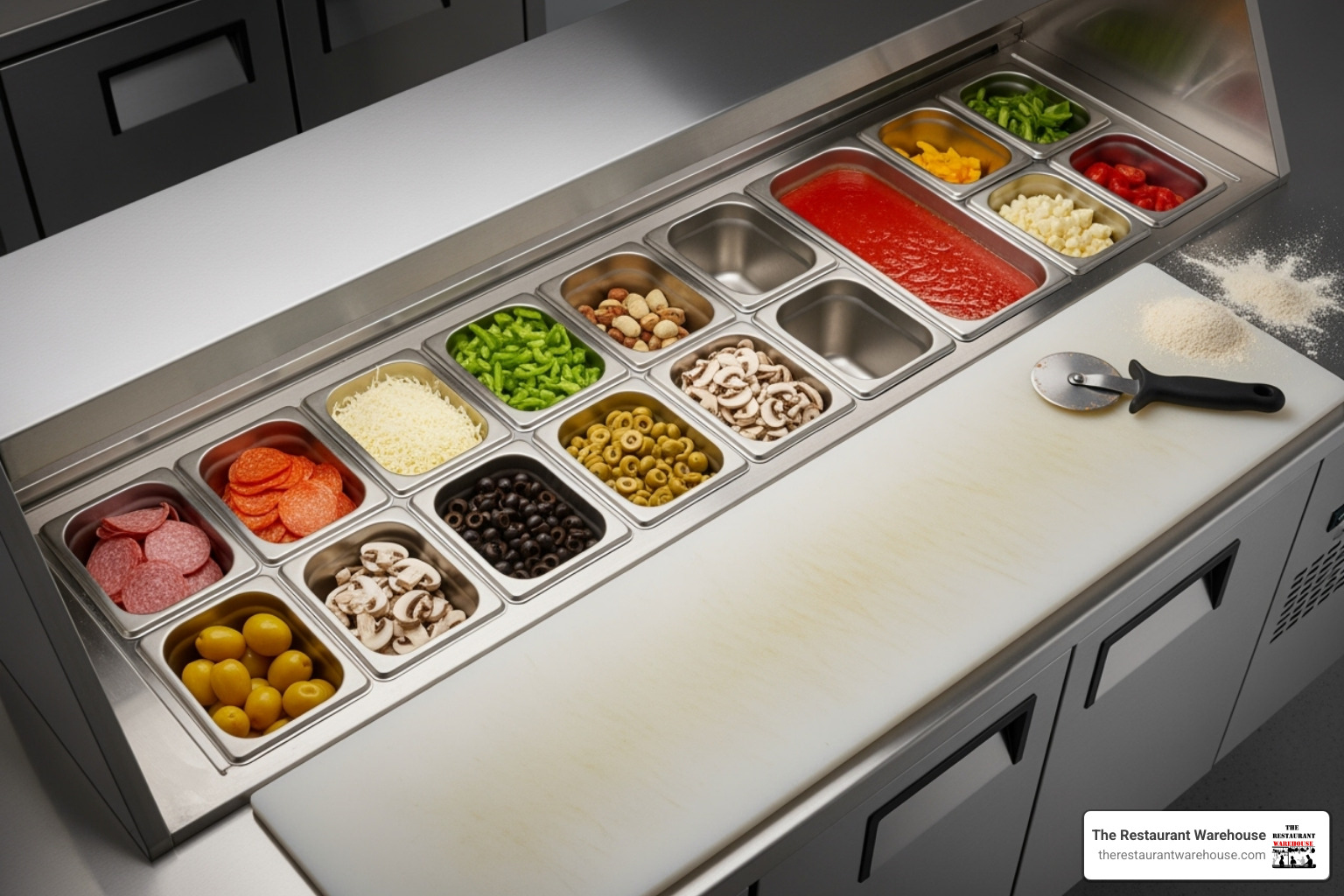
A 48 inch pizza prep table delivers the perfect balance of workspace and storage for compact commercial kitchens. These units are engineered to maximize productivity in a minimal footprint, typically accommodating 6-12 ingredient pans while providing essential refrigerated storage underneath.
Key specifications for 48-inch pizza prep tables:
- Pan Capacity: 6-12 pans (typically 1/3 size)
- Storage Space: 11-12 cubic feet refrigerated storage
- Temperature Range: 33°F to 41°F
- Standard Features: Stainless steel construction, digital temperature controls, polyethylene cutting board
- Typical Dimensions: 48" W x 30" D x 43" H
- Power Requirements: 115V, 1/2 HP compressor
For pizzerias, food trucks, or any restaurant where space is a premium, these tables are a strategic asset. They consolidate ingredient storage, refrigeration, and a dedicated workspace into one efficient unit, streamlining the entire prep process. The key feature that sets them apart is a deep cutting board, designed specifically for pizza making. This extra depth provides ample room to stretch dough, spread sauce, and add toppings without making a mess, directly improving workflow and reducing cleaning time. This all-in-one design is also a smart investment, providing commercial-grade components and functionality in a single purchase, eliminating the need for separate refrigeration and work surfaces.
Exploring Your Pizza Prep Table Options
While the 48-inch model is a fantastic all-rounder, your kitchen's unique needs might call for something different. The good news is that pizza prep tables come in a wide range of sizes, configurations, and price points. Thinking through your menu, daily volume, and kitchen layout will help you pinpoint the perfect unit. Let's look at the key factors to consider so you can find a table that works as hard as you do, streamlining your workflow and keeping your ingredients perfectly chilled and ready to go.
Size and Capacity: Beyond the 48-Inch Model
The first step is to match the table's size to your output. Pizza prep tables are available in one, two, or three-door models, and the difference in storage is significant. A smaller one-door unit might offer around 7 cubic feet of refrigerated space, which is great for a small cafe or a food truck. On the other end, a large three-door table can provide over 30 cubic feet of storage, making it a powerhouse for a high-volume pizzeria. Consider how many ingredient pans you need on the rail and how much backup product you need to keep chilled below. Choosing the right capacity prevents overcrowding your workspace and ensures you have everything you need within arm's reach during a busy service.
Understanding the Price Range
Investing in a new prep table is a significant decision, and the cost can range from about $2,000 to over $5,000 depending on the size, brand, and features. While it's tempting to go for the cheapest option, remember that this piece of equipment is central to your operation. It's better to view it as a long-term investment in efficiency and food safety. If the upfront cost is a concern, many suppliers offer financing options to make it more manageable. Exploring restaurant equipment financing can help you get the high-quality table your kitchen deserves without straining your budget, allowing you to pay for it over time as it helps you generate revenue.
Leading Brands and Product Lines
When you start shopping, you'll come across several reputable brands known for their reliability, like True Manufacturing, Beverage-Air, and Atosa. Each brand offers a range of models designed to meet different operational demands and budgets. Instead of getting overwhelmed by the options, focus on finding a balance between quality construction and practical features. Look for stainless steel durability, efficient cooling systems, and user-friendly designs. Taking the time to shop restaurant equipment from trusted manufacturers ensures you get a prep table that will withstand the rigors of a commercial kitchen and provide consistent performance day in and day out.
Specialty Models: The Mega Top Advantage
If your pizza menu is loaded with a wide variety of toppings, a standard prep table might not offer enough space on the rail. This is where a "Mega Top" model comes in. These specialty tables are designed with an extra row of pan slots, allowing you to hold more ingredients in the top section. This increased capacity means less time spent restocking pans during a rush and more efficient pizza assembly. For kitchens that pride themselves on customization and a diverse topping selection, a Mega Top table is a smart upgrade that can directly improve your speed and service by keeping every last olive and pepperoni slice perfectly chilled and accessible.
Smart Shopping: Finding Quick Ship and USA-Made Options
Once you've narrowed down your choices, a few final details can make a big difference. If you need a replacement unit fast, look for models marked as "Quick Ship." This designation means the supplier has it ready to go, cutting down on frustrating wait times and getting your kitchen back to full capacity sooner. Another factor many restaurant owners consider is where the equipment is made. Opting for a "Made in USA" prep table can be a way to support domestic manufacturing and often means easier access to replacement parts down the road. These practical considerations can simplify the buying process and ensure you get the right equipment on a timeline that works for your business.
How a Pizza Prep Table Streamlines Your Kitchen Workflow
A 48 inch pizza prep table can transform kitchen chaos into culinary choreography, especially during peak hours. Its design is a game-changer by directly addressing the biggest challenges in a food environment.
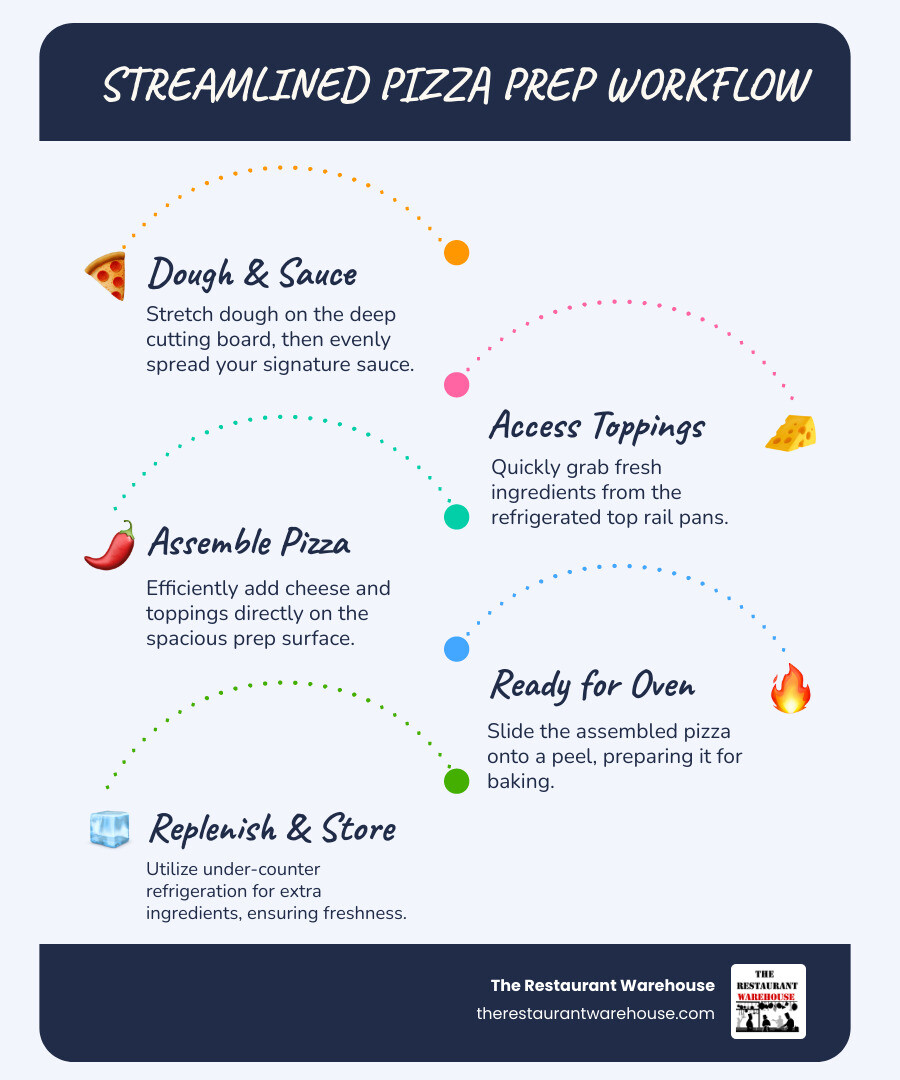
Space efficiency is the most immediate benefit. For compact kitchens, food trucks, or satellite prep stations, these tables offer a functional sweet spot, consolidating multiple pieces of equipment into one smart package. This streamlined design directly leads to increased output. By having chilled ingredients in the top rail, a dedicated cutting board, and backup supplies stored below, staff can work from a single, organized station. This eliminates wasted steps walking between coolers and prep areas, allowing pizza makers to focus on crafting pies, which increases speed and order capacity.
Food safety is also significantly improved. These tables are designed to maintain a consistent temperature between 33 F and 41 F, the optimal zone for keeping ingredients fresh and safe. The forced-air refrigeration system ensures that every pan and the entire storage cabinet remain properly chilled, even when doors are opened frequently during a rush. This reliability gives operators peace of mind and helps prevent costly food spoilage. The result is an improved workflow where every motion is purposeful, reducing ticket times and improving the consistency and quality of the final product.
Want to dive deeper into maximizing your pizza operation? Check out our comprehensive Pizza Prep Table Guide for expert insights on choosing and using these game-changing pieces of equipment.
Must-Have Features for Your Next Pizza Prep Table
When selecting a 48 inch pizza prep table, focus on key features designed for commercial durability and performance.
Stainless steel construction is essential. This material is not just for looks; its non-porous surface resists corrosion from acidic ingredients like tomato sauce, withstands impacts, and is naturally antimicrobial, making it easy to sanitize and crucial for passing health inspections. The refrigeration system is the unit's core. Look for powerful forced-air cooling that maintains even temperatures throughout the cabinet and pan rail, preventing spoilage and ensuring all ingredients are held at safe temperatures. A system that can recover its temperature quickly after the doors are opened is vital for busy operations.
Workspace design is crucial for efficiency. The cutting board must be deep enough to comfortably stretch a 16-inch pizza. The polyethylene material should be durable, resist deep scratches that can harbor bacteria, and not dull knives. The overall height should be ergonomic to prevent staff fatigue during long shifts. Storage options also vary. Some models prioritize maximum pan capacity in the top rail for incredible ingredient variety, while others focus on more interior cubic feet for backup supplies. Consider your menu and volume to decide which configuration best suits your needs. Finally, small details like recessed door handles that won't snag aprons and bright interior lighting contribute to a smoother, safer workflow.
To ensure a perfect fit before you buy, measure the intended location, verify aisle clearance with the lid fully open, and check doorway widths for delivery access. It also helps to map your menu to the rail layout, assign par levels to each pan, and estimate peak-hour throughput so your station configuration aligns with your volume goals.
The Efficiency of a Raised Condiment Rail
The raised condiment rail is the heart of a pizza prep table's efficiency. It’s not just a place to hold toppings; it’s a refrigerated, organized system that puts every essential ingredient within arm's reach. This design creates a self-contained workstation where your team can assemble pizzas from start to finish without ever taking a step. Think about the time saved by not having to walk back and forth to separate refrigerators for cheese, pepperoni, or veggies. This streamlined process directly translates to faster ticket times and a higher capacity for orders during your busiest rushes. Plus, a powerful forced-air cooling system ensures every pan maintains a consistent, food-safe temperature, protecting your inventory and guaranteeing freshness even when the kitchen is in full swing.
What Makes a Quality Pizza Prep Table?
When you're shopping for a 48 inch pizza prep table, the longevity and reliability of the unit depend on its core components. Understanding these elements helps you look past marketing and focus on what delivers real-world performance in a demanding commercial kitchen.
The foundation is construction materials. Quality stainless steel exteriors and food-safe interiors must be robust enough to withstand constant use, harsh cleaning chemicals, and frequent temperature changes. The refrigeration technology is the heart of the unit, responsible for maintaining consistent temperatures to protect hundreds of dollars worth of ingredients and ensure food safety. Ergonomic design elements, such as handle placement, work surface height, and accessible controls, have a cumulative impact on daily efficiency and staff comfort, reducing fatigue and improving productivity. Finally, certifications from organizations like NSF and ETL are your assurance that the equipment has been independently and rigorously tested to meet strict public health, safety, and sanitation standards, protecting your investment and your business.
Understanding these core components helps you see past the marketing materials and focus on what really matters. When you know what makes a quality prep table tick, you can make a decision that serves your kitchen well for years to come. For detailed technical specifications on specific models, checking out a comprehensive Spec Sheet can provide valuable insights into these core components.
Construction and Durability: What to Look For
A commercial kitchen is a demanding environment, so your 48 inch pizza prep table must be built to last. Look for key construction and durability standards to ensure a wise investment.
NSF certified and ETL sanitation listed certifications are crucial. These independent verifications guarantee the unit is designed for safe food handling, with materials that are non-toxic and surfaces that are easy to clean and sanitize. The exterior should be heavy-gauge stainless steel construction, which is non-negotiable for its resistance to dents, corrosion, and its ability to maintain a professional appearance after years of use. The interior is often a corrosion-resistant aluminum interior, which is durable, lightweight, and has a bright finish that makes it easy to spot spills during cleaning.
The polyethylene cutting board is another critical component that takes significant abuse. A quality board will be thick, resist deep knife marks where bacteria can hide, and be removable for thorough cleaning or eventual replacement. Pay attention to hardware details as well. Recessed door handles are a smart design choice as they prevent snagging on clothing, reduce the risk of damage from carts, and are easier to keep clean than protruding handles. Heavy-duty casters provide mobility for cleaning underneath the unit and reconfiguring your kitchen, while locking securely in place during service to ensure stability.
These construction standards aren't just about surviving daily use – they're about maintaining peak performance year after year. When you invest in a properly built 48 inch pizza prep table, you're not just buying equipment; you're buying peace of mind.
Choosing Your Prep Surface: A Comparison
Making great pizza starts with the dough, and working that dough requires the right surface. In a professional kitchen, your prep surface needs to be durable, non-porous, and incredibly easy to clean. While materials like marble or granite look beautiful, they can be porous and require sealing. For the relentless pace of a commercial kitchen, there's one clear winner. As industry experts note, stainless steel is the top choice for professional pizza kitchens because it's the most practical, clean, and durable option. Its non-porous nature means it won't absorb oils or harbor bacteria, and it can withstand the constant scraping, cleaning, and sanitizing that happens during a busy shift without degrading.
Understanding Stainless Steel Grades: Type 304 vs. Type 316
When you see "stainless steel" on a spec sheet, it's helpful to know that not all grades are created equal. The most common you'll encounter is Type 304, which is the workhorse of the foodservice industry. It offers excellent strength and corrosion resistance, making it a reliable choice for most applications. However, if your menu is heavy on acidic ingredients, you might consider a step up. For pizza makers, this is especially relevant. As one source explains, Type 316 is even better if you use a lot of acidic foods like tomato sauce or strong cleaning chemicals, as it resists corrosion even more. This added resistance can extend the life and appearance of your prep table, protecting your investment from the daily assault of tomato sauce and sanitizers.
A Look at Overall Build Quality
Beyond the specific grade of steel, the overall build quality determines how well your prep table will hold up. A truly durable unit features a robust frame, reinforced corners, and doors that seal tightly to prevent cold air from escaping. Quality stainless steel exteriors and food-safe interiors must be robust enough to withstand constant use, harsh cleaning chemicals, and frequent temperature changes. This resilience is what separates commercial-grade equipment from the rest. Furthermore, always look for official certifications. NSF certified and ETL sanitation listed certifications are crucial. These aren't just fancy stickers; they are independent guarantees that the equipment is designed for safe food handling and is easy to properly sanitize, which is essential for passing health inspections and protecting your customers.
How the Refrigeration System Keeps Ingredients Fresh
The refrigeration system is the most critical component of your 48 inch pizza prep table, responsible for keeping ingredients fresh and safe. Modern systems have several key features to look for.
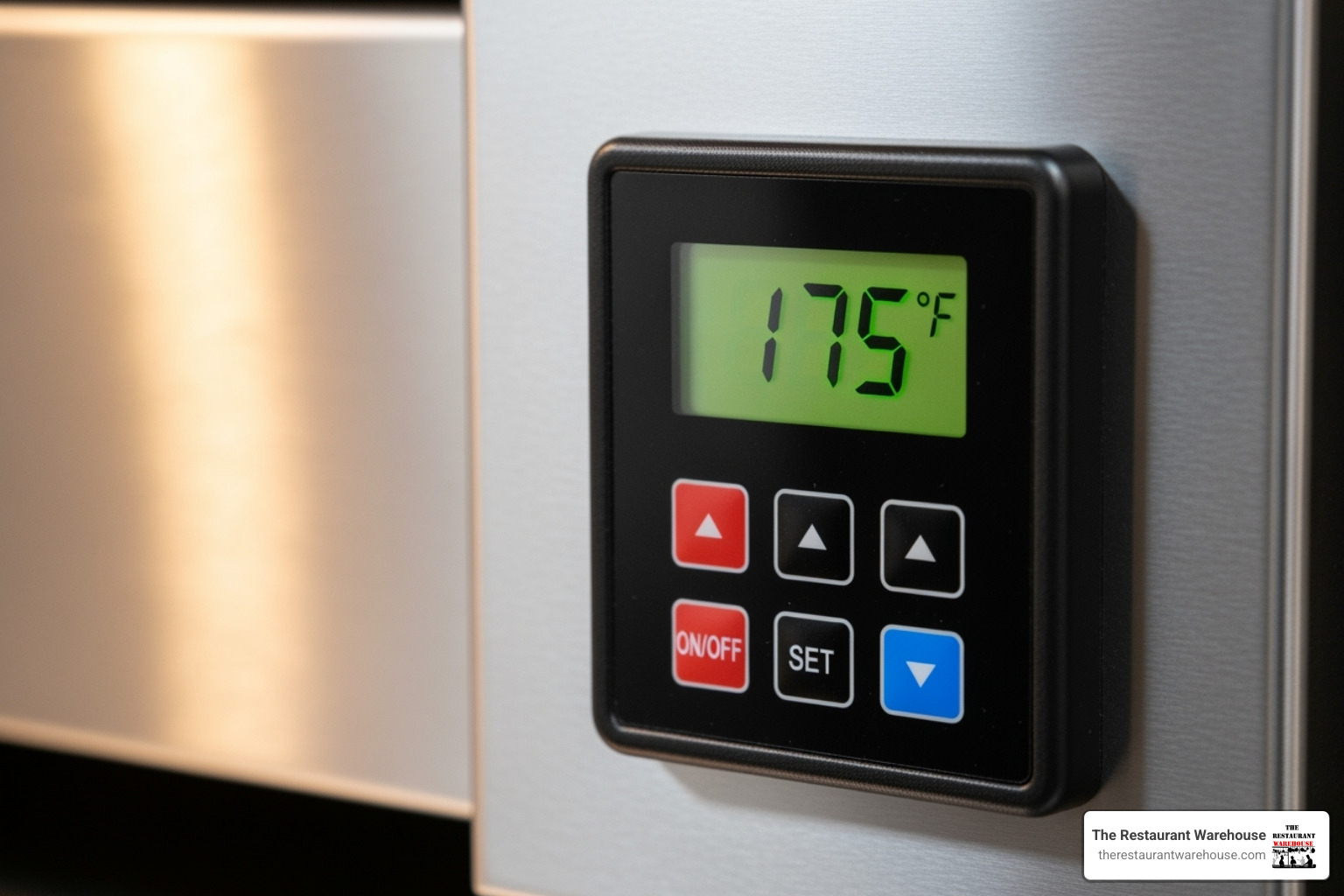
Modern prep tables use forced-air refrigeration. This technology actively circulates cold air throughout the entire unit, from the top pans to the bottom shelf, ensuring consistent temperatures and eliminating the dangerous hot spots found in older, static cooling systems. This is managed by digital temperature controls with an external LED display, allowing for precise temperature management, typically between 33°F and 41°F, the FDA-recommended safe zone for cold food storage.
Many forward-thinking manufacturers are shifting to eco-friendly R290 refrigerant. This natural propane refrigerant is completely safe for commercial use and offers significant benefits: it is up to 40% more energy-efficient than older refrigerants, has a near-zero impact on the ozone layer, and often results in quieter operation. This translates to lower utility bills and a more sustainable business. The compressor location also impacts performance. Side-mounted compressors are easy to access for cleaning and service, while rear-mounted compressors can be more space-efficient in tight kitchens. A quality system's ability to recover temperature quickly after door openings is vital for maintaining food safety during busy rushes.
Understanding these refrigeration fundamentals helps you appreciate why investing in a quality 48 inch pizza prep table pays off in the long run. Better refrigeration means fresher ingredients, less waste, lower energy costs, and most importantly, consistently safe food for your customers.
Compressor Placement: Side-Mounted vs. Rear-Mounted
When choosing a 48 inch pizza prep table, the compressor's location might seem like a minor detail, but it has a real impact on maintenance and kitchen layout. A side-mounted compressor is positioned on the left or right of the unit, making it incredibly easy to access for routine cleaning and service. Technicians can work on it without having to pull the entire heavy table away from the wall, saving time and hassle. This placement also allows the unit to breathe more easily, pulling in cooler ambient air, which can improve efficiency and extend the compressor's life.
On the other hand, a rear-mounted compressor is the traditional, space-saving choice. It keeps the unit's footprint as narrow as possible, which is a huge advantage in tight kitchen spaces where every inch counts. The trade-off is that you must leave several inches of clearance behind the unit for proper ventilation. If it's pushed flush against a wall, it can overheat and fail. Maintenance also becomes more involved, as the table usually needs to be moved for access. The right choice depends entirely on your kitchen's layout and whether you prioritize maximizing space or simplifying service.
The Importance of NSF Standard 7 Compliance
When you see an "NSF Certified" label on a piece of restaurant equipment, it’s not just a fancy sticker—it’s your assurance of safety and quality. NSF International is an independent organization that tests and certifies products to ensure they meet strict public health standards. For refrigerated units like a 48 inch pizza prep table, you should specifically look for NSF Standard 7 compliance. This certification guarantees that the unit is designed for safe food handling from the ground up. It means the materials used are non-toxic and won't leach harmful chemicals into your ingredients.
Furthermore, NSF Standard 7 ensures the equipment is built for easy and thorough cleaning. The design minimizes cracks, crevices, and sharp corners where bacteria could hide, which is a critical factor in passing health inspections. It also verifies that the refrigeration system can consistently hold food within the safe temperature zone of 33°F to 41°F, even in a hot, busy kitchen. Investing in NSF-certified equipment, from your main refrigerators to your prep lines, protects your customers, your reputation, and your business from the risks of foodborne illness.
Pizza vs. Sandwich Prep Tables: Which One Do You Need?
Choosing the right refrigerated prep table is crucial, and while they may look similar, pizza prep tables and sandwich prep tables are designed for different tasks. Understanding these differences ensures your kitchen workflow is as efficient as possible.
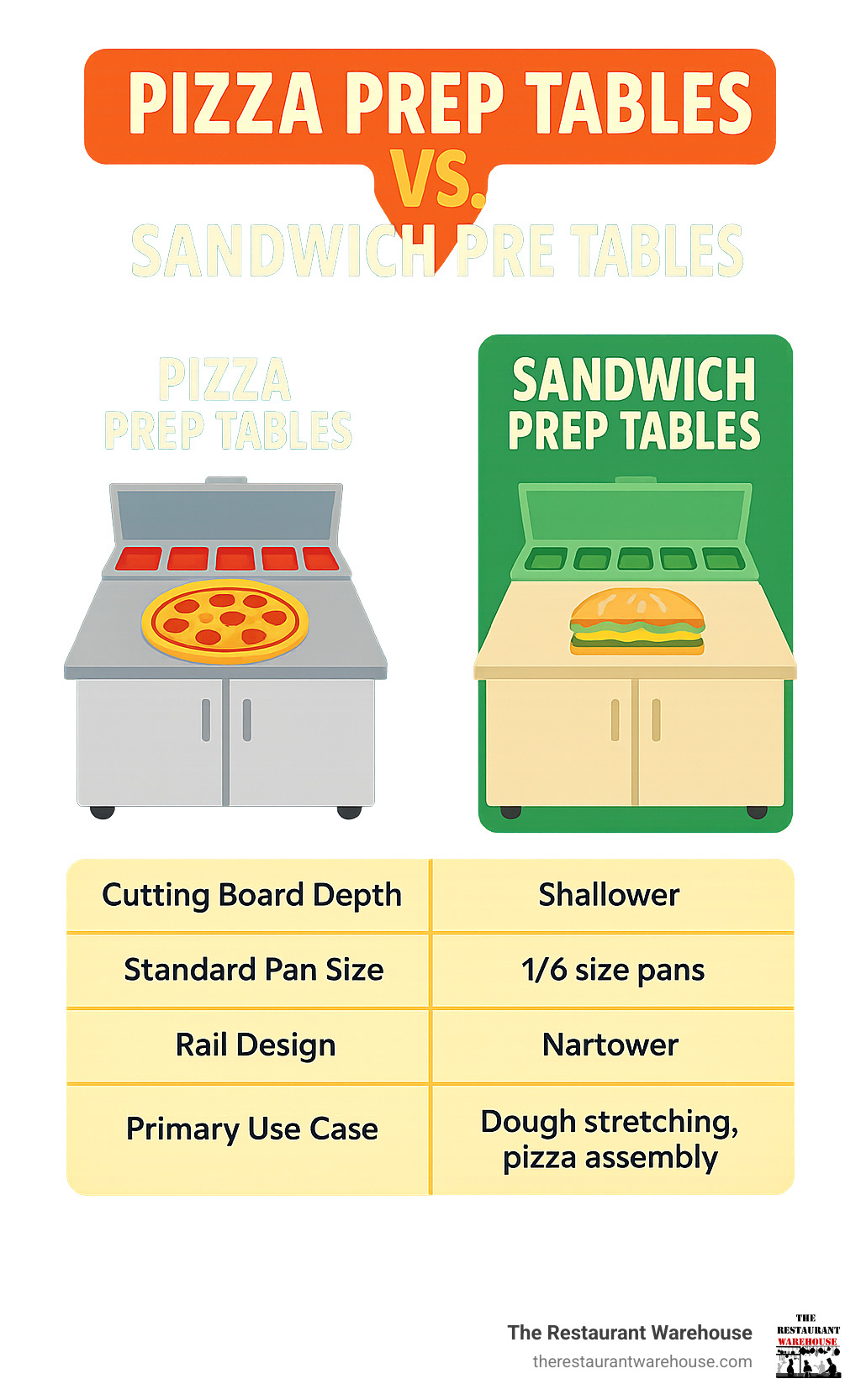
The most significant difference is the cutting board depth. A 48 inch pizza prep table comes with a generously deep cutting board, often 9 inches or more. This space is essential for stretching dough and assembling large pizzas without creating a mess. Sandwich prep tables have much shallower boards, suitable for smaller items but inadequate for pizza making.
The pan size setup also differs based on primary use. Pizza prep tables are built around larger 1/3 size pans to hold high-volume toppings like mozzarella and pepperoni. In contrast, sandwich prep tables typically use smaller 1/6 size pans to offer a wider variety of smaller-quantity ingredients like deli meats and condiments. This difference extends to the rail design, with pizza tables featuring wider rails to accommodate the larger pans.
Can a 48 inch pizza prep table be used for sandwiches and salads? Absolutely. The deeper cutting board provides ample workspace, and the larger pans can hold bulk ingredients. However, the reverse is not true; making pizzas on a sandwich prep table is inefficient and frustrating. If pizza is a primary menu item, investing in a dedicated 48 inch pizza prep table is the correct choice for a smooth, clean, and productive operation.
For more detailed information about sandwich options, check out our guides on Sandwich Prep Tables and All You Need to Know About 48 Inch Sandwich Prep Table.
A Note on Cost Differences
Let's talk about the budget. Generally, you'll find that pizza prep tables come with a higher price tag than their sandwich prep counterparts. This isn't arbitrary; it's a direct result of their specialized design. The deeper cutting boards, wider rails, and larger pan capacity required for efficient pizza making mean more materials and a more robust build, which adds to the initial cost. While it might be tempting to go for the less expensive option, think of the pizza prep table as a long-term investment. The gains in workflow efficiency and productivity, especially during a dinner rush, can quickly justify the higher upfront expense. If the initial cost is a concern, exploring options like restaurant equipment financing can make it much more manageable to get the right tool for the job without compromising your kitchen's potential.
Accessorizing and Maintaining Your Prep Table
Getting the most out of your 48 inch pizza prep table goes beyond the initial purchase and involves using the right accessories and performing regular maintenance to ensure longevity and peak performance.
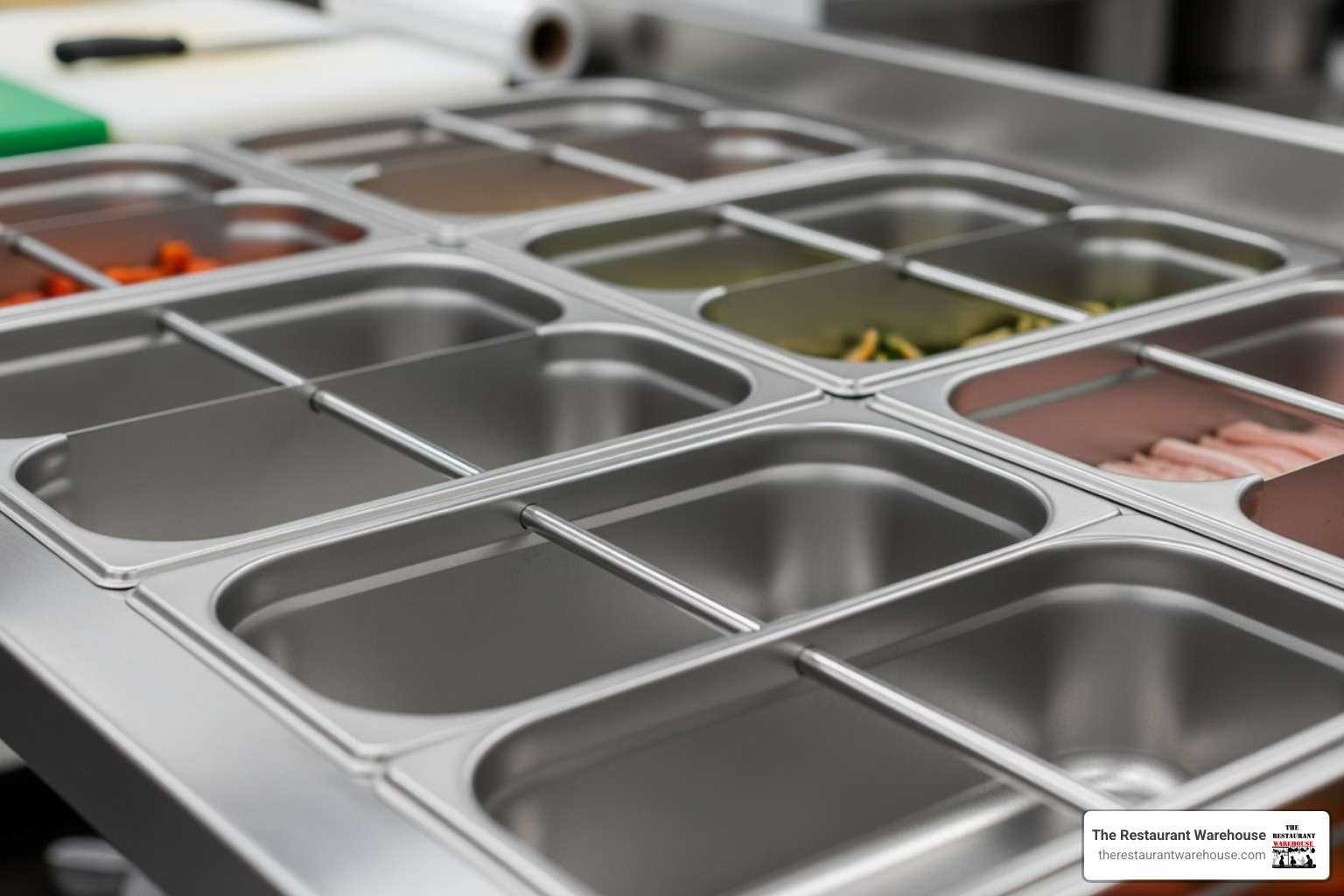
Essential accessories can optimize your workflow. Pan divider bars are simple but crucial for keeping ingredient pans organized and preventing them from sliding during a busy service. Using different pan depth options allows for smart customization; 6-inch or 10-inch deep pans for high-volume ingredients like shredded mozzarella reduce refill frequency, while 4-inch shallow pans are perfect for costly specialty toppings. Overshelves are an excellent addition for tight kitchens, mounting above the prep area to add valuable storage for dry goods, spice shakers, or small tools without using any additional floor space.
Long-term performance depends on simple but consistent maintenance. Gasket maintenance is critical for efficiency. The rubber door seals keep cold air in. Clean them weekly with warm, soapy water to remove food debris that can prevent a proper seal. If a gasket is torn or hardened, replace it immediately; a bad seal makes the compressor run constantly, wasting energy and money. Cleaning condenser coils monthly is also vital. These coils dissipate heat but get clogged with dust and grease. A clogged coil forces the compressor to work overtime, leading to higher electric bills and potential equipment failure. Use a stiff brush or vacuum to clear the coils, a ten-minute task that can add years to the unit's life.
When it comes to warranty details, most commercial prep tables offer solid protection. You'll typically see a 1 year parts and labor warranty and a longer 5-year compressor warranty (usually parts only). Proper maintenance not only prevents breakdowns but is often required to keep the warranty valid.
For more detailed maintenance guidance that applies across different prep table types, check out our Sandwich Prep Table Guide - many of the principles carry over and can help you keep any refrigerated prep equipment in top shape.
Frequently Asked Questions about 48 Inch Pizza Prep Tables
Here are concise answers to the most common questions about 48 inch pizza prep tables.
What is the typical pan capacity of a 48-inch pizza prep table?
A standard 48 inch pizza prep table typically holds 6 to 12 pans, most commonly using 1/3 size pans ideal for pizza toppings. Some "mega-top" models offer increased capacity by mixing pan sizes for greater ingredient variety.
Can I use a 48-inch pizza prep table for sandwiches and salads?
Absolutely. The deeper cutting board provides ample workspace for assembling sandwiches or preparing salads. The large 1/3 size pans can hold bulk ingredients, and pan dividers help organize smaller items. For sandwich-specific features, check our guide on 48 Inch Sandwich Prep Table options.
What kind of warranty should I expect?
Industry standard includes 1 year full coverage for parts and labor, plus an extended compressor warranty of 3-5 years (parts only). Always confirm specific terms and Download the Manual from the manufacturer.
How much space do I need for proper airflow?
Leave at least 3-6 inches clearance around ventilation panels and compressor areas. Adequate airflow keeps the condenser cool and improves temperature recovery during rushes.
Should I choose doors or drawers?
Doors work best for storing larger containers and bulk items. Drawers excel at organization and minimize cold air loss since you only open small sections at a time.
What electrical requirements are typical?
Most 48-inch prep tables run on 115V/60Hz single phase, designed for standard outlets. Use dedicated circuits when possible and avoid extension cords.
Is R290 refrigerant safe?
Yes. R290 (propane-based) refrigerant is safe for commercial use, energy-efficient, and eco-friendly. Maintenance remains straightforward with proper technician training.
How do I keep ingredients safe during peak hours?
- Pre-chill pans and ingredients before loading
- Stage backup pans in the lower cabinet
- Keep the rail lid closed whenever possible
- Use shallower pans for low-use toppings
What daily cleaning should I perform?
- Wipe cutting board and surfaces with food-safe sanitizer
- Empty and wash pans at proper hold times
- Clean door gaskets with warm, soapy water
- Check and wipe drain pan and air intake grills
What are signs of a failing gasket?
- Visible tears, cracks, or hardened areas
- Doors that don't seal properly
- Condensation buildup around door edges
- Rising internal temperatures
How do I prepare for delivery?
- Measure all doorways and delivery paths
- Confirm crated dimensions
- Clear pathways and protect floors
- Have intended outlet within reach
- Level unit after placement
What's the best way to organize the top rail?
Group ingredients by frequency and assembly sequence. Keep cheese and sauce closest to the work zone, high-volume items next, and specialty items at the periphery. Label clearly for efficiency.
How do I minimize energy use?
- Keep condenser coils clean
- Close lids and doors when possible
- Maintain proper airflow clearance
- Replace worn gaskets promptly
- Load pre-chilled products
What's the ideal cutting board depth for pizza?
Look for boards 9 inches or deeper to comfortably stretch your largest pizzas without crowding the rail or bumping the lid.
Can I add an overshelf?
Yes, provided it doesn't interfere with lid operation or airflow. Overshelves create convenient storage for spices, tools, and smallwares while keeping the work surface clear.
What documentation should I keep?
- Spec sheet and manual
- Warranty registration and service contacts
- Serial number and installation date
- Temperature and maintenance logs
One Quick Tip for Immediate Improvement
Clean the condenser coils and replace worn gaskets. These two simple tasks improve temperature stability, lower energy bills, and extend equipment life.
Making Your Final Decision
A 48 inch pizza prep table is more than just a piece of equipment; it's a strategic investment in kitchen efficiency. These units are the unsung heroes of productive pizzerias and compact commercial kitchens, changing tight spaces into powerhouses of output.
By combining precise refrigeration, organized ingredient storage, and a dedicated workspace into a single footprint, these tables save space, reduce waste, and uphold food safety standards. The quality construction, from stainless steel exteriors to reliable refrigeration systems, ensures they can withstand the rigors of daily commercial use. When you invest in a quality unit with proper NSF certification and ETL listing, you're investing in years of dependable service.
At The Restaurant Warehouse, we've seen how the right equipment can transform a kitchen's efficiency. We believe every kitchen deserves equipment that works as hard as the people using it, and these prep tables embody that philosophy perfectly. A 48 inch pizza prep table is a compact culinary command center, ready to help you serve customers faster and more efficiently. It's a smart investment in the quality and speed of your operation.
Ready to transform your pizza preparation process? We invite you to Explore Our Full Range of Pizza Prep Tables and find the perfect unit for your kitchen. Your team, your customers, and your bottom line will thank you for making this smart investment in efficiency and quality.
Your Next Steps
- Map your menu to the rail: List every topping, its velocity, and the ideal pan size and depth. Place high-volume items closest to your dominant hand.
- Measure before you buy: Confirm aisle clearance with the lid open, doorway widths for delivery, and proximity to a dedicated outlet.
- Define par levels: Set rail and cabinet backup quantities for each item. Plan swap intervals for peak hours.
- Establish SOPs: Write a one-page station guide covering startup, shutdown, sanitation, temperature checks, and allergen controls.
- Schedule maintenance: Add recurring tasks for coil cleaning, gasket inspection, and temperature logging.
Considering Your Return on Investment
- Time savings: Consolidating prep, ingredients, and backup stock at a single station often saves 3 steps per pizza. In a 100-pie rush, thats hundreds of steps eliminated and minutes shaved off ticket times.
- Waste reduction: Right-sizing pan depths and improving rail organization typically lower topping waste by 102%.
- Consistency: Portion tools and clear pan labeling drive predictable food costs and steadier guest satisfaction.
A Simple Setup Checklist
- Pre-purchase: Confirm specs (dimensions, amp draw, ambient rating), review rail capacity, and verify included accessories (dividers, cutting board, shelves/casters).
- Delivery day: Inspect the crate, photograph any damage, and verify all parts. Level the unit and let it reach setpoint before loading.
- First week: Fine-tune pan layout, calibrate a thermometer, and train staff on SOPs and par levels. Start temperature and maintenance logs.
- First month: Clean coils, review waste logs, and adjust pan depths and par levels to match actual sales patterns.
A Note on Sustainability and Compliance
- Refrigerant: Modern systems using R290 reduce environmental impact and can lower utility costs over time.
- Energy habits: Keep lids closed, avoid overfilling above the chill line, and clean coils monthly to maintain peak efficiency.
- Documentation: Maintain spec sheets, serial numbers, service contacts, and logs to streamline inspections and service.
A Final Piece of Advice
The right 48-inch pizza prep table turns a tight footprint into a high-output station where every motion has purpose. With a thoughtful layout, disciplined maintenance, and clear station SOPs, youll lift speed, safety, and consistency night after night. When your team can work from a single, well-organized command center, you feel it on the lineand you see it on your bottom line.
Key Takeaways
- The Cutting Board is the Deciding Factor: A pizza prep table's extra-deep work surface is essential for stretching dough. This key design difference prevents messes and streamlines assembly in a way that a narrower sandwich prep table simply cannot accommodate.
- Invest in Commercial-Grade Features: Look beyond the price tag for non-negotiable elements like stainless steel construction, a forced-air refrigeration system, and NSF certification. These features ensure your table will withstand a demanding kitchen, maintain food safety, and perform reliably for years.
- A Dedicated Station Means Faster Service: By consolidating refrigerated storage, ingredients, and a workspace into one unit, a pizza prep table creates a highly efficient command center. This setup eliminates wasted steps, directly leading to faster ticket times and more consistent pizza quality during busy shifts.
Related Articles
- Pizza Prep Table Guide
- Prep Table Kitchen: Your Essential Buying Guide
- The Ultimate 27" Prep Table Buyer's Guide
- True TPP-AT-44-HC 44 inch Pizza Prep Table | Sandwich Prep Table
- Atosa MPF8203GR | 93 inch Pizza Prep Table | True TPP-AT-93-HC
About The Author

Sean Kearney
Sean Kearney is the Founder of The Restaurant Warehouse, with 15 years of experience in the restaurant equipment industry and more than 30 years in ecommerce, beginning with Amazon.com. As an equipment distributor and supplier, Sean helps restaurant owners make confident purchasing decisions through clear pricing, practical guidance, and a more transparent online buying experience.
Connect with Sean on LinkedIn, Instagram, YouTube, or Facebook.