

Work Smarter: Choosing the Best Stainless Steel Prep Table for Your Business
Why Stainless Steel Prep Tables Are Essential for Commercial Success
A stainless steel prep table is far more than a mere piece of furniture; it is the undisputed backbone of every successful commercial kitchen. It serves as the central hub for culinary creation, a durable and hygienic workspace that must withstand the relentless demands of a high-volume food service environment. From the initial chopping of vegetables to the final plating of a dish, the prep table is where efficiency is born and safety is maintained. Investing in a high-quality, NSF-certified table provides the essential foundation upon which your entire operation is built, directly impacting speed, safety, and profitability.
Key Features That Define a Commercial-Grade Stainless Steel Prep Table:
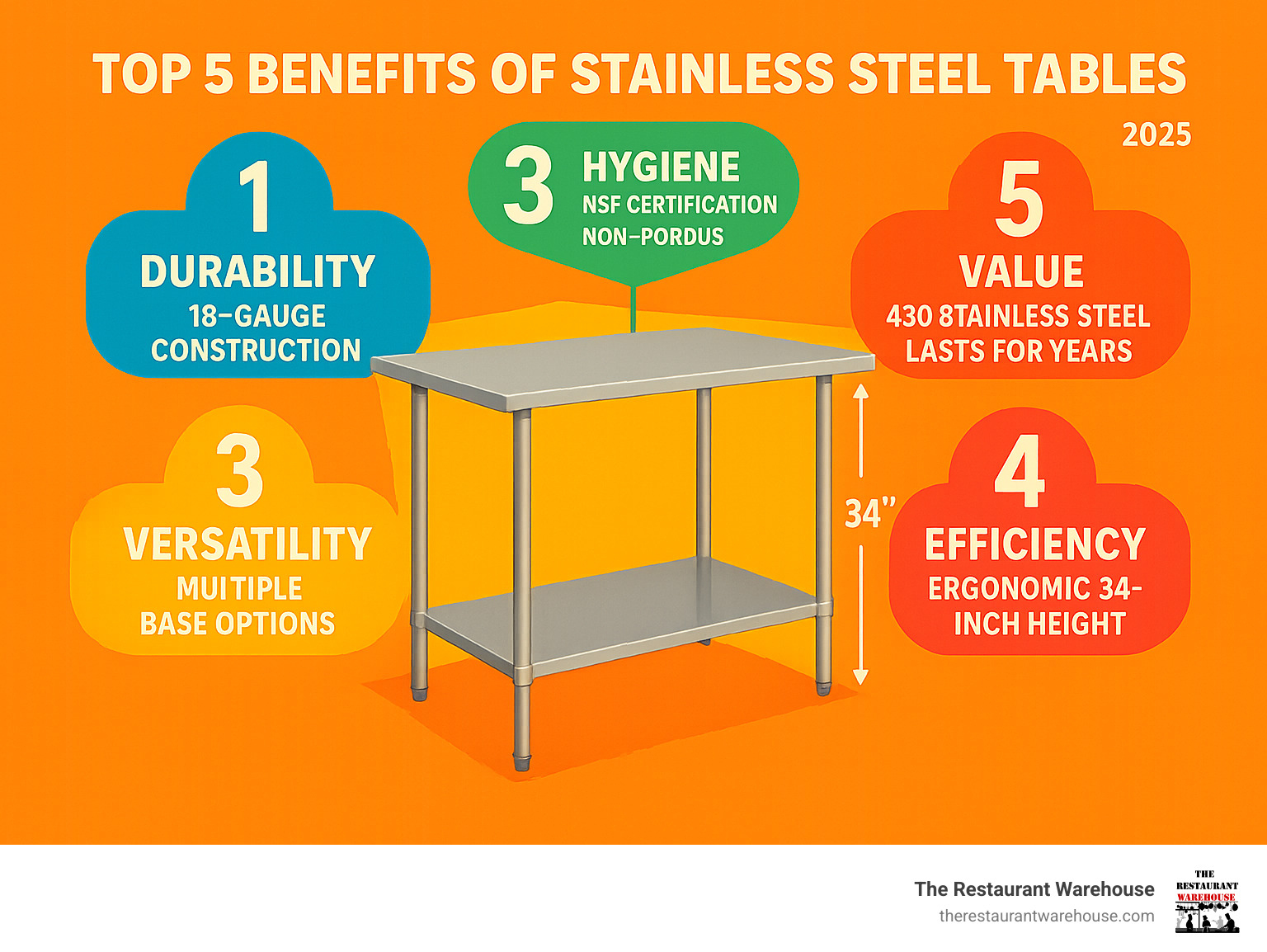
- Robust Construction: The industry standard is 18-gauge steel construction, which provides the necessary strength to endure daily, heavy use without denting or warping. This commercial-grade durability ensures the table remains a stable and reliable work surface for years.
- Ergonomic Design: A 34-inch standard height is not an arbitrary number; it is the result of ergonomic studies designed to reduce fatigue and prevent back strain for staff who spend hours on their feet. This focus on comfort translates directly to sustained productivity.
- Certified Hygiene: NSF certification is a non-negotiable requirement for professional kitchens. It guarantees that the table's design and materials meet stringent public health standards, ensuring it is easy to clean and does not harbor bacteria, which is critical for passing health inspections.
- Versatile Configurations: Kitchens are not one-size-fits-all, and neither are prep tables. They are available in multiple configurations, including open base for accessible storage, cabinet base for enclosed protection, or models with integrated sinks to create multifunctional workstations.
- Effortless Maintenance: The non-porous surface of stainless steel is its greatest hygienic asset. It inherently resists bacteria, stains, and corrosion, meaning spills can be wiped away completely without leaving behind residue or potential contaminants.
- Impressive Load Capacity: These tables are built to be workhorses. Many models boast a heavy-duty capacity, supporting up to 1,200 pounds, allowing them to hold heavy equipment like mixers or large containers of ingredients without issue.
Selecting the right prep table is a critical strategic decision that directly influences kitchen productivity and food safety. The prevention of cross-contamination begins with having adequate, easily sanitizable surfaces. Standard tables range from 24 to 30 inches in depth and 36 to 96 inches in length, offering the flexibility to fit any kitchen footprint. Most professional kitchens opt for 18-gauge stainless steel tops, as they represent the perfect intersection of heavy-duty performance and cost-effectiveness. To foster an environment of efficiency and safety, it is a best practice to plan for a minimum of 4 feet of dedicated counter space per worker. This makes the size, configuration, and placement of your prep tables a direct and powerful factor in your operational success.
Why Stainless Steel Reigns Supreme in Commercial Kitchens
Step into any high-functioning professional kitchen, from a busy restaurant to a large-scale catering facility, and you will be greeted by the gleam of stainless steel prep tables and work surfaces. This choice of material is not an aesthetic preference; it is a strategic decision rooted in performance, safety, and long-term value. Stainless steel is the unsung hero of the culinary world, a material that actively helps a kitchen thrive by preemptively solving critical issues related to maintenance, hygiene, and equipment replacement costs.
The Unbeatable Benefits of a Professional Workspace
Imagine the controlled chaos of a dinner rush: heavy stockpots are dragged across surfaces, razor-sharp knives chop relentlessly, and acidic or staining liquids inevitably spill. This is the environment where stainless steel demonstrates its profound superiority. Its durability is immense. A quality table, often constructed with robust 18-gauge steel and reinforced with TIG welding to create seamless, ultra-strong joints, can support astonishing weights, with some models rated for up to 1,200 pounds. This strength is matched by its exceptional corrosion resistance. Unlike other metals, stainless steel stands up to daily contact with acidic foods like tomato sauce, citrus juices, and vinegar, as well as harsh cleaning chemicals, without pitting, rusting, or degrading. For environments with extreme moisture or acidity, Type 304 grade stainless steel offers the ultimate level of protection, while the more common Type 430 grade provides excellent, reliable performance for general-purpose use.
Beyond its strength, stainless steel offers incredible stain and heat resistance. A splash of beet juice, a smear of turmeric, or a puddle of red wine that would permanently mar a wooden or plastic surface can be wiped away from stainless steel without a trace. This is thanks to its non-porous nature. This same feature allows chefs to place hot pans and trays directly onto the table without fear of scorching or melting, eliminating the need for trivets and streamlining the workflow between the cooking line and the prep area. This non-porous surface is also the cornerstone of its hygienic properties, creating a smooth, impenetrable barrier that bacteria cannot penetrate, which makes cleaning and sanitization truly effective. Finally, the material’s professional aesthetic is not to be underestimated. It communicates a standard of cleanliness and quality, inspiring confidence in staff and, in the case of open kitchens, assuring customers of a safe and professional operation. When you're ready to upgrade, you can Steel The Show in Your Kitchen with Commercial Stainless Steel Tables.
A Foundation for Kitchen Hygiene and Safety
In the food service industry, food safety is paramount, and stainless steel surfaces are engineered to be a primary defense against foodborne illness. The most significant advantage is easy cleaning. The smooth, seamless surface, free of cracks and pores, allows staff to remove all food debris with a simple wipe-down, a stark contrast to the laborious and often ineffective cleaning required for materials like wood or scratched plastic. This leads directly to superior bacteria resistance. The non-porous nature of steel denies microorganisms the footholds and organic matter they need to form biofilms and multiply, ensuring that when you sanitize the surface, it is truly sanitary.
NSF Certification provides an official guarantee that a stainless steel prep table adheres to rigorous public health standards. This certification scrutinizes every aspect of the table's design, construction, materials, and cleanability, ensuring it is fit for a commercial food environment. You can Learn about NSF food equipment standards to fully appreciate their importance in safeguarding public health. This certified design is instrumental in preventing cross-contamination. It allows for the establishment of clear, dedicated work zones—for raw meat, produce, and ready-to-eat foods—that can be thoroughly cleaned and sanitized between tasks, a critical control point in any HACCP plan. The smooth, seamless surfaces, often a result of high-quality TIG welding that eliminates microscopic crevices where bacteria can hide, are a testament to this commitment to creating a truly sanitary workspace. To build your kitchen's entire hygiene protocol on this solid foundation, explore our Commercial Kitchen Stainless Steel Guide.
Stainless Steel vs. The Alternatives
While surfaces made of wood (butcher block) or plastic may appear to be a cost-saving measure initially, their performance, safety, and long-term value fall dramatically short of stainless steel. Wood is inherently porous, acting like a sponge that absorbs liquids, food particles, and bacteria. Over time, it becomes a breeding ground for pathogens that cannot be eliminated with surface cleaning. Plastic surfaces, though non-porous when new, are quickly compromised by scratching and gouging from knives and other utensils. These tiny grooves become permanent reservoirs for bacteria, making complete sanitization impossible and posing a significant health risk.
The maintenance differences further underscore the superior value of stainless steel. It requires only a simple daily cleaning routine to maintain its integrity for decades. In contrast, wood requires regular oiling to prevent cracking, can never be fully sanitized, and will eventually need to be resurfaced or replaced. Plastic must be discarded as soon as its surface becomes significantly scratched. When you analyze the long-term value, the choice becomes clear. The decades-long lifespan of a stainless steel table dwarfs the few years you might get from its alternatives. When you factor in the costs of failed health inspections, the increased labor for intensive maintenance, and the recurring expense of frequent replacements, the initial investment in stainless steel proves to be the most economical and intelligent choice for any serious commercial kitchen. For a deeper dive on this topic, see our Table With Stainless Steel Top Guide.
Your Guide to Selecting the Perfect Stainless Steel Prep Table
Choosing the right stainless steel prep table is a foundational decision that will shape your kitchen's daily workflow and overall efficiency. It’s not just about finding a surface to work on; it’s about selecting a strategic tool custom to your specific operational needs, storage challenges, and preparation routines. A well-chosen table becomes a true partner in your culinary success, streamlining processes and empowering your staff.
Open Base, Cabinet Base, or Specialty: Which Type is for You?
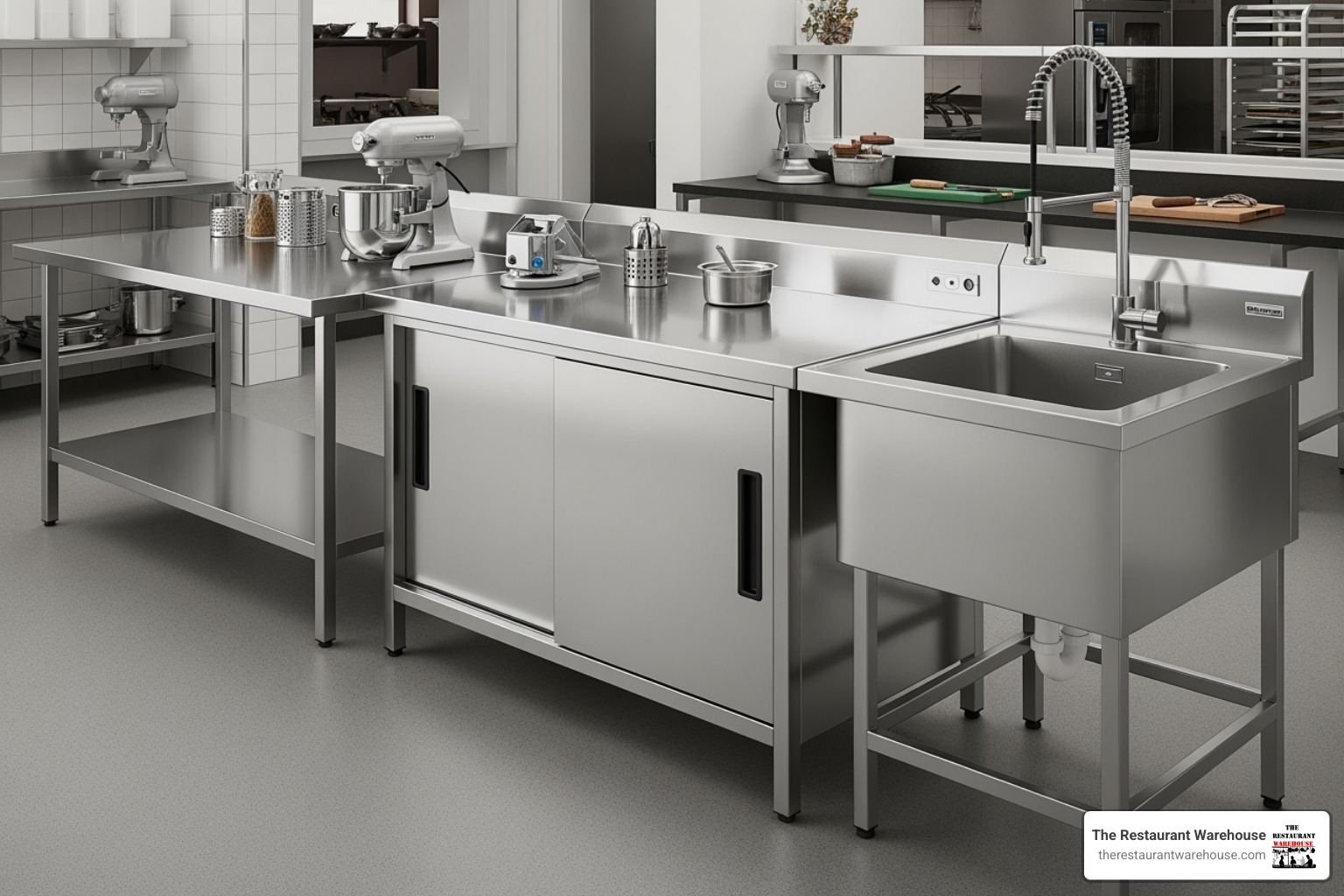
Your table's base style dictates its functionality and is the first major decision point. Each design serves a distinct purpose, and matching the style to the task is key to maximizing utility:
- Open base tables are the versatile workhorses of the kitchen. Their defining feature is easy access storage underneath the worktop. This design is perfect for storing large, mobile items like ingredient bins on wheels, bulky stockpots, or countertop equipment that needs to be stowed away when not in use. They are ideal for dynamic environments where quick access to large items is a priority and are often the most budget-friendly option.
- Cabinet base tables provide fully enclosed storage, which is invaluable for protecting supplies from the ambient grease, dust, and spills of a busy kitchen. The sliding or hinged doors create a tidy, organized appearance, making them an excellent choice for open kitchens where aesthetics matter or for storing smaller items like dry goods, small appliances, or clean linens that need to be kept sanitary and secure.
- Equipment stands are a specialized subcategory of prep tables. They are engineered for heavy-duty applications, featuring a lower height and extremely robust construction designed to safely support heavy countertop equipment like commercial mixers, slicers, or food processors. Using a dedicated stand frees up valuable counter space on your primary prep tables and provides a stable, vibration-resistant platform for operation.
- Worktables with integrated sinks are the ultimate multitaskers, designed for maximum efficiency in a compact footprint. By combining a prep surface with a washing station, they streamline countless tasks, such as rinsing produce or washing hands and utensils. This design dramatically reduces staff movement, saving time and energy, which is particularly beneficial in smaller kitchens where every square foot counts. For more on how these configurations can revolutionize your workflow, see our Prep Table Kitchen Guide.
Getting the Measure Right: Size and Workspace Considerations
Properly sizing your stainless steel prep table is essential for creating an ergonomic and efficient kitchen environment. The standard height of 34 inches is an industry-wide ergonomic benchmark, designed to minimize physical strain and reduce the risk of long-term injury for staff performing repetitive tasks. The standard depth typically falls between 24 to 30 inches. A 24-inch depth is often sufficient for smaller tasks and tight spaces, while a 30-inch depth provides a more expansive workspace for complex prep or plating, while still keeping all areas within easy reach.
Length options are highly flexible, commonly ranging from 36 inches to 96 inches (8 feet). For spaces requiring a continuous surface longer than 8 or 9 feet, it is often more practical and stable to place two smaller tables side-by-side rather than sourcing one massive, custom unit. A popular, well-balanced option is detailed in our 72x30 Stainless Steel Table Guide. When planning workspace per employee, the industry rule of thumb is to allocate a minimum of 4 feet (48 inches) of counter length per person. This ensures staff have enough room to work safely and efficiently without colliding with colleagues.
Effective kitchen layout optimization involves more than just fitting tables into a room; it's about creating a logical and fluid path from storage to prep to the cooking line. Consider how long tables, like 30x96 Stainless Steel Tables, can be used to create assembly-line style stations for large-scale production. Finally, you must decide between mobile vs. fixed tables. Fixed tables with bullet feet offer maximum stability for permanent stations where heavy work is done. Mobile tables equipped with locking casters provide invaluable flexibility, allowing you to easily reconfigure your layout for different services or move tables for thorough deep cleaning.
Decoding the Steel: Understanding Gauge and Grade
To ensure your table can withstand the rigors of your specific kitchen, it's crucial to understand the technical specifications of the steel itself, namely its gauge and grade. Steel gauge refers to the thickness of the steel; it's an inverse scale, so lower gauge numbers indicate thicker, stronger, and more durable steel. Commercial tables are typically available in 14, 16, or 18 gauge.
- 18-gauge steel is the most common choice and is considered the industry standard for general-purpose prep tables. It offers an ideal balance of robust performance, durability, and cost-effectiveness, making it perfectly suitable for most applications like chopping, mixing, and general assembly.
- 16-gauge steel is a step up in thickness and strength. It's an excellent choice for worktables that will also be used to support moderately heavy equipment or for environments with more intensive use.
- 14-gauge steel is the thickest and most heavy-duty option, typically reserved for butcher's tables, equipment stands, or any application involving extreme weight or impact.
Steel grades refer to the alloy composition of the steel, which determines its level of corrosion resistance. The two most common grades in food service are:
- Type 304: This is the premium choice, often referred to as 18/8 stainless steel because it contains approximately 18% chromium and 8% nickel. The addition of nickel provides superior corrosion resistance, making it the ideal choice for high-moisture environments, coastal areas with salt in the air, or kitchens that frequently work with acidic or salty ingredients.
- Type 430: This is a more economical, general-purpose option. It contains chromium but no nickel, making it magnetic. It provides good corrosion resistance for most standard kitchen conditions and is a perfectly suitable and cost-effective choice for dry prep areas and general use.
Matching gauge to application is the final step. While heavy-duty butchering operations may demand a 14-gauge table, most restaurants will find that 18-gauge Type 430 or Type 304 steel provides the reliable, long-lasting performance they need. Our 18x30 Stainless Steel Table Guide illustrates how these different combinations work in real-world settings.
Enhancing Your Workspace: Must-Have Accessories and Customizations
A standard stainless steel prep table is a blank canvas. The true potential of this essential piece of equipment is open uped through strategic customization with accessories and integrated features. By tailoring your table to your specific tasks, you can transform it from a simple surface into a highly organized, multifunctional productivity powerhouse that streamlines every action in the kitchen.
Essential Add-Ons for Your Stainless Steel Prep Table
Several key add-ons can dramatically improve the utility and organization of your prep table, turning unused space into valuable real estate:
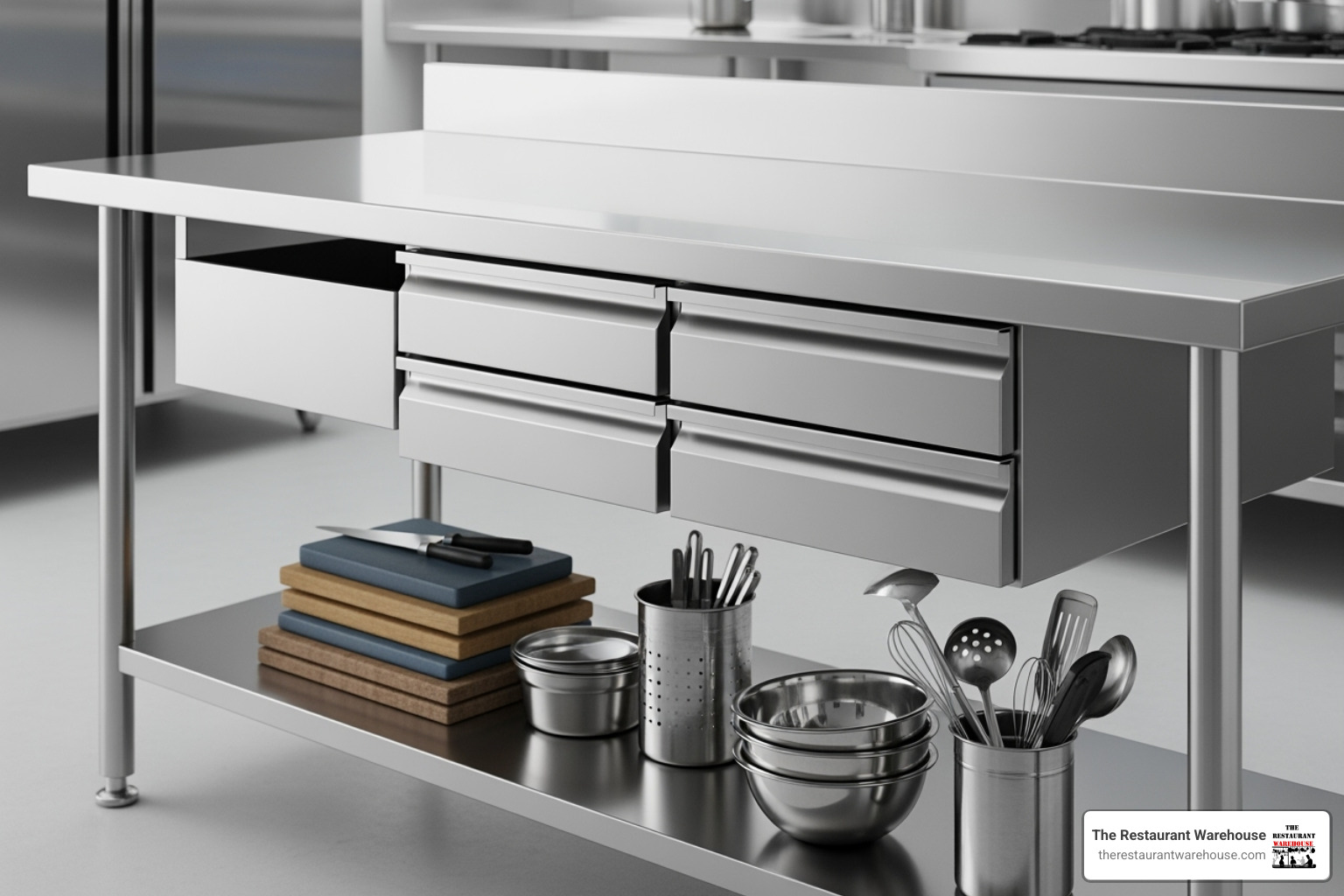
- An undershelf is arguably the most valuable and common addition. It provides crucial storage space directly below the work surface, keeping frequently used ingredients, tools, or containers within arm's reach. While a galvanized steel undershelf is an economical option suitable for dry storage, a stainless steel undershelf is highly recommended for its superior durability, corrosion resistance, and hygienic properties, especially in wet or humid environments. Look for adjustable undershelves that allow you to customize the height to accommodate specific items. You can Order Stainless Steel Shelves to complement your existing setup.
- A backsplash is a raised vertical lip, typically 4 to 6 inches high, running along the back of the table. Its primary function is wall protection. It shields the wall from splashes, splatters, and food debris, which not only keeps the kitchen cleaner but also prevents moisture from seeping into walls and causing damage or mold growth. It also prevents small items and utensils from falling behind the table.
- Drawers offer organized, enclosed, and sanitary storage for smaller, essential items. Integrating a bank of drawers keeps critical tools like knives, peelers, thermometers, and spatulas off the main work surface. This reduces clutter, protects sharp implements, and streamlines workflow by ensuring every tool has a designated home. This is especially important for your collection of Stainless Steel Kitchen Tools.
- A marine edge (or anti-drip edge) is a raised perimeter around the table's work surface. This subtle but highly effective feature helps contain spills and liquids, preventing them from running off the edge and onto the floor, which significantly improves safety and reduces cleanup time.
Mobility and Stability: Casters and Feet
Customizing your table's foundation allows you to choose between permanent stability and valuable mobility.
- Casters for mobile tables are wheels that transform a stationary table into a mobile unit. This provides incredible flexibility for reconfiguring kitchen layouts, creating temporary stations for special events, or easily moving the table for thorough cleaning underneath. It is absolutely critical that at least two of the casters have locking brakes to secure the table firmly in place during use, preventing dangerous movement. High-quality polyurethane wheels are a popular choice as they provide smooth, quiet rolling and are resistant to grease and most chemicals.
- For stationary tables, adjustable bullet feet are the standard. These feet, typically made of durable nylon or stainless steel, can be individually twisted to raise or lower each corner of the table. This allows you to perfectly level the table on uneven floors, ensuring a stable, wobble-free work surface that is essential for safe chopping and for the proper functioning of equipment like scales. This principle of a stable, level foundation is also critical when placing heavy equipment on a Chef Base.
Integrated Features for Maximum Utility
To achieve the highest level of efficiency, some stainless steel prep tables can be ordered with features integrated directly into the unit. The most impactful of these is a built-in prep sink.
- Tables with integrated sinks deliver enormous space-saving benefits by consolidating a work surface and a washing station into a single piece of equipment. This is a game-changer for smaller kitchens, as it can eliminate the need for a separate, standalone sink unit, freeing up valuable floor space.
This integration is key to streamlining prep and wash tasks. It allows staff to rinse produce, wash utensils, or perform other cleaning tasks without having to leave their station and walk across the kitchen. This reduction in movement saves time, conserves energy, and helps maintain a cleaner, more organized workflow. An integrated sink table is a perfect complement to other specialized equipment, such as what you might find when you Choose Sandwich Prep Station, helping to create a highly efficient and self-contained kitchen ecosystem.
Making a Smart Investment: Cost, Care, and Workflow
Acquiring a stainless steel prep table should be viewed as a long-term investment in your kitchen's operational future. Making a truly smart investment requires a clear understanding of the factors that influence cost, the best practices for protecting that investment through proper care, and the ways in which the table will pay dividends through dramatically improved efficiency and workflow.
Understanding the Investment: What Influences Price?
The price of a stainless steel prep table can vary significantly, from a few hundred dollars for a basic model to over two thousand for a large, feature-rich unit. This range is determined by a combination of key factors:
- Size and Dimensions: This is the most straightforward factor. Larger tables require more raw material and more labor to construct, and therefore have a higher price tag.
- Gauge of Steel: The thickness of the steel is a primary cost driver. Thicker steel (a lower gauge number like 16 or 14) is stronger, more resistant to dents, and more expensive than the standard 18-gauge.
- Grade of Steel: The specific alloy, particularly Type 304 stainless steel with its higher nickel content for superior corrosion resistance, commands a premium price over the more common and cost-effective Type 430 grade.
- Brand Reputation and Warranty: Established manufacturers with a long history of quality control, consistent performance, and robust NSF certifications often have higher prices. This premium reflects the reliability, durability, and peace of mind that comes with a trusted brand, often backed by a better warranty.
- Accessories and Custom Features: Every add-on contributes to the final cost. An all-stainless-steel construction (including legs and undershelf), casters, drawers, integrated sinks, or custom modifications will increase the total price.
Typical price ranges begin around $200-$400 for smaller, light-duty models. Mid-range options suitable for most commercial kitchens typically fall between $500-$1,200. Premium, large, or highly customized tables can easily exceed $1,500. This wide spectrum ensures there is a Restaurant Prep Table designed to fit nearly any budget and operational requirement.
Keeping it Gleaming: Best Practices for Cleaning Your Stainless Steel Prep Table
Proper and consistent care is essential to ensure your stainless steel prep table maintains its hygienic properties, professional appearance, and corrosion resistance for its entire lifespan. Follow these best practices for daily and long-term maintenance:
- Daily Cleaning Routine: At the end of every shift, perform a thorough cleaning. First, scrape off any solid food debris. Then, wash the surface with a soft cloth or sponge, warm water, and a mild detergent or an approved alkaline-based cleaner.
- Clean with the Grain: Stainless steel has a very fine, subtle grain or polish line. Wiping parallel to this grain, rather than against it, helps to clean more effectively and prevents streaking, maintaining its smooth, reflective shine. After washing, always rinse the surface with clean water and dry it completely with a soft, lint-free cloth to prevent water spots and mineral deposits.
- Avoid Abrasives and Harsh Chemicals: This is the most critical rule. Never use steel wool, scouring pads, abrasive powders, or harsh, chloride-based chemicals like bleach or oven cleaner. These items can scratch the surface and destroy the passive protective layer of the steel, leading to rust and corrosion.
- Handling Tough Stains: For stubborn, stuck-on food, use a nylon scrub pad or a paste of baking soda and water. For fingerprints or greasy films, specialized stainless steel cleaners can be used. If rust spots appear (usually from contact with other carbon steel items), they can often be removed with a non-abrasive pad and a cleaner containing oxalic acid.
- Long-Term Care and Passivation: Quality tables are chemically treated in a process called "passivation" during manufacturing, which improves the natural chromium oxide layer that protects the steel. Your regular, proper cleaning routine helps to maintain this vital protective layer. For more detailed tips, our Sandwich Prep Table Maintenance guide offers additional insights.
Boosting Kitchen Efficiency and Workflow
A stainless steel prep table transitions from a simple piece of equipment to a strategic asset when it is thoughtfully integrated into the kitchen's workflow. Strategic placement is the first step. Position tables to create a logical, uninterrupted flow from the walk-in cooler/storage area to the prep station and then to the cooking line. This minimizes the number of steps staff need to take, saving valuable time and energy during a busy service.
Creating dedicated work zones is a powerful organizational strategy. Use separate tables—or clearly defined areas on a long table—for different tasks, such as one for raw proteins, another for vegetables, and a third for plating and finishing. This brings order to the kitchen, improves focus, and is one of the most effective ways to reduce the risk of cross-contamination. This prep flow optimization is the essence of an efficient kitchen. The resulting reduction in staff movement not only makes the kitchen faster but also conserves employee energy and reduces fatigue over a long shift. The standard 34-inch ergonomic height further contributes to staff comfort and sustained productivity. You can even use tables to define the kitchen layout, creating central islands for collaborative tasks or perimeter stations for individual work. For more on layout strategy, explore our Restaurant Prep Table Guide.
Conclusion
After a thorough exploration, it is unequivocally clear that stainless steel prep tables are not just another piece of equipment—they are the foundational platform upon which a safe, efficient, and successful commercial kitchen is built. Their unparalleled durability ensures they can withstand the intense, high-impact environment of professional food service, while their superior hygiene, rooted in a non-porous and easily sanitizable surface, makes them the backbone of any effective food safety program. By carefully choosing the right configuration—whether a versatile open base, an organized cabinet base, or a multifunctional specialty model—and selecting the correct size for your space and staff, you create a workspace that actively improves efficiency.
Making an informed decision requires understanding the technical details. Knowing the difference between steel gauge (thickness) and grade (corrosion resistance) allows you to perfectly match the table's specifications to your kitchen's specific demands and budget. Furthermore, you can lift your workspace from functional to exceptional by customizing it with high-value accessories like undershelves for storage, backsplashes for cleanliness, casters for mobility, or integrated sinks for ultimate utility. While there is an initial investment to consider, the price is a direct reflection of key factors like size, material quality, and included features. When you analyze the long-term value derived from decades of reliable service, effortless maintenance, and minimal replacement costs, a quality stainless steel table stands out as one of the smartest and most cost-effective purchases a food service operator can make.
A strategically placed stainless steel prep table does more than just provide a surface; it optimizes your entire kitchen workflow. It enables the creation of organized work zones, drastically reduces unnecessary staff movement, and provides an ergonomic environment that promotes both safety and productivity. The cumulative effect is a safer, more efficient, and ultimately more profitable operation.
At The Restaurant Warehouse, we are committed to providing high-quality commercial restaurant equipment at wholesale prices, empowering operators to build the kitchen of their dreams. We help you find the right equipment that delivers an unbeatable combination of performance and value. Your kitchen deserves a prep table that works as hard as you do. It is an investment that truly sets the stage for culinary success.
Ready to find the perfect foundation for your kitchen? Explore our complete guide to prep tables for your kitchen and find how the right equipment can fundamentally transform your operation.
About The Author

Sean Kearney
Sean Kearney is the Founder of The Restaurant Warehouse, with 15 years of experience in the restaurant equipment industry and more than 30 years in ecommerce, beginning with Amazon.com. As an equipment distributor and supplier, Sean helps restaurant owners make confident purchasing decisions through clear pricing, practical guidance, and a more transparent online buying experience.
Connect with Sean on LinkedIn, Instagram, YouTube, or Facebook.