

What to Look for in a Commercial Mop Bucket: A Buyer's Handbook
Why Commercial Mop Buckets Are More Than Just Cleaning Tools
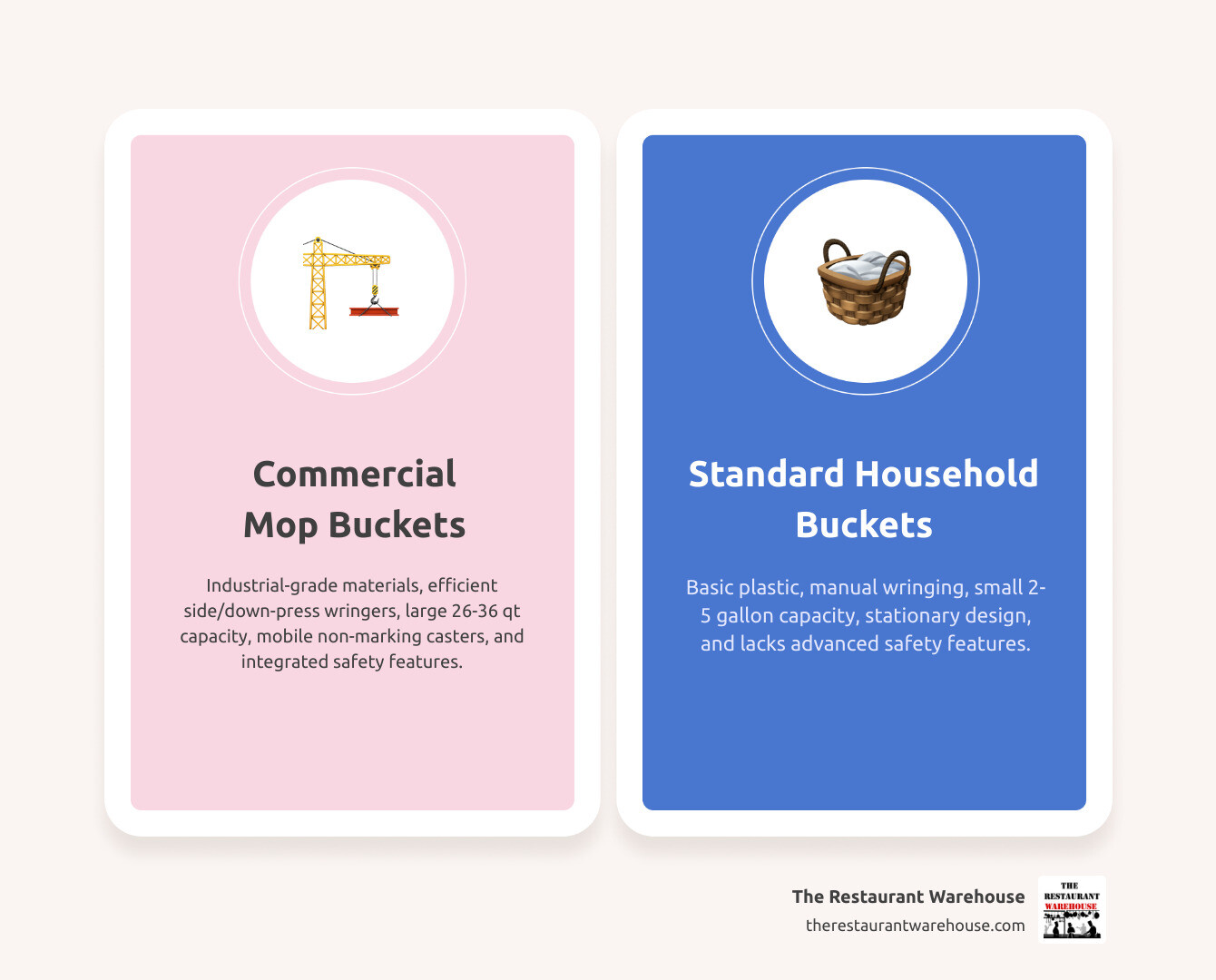
Commercial mop buckets are essential pieces of equipment that significantly impact a facility's cleaning efficiency, safety, and overall hygiene. Unlike standard household buckets, they are engineered for professional use with distinct features that deliver superior performance. Here’s what sets them apart:
- Specialized wringer systems: Side-press or down-press mechanisms provide controlled water extraction for optimal mop dampness.
- Industrial-grade materials: Durable polypropylene construction resists harsh chemicals and impacts, ensuring a long service life.
- Mobility features: Non-marking casters allow for easy transport across large areas without damaging floors.
- Optimal capacity: A 26- to 36-quart range is common, balancing water volume for large jobs with maneuverability.
- Safety design: Integrated splash guards and stable, wide-set bases help prevent spills and accidents.
The professional cleaning industry has evolved far beyond a simple bucket and mop. With the global commercial mop market projected to reach $1.7 billion by 2030, businesses are increasingly recognizing that the right equipment directly impacts their bottom line. A quality mop bucket system reduces labor time, helps prevent slip-and-fall accidents, and upholds the hygiene standards that customers and health inspectors demand.
While a household bucket may seem like a cost-saving measure, a professional-grade commercial system is an investment in efficiency and safety. Modern commercial mop buckets incorporate features like internal baffles to reduce splashing, dual-compartment designs to prevent cross-contamination, and ergonomic wringers rated for over 50,000 cycles. These are not mere conveniences; they are essential tools for maintaining professional standards while protecting staff from strain and injury. Investing in quality cleaning equipment pays dividends in reduced labor costs, improved sanitation, and a safer working environment.
Decoding the Anatomy of a Commercial Mop Bucket
A commercial mop bucket is an engineered system where every component—the bucket, wringer, wheels, and handle—works together to deliver safe and efficient cleaning. Understanding these design elements is key to making a smart purchasing decision that will serve your business for years. A failure in any single component can hinder daily operations, reduce cleaning effectiveness, and even create safety hazards. For a broader perspective on essential tools for your operation, you can explore our complete guide to professional cleaning tools.
Capacity and Size: Matching the Bucket to the Job
Choosing the right size is a critical first step. Going too small leads to constant, time-wasting refills, while going too large can create an unwieldy and heavy hazard for staff. Commercial mop buckets typically range from 26 quarts (6.5 gallons) to 36 quarts (9 gallons). A smaller 15-quart bucket may be ideal for a small café, whereas a large 36-quart system is better suited for a spacious dining hall or warehouse.
Most quality buckets feature graduation markings inside. These measurement lines are crucial for helping staff mix cleaning solutions at the precise ratios recommended by chemical manufacturers, ensuring consistent results and preventing waste. It's also important to consider water weight. A filled 8¾-gallon bucket can weigh over 70 pounds. Managers should balance efficiency with employee safety, as sometimes two trips with a smaller bucket is safer than one trip with an oversized, heavy one.
Material Matters: Durability and Chemical Resistance
Commercial environments subject cleaning equipment to a daily barrage of harsh chemicals, temperature fluctuations, and impacts. Industrial-grade polypropylene (PP) has become the material standard for commercial mop buckets due to its unique combination of being lightweight and exceptionally durable. This tough plastic can withstand impacts that would crack or shatter cheaper alternatives.
Its chemical resistance is a key advantage. Quality polypropylene will not degrade, crack, or become cloudy when exposed to heavy-duty degreasers, sanitizers, or other cleaning compounds. This is not just an aesthetic concern; compromised plastic can harbor bacteria and interfere with the effectiveness of cleaning solutions. Furthermore, most polypropylene buckets are fully recyclable, aligning with modern business sustainability goals. While the upfront cost may be higher, the longevity of a well-made commercial bucket provides a superior return on investment compared to less durable options.
Mobility and Stability: The Role of Casters
Efficient cleaning in a large commercial space requires a bucket that moves smoothly and easily. Non-marking casters are an essential feature. These specialized wheels, typically 3 inches in diameter with a full 360-degree swivel, allow staff to glide the bucket effortlessly. The "non-marking" compound prevents scuffs and streaks on freshly cleaned floors.
The swivel action is vital for navigating tight spaces, such as around tables, through doorways, and past equipment, without awkward lifting or repositioning. This maneuverability not only saves time but also helps prevent the repetitive strain injuries that can sideline valuable employees.
Stability is paramount, especially when the wringer is in use. The force applied during wringing can cause poorly designed buckets to tip or slide, creating spills and safety risks. Quality commercial systems feature a wide, stable base and strategically placed casters to keep the unit firmly planted, ensuring a safe and clean operation.
The Heart of the System: Wringer Types and Mechanisms
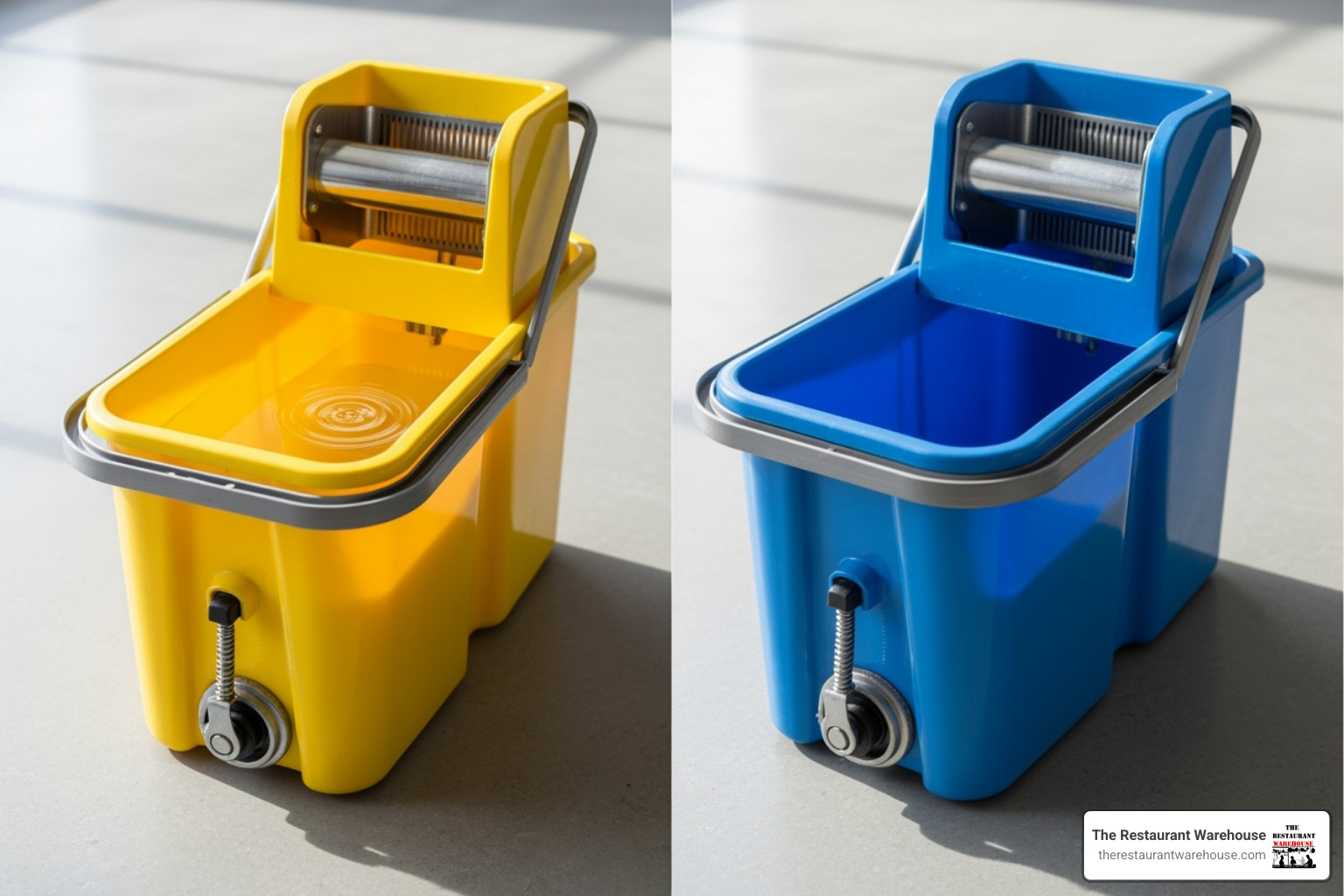
The wringer is the most critical component of a commercial mop bucket system. It transforms a saturated mop into a precisely dampened cleaning tool, controlling the amount of water applied to the floor. A mop that is too wet creates slip hazards and prolongs drying time, while a mop that is too dry cleans ineffectively. A well-designed wringer provides the perfect moisture level for efficient cleaning and reduces physical strain on staff.
Durability is also a major consideration. When investing in commercial mop buckets, look for wringers rated for tens of thousands of wringing cycles, which translates to years of reliable service in a busy facility.
Side-Press Wringers: The Industry Standard
Side-press wringers are the most common choice for commercial mop buckets due to their speed, efficiency, and ergonomic design. The mechanism uses a lever to apply horizontal pressure to the mop head, squeezing water out from the sides. The high-up placement of the ergonomic handle allows staff to operate it from a natural, upright position, reducing back and shoulder strain. This is a significant advantage over designs that require bending or twisting.
The faster wringing process is ideal for busy environments where time is a factor. Staff can move through their cleaning routines more quickly without sacrificing quality. Built for heavy-duty use, many side-press models are rated for 50,000 wringing cycles or more, offering exceptional durability and long-term value. They are also well-suited for the large-head mops commonly used in commercial settings, as the design distributes pressure evenly for consistent water extraction.
Down-Press Wringers: For Drier Floors
When quick-drying floors are a priority, down-press wringers are the superior choice. These systems apply vertical pressure from above the mop head, achieving maximum water extraction and leaving mops significantly drier than side-press models. This controlled moisture application is essential in high-traffic areas like restaurant dining rooms or hospital corridors, where minimizing slip hazards is critical.
Down-press wringers are also ideal for moisture-sensitive surfaces such as sealed hardwood, polished concrete, or specialty flooring that can be damaged by excess water. While the wringing process may be slightly slower than with a side-press wringer, the added safety and floor protection are often worth the trade-off. For comprehensive guidance on maintaining cleaning standards, you can Learn more about proper cleaning and sanitizing procedures.
Specialized Wringing Systems and Features
Modern commercial mop buckets often include additional features designed to improve safety, comfort, and efficiency:
- Splash Guards: Molded plastic walls around the wringer opening contain water during the wringing process, reducing splashes by up to 20%. This keeps floors and staff drier and safer.
- Ergonomic Handles: Specially designed grips on the wringer lever and bucket handle reduce the force required to operate and transport the unit, minimizing hand and wrist fatigue.
- Mop Handle Holders: Simple clips or slots on the wringer or bucket keep the mop handle upright and secure when not in use, preventing it from falling and creating a tripping hazard.
- Pour Spouts and Drains: Molded pour spouts provide better control when emptying dirty water, while some models feature foot-operated drains to eliminate the need to lift and tip a heavy bucket.
Advanced Solutions: Choosing the Right Commercial Mop Buckets for Hygiene and Efficiency
Modern cleaning is about more than just appearance; it’s about preventing cross-contamination, maximizing the effectiveness of cleaning solutions, and meeting stringent hygiene standards. Advanced commercial mop buckets are designed for this purpose, changing cleaning from a basic chore into a strategic operation that protects your business, staff, and customers. As standards for cleanliness rise, the right equipment becomes indispensable. To ensure you're meeting the highest industry benchmarks, you can Read our guide on sanitation certification standards.
The Power of Dual-Compartment Commercial Mop Buckets
With a traditional single-bucket system, every time a dirty mop is rinsed, the cleaning solution becomes contaminated. This means dirt and bacteria are spread back onto the floor with each pass. Dual-compartment commercial mop buckets solve this fundamental problem with a simple yet effective divided design that separates clean cleaning solution from dirty rinse water.
One compartment holds the fresh cleaning solution, while the other is designated for wringing out the dirty mop. This separation dramatically improves cleaning effectiveness by ensuring that only clean solution is applied to the floor, preventing soil redeposition. As a result, the cleaning solution maintains its chemical potency, floors become genuinely cleaner, and you avoid wasting chemicals that would otherwise become ineffective quickly.
For businesses where infection control is a priority, such as healthcare and foodservice, these systems are invaluable. By breaking the chain of contamination, they help maintain the strict hygiene standards required to prevent the spread of pathogens. The extended solution life also translates to cost savings, as staff can often complete a large job with a single batch of solution, reducing time spent on refills.
Selecting a Mop Bucket for Your Specific Environment
Different environments have unique cleaning challenges, so the right commercial mop buckets will vary by industry.
- Foodservice Settings: Hygiene is paramount. Dual-compartment systems are highly recommended to prevent cross-contamination. Chemical resistance is also vital for handling strong degreasers and sanitizers.
- Healthcare Facilities: These environments demand the highest level of infection control. Buckets must be easy to disinfect, and dual-compartment systems are critical for preventing the spread of pathogens between rooms.
- Educational Institutions: Large areas like hallways and cafeterias require high-capacity systems for efficiency. Durability is key to withstand heavy daily use, and side-press wringers are often favored for their speed.
- Industrial Applications: Warehouses and manufacturing plants need robust buckets that can handle rough surfaces and heavy-duty chemicals. Impact-resistant construction is a must.
- High-Traffic Areas: Retail stores and lobbies benefit from systems that promote fast drying times to minimize disruption and slip hazards. Down-press wringers are ideal for this purpose.
For comprehensive cleaning protocols, you can Follow our facility cleaning checklist for best practices.
Understanding Safety and Compliance
Commercial mop buckets play a key role in workplace safety and regulatory compliance. OSHA standards require employers to maintain safe walking surfaces, and wet floors are a leading cause of slip-and-fall accidents. Features like effective wringers, splash guards, and splash-reducing baffles directly support these standards by keeping floors drier.
Color-coding systems are a simple and effective strategy to prevent cross-contamination. By assigning different colored buckets to specific areas (e.g., red for restrooms, green for food prep areas), you create a visual cue that helps prevent the transfer of germs and the misuse of chemicals. The chemical compatibility of the bucket material is also a safety issue. High-quality polypropylene ensures that buckets will not degrade or fail when used with powerful cleaning agents. Contact us today to discuss which mop bucket systems best meet your specific safety and compliance requirements.
For detailed information about chemical safety, For more information on chemical safety, go to www.P65Warnings.ca.gov.
Maintenance, Care, and Cost Considerations
An investment in quality commercial mop buckets is an investment in your facility's cleanliness and your team's efficiency. However, even the best equipment requires proper care to deliver long-term value and a positive return. Understanding the total cost of ownership involves looking beyond the initial price tag to consider durability, maintenance needs, and replacement frequency. The goal is to find the optimal balance of quality and value.
Proper Care for Your Commercial Mop Buckets and Wringers
A consistent cleaning and maintenance routine can add years to your equipment's life. Follow these simple steps to protect your investment:
- Daily Rinsing: After each use, empty the bucket and thoroughly rinse both the bucket and wringer with clean water. This prevents the buildup of grime, mold, and odors.
- Air Dry Completely: Allow all components to air dry completely before storage. This prevents moisture from fostering bacterial growth or causing corrosion on metal parts.
- Periodic Deep Cleaning: On a weekly or bi-weekly basis, scrub all interior and exterior surfaces with a mild detergent and a brush, paying close attention to crevices where dirt can accumulate.
- Inspect Casters: Regularly check the wheels for hair, string, and other debris that can impede movement. Clean the axles to ensure the casters spin freely.
- Check the Wringer Mechanism: Inspect the wringer for signs of wear, cracks, or loose parts. Ensure springs and levers operate smoothly. Some models may require occasional lubrication of moving parts as per the manufacturer's instructions.
- Proper Storage: Store your commercial mop buckets in a clean, dry, and well-ventilated area. If possible, store the wringer in an open position to promote air circulation.
What is the Typical Price Range?
Understanding the relationship between price vs. features helps in making an informed purchasing decision. Commercial mop buckets are available at several price points, reflecting differences in capacity, materials, and features.
- Entry-Level Models ($70 - $150): These systems typically offer capacities around 26 quarts, durable plastic construction, and standard side-press wringers. They provide excellent value for smaller businesses or areas with light cleaning demands.
- Mid-Range Systems ($150 - $300): In this range, you'll find larger capacities (around 35 quarts), more robust materials, and improved wringer designs, including some down-press options. They often include better casters and improved ergonomic features.
- Advanced Dual-Compartment Buckets ($300 - $500+): Representing the premium end, these systems feature designs that separate clean and dirty water, specialized wringing mechanisms, and heavy-duty construction for intensive use. The upfront investment is higher, but the hygiene benefits and efficiency gains often justify the cost in demanding environments.
The durability correlation is a key factor. A cheaper bucket may save money initially, but if it fails prematurely, replacement costs and operational downtime will negate those savings. A quality commercial mop bucket with a wringer rated for 50,000+ cycles delivers a far better return on investment through extended service life. Contact us today to find a mop bucket system that offers the best value for your budget and needs.
Frequently Asked Questions about Commercial Mop Buckets
Facility managers, restaurant owners, and cleaning professionals often have questions when selecting commercial mop buckets. Answering these common queries can help you make a more informed decision for your business.
What is the main benefit of using a mop bucket with a wringer?
The primary benefit is a significant boost in both efficiency and safety. A wringer gives you precise control over the mop's dampness. This leads to more effective cleaning, as the solution is not overly diluted, and faster drying times for floors. Quicker drying directly translates to a lower risk of slip-and-fall accidents, protecting both your staff and your customers.
From an ergonomic standpoint, a mechanical wringer also dramatically reduces the physical strain of mopping. Manually wringing a heavy, saturated mop can cause injury to the back, wrists, and shoulders. A wringer allows staff to perform their duties with less fatigue and a lower risk of injury.
How does a dual-compartment bucket improve cleaning?
A dual-compartment commercial mop bucket revolutionizes cleaning by preventing cross-contamination. In a standard single bucket, dirty water from the mop contaminates the entire cleaning solution, meaning dirt and germs are spread back onto the floor. A dual-compartment system solves this by keeping the clean solution separate from the dirty rinse water.
One compartment holds fresh solution, while the other collects the grime wrung from the mop. This ensures that a clean, effective solution is always being applied to the floor. The practical benefits include genuinely cleaner floors, longer-lasting cleaning chemicals (which saves money), and a much higher standard of hygiene—a critical factor in foodservice and healthcare environments.
What size mop head is compatible with most commercial buckets?
This is a practical question that directly impacts performance. Most standard commercial mop buckets, particularly those in the 26- to 36-quart capacity range, are designed for versatility. They are generally compatible with a wide range of mop heads, typically from 12 ounces up to 32 ounces.
This range covers smaller looped-end mops for tight spaces as well as large cut-end mops for expansive areas. However, it is important to check the wringer's specifications. Some wringer designs are better suited for certain mop styles. For example, side-press wringers work very well with large string mops, while other specialized wringers may be engineered for flat microfiber mops. Matching the mop head to both your cleaning task and your wringer's capability ensures optimal performance and longevity for your equipment.
Conclusion: Making the Right Choice for a Cleaner, Safer Facility
Choosing the right commercial mop buckets is a strategic investment in your facility's operational excellence. A quality system impacts everything from staff safety and efficiency to the cleanliness that your customers experience. The key is to select a bucket that aligns with your specific needs.
We've seen how capacity affects efficiency, how material choice dictates durability, and how the wringer type influences drying times and ergonomics. We've also explored how mobility features like non-marking casters protect your floors and how advanced dual-compartment commercial mop buckets lift hygiene standards by preventing cross-contamination.
Matching the tool to the task is essential. A small café has different needs than a large warehouse, and a hospital's requirements differ from those of a school. Getting this match right leads to more effective cleaning, happier staff, and better business outcomes. Investing in quality cleaning tools is not an expense; it's a smart decision that delivers returns through reduced labor, fewer accidents, and a reputation for cleanliness.
At The Restaurant Warehouse, we understand these nuances and are committed to helping you lift your facility's standards with solutions that work. We believe every great business is built on a foundation of quality, and that includes the tools you use to maintain your space.
Ready to transform your cleaning operations? For a complete overview of essential supplies that can revolutionize your entire operation, explore our comprehensive Professional Cleaning Supply Guide. Contact us today to find the perfect cleaning solutions for your needs and find how the right commercial mop buckets can work as hard as you do.
About The Author

Sean Kearney
Sean Kearney is the Founder of The Restaurant Warehouse, with 15 years of experience in the restaurant equipment industry and more than 30 years in ecommerce, beginning with Amazon.com. As an equipment distributor and supplier, Sean helps restaurant owners make confident purchasing decisions through clear pricing, practical guidance, and a more transparent online buying experience.
Connect with Sean on LinkedIn, Instagram, YouTube, or Facebook.