
What Is a Steam Table and How Does It Work
A steam table is one of those essential pieces of kitchen gear designed to do one job incredibly well: hold cooked food at a safe, consistent temperature for hours on end. Think of it as a professional 'hot tub' for your food pans, making sure every dish stays ready for service.
Its primary job is not to cook food, but to keep it hot and safe for serving.
Defining the Steam Table and Its Core Function
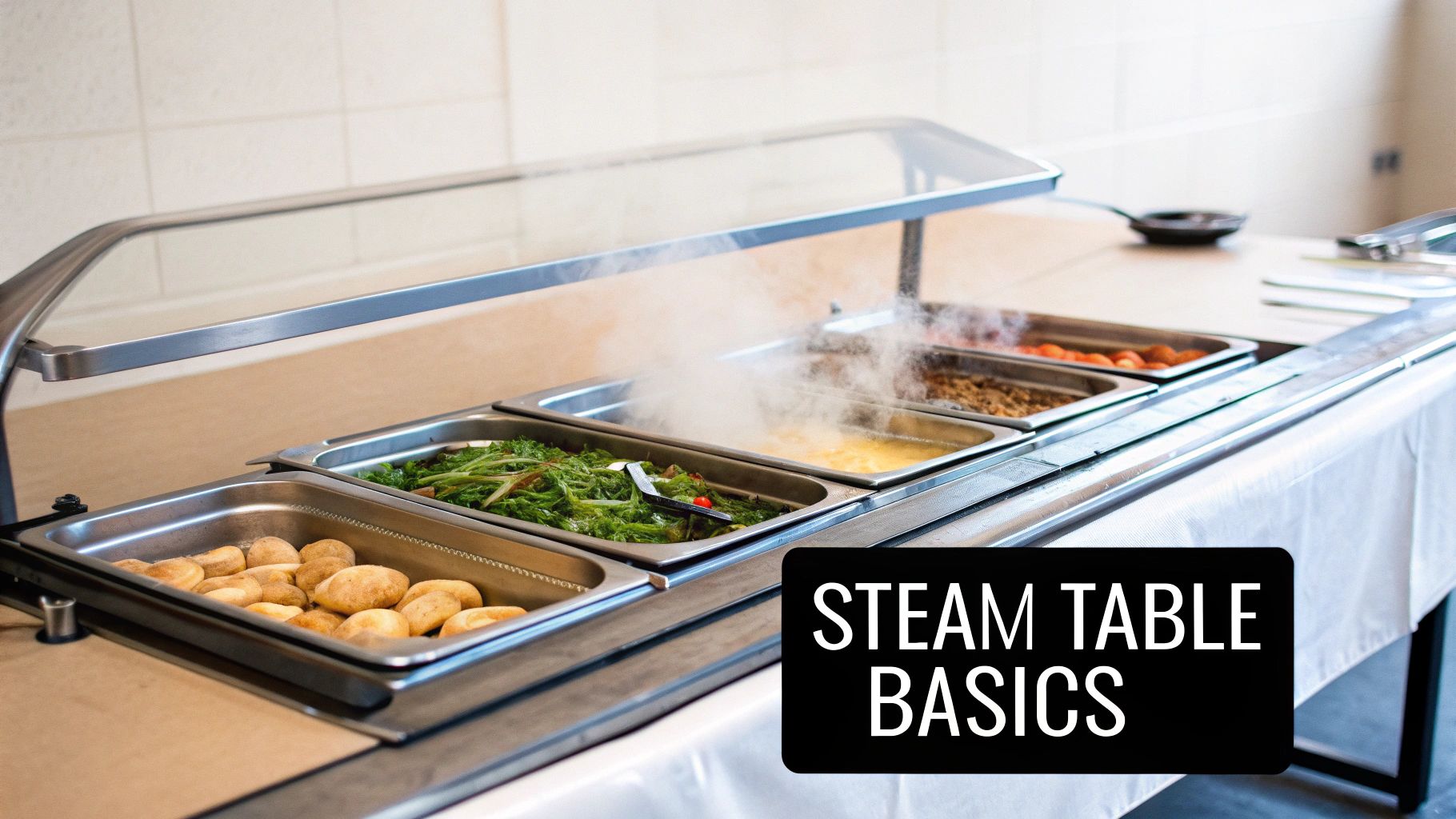
So, what exactly is a steam table? At its heart, it's a fundamental piece of hot-holding equipment you'll find in buffets, cafeterias, and catering operations all over the world. Its mission is simple but absolutely critical: keep food safely above the temperature danger zone—135°F (57°C)—to prevent bacterial growth and ensure food quality from the first serving to the last.
This makes it an indispensable tool for any operation that serves a lot of people over an extended period. The name itself, "steam table," points to its most common method of heating. By using steam, the equipment provides a gentle, even heat that won't scorch or dry out delicate foods. It's this controlled environment that allows kitchens to prep dishes ahead of time without sacrificing texture or taste.
How Steam Tables Generate Heat
Steam tables use one of two fundamental methods to keep food warm, and the choice between them directly impacts what kind of food you can successfully hold. Getting this difference is the first step in mastering its use.
-
Wet Heat (Water Wells): This is the classic approach. The wells underneath the food pans are filled with water, which is then heated by electric elements or gas burners. The hot water produces steam, creating a moist, gentle heat that envelops the food pans. This method is perfect for items that need to retain moisture, like mashed potatoes, sauces, gravies, and steamed vegetables.
-
Dry Heat (Element Wells): Some models operate without water. In these units, exposed or sealed heating elements directly warm the air in the wells, which in turn heats the food pans. This dry environment is perfect for holding foods that need to stay crispy—think fried chicken, french fries, or onion rings. Using wet heat on these items would quickly turn them soggy.
For operators trying to make a quick decision, understanding the core differences is key. Here's a simple breakdown to help you choose the right method for your menu.
Wet Heat vs. Dry Heat Steam Tables at a Glance
| Feature | Wet Heat (Water Wells) | Dry Heat (Element Wells) |
|---|---|---|
| Best For | Moist foods like sauces, soups, vegetables, pasta | Crispy foods like fried chicken, fries, onion rings |
| Heat Distribution | Very even and gentle due to surrounding steam | Can have hot spots if elements are not well-placed |
| Moisture Level | High; prevents food from drying out | Low; helps maintain crispiness and texture |
| Setup & Cleanup | Requires filling with water and draining afterward | Simpler setup; no water to manage |
| Energy Consumption | Can be slightly less efficient due to heating water | Generally more energy-efficient |
| Common Use Case | Buffets, cafeterias, and all-purpose holding | Fast-food operations, concession stands |
Ultimately, the best choice always comes down to what you're serving. Matching the heating method to the menu is the secret to happy customers.
The core principle is straightforward: use moist heat for moist foods and dry heat for dry foods. Matching the heating method to the menu item is the key to maintaining food quality throughout service.
Whether you're using gentle steam or direct warmth, the goal is the same. A steam table bridges the gap between the kitchen and the customer, ensuring every plate served is as safe and delicious as the chef intended.
Exploring the Common Types of Steam Tables
Just like cars come in different models for different drivers, steam tables are built in various styles to handle specific foodservice jobs. Getting to know the common types is the secret to picking a unit that fits perfectly with your space, workflow, and menu. Each design offers a different mix of portability, style, and capacity.
Let's break down the four main types you’ll run into.
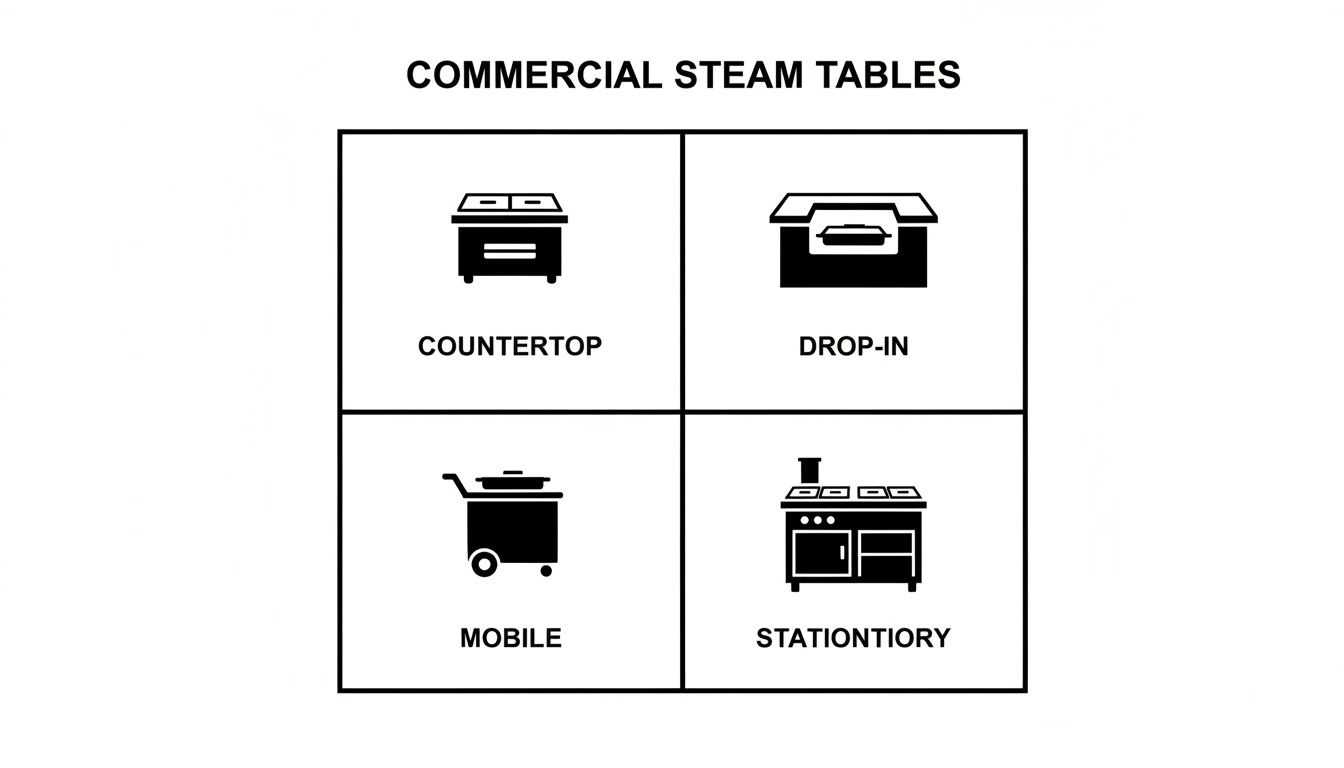
Countertop Steam Tables
Picture a compact, portable holding station you can set up on just about any sturdy surface. That’s a countertop steam table. These smaller units are a lifesaver for businesses with limited space or for those who just need a temporary holding solution.
- Best For: Food trucks, concession stands, small cafes, or as an extra station in a bigger kitchen.
- Pros: Super portable, space-saving, and usually easier on the wallet.
- Cons: Limited capacity, typically holding just two to four food pans.
Drop-In Steam Tables
For a polished, high-end look, drop-in steam tables are the way to go. These units are designed to be installed right into a custom-built counter, creating a seamless and integrated buffet line that looks sharp.
They offer a clean, professional appearance that really elevates the customer experience. This style is a huge favorite in hotel buffets, upscale cafeterias, and catered events where looks are just as important as the food.
Drop-in units are all about presentation. By hiding the hardware, they put the focus squarely on the food, creating an elegant and professional self-service station.
Mobile and Stationary Units
The real workhorses of the industry are the full-size floor models, and they come in two main flavors: mobile and stationary.
A mobile steam table is built with casters (wheels), making it the ultimate tool for caterers and event venues. Its biggest advantage is the ability to be moved easily from the kitchen right out to the serving area.
On the other hand, a stationary steam table is designed to stay put. These are the backbone of high-volume kitchens, cafeterias, and permanent buffet lines where they are a fixed part of the daily grind. They often pack in more robust features and larger capacities. For a closer look at a popular size, check out our comprehensive guide on 4-pan steam tables.
The choice between mobile and stationary really just boils down to whether your operation needs flexibility or permanence.
Mastering Food Safety and Holding Temperatures
Using a steam table correctly is about way more than just keeping food warm. Think of it as your first line of defense for food safety. If you get temperatures wrong, that beautiful buffet can quickly become a health hazard, which makes this knowledge absolutely non-negotiable for any operator.
The single most important rule to burn into your memory is the temperature danger zone. The FDA defines this as the range between 41°F and 135°F (5°C to 57°C). This is the sweet spot where nasty bacteria like Salmonella and E. coli throw a party and multiply like crazy. Your steam table’s entire purpose is to keep your food safely above that threshold, always.
The Golden Rule of Hot Holding
The absolute, rock-bottom minimum temperature for holding hot food is 135°F (57°C). But here's the catch: the food has to be fully cooked and heated to its proper internal temperature before it even sees the steam table. The table is only designed to hold food at temp, not to cook or reheat it.
A steam table is a holding cabinet, not an oven. Always bring foods like soups, sauces, and proteins to at least 165°F (74°C) before transferring them to the holding pans to ensure they start hot and stay hot.
Regular temperature checks are your best friend here. Get a calibrated food thermometer and check the food itself—don't just rely on the water temperature in the well. You need to probe multiple spots in each pan, hitting the center and corners, to make sure the entire dish is holding evenly and safely above that 135°F minimum. A solid temperature log is the backbone of any serious food safety plan. For a deeper dive into building these kinds of systematic protocols, learning what HACCP is and how to implement it is a game-changing next step for any food business.
Balancing Safety with Food Quality
Beyond just being safe, you also want the food to taste great. Holding food for too long, even at the right temperature, can ruin the texture and flavor your chefs worked so hard to create. Nobody wants mushy vegetables or dried-out mac and cheese.
To keep everything delicious and safe, here are a few best practices from seasoned pros:
- Cook in Batches: Instead of making one giant batch of an item to last all day, cook smaller batches more often. This ensures everything is served closer to its peak freshness.
- Rotate Pans: Always use the "First-In, First-Out" (FIFO) method. When you bring out a fresh pan, put it at the back of the line and move the older (but still safe) pan to the front to be used first.
- Mind the Lid: Keep those food pans covered whenever you're not serving from them. Lids are crucial for trapping heat and moisture, which prevents food from drying out and helps maintain a consistent, safe temperature.
The diagram below shows you the main types of steam tables you'll find out there, from mobile units perfect for catering to stationary models built for buffet lines.
No matter which style you choose, mastering these holding principles is the secret to serving food that’s both delicious and safe for every single guest.
How to Choose the Right Steam Table for Your Business
Picking the right steam table is a pretty big deal. It's an investment that directly affects how smoothly your service runs and the quality of the food you hold. To make the right call, you have to look past the price tag and really think about your day-to-day operations, from the size of your menu to the layout of your kitchen.
Your first step is to get a real handle on your capacity needs. How many hot dishes are you planning to serve at once? The number of wells you need is the most straightforward part, with options ranging from compact two-pan units to massive six-pan workhorses. A small café might do great with a two-well countertop model, but a high-volume buffet will probably need a five or six-well floor unit to show off its full spread.
Gas vs. Electric Power Sources
Once you’ve settled on a size, the next major decision is whether to go with gas or electric. Each has its own perks and quirks, and the best choice often comes down to your kitchen's existing setup and what you pay for utilities.
-
Gas Steam Tables: These units usually heat up faster and often have a simpler design, which can translate to fewer things breaking down the line. They run on natural gas or liquid propane. Just keep in mind that a gas unit will throw off more ambient heat into your kitchen.
-
Electric Steam Tables: While they might take a few extra minutes to get up to temp, electric models are generally more energy-efficient and can give you more precise control over the heat. They come in all sorts of voltage and phase options to match whatever electrical system you have.
A smart move is to simply compare the cost of gas versus electricity in your area. That quick calculation can tell you which option will be easier on your operating budget in the long run.
Construction and Durability Matters
The build quality of a steam table is what determines how long it will last in your kitchen. Pay close attention to the stainless steel gauge—that’s just a measure of its thickness. A lower gauge number means you're getting thicker, more durable steel. For a busy commercial kitchen, you'll want to look for units made from 18-gauge or 20-gauge stainless steel to handle the daily grind.
Think of the steel gauge like a long-term insurance policy. A thicker, lower-gauge unit might cost more upfront, but it’s far less likely to dent or warp, saving you from having to replace it prematurely.
Next, take a look at the well design. Sealed wells are a dream for cleanup because the heating elements are sealed underneath a permanent water pan, and they usually come with built-in drains. Open wells, on the other hand, use an exposed heating element and require you to use separate spillage pans, but they give you the flexibility to use them for either wet or dry heating.
Essential Features and Accessories
Finally, think about the little extras that can make a big difference in your workflow. Many steam tables can be decked out with accessories that add a ton of value and function to your service line.
Consider adding options like:
- Built-in Cutting Boards: These give you a handy, integrated spot for carving meats or doing last-minute prep right on the line.
- Sneeze Guards: An absolute must-have for any self-service buffet or cafeteria to keep food protected and hygienic.
- Undershelves or Cabinets: This extra storage is a lifesaver for keeping extra serving utensils, plates, or backup food pans right where you need them.
- Tray Slides: These simple rails make it much easier for customers to slide their trays along the line, which helps prevent spills and keeps traffic moving.
By carefully thinking through your capacity, utilities, build quality, and the features you need, you can confidently pick a steam table that not only fits your budget but becomes a reliable cornerstone of your whole operation.
Protecting Your Investment with Proper Maintenance
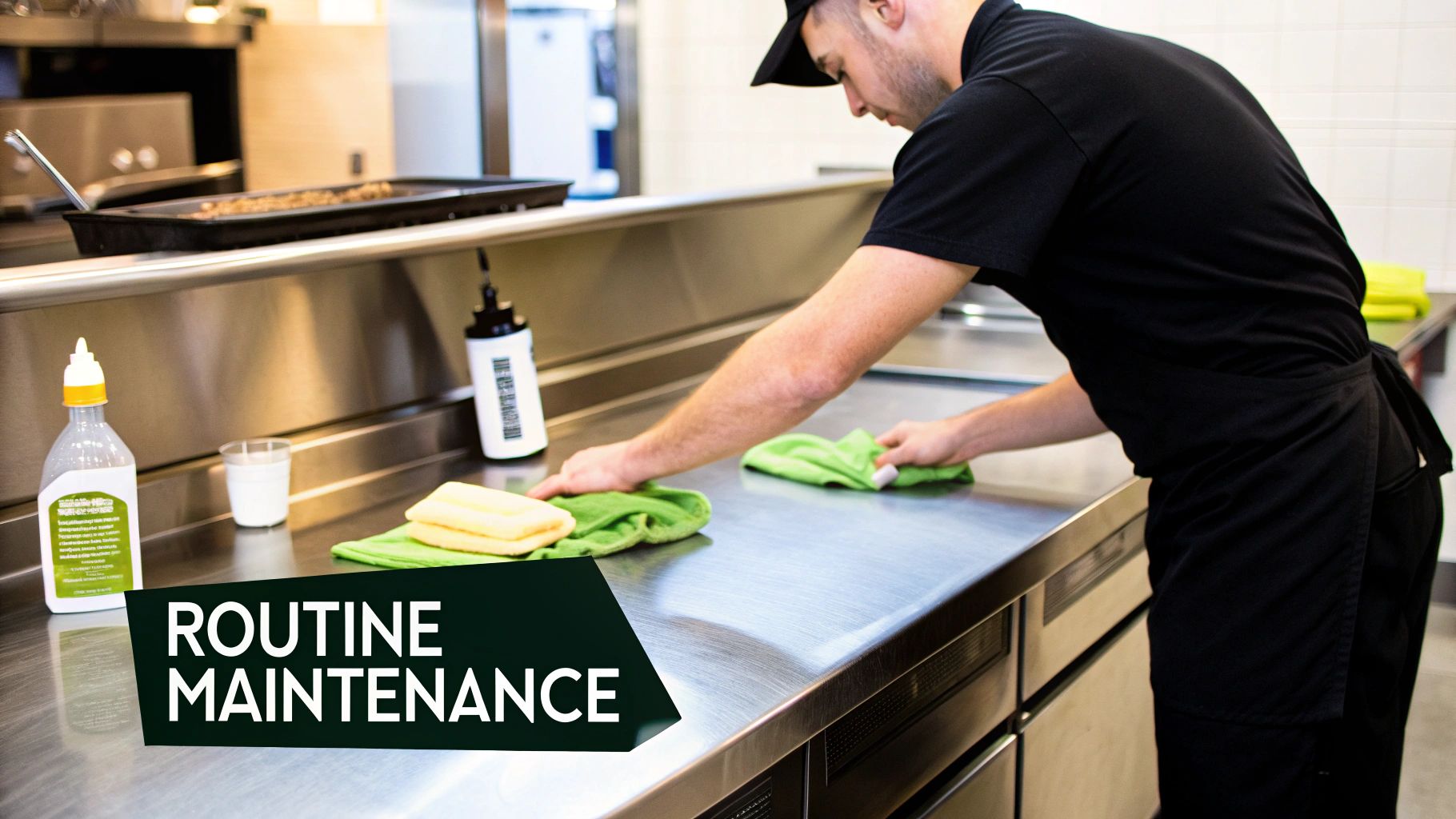
A steam table is a true workhorse, but its lifespan and performance hinge entirely on consistent care. Think of proper installation and a solid cleaning routine as your insurance policy for this essential investment, making sure it runs safely and efficiently for years to come. A few simple steps are all it takes to prevent unexpected breakdowns and keep your food safety standards airtight.
The process starts the moment it’s set up. Before you even turn it on, make sure your steam table is perfectly level. If it’s tilted, water can pool in one area, leading to uneven heating and potential hazards. You’ll also want to ensure there’s proper ventilation, especially for gas models, to keep heat from building up in your kitchen.
Daily Cleaning Checklist for Peak Performance
A non-negotiable part of using a wet steam table is daily sanitation. This simple habit is the single best thing you can do to stop bacterial growth and prevent equipment damage. At the end of every single service, your closing crew should have a shutdown routine that becomes second nature.
Here are the essential steps to follow every day:
- Power Down and Cool Off: Turn the unit off and let it cool down completely. Never, ever pour cold water into a hot well—that drastic temperature shock can warp the metal.
- Drain Completely: Safely drain all the water from the wells. Leaving water to sit overnight is an open invitation for bacteria.
- Scrub and Sanitize: Grab a mild detergent and a non-abrasive scrubber to clean out each well, getting rid of any food spills or residue.
A clean steam table is a safe steam table. Daily draining and scrubbing not only protect the equipment but are fundamental to preventing cross-contamination and upholding your kitchen's hygiene standards.
Preventing Limescale Buildup
Over time, you might notice a crusty, white buildup inside the wells. That’s limescale, and it’s caused by mineral deposits from hard water. It's not just ugly; limescale acts as an insulator, forcing the heating elements to work harder and less efficiently, which can lead to them burning out way too soon.
Your best defense is a weekly descaling treatment. You don’t need harsh chemicals for this, either. A simple solution of equal parts white vinegar and water, left to sit in the wells for about an hour, will do the trick. Just drain and rinse thoroughly afterward. For more detailed advice, our guide to cleaning restaurant equipment provides a deeper look into maintaining all your kitchen gear.
When you invest in a steam table, you aren't just buying another piece of kitchen hardware. You're tapping into a major trend that’s reshaping modern foodservice. Steam-based equipment is a cornerstone of smart commercial kitchens, and seeing the bigger picture helps frame your purchase as a strategic move toward a more efficient, flexible operation.
The demand for this technology isn't just steady—it's exploding. The global market for commercial steam cooking equipment was valued at $4.705 billion back in 2025 and is projected to surge to an incredible $13.7 billion by 2033. That’s a compound annual growth rate of 14.3%, driven by everyone from fine dining establishments to quick-service chains. You can get a closer look at the forces driving this market expansion and read the full research on commercial steam cooking equipment.
Why This Growth Matters to You
So, what do these big numbers mean for your kitchen? Simply put, this industry-wide expansion confirms the value of your investment. It’s a clear signal that operators everywhere recognize a steam table’s power to streamline service and lock in consistent food quality. As kitchens face constant pressure to do more with less, the ability to prep ahead and hold food safely without sacrificing taste becomes absolutely essential.
Choosing a steam table aligns your operation with a proven industry standard. It's a foundational tool that supports batch cooking, reduces service bottlenecks, and ultimately helps protect your profit margins by minimizing food waste.
This market momentum is fueled by real innovation and a deep understanding of what modern kitchens truly need. It's important to see your steam table as part of this larger ecosystem. It’s not just another appliance; it's a vital component for any serious food business aiming to serve high-quality food efficiently and safely, ensuring you stay competitive and ready for whatever comes next.
Your Top Steam Table Questions, Answered
Even after you get the hang of a new piece of equipment, a few practical questions always pop up in the middle of a busy shift. When it comes to steam tables, getting clear, quick answers can make all the difference, helping you work confidently and keep the service line moving without a hitch.
Let's tackle some of the most common questions we hear from chefs and kitchen managers.
Can I Cook Raw Food in a Steam Table?
Absolutely not. If there's one rule to remember, it's this one. A steam table is built for hot-holding—that’s it. Its job is to keep food that's already been cooked at a safe and consistent temperature for service.
The heating elements in a steam table just aren't powerful enough to cook raw ingredients all the way through or get them to a safe temperature. Always cook your food first using the right equipment, like an oven, a range, or a fryer. Once it’s fully cooked, then you can transfer it to the steam table to hold.
Think of your steam table like a marathon runner—it’s built for endurance, holding a steady pace for hours. It’s not a sprinter designed for the quick burst of high heat needed for cooking. Trying to cook with it is a surefire way to create a food safety disaster.
How Often Should I Change the Water?
For any wet steam table, the water needs to be drained and replaced every single day. No exceptions. Once service is over, turn the unit off, let it cool down completely, drain the well, and give it a good cleaning.
This daily routine is non-negotiable for two big reasons:
- First, it stops nasty bacteria from growing in the stagnant water.
- Second, it prevents limescale and other mineral deposits from building up, which can eventually wreck the heating elements.
Is a Gas or Electric Steam Table Better?
Honestly, this one comes down to your kitchen's layout and what you pay for utilities. There’s no single "better" option, but one will almost certainly be a smarter fit for your specific operation.
Gas models usually heat up faster, which is a nice perk, but you'll likely need a professional to handle the gas line installation. Electric units, on the other hand, often give you more precise temperature control and are a breeze to install—but they can cost more to run over the long haul, depending on your local electricity rates. Take a look at your kitchen's hookups and your utility bills to figure out which makes the most financial sense.
Ready to add a reliable, high-performance steam table to your kitchen? We've got a huge selection of top-quality models to explore at The Restaurant Warehouse. Find the perfect fit for your business by visiting us at https://therestaurantwarehouse.com and get started today.
About The Author

Sean Kearney
Sean Kearney is the Founder of The Restaurant Warehouse, with 15 years of experience in the restaurant equipment industry and more than 30 years in ecommerce, beginning with Amazon.com. As an equipment distributor and supplier, Sean helps restaurant owners make confident purchasing decisions through clear pricing, practical guidance, and a more transparent online buying experience.
Connect with Sean on LinkedIn, Instagram, YouTube, or Facebook.