

Trailer Treats: Finding Your Perfect Ice Cream Concession Trailer
Your Dream of a Mobile Ice Cream Business
An ice cream concession trailer offers one of the most accessible paths to mobile food entrepreneurship. With no culinary experience required, consistent year-round demand, and relatively low startup costs, it's no wonder entrepreneurs are flocking to this sweet business opportunity.
Quick Facts About Ice Cream Concession Trailers:
- Starting Cost: $15,000-$60,000+ depending on size and equipment
- Common Sizes: 6'x12', 8'x16', 8.5'x20', up to 8'x24'
- Key Equipment: Dipping cabinets, chest freezers, 3-compartment sink, generator
- Products: Hard-scoop ice cream, soft serve, gelato, shaved ice, frozen yogurt
- Advantages: More storage than trucks, lower vehicle costs, detachable from towing vehicle
Unlike ice cream trucks that combine kitchen and vehicle into one unit, concession trailers are pulled behind your existing vehicle. This gives you more cooking and storage space while keeping your initial investment lower. You can park at festivals, private events, or busy locations for extended periods without tying up an expensive food truck.
The numbers tell the story of this growing market. Based on current availability, most ice cream trailers fall into the $25,000-$40,000 range, with 18 units available in this price bracket. Budget-conscious buyers can find 3 options under $15,000, while premium turnkey operations start around $60,000.
Whether you're dreaming of serving classic scoops at summer festivals or trendy rolled ice cream at food truck gatherings, the right trailer can turn your mobile dessert dreams into a profitable reality.
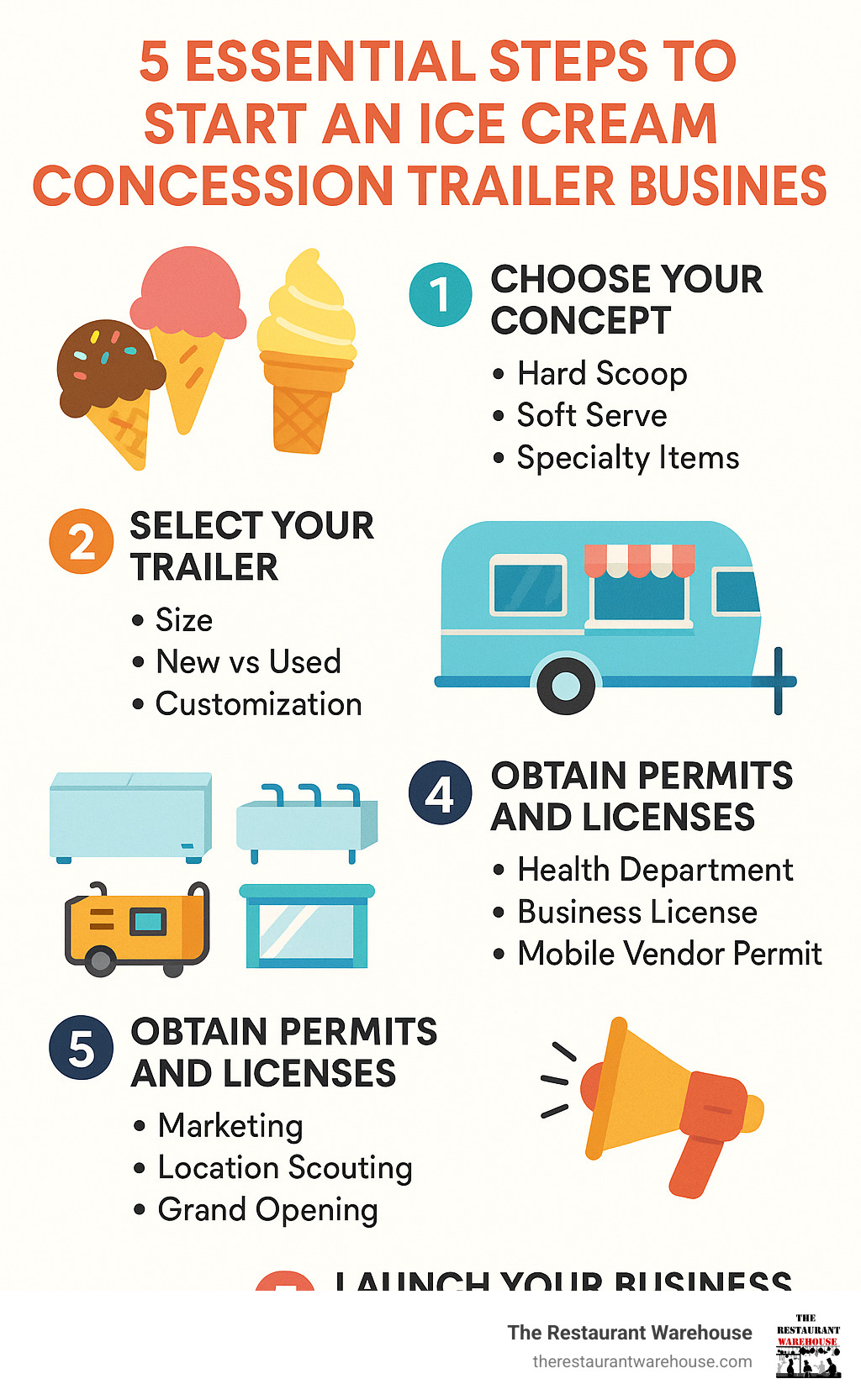
Find more about ice cream concession trailer:
Ice Cream Trailer vs. Ice Cream Truck: What's the Difference?

When you're dreaming of starting your frozen treat business, you'll face a crucial decision: should you go with a traditional ice cream truck or choose an ice cream concession trailer? While both will get you serving smiles and scoops, they operate quite differently.
Think of it this way: a food truck is like a studio apartment on wheels - everything's built into one compact unit. The kitchen and vehicle are permanently married together, typically housed in a step-van with kitchen space ranging from 10 to 26 feet (though 16 to 18 feet is most common).
An ice cream concession trailer, on the other hand, is more like having a mobile shop that you can unhitch from your regular vehicle. These trailers typically range from 8 to 53 feet long and are usually 8.5 feet wide, giving you significantly more room to work and store your frozen treasures.
The Case for a Concession Trailer
More kitchen space is perhaps the biggest advantage of choosing a concession trailer. Without needing to accommodate a driver's cab or engine compartment, every square foot can be dedicated to what matters most - preparing and serving delicious frozen treats. This extra space means you can stock more flavors, add more equipment, and serve customers more efficiently.
Lower initial vehicle cost makes trailers especially attractive for new entrepreneurs. Instead of buying an expensive food truck, you can use your existing pickup truck or SUV to tow the trailer. This approach can save you tens of thousands of dollars upfront, letting you invest more in quality equipment and inventory.
The detachable business aspect offers incredible flexibility. Once you arrive at a festival or event, you can unhook your trailer and use your vehicle for supply runs, personal errands, or even towing a second trailer if your business grows. Try doing that with a food truck!
Customizable layout options give you more control over your workspace design. You can optimize the flow for your specific menu and operational needs without being constrained by vehicle limitations. Want a longer counter for rolled ice cream preparation? No problem. Need extra freezer space for premium gelato? You've got it.
Ideal for festivals and private events, concession trailers shine when you're planning to stay put for hours or days. Their larger size and substantial equipment capacity make them perfect for high-volume events like county fairs, music festivals, and corporate gatherings where you'll serve hundreds of customers.
Learn more about concession trailer equipment to maximize your mobile kitchen potential.
When a Food Truck Might Be Better
All-in-one unit convenience is the food truck's biggest strength. You can drive directly to your location and start serving immediately - no unhitching, no setup, just park and scoop. This simplicity appeals to entrepreneurs who want to keep things straightforward.
Maximum mobility makes food trucks ideal for serving neighborhood routes. If your business model involves cruising residential areas with that familiar ice cream truck melody, a traditional truck design gives you the freedom to move quickly from block to block.
Quick setup and breakdown means you can capitalize on sudden opportunities. Spot a Little League game that just ended? A food truck can be there and serving in minutes, then move on to the next location without missing a beat.
Better for routes with many stops becomes apparent when you're planning to hit multiple locations throughout the day. If you're thinking about serving the lunch crowd at office parks, then moving to residential areas for the after-school rush, a food truck's integrated design eliminates the time spent hitching and unhitching.
For additional insights on mobile food success, check out our food truck tips.
The choice between a truck and trailer ultimately depends on your business model, budget, and personal preferences. But for most ice cream entrepreneurs, the extra space, lower costs, and flexibility of a concession trailer make it the sweeter choice.
What Sweet Treats Can You Serve?
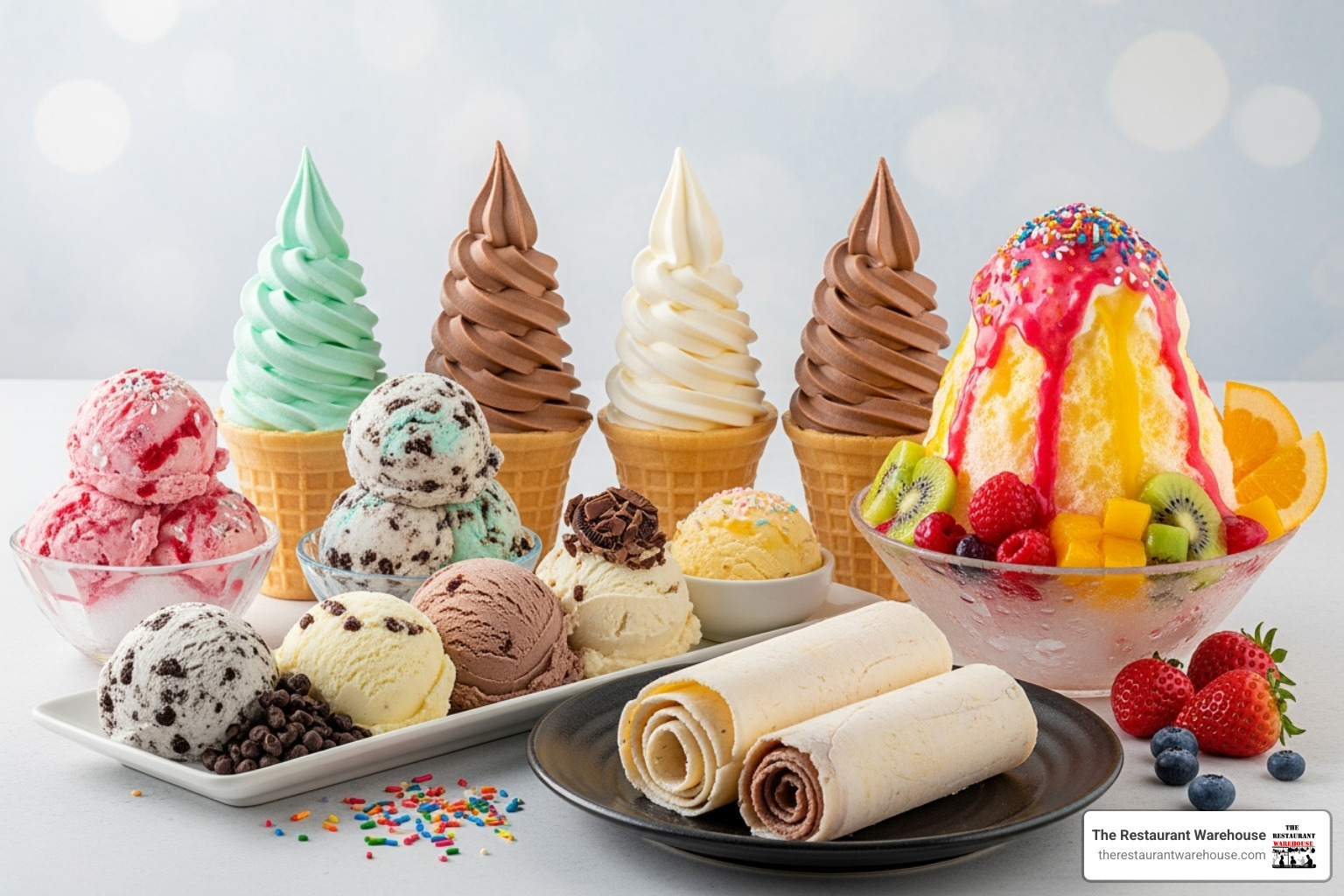
Your ice cream concession trailer opens up a world of frozen possibilities. The beauty of this business lies in its menu flexibility – you can start simple with classic scoops and expand into trendy offerings as your business grows. Smart menu planning directly impacts your profit margins and customer appeal, so understanding your options helps you make the right equipment choices from day one.
Classic Hard-Scoop Ice Cream & Gelato
Nothing beats the timeless appeal of hand-scooped ice cream. Dipping cabinets become the star of your operation, displaying 6-12 flavors behind glass while keeping everything at the perfect scooping temperature. These glass-top freezers do double duty – they store your product and create an irresistible visual display that drives impulse purchases.
The magic happens when you lift simple scoops into premium experiences. A basic scoop might sell for $3-4, but serve it in a fresh waffle cone with hot fudge and whipped cream, and you can charge $6-8 for essentially the same product. Sundaes and elaborate topping stations turn your trailer into an interactive dessert experience.
Your topping station becomes a profit center all on its own. Hot fudge, caramel sauce, sprinkles, nuts, and whipped cream have incredibly high markup potential with low food costs. Plus, customers love the ability to customize their treats exactly how they want them.
For the technical details on ice cream storage, check out our dip freezer guide and chest freezer guide for restaurants.
Soft Serve, Frozen Yogurt & Custard
Soft serve machines represent the biggest equipment investment you'll make, but they're also capable of your highest volume sales. During peak times, a single machine can serve dozens of customers per hour – that's the kind of speed that makes money at busy festivals and events.
The trade-off comes in electrical needs. These machines are power-hungry, typically requiring 220V and drawing significant amperage. You'll need a robust generator in the 8-10kW range minimum, along with professional electrical installation to handle the load safely.
But when you're parked at a county fair with lines of eager customers, that investment pays off quickly. High-volume sales become possible because soft serve is fast to dispense and requires minimal labor compared to hand-scooping individual orders.
Understanding your power requirements is crucial for soft serve success. Our guide on electrical gear for food trailers covers everything you need to know about powering your operation.
Trendy & Unique Offerings
Rolled ice cream has taken social media by storm, and for good reason. This Instagram-worthy treat involves pouring liquid ice cream base onto a frozen metal plate, mixing in toppings, and rolling it into beautiful spirals. It's labor-intensive but commands premium prices of $8-12 per serving while creating an entertaining show that draws crowds.
Shaved ice and Italian ice offer the opposite approach – minimal equipment investment with excellent profit margins. A quality ice shaver and flavor syrups can generate serious revenue, especially in hot climates where customers crave refreshing treats.
Frozen beverages expand your market beyond traditional ice cream lovers. Smoothies, slushies, and frozen cocktails (where permitted) often have food costs below 20% and appeal to health-conscious customers looking for lighter options.
For the truly adventurous, nitrogen ice cream uses liquid nitrogen to instantly freeze custom orders. While equipment costs are higher and safety training is required, the novelty factor allows for premium pricing and generates incredible social media buzz that markets your business for free.
Explore our slushy machine guide and juice dispensers guide to see your beverage equipment options.
Equipping Your Ice Cream Concession Trailer for Success
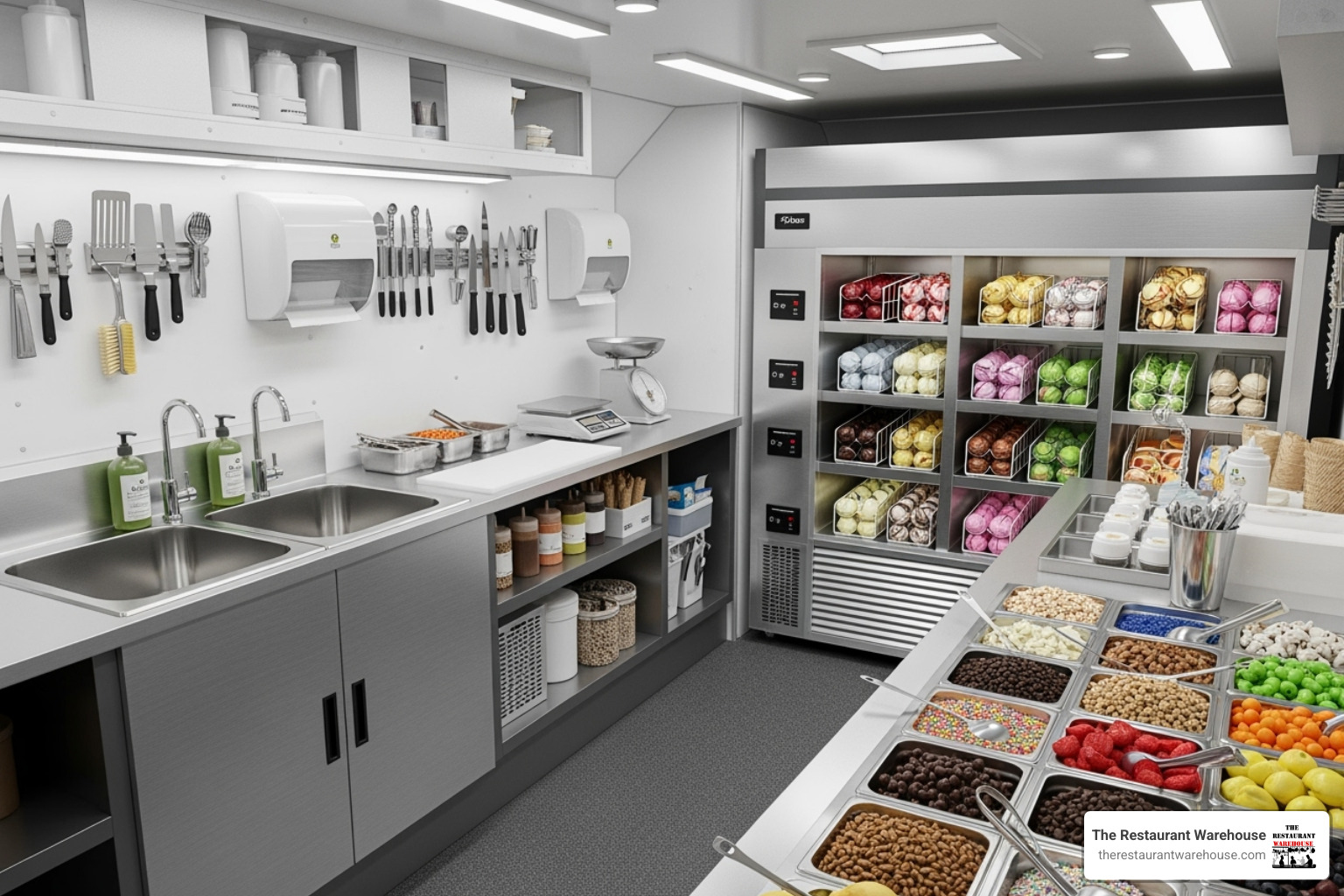
The right equipment layout can make or break your ice cream concession trailer operation. Every piece of equipment must serve multiple purposes: maintaining food safety, maximizing efficiency, and ensuring compliance with health codes. We've seen too many entrepreneurs struggle because they skimped on essential equipment or failed to plan their workflow properly.
For comprehensive equipment planning, consult our buyer's guide for food truck equipment.
Freezing & Refrigeration: The Heart of Your Operation
Your refrigeration system is absolutely critical - a failure here means lost inventory and lost revenue. Here's how different freezer types compare for ice cream operations:
| Equipment Type | Capacity | Accessibility | Ideal Use Case |
|---|---|---|---|
| Chest Freezers | 10-20 cubic feet | Top-loading, requires digging | Bulk storage, backup inventory |
| Dipping Cabinets | 6-12 pans | Glass top, easy access | Active service, display |
| Undercounter Freezers | 4-8 cubic feet | Front-loading, organized | Prep ingredients, toppings |
Dipping Cabinets: These are your primary service units. Look for models with curved glass tops that provide better visibility and easier access. The ideal temperature range is 6-10°F for optimal scooping consistency.
Chest Freezers: Essential for bulk storage of ice cream containers, frozen toppings, and backup inventory. Position these away from the service area but ensure they're easily accessible for restocking.
Undercounter Refrigerators: Perfect for storing milk, cream, fresh fruits for toppings, and other perishables that don't require freezing temperatures.
Glass Door Merchandisers: These units serve double duty by storing pre-packaged items like ice cream sandwiches and popsicles while displaying them to customers for impulse purchases.
Learn more about refrigeration options in our commercial freezer guide, top commercial freezer brands, and undercounter commercial freezer guide.
Sanitation & Plumbing: Staying Health-Code Compliant
3-Compartment Sink: This is non-negotiable for health department approval. The three compartments are used for washing, rinsing, and sanitizing all utensils and small equipment. Size requirements vary by jurisdiction, but most require each compartment to be large enough to completely submerge your largest washable item.
Hand-Washing Sink: A separate hand-washing sink is required by health codes and must be easily accessible to all food handlers. It needs hot and cold running water, soap, and single-use towels.
Water Heater: A 2.5-gallon unit is typically sufficient for most ice cream operations. Look for models with fast recovery rates to ensure consistent hot water availability during busy periods.
Freshwater Tank: Size this based on your expected daily usage and local refill availability. A 20-gallon tank is common for most operations, but high-volume locations might need 30-40 gallons.
Greywater Tank: Must be at least as large as your freshwater tank, with 40-gallon capacity being standard for most trailers. Some jurisdictions require larger greywater tanks to account for ice melting and cleaning water.
For detailed plumbing guidance, check our food truck sinks guide and food truck regulations.
Power, Serving & Other Essentials
Generator: Size your generator based on your total electrical load plus 20% safety margin. Soft serve machines, air conditioning, and lighting are your biggest power consumers. Most ice cream trailers need 6-10 kW generators, with larger units required for multiple soft serve machines.
Power Inverter: Converts 12 V DC power to 120 V AC power for smaller equipment when the generator isn't running. Useful for maintaining minimal lighting and small refrigeration units during transport.
Serving Windows: Double-hung windows with screens are standard, but consider slide-up windows for better weather protection and easier operation. The window should be positioned at a comfortable height for both staff and customers.
Awnings: Provide shade for customers and protect your serving window from rain. Retractable awnings offer flexibility and reduce wind resistance during transport.
Point-of-Sale System: Modern POS systems accept credit cards, track inventory, and provide sales analytics. Many systems now integrate with mobile payment apps like Apple Pay and Google Pay.
Menu Boards: LED-backlit boards are visible in all lighting conditions and allow easy menu changes. Consider digital displays for maximum flexibility.
Essential Smallwares:
- Ice cream scoops (multiple sizes)
- Serving spoons for toppings
- Cup dispensers for different sizes
- Napkin holders and dispensers
- Topping containers with portion control scoops
- Squeeze bottles for sauces
- Cleaning supplies and sanitizers
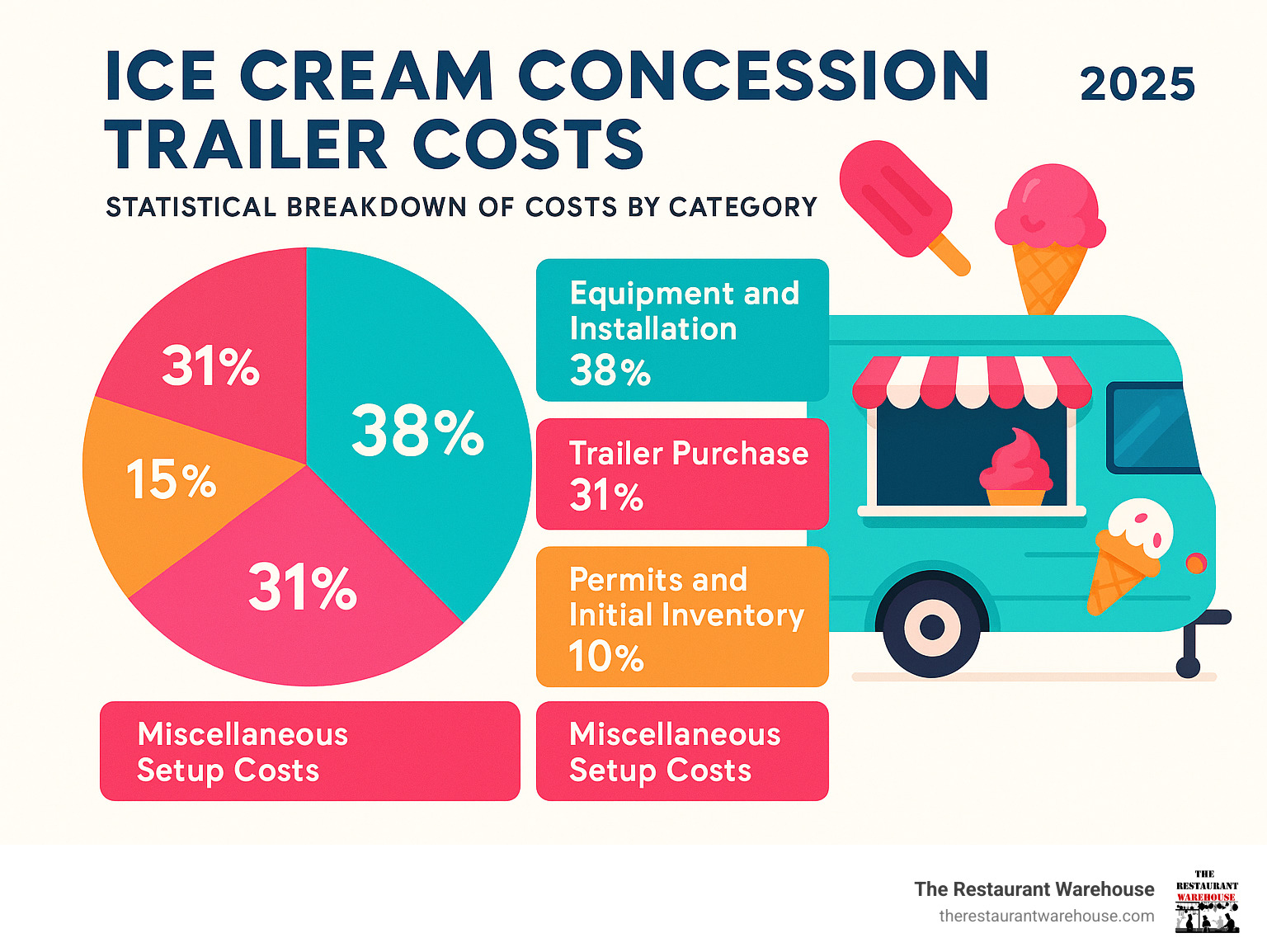
Budgeting for Your Trailer: Costs, Sizes, and Where to Look
Understanding the financial investment required for an ice cream concession trailer helps you make informed decisions and secure appropriate financing. The total cost depends on several factors: trailer size, equipment package, new versus used condition, and level of customization.
How Much Does an Ice Cream Concession Trailer Cost?
Based on current market data, here's how ice cream concession trailers break down by price range:
Under $15,000 (3 available):
- Usually older units (10+ years)
- Basic equipment packages
- May need significant updates
- Good for testing the market with minimal investment
$15,000 - $25,000 (9 available):
- Mix of older and mid-age units
- Basic to moderate equipment
- Often include essential items like sinks and electrical
- Popular entry-level price point
$25,000 - $40,000 (18 available):
- Most common price range
- Good mix of age and condition
- Usually include complete equipment packages
- Best value for established businesses
$40,000 - $60,000 (10 available):
- Newer units with premium equipment
- Often include soft serve machines
- Turnkey operations ready for immediate use
- Higher-end finishes and features
Over $60,000 (11 available):
- New or nearly new units
- Premium equipment packages
- Custom designs and layouts
- Maximum earning potential from day one
Turnkey Trailers: These fully equipped units include everything needed to start operations immediately. While more expensive upfront, they eliminate the guesswork and potential compatibility issues of piecing together equipment separately.
Used Trailer Inspection: When buying used, always inspect the electrical system, plumbing, refrigeration equipment, and structural integrity. A professional inspection can save thousands in unexpected repairs.
Finding the Right Size for Your Business
Common Dimensions:
- 6'x12': Compact size, lower towing requirements, suitable for small events
- 8'x16': Popular mid-size option, good balance of space and mobility
- 8.5'x20': Large capacity, suitable for high-volume locations
- 8'x24': Maximum space, requires heavy-duty towing vehicle
Interior Height: Most trailers offer 6'4" interior height for 10-12 foot lengths, and 6'8" for 14+ foot lengths. Taller operators should verify headroom before purchasing.
Layout Planning: Sketch your workflow from order-taking to product delivery. Ensure equipment placement allows efficient movement and meets health code requirements for hand-washing access.
Towing Capacity: Verify your vehicle's towing capacity includes the trailer weight plus equipment, inventory, and water. Most ice cream trailers require vehicles rated for 5,000-8,000 pounds towing capacity.
Storage Space: Plan for ice cream inventory, toppings, supplies, cleaning materials, and personal items. Adequate storage prevents daily restocking trips and ensures you can handle busy periods.
Where to Find Your Perfect Ice Cream Concession Trailer
Custom Manufacturers: Companies specializing in food trailers can build exactly what you need. Expect 6-12 week lead times and higher costs, but you'll get precisely the layout and equipment you want.
Online Marketplaces: Websites specializing in food trucks and trailers offer the largest selection of used units. You can filter by price, location, and equipment to find suitable options.
Local Classifieds: Don't overlook local newspaper classifieds and Facebook Marketplace. Sometimes the best deals are found close to home, and you can inspect before buying.
Due Diligence: Always verify the seller's ownership, check for liens, and confirm the trailer's legal status for food service. Some states require special documentation for commercial food trailers.
Health Department Inspection: Before finalizing any purchase, confirm the trailer will pass your local health department inspection. Requirements vary significantly between jurisdictions.
Professional Appraisal: For expensive units, consider hiring a professional appraiser familiar with food service equipment. This protects your investment and helps secure financing.
Conclusion: Start Scooping Up Success
Your dream of owning an ice cream concession trailer is closer than you think. This isn't just another business opportunity - it's your chance to build something that brings genuine joy to people while creating a profitable future for yourself.
The numbers speak for themselves. With startup costs ranging from $15,000 to $60,000, you're looking at a fraction of what traditional restaurants require. Yet the earning potential rivals much larger operations, especially when you consider the lower overhead costs and flexible location options that come with mobile food service.
What makes ice cream concession trailers particularly attractive is their forgiving nature for new entrepreneurs. Unlike complex restaurant kitchens requiring years of culinary training, ice cream operations focus on quality ingredients, friendly service, and smart location choices. These are skills you can learn quickly and master with practice.
The detachable design gives you advantages that ice cream truck operators simply can't match. More storage space means fewer restocking trips. Lower initial vehicle costs mean more money available for quality equipment. The ability to unhook your trailer means your personal vehicle stays available for other uses.
But here's what really matters: the right equipment makes all the difference. We've seen too many promising ice cream businesses struggle because they tried to save money on essential items like refrigeration or electrical systems. A failed freezer doesn't just mean lost inventory - it means disappointed customers, damaged reputation, and lost revenue during your busiest times.
At The Restaurant Warehouse, we've helped hundreds of mobile food entrepreneurs get their start. Our wholesale pricing means you can afford quality equipment from day one, while our experience helps you avoid the costly mistakes that sink new businesses. Whether you need a complete equipment package or just a few key pieces, we're here to help you succeed.
The mobile food industry continues growing, and ice cream remains one of the most beloved treats across all demographics. Your ice cream concession trailer can tap into this demand while giving you the freedom and flexibility that traditional restaurants can't offer.
The sweet taste of entrepreneurial success is waiting for you. Take that first step, invest in quality equipment, and start building the mobile ice cream business you've been dreaming about.
Ready to turn your vision into reality? Get your complete restaurant kitchen equipment checklist and start planning your perfect ice cream operation today.
About The Author

Sean Kearney
Sean Kearney is the Founder of The Restaurant Warehouse, with 15 years of experience in the restaurant equipment industry and more than 30 years in ecommerce, beginning with Amazon.com. As an equipment distributor and supplier, Sean helps restaurant owners make confident purchasing decisions through clear pricing, practical guidance, and a more transparent online buying experience.
Connect with Sean on LinkedIn, Instagram, YouTube, or Facebook.