

Swirl, Serve, Sell: Best Soft Serve Concession Trailers Available Now
Why Starting a Soft Serve Concession Trailer Business Makes Perfect Sense
Launching a soft serve concession trailer is one of the quickest, most affordable ways to join the food-service world. Instead of signing a long lease or paying for a full build-out, you tow your dessert shop wherever crowds gather. Low equipment costs, simple recipes, and minimal food waste mean you can reach profitability fast. Add the freedom to park at festivals, corporate lunches, or neighborhood block parties—and it’s easy to see why first-time entrepreneurs love this model.
In the sections below we’ll show you how to pick the right trailer, outfit it correctly, stay compliant, and keep your budget in line—all while taking advantage of the wholesale pricing offered by The Restaurant Warehouse.
The Sweet Appeal: What Can You Serve from a Soft Serve Trailer?
A soft serve concession trailer is a fully equipped, road-ready ice-cream shop that lets you meet customers wherever they are. With the right gear your menu can be as simple or as adventurous as you like.
Beyond the Cone: Expanding Your Menu
- Soft serve ice cream—vanilla, chocolate, or an irresistible twist—remains the star.
- Frozen yogurt gives calorie-conscious guests a lighter choice.
- Gelato, Italian ice, and fruit sorbets provide premium or dairy-free upsells.
- Slushy machines add frozen drinks; the same mix can become thick milkshakes.
- Toppings, sundae cups, and floats turn a $3 cone into a $7 treat.
The Advantages of a Mobile Dessert Business
- Start-up costs are far lower than a brick-and-mortar shop.
- Ice cream enjoys year-round demand.
- You can relocate instantly to busy spots or events.
- Catering gigs—corporate parties, birthdays, school functions—add steady revenue.
- Local visibility grows quickly; sites like Food Truck Army help you book high-value events.
Gearing Up: Essential Equipment for Your Soft Serve Concession Trailer
Every appliance must do double duty, survive bumpy roads, and satisfy the health inspector. For a deep dive, see our concession trailer equipment guide.
The Star of the Show: Soft Serve Machines
Countertop units save space; floor models increase capacity. Gravity-fed machines are simple and rugged, while pump systems handle thicker mixes. Air-cooled models require no plumbing; water-cooled units run quieter if you can supply water. Choose single-flavor barrels for basics or twist machines for instant variety, and size for your busiest day.
Refrigeration and Storage
- Under-counter refrigerators for mix and perishables
- Dipping cabinets for gelato or hard ice cream
- Chest freezers for backup stock
- Chilled topping rails to keep fruit and whipped cream safe
Find more mobile-friendly options in our commercial refrigerator guide.
Support and Sanitation Equipment
A 3-compartment sink, separate hand sink, hot water, and properly sized fresh/grey tanks are mandatory. Add a high-speed blender for shakes and a waffle-cone iron for that unmistakable aroma. Specs are in our food truck sinks guide.
Designing Your Dream Trailer: Sizes, Layouts, and Customization
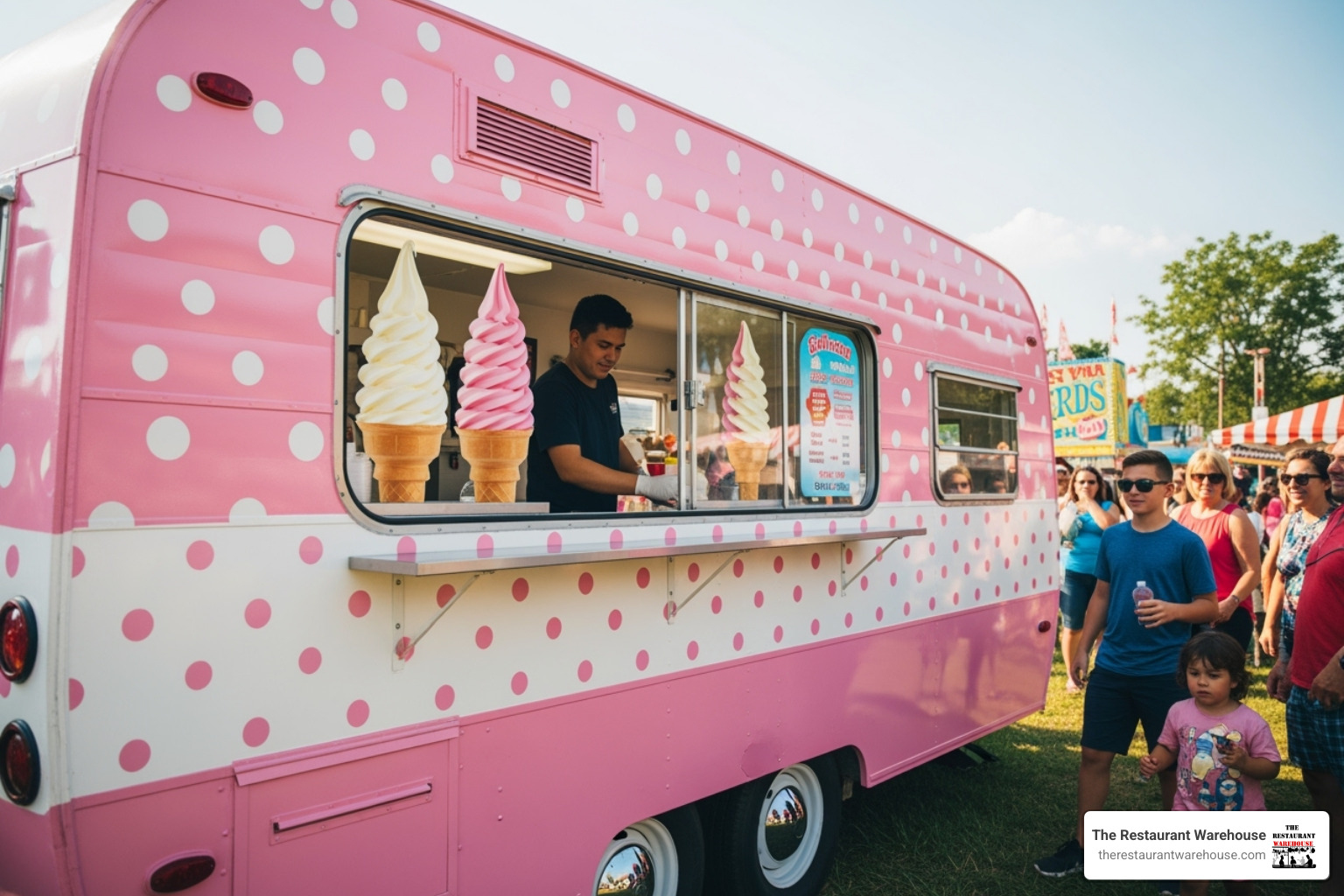
Smart design turns a tight space into an efficient, profitable workspace.
Common Trailer Sizes and Configurations
- Small (10–14 ft) – one operator, one machine, ideal for testing the waters.
- Medium (16–20 ft) – two windows, room for a helper, added storage.
- Large (22 ft+) – multiple machines and windows for high-volume events.
Bumper pulls hitch to a standard receiver; goosenecks offer better weight distribution and extra floor space.
Planning Your Custom soft serve concession trailer Layout
Place the soft serve machine near the service window, toppings beside it, and the register last. Reserve uninterrupted counter space for prep and keep sinks easy to reach. Vertical shelving maximizes storage.
Branding and Exterior Design
A vinyl wrap is a rolling billboard. LED strips around the window draw evening crowds, while clear, readable menu boards speed up ordering. Stick to consistent colors and logos for instant brand recognition.
Powering Your Operation: Utilities and On-the-Go Logistics
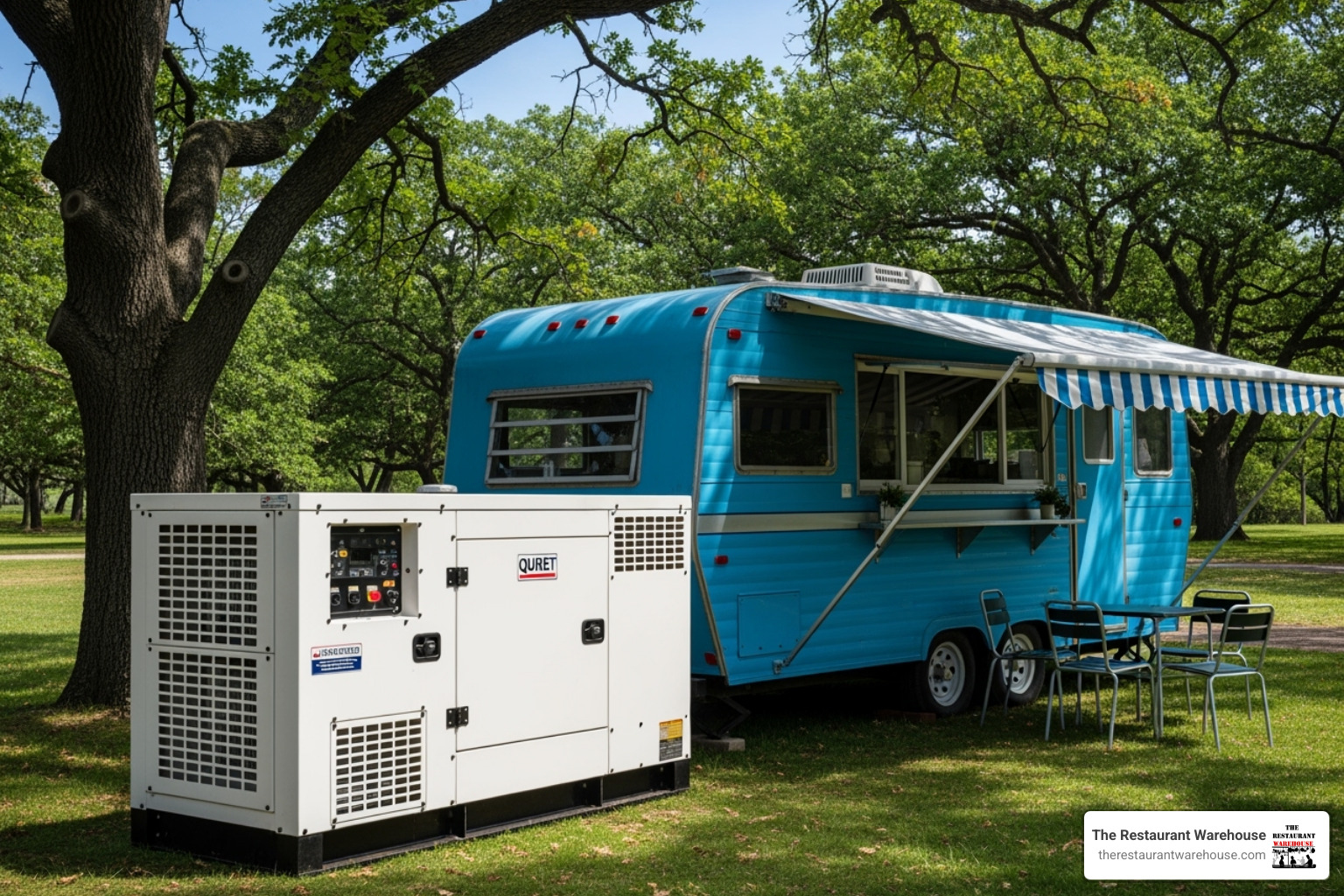
A reliable utility setup keeps the lines moving and the health inspector happy.
The Heartbeat of Your Trailer: Power Generation
Add the running amps of your equipment, then choose a generator with at least 20 % headroom. Quiet inverter models keep neighbors and event organizers on your side. Gas is affordable upfront, diesel runs longer, and propane stores cleanly. Wire in a shore-power inlet for fairs that supply electricity.
Water and Plumbing Systems
Most codes call for about 30 gal of fresh water and an equal or larger grey tank, plus a heater that can reach 120 °F. A demand pump and accumulator provide steady pressure; mount tanks low for stability.
Inventory and Waste Management
Ice-cream’s 8–12-month shelf life lets you buy mix in bulk without spoilage. Protect dry goods in sealed bins and use lidded trash cans for quick change-outs. Build relationships with suppliers who deliver to your commissary or allow after-hours pickup.
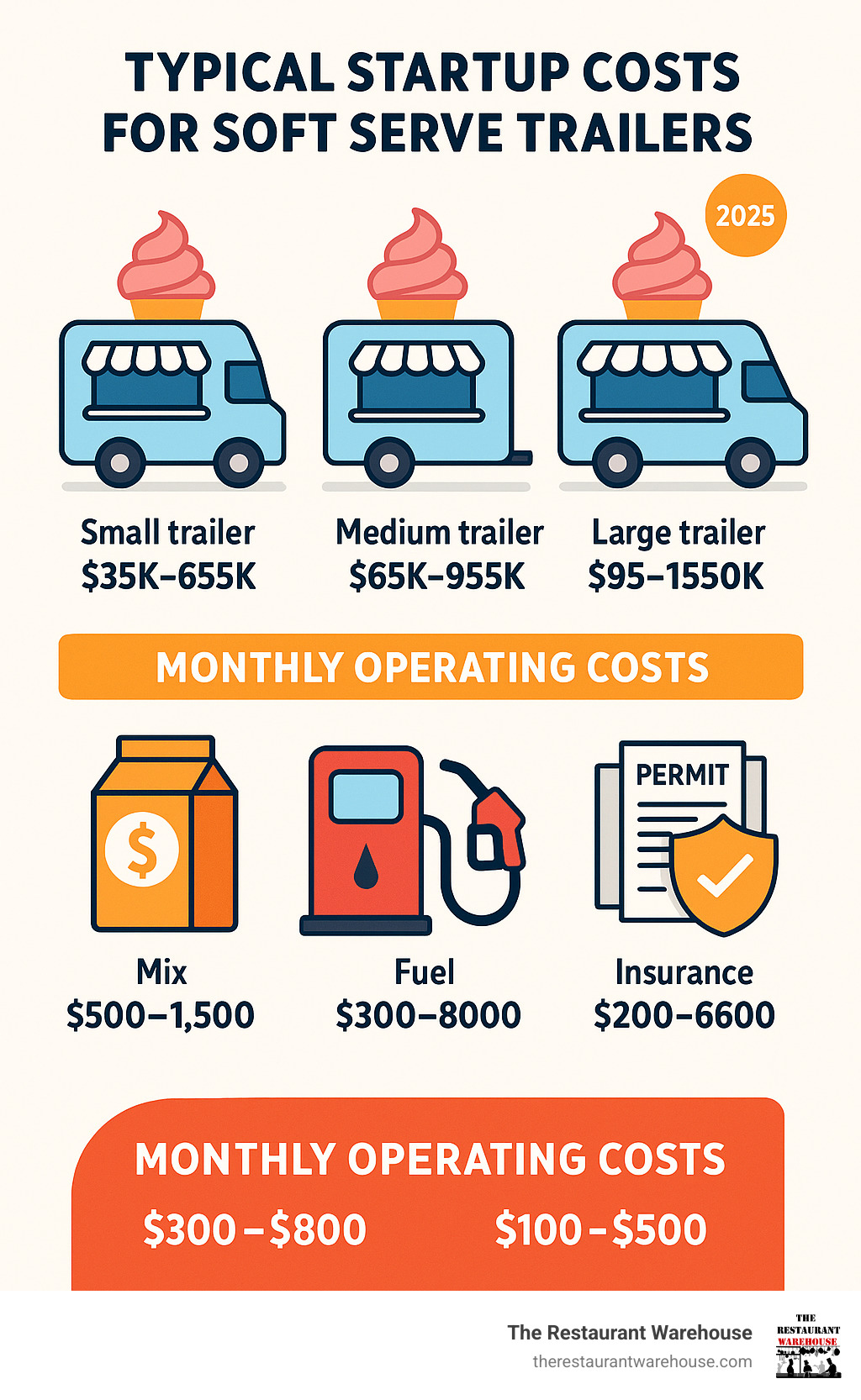
The Bottom Line: Budgeting for Your Mobile Business
A clear budget keeps your dream from melting. For a full template, see our sample food truck business plan.
Estimating Your Initial Investment
- Used 2015-or-newer trailer with one machine: $35k–$50k
- Custom multi-machine build: $95k+
- Wrap: $3k–$8k
- Opening inventory: under $5k
- Licensing and permits: $500–$2k
Understanding Ongoing Costs
- Mix: 15–25 % of sales
- Cups/cones: 3–5 %
- Toppings: 2–4 %
- Fuel: $300–$800 per month
- Insurance: $200–$600 per month
- Maintenance: 5–10 % of equipment value yearly
Securing Funding for your soft serve concession trailer
Most owners blend savings with an SBA micro-loan or equipment lease. Investors are another route if you’re comfortable sharing profits. Our restaurant equipment financing guide explains each option.
Frequently Asked Questions about Soft Serve Trailers
How much does a fully equipped soft serve concession trailer cost?
When entrepreneurs ask about soft serve concession trailer pricing, the answer depends on several key factors that can dramatically impact your investment.
Small trailers (10-14 ft) represent the most affordable entry point, typically costing $35,000-$65,000 fully equipped. These compact units work perfectly for single operators or part-time ventures, offering everything you need to start serving customers without breaking the bank.
Medium trailers (16-20 ft) hit the sweet spot for most operators, ranging from $65,000-$95,000. This size provides room for dual service windows, multiple soft serve machines, and comfortable working space for small teams.
Large trailers (22+ ft) cater to high-volume operations and can cost $95,000-$150,000 or more with premium equipment packages. These units offer full kitchen capabilities and extensive storage for ambitious operators targeting large events and festivals.
The new vs. used decision significantly affects your budget. Used trailers can provide 30-50% savings, making them attractive for budget-conscious entrepreneurs. However, we recommend focusing on 2015 or newer models to ensure you're getting modern equipment that meets current health codes.
Customization choices can push costs higher or keep them manageable. Basic packages include essential equipment like a single soft serve machine, required sinks, and basic refrigeration. Premium customizations like multiple machines, specialty refrigeration, or advanced electrical systems add substantial costs but may be worth it for high-volume operations.
Equipment quality directly impacts both upfront costs and long-term success. Commercial-grade equipment costs more initially but delivers better reliability, efficiency, and durability than consumer alternatives. Skimping on equipment quality often leads to expensive repairs and lost revenue during breakdowns.
What permits do I need to operate?
Navigating the permit process might seem overwhelming, but understanding the requirements helps you plan properly and avoid costly delays.
Every soft serve concession trailer operation needs a business license, which typically costs $50-$500 depending on your location and business structure. This basic requirement establishes your legal right to operate and collect sales tax.
Health department permits represent the most critical requirement for food service operations. These mandatory permits ensure you meet food safety standards and protect public health. The process typically includes facility inspections, food safety training verification, and ongoing compliance monitoring.
All staff members need food handler's permits in most jurisdictions. These certifications demonstrate proper food safety knowledge and typically cost $10-$50 per person. The training covers essential topics like temperature control, cross-contamination prevention, and proper hygiene practices.
Here's where it gets tricky: requirements vary significantly by city and county. Some areas require additional permits for mobile vendors, special event participation, or specific locations. You'll need to research requirements for each area where you plan to operate, as permits from one jurisdiction rarely transfer to another.
The permit process can take several weeks or months, so start early in your planning process. Many operators find it helpful to connect with local health departments before finalizing their trailer design to ensure compliance with local requirements.
For comprehensive guidance on navigating regulatory requirements, our food truck regulations overview covers the essential compliance issues that mobile food operators face.
How profitable is a soft serve trailer?
The profit potential of a soft serve concession trailer makes it one of the most attractive mobile food businesses, but success depends on understanding several key factors.
High profit margins create the foundation for success. Typical food costs run just 15-25% of sales, significantly lower than most restaurant operations. This advantage comes from the nature of frozen desserts and efficient serving methods that minimize waste.
Low food costs result from unique advantages in the frozen dessert business. The 8-12 month storage life of properly maintained ice cream reduces waste dramatically compared to fresh food operations. This extended shelf life also allows bulk purchasing, reducing your cost per serving.
Location makes all the difference in your profitability. High-traffic areas, popular events, and affluent neighborhoods typically generate higher sales volumes and support premium pricing. A great location can mean the difference between struggling and thriving.
Event frequency directly impacts your seasonal profitability. Building relationships with event organizers and developing a regular schedule of appearances helps maintain consistent revenue throughout your operating season. Many successful operators book 60-80% of their events months in advance.
Seasonal factors affect demand in most climates, but smart operators develop strategies for slower periods. Some focus on indoor events during winter months, others create holiday specialties, and some use slow seasons for equipment maintenance and business planning.
The most successful operators understand that profitability comes from combining reasonable pricing with high volume and efficient operations. With proper planning and execution, many soft serve concession trailer businesses achieve positive cash flow within their first season.
Conclusion: Start Your Sweet Journey Today
The soft serve concession trailer business represents one of the smartest entry points into mobile food entrepreneurship. While other food ventures demand years of culinary training and complex operations, your path to success centers on delivering consistent quality treats that people already love.
What makes this opportunity especially sweet? The numbers tell the story. With ice cream maintaining its 8-12 month shelf life when properly stored, you're looking at minimal waste compared to restaurants throwing away fresh ingredients daily. Your customers span every age group - from toddlers demanding their first cone to grandparents treating their families at weekend festivals.
The beauty lies in the simplicity. You're not reinventing cuisine or competing with celebrity chefs. You're providing a universally beloved product with proven demand and excellent profit margins. Food costs typically run just 15-25% of sales, leaving healthy room for growth and profit.
Your soft serve concession trailer offers something traditional restaurants can't match: complete flexibility. Busy downtown lunch crowd on Tuesday? You're there. Weekend festival across town? You're there too. School event, corporate gathering, or neighborhood block party - you follow the customers instead of hoping they find you.
This mobility transforms seasonal challenges into opportunities. When winter slows outdoor events, you can pivot to indoor venues, holiday parties, or even take a planned break for equipment maintenance and vacation. Try doing that with a brick-and-mortar shop paying rent every month.
At The Restaurant Warehouse, we've helped countless entrepreneurs launch their mobile food dreams. Our wholesale pricing on commercial equipment means your initial investment goes further, while our experience guides you toward equipment choices that support long-term success rather than just the lowest upfront cost.
The mobile dessert industry keeps growing as busy families seek convenient treats and event organizers look for vendors who improve their gatherings. Your timing couldn't be better for entering this market with a well-planned operation.
Ready to turn your entrepreneurial dreams into reality? Start with proper planning using our complete kitchen equipment checklist. This comprehensive guide ensures you don't miss any crucial equipment while staying within budget.
The combination of low startup costs, consistent demand, and attractive profit margins makes the soft serve concession trailer business one of the most accessible paths to entrepreneurial success. Your sweet journey starts with a single decision - are you ready to serve happiness, one cone at a time?
About The Author

Sean Kearney
Sean Kearney is the Founder of The Restaurant Warehouse, with 15 years of experience in the restaurant equipment industry and more than 30 years in ecommerce, beginning with Amazon.com. As an equipment distributor and supplier, Sean helps restaurant owners make confident purchasing decisions through clear pricing, practical guidance, and a more transparent online buying experience.
Connect with Sean on LinkedIn, Instagram, YouTube, or Facebook.