Why Commercial Espresso Machines Are Critical to Your Success

Commercial espresso machines are the beating heart of any coffee-focused business, from busy cafes to upscale restaurants. Choosing the right machine impacts everything from the speed of service during peak hours to the consistency of your drinks and, ultimately, your customer satisfaction. When you invest in the right espresso machine, you're not just buying equipment—you're investing in your business's reputation.
A quality machine delivers the speed and consistency needed to serve hundreds of customers daily without compromising on taste. Understanding the different types is key. Semi-automatic machines offer full barista control, ideal for artisan shops. Automatic (volumetric) machines provide consistent shot volumes, perfect for busy cafes. For ultimate convenience in hotels or offices, super-automatic machines deliver one-touch operation. Finally, lever machines offer artisanal pressure profiling for specialty shops that value craft and theater.
Beyond the initial purchase, consider ongoing costs like maintenance, water filtration, and staff training. Daily backflushing, regular gasket replacement, and proper descaling are critical to protecting your investment and ensuring consistent performance. Understanding customer needs is everything—especially when selecting commercial espresso machines that match your business volume and service style. Finding equipment that delivers both quality and value is the key to setting your business up for success.
Ready to explore the best equipment for your business? Let's explore what makes a great commercial espresso machine and how to choose the right one for your needs.
Choosing the Best Commercial Espresso Machines for Your Business
Picture this: It's 7:30 AM, and your cafe is buzzing. A line of customers stretches to the door, each one eager for their morning caffeine fix. Behind the counter, your espresso machine hums to life, pulling shot after perfect shot. This isn't just a piece of equipment—it's the beating heart of your coffee program.
The foundation of any great coffee program rests squarely on the shoulders of your commercial espresso machine. This single piece of equipment can make or break your reputation. Investing in a quality machine delivers benefits that ripple through your operation, starting with increased speed and efficiency. A robust machine built for continuous service helps you get ahead during the morning rush, turning tables faster and translating directly into revenue.
But speed without quality is a recipe for disaster. A quality machine empowers your baristas to pull shots with rich crema and steam milk to velvety perfection, shift after shift. This reliability becomes your reputation, leading to higher customer satisfaction and retention. When customers know they can count on you for an excellent espresso, they keep coming back. All these factors combine to maximize your profitability. A top-tier commercial espresso machine might seem like a significant upfront investment, but when you calculate the return—higher throughput, reduced waste, and increased customer loyalty—the numbers speak for themselves.
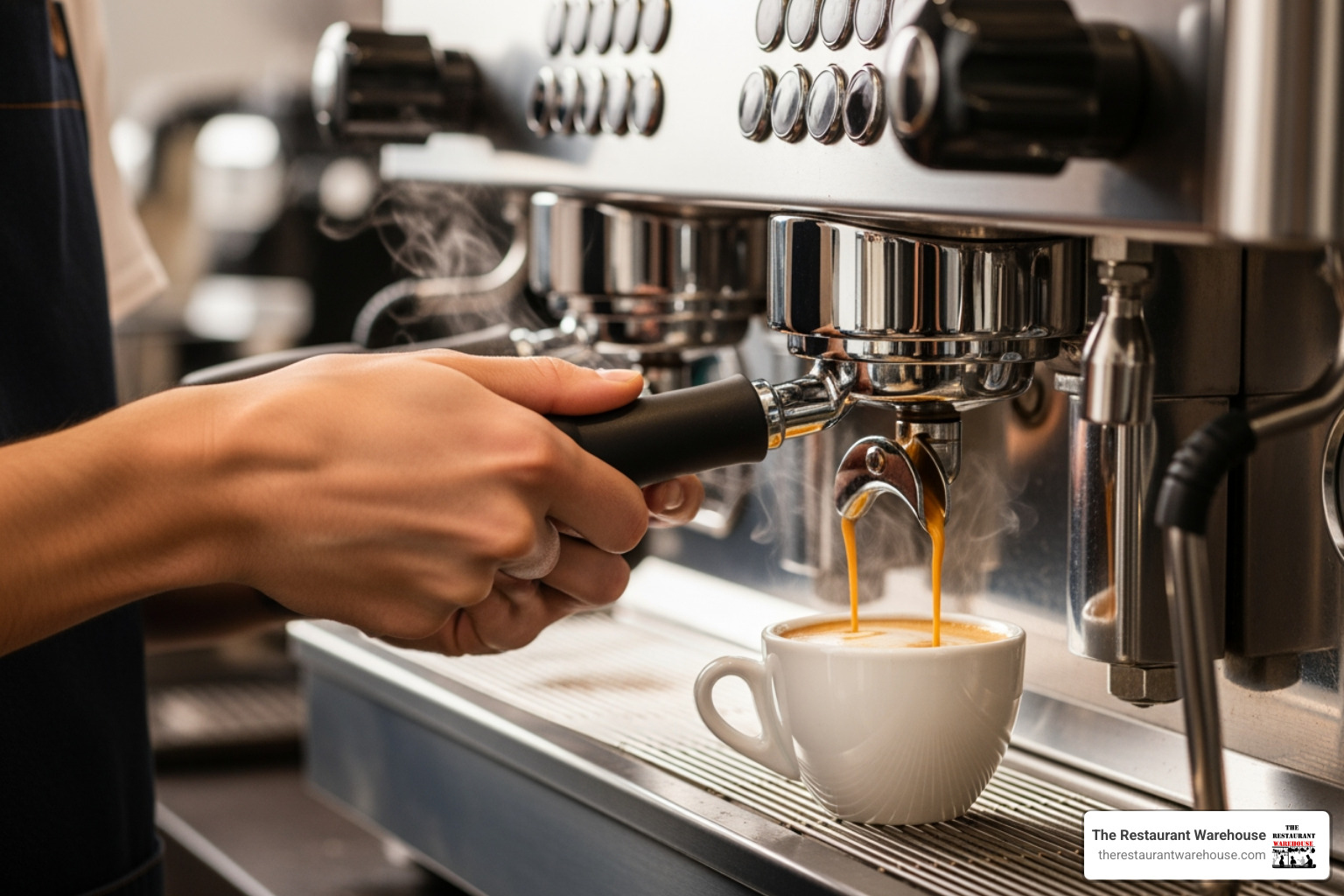
Understanding the Different Types of Commercial Espresso Machines
Navigating commercial espresso machines is clearer once you understand the main types. Each offers a different balance of control and automation.
-
Semi-automatic machines are for artisan shops where craft matters. The barista controls the start and stop of the extraction, allowing them to dial in each shot. This requires significant training but allows for true artistry.
-
Automatic or volumetric machines are game-changers for busy environments. You program specific shot volumes, and the machine dispenses the precise amount of water automatically. This ensures remarkable consistency and is perfect for cafes and restaurants needing both speed and reliability. Learn how to choose the right espresso machine for your needs.
-
Super-automatic machines handle the entire process: grinding, tamping, brewing, and even steaming milk, all at the touch of a button. They're excellent for hotels, offices, or self-service stations where staff may not have extensive barista training.
-
Lever or manual machines offer the ultimate in artisanal control. The barista manually pulls a lever to force water through the coffee, allowing for nuanced pressure profiling. It's the most skill-intensive option but offers an unparalleled connection to the brewing process.
Key Features That Define a Quality Commercial Espresso Machine
Beyond type, critical features separate exceptional machines from adequate ones.
Temperature stability starts with your boiler system. A consistent brewing temperature is critical for proper extraction. Heat exchanger (HX) systems use one boiler for steam with a tube running through it to heat brew water. Dual boiler systems have independent boilers for brewing and steaming, offering precise temperature control for both. At the top end, multi-boiler technology provides a dedicated boiler for each group head, offering unparalleled stability for high-volume operations.
Group head capacity determines how many shots you can pull simultaneously. A single-group machine works for low-volume settings. Two-group machines are the industry standard for most cafes, allowing two baristas to work side-by-side. For high-volume locations, three or four-group machines are necessary to prevent bottlenecks.
Your pump and pressure system is also vital. Rotary pumps are the commercial standard, prized for their consistent pressure, durability, and quiet operation. They can be plumbed directly into your water line, which is essential for a busy cafe. Consistent pressure, typically around 9 bars, is fundamental to creating balanced espresso.
Finally, consider build quality and water. Look for machines with durable stainless steel construction. An ergonomic design also matters for your baristas' comfort and productivity. And never underestimate water. The critical role of water filtration cannot be overstated. Unfiltered hard water creates limescale buildup that can cause costly damage. Proper filtration protects your machine and ensures the true flavors of your coffee shine through, as confirmed by scientific research on how water chemistry impacts coffee flavor. Scientific research on water chemistry for coffee.
Maintenance and Upkeep: Protecting Your Investment
Your commercial espresso machine needs regular care. Think of maintenance as insurance against expensive repairs.
Your daily cleaning routine should include backflushing the group heads with water to flush out old coffee grounds, purging and wiping steam wands after every use to prevent milk buildup, and thoroughly cleaning portafilters and baskets at the end of the day.
Weekly and monthly procedures go deeper. Once a week, perform a deep cleaning with a specialized espresso machine cleaner to break down stubborn coffee oils. Monthly, inspect your group head gaskets and shower screens, replacing them as needed to prevent leaks and ensure proper water distribution.
We've mentioned it before, but it deserves emphasis: the critical role of water filtration is ongoing. Even with good filtration, periodic descaling may be necessary to remove mineral deposits and keep your machine running efficiently. Discover the essentials of descaling coffee machines. A well-maintained machine produces better coffee, lasts longer, and saves you money. Ready to invest in a commercial espresso machine that will become the foundation of your coffee program? Contact us to discuss your specific needs and find the perfect equipment for your business.
Essential Equipment Spotlight: Commercial Ice Makers
While your commercial espresso machine might take center stage, your commercial ice maker is an unsung hero. Every iced latte, iced tea, and chilled cocktail depends on a steady supply of clean, fresh ice. A reliable ice maker is also critical for food safety, preserving ingredients, and creating attractive food displays. With iced beverages being a year-round staple, a dependable ice maker is essential.
Types of Ice and Their Uses
Not all ice is created equal. Understanding the different types helps you choose the right machine.
-
Full cube and half cube ice are the workhorses for general use. Full cubes melt slowly, making them perfect for cocktails. Half cubes are excellent for soft drinks and iced coffees, chilling beverages quickly.
-
Nugget ice, also known as chewable ice, is incredibly popular in soft drinks and smoothies because it absorbs flavors and has a satisfying texture.
-
Flake ice is soft and moldable, used primarily for food displays like seafood counters and salad bars to keep items chilled and visually appealing.
Key Purchasing Considerations
Choosing the right commercial ice maker requires careful thought. First, determine how much ice you need. Your daily production capacity, measured in pounds, should be based on your peak consumption. It's always smarter to slightly overestimate than to run out.
Production capacity is useless without adequate storage bin size. Your bin should hold at least a full day's production. The choice between air-cooled and water-cooled units depends on your space. Air-cooled machines are more common and energy-efficient but require good ventilation. Water-cooled units are quieter and work well in hot environments but use more water.
Don't overlook footprint and ventilation requirements. Poor ventilation leads to overheating and reduced efficiency. Finally, ice is food. Look for machines that are easy to clean and maintain to prevent mold and bacterial growth. Following FDA guidance on ice machine sanitation is crucial. The FDA Food Code provides clear standards for equipment cleaning to protect public health.
Investing in a quality commercial ice maker protects your beverage program. Contact us to discuss the right ice maker capacity and configuration for your specific business needs—we'll help you find the perfect balance of production, storage, and efficiency.
Powering Your Kitchen: Commercial Mixers
While your commercial espresso machine is brewing, a commercial mixer is often the powerhouse in the background. From cafes whipping up batters for muffins and scones to bakeries kneading dough for fresh bread, a strong commercial mixer is essential for boosting efficiency in food preparation and ensuring batch-to-batch consistency. This equipment dramatically cuts down on manual labor and saves precious time.
Planetary vs. Spiral Mixers
Choosing the right type of mixer comes down to your primary tasks.
Planetary Mixers are versatile all-rounders. The mixing attachment spins on its own axis while orbiting the bowl, ensuring all ingredients are thoroughly incorporated. This makes them perfect for a wide variety of tasks, including mixing batters, whipping creams, and kneading lighter doughs. If your menu requires flexibility, a planetary mixer is a fantastic choice.
Spiral Mixers are specialists designed for heavy dough. In these machines, the bowl rotates while a spiral-shaped arm gently kneads the dough. This process develops gluten with less friction and heat, resulting in a superior dough structure. Spiral mixers are the go-to for high-volume bakeries and cafes that need to produce large amounts of dense dough consistently.
Sizing and Power
Once you know the type, consider size and power. Choose capacity in quarts based on your batch size. Commercial mixers range from small 5-20 quart countertop models to massive 60-140 quart floor models. It's wise to select a mixer slightly larger than your current needs to allow for growth.
Next, match motor horsepower (HP) to your toughest mixing job. Kneading heavy, dense doughs requires a higher HP motor to prevent strain and premature wear. For dough-focused operations, it's also important to understand the absorption ratio (the ratio of water to flour). Stiffer doughs with a lower absorption ratio put more stress on a mixer. Ensure the model you choose can handle your specific recipes without struggling. A properly matched mixer is a smart investment for any serious food preparation area.
The Foundation of Cold Storage: Walk-In Freezers & Coolers
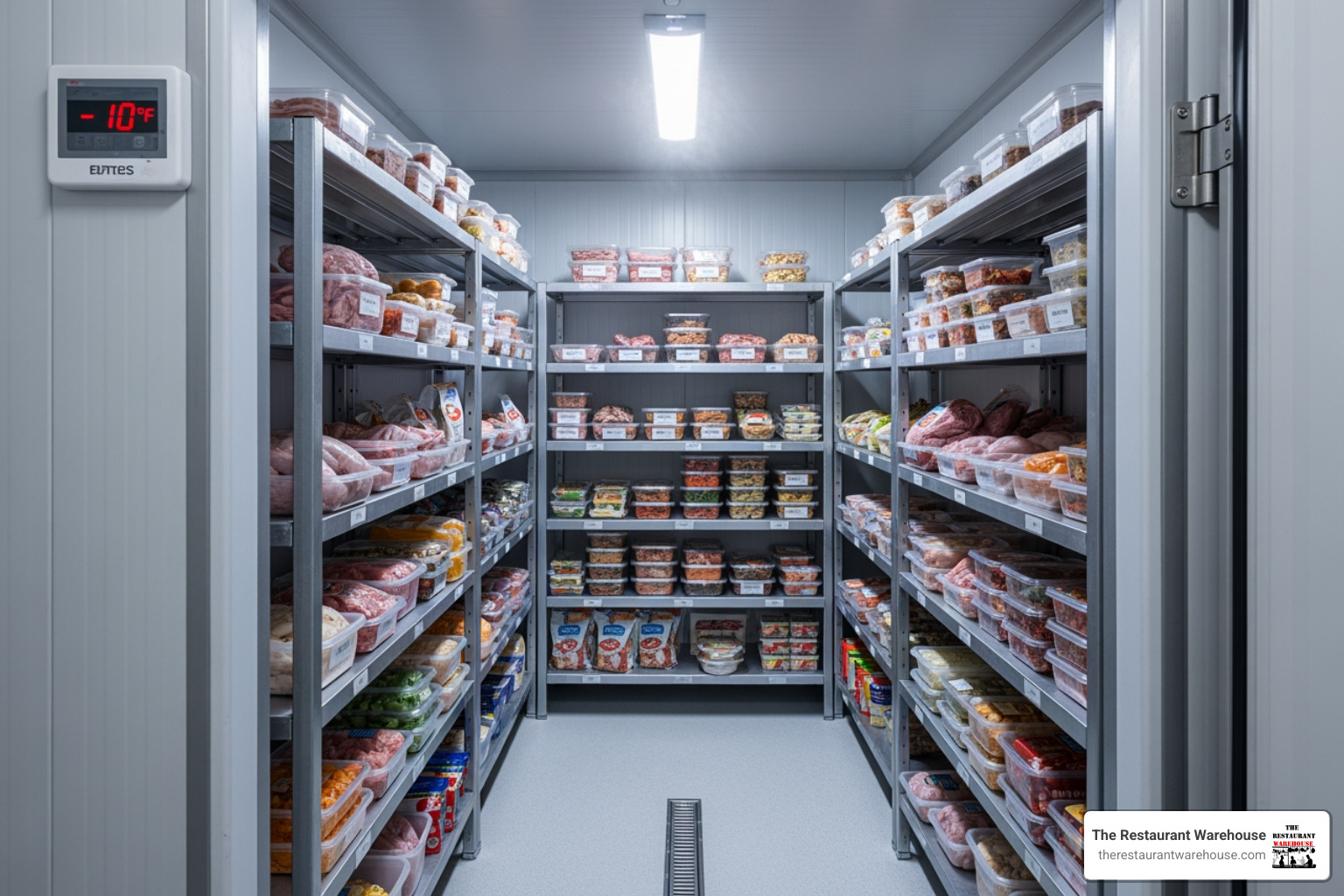
While your commercial espresso machines get the glory, your walk-in freezer or cooler is the guardian of your inventory. For any foodservice operation, reliable cold storage is the cornerstone of inventory management, food safety, and waste reduction. Walk-ins allow you to maintain strict temperature control, comply with health regulations, and take advantage of bulk purchasing to save costs. Their large capacity means fewer delivery trips and the peace of mind that you won't run out of essential items during a busy service.
Key Design Factors
Choosing the right walk-in starts with understanding key design factors.
-
Custom vs. Prefabricated Units: Prefabricated units offer a great balance of affordability and functionality. These modular panels are assembled on-site and can often be relocated if needed. Custom units are built to fit irregular spaces but come at a higher cost.
-
Insulation R-Value: The R-value measures insulation effectiveness. A higher R-value means better insulation, which forces your refrigeration system to work less, saving you money on utility bills over time.
-
Refrigeration Systems: Self-contained units have all components in one cabinet, making them easier and cheaper to install. However, they generate heat and noise in your kitchen. Remote systems place the noisy components elsewhere (like the roof), resulting in a quieter, cooler workspace and greater energy efficiency for larger installations.
-
Flooring: Your walk-in floor must be durable enough to handle heavy traffic and carts. Non-slip surfaces are essential for safety, especially in freezers where condensation can create ice.
Optimizing for Efficiency
Once installed, smart practices can reduce your operating costs. Prioritize energy-efficient components like EC fan motors and LED lighting. The upfront cost is often recovered quickly through lower electricity bills.
Proper organization is also key to efficiency. Use shelving that allows for free circulation of cold air and keep items a few inches away from walls. This prevents warm spots and ensures your system works efficiently. Implement a "first-in, first-out" (FIFO) system by labeling items with dates and rotating stock to reduce waste. A well-organized walk-in improves workflow and reduces the time the door stays open, saving energy. When planning your space, consider how cold storage integrates with your overall design. Get ideas for your coffee shop layout.
At The Restaurant Warehouse, we understand that cold storage is a significant investment. Contact us to discuss your cold storage needs and find the perfect solution for your operation.
Acquiring Your Equipment: Budgeting and Financing
Affording the right equipment is just as crucial as choosing which commercial espresso machine to buy. Understanding how to budget for and finance quality foodservice equipment is a key step for any new or growing business.
Understanding the Price of Quality
Quality equipment is an investment that pays dividends in reliability and consistency. Several factors drive the cost. For commercial espresso machines, the price is influenced by brand reputation, build quality (stainless steel components last longer), and technological features like dual boilers or PID temperature control. Capacity also matters: a single-group machine costs less than a three-group powerhouse.
This principle applies to all equipment. Ice maker prices vary by production capacity, while mixer costs depend on size and power. Walk-in coolers represent a large investment, with costs varying based on size and insulation quality.
Should you buy new or used equipment? New equipment offers the latest technology and full warranties. However, used and refurbished equipment can offer incredible value, with potential savings of 30-60%. A properly refurbished machine from a reputable supplier has been tested and rebuilt, ensuring you're not inheriting someone else's problems. Smart business owners know the difference between cheap and affordable—and quality used equipment is an affordable way to get the performance you need.
Think about return on investment, not just sticker price. A more expensive machine that doubles your output during rush hour or an energy-efficient freezer that saves hundreds on utilities will pay for itself over time.
Financing and Leasing Options
Coming up with the capital for equipment can be challenging. That's why flexible financing and leasing options are so valuable.
Financing allows you to preserve your working capital for other critical expenses like inventory, marketing, and payroll. It makes the equipment you actually need affordable today, changing a large upfront cost into a manageable monthly payment. This allows you to invest in the right tools for success rather than settling for something that's just "good enough." We work with businesses to find payment structures that align with their financial reality, supporting their growth from day one.
Making the Right Choice
Successful operations are built on careful planning. A complete equipment list is vital for your success. You can't just focus on the commercial espresso machine; you need to consider how your ice maker, mixer, and walk-in freezer all work together to support your operation. Use a coffee shop equipment checklist to plan your purchases to ensure you haven't missed any critical pieces.
Our team is here to help you make informed decisions that set you up for long-term success. Contact us to discuss financing options for your business and let's find the best path forward together.
Frequently Asked Questions about Commercial Equipment
How do I choose the right size espresso machine for my cafe?
Choosing the right size commercial espresso machine depends on your projected sales during peak hours. A low-volume cafe serving 50-100 drinks during its busiest time might thrive with a single-group machine. However, a high-traffic location or drive-thru will likely need a two-group or three-group model to keep up with demand and prevent a bottleneck at the bar. Analyze your business plan and expected customer flow to make an informed decision that allows for growth.
What's more important for an espresso machine: the boiler or the pump?
This is a classic trick question because both are equally critical and must work together perfectly. The boiler system is responsible for providing consistent and stable water temperature (195°F-205°F), which is vital for proper flavor extraction. The pump provides the necessary pressure (typically 9 bars) to force that hot water through the coffee grounds. A failure or inconsistency in either the temperature or the pressure will result in a poor-quality espresso shot. They are a team, and both must perform flawlessly.
How often should I have my commercial equipment professionally serviced?
It's always best to follow the manufacturer's specific recommendations. However, a general rule of thumb is to have high-use equipment like commercial espresso machines and ice makers professionally serviced at least once a year. For extremely high-volume operations, semi-annual service may be beneficial.
This preventative maintenance allows a trained technician to identify potential issues before they cause costly downtime during your busiest hours. Regular servicing ensures your equipment operates at peak efficiency, saves on energy costs, and significantly extends the lifespan of your investment. If you're unsure about the right maintenance schedule, contact us to discuss your equipment needs and service options.
Conclusion: Equipping Your Business for Success
From the art of pulling the perfect shot with a commercial espresso machine to the quiet hum of a reliable ice maker, it's clear that every piece of equipment plays a vital role. Choosing the right tools is a foundational investment in the success and profitability of your foodservice venture.
Each item, whether it's the commercial espresso machine that defines your coffee service or the walk-in freezer protecting your inventory, is an investment in the quality of your products, the efficiency of your operations, and the satisfaction of your customers. By focusing on durable, reliable, and appropriately sized equipment, you're building a strong foundation for long-term growth.
Here at The Restaurant Warehouse, we are committed to helping you get the best value without ever compromising on performance. We believe that equipping your business for success means empowering you with the right tools to help you serve customers better, operate more efficiently, and watch your profitability grow.
Ready to take the next step?
Contact us today to discuss your equipment needs and get started!
Explore our full range of restaurant equipment to find everything you need to build the business of your dreams.


