

Coffee Shop Layout: Boost Efficiency & Profit
A great coffee shop layout is more than just where you put the tables and chairs. It's the strategic blueprint for your shop's profitability, customer satisfaction, and even the speed of your service. Your floor plan has a direct hand in how customers move, how your baristas work, and ultimately, how your business performs from day one.
Your Blueprint for a Profitable Coffee Shop
The success of your coffee shop is decided long before the first espresso is pulled—it’s built right into your floor plan. A well-designed layout is a powerful, silent partner that guides customer behavior, eliminates frustrating bottlenecks for both your staff and your guests, and sets the stage for a memorable experience that keeps people coming back.
It’s the invisible framework that supports every single transaction and interaction in your space.
Forget the generic advice that treats all cafes the same. The best coffee shop layout is deeply connected to your specific business model. A high-volume, grab-and-go spot in a busy financial district has completely different needs than a cozy, community-focused hub in a quiet neighborhood. One lives and dies by speed and throughput, while the other values comfort and dwell time.
Aligning Layout with Your Business Model
Your core concept should dictate every design choice you make. Before you even think about furniture or equipment, you have to define your primary goal. Are you building a shop for:
- High-Volume Takeaway? This model needs a clear, straight shot from the door to the ordering counter and on to the pickup point. Seating is minimal, and the entire focus is on getting customers in and out with as little friction as possible.
- A Community Hub? This approach demands a variety of seating—think communal tables, cozy nooks, and comfy armchairs. The goal is to encourage people to stay, work, or socialize, which means prioritizing a great atmosphere over raw speed.
- A Hybrid Model? Many shops try to blend both, offering a quick service line for mobile orders alongside a welcoming seating area. This requires smart zoning to keep the two customer flows from colliding and creating chaos.
One of the most common mistakes I see is owners trying to be everything to everyone without a clear plan. This usually results in a confused layout that serves neither the takeaway customer nor the lingering guest effectively, creating congestion and a disjointed experience for everyone.
More Than Just Aesthetics
While style and brand identity are obviously important, a beautiful space with a flawed workflow is a recipe for failure. A truly effective plan balances visual appeal with hard-nosed practicality.
It considers the ergonomics of the barista station to minimize steps and maximize drink output. It analyzes customer psychology to place retail displays where they'll actually generate impulse buys. A truly profitable coffee shop also integrates robust and effective retail loss prevention strategies right into the physical design, ensuring sightlines are clear and valuable products are secure yet accessible.
Ultimately, your coffee shop layout is a silent partner in your business. It can either empower your team to work at peak efficiency or create constant obstacles that slow them down. This guide will walk you through the essential steps to make sure your foundation is solid, compliant, and built for profitability from the moment you open your doors.
Mapping Your Customer Journey and Workflow
Alright, this is where the blueprint starts to feel real. You’ve got an empty space, and now it’s time to turn it into a living, breathing map for your coffee shop. A great layout isn't just one big room; it's a collection of distinct zones, each with a job to do. Thinking strategically about your three core areas—the service bar, customer seating, and your back-of-house—is the key to creating a path that feels completely natural for every single person who walks in.
The goal here is simple: design an experience that feels effortless for your customers and is ridiculously efficient for your team. It all starts with visualizing the entire customer journey, from the second they step through the door to the moment they leave, latte in hand.
Understanding the Flow
Think of your layout as a silent guide. A first-timer should instinctively know where to order and where to wait without needing a single sign. This intuitive path is what we call customer flow, and when you nail it, you prevent annoying bottlenecks, keep people happy, and serve drinks faster. Simple as that.
For example, you'd never want the line for the register to snake through the quiet corner you've set up for people working on laptops. That’s just common sense. Likewise, putting a noisy, high-traffic condiment bar right next to a cozy table for two creates a seriously awkward vibe. You have to anticipate how people will move and keep conflicting activities separate.
This infographic breaks down how a smart business model translates directly into an efficient workflow that boosts your bottom line.
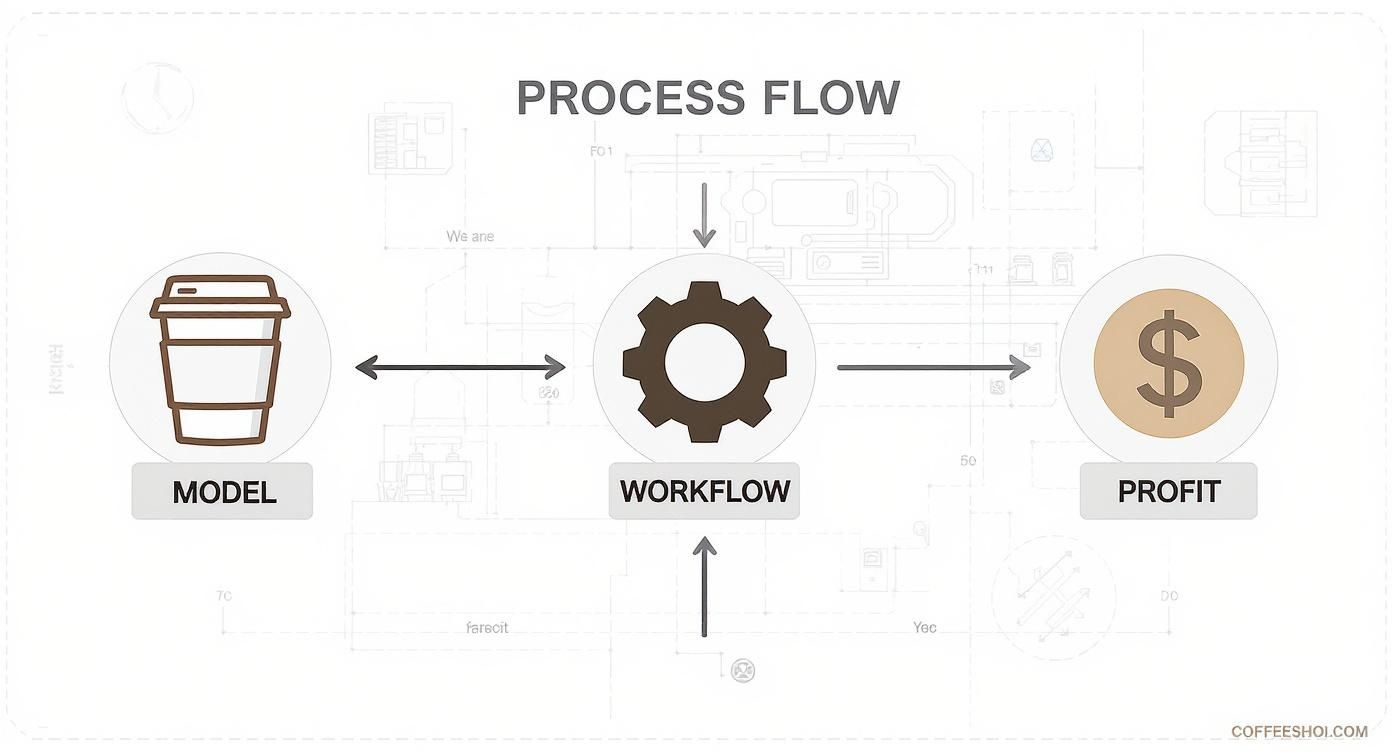
As you can see, aligning your shop’s vibe with a killer workflow isn't just a nice idea—it's the most direct path to profitability.
Zoning Your Space for Success
Effective zoning is about more than just drawing a line between the tables and the counter. It's about creating intentional micro-environments inside your shop. Each zone should cater to a specific need, making the whole experience better for everyone.
Here are the key zones you need to think about and how they play together:
- The Decompression Zone: This is the first five feet inside your door. You absolutely must keep it open and clear. It gives customers a moment to get their bearings without feeling rushed or crowded.
- The Ordering Queue: Design a clear, obvious line that doesn't block the entrance or wander into the seating area. You can use floor markings, stanchions, or even the placement of your retail shelves to guide people naturally.
- The Handoff Point: This is where customers grab their drinks, and it's a notorious bottleneck. This spot has to be separate from where people are ordering. Give them enough room to wait without causing a traffic jam.
- The Seating Area: This is where your brand’s personality really shines. Most shops dedicate about 40-50% of their floor space to seating, with the rest going to service and back-of-house operations. The trend toward big community tables and comfy lounge areas is still going strong, reflecting what people want: a space that works for both getting work done and catching up with friends.
I see this mistake all the time: placing the drink pickup counter right next to the cash register. It forces customers who've already paid to crowd around people still trying to order. The result? A chaotic, stressful mess for everyone. Always, always create a distinct, separate space for order collection.
For new coffee shop owners, figuring out the right balance between these zones can be a challenge. This table offers a general guideline to help you allocate your square footage effectively.
Coffee Shop Zone Allocation Guide
| Zone | Recommended Space Allocation (%) | Key Considerations |
|---|---|---|
| Seating Area | 40-50% | Includes tables, chairs, lounge areas, and patios. Balance seating density with customer comfort. |
| Service Area | 25-35% | Encompasses the ordering counter, POS, espresso bar, pickup point, and condiment station. |
| Back-of-House (BOH) | 15-25% | Covers storage, dishwashing, prep areas, office space, and restrooms. Must comply with health codes. |
| Decompression/Retail | 5-10% | The entrance area and any space for selling merchandise like beans, mugs, or brewing gear. |
Remember, these percentages are a starting point. A shop focused on high-volume takeaway might shrink its seating area, while a community-focused cafe might expand it. Adjust these figures to match your specific business model.
Back of House: The Unseen Engine
While your customers are enjoying the vibe out front, your business is running on the efficiency of your back-of-house (BOH). This is your operational core, and it deserves just as much strategic planning as your seating area. A cramped or illogical BOH will slow down service and kill staff morale. Trust me.
The BOH is where you'll have space for:
- Storage: Dry goods, paper products, and anything that needs to be refrigerated.
- Dishwashing: A three-compartment sink isn't just a good idea; it's often a health code requirement.
- Prep: A dedicated area for any food prep, kept separate from the main coffee bar.
- Office & Staff Area: A small corner for administrative tasks and for your team to take a breather.
Mapping this area is every bit as crucial as planning your customer seating. For a deeper dive into optimizing this critical space, you might find our guide on designing a commercial kitchen floor plan really helpful. A well-designed BOH ensures your team has everything they need within reach, cutting down on wasted steps and keeping the entire operation running like a well-oiled machine.
Designing an Efficient Barista Workspace
Your service counter is the heart of the entire operation. It’s the engine room. When it's poorly designed, you're signing up for slow service, stressed-out baristas, and lost sales. This is where the magic happens, but only if the space is built for speed, smart ergonomics, and a logical flow.
Let’s get one thing straight: an efficient coffee shop layout isn't about having the fanciest gear. It's about arranging it to eliminate wasted movement. Every extra step a barista takes to grab milk, find a lid, or rinse a pitcher adds up to serious delays during that morning rush.
The Barista Triangle and Workflow
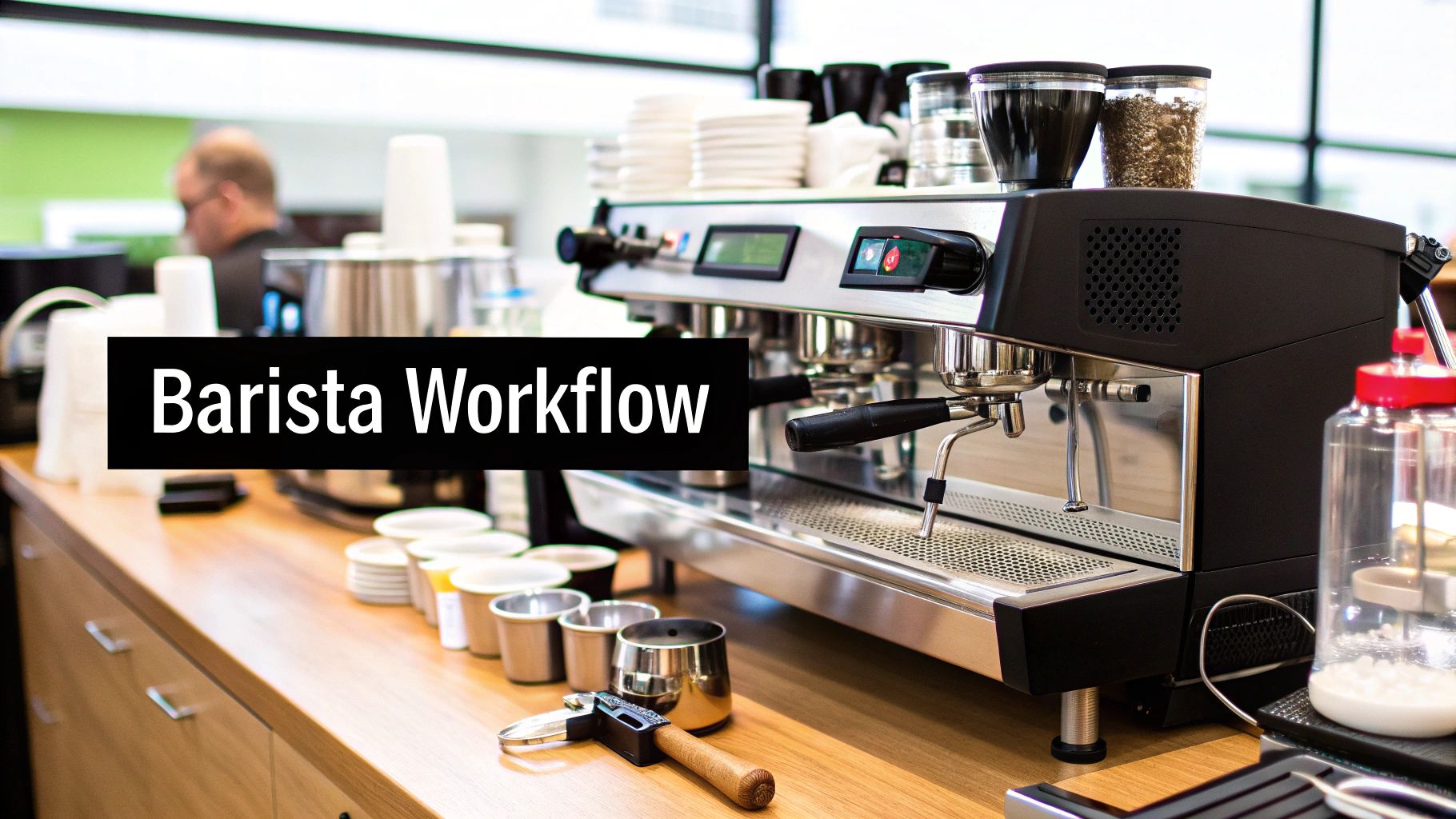
The golden rule for an efficient bar is the "barista triangle." This concept places your three most-used pieces of equipment—the espresso machine, the grinder, and the knock box—within a single step of each other. This setup lets a barista grind, tamp, pull a shot, and discard the puck without wandering all over the place.
This ergonomic layout can shave precious seconds off every single espresso drink. Multiply that by hundreds of orders a day, and the time savings are massive.
Beyond the core triangle, you need to map out the entire production sequence. Think of it like an assembly line. A logical workflow usually looks something like this:
- Order & POS: The customer order is taken and paid for.
- Grind & Tamp: The barista moves to the grinder and espresso machine.
- Brew & Steam: Shots are pulled while milk is steamed. A nearby fridge is absolutely essential here.
- Finish & Handoff: The drink is assembled with syrups or toppings at a dedicated "landing zone" before being passed to the customer.
This linear path stops baristas from bumping into each other and creates a smooth, repeatable process for every order.
Essential Equipment and Placement
Arranging your gear is a lot like setting up a professional kitchen. Everything needs a home, and that home is determined by its role in the production line. A well-organized bar keeps everything within arm's reach.
You'll need enough counter space for finished drinks, smart under-counter storage for cups and beans, and integrated systems for waste. For a complete rundown of everything you'll need, check out this detailed coffee shop equipment checklist so nothing critical gets missed.
Here are a few key placement tips from experience:
- Refrigeration: Under-counter fridges for milk should be directly next to or below the espresso machine. No exceptions.
- Ice Machine: Put the ice bin near the blender station and where you finish iced drinks. This avoids a dripping scoop being carried across the workspace.
- Sinks: You’ll need several. Health codes often require a dedicated handwashing sink, a pitcher rinser built into the counter, and a three-compartment sink in the back.
- Waste Management: Integrate a knock box for espresso pucks right beside the machine and have trash bins strategically placed for other waste.
A classic layout mistake is putting the ice machine too far from the cold drink station. During a rush, a barista might have to walk 10 feet across the bar just for ice, creating a bottleneck that slows down the entire line. Plan your "cold zone" just as carefully as your "hot zone."
Balancing Transparency and Tidiness
Modern customers love watching the craft of coffee making. An open bar can be great theater, showing off your team’s skills and the quality of your equipment. It builds trust and adds to the whole vibe.
But this transparency means your workspace is always on display. There's a fine line between "artisanal" and just plain "messy."
To keep a clean look, lean on smart storage. Under-counter cabinets can hide cleaning supplies and extra stock. Have a designated spot for everything, from syrup bottles to cleaning rags, so the counter stays uncluttered. Beyond the design, the daily habit of maintaining a clean and organised workspace is absolutely crucial for efficiency and staff morale.
Finally, don’t forget the technical details. Make sure your bar design includes plenty of electrical outlets to handle the heavy load of commercial equipment. Plan for proper plumbing for sinks and the espresso machine, and install good ventilation, especially around anything that produces heat. Getting these technical specs right from the beginning will save you from costly headaches down the road.
Creating an Unforgettable Customer Experience
Your service counter might be the engine of your coffee shop, but the seating area is its soul. This is where your brand's personality truly shines and where customers decide if they’ll become regulars or just pop in once. A fantastic customer experience is built on comfort, atmosphere, and a layout that invites people to settle in and stay a while.
This is about so much more than just buying some tables and chairs. It’s about creating a space that feels intentional and memorable. When customers feel comfortable and at ease, they tend to stay longer, which almost always translates to a higher average spend per visit.
Crafting a Versatile Seating Strategy
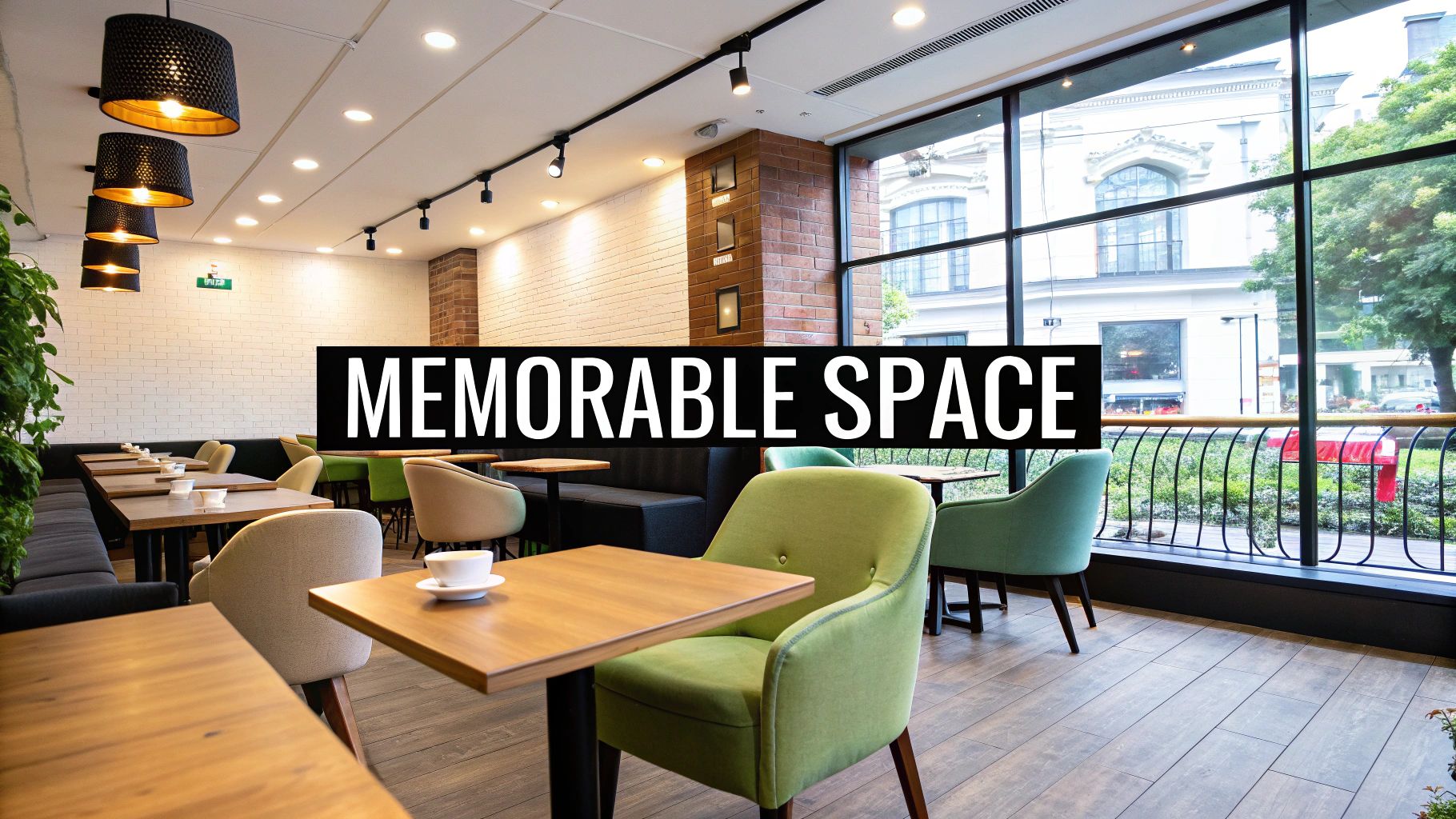
A one-size-fits-all seating plan is a recipe for a bland, forgettable space. Your customers all have different needs, and your seating should reflect that reality. A student hunting for a quiet corner to study has a completely different set of needs than a group of friends catching up over lattes.
The key is to create distinct zones or "micro-environments" within your seating area. You can pull this off with a thoughtful mix of furniture types:
- Intimate Two-Tops: Perfect for couples or individuals, these small tables create a sense of privacy and are incredibly flexible for reconfiguring your layout.
- Large Communal Tables: These are fantastic for fostering a sense of community. They naturally encourage conversation and are a lifesaver for accommodating larger groups.
- Cozy Armchairs: Tucked into a small nook, these signal pure comfort and are ideal for customers who want to settle in with a book or a laptop for a few hours.
- Bar Stools: Window-facing bar seating is a brilliant option for solo customers who enjoy people-watching and doesn't take up a massive footprint.
By offering a variety of options, you empower customers to choose the experience that fits their mood. This kind of versatility is a hallmark of a well-considered coffee shop layout.
Calculating Capacity for Comfort, Not Crowds
It’s so tempting to cram as many seats as possible into your floor plan, but trust me, this is almost always a mistake. An overcrowded cafe feels chaotic and stressful, not inviting.
A good rule of thumb is to allow for 18-20 square feet per person. This calculation provides enough room for seating, comfortable movement, and a general sense of personal space.
Don’t sacrifice comfort for a few extra chairs. Customers will remember feeling cramped long after they've forgotten the coffee. Giving people adequate space is a non-negotiable part of a premium experience.
This approach ensures there are clear pathways, allowing both customers and staff to move freely without bumping into chairs or other guests. For a deeper dive into crafting a welcoming environment, check out our guide on coffee shop interior design, which covers these concepts in more detail.
The Power of Lighting and Acoustics
Furniture sets the stage, but lighting and sound design direct the entire show. These elements work together to shape the mood of your space more than almost anything else.
Effective lighting uses multiple layers to create warmth and functionality. Start with ambient lighting—the general, overall illumination of the space. Then, add task lighting, like pendant lights over the counter or reading lamps in a lounge area. Finally, use accent lighting to highlight cool architectural features, art, or your retail displays.
Sound management is just as critical. In a shop with all hard surfaces—concrete floors, brick walls, and large windows—the noise from the espresso machine and chatter can quickly become overwhelming. Incorporating soft materials can make a massive difference.
Consider using:
- Acoustic panels disguised as art
- Upholstered furniture and area rugs
- Curtains or drapes on windows
- Even strategically placed plants can help absorb sound
Your goal isn't silence, but a pleasant, manageable buzz that allows for easy conversation. This focus on the full sensory experience is what separates good cafes from great ones. Globally, coffee shop layouts are shifting from purely transactional spaces to experiential venues. Cafes in fast-growing markets invest heavily in 'experience zones' that can take up nearly 30% of the floor space for things like interactive brewing demonstrations, reflecting consumer demand for quality and engagement. Creating an immersive atmosphere is no longer a luxury—it's a competitive necessity.
Dodging Pitfalls: Regulations and Future-Proofing Your Layout
A stunning design is completely worthless if it doesn't meet legal standards. Getting your coffee shop layout right means balancing aesthetics with the non-negotiable world of regulations. This isn't just about avoiding fines; it’s about making sure your space is safe, accessible, and ready for business from day one. I've seen too many owners get tripped up here, leading to expensive rebuilds and painful delays.
The three main areas of compliance you'll run into are ADA accessibility, health department codes, and local building permits. Each comes with its own checklist of specific requirements that will directly impact your floor plan. This isn't red tape to sort out later—it's foundational to your design.
Meeting Critical Compliance Standards
Let’s translate the legal jargon into what it actually means for your layout. Accessibility isn't just a nice feature; it's a legal requirement and, frankly, the right thing to do. The Americans with Disabilities Act (ADA) has clear guidelines that affect everything from your front door to your restrooms.
Your layout absolutely must include:
- A Clear Path of Travel: Think of this as a continuous, unobstructed path at least 36 inches wide. It has to run from the entrance to the service counter, seating areas, and restrooms. No exceptions.
- Accessible Seating: You'll need to designate a certain number of tables for wheelchair users, complete with the proper knee and toe clearance.
- Service Counter Height: At least a portion of your service or payment counter can be no higher than 36 inches from the floor.
Health department codes are just as strict and are all about sanitation and safety. For your layout, this often comes down to one thing: sinks. You will almost certainly need a three-compartment sink for washing, rinsing, and sanitizing, a separate handwashing sink for staff, and maybe even a food prep sink if you plan to offer more than just pastries.
One of the most common and costly mistakes I see new owners make is underestimating their sink requirements. A health inspector can shut you down before you even open if your plumbing and sink setup isn't up to local code. Always, always confirm the exact number and type of sinks required with your local health department early in the planning process.
Building a Layout That Lasts
Compliance gets your doors open, but future-proofing is what keeps them open. The coffee industry is always changing, and a rigid layout can quickly feel dated. Building flexibility into your coffee shop layout from the start is one of the smartest investments you can make.
Just think about the rise of mobile ordering. A few years ago, a dedicated pickup zone was a novelty; now, it's essential for managing customer flow without creating chaos. A flexible design anticipates these kinds of shifts.
Consider weaving in elements that can adapt as you grow:
- Modular Furniture: Use smaller tables that can be pushed together for large groups or separated for individuals. Lightweight chairs and movable planters allow you to reconfigure your space with minimal hassle.
- Multi-Use Spaces: Design a corner of your shop that could host a pop-up retail display one month, a community workshop the next, and extra seating during the holiday rush.
- Smart Technology Integration: Plan for power and data ports in strategic locations, not just for your customers but for future tech like self-service kiosks or digital menu boards.
This forward-thinking approach means your business can pivot without needing a complete, and costly, overhaul. The goal is to create a dynamic space that can evolve right alongside customer habits and industry trends.
The shift toward digital integration is already reshaping physical footprints. For example, solid digital ordering systems can shrink the space needed for traditional cashiers by up to 20% while increasing service speed by as much as 15%. This reflects a broader trend where coffee shops are evolving into either highly efficient service hubs or high-touch experiential destinations. To get a better handle on this, you can discover more insights about the U.S. coffee market analysis on mmcginvest.com. This data really drives home why building adaptability into your layout isn't just optional anymore—it's crucial for long-term survival and success.
Your Top Coffee Shop Layout Questions, Answered
Even when you have a solid blueprint in hand, a few specific questions always seem to surface during the design phase. Getting straight answers to these common hang-ups can be the difference between a smooth launch and a series of costly mistakes down the road.
Let's dive into some of the most frequent questions I hear from aspiring coffee shop owners. Nailing these details helps bridge that crucial gap between your vision and a practical, profitable reality.
What’s the Ideal Square Footage for a Coffee Shop?
There's no single magic number here; the right size is all about your specific business model. That said, most successful coffee shops tend to land somewhere between 1,200 and 2,200 square feet.
If you're envisioning a high-volume, grab-and-go spot with minimal seating, a compact space under 1,000 sq ft can work beautifully. The focus is entirely on a lightning-fast workflow, not a lingering atmosphere.
The sweet spot for most cafes—the ones that balance comfy seating with a roomy service area and essential back-of-house space—is typically between 1,500 and 2,000 sq ft. Anything larger is usually reserved for concepts that include things like an in-house roastery, a full kitchen, or a dedicated event space.
As a reliable rule of thumb, plan on dedicating about 50-60% of your total space to customer-facing areas (like your seating and service bar). The other 40-50% should be for your back-of-house operations—think storage, prep, and restrooms.
How Do I Make Sure My Layout Is ADA Compliant?
This one is non-negotiable. ADA compliance has to be baked into your coffee shop layout from day one, not treated as an afterthought. Ignoring these federal requirements can lead to hefty fines and force you into expensive, frustrating renovations later on.
Here are the key areas to focus on:
- Path of Travel: You need a clear, unobstructed pathway that’s at least 36 inches wide running through the entire shop—from the entrance to the counter, through the seating areas, and to the restrooms.
- Counter Height: A portion of your main service counter must be no higher than 36 inches from the floor to comfortably serve customers in wheelchairs.
- Restroom Accessibility: Your bathrooms need proper clearance for entry, a sufficient turning radius inside, and easy access to fixtures like sinks and toilets.
These regulations can get complex, and local codes often add another layer of requirements. I strongly advise working with an architect or a contractor who has direct experience in commercial food service design. Their expertise is truly invaluable for making sure your plans are fully compliant from the get-go.
What Are the Biggest Layout Mistakes to Avoid?
The most common—and damaging—mistakes almost always come down to messing up the workflow and customer flow. A classic error is creating a bottleneck right at the entrance or order point. This instantly creates a stressful, chaotic experience for everyone.
Another major misstep is designing an inefficient bar layout that forces baristas to take extra, unnecessary steps for every single drink. It absolutely kills their speed and service quality. I also see many new owners drastically underestimate their back-of-house needs. Skimping on space for storage, dishwashing, and prep will cripple your daily operations.
Finally, don't forget about acoustics and lighting. Ignoring these can make an otherwise beautiful space feel loud, unwelcoming, and unpleasant to be in. Always prioritize how the space functions over pure aesthetics.
How Much Space Should I Leave Between Tables?
To give your customers comfortable breathing room and meet accessibility guidelines, a good target is to leave at least 24 to 30 inches between the edges of your tables. This gives guests enough space to slide into and out of their chairs without bumping into the people at the next table.
Your main pathways or "traffic lanes" through the seating area—like the primary route to the restrooms or the exit—need to be even wider. For these main arteries, aim for a width of 36 inches or more. This keeps customers from having to squeeze past seated guests and ensures a smooth, easy flow, even during your busiest hours. It's tempting to cram in extra tables to maximize seating, but it almost always backfires by hurting the customer experience and making service a nightmare for your staff.
Ready to build the coffee shop of your dreams? The Restaurant Warehouse has all the high-quality, affordable equipment you need to bring your perfect layout to life. From espresso machines and grinders to refrigeration and worktables, we provide the tools that power successful cafes. Explore our extensive catalog and flexible financing options to get started today at https://therestaurantwarehouse.com.
About The Author

Sean Kearney
Sean Kearney is the Founder of The Restaurant Warehouse, with 15 years of experience in the restaurant equipment industry and more than 30 years in ecommerce, beginning with Amazon.com. As an equipment distributor and supplier, Sean helps restaurant owners make confident purchasing decisions through clear pricing, practical guidance, and a more transparent online buying experience.
Connect with Sean on LinkedIn, Instagram, YouTube, or Facebook.