

A Complete Guide to Descaling Coffee Machines
Descaling your coffee machine isn't just a chore to check off a list; it's the single most important piece of preventative maintenance you can do for your commercial setup. This isn't just about cleaning. It’s about protecting a serious investment and making sure every single cup of coffee that leaves your counter is up to your standards.
The Hidden Costs of Ignoring Limescale Buildup
It’s easy to overlook what you can’t see, but inside your machine, a silent saboteur might be at work: limescale. Over time, the minerals that are naturally in your water supply—mostly calcium and magnesium—settle on internal components, forming a chalky, destructive residue.
This buildup acts like an insulator, coating the heating elements and forcing them to work much harder to get the water to the right temperature. This leads to two big problems for your business: a spike in your energy bill and, even worse, inconsistent water temperatures that result in sour, under-extracted coffee.
How Limescale Cripples Performance
Limescale doesn't just mess with temperature. As the mineral deposits accumulate, they start to constrict and eventually block the narrow tubes and valves that are critical for your machine's operation.
This blockage directly impacts a few key things:
- Brew Pressure: Weak or fluctuating pressure means you can't pull a decent espresso shot.
- Steam Wand Power: A clogged wand produces weak, wet steam, making it impossible to properly texture milk.
- Water Flow: You'll notice a reduced flow from the group head, leading to longer shot times and inconsistent volumes.
The constant strain from limescale buildup is one of the leading causes of premature component failure. Boilers, pumps, and solenoids are all at risk, leading to expensive repairs and significant downtime for your business. A simple, proactive approach to descaling is your best defense against these preventable issues.
One of the best ways to get ahead of the problem is by improving your water quality from the start. For instance, installing a water softener can dramatically reduce how quickly limescale forms in the first place.
Businesses are catching on to how crucial this is. The global market for coffee machine cleaning liquids is projected to hit USD 1.70 billion by 2032, which tells you that smart operators are making machine health a top priority.
Descaling Solutions At a Glance
Choosing the right descaler can feel like a chemistry lesson, but it really comes down to a few key types. Each one has its place, depending on your machine, your water hardness, and your maintenance routine.
| Solution Type | Primary Active Ingredient | Best For | Key Consideration |
|---|---|---|---|
| Citric Acid | Citric Acid | Regular maintenance; environmentally friendly option | Slower-acting and may require multiple cycles for heavy buildup. |
| Lactic Acid | Lactic Acid | Effective yet gentle on metal components; good for espresso machines | Can be slightly more expensive than citric acid-based solutions. |
| Sulfamic Acid | Sulfamic Acid | Highly effective for heavy, stubborn limescale deposits | More aggressive; must follow safety precautions and ensure it's safe for your machine. |
| Phosphoric Acid | Phosphoric Acid | Very powerful; often found in commercial-grade descalers | Can be harsh on certain metals; check machine compatibility. |
At the end of the day, the goal is to find a solution that's tough on scale but gentle on your machine's delicate internal parts. Always check your manufacturer's recommendations first
Choosing the Right Descaling Solution
Picking the right descaling solution for your commercial coffee machine is about more than just cleaning—it’s about protecting one of the most important pieces of equipment in your shop. Grabbing the wrong agent can lead to some seriously expensive damage, from fried seals to corroded boilers, and it could even void your warranty. Not all descalers are created equal, and the choice between a pro formula and a DIY shortcut has bigger consequences than you might think.
A lot of people are tempted to reach for white vinegar. It's cheap, it's in every grocery store, and yes, its acetic acid can dissolve mineral deposits. But it’s far too aggressive for the delicate components inside a commercial-grade machine. Over time, that acid can eat away at rubber gaskets, O-rings, and even metal parts, setting you up for leaks and premature failure.
On top of that, vinegar leaves behind a powerful smell and taste that’s notoriously hard to flush out completely. A few rinse cycles often won't cut it, and you'll end up with tainted coffee and unhappy customers. The few bucks you save are just not worth the risk to your equipment or the quality of your coffee.
Commercial Descalers: The Safer Bet
Professionally formulated descalers are engineered for one job: descaling coffee machines. They’re designed to be tough on limescale but gentle on your machine's internals. These products use a balanced blend of acids, like citric or lactic acid, that effectively dissolve mineral buildup without being corrosive.
You've got a few solid options on the market:
- Citric Acid-Based Solutions: These are a popular choice for being eco-friendly and great for routine maintenance. They get the job done well but might need a longer cycle if you’re dealing with really heavy scale.
- Lactic Acid-Based Solutions: Known for being powerful yet gentle on metal parts, making them a fantastic option for high-end espresso machines.
- Manufacturer-Approved Formulas: This is always your safest bet. Using the descaler specified by your machine's manufacturer guarantees compatibility and keeps your warranty intact.
The decision to use a proper commercial descaler is a strategic one. The global coffee machine descaler market is a substantial industry, valued at around $2 billion in 2023, and is expected to grow. This growth reflects a wider understanding that specialized products are essential for maintaining expensive equipment.
Water Quality And Descaling Frequency
Ultimately, the best descaling solution is the one you use consistently as part of a proactive maintenance schedule. How often you need to descale is tied directly to your water quality. Hard water, which is packed with minerals, causes limescale to build up much faster, meaning you'll have to descale more frequently.
Investing in a proper water filtration system is one of the smartest ways to tackle this problem at the source. By removing minerals from the water before they even get into your machine, you can extend the time between descaling cycles and protect your equipment in the long run. You can learn more about how to implement effective water filtration for restaurants in our detailed guide.
As you explore the descaling products out there, it's helpful to understand the different forms of cleaning agents, such as cleaning tabs, and how they might fit into your routine. Whether you choose a liquid, powder, or tablet, the key is to pick a product designed for your machine to ensure every single cup of coffee you serve is perfect.
The Practical Descaling Process From Start to Finish
Alright, it’s time to roll up your sleeves and get to it. While every commercial machine has its quirks, there's a universal process that applies to most espresso and drip coffee makers. Think of this less as a list of steps and more as a hands-on walkthrough to help you tackle this crucial task with confidence.
Before you start, get your essentials in order. You'll need the manufacturer-approved descaling solution, a bucket for purging water, a few clean cloths, and a non-abrasive sponge. You might also need a screwdriver or other simple tools to access certain panels. A quick pro tip: post a small "out of service" sign on the machine so a well-meaning team member doesn't try to pull a shot mid-clean.
Preparing Your Station and Machine
First things first, let’s talk safety. Turn off and unplug the machine, then give it plenty of time to cool down completely. This is a non-negotiable step to avoid any risk of burns or electrical issues. Once it's cool, go ahead and empty the drip tray and any water left in the boiler, and be sure to remove the portafilters.
Next up, it’s time to mix your descaling solution. Follow the instructions on the product packaging to the letter. Using too much can be too aggressive on your machine's internals, but using too little just won't get the job done. For instance, if the instructions call for a 1:10 ratio of descaler to water, use a measuring container for accuracy before pouring it into the machine’s water reservoir. If your machine is plumbed in, you'll connect it directly to the water line.
Executing the Descaling Cycle
With your solution ready, plug the machine back in, turn it on, and run the solution through the system. Many modern commercial machines have a dedicated descaling mode. This is often activated by holding down a combination of buttons during startup—your user manual is your best friend here, so double-check the exact procedure.
Once the cycle kicks off, the machine will start pulling the solution from the reservoir and circulating it through all the internal components. It's crucial to make sure the descaler hits every part that water touches.
- Group Heads: Run the solution through each group head for about 30 seconds at a time, with a short pause in between each one.
- Hot Water Spout: Dispense several ounces of the solution through the hot water wand to clear out any buildup there.
- Steam Wands: Carefully open the steam wands to let the solution pass through. Be ready for hot liquid to come out, not steam.
Now, let the machine sit for the manufacturer-recommended time, which is usually around 20-30 minutes. This dwell time gives the acid in the solution a chance to really break down and dissolve all that mineral buildup. While you wait, you can soak your steam wand tips, portafilters, and shower screens in a separate container filled with the descaling solution.
Pro Tip: Keep a simple maintenance log right next to the machine. After each descaling cycle, have the barista who did the job initial and date the log. This creates accountability and gives anyone on your team a clear history of when the machine was last serviced.
This infographic breaks down the typical process, from grabbing your solution to the final, all-important rinse.
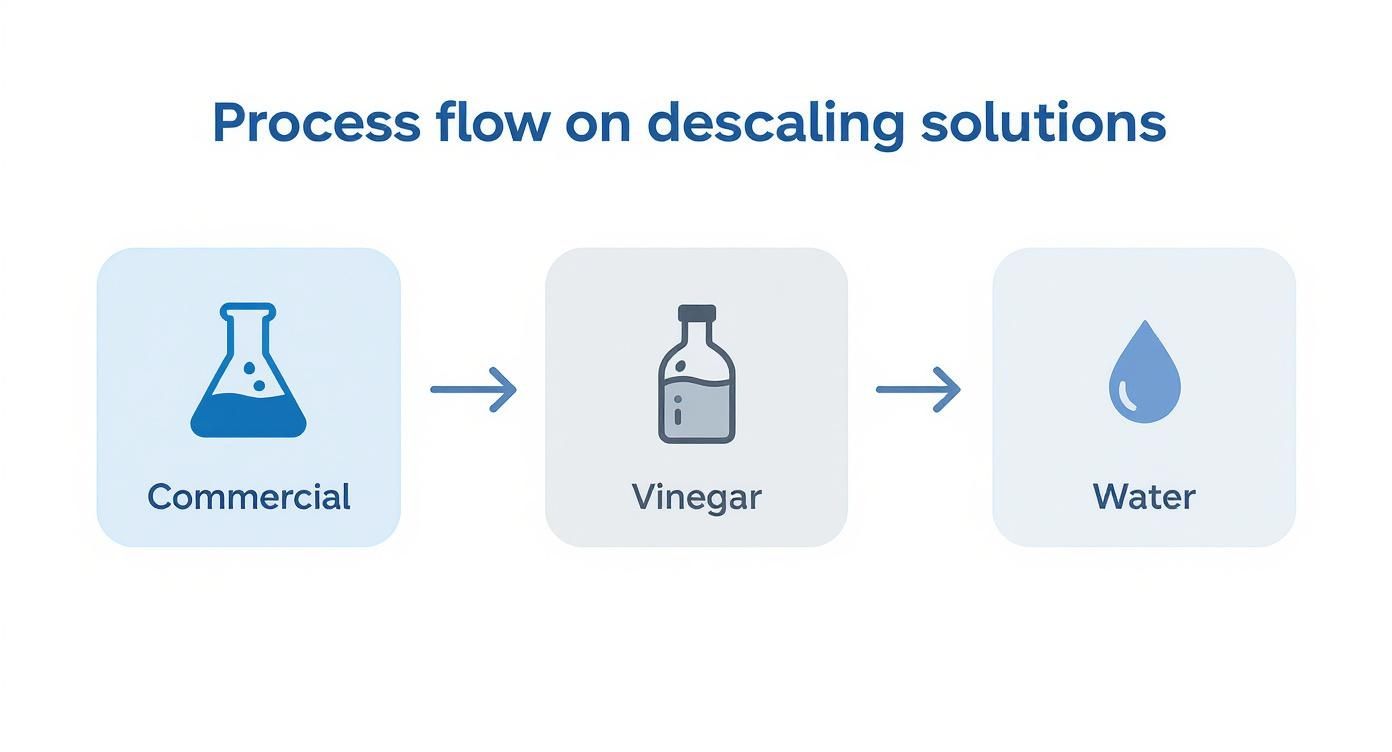
As you can see, the process is a two-part play: first the cleaning agent does its job, then the flushing phase ensures everything is pristine.
The Critical Rinsing and Flushing Phase
Once the descaling solution has worked its magic, you’re only halfway there. The rinsing phase is arguably the most important part of this whole process. Any leftover cleaning solution will give your coffee a nasty chemical taste, and nobody wants that.
Start by draining any remaining descaling solution from the boiler. Give the water reservoir a thorough rinse and fill it with fresh, clean water. Now, it’s time to flush. Run several full tanks of fresh water through the entire system—group heads, hot water spouts, and steam wands—until you're absolutely certain that no trace of the descaler is left.
After a thorough flushing, wipe down the exterior of the machine, reassemble any parts you removed, and pull a test shot of espresso. Give it a taste to make sure there’s no chemical aftertaste. Once you’re satisfied, your machine is ready for action, running more efficiently and prepared to brew consistently delicious coffee.
Building Your Proactive Maintenance Schedule
Great coffee doesn’t just happen. It’s the direct result of well-maintained equipment, and a proactive descaling schedule is your best defense against the performance issues that can plague a busy café. This is about shifting from a reactive "fix-it" mode to a preventative "maintain-it" mindset.
Creating a smart plan isn't complicated at all. It really just boils down to two key variables: your local water hardness and your machine's daily workload.
A bustling downtown café in an area with notoriously hard water might need to descale its machines every single month to keep up with heavy mineral deposits. On the other hand, a small office with softer water could easily go a full quarter between cycles. The goal is to find the right rhythm for your specific environment.
This consistency is only becoming more important as the global appetite for specialty coffee grows. Modern machines, especially, demand more frequent upkeep to perform at their best. Descaling is absolutely essential for removing those mineral deposits that kill machine performance and ruin the taste of your coffee.
Setting Your Descaling Frequency
So, where do you start? First, figure out what you're working with by assessing your water. You can grab a simple water hardness test kit online or from a local hardware store for just a few bucks. The results, usually measured in Parts Per Million (PPM), will give you a clear baseline to work from.
Next, get a real sense of your daily usage. On an average day, how many shots does your machine actually pull? Combining these two data points—water hardness and daily volume—is how you'll establish a descaling frequency you can rely on.
Don't just set it and forget it. A simple maintenance log is a surprisingly powerful tool. A basic clipboard or a digital spreadsheet where staff can initial and date each descaling cycle creates accountability and gives you a clear service history at a glance.
Here’s a sample framework to help you determine how often you should be descaling your machines.
Sample Descaling Frequency Based on Water Hardness and Usage
| Water Hardness (PPM) | Daily Usage (Shots/Day) | Recommended Descaling Frequency |
|---|---|---|
| Soft (0-60) | < 100 | Every 3-4 months |
| Moderate (61-120) | 100-200 | Every 2-3 months |
| Hard (121-180) | 200+ | Every 4-6 weeks |
| Very Hard (180+) | Any | Monthly |
This table provides a great starting point, but remember to adjust based on your machine's performance. If you notice any signs of scale buildup, it's time to descale, regardless of the schedule.
A Holistic Approach to Machine Health
Descaling is a cornerstone of good machine maintenance, but it’s just one piece of the puzzle. For a truly healthy machine, this process needs to fit into a broader, more comprehensive cleaning routine.
Here’s what that looks like in practice:
- Daily: Backflush the machine with a specialized detergent. This is non-negotiable for removing the coffee oils that build up in the group head.
- Weekly: Do a deeper clean by soaking the portafilters and shower screens.
- As Needed: Stick to your descaling schedule, tailored to your water hardness and usage.
This layered approach ensures every part of your machine is cared for, from the internal water path to the final brew path. For a complete overview of what your cafe needs to run smoothly, check out our comprehensive coffee shop equipment checklist. By integrating all of these tasks, you protect your investment, prevent costly downtime, and guarantee every single cup of coffee you serve is perfect.
Troubleshooting Common Descaling Problems
Even when you follow the steps perfectly, descaling can sometimes throw a curveball. We've all been there: a machine that hums but won't pull water, a shot that has a funky chemical taste, or that stubborn descaling light that just refuses to switch off. These hiccups are frustrating, for sure, but the good news is they are almost always fixable without calling in a pricey technician.
The most common snag you'll hit after descaling is an airlock. This happens when a little air bubble gets trapped in the water lines during the process, which stops the pump from priming and pulling in fresh water. The machine sounds like it's working, but nothing comes out. It’s an easy fix, but it does require a bit of patience.
Clearing an Airlock and Other Glitches
If you've got an airlocked machine, the goal is simple: you need to manually coax water back into the pump to push that pesky air bubble out. It sounds more technical than it is.
- For Machines with a Reservoir: Fill the water tank all the way to the top. Then, try running the hot water spout and the steam wand at the same time to really encourage water to flow through the system. Sometimes, just taking the full water tank out and putting it back in a few times is enough to jolt the air bubble loose.
- For Plumbed-In Machines: If your setup includes an external pump, you can try quickly turning the main water supply off and on again. This can create a little surge of pressure that's often enough to clear the line.
Another frequent issue is that lingering chemical aftertaste. If your espresso shots taste a bit "off" after a descale, it's a dead giveaway that the rinsing phase was rushed. The only way to fix it is to flush the machine again, and this time, be thorough. Run at least two full tanks of fresh water through every single part—group heads, hot water spout, and steam wand—until that taste is completely gone.
Don’t Panic If the Descaling Light Stays On
On many modern machines, the descaling alert doesn't reset on its own. It often requires you to press a specific combination of buttons to tell the machine the job is done. Your user manual is your best friend here. The fix is usually as simple as holding down two buttons for about five seconds.
When the Problem Is Something Else
If you’ve tried these simple fixes and you’re still stuck, it’s time to take a step back. A persistent problem right after descaling coffee machines can sometimes point to an underlying issue that the cleaning process just happened to uncover, like a failing sensor or a more serious blockage deep in the lines.
While descaling is a critical piece of the maintenance puzzle, it’s just one part of keeping your equipment in top shape. Thinking about the bigger picture of equipment care helps build a stronger maintenance mindset. For a wider perspective on these routines, our guide on ice machine cleaning offers some great insights that apply to all sorts of kitchen gear.
Of course. Here is the rewritten section, crafted to sound completely human-written and natural, following the provided style guide and examples.
Your Descaling Questions, Answered
Even with the best instructions, you're bound to have questions. It's totally normal. When it comes to something as important as descaling your machine, a few common queries always seem to pop up. Getting clear, no-nonsense answers is the best way to build the confidence you need to get the job done right and protect that beautiful piece of equipment.
This is where we tackle the questions I hear most often from café owners and baristas. We’ll cut through the noise about DIY shortcuts, clarify the difference between a couple of key cleaning tasks, and help you figure out what your machine is trying to tell you.
Can I Use Vinegar on a Commercial Machine?
I get this question all the time, and I can see the appeal. White vinegar is cheap, and you probably have it on hand. But for a commercial espresso machine, my advice is a firm no. The acetic acid in vinegar is surprisingly harsh and, over time, can eat away at the sensitive rubber gaskets, seals, and other internal parts. This can lead to leaks and some seriously expensive repairs down the road.
Even worse, vinegar leaves behind a powerful smell and taste that is incredibly stubborn. A few rinse cycles just won't cut it, and you'll end up with tainted coffee that your customers will definitely notice. Always, always use a descaler that’s specifically made for coffee equipment. It's formulated to be tough on mineral scale but gentle on your machine's internals.
How Do I Know When Descaling Is Needed?
Your machine is pretty good at giving you signals when it’s time for a descale. You’ll probably start to notice it's taking longer than usual to heat up, or maybe the water flow from the group head has become weak and inconsistent. A noticeable drop in steam wand pressure is another classic sign.
The biggest clue, though, is often in the cup. If your espresso starts tasting unusually bitter or sour, it could be because limescale is insulating the heating elements, throwing off your brewing temperature. Thankfully, many modern machines take the guesswork out of it and have an indicator light that will tell you exactly when a descaling cycle is due.
What Is the Difference Between Descaling and Backflushing?
This is a fantastic question because they are two totally different—but equally vital—maintenance jobs. The easiest way to think about it is this: descaling cleans the water path, while backflushing cleans the brew path.
- Descaling is something you'll do less frequently, maybe monthly or quarterly. Its job is to remove mineral scale from the boiler and all the internal plumbing where water flows.
- Backflushing is a daily or weekly routine. You use a specialized detergent to blast away all the built-up coffee oils and grounds from the group head, shower screen, and three-way valve.
Both are non-negotiable if you want your machine to last and your coffee to taste great. If you skip one, you're really undermining all the good work you're doing with the other.
Will Descaling Fix Low Water Pressure?
In many cases, yes, absolutely. Low pressure is a classic symptom of limescale buildup literally choking the water flow through the internal pipes and valves. A proper descaling cycle can dissolve those blockages and get your pressure and flow right back where they should be.
However, if you've done a thorough descale and flush and the pressure issue is still there, it might point to a bigger problem. It could be a failing pump or a major blockage that needs a professional technician to sort out. Just always make sure descaling is your first troubleshooting step for any pressure-related problem.
Equipping your business with the right tools is the first step toward excellence. At The Restaurant Warehouse, we provide top-tier commercial kitchen equipment and supplies to help you serve the best. Explore our collection and find everything you need to succeed.
About The Author

Sean Kearney
Sean Kearney is the Founder of The Restaurant Warehouse, with 15 years of experience in the restaurant equipment industry and more than 30 years in ecommerce, beginning with Amazon.com. As an equipment distributor and supplier, Sean helps restaurant owners make confident purchasing decisions through clear pricing, practical guidance, and a more transparent online buying experience.
Connect with Sean on LinkedIn, Instagram, YouTube, or Facebook.