

Finding Affordable Chef Pants Without Compromising Quality
Why Professional Chef Pants Don't Have to Break the Bank
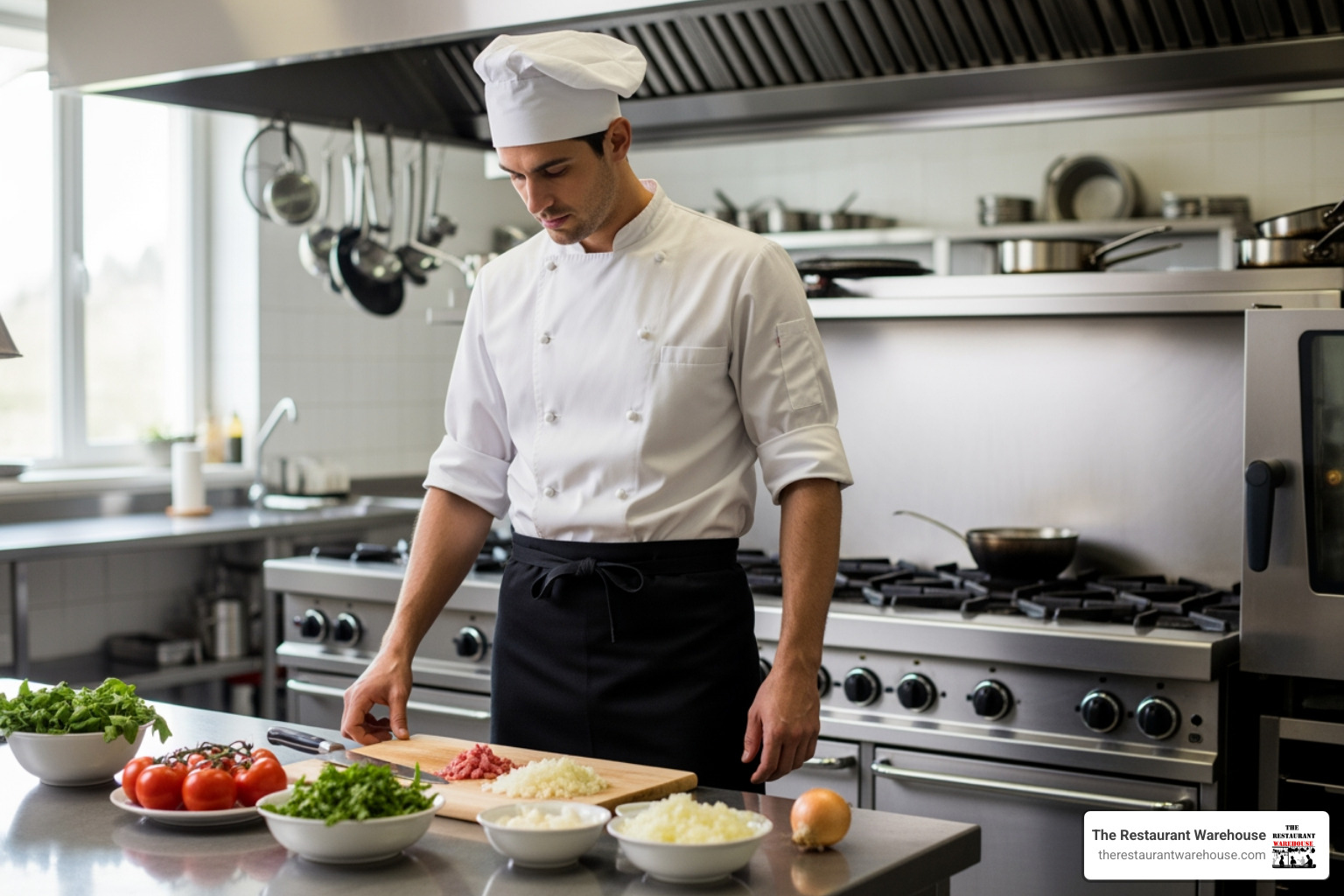
Image metadata: Alt text: "chef wearing professional black chef pants in kitchen - cheap chef pants"; Title: Professional black chef pants in action; Source: Bannerbear; Subject: Chef in a commercial kitchen wearing durable black pants; Usage: Editorial/illustrative only; Notes: Image used to demonstrate fit and style typical of budget-friendly chef pants
Every professional chef knows that long shifts in a hot kitchen demand comfortable, durable workwear. But when you're outfitting an entire team or starting a new restaurant, uniform costs can add up quickly. The good news is that you don't need to spend a fortune to get high-performing cheap chef pants that last through countless shifts. Functional options are available at every price point, from basic models under $20 to professional-grade pants with advanced features in the $40–$60 range.
“Cheap” does not have to mean flimsy, uncomfortable, or disposable. In the context of chef apparel, cheap should mean cost-efficient: pants that meet core performance standards—durability, comfort, and utility—without unnecessary extras. When you focus on the right fabric, construction quality, and a design that supports real kitchen workflows, you can unlock meaningful savings without trading away reliability or safety.
The key is knowing what to look for and where to buy. Affordable chef pants prioritize function over frills, emphasizing the features that matter during prep, service, and cleanup. Look for a durable 65% polyester and 35% cotton blend, an elastic waistband with a drawstring, multiple functional pockets, and reinforced stitching at stress points. These choices keep the pants comfortable, long-lasting, and practical for daily use. With the right materials and construction, a value pair can perform like a premium one while costing far less.
Fit and style also influence both comfort and longevity. Baggy-fit pants in traditional solid black or houndstooth patterns dominate the affordable market because their simpler construction keeps costs down while delivering excellent mobility and airflow. They’re also adaptable across stations and shifts. That simplicity translates directly into budget efficiency without compromising performance.
Equally important is sourcing. Buying from wholesale-focused suppliers lets you bypass unnecessary markups and access fair, transparent pricing. Internal quality checks, consistent size runs, and reliable return policies are the finishing touches that make budget-friendly chef pants a smart investment instead of a gamble.
If you need to kit out a full kitchen staff, build a rotation for long weeks, or stock backup pairs that won’t strain your budget, the market has proven, reliable choices at every price point. The trick is understanding which features matter most, how to compare options without the marketing gloss, and where to source them.
CTA: Shop Chef Pants now at https://therestaurantwarehouse.com/ to compare value-focused options and build a cost-effective uniform program.
Whether you’re a culinary student, a chef leading a brigade, or an operator optimizing costs, a smart approach to cheap chef pants can reduce spend, simplify maintenance, and help your team stay focused on the food—not their uniforms.
Key Features of High-Value, Cheap Chef Pants
Finding high-value cheap chef pants isn't about grabbing the lowest-priced pair; it's about choosing the features that deliver real performance in a professional kitchen. When you know what to look for, you can find pants that perform like they cost twice as much by focusing on materials, construction, and functional design.
Fabric First: The Sweet Spot for Durability and Comfort
For budget-conscious buyers, the ideal starting point is a poly/cotton blend—most commonly 65% polyester and 35% cotton. Polyester contributes durability, wrinkle resistance, and color retention. Cotton adds breathability and a softer hand feel. Together, this blend is tough enough for the kitchen grind yet comfortable for long shifts. Look for:
- Weight and weave: Midweight twill fabrics hold their shape, resist snags, and drape well. They also tend to pill less and maintain a professional appearance after repeated laundering.
- Stain resistance: Some value pants use a basic stain-release finish that helps grease and sauce wash out more easily.
- Quick-drying performance: Polyester-heavy blends dry faster, which is useful for nightly wash cycles and quick turnarounds.
According to research published by the National Institutes of Health on textile performance in professional workwear, breathable fabric blends with moisture management properties significantly improve comfort and performance during physically demanding tasks in high-temperature environments. This scientific backing reinforces why poly/cotton blends remain the industry standard for kitchen apparel. Read more about workwear textile research
Construction: The Details That Prevent Blowouts
Great fabric is meaningless if the pants fall apart. Quality construction is the backbone of longevity:
- Reinforced seams: Double-stitched seams at stress points (crotch, seat, and pocket openings) significantly reduce seam failure during bending and pivoting.
- Bar tacks and rivets: Inexpensive but effective reinforcements at pocket corners and belt loops add months to a garment's life.
- Gusseted crotch: A diamond gusset allows more range of motion, reduces seam stress, and improves comfort for frequent crouching or reaching into low storage areas.
- Consistent thread quality: Even in affordable pants, a balanced stitch density and strong thread reduce popped seams.
Functional Design: Comfort and Utility Without the Frills
Thoughtful design separates great value pants from merely adequate ones:
- Waistband: An elastic waistband with an adjustable drawstring is the go-to for affordable pants. It allows a snug, flexible fit without the complexity of a zipper-and-button closure. If you prefer a hybrid, some value models use elastic at the back and a flat front for a tidier look.
- Pockets: At minimum, two deep side pockets are essential. Better value options add at least one back pocket and sometimes a low-profile cargo pocket to stash pens, a thermometer, a small notebook, or a service towel.
- Fit and ventilation: Baggy or relaxed fits are popular in the budget category because they're easier to construct, cost less, and promote airflow—a major comfort advantage in a hot kitchen. Some models include mesh venting or lightweight panels behind the knees in the $30–$40 range.
- Easy care: Machine washable, colorfast fabrics minimize downtime. Most 65/35 blends handle daily laundering without losing shape or sheen.
Safety and Professionalism on a Budget
A solid pair of cheap chef pants should help you meet two practical goals: stay safe and look professional.
- Heat management: Looser silhouettes help air circulate, which reduces heat buildup and helps you stay focused during peak service.
- Freedom of movement: A relaxed fit supplemented by a gusseted crotch means fewer seam failures and easier transitions between stations.
- Appearance: Dark solids like black and traditional houndstooth conceal stains between washes and keep a cohesive look across the team. Color retention in polyester-rich blends helps your uniform stay presentable longer.
How to Compare Value Pants Quickly
When comparing two options at similar prices, use this checklist:
- Fabric blend: Prefer 65/35 poly/cotton over lower-cost single-fiber fabrics.
- Stitching: Look for double-stitched or reinforced seams with bar tacks at stress points.
- Pockets: Aim for at least two side pockets plus a back pocket; cargo pockets add utility without much extra cost.
- Fit: Choose relaxed or baggy for comfort, but ensure the inseam and rise match your movement needs.
- Care: Confirm machine wash and colorfastness; quick-dry is a plus.
If you apply these criteria consistently, you'll find affordable pants that deliver the durability and comfort you need, shift after shift—without paying for extras that don't matter in the heat of service.
CTA: Need help choosing features for your team? Contact Us at https://therestaurantwarehouse.com/pages/contact-us for personalized recommendations and fast quotes.
Decoding the Price Tag: What Makes Chef Pants Affordable?
Understanding why some chef pants cost less than others helps you make confident choices that deliver the best value. Affordability doesn’t always mean sacrificing quality; it often reflects efficient manufacturing, smart material selection, and streamlined design.
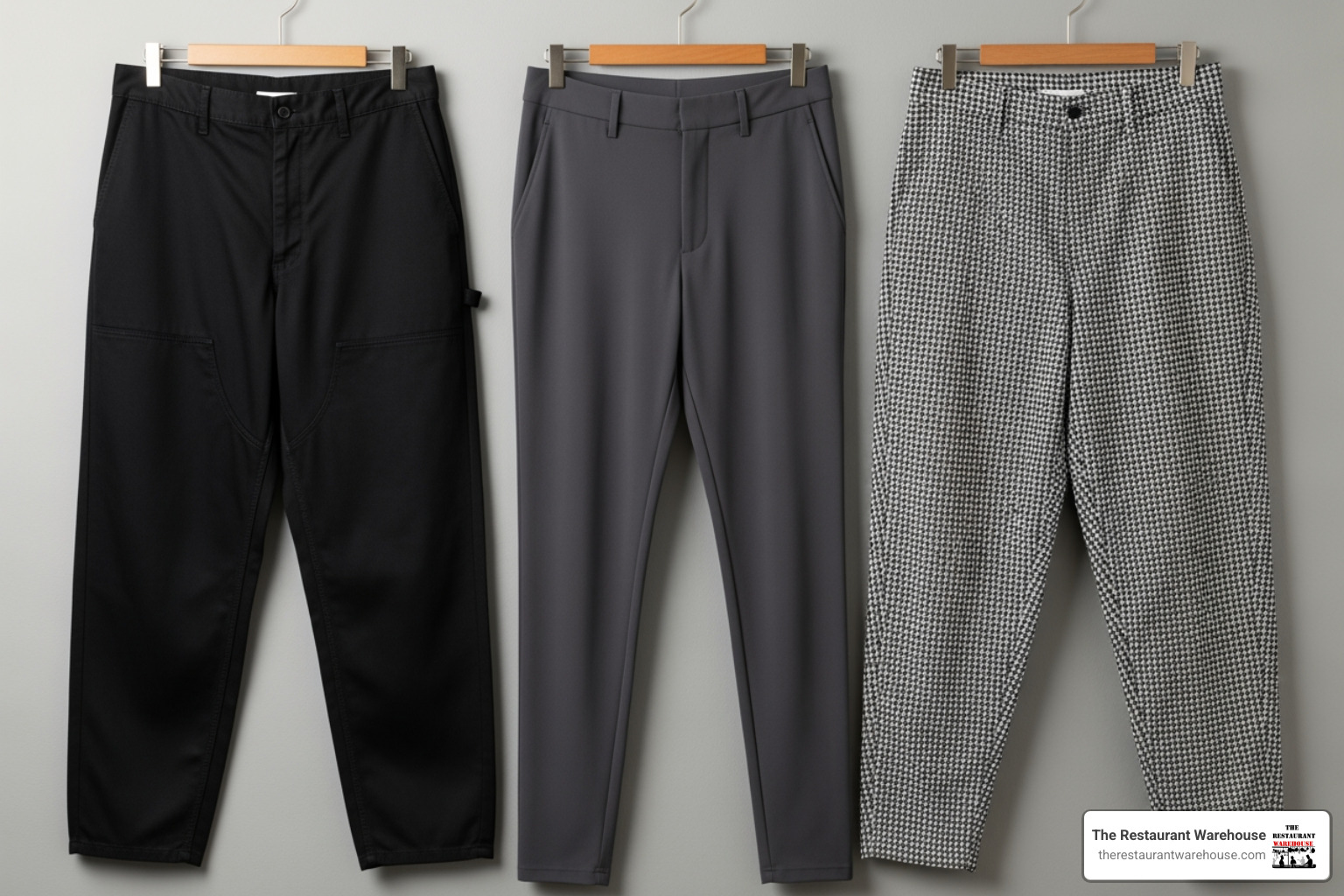
Image metadata: Alt text: "three different styles of chef pants hanging side-by-side: classic black baggy, modern slim-fit, and traditional houndstooth pattern - cheap chef pants"; Title: Side-by-side comparison of popular chef pant styles; Source: Bannerbear; Subject: Comparison of common fits and patterns used in value-focused chef apparel; Usage: Editorial/illustrative only; Notes: Styles shown represent typical budget-tier offerings
Style Choices and Their Impact on Cost
The style you choose directly affects the price. Simpler, traditional designs cost less to produce and often last longer due to fewer failure points.
- Baggy pants: The workhorses of affordable chef wear. The relaxed fit requires less complex tailoring, which keeps production costs down. Baggy silhouettes promote air circulation and unrestricted movement.
- Traditional check or houndstooth: Classic patterns are easy to manufacture at scale and help conceal stains—an aesthetic and practical advantage.
- Solid black: Mass-produced fabrics and a timeless, versatile look make black a consistent budget-friendly choice.
- Cargo details: Extra pockets add utility and a small cost bump, but many affordable versions keep prices competitive.
- Slim and jogger fits: Typically cost more because they use stretch fabrics and require more precise patterning and sewing.
Price Ranges: What You Get for Each Tier
- Under $20: Bare-bones functionality. Expect a standard poly/cotton blend, elastic waistband with drawstring, and two side pockets. Best for students, backups, or high-turnover kitchens.
- $20–$40: The value sweet spot. Reinforced stitching, better pocket variety (back or cargo pockets), and more consistent sizing. Durability and comfort noticeably improve here.
- $40–$60: Still budget-friendly but with enhanced features—lightweight ventilated panels, more refined pocket layouts, improved hand feel, and expanded fit options.
Cost Drivers Behind the Scenes
- Fabric and finishing: Polyester is less costly than cotton and provides durability and color retention. A balanced 65/35 blend is economical yet resilient. Simple stain-release finishes add value without much cost.
- Pattern complexity: Relaxed fits with straight legs are cheaper to cut and sew. Tailored joggers and slim fits require more fabric precision and labor time.
- Sewing operations: Eliminating zippers and buttons in favor of an elastic drawstring reduces labor and hardware costs. Double stitching at stress points adds minimal cost and substantial value—worth seeking even in the budget segment.
- Scale and procurement: Bulk manufacturing reduces the unit cost, and wholesale suppliers pass along those savings. Buying in bulk yourself compounds the effect.
- Logistics: Streamlined supply chains and consistent inventories help keep prices stable. When a supplier specializes in foodservice apparel, they tend to negotiate better fabric contracts and reduce waste, which ultimately lowers your price.
Total Cost of Ownership (TCO) for Chef Pants
Look beyond the initial price tag. Consider:
- Lifespan per pair: A $30 pair that lasts 9–12 months often beats a $20 pair that fails in 3–4 months.
- Rotation strategy: Owning multiple pairs extends garment life and improves hygiene.
- Laundering efficiency: Quick-drying fabrics reduce energy use and speed nightly turnarounds.
- Repairability: Reinforced seams and quality stitching make simple repairs easy, stretching your budget further.
When you align purchase decisions with long-term value, cheap chef pants stop being a compromise and become a practical, sustainable choice for your team and your bottom line.
The Pros and Cons: Is Buying Inexpensive Chef Apparel Worth It?
For many in the foodservice industry—especially those managing tight budgets or large teams—cheap chef pants offer tremendous value. But it’s important to balance savings with performance so your staff can work comfortably and safely.
Advantages of Budget-Friendly Pants
- Significant cost savings: Outfitting a team of ten with $70 pants costs $700; moving to quality $30 pants cuts that to $300. Those savings can fund training, menu R&D, or wage increases.
- Easy replacement: If a $20 pair is ruined by a grease spill, replacing it is manageable—not a setback.
- Ideal for culinary students and high-turnover teams: Students look professional without protecting a high-dollar pair, and operators can onboard new hires affordably.
- Rotation-ready: Two or three affordable pairs per person improve hygiene and prolong garment life by reducing daily wear.
- Less stress on the job: Team members are freer to focus on speed and accuracy when they aren’t worried about damaging expensive clothing.
Potential Drawbacks—and How to Mitigate Them
- Durability variance: Not all budget pants are equal. Mitigation: Prioritize a 65/35 poly/cotton blend with double-stitched seams and bar tacks. Read real-world reviews and choose a supplier known for consistent quality control.
- Comfort differences: Some low-cost fabrics feel stiff. Mitigation: Look for midweight twill with a soft hand, or try one size up in baggy fits for airflow and range of motion.
- Color fading: Cheaper dyes may fade faster. Mitigation: Choose darker colors in polyester-rich blends and follow care instructions—wash cold, avoid overdrying, and separate loads.
- Fewer advanced features: Ultra-low pricing rarely includes premium ventilation or antimicrobial finishes. Mitigation: Step up into the $30–$40 range where such features start appearing while remaining affordable.
Make a Smarter Purchase with a Quick Decision Matrix
Ask these questions before buying:
- Does the pant use a 65/35 poly/cotton blend with reinforced seams?
- Does the fit match the job? (Baggy for line heat, slightly slimmer for FOH-adjacent roles.)
- Do the pockets support your tool carry needs?
- Does the supplier offer clear size charts and an uncomplicated return policy?
- Will you purchase two or three pairs per person to extend lifespan and ensure hygiene?
If your answers align, you’re likely choosing a pair of cheap chef pants that will support your team effectively—without paying for unnecessary frills.
Where to Find the Best Deals on Chef Pants
Finding the best deals on cheap chef pants is about knowing where to look and how to compare. The biggest wins come from skipping traditional retail markups and buying from wholesale-oriented suppliers who focus on the foodservice industry.

Image metadata: Alt text: "diverse kitchen team all wearing matching, professional chef uniforms and smiling - cheap chef pants"; Title: Kitchen team in coordinated chef apparel; Source: Bannerbear; Subject: Multirole kitchen staff modeling affordable uniform consistency; Usage: Editorial/illustrative only; Notes: Emphasizes team uniformity achievable at budget pricing
Wholesale Restaurant Suppliers vs. Specialty Retailers
The same pair of pants selling for $60 at a specialty store might be available for $30 or less from a wholesale-oriented supplier. Wholesalers reduce layers of markup and operate on volume and efficiency, offering professional-grade apparel at prices traditional retailers can’t match.
At The Restaurant Warehouse, we focus on supplying professional-grade products directly to the foodservice industry and passing wholesale savings to you. Whether you need one pair of cheap chef pants or enough for your entire staff, our pricing reflects the true cost of the item—not inflated retail markups. The wholesale advantage grows with bulk orders, saving you hundreds of dollars and ensuring consistent sizing and style across your team.
- CTA: Get a Quote for bulk pricing today at https://therestaurantwarehouse.com/pages/contact-us
- CTA: Book a Strategy Call to outfit your team efficiently at https://therestaurantwarehouse.com/pages/contact-us
Tips for Shopping for cheap chef pants Online
Shopping online yields the best prices if you prepare and compare carefully.
- Check the size chart: Measure your waist and inseam, then compare to the brand’s chart. Don’t assume sizes are universal.
- Read product descriptions: Confirm a 65/35 poly/cotton blend, reinforced stitching, pocket layout, and wash instructions.
- Review the return policy: Look for a clear timeline, restocking details, and who pays return shipping.
- Calculate total landed cost: Compare prices after shipping and taxes. Many suppliers offer free shipping at a threshold—plan your cart to take advantage.
- Order a test pair: If you’re outfitting a full team, buy one pair first to check fit, fabric hand feel, and pocket utility.
- Standardize SKUs: Choose 1–2 styles/colors for the whole team to simplify reordering and replacements.
If you’re unsure which pant is right for your operation or need help building a cost-efficient uniform program, our team can help. Explore options and start building your cart at https://therestaurantwarehouse.com/ and reach out for tailored guidance at https://therestaurantwarehouse.com/pages/contact-us.
Frequently Asked Questions about Affordable Chef Pants
When it comes to outfitting a kitchen, many chefs and restaurant owners have similar questions about balancing cost and performance. Here are straightforward answers to the most common questions about cheap chef pants.
Can I find functional chef pants for under $30?
Yes. Basic yet functional pants in the $16–$30 range are widely available. Prioritize a 65/35 poly/cotton blend, an elastic drawstring waistband, and at least two deep pockets. You’ll get more consistent stitching and pocket variety by stepping up to the $25–$35 range.
What is the most durable material for cheap chef pants?
A 65% polyester / 35% cotton twill is the best value blend for durability, color retention, and easy care. Polyester boosts strength and reduces wrinkles; cotton adds breathability and comfort.
Are baggy chef pants better for a hot kitchen?
Typically, yes. A relaxed or baggy silhouette promotes airflow, improving comfort in high-heat environments. If you prefer a tidier look, consider a relaxed straight leg rather than a slim fit.
How should I care for budget pants to make them last longer?
Wash cold, tumble dry low or hang dry, and avoid overdrying. Wash dark colors separately to protect dye integrity. Close drawstrings before washing to prevent snags, and avoid heavy bleach unless absolutely necessary.
Will budget-friendly pants fade quickly?
Lower-quality dyes can fade faster, but polyester-rich twill helps maintain color. Proper laundering (cold water, minimal heat) slows fading and keeps pants looking professional longer.
What pocket setup works best for line cooks?
At minimum, two deep side pockets. A back pocket is helpful for a small notebook or folded prep list. If you carry thermometers, pens, or a small timer, a low-profile cargo pocket adds convenience without bulk.
What if I’m between sizes?
Check the brand’s size chart and consider the elastic range. If you’re between sizes and prefer more airflow, size up. If you prioritize a secure fit, choose the smaller size but confirm the waistband has a drawstring.
Are affordable chef pants gender-inclusive?
Many value pants use a unisex pattern intended to fit a wide range of body types. If you need a more tailored fit, look for offerings that list rises and inseams by size and consider a hybrid waistband (flat front, elastic back) for a cleaner look.
Can cheap chef pants be hemmed?
Yes. Most twill blends handle basic alterations well. If you’re outfitting a team, consider ordering slightly long and hemming to a standard inseam to ensure a clean, uniform look.
Is there a meaningful difference between $20 and $35 pants?
Often, yes. In the $25–$35 range you’re more likely to find reinforced stitching, better pocket designs, improved fabric hand feel, and more consistent sizing. The added durability often reduces replacements over a year.
How many pairs should each team member own?
Two to three pairs per person lets you rotate between shifts, improve hygiene, and reduce wear. This small up-front investment pays off in lifespan extension.
Can I get bulk pricing or team outfitting help?
Yes. For bulk orders, reach out for a customized quote and sizing support. Contact Us at https://therestaurantwarehouse.com/pages/contact-us for assistance with size runs, returns, and reorder planning.
Are there breathable or ventilated options under $50?
Yes. In the $35–$50 range, you’ll find pants with lightweight panels, partial mesh vents, or improved moisture management—all while staying budget-friendly.
If you need help selecting styles, building a rotation plan, or confirming size runs, our team is happy to assist. Start by browsing options at https://therestaurantwarehouse.com/ and then request tailored guidance at https://therestaurantwarehouse.com/pages/contact-us.
Conclusion
Finding cheap chef pants that truly perform isn’t about settling for less—it’s about buying smarter. When you focus on the essentials—durable 65/35 poly/cotton twill, reinforced seams, functional waistbands, and practical pocket layouts—you get pants that hold up through demanding shifts without the premium price tag. Style choices like baggy fits and classic colors keep costs down and comfort high, while smart sourcing from wholesale-focused suppliers ensures honest pricing and consistent stock.
The best value lives in the $20–$40 range, where construction quality and fit consistency rise sharply without straining your budget. For kitchens prioritizing comfort and longevity, buying two to three pairs per person, washing with care, and standardizing SKUs creates a cost-effective, hygienic uniform program that lasts.
Ready to outfit your team? Shop Chef Pants and compare value-first options at https://therestaurantwarehouse.com/. Need a tailored plan for your operation? Book a Strategy Call at https://therestaurantwarehouse.com/pages/contact-us and our team will help you size, standardize, and save.
About The Author

Sean Kearney
Sean Kearney is the Founder of The Restaurant Warehouse, with 15 years of experience in the restaurant equipment industry and more than 30 years in ecommerce, beginning with Amazon.com. As an equipment distributor and supplier, Sean helps restaurant owners make confident purchasing decisions through clear pricing, practical guidance, and a more transparent online buying experience.
Connect with Sean on LinkedIn, Instagram, YouTube, or Facebook.