

Round, Square, or Rectangular: Finding the Perfect Large Restaurant Tables
Why Choosing the Right Large Restaurant Tables Transforms Your Business
Large restaurant tables are more than just furniture—they're strategic assets that directly impact your seating capacity, revenue potential, and guest satisfaction. Whether you're outfitting a new restaurant or upgrading your existing space, choosing the right tables can mean the difference between cramped, inefficient service and a welcoming, profitable dining room.
Quick Guide to Choosing Large Restaurant Tables:
- Round tables (60-72"): Best for conversation and group dining; seat 6-10 guests
- Rectangular tables (30"x72-84"): Maximize space efficiency; seat 6-10 guests; easy to combine
- Square tables (48"x48"): Flexible for medium groups; seat up to 8 guests
- Key considerations: Shape affects guest interaction, size determines capacity, material impacts durability, and layout controls traffic flow
- Space planning: Allow 24" width per person and adequate aisle space (18-24") for comfort
The dining room is the revenue-generating heart of a restaurant, and your table choices set the foundation for everything from customer comfort to operational efficiency. Large tables offer unique advantages: they accommodate bigger parties who typically spend more per visit, create opportunities for memorable communal dining experiences, and can maximize your floor space when planned correctly. Selecting the right large restaurant tables is one of the most impactful decisions you'll make for your business, as the right tables don't just fill space; they create experiences and drive profitability.
Quick Large restaurant tables definitions:
Ready to transform your dining space? Contact us today for expert guidance on selecting the perfect large restaurant tables for your establishment.
The Big Impact: Benefits of Large Restaurant Tables
Choosing large restaurant tables is a strategic move that offers benefits beyond simply seating more people. These tables are powerful tools for maximizing your restaurant's potential, enhancing the customer experience, and boosting your bottom line.
One key advantage is maximizing seating capacity. While it seems counterintuitive, large tables, especially modular rectangular ones, allow for flexible configurations that accommodate varying party sizes efficiently. A restaurant that can push together several 30x72-inch tables for a party of 12 avoids turning away profitable large groups, directly increasing revenue. According to research from the National Restaurant Association, restaurants that can accommodate larger parties see an average 15-20% increase in per-table revenue compared to establishments limited to smaller seating arrangements.
Beyond numbers, large restaurant tables are essential for accommodating large groups. Whether it's a family celebration or a corporate dinner, these tables provide necessary space and comfort. For banquet halls, 60-inch round tables (seating 6-8) and 30x84-inch rectangular tables (seating 8-10) are ideal. Being able to comfortably seat these groups means more sales and happier customers. Large groups typically order more appetizers, entrees, and beverages, resulting in higher check averages that can significantly impact your monthly revenue.
The impact on enhancing customer experience cannot be overstated. Large tables naturally encourage interaction, turning a meal into a shared experience. This aligns with the growing communal dining trend, where guests seek connection. A large round table, for example, promotes easy conversation, fostering a sense of camaraderie that leads to repeat business and positive reviews. Studies show that diners who feel comfortable and engaged during their meal are 40% more likely to return and 60% more likely to recommend the restaurant to others.
Furthermore, large restaurant tables can serve as a focal point in your dining space. A beautifully crafted, generously sized table can anchor a room's design, setting the tone for the entire restaurant. A stunning solid wood communal table, for instance, instantly signals a sophisticated and welcoming environment. This visual impact extends beyond aesthetics—it becomes part of your brand identity and can be a powerful marketing tool when guests share photos on social media.
Investing in the right large restaurant tables creates a versatile, welcoming, and profitable dining environment. For more comprehensive insights into furnishing your space, we recommend exploring our Ultimate Guide to Restaurant Furniture.
Shape Showdown: Round vs. Square vs. Rectangular Large Restaurant Tables
The shape of your large restaurant tables is one of the most critical decisions for your dining room layout. Each shape brings its own advantages regarding space utilization, guest interaction, and overall aesthetic.
The Social Circle: Advantages of Large Round Tables
Large round tables are champions of conversation. The circular shape inherently promotes conversation, allowing everyone at the table to see and hear each other without strain. This creates a more inclusive and engaging dining experience, fostering a strong communal feel. From a practical standpoint, round tables have no sharp corners, which contributes to better traffic flow as servers and guests can steer around them more easily. A 60-inch round table can comfortably seat 6 to 8 guests, while a larger 72-inch round table can accommodate up to 10, making them ideal for family-style service where sharing dishes is encouraged.
The Flexible Foundation: Why Choose Large Square & Rectangular Tables
Large square and rectangular tables are the workhorses of the restaurant world, prized for their efficiency. Their straight edges make them incredibly space-efficient against walls and when arranged in rows, maximizing floor space. One of their biggest advantages is how easy they are to combine for larger parties. A 30x72-inch rectangular table seats 6 to 8 guests, and two can be seamlessly pushed together for a party of 12 or more. This modularity is a huge benefit for managing fluctuating party sizes. Rectangular tables also create clear traffic paths, guiding guests and staff through the dining room and improving service efficiency. For more insights into how table shapes influence design, check out our guide on Restaurant Table and Chairs Design.
Making the Choice for Your Large Restaurant Tables
The decision between shapes is influenced by your restaurant type, menu style, and desired atmosphere. A fine dining establishment might lean towards large round tables to create an intimate, luxurious feel. Conversely, a busy, casual cafe might opt for rectangular tables that can be easily combined. The menu also plays a role: communal platters are best served on large rectangular tables, while individual, artfully plated dishes shine on round ones. As our blog on Restaurant Dining Sets Guide suggests, a blend of shapes often offers the most versatility.
| Feature | Round Tables | Square Tables | Rectangular Tables |
|---|---|---|---|
| Seating Flexibility | Can 'squeeze' more people; less modular for combining. | Good for small groups; easily combined to form larger squares/rectangles. | Highly modular; easy to combine for large parties. |
| Space Efficiency | Takes up more space per person; less efficient for wall placement. | Efficient for small groups; can be placed against walls. | Most space-efficient; ideal for wall placement and rows. |
| Guest Interaction | Promotes conversation; inclusive for all guests. | Good for 2-4 person interaction; can feel separated in larger combinations. | Good for side-by-side; less inclusive for end-to-end conversation. |
| Aesthetics | Soft, inviting, classic; can be a focal point. | Modern, clean lines; versatile for various décors. | Practical, versatile; can create communal or formal looks. |
Sizing and Spacing: The Blueprint for a Perfect Layout
Designing your restaurant's layout is like choreographing a dance – every piece of furniture must work in harmony for a seamless experience. When it comes to large restaurant tables, getting the sizing and spacing right is paramount for comfort, efficiency, and safety.

Standard Dimensions for Large Restaurant Tables and Seating
Understanding standard dimensions is the first step. A crucial rule is the 24-inch rule per person, ensuring each diner has enough elbow room and can get in and out of their seat comfortably. This measurement has been established through decades of hospitality industry research and represents the minimum comfortable space for an enjoyable dining experience.
Common capacities for large restaurant tables:
- Round table dimensions: A 60-inch round table is perfect for 6 to 8 guests, while a 72-inch round table can seat up to 10. The circular shape means the center of the table becomes less accessible as diameter increases, so consider lazy Susan turntables for tables over 60 inches.
- Rectangular table dimensions: A 30x72-inch table seats 6 to 8 guests comfortably. For bigger parties, a 30x84-inch or 30x96-inch table can accommodate 8 to 10 guests. These dimensions allow for proper place settings with room for serving dishes down the center.
- Square table dimensions: A large 48x48-inch square table can seat up to 8 guests, providing a compact yet spacious option that works well in corners or against walls.
For additional background on how building and accessibility standards treat clearances and usable space, you can review guidance from the U.S. Access Board on ADA standards.
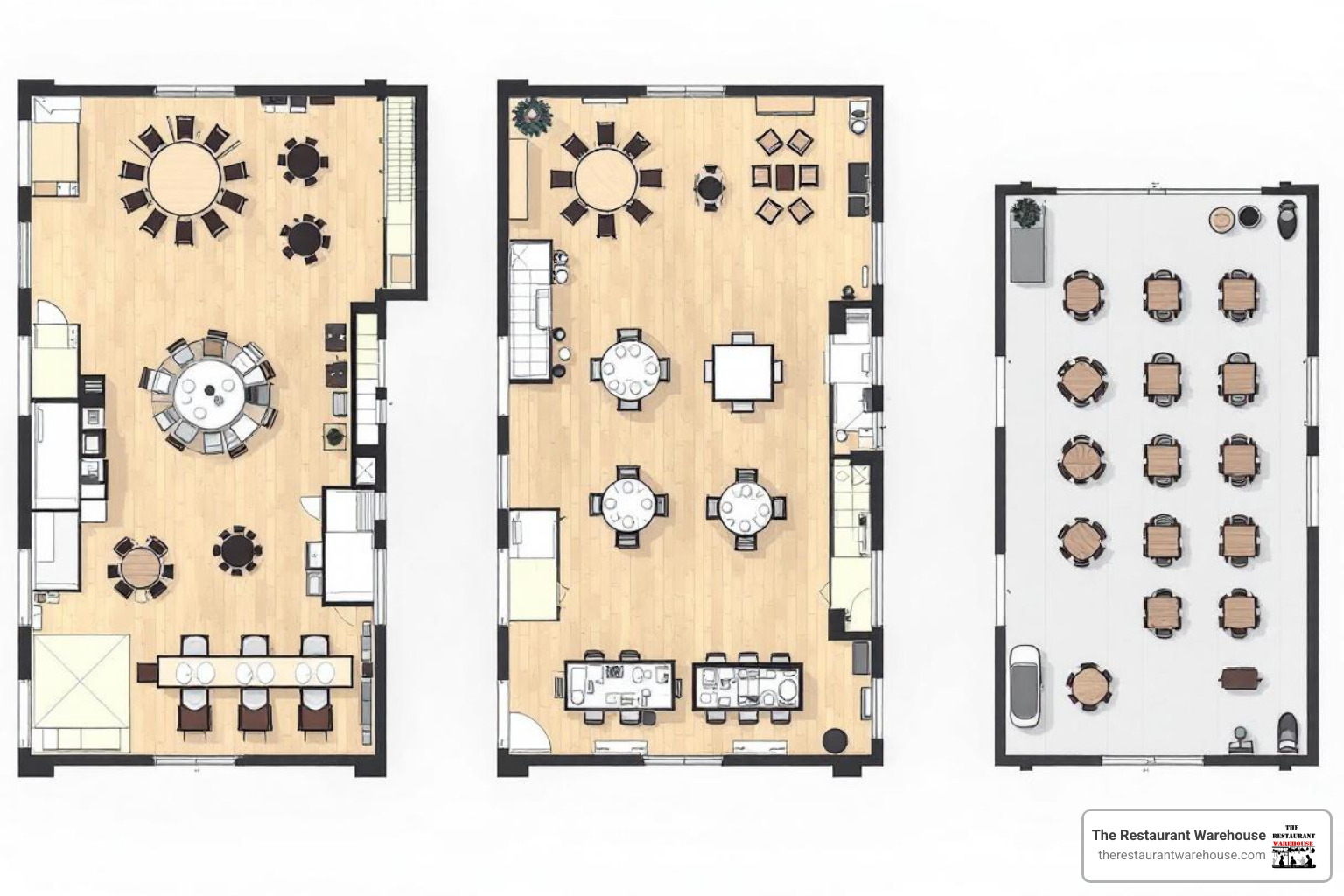
Mastering Your Floor Plan: Layout and Spacing Essentials
Once you know your table dimensions, master the layout and spacing essentials to create a functional flow and comfortable environment. Poor spacing is one of the most common mistakes that can turn a potentially successful restaurant into a frustrating experience for both guests and staff.
- Aisle width standards: Adequate aisle space is non-negotiable. The typical distance between tables should be 18-24 inches minimum. However, main aisles for servers need to be wider, often 36-48 inches, to ensure efficient service and prevent congestion. Consider that servers often carry large trays and need to navigate quickly during busy periods.
- Guest comfort: Beyond the 24 inches per person, guests need space to pull out chairs (add 18 inches behind each chair) and converse without feeling cramped. Remember that comfortable guests stay longer and order more.
- Traffic flow management: A well-planned layout minimizes bottlenecks and ensures a smooth flow of guests and staff. Create clear pathways from the entrance to tables, to restrooms, and between service stations.
- ADA compliance: This is a legal and ethical imperative. Your layout must accommodate guests with disabilities, including providing accessible routes (minimum 36 inches clear width) and tables with appropriate knee clearance (27 inches high, 30 inches wide, 19 inches deep). At least 5% of your dining surfaces must be accessible.
Don't leave your layout to chance! Book a free consultation with our space planning experts to ensure your large restaurant tables are positioned for maximum efficiency and profitability.
Planning a restaurant layout can be complex, but getting it right means a better experience for guests and a more efficient operation. Need help? Explore our Restaurant Furniture Guide for more insights.
Material Matters: Durability and Style for Commercial Tables
When selecting large restaurant tables, the material is critical. It impacts aesthetics, durability, maintenance, and long-term cost. Commercial-grade furniture is rigorously tested to meet strict quality standards, ensuring it withstands daily use.
Common Materials for Large Tabletops
Let's explore the pros and cons of common tabletop materials:
- Solid wood: Pros: Offers warmth, natural beauty, and an upscale appearance. It's durable and can be refinished. Cons: More expensive and requires maintenance to protect from moisture and scratches.
- Laminate: Pros: Highly durable, resistant to scratches and heat, cost-effective, and easy to clean. Comes in thousands of colors and patterns. Cons: Can chip at the edges and cannot be refinished.
- Resin: Pros: Often used for outdoor tables, it's lightweight, durable, and weather-resistant. Cons: Can look less high-end and may scratch over time.
- Metal: Pros: Incredibly durable, hygienic, and offers a modern, industrial aesthetic. Cons: Can be noisy, show fingerprints, and get hot in direct sunlight.
- Stone and marble: Pros: Offers a sophisticated, luxurious look and is very durable and heat-resistant. Cons: Expensive, very heavy, and porous stone like marble can stain without proper sealing.
For more on quality, see our guide on Understanding Commercial Grade Tables.
The Unsung Hero: Choosing the Right Table Base
The table base is just as crucial as the tabletop. It provides stability, influences legroom, and contributes to the aesthetic.
- Base Types: Pedestal bases offer maximum legroom. Trestle bases provide excellent stability for long tables. X-prong bases offer a modern look with good stability. Traditional four-leg styles are very stable but can interfere with legroom at corners.
- Base Materials: Cast iron and steel are strong and durable for heavy tops. Aluminum is lighter and corrosion-resistant, ideal for outdoor use.
- Key Considerations: Balance stability vs. legroom. A heavy, wide base is more stable but may reduce legroom. The base's aesthetic impact is also key; a sleek chrome pedestal creates a different feel than a rustic wooden trestle. Our Bar Table Dimensions Guide can be a useful resource.
Custom vs. Standard: What's Right for You?
- Standard tables: Pros: More cost-effective and readily available with shorter lead times. Cons: Limited design flexibility and may not fit unique spaces perfectly.
- Custom tables: Pros: Allows for a perfect fit and unique branding opportunities through specific designs and materials. Cons: Higher cost and longer lead times for manufacturing and delivery.
The decision depends on your budget, timeline, and how unique you want your dining space to be. Find the perfect combination of style and durability in our collection of Restaurant Chairs and Tables for Sale.
Frequently Asked Questions about Large Restaurant Tables
We understand that choosing the right large restaurant tables can bring up many questions. Here are some of the most common inquiries we receive, answered with our expert insights.
How do I maximize seating with a mix of table sizes?
To maximize seating, we advocate for a flexible floor plan that strategically combines large restaurant tables for big groups with smaller two-tops and four-tops. This approach allows you to adapt to various party sizes throughout service.
- Zone Your Space: Designate areas for different table types. Use large rectangular or square tables along walls where they can be easily pushed together for parties of 10 or more.
- Modular Flexibility: Rectangular tables (like 30x72-inch options) are excellent for this, as they can be arranged individually or combined seamlessly for larger gatherings.
- Centerpiece Rounds: Use large round tables (e.g., 60-inch or 72-inch) as centerpieces in more open areas. These are fantastic for fostering conversation among groups of 6-10.
- Fill in the Gaps: Use smaller two-tops and four-tops to fill in remaining spaces, especially in more intimate corners.
This mixed approach ensures you can accommodate various party sizes efficiently, reducing wait times and increasing revenue.
What table size is best for a party of 10?
For a party of 10, providing ample space and comfort is crucial. Based on industry standards, here are the best large restaurant tables options:
- 72-inch Round Table: This is an excellent choice as it promotes easy conversation among all guests, allowing everyone to feel included. It's often preferred for celebratory dinners.
- Rectangular Table (30x84 inches or 30x96 inches): A rectangular table measuring at least 30x84 inches will comfortably seat 8 to 10 people. A 30x96-inch table provides even more generous space. This is a practical choice for restaurants that value flexibility.
- Two 48x48-inch Square Tables Pushed Together: Combining two large square tables can also work well, creating a versatile rectangular surface.
When selecting, also consider the type of service (e.g., family-style vs. individual plates) and the size of your dinnerware.
How does my restaurant's concept affect my choice of large tables?
Your restaurant's concept profoundly dictates your choice of large restaurant tables. The tables are a major component of the ambiance and must align with your brand.
- Fine Dining: An intimate, sophisticated restaurant might prefer large round tables (60- or 72-inch) with solid wood or marble tops to promote conversation and an exclusive feel.
- Casual Eatery / Family-Style: A busy, family-style eatery would benefit from long, rectangular communal tables (such as 30x84-inch or larger). These encourage sharing and foster a lively atmosphere. Durable laminate or robust wood tops are often preferred.
- Café / Bakery: A casual cafe might use a mix of smaller round tables and medium-sized rectangular tables that can be easily reconfigured. The emphasis is on comfort, versatility, and a welcoming aesthetic.
- Bar / Pub: For a pub or bar, tall bar tables are essential for casual drinks, but if food service is significant, large rectangular tables might be used in a dining section. See our Bar Table Guide for more.
- Banquet Hall / Event Venue: These venues almost exclusively rely on 60-inch or 72-inch round tables for formal events and long rectangular tables for seminars or buffets.
Conclusion
Selecting the right large restaurant tables is a strategic investment in your business's success. By carefully considering shape, size, material, and layout, you can create a dining space that is beautiful, comfortable, highly functional, and profitable. The perfect table configuration welcomes large parties, improves service flow, and encourages guests to return, solidifying your restaurant's reputation.
Throughout this guide, we've explored how the right large restaurant tables can transform your business—from maximizing seating capacity and accommodating diverse party sizes to creating memorable dining experiences that keep customers coming back. Whether you choose elegant round tables for intimate conversation, versatile rectangular tables for flexibility, or a strategic mix of both, your table selection directly impacts your bottom line.
At The Restaurant Warehouse, we pride ourselves on supplying commercial-grade restaurant furniture at lower prices by avoiding high commissions and retail overhead. We serve the foodservice industry, offering affordable, wholesale pricing to help businesses like yours thrive. Our extensive selection of large restaurant tables includes options for every concept, from casual family dining to upscale establishments. For a wide selection of affordable, high-quality options, The Restaurant Warehouse provides the tables and chairs you need to bring your vision to life.
Remember, your tables are more than furniture—they're the foundation of countless memories, celebrations, and experiences in your restaurant. Make sure you're choosing tables that not only meet today's needs but can adapt to tomorrow's opportunities.
Ready to transform your dining space with the perfect large restaurant tables? Explore our extensive collection of restaurant tables today or Contact us for personalized advice and wholesale pricing on commercial-grade furniture. Our team of experts is standing by to help you select the ideal tables that will maximize your space, enhance your guests' experience, and boost your profitability. Don't wait—the right tables can start making a difference in your business today!
About The Author

Sean Kearney
Sean Kearney is the Founder of The Restaurant Warehouse, with 15 years of experience in the restaurant equipment industry and more than 30 years in ecommerce, beginning with Amazon.com. As an equipment distributor and supplier, Sean helps restaurant owners make confident purchasing decisions through clear pricing, practical guidance, and a more transparent online buying experience.
Connect with Sean on LinkedIn, Instagram, YouTube, or Facebook.