

Furniture That Serves Up Style – Restaurant Bar Furniture Essentials
Creating a Profitable Bar Space: Restaurant Bar Furniture Essentials
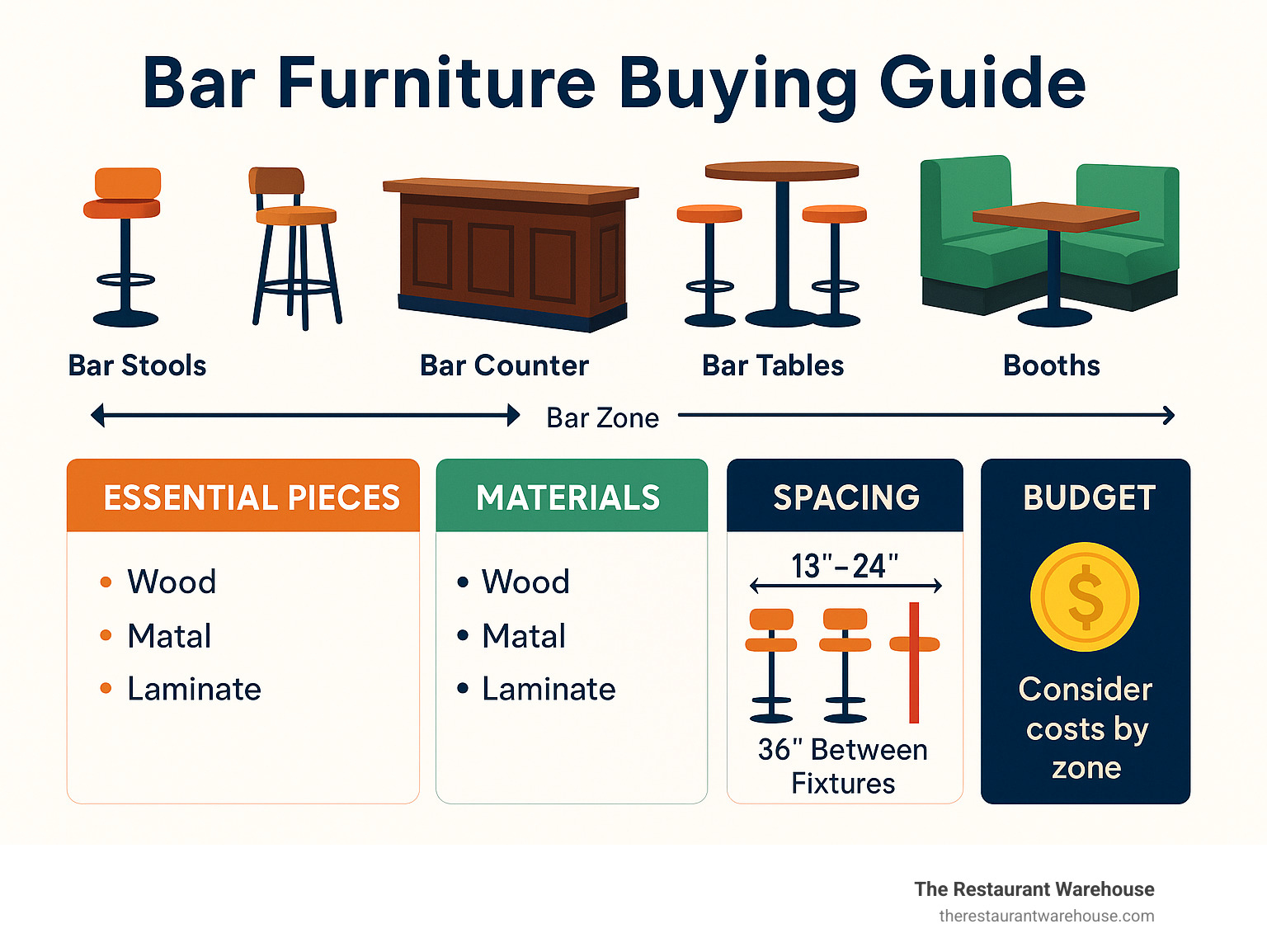
Restaurant bar furniture is the foundation of both your bar's aesthetic appeal and operational efficiency. For quick reference, here are the essential pieces you need for a successful bar setup:
| Essential Bar Furniture | Purpose | Price Range |
|---|---|---|
| Bar Stools | Customer seating at bar counter | $60-$200+ |
| Bar Tables | High-top seating for drinks | $130-$500+ |
| Bar Counters/Surfaces | Service area and customer seating | $500-$2,000+ |
| Booths | Space-efficient seating (increases capacity by 30%) | $400-$1,500+ |
| Drink Rails | Standing areas for customers | $200-$800+ |
The furniture you select for your restaurant bar does more than just fill space—it shapes the entire guest experience while directly impacting your operational efficiency and bottom line. As a bar or restaurant owner, your furniture choices must balance durability, comfort, style, and cost-effectiveness.
According to our research, booths can increase your seating capacity by up to 30% compared to traditional chairs and tables—a significant advantage when maximizing revenue per square foot. Commercial-grade furniture isn't just about aesthetics; it's about investing in pieces that can withstand the intense wear and tear of a busy establishment.
When selecting bar furniture, focus on three key factors:
-
Durability - Look for commercial-grade materials like solid hardwood, powder-coated steel, or high-pressure laminate tested to withstand high traffic (upholstery should be rated for 40,000+ double rubs)
-
Space Efficiency - Choose pieces that maximize seating while maintaining proper traffic flow and comfort
-
Brand Alignment - Select styles and finishes that reinforce your concept and attract your target customers
With wholesale pricing available through direct-from-manufacturer sources, you can furnish your bar space without the markup traditionally added by retail stores. This approach typically saves 20-40% on your furniture investment.
Restaurant Bar Furniture Essentials: Types You Can't Skip
When designing your bar area, certain furniture pieces aren't just nice-to-haves—they're absolute must-haves if you want a space that works hard for your business. At The Restaurant Warehouse, we've helped thousands of bar owners create spaces that keep customers comfortable and spending.
Your bar's foundation starts with these essential restaurant bar furniture pieces that balance function and style:
Bar stools are the workhorses of your bar counter, where customers perch for drinks and conversation. Bar tables provide those high-top surfaces perfect for casual drinks and appetizers. Booths offer cozy, space-efficient seating that customers love for their privacy. Counter-height seating gives you alternatives to traditional stools, while drink rails let standing customers have a place for their beverages during busy rushes. Don't forget lounge chairs for those cocktail areas where comfort is key, plus the right tabletops and bases to tie everything together.
Each piece plays its own role in creating a profitable bar space. For instance, those drink rails might seem simple, but they're brilliant for accommodating standing customers during your Friday night rush—effectively boosting your capacity without needing more square footage.
Bar Stools 101 – Height, Swivel & Footrests
The bar stool might seem straightforward, but getting these details right can make or break your customers' comfort levels—and their tab sizes.
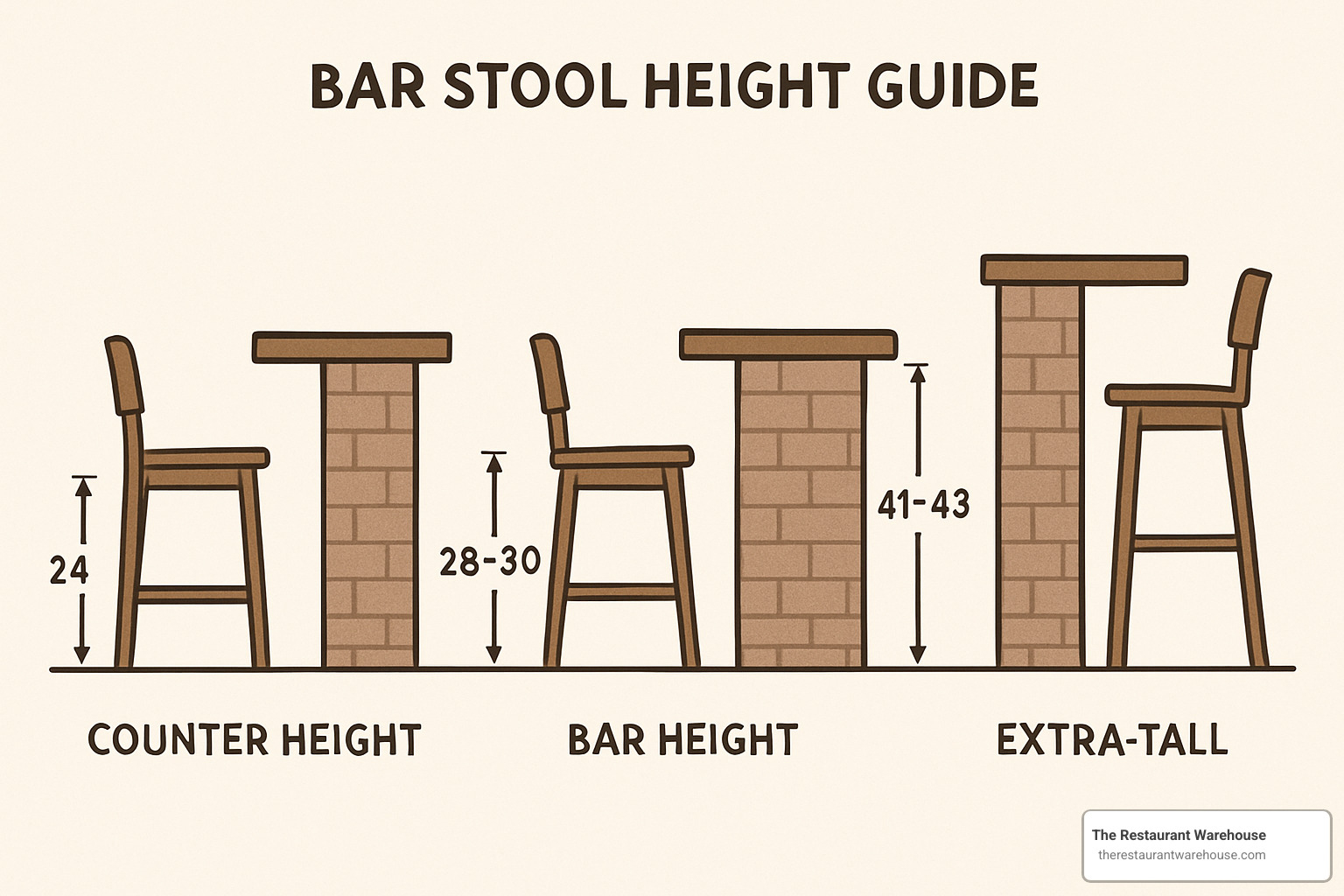
Height considerations matter tremendously. Your standard options include counter height (24-26") for 36" counters, bar height (28-30") for standard 40-42" bars, and extra-tall options (33-36") for custom high counters. Remember the golden rule: allow 9-12 inches between the seat and the counter's underside so elbows rest comfortably without awkward hunching.
Swivel functionality is worth the extra 10-20% in cost. Swivel stools let customers easily turn toward conversations, slide in and out without scraping floors, and adjust their position without lifting heavy furniture. Your maintenance team will thank you for fewer floor repairs, and customers appreciate the ease of movement.
Footrest importance can't be overstated—nobody enjoys dangling legs! A proper footrest positioned 7-9" from the floor makes the difference between a customer who stays for one drink and one who settles in for the evening. Look for circular footrests on pedestal stools or horizontal bars on four-legged designs.
High-Top & Communal Tables
High-top and communal tables have become the social hearts of successful bars, serving double-duty as both dining surfaces and gathering spots.
Communal tables shine in bar settings by encouraging strangers to become friends. They maximize your seating efficiency—fitting more people in less space—while creating that buzzy, energetic vibe that keeps people coming back. Plus, they offer flexibility when you need to accommodate different group sizes throughout the night.
When choosing high-tops, think about height (standard bar-height tables sit at 40-42"), size (24" rounds work for couples, 30" handles small groups), and shape (rounds encourage conversation, rectangulars maximize space). Don't skimp on stability—weighted bases prevent embarrassing spills when customers get animated.
Want more details on selecting the perfect bar tables? Our comprehensive bar-table-guide dives deeper into materials, dimensions, and styling options.
Standing zones equipped with drink rails (those narrow 12-18" counters) are brilliant for busy nights. They give standing customers somewhere to set drinks without taking up valuable seating space—perfect for those peak hours when every square foot counts.
Booths vs. Counter Seating
The strategic placement of booths and counter seating can dramatically transform your bar's capacity and atmosphere.
Booths are space-efficiency superstars, increasing seating capacity by up to 30% compared to traditional table-and-chair setups. They create those semi-private nooks that encourage customers to linger (and order another round), naturally define your traffic flow, and even help absorb noise in busy spaces. Customers simply prefer booths—they're the restaurant equivalent of getting the window seat on an airplane.
Counter seating along your bar offers different but equally important benefits. It puts customers front-row for watching your bartenders work their magic, encourages those staff-customer interactions that build loyalty, and maximizes otherwise unused wall space. It's perfect for solo diners or couples who want quick service without the commitment of a full table.
The smartest bar layouts we've helped design incorporate both: counter seating for casual drinks and quick turnover, with booths for groups planning to stay awhile. This mixed approach gives you flexibility while maximizing your revenue potential per square foot.
Choosing the Right Pieces for Your Theme & Layout
When it comes to selecting restaurant bar furniture, think of yourself as a storyteller—each piece contributes to the narrative of your establishment. Your furniture doesn't just fill space; it communicates your concept while creating a functional environment where both guests and staff can thrive.
Start by mapping out a detailed floorplan that considers the choreography of your bar. This means accounting for:
- How customers and servers will move through the space
- Service pathways that keep staff efficient
- ADA compliance with minimum 36" aisle widths
- Clear sightlines to TVs, stages, or other focal points
- Unobstructed access to emergency exits
Once your layout is solid, focus on creating a cohesive style story. While eclectic mixing can work when intentional, random combinations often feel jarring rather than charming.
Different themes naturally lend themselves to specific furniture choices. Here's how various concepts translate to tangible pieces:
| Theme | Bar Stool Style | Table Style | Material Choices | Color Palette |
|---|---|---|---|---|
| Classic/Traditional | Wooden with upholstered seats | Dark wood, round | Mahogany, leather, brass | Deep reds, browns, greens |
| Industrial | Metal with minimal padding | Metal bases, wood tops | Reclaimed wood, steel, concrete | Grays, blacks, rust tones |
| Modern | Sleek, low-back designs | Clean lines, geometric | Polished metals, glass, synthetic | Whites, blacks, bold accents |
| Rustic | Wood with natural finishes | Farmhouse style | Distressed wood, iron, copper | Earth tones, neutrals |
Need more guidance on selecting chairs that perfectly complement your restaurant's personality? Our chairs for restaurants guide dives deeper into matching form with function.
Matching Bar Stools to Décor
Bar stools often serve as the most visible furniture elements in your bar—they're like the supporting actors that can steal the show. Making thoughtful choices here pays dividends in your overall aesthetic.
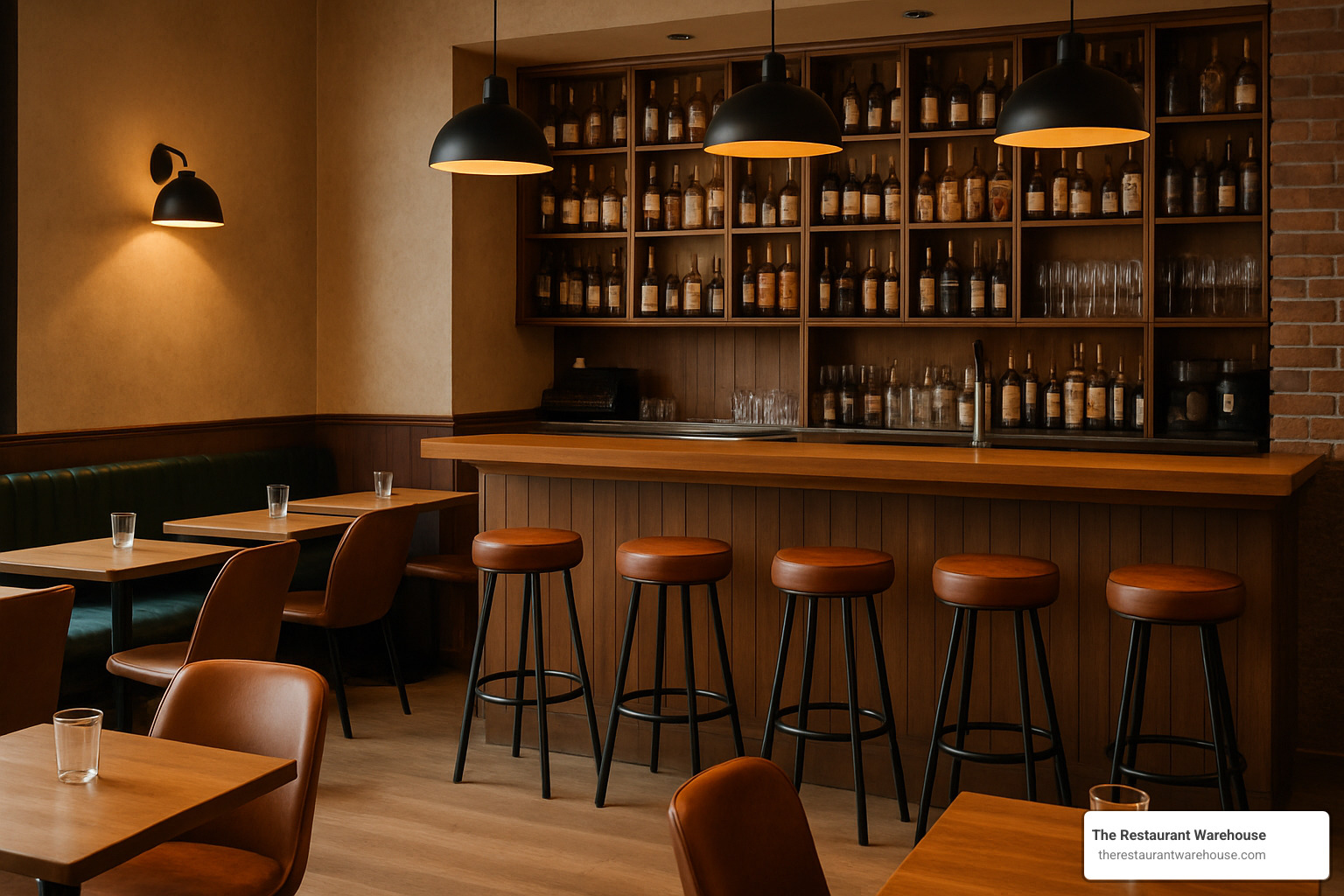
Leather-look upholstery brings both practical durability and visual richness to your space. For a traditional pub feel, consider button-tufted designs in warm browns or deep burgundies. If you're going for a contemporary vibe, sleek upholstery in crisp neutrals or unexpected pops of color creates instant visual interest.
The metal finishes throughout your bar should create a harmonious conversation rather than competing statements. Brushed stainless steel speaks the language of contemporary design, while matte black anchors industrial or modern spaces. Antique brass or copper adds warmth to vintage themes, and bronze brings a touch of timeless elegance to traditional settings.
Your choice of wood stains should coordinate with your bar counter and other wooden elements like a well-rehearsed dance. Lighter stains create an approachable, daytime-friendly atmosphere, while darker stains whisper of evening sophistication and lingering conversations.
Brass accents have made a triumphant return to bar design. Consider stools with brass footrests, nailhead trim, or subtle metallic details—these small touches add an accessible luxury that guests notice, even if only subconsciously.
Bar stools take tremendous abuse—they're dragged, spilled on, and constantly in use. While beauty matters, durability and ease of cleaning should never take a back seat to pure aesthetics.
Optimal Table Footprints & Clearances
Getting your spacing right is like conducting a symphony—when done well, it creates harmony that goes unnoticed; when done poorly, the discord is impossible to ignore. Industry standards for restaurant bar furniture placement include:
An 18-inch minimum aisle width keeps traffic flowing, though 24-36 inches provides a much more comfortable experience for both guests and staff. For bar stools, allow 24 inches from center to center for standard models—this gives patrons enough personal space without creating awkward gaps.
Keep 24-30 inches between tables to ensure servers can steer without performing acrobatics or disturbing guests. Pathways to restrooms should maintain a minimum 36-inch clear width for accessibility and comfort.
For your bar counter itself, allocate 16-20 inches of depth on the customer side and 24-30 inches on the service side to accommodate preparation and storage.
Thoughtful sightlines can significantly improve your guests' experience. Arrange seating to provide clear views to entertainment areas or TVs from as many positions as possible. Nothing frustrates customers more than constantly shifting to see the big game or craning their necks throughout their visit.
Proper spacing isn't just about comfort—it directly impacts safety and service efficiency. Arrangements that are too tight can violate fire codes and turn busy service periods into obstacle courses for your staff. When in doubt, err on the side of breathing room—your servers (and their trays of drinks) will thank you.
Materials That Withstand a Busy Bar Night
Let's face it – your bar takes a beating every night. Between spilled drinks, constant cleaning with harsh chemicals, and the never-ending parade of customers, your restaurant bar furniture needs to be tough as nails.
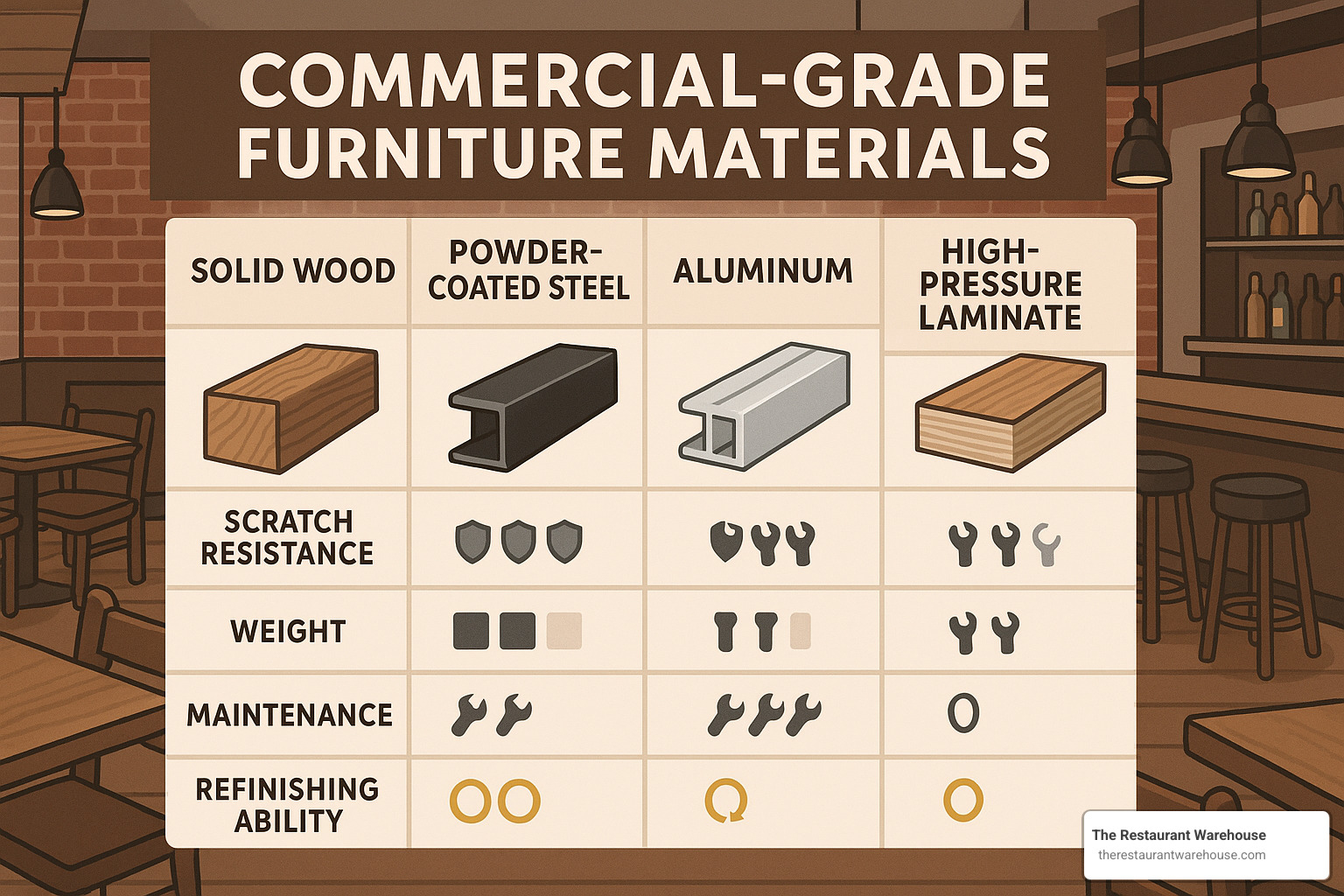
Hardwood frames remain a customer favorite for bar stools and chairs, and for good reason. They offer exceptional durability when properly constructed, provide that classic look that works with practically any design style, and can be refinished if someone gets a little too rowdy with their cocktail. Look for solid beech, oak, or maple – these sturdy woods won't let you down like softer options or engineered products might.
For a more modern or industrial vibe, powder-coated steel delivers impressive resilience. It stands up beautifully to chips, scratches, and corrosion while being available in virtually any color your designer's heart desires. Plus, it's a breeze to clean after a busy Saturday night.
Aluminum strikes a nice balance for spaces that transition between indoor and outdoor use. It naturally resists corrosion, weighs less than steel (your staff will thank you during rearrangements), and requires minimal maintenance – perfect for those times when deep cleaning falls to the bottom of your priority list.
When it comes to tabletops, high-pressure laminate (HPL) is your best friend in a busy bar environment. These surfaces laugh in the face of scratches, heat, and moisture while coming in countless colors and patterns. They're also significantly more affordable than solid surfaces – because we know you're watching that bottom line.
For upholstery, don't even think about anything less than commercial-grade vinyl rated at Grade 5 or higher. This rating means your fabric can withstand at least 40,000 back-and-forth abrasion cycles before showing significant wear. Trust me, in a busy establishment, you'll hit that number faster than you might expect!
For more detailed guidance on selecting the perfect durable materials for your bar setup, our guide to the best bar table options has everything you need to know.
Indoor vs. Outdoor Requirements
If your establishment includes a patio or deck area, you'll need to think differently about your outdoor restaurant bar furniture. The great outdoors throws some serious additional challenges your way.
Weather resistance becomes your top priority. Look for UV-resistant materials that won't fade to an unrecognizable color after one summer in the sun. Rust-proof metals like aluminum, stainless steel, or properly treated iron will save you from premature replacements. And of course, water-resistant finishes and materials with mold and mildew resistance are non-negotiable unless you enjoy the "abandoned property" aesthetic.
Smart drainage features prevent that unpleasant "surprise puddle" when customers sit down after a rain shower. Slatted seats and tables allow water to pass through rather than collect, while mesh fabrics dry quickly. Even the angle of your furniture can make a difference in facilitating proper runoff.
Stackable designs prove their worth during severe weather or seasonal storage. They're typically lighter weight for easier movement and wonderfully space-efficient when not in use. Your staff will appreciate this thoughtful feature when they're rushing to secure the patio before an approaching storm.
For maximum protection, consider anodized frames. This special treatment provides superior corrosion resistance and increased hardness against wear and tear. They come in various colors and finishes to match your overall design scheme.
One word of caution – even with proper maintenance, outdoor furniture typically has a shorter lifespan than its indoor counterparts. It's wise to budget for more frequent replacement cycles for these exposed items.
Eco-Friendly & Easy-Clean Options
Today's customers increasingly appreciate sustainability, and fortunately, eco-friendly restaurant bar furniture options offer practical benefits beyond just feeling good about your choices.
Reclaimed wood brings character and environmental benefits to your space. Each piece tells its own unique story through its appearance, while diverting materials from landfills. Interestingly, this older-growth timber is often more durable than new wood, creating a distinctive aesthetic that can become a talking point for customers.
For new wood products, look for FSC-certified sourcing, which ensures materials come from responsibly managed forests. This third-party verification provides documentation of sustainable practices and reduces environmental impact. It's also a nice marketing advantage with eco-conscious customers who appreciate your commitment.
Antimicrobial surfaces offer health benefits that both customers and health inspectors will appreciate. These special treatments inhibit bacteria growth between cleanings, reduce odors and staining, and support your existing sanitation protocols. They're available in many materials, including upholstery, making them perfect for high-touch areas.
When selecting easy-clean options (and who doesn't want those?), prioritize smooth surfaces without crevices where sticky liquids can collect and hide. Non-porous materials prevent absorption of spills, while stain-resistant treatments on upholstery extend the life of your investment. Removable seat covers for deep cleaning are worth their weight in gold during flu season.
At The Restaurant Warehouse, we understand the balance between sustainability, cleanability, and durability isn't always easy to strike. We're here to help you find the perfect materials for your specific bar environment without breaking the bank.
Design, Comfort & 2024 Trends in Restaurant Bar Furniture
The bar furniture landscape is constantly evolving, and staying current with design trends helps your establishment feel fresh and appealing. In 2024, we're seeing exciting new directions in restaurant bar furniture that blend style with functionality.
Gone are the days of one-note furniture designs. Today's most popular pieces feature mixed materials that create visual interest and depth. Think warm wood paired with industrial metals, plush upholstery with contrasting piping, or sleek stone countertops softened by natural elements. These combinations add dimension to your space while telling a more complex design story.
Shapes are softening across the industry, with curved silhouettes replacing harsh angles. From rounded bar stool backs to gently curved booth seating, these organic forms create a more welcoming atmosphere. Customers unconsciously respond to these softer lines with longer, more comfortable stays – which translates directly to higher tabs.
"Our customers have been gravitating toward curved booths and rounded stools," notes our design team. "They create a more inviting atmosphere that encourages guests to settle in and enjoy themselves."
Color is making a dramatic comeback in 2024. After years of neutral minimalism, bold colors are returning to bar spaces through jewel tones like emerald, sapphire, and ruby. Whether you incorporate these as statement pieces or through a cohesive color scheme, these rich hues create memorable environments that stand out on social media feeds.
The modern bar experience increasingly incorporates technology, and furniture is evolving to match. Integrated technology features like built-in charging stations, subtle LED lighting, and even QR code holders built into tabletops are becoming standard expectations rather than luxury add-ons. These thoughtful details improve the customer experience while showcasing your attention to detail.
Perhaps most practical for busy establishments is the rise of modular seating options. These flexible pieces can be reconfigured for different events or service styles, allowing your space to evolve throughout the day or week. This adaptability is particularly valuable for venues that serve multiple purposes, from casual happy hours to more formal evening service.
For truly distinctive design solutions, we partner with specialized firms that can create signature pieces custom to your concept. Learn more about project services if you're interested in exploring custom options beyond our standard offerings.
Balancing Style & ROI
While stunning design catches the eye, smart bar owners know that every furniture decision must consider return on investment. The good news? Style and ROI aren't mutually exclusive.
Brand storytelling through thoughtfully chosen furniture creates memorable experiences that keep customers coming back. When your seating, tables, and bar elements reinforce your concept, they work as silent ambassadors for your brand. Whether it's through materials that echo your theme or colors that align with your visual identity, these choices build recognition and loyalty.
In today's social media-driven world, creating Instagrammable corners isn't just vanity – it's smart marketing. Strategic furniture arrangements with statement pieces, complementary lighting, and comfortable seating can turn customers into brand advocates who share your space with their followers. This organic promotion often delivers better results than traditional advertising, at a fraction of the cost.
Need personalization without extended lead times? Quick-ship custom upholstery offers the best of both worlds. Standard frames upholstered in your choice of fabric or vinyl can be delivered on accelerated timelines, allowing you to incorporate branded colors or unique pattern combinations without the usual custom furniture wait.
When evaluating furniture investments, look beyond the initial price tag to consider:
- How many years the piece will last in your high-traffic environment
- Ongoing maintenance requirements and costs
- The impact on customer perception and spending habits
- How easily the furniture can adapt to future concept adjustments
At The Restaurant Warehouse, we specialize in helping you find that sweet spot where style meets practicality, ensuring your investment delivers both aesthetic appeal and solid financial returns.
Customization Pays Off
Custom restaurant bar furniture might seem like a luxury, but it often delivers returns that justify the investment. Think of customization not as an expense, but as a strategic choice that can set your establishment apart.
Size customization ensures every piece fits perfectly in your space. Bar stools at the exact height for your unique counters, tables sized for your specific floor plan, and booths designed for your wall dimensions all contribute to a more efficient, comfortable environment. This precision fit not only looks more professional but can increase your seating capacity by eliminating wasted space.
Creating a cohesive look becomes easier with custom finish options. Wood stains matched to existing elements, metal finishes coordinated throughout your space, and paint colors that perfectly reflect your brand all contribute to a polished, professional appearance that customers notice – even if they can't quite identify why your space feels so "put together."
For unlimited upholstery possibilities, Customer's Own Material (COM) options allow you to provide fabrics that perfectly match your concept. Whether you need your exact brand colors, patterns specific to your theme, or performance fabrics suited to your particular environment, COM options deliver exactly what you need rather than forcing you to compromise.
Adding subtle branding through laser-etched logos on chair backs, table surfaces, or metal components reinforces your identity while creating distinctive elements unique to your establishment. These thoughtful touches become conversation pieces that customers remember and associate with your brand.
For truly distinctive designs, digital printing expands what's possible in bar furniture. From photographic images on tabletops to complex patterns on upholstery, these techniques allow for creative expression that was impossible just a few years ago.
While custom furniture typically adds 15-30% to base costs, many establishments find this investment delivers substantial returns through increased customer engagement and stronger brand recognition. As one owner told us, "Our custom booth seating with our logo stitched into the backs has become as much a part of our brand as our signature cocktails – customers actually ask to sit there specifically for photos."
Maintenance, Budget & Purchasing Checklist
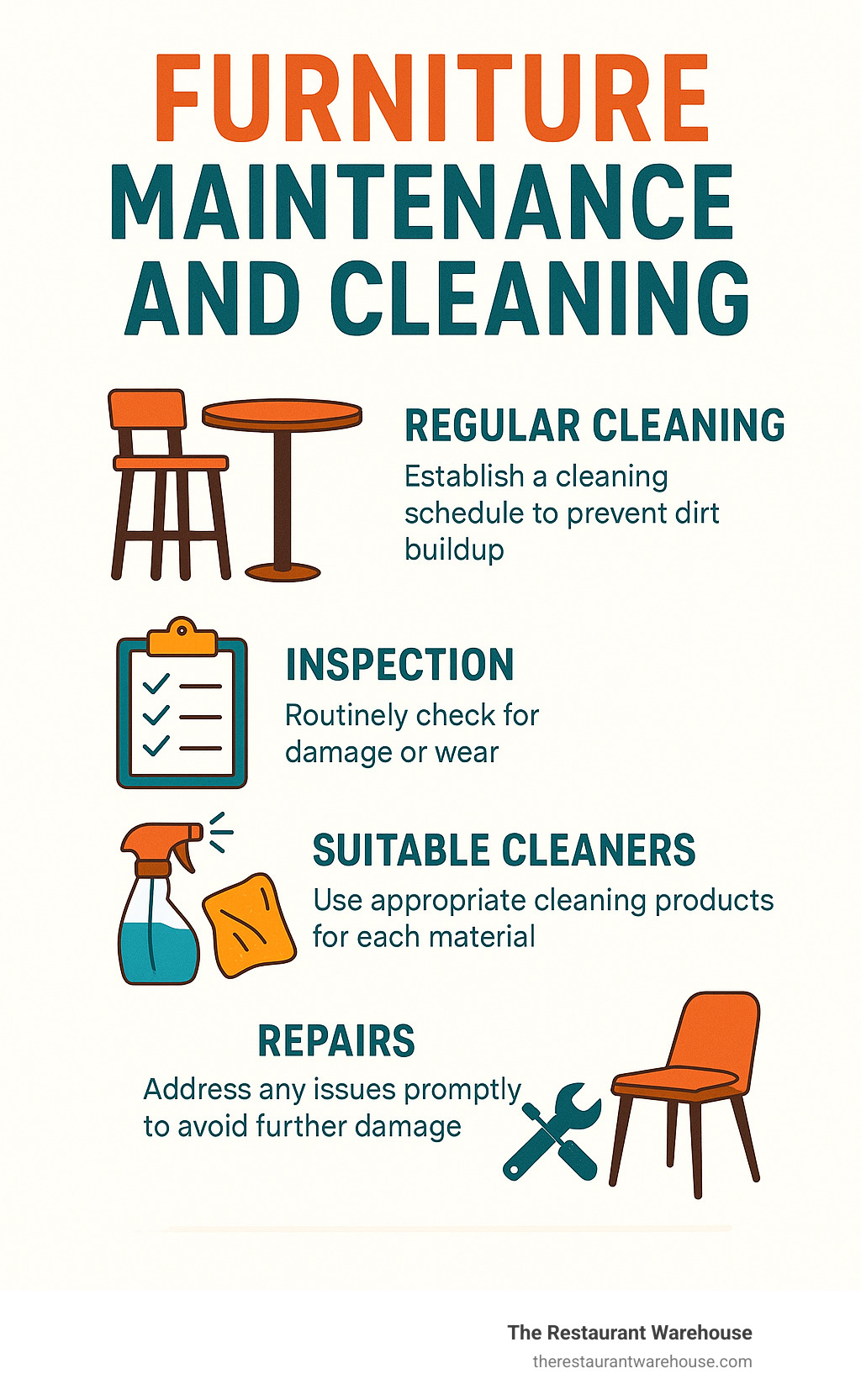
Taking care of your restaurant bar furniture isn't just about keeping things looking nice—it's about protecting your investment. Think of your furniture maintenance plan as a savings account that pays dividends through extended product life.
Daily attention makes all the difference. Quick wipe-downs after spills prevent those drips from becoming permanent stains. We recommend training your staff on proper cleaning techniques for different materials—what works for wood might damage vinyl. The few extra minutes spent on proper cleaning each day can add years to your furniture's lifespan.
Choose your cleaning products wisely. Commercial-grade cleaners designed specifically for restaurants offer the perfect balance between effective sanitizing and gentle care for your surfaces. Many of our customers find that eco-friendly options work beautifully while aligning with their brand values and avoiding the harsh chemical smell that can interfere with the dining experience.
Smart bar owners keep touch-up kits on hand for quick fixes. A matching stain pen for your wood surfaces, spare hardware for wobbly connections, and replacement glides for chair legs can turn potential furniture casualties into simple maintenance moments. For upholstered pieces, having a small repair kit ready means that tiny tear won't become a big problem.
When it comes to budgeting, thinking ahead saves money. Bulk ordering typically open ups discounts starting at around 10+ identical items. We've seen customers save 15-25% just by consolidating their orders. Plus, larger shipments often qualify for free or reduced shipping rates—a significant saving when you're talking about heavy furniture.
Be mindful of lead times in your planning. While many of our in-stock items ship within 1-2 weeks, custom pieces tell a different story. Custom upholstery usually adds 2-4 weeks to delivery times, and fully custom-built pieces might require 6-12 weeks or longer. For imported items, plan for 12-16 weeks—sometimes more during supply chain disruptions.
Minimum order quantities can surprise unprepared buyers. Custom finishes and special upholstery often come with minimum requirements. If you're a smaller establishment, consider partnering with neighboring businesses for a joint order, or work with us to find alternatives that don't require large quantities.
Don't forget to factor shipping into your budget. Freight costs vary dramatically between curbside delivery (least expensive) and white-glove service (where items are brought inside, unwrapped, and assembled). The difference can add hundreds to your bottom line.
For more detailed guidance on keeping your furniture in top condition, check out our comprehensive chair for restaurant upkeep resource.
Cleaning Protocols for Common Materials
Different materials in your restaurant bar furniture need specific care approaches. Vinyl upholstery—so common in busy bars—responds best to gentle cleaning with mild soap and water. Avoid alcohol-based cleaners that might seem perfect for a bar environment but actually dry out and crack vinyl surfaces over time. A monthly application of vinyl conditioner keeps these surfaces supple and resistant to cracking.
Wood surfaces bring warmth to your space but require careful attention. Clean with just a slightly damp cloth and mild detergent, being careful not to let moisture seep into joints where it can cause swelling or mold. Quarterly polishing with a commercial-grade product adds protection while enhancing the natural beauty of the grain.
Metal elements need their own care routine. The specific cleaner depends on the finish—what works for brushed stainless might damage powder-coated surfaces. Regular checks for loose connections can prevent wobbly tables and chairs, which customers immediately notice (and judge). For non-coated metals like brass footrests, periodic protective waxing prevents tarnish and maintains that warm glow.
Fabric upholstery requires vigilance. Regular vacuuming removes the abrasive particles that can wear down fibers, while immediate attention to spills prevents permanent staining. Even with daily care, professional cleaning every 6-12 months keeps fabrics looking and smelling fresh. After professional cleaning, consider applying fabric protector—think of it as sunscreen for your upholstery.
Smart Budgeting & Order Timing
Timing your furniture purchases strategically can stretch your budget considerably. The furniture industry has predictable sales cycles you can leverage. January and February often feature excellent discounts as manufacturers clear inventory for new lines. End-of-quarter promotions (March, June, September, December) offer opportunities as vendors push to meet targets. Even Black Friday has expanded to include commercial furniture deals.
Plan your refurbishment cycles realistically. Bar stools take the most abuse and typically need replacement every 3-5 years, while sturdy table bases might last 7-10 years with proper care. Tabletops usually fall somewhere in between at 5-7 years, and upholstery often needs refreshing every 2-3 years, depending on your cleaning protocols and material quality.
Avoid the rush by ordering during industry lulls. Placing orders 3-4 months before your peak season begins not only ensures timely delivery but often means more attentive service and sometimes better pricing. Summer furniture ordered in January or February arrives with plenty of time for installation, while fall refreshes planned during summer months avoid the back-to-school commercial rush.
At The Restaurant Warehouse, we work alongside you to develop purchasing plans that align with your budget cycles and business seasons. Our goal is helping you maintain a fresh, appealing environment for your customers without breaking the bank—because smart furniture investments contribute directly to your bottom line.
Frequently Asked Questions about Restaurant Bar Furniture
What makes furniture "commercial-grade"?
Ever walked into a restaurant and wondered why their furniture looks similar to what you have at home, yet somehow lasts through thousands of customers? That's the magic of commercial-grade restaurant bar furniture.
Commercial furniture isn't just residential furniture with a fancier name tag. The differences run deep, starting with construction techniques that include reinforced joints, industrial-grade adhesives, and metal-to-metal connections that ensure your furniture survives years of customers sliding in and out.
The materials tell a similar story. While your dining room chair might use standard plywood, commercial pieces feature thicker, multi-layered plywood, higher-density foam that retains its shape after thousands of compressions, and heavier-gauge steel that won't bend or warp under daily use.
Perhaps most importantly, commercial furniture undergoes testing that would make military equipment blush. BIFMA certification (that's the Business and Institutional Furniture Manufacturer's Association) ensures pieces can handle the weight, wear, and tear of commercial environments. Your home furniture? It's tested for occasional family gatherings, not Saturday night rushes.
This durability comes with warranty coverage that typically extends 5+ years for structural elements, reflecting manufacturers' confidence in their products. Plus, commercial pieces meet stringent regulations for public spaces, including fire codes, ADA requirements, and sanitation standards that residential furniture simply doesn't need to consider.
Yes, you'll pay more upfront for commercial-grade pieces, but when you're replacing residential-grade chairs every six months instead of every five years, the math quickly works in favor of commercial quality.
How do I maximize seating without crowding?
Finding that sweet spot between "comfortably full" and "sardine can" is an art form in the bar business. The goal isn't to cram in as many bodies as possible—it's to optimize your space for both comfort and profitability.
Booths are your secret weapon for capacity. They can increase your seating by up to 30% compared to traditional tables and chairs, while actually giving customers more personal space. Win-win! Banquette seating along walls follows the same principle, letting you use movable tables and chairs on the opposite side for flexibility.
Choose your furniture profiles wisely. Slim-profile bar stools without arms take up significantly less space while maintaining comfort. When you're multiplying by dozens of seats, those few inches per stool make a huge difference in your overall capacity.
Think vertically! Bar-height tables and stools occupy the same footprint as standard tables but create a more dynamic layout that customers love. For peak times, standing zones with drink rails let people enjoy their beverages without requiring a full seating setup.
Communal tables have made a massive comeback for good reason—they maximize efficiency while creating a social atmosphere that many customers actually prefer. Just make sure to maintain clear traffic lanes (36" for primary aisles, 18" for secondary pathways) so your staff can steer without performing gymnastics routines between tables.
Overcrowding isn't just uncomfortable—it can violate occupancy codes and create safety hazards. Your goal should be to optimize, not maximize. When customers have enough personal space to enjoy themselves, they stay longer and spend more.
What customization options add the most value?
Not all customization is created equal. Some options give you tremendous bang for your buck, while others are mostly vanity expenses that customers barely notice.
Custom upholstery in your brand colors creates a cohesive identity that subtly reinforces your brand with every visit. With only a 5-15% premium over standard fabrics, this is one of the smartest investments you can make in custom furniture.
For flexibility that pays dividends year-round, adjustable-height tables are hard to beat. Yes, they'll cost 10-20% more upfront, but they allow you to transform your space for different service styles and events without purchasing multiple furniture sets.
If your floor plan has unusual dimensions (and whose doesn't?), custom table sizes designed specifically for your space can increase your seating capacity by 10-15%. That capacity increase more than justifies the 15-25% premium you'll pay for custom dimensions.
Branded elements like laser-etched logos on chair backs or table edges create Instagram-worthy details that reinforce your identity. At typically just $10-30 per piece, they're an affordable way to make your furniture distinctively yours.
For venues that host varied events, modular components that can be reconfigured are worth their 20-30% premium. The versatility means you won't need separate furniture sets for different functions, saving both money and storage space.
What customizations rarely justify their cost? Exotic wood species that look identical to standard options after a few months of use, hand-carved details in high-touch areas that quickly wear away, and ultra-premium materials that don't actually improve durability or comfort. Save your budget for customizations your customers will notice and appreciate.
At The Restaurant Warehouse, we help you identify which custom options will deliver genuine ROI for your specific concept and customer base, ensuring every dollar of your furniture budget works as hard as you do.
Conclusion
Choosing the right restaurant bar furniture isn't just about filling space—it's about making a strategic investment in your business's future. The tables, chairs, and stools you select directly shape how customers experience your establishment, how efficiently your staff can work, and how strongly your brand resonates with visitors.
We at The Restaurant Warehouse have seen how the right furniture choices can transform a good bar into a great one. Our focus has always been providing commercial-grade options that don't come with those painful retail markups. After all, your furniture should work as hard as you do without breaking the bank.
One of the beauties of our approach is scalability. You don't need to furnish everything at once—start with the essentials and grow your collection as your business expands. Many of our most successful clients began with core pieces and added complementary items as their budget allowed. This stepped approach helps manage cash flow while still creating a cohesive look.
Our wholesale pricing model cuts out the middlemen, eliminating those high commissions and retail overhead costs that typically add 20-40% to furniture prices. This means you can invest in better-quality pieces that will stand up to years of spills, wipedowns, and the occasional rowdy customer.
Whether you're launching an exciting new concept or breathing fresh life into an established venue, our team is here to help steer the selection process. We've guided hundreds of bar owners through the journey of finding that sweet spot where style, durability, and value intersect.
For those looking to dive deeper into all aspects of restaurant furnishings beyond just the bar area, our comprehensive restaurant furniture guide covers everything from dining room seating to outdoor furniture options.
Your restaurant bar furniture does double-duty—it's both functional equipment and a tangible expression of your brand's personality. When you invest thoughtfully in pieces that deliver both style and staying power, you're setting the stage for countless memorable nights and satisfied customers. And in this business, that's what keeps people coming back for another round.
About The Author

Sean Kearney
Sean Kearney is the Founder of The Restaurant Warehouse, with 15 years of experience in the restaurant equipment industry and more than 30 years in ecommerce, beginning with Amazon.com. As an equipment distributor and supplier, Sean helps restaurant owners make confident purchasing decisions through clear pricing, practical guidance, and a more transparent online buying experience.
Connect with Sean on LinkedIn, Instagram, YouTube, or Facebook.