

How Much Does an Ice Machine Cost? A Comprehensive Price Breakdown
Why Understanding Ice Machine Price Matters for Your Business
The ice machine price can vary dramatically, from a few hundred dollars for a portable unit to over $5,000 for a high-capacity commercial model. Whether you're launching a new restaurant, upgrading a bar, or outfitting a cafe, ice is a critical component, but the wide range of prices can be overwhelming.
A quick overview of typical price ranges:
- Countertop/Portable Ice Makers: $100 - $500
- Under-Counter Ice Makers: $1,500 - $3,000
- Commercial Ice Machines: $1,000 - $5,000+
The difference in cost isn't just about size. It's driven by production capacity, ice type, condenser technology, and overall build quality. Many business owners focus only on the upfront price, but hidden costs like installation, water filtration, and energy consumption can add thousands to your total investment over time.
Understanding what drives these costs helps you avoid overpaying and select the right machine for your needs. With the right information, you can find a machine that fits your budget and produces the ice volume your business demands. This guide breaks down what you'll pay for different types of ice machines, what factors influence prices, and how to calculate the true cost of ownership to make a smart investment for your bottom line.
Decoding Ice Machine Types and Their Price Tags
When we talk about the ice machine price, the first thing to consider is the type of machine. Ice machines come in various models, each designed for different needs and budgets. From a small portable unit to a large commercial system, the range is vast, and so are their price tags. Let's break down the different types and their typical costs.
Countertop & Portable Ice Makers: Convenience at a Cost
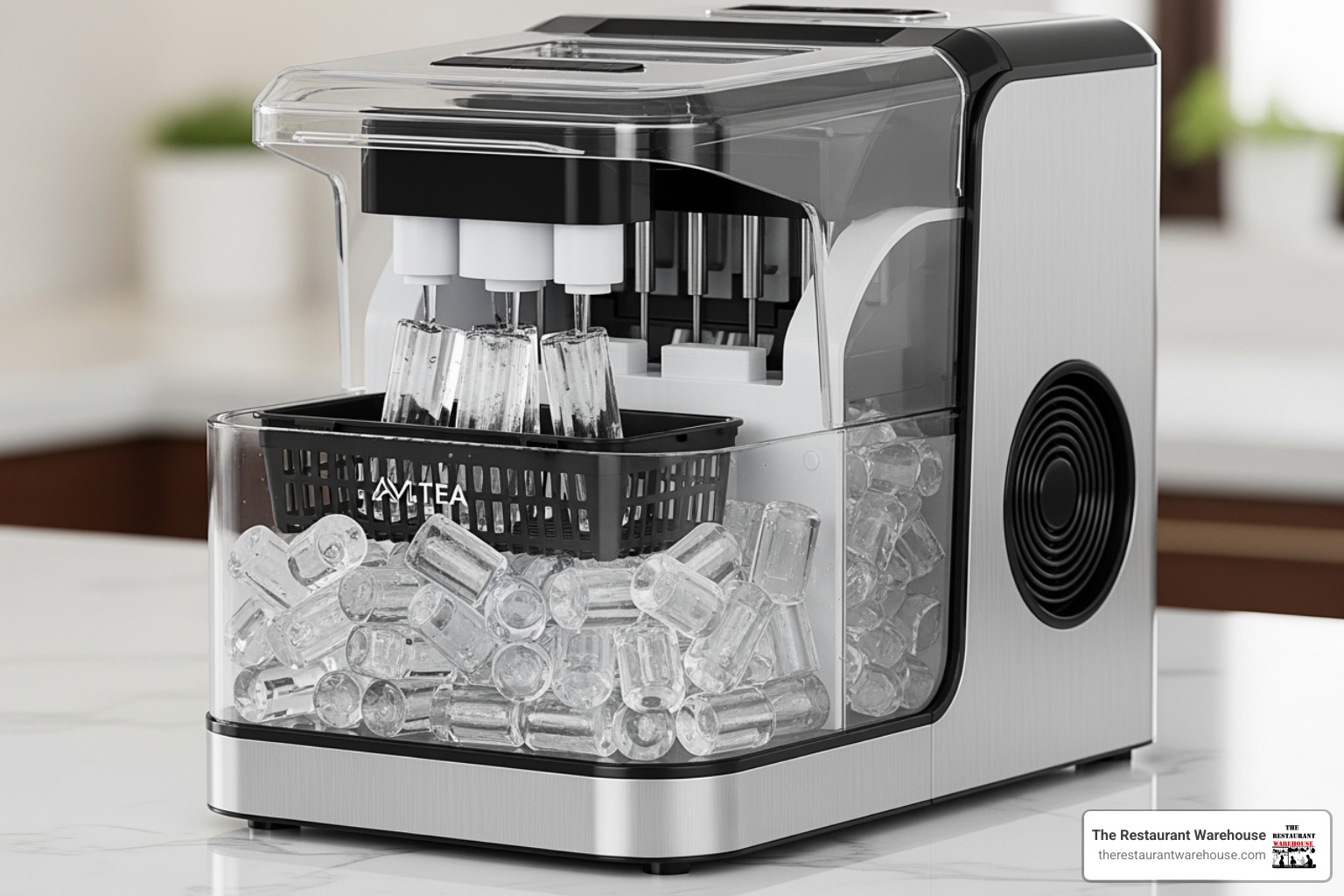
These are the most accessible and affordable ice makers, designed for convenience and portability. They're perfect for occasional use, small offices, or as a supplement to a refrigerator's ice dispenser.
- Design: Their compact size means you can easily move them. They don't require special installation; just plug them in and add water.
- Price Range: Countertop ice makers typically range from $100 to $500, with the average price around $200.
- Production Capacity: Most units produce between 20 to 50 pounds of ice per day, which is ample for personal or small group use.
- Ice Type: They predominantly produce "bullet ice"—soft, chewable, cylindrical ice popular for drinks.
- Use Cases: Ideal for home use, RVs, small offices, or dorm rooms where space is limited and high ice volume isn't a constant necessity.
Under-Counter & Built-In Ice Makers: A Seamless Solution
Moving up in price and sophistication, under-counter ice makers are designed to integrate seamlessly into cabinetry, offering a more permanent and aesthetically pleasing solution.
- Design: They fit neatly under standard countertops, providing a streamlined look for modern kitchens, entertainment areas, and home bars.
- Price Range: Under-counter ice makers typically range from $1,500 to $3,000. The price reflects their integrated design, higher production capacity, and superior ice quality.
- Production Capacity: These machines generally produce between 50 to 100 pounds of ice per day, making them suitable for households that consume a lot of ice or small commercial settings like cafes and small bars.
- Ice Type: Many under-counter models produce clear, restaurant-quality ice cubes that are denser and slower melting than bullet ice.
For those outfitting a bar, our bar ice machine guide offers more specific advice.
Commercial Ice Machines: The Heavy-Duty Choice
The ice machine price for commercial units escalates significantly, reflecting their robust construction and massive production capabilities for demanding business environments like restaurants, hotels, and hospitals.
- High-Volume Production: Commercial ice machines are built to produce ice around the clock, with capacities ranging from 100 lbs/day to over 1000 lbs/day for industrial-grade machines.
- Design: Many are modular, with a separate ice-making head and storage bin for flexible configuration. Some come as integrated ice and water dispensers.
- Price Range: Commercial ice machines can cost $1,000 to $5,000 or more, depending on production capacity and features. High-capacity units easily exceed $4,000.
-
Ice Types: Commercial machines offer a variety of ice types:
- Cube Ice (Full or Half): Versatile for drinks and food displays. Full cubes are dense and melt slowly.
- Nugget Ice: This soft, chewable ice is incredibly popular in many foodservice establishments. If you're curious about this unique ice, check out our guide on what is nugget ice.
- Flake Ice: Soft and moldable, ideal for food displays, medical applications, or blending.
- Durability: These machines are constructed with heavy-duty materials like stainless steel and are built to withstand continuous operation, often carrying NSF (National Sanitation Foundation) certifications. Investing in a reliable commercial ice machine is non-negotiable for businesses where ice is critical.
Key Factors That Determine the Ice Machine Price
Beyond the basic type, several critical factors significantly influence the ice machine price. Understanding these elements will help you make an informed decision and ensure you're paying for features that matter to your business.
For a deeper dive into choosing a capacity that fits your menu and service style, see The Restaurant Warehouse 200 lb ice machine guide.
Production Capacity: The Pounds Per Day Equation
This is arguably the most significant factor in an ice machine's cost. Production capacity is how much ice the machine can produce in a 24-hour period, measured in pounds (lbs/day).
- Scale of Production: A home ice maker might produce 20-50 lbs/day, while a commercial unit can churn out hundreds or even thousands. A machine built to produce 500 lbs of ice daily will cost substantially more than one producing 50 lbs.
- Price and Complexity: As production capacity increases, so does the complexity of the refrigeration system and the size of components, directly translating to a higher upfront ice machine price.
- Sizing for Demand: It's crucial to correctly size your machine to your peak demand. Undersizing leads to ice shortages, while oversizing means unnecessary upfront costs and higher operating expenses. For help with sizing, our 200 lb ice machine guide might offer useful insights.
The Impact of Ice Type and Quality on Price
Not all ice is created equal, and the type of ice a machine produces can have a considerable impact on its cost. Different ice types require different internal mechanisms, affecting the machine's complexity and its ice machine price.
- Nugget Ice: Highly sought after for its soft, chewable texture, machines that produce nugget ice often come with a higher price tag. The specialized auger system required to create this popular ice type adds to the manufacturing costs and overall price.
- Gourmet (Clear) Ice: These dense, slow-melting, crystal-clear cubes are often used in high-end bars. The process to create this ice involves specific freezing cycles to remove impurities, demanding more precise engineering and driving up the cost.
- Flake Ice: Machines producing flake ice use a different method involving a cold drum and a scraper, which contributes to their specific price point.
If you want a neutral, technical overview of how different ice forms are produced and used, the general article on ice making at Wikipedia offers additional background.
Condenser Type: Air-Cooled vs. Water-Cooled
The method an ice machine uses to cool its refrigerant system (the condenser) is a crucial factor influencing both the upfront ice machine price and its ongoing operational costs.
-
Air-Cooled Condensers: These are the most common type, using ambient air to cool the condenser coils.
- Cost: Generally have a lower initial purchase price.
- Operation: Require good ventilation to dissipate heat. They can become less efficient in hot or enclosed spaces.
- Utilities: Use less water but can consume more electricity if ventilation is poor.
- Installation: Simpler, requiring only a power source and water supply/drain.
-
Water-Cooled Condensers: These units use a continuous flow of water to cool the condenser coils.
- Cost: Often have a higher initial purchase price due to more complex plumbing requirements.
- Operation: Perform consistently well regardless of ambient air temperature, making them ideal for hot kitchens or confined spaces.
- Utilities: Can be more energy-efficient but use a significant amount of water, which can add to operational costs.
- Installation: More complex, requiring a dedicated drain for the condenser water.
The choice between air-cooled and water-cooled should factor in your operating environment, local utility costs, and initial budget. For custom guidance on which configuration offers the best value for your operation, you can contact The Restaurant Warehouse team to review your options before you buy.
Beyond the Sticker Price: Hidden Costs of Ownership
When budgeting for an ice machine, it's easy to focus solely on the initial ice machine price. However, ignoring the "hidden costs" of ownership can lead to unpleasant surprises. To truly understand your investment, you need to look at the total cost of ownership (TCO).
If you are mapping out your multi-year equipment budget, you can also reference guidance from the U.S. Department of Energy on commercial foodservice energy use at energy.gov, which explains how utility costs add up over time.
Installation and Setup Expenses
Unlike a simple countertop model, many under-counter and commercial ice machines require professional installation, which adds to the overall cost.
- Professional Help: We recommend professional installation for commercial units to ensure proper functioning, adherence to codes, and to preserve the warranty.
- Plumbing & Electrical: Most machines need a dedicated water line and a drain, which may require a licensed plumber. Commercial units often need specific electrical circuits, requiring an electrician to ensure a safe power supply.
- Complexity: Installation costs can range from a few hundred to over a thousand dollars, depending on the complexity of your setup and local labor rates.
Ongoing Maintenance and Cleaning
An ice machine requires regular care to operate efficiently and hygienically. This is vital to the machine's longevity and the quality of your ice.
- Routine Cleaning: Ice machines need regular cleaning to prevent the buildup of slime, mold, and mineral deposits. Some modern units feature one-touch cleaning controls and dishwasher-safe components to simplify this process.
- Descaling and Sanitizing: Mineral buildup (limescale) can clog water lines and reduce efficiency, requiring a descaling solution. The machine must also be sanitized regularly to ensure the ice is safe for consumption. Some models feature built-in antimicrobial protection to inhibit bacterial growth between cleanings.
- Professional Service: Commercial machines benefit from professional maintenance once or twice a year for deeper cleaning and inspection. Neglecting maintenance can lead to reduced ice production, poor ice quality, and expensive repairs. For more details, our guide on commercial ice maker maintenance is an excellent resource. If you face an issue, understanding ice machine repair cost can help you budget.
If you prefer to bundle upkeep into a predictable monthly expense instead of paying unexpected service bills, consider asking The Restaurant Warehouse about equipment programs that include scheduled maintenance when you contact us.
Water Filtration and Utility Consumption
The quality of your water and the efficiency of your machine are two significant factors that impact your ongoing costs.

- Water Filter Systems: Untreated water with high mineral content leads to rapid scale buildup. Installing a good water filter system is crucial. The initial cost can be $100 to $500+, with replacement cartridges costing $50 to $200 every 6-12 months. Filtration also ensures clear, taste-free ice.
- Energy Consumption: Ice machines are energy-intensive. Consumption varies based on machine type, capacity, condenser type, and ambient temperature.
- ENERGY STAR Savings: Energy-efficient models can significantly reduce electricity bills. An ENERGY STAR certified commercial ice maker can save businesses hundreds of dollars annually by using less energy and water.
- Water Usage: Water-cooled condensers use additional water for cooling, which can be a significant operational cost in areas with high water prices.
Considering these hidden costs upfront allows for a more accurate budget. If you need help selecting an efficient machine that fits your budget, contact our team for expert advice. You can also compare energy-efficient options and wholesale pricing in The Restaurant Warehouse catalog at https://therestaurantwarehouse.com/.
Smart Purchasing: Maximizing Value for Your Investment
Making a smart investment in an ice machine goes beyond looking at the initial ice machine price. You need to consider factors that impact the machine's long-term value, reliability, and your overall financial outlay.
If you want a structured walkthrough of spec sheets, brands, and configurations, start with The Restaurant Warehouse buy commercial ice machine guide for step-by-step help.
Understanding the Lifespan to Price Ratio
The expected lifespan of an ice machine is directly related to its build quality and intended use, which heavily influences its upfront cost.
- Durability: A countertop ice maker might last 3-5 years, whereas a heavy-duty commercial ice machine is engineered to run continuously for 7-10 years or more with proper maintenance. This difference is a primary driver of the price disparity.
- Build Materials: Commercial machines often feature corrosion-resistant stainless steel construction and robust components. These superior materials cost more but pay off in durability and fewer breakdowns.
- Long-Term Value: While a commercial machine has a higher initial ice machine price, its extended lifespan and greater reliability can mean a lower cost per year of operation compared to frequently replacing cheaper models.
The Role of Warranty in Your Purchase Decision
A comprehensive warranty is a safeguard for your investment and a key indicator of a product's quality.
- Warranty Coverage: For commercial ice machines, it's common to see multi-year warranties covering parts and labor for the ice maker itself, with even longer coverage for critical components like the compressor and evaporator.
- Price Correlation: Machines from reputable brands with robust warranties might have a slightly higher upfront ice machine price, but this is often justified by the peace of mind and protection against costly repairs. A longer warranty signals the manufacturer's confidence in their product.
- Understanding Terms: Always read the fine print. Some warranties are voided if used in non-commercial applications or if specific maintenance schedules and approved filters are not used.
If you are comparing several models and unsure which warranty structure offers the best protection for your budget, you can book a quick consultation with The Restaurant Warehouse to walk through the options.
Cost-Effective Alternatives: Used, Refurbished, or Leasing
If the upfront ice machine price for a new unit is daunting, several alternatives can help you acquire the necessary equipment without breaking the bank.
- Used & Refurbished Equipment: Buying used can offer a significantly lower upfront cost but often comes with no warranty and an unknown history. Refurbished machines are a safer bet, as they have been inspected and repaired, and may come with a limited warranty.
-
Ice Machine Leasing: This is a popular option for businesses that want to preserve capital and manage cash flow.
- How it Works: You pay a regular monthly fee to use the equipment, and the agreement often includes maintenance and filter replacements.
- Pros: Low upfront costs, predictable monthly expenses, and access to high-end equipment.
- Cons: You don't own the equipment, and the total long-term cost might be higher than purchasing.
- Resource: Learn more about this flexible option in our article on ice machine leasing.
- Finding Deals: Keep an eye out for sales, closeouts, or "scratch & dent" models for significant savings. Our guide on cool deals on commercial ice makers for sale can help you spot opportunities.
To see what you could save with wholesale pricing versus typical retail, browse current promotions and clearance ice machines at The Restaurant Warehouse ice machines collection and reach out to our team if you want help matching a deal to your projected ice demand.
Frequently Asked Questions about Ice Machine Prices
Here, we address some of the most common questions we hear regarding the ice machine price and related costs.
What is a good price for a home ice maker?
A good price for a home ice maker depends on your needs for capacity, ice type, and design.
- Countertop Price Range: For a basic, portable countertop model, a good price is in the $150 - $300 range. Cheaper options exist but may lack durability. The average price is around $200.
- Under-Counter Price Range: If you're looking for a built-in solution that produces clear, gourmet ice, expect to pay between $1,500 - $3,000. These are a significant step up in quality and aesthetics.
- Value: A "good price" is one that offers the best value for your money based on your usage, desired features like self-cleaning, and aesthetic preferences.
Why are commercial ice machines so expensive?
Commercial ice machines command a higher ice machine price for several compelling reasons related to their demanding purpose:
- High Production Capacity: They are designed for continuous, high-volume ice production (100+ lbs/day), requiring more robust and complex refrigeration systems than residential units.
- Durable Construction: Built with heavy-duty materials like stainless steel, they are engineered to withstand the rigors of a professional environment, ensuring a long lifespan.
- Advanced Systems: Their cooling systems are powerful and designed for efficiency under constant load.
- Longevity: With proper maintenance, commercial ice machines are expected to last 7-10 years or more, making them a long-term investment.
- Safety Certification: Many carry NSF certification, meaning they meet strict public health and safety standards, which adds to manufacturing costs.
- Reliability: Every component is built to a higher standard to ensure reliability and minimize downtime in a business-critical setting.
How much does it cost to run an ice machine per month?
The monthly running cost of an ice machine is a variable sum influenced by several factors:
- Energy Costs: This is often the largest component and depends on the machine's energy efficiency, production capacity, the ambient temperature of its location, and your local electricity rates. An energy-efficient model will consume significantly less power.
- Water Costs: This includes the water used to make the ice itself and, for water-cooled units, the water used to cool the condenser. Local water and sewer rates will determine this cost. Air-cooled units use far less water.
- Maintenance & Filters: You must also budget for the recurring cost of water filter replacements (e.g., every 6-12 months) and cleaning supplies.
Adding these up, a commercial ice machine could cost anywhere from $100 to several hundred dollars per month to run, depending on its size, efficiency, and local utility rates. A smaller residential unit would be much less, perhaps $20-$50 per month.
Conclusion
Navigating the ice machine price landscape can seem complex, but it becomes manageable with the right knowledge. We've seen that the cost is a dynamic figure influenced by the machine's type, production capacity, ice type, and condenser system.
The sticker price is only part of the story. Hidden costs like installation, maintenance, water filtration, and utilities all contribute to the total cost of ownership. By considering these factors upfront, you can avoid financial surprises and ensure your investment provides long-term value. Whether you need a small portable unit, a sleek under-counter model, or a robust commercial workhorse, understanding the interplay between features, durability, and cost is paramount.
At The Restaurant Warehouse, we're committed to helping you find the perfect ice machine that meets your needs without breaking your budget. We provide affordable, wholesale pricing by avoiding high commissions and retail overhead.
Ready to find the ideal ice machine for your business? Explore our extensive selection and detailed guides to make your coolest investment yet. Visit our ice machine buyers guide today, or review our full range of ice machines at https://therestaurantwarehouse.com/collections/ice-machines.
If you would like personalized help comparing models, capacities, and long-term operating costs, you can also contact The Restaurant Warehouse to speak with a product specialist before you purchase.
About The Author

Sean Kearney
Sean Kearney is the Founder of The Restaurant Warehouse, with 15 years of experience in the restaurant equipment industry and more than 30 years in ecommerce, beginning with Amazon.com. As an equipment distributor and supplier, Sean helps restaurant owners make confident purchasing decisions through clear pricing, practical guidance, and a more transparent online buying experience.
Connect with Sean on LinkedIn, Instagram, YouTube, or Facebook.