


A Complete Guide to Ice Machine Leasing for Businesses
Staring at the price tag of a new commercial ice machine can feel like a punch to the gut for any business owner. It's a big number. But here's the good news: Ice machine leasing offers a powerful alternative, turning what would be a massive capital expense into a predictable, manageable monthly payment. Think of it as a strategic financial tool that keeps cash in your business while making sure you never run out of ice.
Why Leasing an Ice Machine Is a Smart Business Move
Think of leasing an ice machine in the same way you’d lease a delivery vehicle for your business. You get all the utility and reliability you need for your day-to-day operations without draining your bank account or dealing with the long-term headaches of ownership, like depreciation and unexpected breakdowns. It shifts the entire dynamic from a one-time, high-stress purchase to a continuous, hassle-free service.
For any business in the foodservice and hospitality world, cash flow is king. Leasing frees up thousands of dollars that would otherwise be tied up in a single piece of equipment. That preserved capital can then be put to work in areas that actually drive growth, like marketing, expanding your inventory, or hiring great new staff.
The Financial and Operational Edge
Opting to lease an ice machine gives you several immediate advantages that go way beyond just saving money upfront. It's really about building a more resilient and efficient operational model for your business.
- Eliminate Surprise Repair Bills: Most comprehensive lease agreements bundle all maintenance and repairs into your monthly fee. When the machine inevitably breaks down, you’re not scrambling to cover an emergency repair bill; the leasing company handles it. Simple as that.
- Stay Technologically Current: The ice machine industry is always getting better and more efficient. Leasing lets you upgrade to a newer, more energy-efficient model every few years, which keeps your utility bills down and your equipment modern.
- Focus on Your Core Business: Let's be honest, managing equipment is a distraction. A good lease transfers the responsibility of maintenance, deep cleaning, and repairs to the provider, freeing you up to focus on what you do best: serving your customers.
As you weigh your options, it's really insightful to examine the tax benefits of leasing versus buying business assets. This financial angle is a key piece of the puzzle for any big equipment decision. You can also explore this topic in more detail in our broader guide to restaurant equipment leasing.
The global commercial ice machine market was valued at approximately USD 1.47 billion in 2025 and is projected to grow significantly. This expansion highlights a crucial trend where leasing becomes an essential strategy for businesses to meet rising demand while managing costs in a competitive market.
How to Read an Ice Machine Lease Agreement
Let’s be honest, an ice machine lease agreement can look pretty intimidating. It’s often packed with dense legal language that makes your eyes glaze over. But once you understand a few key concepts, that complex document becomes a straightforward business tool.
Think of it as the playbook for your equipment. Knowing the rules of the game from the start ensures you come out on top in the long run. The first thing you absolutely need to grasp is what happens when your lease term is up, which brings us to the two main types of leases.
Demystifying Lease Structures
When it comes to equipment leases, you'll almost always run into two main flavors: the Fair Market Value (FMV) lease and the $1 Buyout lease. They sound complicated, but the ideas behind them are pretty simple.
An FMV lease is a lot like renting an apartment. You get lower monthly payments, and at the end of the term, you have a few choices. You can return the ice machine, renew the lease, or buy it for whatever its current market price is at that time.
On the other hand, a $1 Buyout lease is more like a rent-to-own deal for a house. The monthly payments are a bit higher, but here’s the kicker: at the end of the term, you can buy the machine outright for a symbolic fee—usually just one dollar. This is the path for businesses that know they want to own the asset when all is said and done.
To make it even clearer, let's break down the key differences between these two common lease types.
Lease Types Compared: Fair Market Value vs. $1 Buyout
| Feature | Fair Market Value (FMV) Lease | $1 Buyout (Capital) Lease |
|---|---|---|
| Monthly Payment | Typically lower | Typically higher |
| End of Term | Return, renew, or buy at market price | Purchase for a nominal fee (usually $1) |
| Ownership Goal | Best if you want to use, not own | Best if you plan to own the equipment |
| Best For | Lower initial cost, flexibility | Building equity, long-term ownership |
| Analogy | Renting an apartment | Rent-to-own a house |
Ultimately, your choice depends entirely on your long-term strategy. Do you want the lowest possible monthly payment and the flexibility to upgrade later? Or is owning the machine your end goal?
When you're reviewing any contract, zoom in on the fine print about maintenance and repairs. A truly great lease shifts all the operational headaches from you to the provider, but only if the terms clearly state that all service is included in your monthly payment.
Understanding these fundamental differences is the first big step. If you want to go even deeper into the nuances of equipment contracts, our guide on how to lease restaurant equipment without losing your lunch money has some incredibly valuable insights.
Critical Clauses and Questions to Ask
Beyond the main structure, there are a few specific clauses that demand your full attention. Glazing over these sections can lead to some seriously costly surprises down the road, so scrutinize them and don’t be shy about asking direct questions before you sign anything.
Here are a few of the most critical areas to lock in on:
- Term Length: How long are you actually committed? Make sure the term aligns with your business's long-range plans. You don’t want to be stuck with a five-year lease if you’re not sure you’ll need that machine in three.
- Early Termination Penalties: What happens if you need to break the lease? These penalties can be substantial, so it's vital to know exactly what that would cost you.
- Service and Maintenance: Is routine cleaning and maintenance included in the payment? Who pays for emergency repairs and parts? Get crystal-clear answers, preferably in writing.
- Uptime Guarantees: Does the provider guarantee your ice supply? Some of the best leasing companies will deliver free ice if your machine is down for repairs, which can be a lifesaver during a dinner rush.
By carefully reviewing these points, you can transform a potentially confusing document into a clear agreement that actually protects your business. A little diligence upfront ensures your ice machine leasing experience is a positive one, free from those nasty, unexpected financial burdens that can pop up later.
Calculating the Real Cost of Leasing an Ice Machine
When you're looking at an ice machine leasing plan, that monthly payment is just the tip of the iceberg. To really understand the full financial picture, you have to look past that single number and stack up the total costs over time against the steep price of buying one outright.
The monthly lease payment itself can swing pretty widely, typically landing somewhere between $100 to over $500. What causes that big range? It really boils down to a few key things:
- Machine Type: A little undercounter unit is going to be way less to lease than a massive modular ice maker cranking out hundreds of pounds of ice a day.
- Production Capacity: Simple enough—the more ice a machine makes in 24 hours, the higher that monthly fee will be.
- Brand and Features: Premium brands or machines with all the bells and whistles usually carry a higher lease price.
- Included Services: A lease that bundles in all the maintenance, repairs, and water filter changes will have a higher monthly cost, but it completely smooths out your expenses so you're never hit with a surprise bill.
Ownership Costs vs. Leasing Payments
Now, let's flip the coin and talk about buying. The upfront price tag on a commercial ice machine can easily hit several thousand dollars. But that initial hit to your wallet is just the beginning. The hidden costs of ownership can pile up fast, and they're the ones that people often forget about.
Owning an ice machine means you're on the hook for every single emergency repair, routine cleaning visit, and its eventual replacement. A single major breakdown, like a compressor failure, can cost you over $1,000 in an instant, completely wiping out any savings you thought you were getting by buying.
To get a true side-by-side comparison, you need to add up the total lease payments over a typical term (say, 36 months) and weigh that against the full cost of ownership. That means the purchase price plus the estimated costs of professional cleanings (twice a year), water filter swaps, and at least one major repair over that same timeframe. For a clear-eyed view of these numbers, you can play around with tools like a restaurant equipment finance calculator to project your expenses.
A Growing Market for Smart Financial Decisions
This move toward leasing isn't just a small trend; it's a major shift in how businesses are managing their equipment. The industrial ice maker market, which covers the larger systems often leased by commercial and healthcare operations, was valued at around USD 2.5 billion in 2025 and is set to grow steadily. This growth is being pushed by businesses that need reliable ice production without the huge capital drain.
When you actually run the numbers, the long-term financial sense of leasing often becomes crystal clear. That predictable monthly payment shields your cash flow from the volatile and often expensive reality of owning equipment. This lets you budget with confidence and put your capital into the parts of your business that actually drive growth.
The Hidden Value of Bundled Maintenance and Repairs
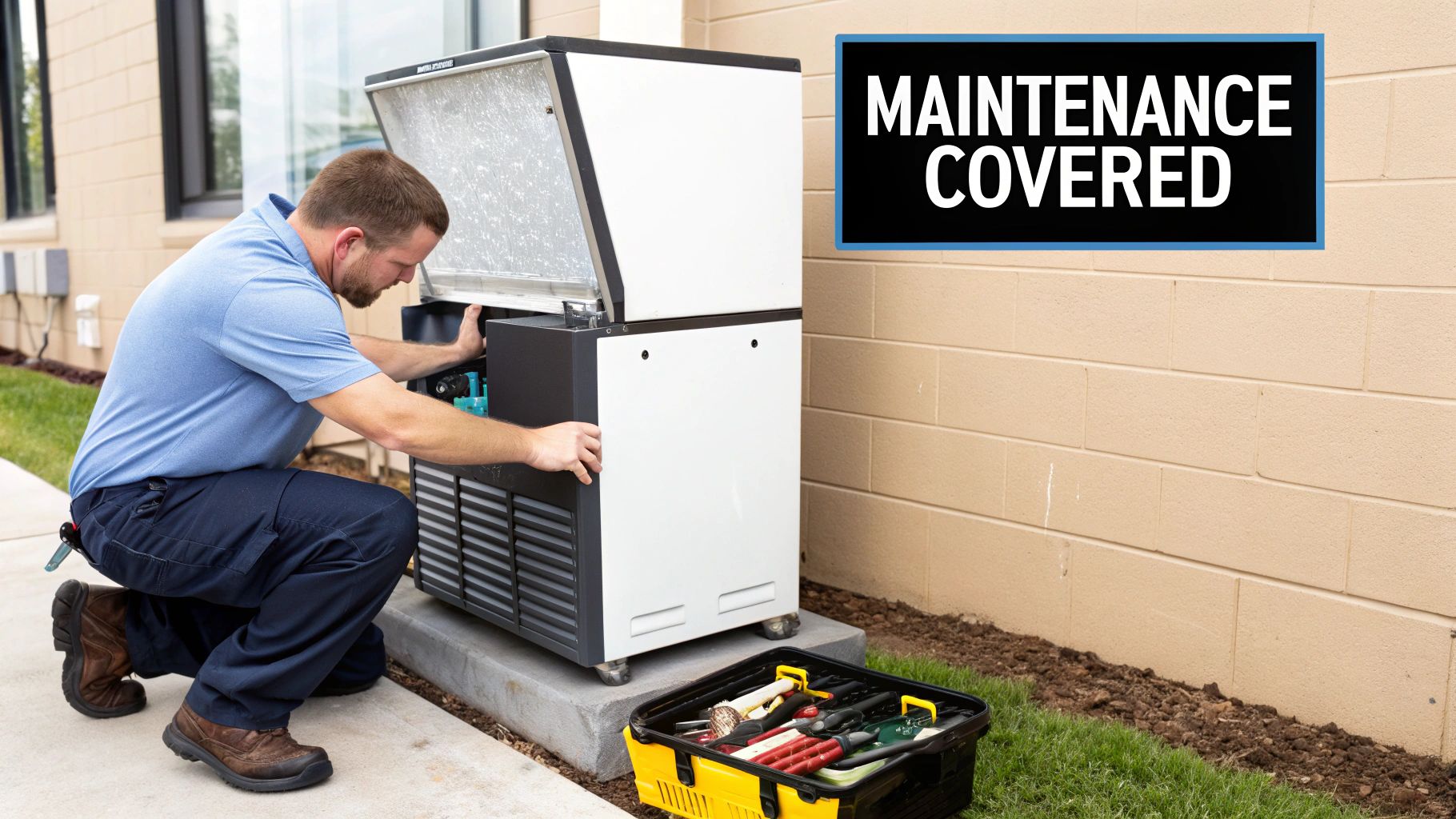
Picture this: It's the middle of your Friday night rush, the bar is slammed, and your ice machine just gives up. If you own that machine, the whole crisis lands squarely on your shoulders. You're left scrambling to find a tech, bracing for those sky-high emergency repair fees, and losing money with every drink you can't make.
This is exactly where the real power of ice machine leasing comes into play. It’s not just about ducking a massive upfront payment; it's about handing off the stress and the completely unpredictable costs that come with owning equipment. A good lease is basically an "ice insurance policy," rolling all those operational headaches into one simple, predictable monthly payment.
Your Ice Uptime Guarantee
The best lease agreements are much more than just a hardware rental. They're a full-service package designed to shield your daily operations from chaos. This isn't just a matter of convenience—it's a critical part of protecting your revenue and making sure your customers have a great experience.
A solid service bundle typically includes:
- Preventive Maintenance: Scheduled check-ups from the pros to clean and inspect the machine, catching common problems before they can shut you down.
- All-Inclusive Repairs: When a breakdown happens, the leasing company sends a technician and covers 100% of the parts and labor costs. No surprise bills.
- Deep Cleaning and Sanitizing: Professional cleanings keep your ice safe, pure, and ready to pass any health inspection with flying colors.
- Water Filter Replacements: Regular filter changes are often part of the deal, protecting the machine's guts and keeping your ice tasting clean and fresh.
Think of it this way: the bundled approach shifts all the risk from your shoulders to the provider's. You no longer have to sweat a surprise five-hundred-dollar repair bill that blows up your monthly budget. What you get instead is peace of mind, knowing a team of experts is ready to keep the ice flowing.
Protecting Your Business Operations
At the end of the day, a top-notch lease makes sure your business has a steady, reliable supply of clean ice. The best providers even throw in uptime guarantees. This means if your machine is down for the count, they’ll deliver free bagged ice right to your door to get you through until it's fixed.
This kind of guarantee turns a potential operational meltdown into a minor hiccup. By choosing a lease with a strong service agreement, you’re not just renting a box that makes ice. You're getting a partner who actively works to keep your business running smoothly, no matter what.
Choosing the Right Ice Machine for Your Business
Leasing the wrong ice machine is just as bad as buying the wrong one—maybe even worse. When you sign a multi-year agreement, you’re committing to that piece of equipment, for better or worse. Get it wrong, and you could be facing ice shortages during a dinner rush or throwing money away on a giant unit that’s wasting energy. Taking the time to choose thoughtfully ensures your lease is a perfect operational fit.
First things first, you need to get a real, honest calculation of your daily ice needs. This isn’t guesswork; it’s about matching the machine’s production capacity to how your business actually runs. A bustling café might cruise through 200 pounds of ice a day, while a large hotel could easily need over 1,000 pounds. And remember, always plan for your peak demand, not just your average day, to avoid the nightmare of running out of ice on a slammed Saturday night.
Matching Ice Type to Your Needs
Once you know how much ice you’ll go through, the next big question is what kind of ice makes the most sense for your drinks and displays. Each type has its own personality and purpose, directly impacting presentation and even how a drink tastes.
- Cubed Ice: This is the classic all-rounder. It’s perfect for sodas, cocktails, and general beverage service because its slow melting rate keeps drinks from getting watered down too quickly.
- Nugget Ice: You know it, you love it—it’s often called "chewable ice." This softer ice soaks up the flavor of whatever it’s in, making it a huge customer favorite for soft drinks. It’s also fantastic for blended cocktails and is commonly used in healthcare settings.
- Flake Ice: This soft, moldable ice is the go-to for displays. Think of a fresh seafood counter, a vibrant salad bar, or packing down produce. It cools everything down quickly and evenly without bruising delicate items.
Picking the right ice type is one of those small details that really elevates the customer experience and can even help cut down on product waste.
The global ice maker market was valued at around USD 6.2 billion in 2025 and is set for steady growth. A big reason for North America’s dominance in this market is the hospitality sector’s smart preference for leasing to maintain operational flexibility and manage capital costs. You can find more insights on the ice maker market from Expert Market Research.
Finalizing the Logistical Details
Okay, last but definitely not least, you have to sort out the practical details before you sign on the dotted line. Get out a tape measure and check the physical space where the machine will live. Make sure there’s enough ventilation around the unit so it doesn’t overheat. Then, confirm you have the right electrical hookups, a nearby water line, and a floor drain. These logistical details are every bit as important as the machine's production capacity. Getting this stuff right from the start makes your entire ice machine leasing experience smooth and hassle-free.
A Step-by-Step Guide to Leasing Your Ice Machine
So, you’ve decided that ice machine leasing is the right move for your business. Great choice. The good news is that the next part is surprisingly straightforward. The whole process is designed to be simple and transparent, turning your decision into a reality without a mountain of paperwork.
Getting started kicks off with a simple application. This is where you’ll provide the basic details about your business—its name, address, and how long you've been up and running. You’ll also need to share the specifics of the ice machine you have your eye on, including the model and any extra features you need.
From Application to Approval
After you hit 'submit' on your application, the leasing company gets to work. They’ll take a look at your business’s financial health and credit history to figure out the terms of your agreement. Don't let that intimidate you; it's generally a much more flexible process than trying to get a traditional bank loan.
Approval times are usually pretty quick, often taking just 24 to 48 hours. Once you get the green light, you’ll receive the lease agreement to review and sign. This is your chance to go over all the details we’ve discussed—from the term length to the maintenance plan—before you make it official.
Delivery, Installation, and Getting Started
With the signed agreement in hand, the final steps are all about logistics. The leasing provider will coordinate the delivery of your shiny new ice machine right to your door. The best programs don’t just drop it on the curb, either; they include professional installation by a certified technician.
This isn’t just a convenience—it’s absolutely crucial. A pro makes sure the machine is hooked up correctly with proper plumbing, electrical connections, and ventilation. Getting the setup right from day one is vital for the machine's performance and longevity.
The chart below gives you a quick visual of how to think through the selection process, guiding you from assessing your needs to making sure you have the right space.
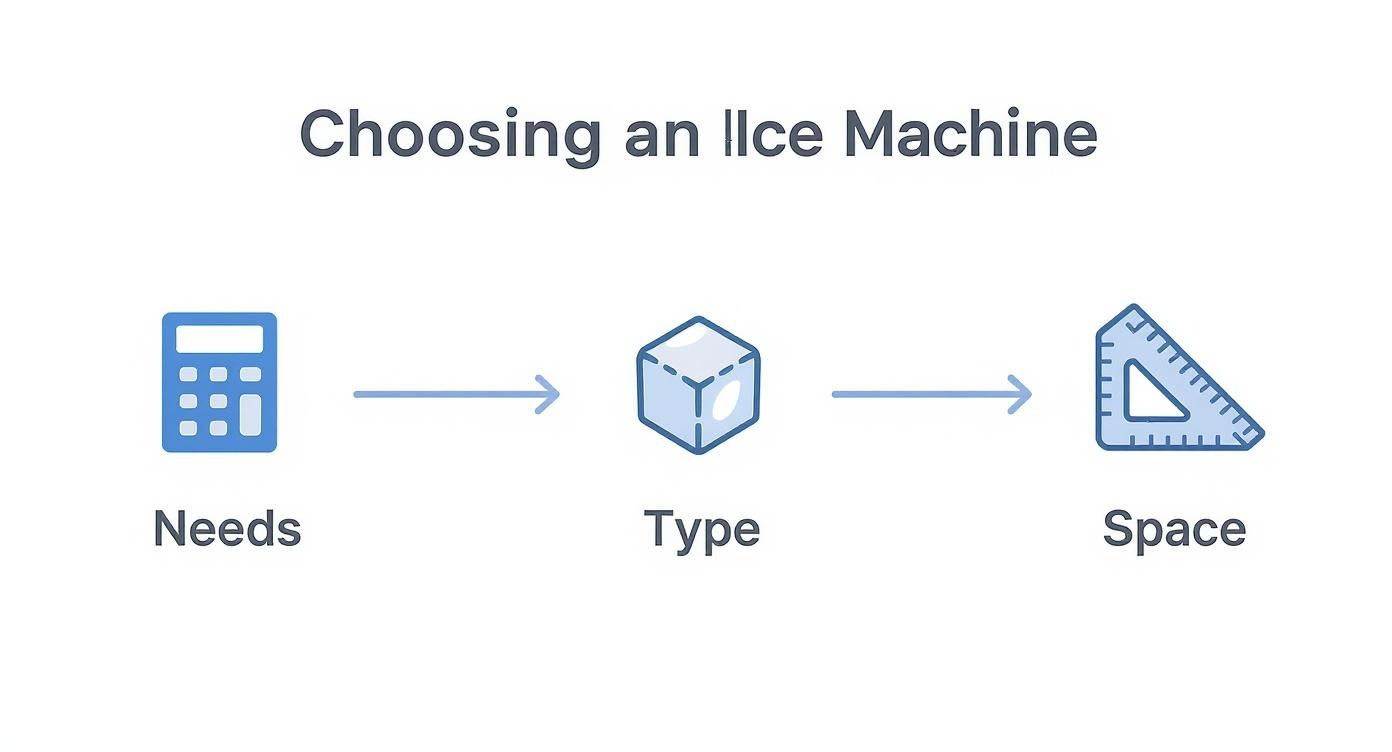
Nailing down these key steps—calculating your needs, picking an ice type, and confirming your space—ensures you choose the right machine before you even start the application. A little prep work here makes the entire leasing process smoother and guarantees a perfect fit for your business.
Got Questions About Ice Machine Leasing? We've Got Answers.
Even after you've weighed the pros and cons, a few practical questions usually pop up. It's totally normal. Getting these last few details ironed out is what helps you move forward with confidence. Let's tackle some of the most common things business owners ask right before they sign on the dotted line.
What Happens If My Business Grows and I Need a Bigger Machine?
This is actually one of the best things about leasing. Unlike buying, where you're stuck with the machine you've got, most lease agreements are built for growth. They have flexible upgrade paths that let your equipment scale right alongside your business.
If you find your current ice maker just can't keep up with demand anymore, you can usually trade it in for a bigger model, even in the middle of your lease. Your monthly payment will adjust, of course, but it saves you from the massive headache and financial hit of trying to sell a used machine and buy a brand new one.
Is My Credit Score a Deal-Breaker for Lease Approval?
While your credit history definitely gets a look, getting approved for an equipment lease is often much more straightforward than getting a traditional bank loan. Leasing providers tend to look at the whole picture of your business—how long you've been operating, your revenue consistency, and your overall financial health.
Plenty of businesses with less-than-perfect credit still get approved for a lease, though the exact terms might look a little different. The best move is always to just have an honest chat with the financing company about your situation.
The real beauty of leasing is its flexibility. Ownership locks you into one piece of equipment, for better or worse. A good lease, on the other hand, expects your business needs to change and gives you a clear path for upgrades.
Can I Lease a Used or Refurbished Ice Machine?
You absolutely can. Choosing a used or refurbished ice machine is a fantastic strategy if you want to bring those monthly payments down even further. These aren't just old units dragged out of another restaurant; they're typically certified by the provider after a complete inspection and tune-up to make sure they're in great working order.
When you're talking to a leasing company, make sure to ask if they have any certified pre-owned options. It's a great way to get significant savings while still getting all the benefits of a full service agreement.
Are Water Filter Replacements Included in the Lease?
This can vary, but any top-notch lease program will almost always include regular water filter replacements as part of their maintenance package. Clean water is the lifeblood of an ice machine. It's essential for keeping the machine running for years and for making that crystal-clear, taste-free ice your customers expect.
Always double-check that filter changes are specifically mentioned in your service agreement. This helps you avoid surprise costs down the road and keeps your machine performing at its absolute best.
Ready to find the perfect ice machine lease for your business? At The Restaurant Warehouse, we offer flexible financing and lease-to-own programs designed to help you get the equipment you need with predictable monthly payments. Explore our options and get equipped for success today. https://therestaurantwarehouse.com
About The Author

Sean Kearney
Sean Kearney used to work at Amazon.com and started The Restaurant Warehouse. He has more than 10 years of experience in restaurant equipment and supplies. He graduated from the University of Washington in 1993. He earned a BA in business and marketing. He also played linebacker for the Huskies football team. He helps restaurants find equipment at a fair price and offers financing options. You can connect with Sean on LinkedIn or Facebook.
Leave a comment