

How to Lease Restaurant Equipment Without Losing Your Lunch Money
Why Equipment Leasing is a Game-Changer for Restaurants
When you're looking to open a new eatery or upgrade your current one, the cost of outfitting a professional kitchen can be staggering. We're talking anywhere from $30,000 to $120,000 just for kitchen equipment, with total restaurant startup costs often reaching $100,000 to $300,000. That's a lot of dough, and it can quickly drain your working capital before you even serve your first customer.
This is where equipment leasing restaurant comes in as a smart financial move. It's a way to get the essential gear you need without emptying your bank account upfront.
Here’s why it’s a big deal:
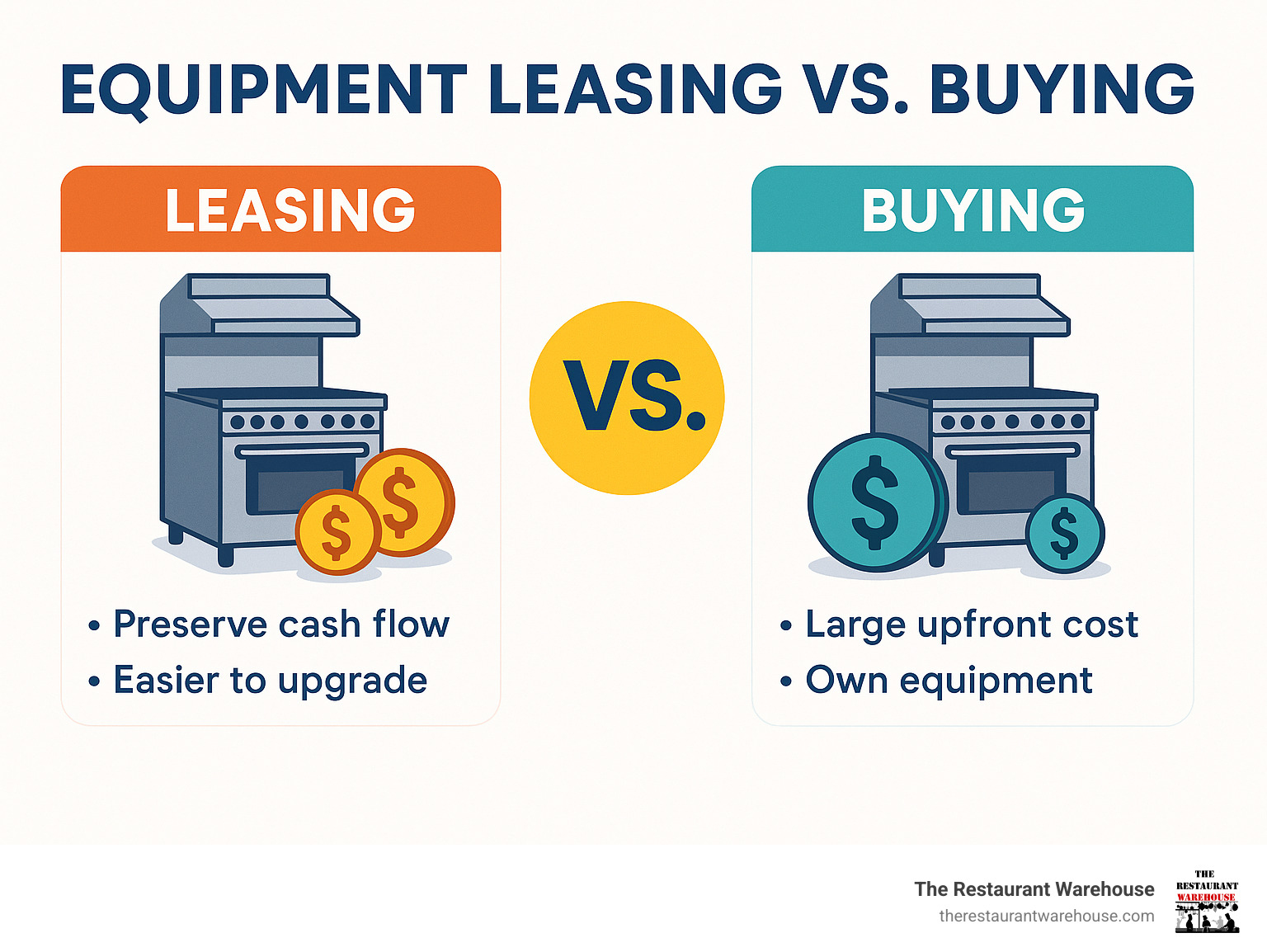
- Preserve Cash Flow: Avoid huge upfront costs, keeping your valuable cash for daily operations, payroll, or unexpected needs.
- Access Top Equipment: Get high-quality, modern machinery even if your budget is tight. No need to settle for less.
- Predictable Monthly Costs: Enjoy fixed, manageable payments each month, making budgeting much easier.
- Stay Agile: Easily upgrade equipment as new technology emerges or your menu changes. No long-term commitment to outdated gear.
As Vincent Fernandes-Miller, a happy SilverChef customer, put it, leasing "gave us the ability to get professional equipment without breaking the bank!" It's about getting the tools you need to succeed, without sacrificing your financial stability.
Terms related to equipment leasing restaurant:
What is Restaurant Equipment Leasing and Why Consider It?
Picture this: you’re about to launch your dream restaurant and find that a basic kitchen package can run $30,000–$120,000. Equipment leasing restaurant programs let you skip that crushing upfront check and replace it with predictable payments spread over 12–60 months.
Why does that matter? Because in a business where payroll, inventory, and last-minute repairs never stop, tying up cash in equipment is a quick way to run short on the things that actually keep the lights on. Leasing keeps working capital free and often puts better equipment within reach than a one-time purchase ever could.
Fixed monthly costs make budgeting easier too—no guessing, no surprises—while optional maintenance coverage can keep you off the phone hunting for repair techs.
What Types of Equipment Can You Lease?
Just about anything that helps you serve food can be financed:
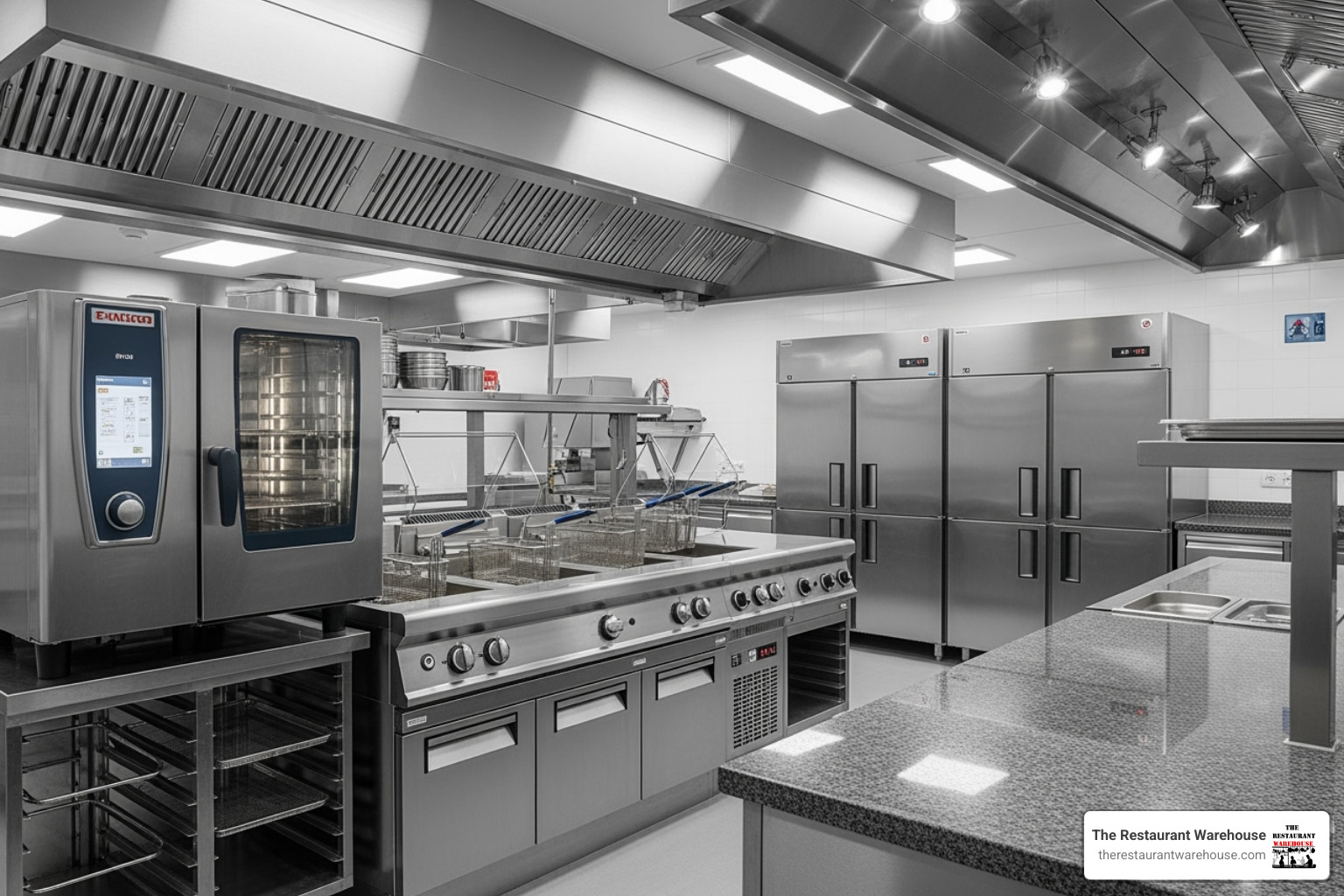
- Cooking equipment (fryers, ranges, griddles, charbroilers)
- Refrigeration (walk-ins, reach-ins, display cases, ice machines)
- Dishwashers and pot washers
- Food-prep gear (mixers, slicers, processors, prep tables)
- POS systems and other tech
- Front-of-house furniture and fixtures
- Beverage and coffee equipment
The Core Benefits of Leasing for a New Restaurant
Preserve capital* – keep cash on hand for labor, marketing, and emergencies.
Access modern equipment* – lease top-tier gear you couldn’t otherwise afford.
Predictable payments* – easier forecasting and loan applications.
Flexible end-of-lease options* – return, renew, or buy at a discount.
Possible tax savings* – payments are usually 100 % deductible operating expenses.
Maintenance add-ons* – protect yourself from costly breakdowns.
Easy upgrades* – stay current as technology and menu trends evolve.
Leasing vs. Buying vs. Renting: A Head-to-Head Comparison
When you’re mapping out your kitchen, three paths appear: lease, buy, or rent. Each one hits your cash flow, balance sheet, and flexibility in a different way.
The quick take: leasing means low upfront cost and mid-range monthly payments; buying involves high upfront cost (or loan payments) but builds equity; renting is ultra-flexible but can turn pricey if you keep gear for long.
| Feature | Leasing | Buying (Outright/Loan) | Renting |
|---|---|---|---|
| Upfront Cost | Low (1st month + small fee) | High (full price or down payment) | Low (deposit + 1st month) |
| Monthly Payment | Moderate, fixed | High (loan) or none (cash purchase) | Moderate-High |
| Ownership | Lessor owns; option to buy | You own immediately | Lessor owns |
| Maintenance | Often included | Your responsibility | Usually included |
| Flexibility | Good (upgrade / return) | Low (stuck with gear) | Excellent (walk away any time) |
| Long-Term Value | No equity unless purchased | Builds equity | None |
| Tax Treatment | Lease payments deductible | Depreciation on purchase | Payments deductible |
| Best Use Case | Cash-flow preservation, tech upgrades | Long-life gear, strong cash position | Short-term trials, pop-ups |
When Leasing Makes the Most Sense
- Limited startup capital but you still want pro-grade equipment.
- Items that become obsolete quickly (POS, specialty cooking tech).
- Concepts you’re testing or seasonal pop-ups where flexibility is key.
- You’d rather avoid large repair bills—many leases bundle service.
When Buying Is Better
- You’ve got the cash (or a low-rate loan) and plan to keep equipment for 7–10 years.
- Heavy-duty workhorses—walk-ins, ranges—that change little over time.
- You need assets on the balance sheet for future financing.
For more on funding options, our full guide on restaurant equipment financing breaks down the numbers.
The Pros and Cons of Equipment Leasing for Your Restaurant
The Advantages: Keeping Cash Flow Healthy
- Low upfront cost – usually just the first month plus paperwork.
- Modern equipment access – lease $20 k in gear for roughly $450–$500/mo with good credit.
- Predictable expenses – fixed payments simplify your budget.
- Maintenance options – many providers include or discount service calls.
- Tax deduction – full payments are often 100 % deductible.
- Upgrade flexibility – swap outdated tech when the term ends.
The Disadvantages: Know the Trade-Offs
- Higher total spend – long-term payments can exceed purchase price.
- No equity during term – gear isn’t an asset on your books until you buy it.
- Contract commitment – early exit fees apply if you close or pivot.
- Usage restrictions – relocation or modifications may require approval.
- Limited control – the lessor sets service and insurance rules.
Balancing these factors helps you decide if leasing strengthens—not strains—your restaurant’s finances.
Navigating the Restaurant Equipment Leasing Process

Key Steps
- List your needs – exact models, sizes, and quantities.
- Compare lessors – pick those with hospitality experience and fast approvals.
- Apply – basic business info + credit check; decisions can arrive in hours.
- Review terms – payment, length (12–60 months), fees, end-of-lease options.
- Sign – have an advisor scan for early-termination or maintenance clauses.
- Schedule delivery – payments start once equipment is on-site.
Understanding the Agreement
- Lease term – longer term = lower monthly, higher total cost.
- Payment formula – based on equipment price, term, and credit profile.
- End-of-term choices – return, renew, or purchase ($1 or FMV buyout).
- Fine print – insurance, service obligations, and any regional registrations (e.g., Ontario’s PPSA).
A quick read-through up front saves expensive surprises later.
Financial and Legal Fine Print You Can’t Ignore
Different Types of Lease Agreements
- Capital/Finance Lease ($1 buyout) – higher monthly payment, but you own the gear at term-end.
- Fair Market Value (FMV) Lease – lower payment; at term-end you can return, renew, or buy at FMV.
- Lease-to-Own / Rent-Try-Buy – start as a rental; a portion of rent applies toward purchase if you decide to keep the equipment.
Choose based on how long you’ll need the equipment and whether ownership matters to you.
Tax and Legal Considerations
- Tax treatment – operating-lease payments are usually 100 % deductible; capital leases may let you claim depreciation instead. Ask your accountant which produces the bigger benefit.
- Registration & ownership – many regions require the lease be registered (e.g., Ontario’s PPSA) so the lessor’s claim is public.
- Personal guarantees – common for new restaurants; you’re personally liable if the business defaults.
- Insurance – you’ll need coverage for loss, theft, or damage throughout the term.
Do a quick legal and tax check before signing so your new gear helps build profits—not headaches.
Conclusion
Well, we've certainly taken a deep dive into equipment leasing restaurant! We've peeled back the layers, exploring how it can be a truly powerful and flexible financial tool for every restaurateur. From keeping your precious working capital healthy and allowing you to snag cutting-edge equipment, to giving you predictable monthly costs and even offering some sweet tax benefits, leasing really does present a compelling alternative to buying everything outright.
It’s all about empowering you to focus on what you do best: crafting delicious dishes and creating memorable experiences for your guests. You shouldn't have to carry the immediate burden of huge equipment costs when you're busy building your culinary dream.
Of course, like any smart business decision, there are things to consider, such as the overall cost over time or the commitment of a contract. But for many, the sheer financial agility, the ease of upgrading your gear, and the peace of mind that comes with reduced maintenance worries make equipment leasing restaurant an incredibly attractive option. It's truly about making an informed choice that perfectly fits your unique business goals and keeps your financial health on track.
Here at The Restaurant Warehouse, we get it. We understand the daily hustle and bustle of the foodservice industry, with all its challenges and triumphs. That's precisely why we're dedicated to supplying top-notch commercial restaurant equipment and food service supplies at lower prices. We cut out the high commissions and retail overhead, giving you the affordable, wholesale pricing you need. We truly believe that getting your hands on quality equipment shouldn't mean emptying your bank account. We're here to help you find the very best solutions for your kitchen, without breaking the bank.
So, if you're feeling ready to explore just how equipment leasing restaurant can give your business a boost, or if you're curious about other smart financing avenues, we encourage you to dig a little deeper. Come on over and explore restaurant equipment financing options with us. Let us help you equip your dream kitchen, all without losing your lunch money!
About The Author

Sean Kearney
Sean Kearney is the Founder of The Restaurant Warehouse, with 15 years of experience in the restaurant equipment industry and more than 30 years in ecommerce, beginning with Amazon.com. As an equipment distributor and supplier, Sean helps restaurant owners make confident purchasing decisions through clear pricing, practical guidance, and a more transparent online buying experience.
Connect with Sean on LinkedIn, Instagram, YouTube, or Facebook.