


Commercial Dishwasher Rental: Save Costs and Streamline Your Kitchen
Renting a commercial dishwasher is one of the smartest financial moves a food service operator can make. Think of it less as a simple rental and more like a subscription for sanitation. Instead of a massive upfront cash outlay, you get a high-performance machine, all its maintenance, and sometimes even the cleaning chemicals bundled into one predictable monthly payment. This protects your cash flow for everything else it takes to run your business.
Why Smart Kitchens Run on Rented Dishwashers
Deciding how to equip your kitchen is a huge deal. While buying equipment outright seems like the traditional path, renting your commercial dishwasher offers a powerful alternative that puts financial flexibility and operational peace of mind first. It fundamentally shifts your perspective from owning a complex piece of machinery to simply paying for a guaranteed result: perfectly clean and sanitized dishes, every single time.
Let’s put it this way: you're offloading all the headaches of ownership—like sudden repair bills, the machine losing value over time, and becoming outdated—to a provider who specializes in handling exactly that. This frees up your capital for more immediate needs, whether that’s hiring another line cook, expanding your menu, or launching a new marketing campaign.
The Financial Advantage of Predictability
A healthy business budget is built on predictable expenses. When you own a dishwasher, an unexpected breakdown can hit you with a repair bill anywhere from $400 to over $1,200 for common issues like a failed pump or heating element. A rental agreement completely transforms these potential financial shocks into a single, manageable line item in your monthly budget.
Here’s where you really see the benefits:
- Zero Upfront Capital: You get to skip the initial purchase price, which can easily run from $3,000 to over $15,000 for new machines.
- Bundled Maintenance and Repairs: Most rental plans cover routine service and emergency repairs, which means no surprise costs and, more importantly, minimal downtime.
- No Depreciation Worries: The rental company absorbs the asset's loss of value over time. You’re never left holding an old, outdated machine worth a fraction of what you paid.
- Flexibility to Upgrade: As your business grows, you can easily swap your current model for a larger, more efficient one to keep up with increasing demand.
It’s no surprise this model is catching on. The global commercial dishwasher market, valued at USD 4.51 billion in 2023, is expected to climb to USD 7.29 billion by 2029. This growth is fueled by rising hygiene standards and an expanding foodservice industry, with more and more operators recognizing the practical value of rental services. You can find more insights on this market growth at Arizton Advisory & Intelligence.
By renting, you’re not just getting a machine; you’re securing a service. You are investing in operational continuity and peace of mind, ensuring a critical part of your kitchen is always running at its best without draining your bank account. It’s a strategic choice that lets you focus on what you do best: creating incredible experiences for your customers.
Picking the Right Dishwasher for Your Kitchen’s Pace
Choosing a commercial dishwasher isn’t about just grabbing the biggest, shiniest model you can find. It’s all about matching the machine’s power and design to the actual rhythm of your kitchen. The wrong machine creates frustrating bottlenecks during a rush or sits there wasting energy during slow periods—both of which hit your bottom line. Getting a handle on the three main types of commercial dishwashers is the first step to making a smart rental decision.
Think of it like picking a vehicle for a job. You wouldn't try to haul lumber in a compact car, and you wouldn't fire up a semi-truck for a quick trip to the corner store. Each dishwasher is built for a specific scale of work. Your job is to find the perfect fit for what your operation throws at it every day.
This decision tree helps visualize the thought process many operators go through, especially when weighing the choice between renting and buying.
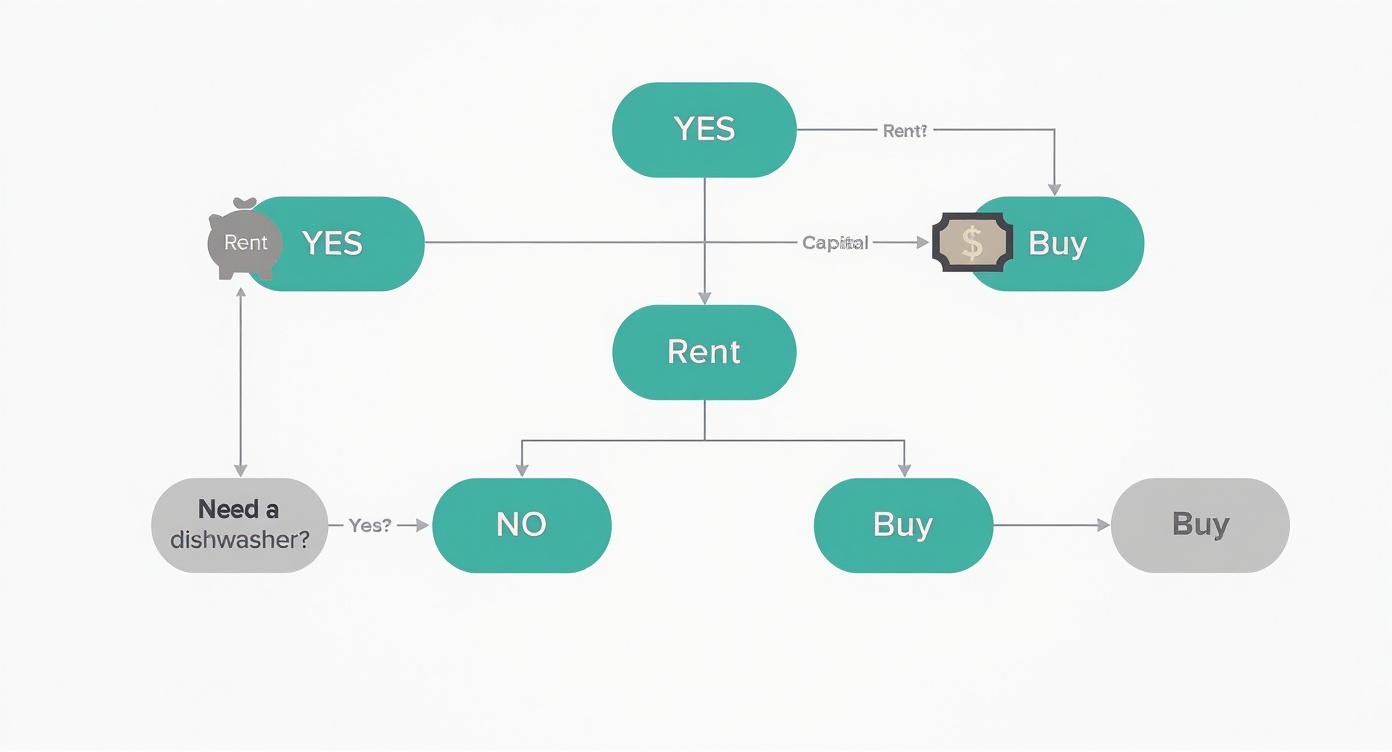
The flowchart gets right to the point for new or growing businesses: when you're tight on upfront cash, renting a commercial dishwasher gives you a top-tier machine without the massive financial hit. This move frees up your capital for other critical things, like payroll or marketing, while still getting the professional-grade equipment you need.
The Compact and Convenient Undercounter Dishwasher
The undercounter dishwasher is your entry into professional warewashing. It’s the perfect solution for places with lower volume and tight spaces. Picture a residential dishwasher, but built tougher and faster for commercial life. These units slide right under a standard 34-inch counter, making them ideal for front-of-house use or in smaller kitchens.
These machines can typically handle 20-35 racks per hour. An undercounter model is a great fit for:
- Coffee Shops: Perfect for keeping up with a steady stream of mugs, saucers, and glasses without getting in the way.
- Bars and Tasting Rooms: Gives you a dedicated spot to sanitize glassware quickly, so you never run out during a busy happy hour.
- Small Delis or Cafés: Easily manages the flow of plates and cutlery from the breakfast and lunch rush.
Just remember, while they're super efficient for their size, they're specialists. They simply can't keep up with a high-volume dinner service.
The Workhorse Door-Type or Pass-Through Model
When you need more muscle, you step up to the door-type dishwasher, often called a pass-through. This is the most common choice for small to medium-sized restaurants for a reason. It's a freestanding unit that usually sits between two stainless steel tables—one for dirty dishes coming in and one for clean dishes going out. The operator slides a rack in, closes the door, runs the cycle, and then pushes the clean rack out the other side.
This setup creates a seriously efficient workflow that can handle a much bigger load, washing anywhere from 35 to 90 racks per hour. If you're running a bustling bistro or a busy family restaurant, the door-type model is your go-to workhorse.
The High-Capacity Conveyor Dishwasher
For the big leagues—high-volume operations where speed is absolutely everything—the conveyor dishwasher is the undisputed champ. Instead of washing one rack at a time, you place racks on a conveyor belt that pulls them through separate wash, rinse, and sanitize chambers. These machines are the powerhouses of the foodservice world.
Conveyor systems are built for one thing: maximum throughput. They can wash 200 or more racks per hour, making them the standard for university dining halls, hospitals, big hotels, and any catering facility serving hundreds or thousands of meals in a single go.
Of course, all that power comes with a larger footprint and higher utility bills. Renting a conveyor model is a major operational decision, reserved only for kitchens where the sheer volume of dirty dishes would completely overwhelm anything smaller. If you're weighing the pros and cons of purchasing, our comprehensive guide to buying commercial dishwashers offers a deeper financial dive.
Getting to Grips with Your Rental Agreement and Costs
A rental contract can be your best friend, but only if you actually know what’s inside it. Think of it as the rulebook for your "sanitation subscription"—it lays out exactly what you get for your monthly payment and what you’re on the hook for. Just signing on the dotted line without reading the fine print is a recipe for surprise costs and major headaches down the road.
Getting familiar with these documents is the key to a good rental experience. You're looking for a straightforward, transparent agreement that actually supports your business, not one that’s booby-trapped with hidden fees. When you understand the key parts, you have the power to negotiate terms that really work for your kitchen and your budget.
What Your Monthly Fee Actually Covers
At first glance, a single monthly fee seems simple enough, but you’ve got to know what’s packed into that number. Most reputable rental companies bundle several essential services into one price, which is one of the biggest perks over buying outright. This all-in-one approach is designed to give you predictable, steady operating costs.
Your monthly payment almost always includes:
- The Equipment: You get the use of a high-performance commercial dishwasher without having to shell out a massive chunk of cash upfront.
- Scheduled Maintenance: This means routine check-ups by a technician to clean, calibrate, and proactively swap out worn parts to stop breakdowns before they happen.
- Emergency Service Calls: If your machine dies in the middle of a dinner rush, the cost of labor and parts for the repair is typically covered. No surprise four-figure repair bills.
- Chemicals (Often): Many agreements include regular drop-offs of detergent, rinse aid, and sanitizer that are perfectly matched to your machine, ensuring you get the best results.
This bundled service model is what makes renting so appealing. Instead of juggling separate bills for the machine, maintenance visits, and emergency repairs, you’re just managing one predictable expense.
Decoding Common Contract Clauses
Beyond the monthly payment, your rental agreement has critical terms that dictate how flexible your partnership will be. Paying close attention to these clauses will save you from expensive misunderstandings. Think of it like looking over the blueprints before you build a house; understanding the structure now prevents big problems later.
A well-structured rental agreement should feel like a partnership. The terms should be clear, fair, and designed to keep your kitchen operational, not to trap you with hidden penalties. If a clause feels confusing or overly restrictive, ask for clarification before you sign.
Key areas to zoom in on include:
- Term Length: Agreements can be as short as month-to-month or go long-term, like 36 or 60 months. Longer terms usually get you a lower monthly payment, but you sacrifice some flexibility.
- Early Termination Penalties: What happens if you need to close up shop or move? Most contracts have a penalty for bailing early, which could mean paying a percentage of the remaining balance.
- Upgrade Options: As your business grows, you might need a bigger, faster machine. Your contract should spell out the process and potential costs for upgrading your equipment mid-term.
- Damage and Misuse: The agreement will define what counts as "normal wear and tear" (covered by them) versus damage from negligence (your responsibility to pay for).
Understanding these details is non-negotiable. For anyone weighing their options, our guide on restaurant equipment leasing offers a broader look at how these financial agreements are structured.
How to Budget for Your Dishwasher Rental
To budget properly, you need a realistic idea of the costs. Prices can vary a lot based on the type of machine, your location, and how much service is included. An undercounter model for a small coffee shop is naturally going to cost less to rent than a massive conveyor system for a university dining hall.
Here are some typical monthly rental cost ranges to help you start planning:
| Machine Type | Typical Monthly Rental Cost | Best For |
|---|---|---|
| Undercounter | $100 - $250 | Coffee shops, bars, small delis |
| Door-Type | $200 - $450 | Small to medium restaurants |
| Conveyor | $450 - $900+ | Large restaurants, hotels, institutions |
Don't forget to ask about any other potential charges, like fees for a tricky installation or extra costs for after-hours service calls, so you can build a truly accurate budget.
Preparing Your Kitchen for a Smooth Installation
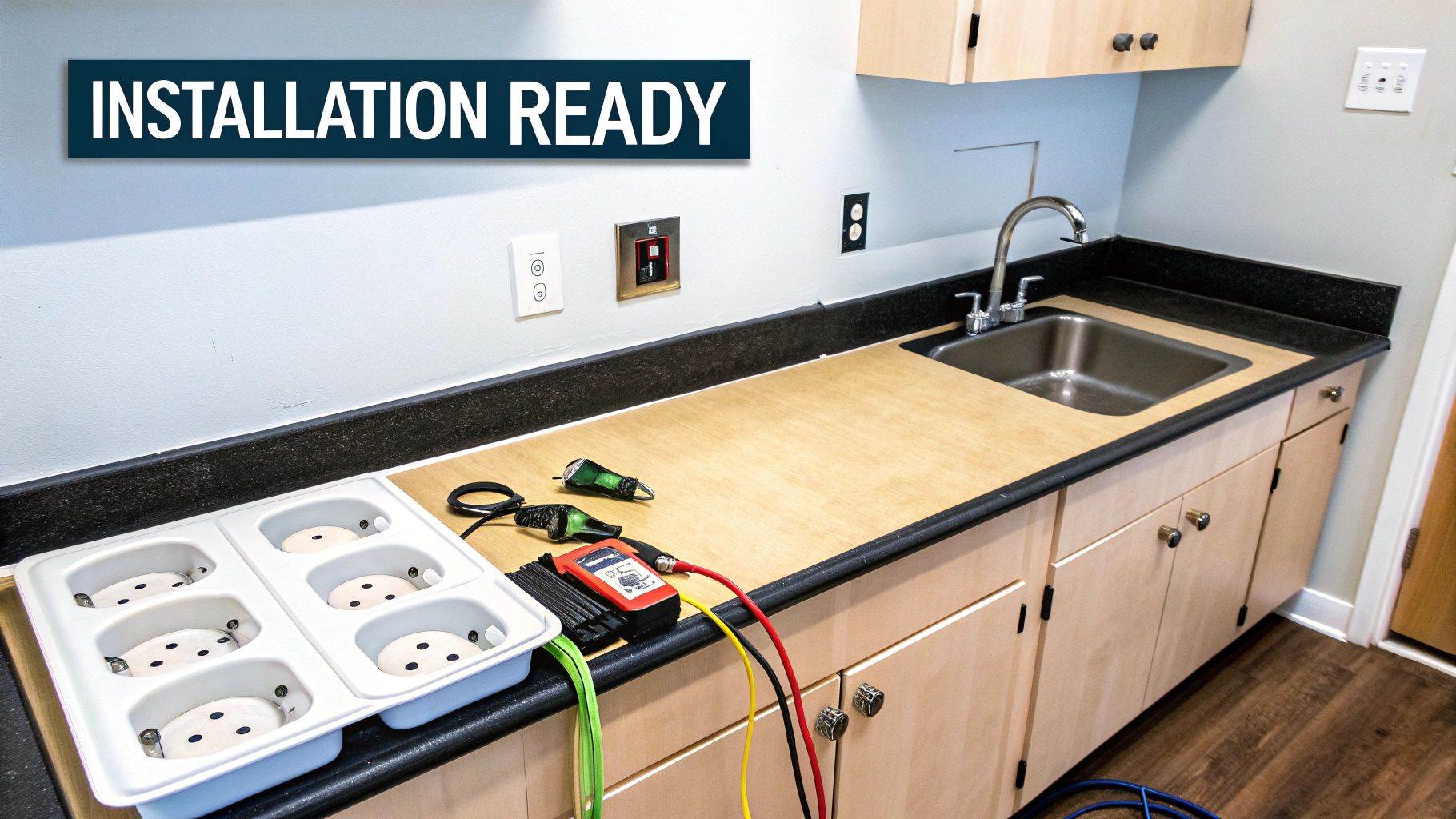
Getting a commercial dishwasher rental is exciting, but a successful start happens long before the delivery truck pulls up. Honestly, proper prep is the difference between a quick, seamless installation and a day totally derailed by delays, surprise costs, and a major disruption to your service.
Think of this as doing your own mini-site survey. By figuring out what the installation techs will be looking for, you can get ahead of any potential headaches. This little bit of foresight ensures your new workhorse is running perfectly from its very first cycle, preventing setbacks that could bring your kitchen to a halt.
Verifying Your Electrical Setup
A commercial dishwasher is a serious piece of equipment, and it draws a serious amount of power. Unlike the one in your home that plugs into a standard wall outlet, these machines need dedicated, high-voltage connections to run safely and effectively.
An inadequate electrical supply is one of the most common reasons an installation fails. The rental company will give you the exact specs, but here's what you'll need to confirm with a licensed electrician:
- Correct Voltage and Phase: Most commercial units need either 208V or 240V power. Many also require a three-phase connection, which is pretty standard in commercial buildings but something you absolutely have to confirm.
- A Dedicated Circuit: Your dishwasher needs its own circuit breaker. Period. Trying to share a circuit with other high-draw equipment is a recipe for disaster and a major safety hazard.
- Proper Amperage: The circuit has to be rated for the correct amperage listed by the manufacturer. This isn't a suggestion—it's essential for handling the power draw without risking an overload.
Getting your electrical right isn’t just about making the machine turn on. It’s about safety and performance. An improper setup can fry the dishwasher, void your rental agreement, and create a serious fire risk.
Assessing Water and Drainage Readiness
Just as important as power is the water situation—both coming in and going out. The right water pressure, temperature, and drainage are absolutely crucial for getting sanitized dishes and avoiding damage to the machine.
Your plumbing check should focus on three critical things. First, check your water pressure. It needs to be in the manufacturer's recommended range, which is usually between 15-25 PSI. If it's too low, the machine won't fill or rinse right. Too high, and you could blow out internal components.
Second, you need a hot water supply that can consistently hit 120-140°F. This is non-negotiable for activating detergents and hitting sanitation temperatures.
Finally, you need proper drainage. Most health departments require an indirect drain connection with an air gap. This is a critical safety measure that prevents dirty water from the sewer line from ever backing up into your clean dishwasher. A good drainage plan often ties into your sink setup, which you can learn more about in our guide to commercial sinks for restaurants.
Before the installation team arrives, running through a quick utility check can save everyone a massive headache. This table breaks down the essentials you need to confirm are ready to go.
| Utility Type | Requirement | Why It Matters |
|---|---|---|
| Electrical | Dedicated circuit with correct voltage (208V/240V), phase, and amperage. | Prevents overloading your system, ensures the machine runs correctly, and avoids creating a fire hazard. |
| Water Supply | Consistent pressure (15-25 PSI) and temperature (120-140°F). | Guarantees effective cleaning and sanitizing cycles without damaging the dishwasher's internal parts. |
| Drainage | An indirect drain with an air gap, compliant with local health codes. | Prevents contaminated sewer water from back-siphoning into the dishwasher, a critical food safety rule. |
Verifying these three points with your plumber and electrician ahead of time is the single best thing you can do to ensure a smooth, one-trip installation.
Final Checks for Space and Ventilation
With the utilities sorted, the last piece of the puzzle is the physical space itself. Make sure you carefully measure the spot where the dishwasher will live, accounting for door swing and leaving enough clearance for maintenance access. The technicians will need at least a few inches of breathing room around the unit.
Good ventilation is also key, as these machines kick out a lot of heat and steam. Proper airflow keeps moisture from building up, which can lead to mold and create a pretty miserable work environment for your team.
Here's a pro tip: to get the best cleaning results and protect the machine from limescale right from the start, think about installing a water filter system. Something like the Brita Purity Clean 1200 Filter System for Glass Dishwashers can make a huge difference, extending the life of the dishwasher and keeping your glassware spotless.
What to Expect From Your Maintenance and Support Plan
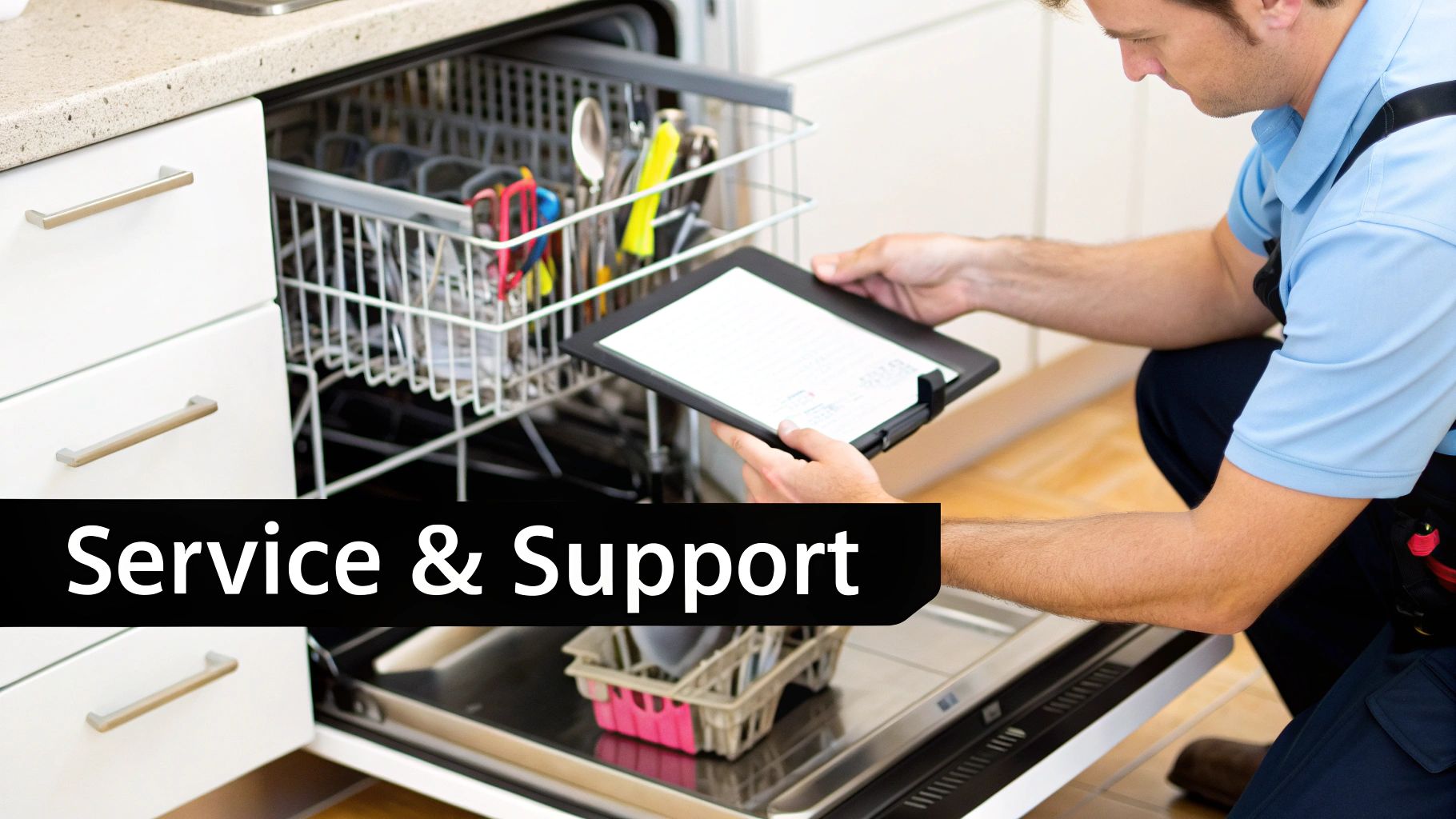
When you rent a commercial dishwasher, you’re not just getting a machine. You're buying yourself operational peace of mind. Let's be honest, one of the biggest perks is handing off the massive headache of maintenance and repairs to an expert partner. A solid service plan is your guarantee that the kitchen won’t grind to a halt when something inevitably goes wrong.
Think of it like having a dedicated mechanic on speed dial for the most critical sanitation tool in your entire kitchen. Instead of frantically searching for a qualified technician and bracing for a huge, surprise bill, you have a direct line to a team whose only job is to keep your dishwasher humming along. This service isn't just a feature; it's the core value of renting.
Proactive vs. Reactive Service
A top-notch maintenance plan really boils down to two types of support, and you absolutely need both. Understanding the difference helps you see what a potential rental company is truly offering.
Proactive Preventative Maintenance is the scheduled check-up. A technician stops by your kitchen on a regular basis—usually quarterly or monthly—to give the machine a full inspection. They're cleaning internal parts, calibrating chemical dispensers, looking for worn-out components, and fixing tiny issues before they can explode into a full-blown breakdown. This is the classic "ounce of prevention" that saves you from the "pound of cure."
Reactive Emergency Service is your lifeline when things go sideways without warning. If your machine dies mid-shift on a busy Friday night, this is the rapid-response team you call. A good rental agreement guarantees a technician will be dispatched to figure out what’s wrong and fix it, covering the costs for both labor and parts for any issues that pop up from normal wear and tear.
The real value in a rental agreement isn’t just fixing what’s broken; it’s preventing it from breaking in the first place. Proactive care minimizes downtime and keeps your machine running at peak efficiency, saving you the stress and lost revenue of a failed dishwasher.
Key Questions for Your Rental Provider
Before you sign anything, you need to get crystal clear on the specifics of the service you’ll be getting. The answers to these questions will tell you everything you need to know about the quality of their support.
- What is your guaranteed response time for an emergency call? You're looking for a firm commitment here, like 4-6 hours or within 24 hours, so you know exactly how long you might be stuck washing dishes by hand.
- Are service calls available 24/7, including weekends and holidays? A breakdown during the Saturday dinner rush needs immediate attention, not a callback on Monday morning.
- What is your policy on providing a loaner machine? If a repair is going to be complicated and take a few days, will they hook you up with a temporary replacement to keep your operation moving?
- How often is preventative maintenance scheduled? Monthly or quarterly visits are standard and show a real commitment to proactive care.
Your Role in Daily Upkeep
While the rental company handles the heavy lifting, your team still plays a vital role in the machine's day-to-day care. A few simple, consistent habits can dramatically cut down on service calls and extend the dishwasher's life. Setting up a routine inspired by a solid commercial-grade maintenance checklist is a great way to get started.
Empower your staff with these quick daily checks:
- Clean Filters and Scrap Trays: At the end of every single day, pull out and rinse all filters and scrap trays. This keeps food gunk from clogging up the jets and pumps.
- Wipe Down the Interior: After the machine is drained, give the inside a quick wipe-down to get rid of any leftover residue.
- Check Wash and Rinse Arms: Make sure the little jet holes are clear of debris. If they’re clogged, water can’t spray freely, and your dishes won't get clean.
These simple steps take just a few minutes but make a world of difference in the machine's performance and reliability.
Finding the Perfect Rental Plan for Your Business Type
Choosing a commercial dishwasher rental isn’t a one-size-fits-all deal. The monster conveyor system that keeps a university dining hall churning would be total overkill for a cozy neighborhood café. The right plan is all about finding the perfect match for your kitchen's unique rhythm, layout, and how many customers you’re serving.
This is the final, crucial step: matching the machine and the rental terms to your business model. A bustling independent restaurant has a completely different set of needs than a catering company that’s always on the move. By really thinking through the challenges of your specific operation, you can pick a rental package that feels like a powerful asset, not another logistical headache.
For Cafés and Coffee Shops
Small but high-traffic spots like coffee shops and bars live and die by two things: speed and smart use of space. Your main warewashing challenge isn't a mountain of greasy plates but a constant, relentless stream of mugs, glasses, and saucers. When you've got a line out the door, downtime simply isn't an option.
For this kind of environment, the answer is almost always an undercounter dishwasher. Its compact footprint means you can tuck it right under the counter or behind the bar, right where the action is. This completely cuts out the need for staff to run dishes to a back-of-house kitchen, keeping service flowing fast and smooth.
Key rental features to look for:
- High-Temperature Sanitizing: Absolutely essential for glassware. It delivers that spotless, streak-free finish your customers expect.
- Fast Cycle Times: Find a model with cycles under two minutes. You'll need it to keep up when you're slammed.
- Bundled Service Plan: With just one machine doing all the work, you need a plan with a rapid emergency response time. It's critical.
For Independent Restaurants and Bistros
Full-service restaurants face a much more complex challenge. You’re handling everything from delicate wine glasses and appetizer plates to the heavily soiled pots and pans coming off the line. The volume is significant and spikes like crazy during the lunch and dinner rush, making the flow of your dish pit a top priority.
A door-type (pass-through) dishwasher is the industry standard here, and for good reason. It creates a logical workflow, with dirty dishes coming in on one side and emerging clean and sanitized on the other. This kind of setup can easily handle the volume of a busy service without creating a bottleneck.
A long-term rental agreement of 36 to 60 months often makes the most financial sense, giving you a lower monthly rate and a predictable, stable cost. Make sure your rental contract includes 24/7 emergency service and regularly scheduled preventative maintenance. This is the engine of your kitchen; you can't afford for it to fail.
For Event Caterers and Food Trucks
Caterers and food truck operators are in a totally different world, defined by mobility and unpredictability. One weekend might be a 300-person wedding, and the next could be a small corporate lunch. Tying up your capital in a big, permanent machine that sits unused most of the time just doesn’t make sense.
This is exactly where short-term commercial dishwasher rental shines. Flexibility is everything. Caterers need to be able to rent high-capacity, sometimes even portable, units for specific events. It helps you avoid the logistical nightmare of hauling dirty dishes all the way back to a central kitchen.
The catering sector is seeing the fastest growth in dishwashing equipment demand, with an 8.48% CAGR. This surge is driven by a comeback in corporate events, with operators preferring flexible, portable rental dishwashers to slash logistics costs and adapt to varying event sizes.
This growth is reflected across the entire commercial dishwasher market in the United States, valued at around USD 1.13 billion in 2025 and projected to hit USD 1.66 billion by 2030. This expansion is heavily influenced by the restaurant sector, which alone makes up 53.36% of the market share, showing just how critical warewashing is across all types of food service. You can learn more about these U.S. commercial dishwasher market trends.
Got Questions About Renting a Dishwasher? We’ve Got Answers.
When you're thinking about renting a commercial dishwasher, a few key questions always seem to pop up. It's a big decision, and you want to be sure you've covered all your bases. Let's walk through the most common queries we hear from operators just like you, so you can feel confident you're making the right call for your kitchen.
Are Cleaning Chemicals Included in the Rental Price?
Most of the time, yes. A lot of rental agreements are set up as "full-service" deals, which is great because it means regular deliveries of the right detergent, rinse aid, and sanitizer are bundled right into your monthly fee. This is a huge plus because the supplier makes sure you’re always using chemicals that are perfectly matched to that specific machine for the best results.
But don't just assume this is the case. Some of the more basic, stripped-down plans might not include chemicals. You'll want to double-check this in the contract so you aren't surprised by supply costs later on.
What Happens if I Outgrow My Machine?
This is one of the biggest perks of renting. As your business grows, your needs change, and most rental companies are built for that. They usually have upgrade clauses that let you swap your current model for a bigger, faster one.
It typically involves a tweak to your monthly payment and maybe signing a new term, but it saves you from the massive headache of trying to sell a machine you own just to buy a new one. It's all about flexibility.
The global commercial dishwasher market was valued at a hefty USD 3.5 billion in 2023, and a big chunk of that comes from North America's bustling restaurant scene. This high demand is exactly why rental companies offer flexible solutions like easy equipment upgrades—it’s how they stay competitive and meet the real-world needs of growing businesses. You can dig deeper into the global commercial dishwasher market trends to see where things are headed.
Who’s on the Hook if the Dishwasher Gets Damaged?
Think of it as a partnership. The rental company is generally responsible for fixing anything that breaks due to normal wear and tear or a random mechanical failure. That's the whole point of the service agreement—they keep the machine running.
However, you’ll be responsible for damage that comes from obvious misuse. If a staff member breaks something through negligence or fails to do the simple daily cleaning, that cost will likely fall on you. Your contract should draw a clear line between normal equipment failure and operator error.
Can I Just Rent a Dishwasher for a Weekend Event?
Absolutely. Many suppliers have short-term rental options that are perfect for pop-up kitchens, seasonal businesses, or big catering gigs. It's an incredible way to get the firepower you need without locking into a long-term contract.
Just be aware that the daily or weekly rate for a short-term rental will probably be higher than a long-term lease. Make sure you ask about all the details—delivery, on-site setup, and pickup—to make sure it all runs smoothly for your event.
Ready to find the right equipment solution for your kitchen? At The Restaurant Warehouse, we offer flexible financing and lease-to-own programs designed to help your business thrive without the upfront capital expense. Explore our wide selection of commercial kitchen equipment and find a plan that works for you at https://therestaurantwarehouse.com.
About The Author

Sean Kearney
Sean Kearney is the Founder of The Restaurant Warehouse, with 15 years of experience in the restaurant equipment industry and more than 30 years in ecommerce, beginning with Amazon.com. As an equipment distributor and supplier, Sean helps restaurant owners make confident purchasing decisions through clear pricing, practical guidance, and a more transparent online buying experience.
Connect with Sean on LinkedIn, Instagram, YouTube, or Facebook.