Why Choosing the Right Commercial Walk-In Refrigerator Freezer Combo Matters
A commercial walk in refrigerator freezer combo is a single, integrated cold storage unit that houses both refrigeration and freezing compartments within one insulated structure. These combo units save valuable floor space, reduce energy costs through shared insulation, and lower initial investment compared to purchasing separate walk-in cooler and freezer units. They're ideal for restaurants, catering operations, breweries, grocery stores, and any foodservice business that needs both refrigerated storage, typically 35°F to 45°F, and frozen storage, typically 0°F to -10°F, without dedicating space for two separate units.
Key benefits of a walk-in combo unit:
-
Space efficiency - One footprint instead of two separate units
-
Energy savings - Shared wall insulation reduces overall cooling costs
-
Lower upfront costs - Less material and installation expense than separate units
-
Streamlined workflow - Centralized inventory management and easier access
If you're opening a new restaurant, upgrading your cold storage, or working with limited kitchen space, understanding walk-in combo configurations can save you thousands of dollars while improving your operation's efficiency.
Cold storage isn't just a convenience—it's the backbone of food safety and inventory management. Without reliable refrigeration and freezing capacity, you risk spoilage, failed health inspections, and lost revenue. But for budget-conscious operators, the traditional approach of installing separate walk-in coolers and freezers often means paying twice for materials, installation, and floor space.
This is where the commercial walk in refrigerator freezer combo shines. By combining both temperature zones into one integrated unit, you get the functionality you need without the redundant costs. The shared wall between compartments acts as dual insulation, cutting down on energy consumption. The single installation process reduces labor costs. And the compact footprint frees up valuable kitchen real estate for prep stations, food preparation surfaces, or additional storage.
What makes combo units especially practical:
- Customizable configurations, including side-by-side, stacked, or internal door access
- Advanced insulation meeting federal EISA standards
- Options for indoor or outdoor installation
- Modular construction allowing for future expansion
- Modern features like digital controls and remote monitoring
Throughout my years in equipment sales, I've seen how the right commercial walk in refrigerator freezer combo can transform a cramped, inefficient kitchen into a streamlined operation that saves money every month on energy bills while protecting valuable inventory.
This guide will walk you through everything you need to know—from understanding insulation R-values and construction materials to choosing between standard and custom configurations. You'll learn how to evaluate features that matter, avoid common installation mistakes, and maintain your unit for maximum longevity. Whether you're opening your first location or upgrading an existing operation, you'll have the knowledge to make a confident, cost-effective decision. If you're still comparing formats, our walk-in combo freezer cooler guide is another useful resource for planning your cold storage layout.
The Core Advantages of a Combined Walk-In Unit
The decision to invest in a commercial walk in refrigerator freezer combo is often driven by a smart business strategy focused on efficiency and savings. These integrated units offer a compelling suite of benefits that address common challenges faced by foodservice establishments.
Space Optimization
One of the most immediate and tangible benefits of a combo unit is its ability to optimize space. Instead of carving out two separate footprints for a cooler and a freezer, you only need one. This single footprint design can be a game-changer for kitchens with limited square footage, allowing for more efficient layouts and potentially freeing up space for additional prep areas or dining capacity. Imagine having the cold storage you need without having to expand your facility. It’s simply smart engineering.
Energy Efficiency
Energy costs are a significant overhead for any commercial operation. Combo units are inherently more energy-efficient than separate units due to their shared wall insulation. This common wall acts as a thermal buffer, reducing heat transfer between the two compartments and from the ambient environment. This clever design means the refrigeration systems don't have to work as hard, which translates directly into lower electricity bills. Leading manufacturers design their panels to meet or exceed federal energy standards, ensuring excellent energy efficiency. If reducing operating expenses is a top priority, our energy efficient freezer guide explains the long-term value of efficient cold storage in more detail.
Cost Savings
Beyond operational energy savings, a commercial walk in refrigerator freezer combo typically offers significant cost advantages from the outset.
-
Lower Initial Investment: You're purchasing one unit instead of two, which often means less material and simpler manufacturing, leading to a lower purchase price.
-
Reduced Installation Costs: Installing one unit is generally less labor-intensive and time-consuming than installing two separate ones. This reduction in complexity can save you substantially on installation fees.
-
Less Material Usage: Combo units use less material to achieve the same storage capacity as two individual units, which contributes to overall cost savings.
Operational Streamlining
A combined unit simplifies your day-to-day operations.
-
Centralized Inventory Management: Having both refrigerated and frozen goods in one location makes inventory tracking, stocking, and retrieval much more efficient. Your team spends less time moving between different storage areas.
-
Improved Kitchen Workflow: With everything accessible from a single point, your kitchen staff can operate more smoothly, reducing the time spent searching for ingredients and improving overall productivity.
Temperature Ranges
A well-designed commercial walk in refrigerator freezer combo maintains precise and distinct temperature zones:
-
Freezer: The freezer section typically runs between 0°F and -10°F, ensuring optimal preservation for meats, poultry, seafood, and other frozen goods.
-
Cooler: The cooler compartment maintains temperatures between 35°F and 45°F, perfect for dairy, produce, beverages, and prepared foods, keeping them fresh and safe.
These distinct ranges are critical for food safety and product quality. For more general category planning, our commercial freezer guide and commercial refrigerator guide can help you compare walk-ins with other cold storage options.
Decoding the Key Features of a Walk-In Cooler Freezer Combo
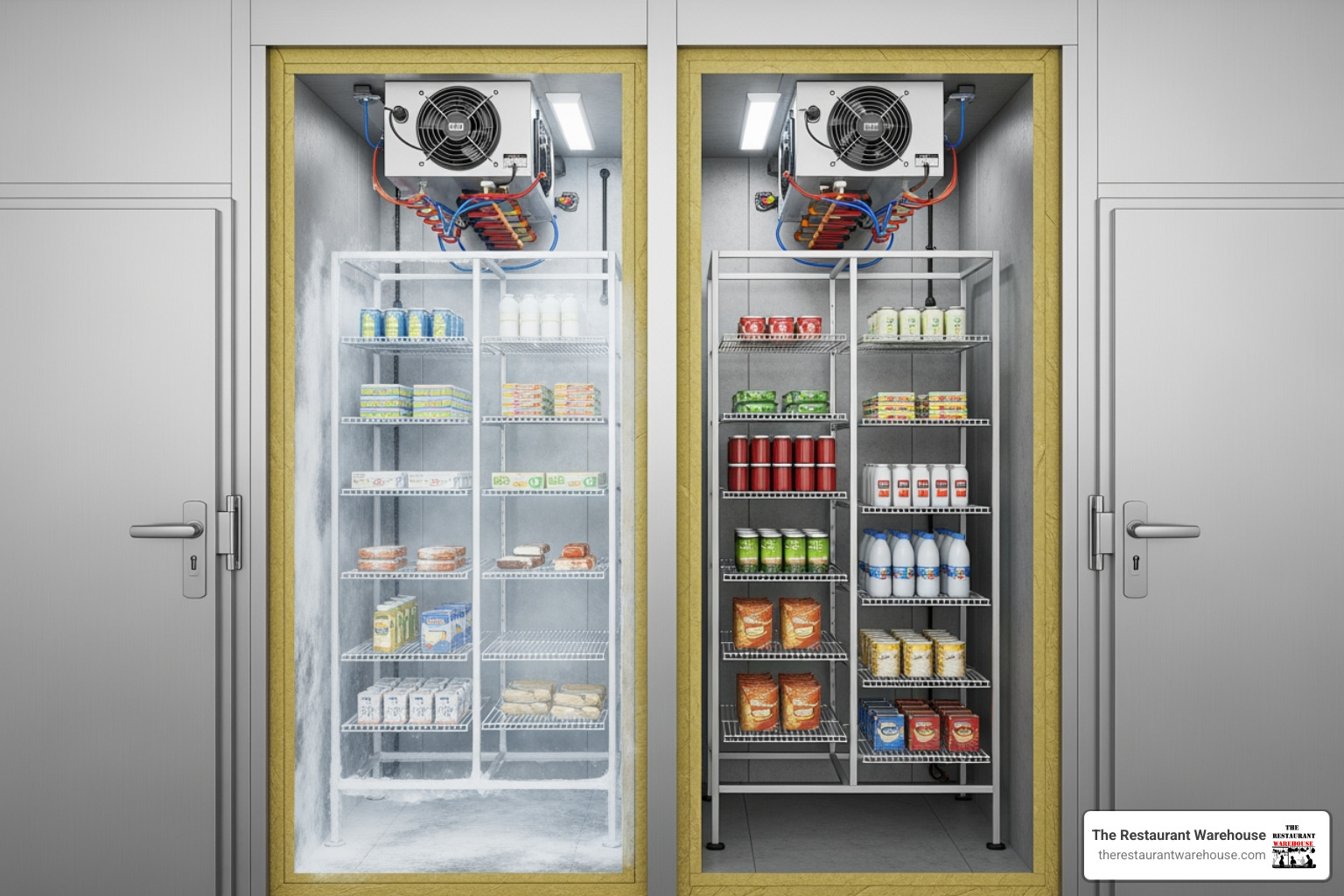
When selecting a commercial walk in refrigerator freezer combo, understanding its core features is paramount. These elements dictate the unit's long-term value, performance, and how well it integrates into your daily operations.
Insulation and Energy Efficiency for your commercial walk in refrigerator freezer combo
Insulation is the unsung hero of any cold storage unit. It's what keeps the cold in and the heat out, directly impacting your energy bills and the safety of your stored products.
-
Insulation Types:
-
Foamed-in-place polyurethane: This is a highly effective insulation material, known for its excellent thermal resistance and structural integrity.
-
Extruded polystyrene: Another strong performer, offering good R-values and moisture resistance.
-
R-value Explained: R-value is a measure of thermal resistance. A higher R-value indicates better insulation performance, meaning less heat transfer and greater energy efficiency.
-
EISA Regulations: The Energy Independence and Security Act significantly impacts walk-in cooler and freezer requirements. Manufacturers in the United States must meet specific federal energy standards. You can learn more about these requirements at the EISA regulations portal.
-
High-Efficiency Panels: Standard panels are typically four inches thick, while higher-efficiency options may use thicker polyurethane insulation for greater thermal protection and lower operating costs.
Construction Materials and Durability
The materials used in a commercial walk in refrigerator freezer combo directly influence its durability, sanitation, and ability to withstand the rigors of a commercial environment.
-
Exterior and Interior Finishes: Common materials include 26-gauge embossed coated steel, which offers a balance of durability, corrosion resistance, and a clean appearance. Stainless steel is also a popular choice for its superior hygiene and resistance to harsh cleaning agents.
-
Fiberglass Construction: For outdoor units, fiberglass construction stands out. Its seamless exterior design is naturally resistant to conductivity, meaning it absorbs very little heat compared to conventional metal and steel exteriors, which act as conductors. This property makes fiberglass units exceptionally energy-efficient and highly resistant to corrosion, rust, and denting, especially in challenging climates. You can explore more about thermal conductivity properties to understand the science behind it.
-
Sanitation Benefits: Seamless designs and rounded interior corners help prevent moisture damage and bacteria formation, making units easier to clean and maintain.
-
Flooring Options:
-
Smooth aluminum: A durable and easy-to-clean option
-
NSF-approved floors: These meet stringent sanitation standards, crucial for food safety
-
Floor load capacity: Make sure the floor can support your anticipated storage load
Doors, Shelving, and Access
The efficiency of your commercial walk in refrigerator freezer combo isn't just about temperature; it's also about how easily and effectively your staff can access its contents.
-
Door Types:
-
Solid insulated doors: Standard for strong thermal retention
-
Glass display doors: Useful for merchandising and quick visibility
-
Freezer access doors: Can be external or located inside the cooler section, depending on layout needs
-
Features for Efficiency and Safety:
-
Self-closing hinges: Help prevent accidental temperature loss
-
Heavy-duty gaskets: Maintain a tight seal and prevent air leaks
-
Locking deadbolt handles: Improve inventory security
-
Heated door frames: Help prevent frost buildup around freezer doors
-
Vinyl strip curtains: Add another layer of insulation for high-traffic access points
-
Interior Shelving Systems: Shelving kits maximize storage capacity and keep products neatly arranged. Plan for adequate aisle space to support movement, stocking, and retrieval.
Refrigeration Systems and Modern Technology
The heart of any cold storage unit is its refrigeration system. Modern commercial walk in refrigerator freezer combo units incorporate advanced technology for optimal performance and control.
-
Refrigeration System Types:
-
Self-contained units: These systems are integrated directly into the walk-in
-
Remote systems: The condenser unit is located outside the walk-in, often reducing interior heat and noise
-
Top-mounted refrigeration: A space-saving option
-
Side-mounted units: Useful where overhead clearance is limited
-
Advanced Air Circulation: Good airflow helps maintain consistent temperatures throughout both compartments.
-
Digital Temperature Controls: Modern units feature precise digital controls for accurate setting and monitoring.
-
Remote Monitoring Capabilities: Some systems offer remote monitoring through desktop or smartphone access.
-
Eco-friendly Refrigerants: Many units now use refrigerants such as R290 for improved environmental performance.
Configurations and Customization for Your Commercial Walk-In Refrigerator Freezer Combo
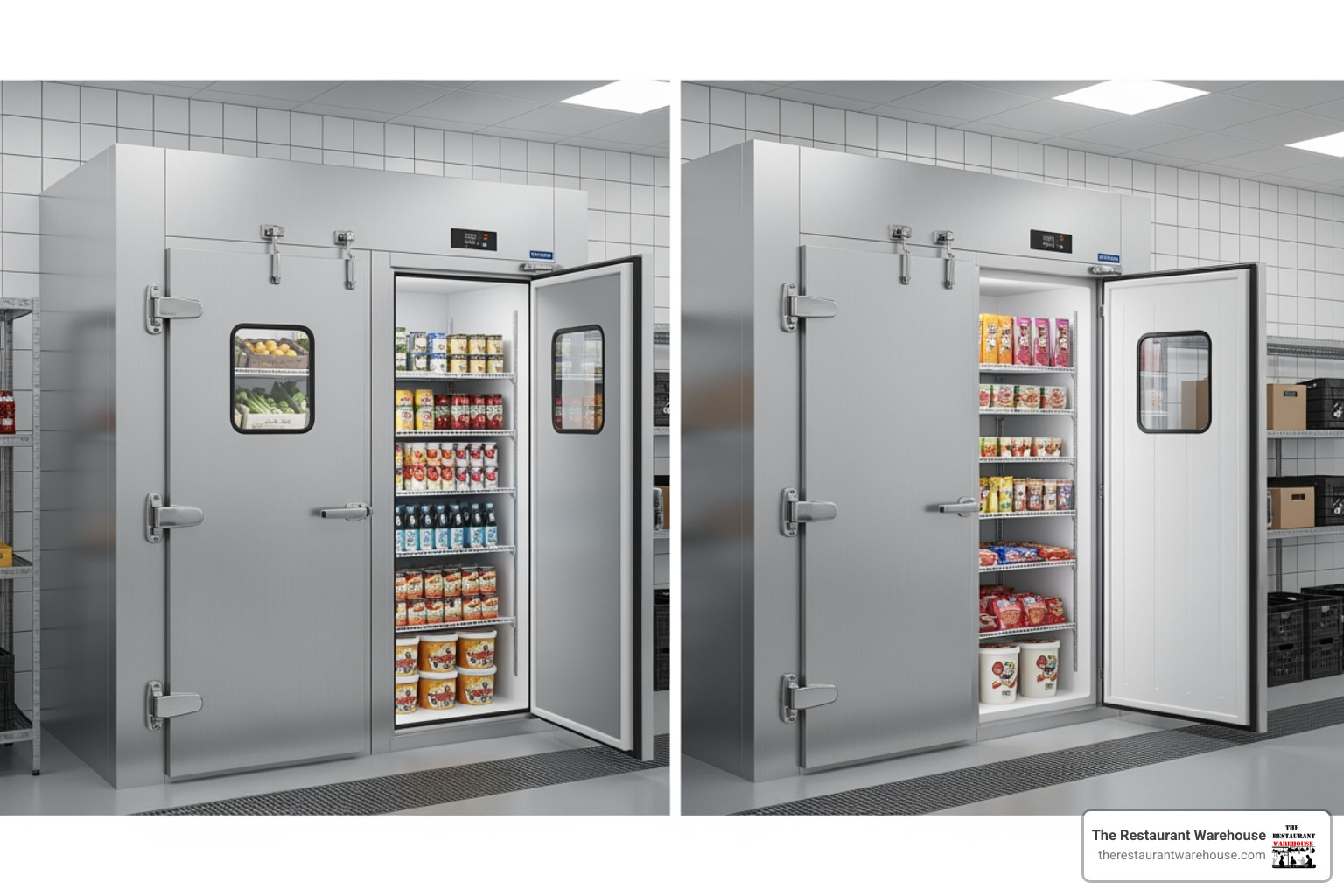
One of the greatest strengths of a commercial walk in refrigerator freezer combo is its adaptability. No two businesses are exactly alike, and your cold storage needs will vary based on your menu, volume, and available space. Tailoring a unit to your specific business needs is crucial for maximizing efficiency and return on investment.
Standard vs. Custom-Built Units
Choosing between a standard, pre-fabricated unit and a custom-built one depends on your specific requirements and budget.
-
Pre-fabricated Models: These units come in standard dimensions and often have quick-ship options, making them a faster and potentially more affordable solution for common cold storage needs.
-
Custom-Sized Units: For unique layouts, unusual dimensions, or highly specialized applications, custom-sized units are the answer. Modular panel construction allows for precise sizing and future expansion if your business grows.
Indoor vs. Outdoor Placement
The placement of your commercial walk in refrigerator freezer combo is a critical decision that affects its design, installation, and long-term performance.
-
Indoor Installation: Indoor units require proper ventilation and clearance space for optimal airflow around the refrigeration components. They benefit from more stable ambient temperatures and often support easier access for service.
-
Outdoor Units: Outdoor units are built to withstand weather exposure and often feature weather-resistant construction, protective roof systems, and added insulation benefits for external use.
Common Applications for a commercial walk in refrigerator freezer combo
The versatility of a commercial walk in refrigerator freezer combo makes it an invaluable asset across a wide range of industries.
-
Restaurants and Foodservice: Ideal for storing produce, dairy, meats, seafood, frozen goods, and prep items
-
Catering Operations: Supports high-volume cold storage for events and prep work
-
Breweries and Taprooms: Useful for kegs, beverages, and ingredient storage
-
Grocery and Convenience Stores: Supports both refrigerated and frozen retail products
-
Bakeries and Cafes: Helps manage ingredients, dough, pastries, and finished products
-
Medical and Pharmaceutical Labs: Useful where precise cold storage is required
-
Florists: Helps preserve freshness of temperature-sensitive stock
If you need other commercial refrigeration options alongside a combo unit, you may also want to compare commercial refrigerators, commercial freezers, and Atosa freezer models depending on your kitchen layout and volume needs.
Installation, Maintenance, and Long-Term Considerations
Investing in a commercial walk in refrigerator freezer combo is a significant decision, and ensuring its longevity and optimal performance requires attention to installation, routine maintenance, and understanding warranty coverage. Protecting your investment means making smart choices from day one and committing to proper upkeep.
Preparing for Installation
Proper site preparation is the first step toward a successful installation and years of reliable service.
-
Site Preparation: Ensure you have a level surface that can structurally support the weight of the unit and its contents.
-
Electrical Requirements: Confirm the correct voltage and phasing, and ensure dedicated circuits are available with sufficient amperage. Always consult a qualified electrician.
-
Providing Adequate Clearance for Airflow: Whether indoor or outdoor, the refrigeration system needs proper airflow to operate efficiently. Leave adequate space around the condensing unit and access doors.
Routine Maintenance for Longevity
A consistent maintenance schedule will extend the life of your commercial walk in refrigerator freezer combo and keep it running efficiently.
-
Daily and Weekly Cleaning: Regular cleaning of interior and exterior surfaces is essential for hygiene and appearance.
-
Gasket Inspection and Cleaning: Inspect door gaskets regularly for tears or damage and clean them to maintain a tight seal.
-
Condenser and Evaporator Coil Cleaning: Dust and debris reduce efficiency, so clean condenser coils regularly and keep evaporator areas free of excessive ice buildup.
-
Checking Refrigerant Levels: A qualified technician should periodically check refrigerant levels and system performance.
-
Professional Service Schedules: Schedule professional service once or twice per year to identify issues early and keep the unit operating efficiently.
If maintenance strategy is part of your buying decision, our commercial freezer maintenance guide and commercial freezer repair and maintenance guide can help you plan long-term upkeep.
Understanding Warranties
A comprehensive warranty provides peace of mind and protects your investment.
-
Warranty Types: Look for coverage on panels, parts and labor, and compressors.
-
Warranty Duration: Different components often have different coverage periods, so read the details carefully.
-
Product Registration: Register your unit with the manufacturer after purchase to keep warranty coverage active and accessible.
For questions regarding configurations, service, or planning your storage layout, visit our contact page.
Commercial Freezer and Refrigeration Resources
Frequently Asked Questions about Walk-In Combos
We get a lot of questions about commercial walk in refrigerator freezer combo units. Here are some of the most common inquiries:
What are the typical temperature ranges for a cooler/freezer combo?
A commercial walk-in cooler is typically set to hold between 35°F and 45°F, ideal for preserving produce, dairy, and prepared foods. The freezer compartment is designed to maintain temperatures between 0°F and -10°F, ensuring deep and safe freezing for meats, seafood, and other frozen goods.
Can I install a walk-in combo unit myself?
While some smaller, pre-fabricated units may be designed for simpler assembly, professional installation is highly recommended for most commercial walk-in combos. Proper installation ensures that panels are sealed correctly, the refrigeration system is charged and calibrated, and all electrical connections are safe, which is crucial for efficiency, safety, and warranty validity. An improperly installed unit can lead to energy waste, food spoilage, and costly repairs down the line.
How do I determine the right size for my business?
Sizing depends on your inventory volume, product types, delivery frequency, and available space. A general guideline is to allocate about 1 cubic foot of space for every 28 pounds of food. It's also wise to plan for future growth, selecting a unit that is 20% to 25% larger than your immediate needs. Carefully assess your current and projected storage requirements to ensure you choose a unit that serves you well for years to come.
Conclusion
Choosing the right commercial walk in refrigerator freezer combo is a strategic decision that can significantly impact your business's operational efficiency, energy consumption, and bottom line. We've explored the benefits of space optimization, energy savings, reduced initial investment, and streamlined workflow.
We've also reviewed the major factors to evaluate, including insulation, materials, access design, refrigeration technology, customization options, installation requirements, maintenance planning, and warranty protection.
A well-chosen combo unit can help protect inventory, support food safety, improve kitchen efficiency, and reduce the long-term cost of ownership. If you're comparing multiple cold storage formats before making a final decision, use your walk-in combo research alongside other resources such as our commercial freezer guide, commercial refrigerator guide, and large commercial freezer guide.
At The Restaurant Warehouse, we focus on supplying foodservice equipment at affordable wholesale pricing. If you need help narrowing down the right cold storage setup for your operation, get a quote on your walk-in combo today.



