
Commercial Freezers

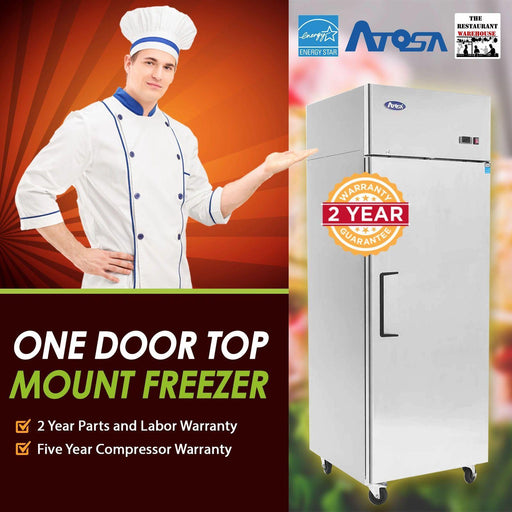
Atosa MBF8001GR 29-Inch 21.4 cu. ft. Commercial Freezer
Atosa
Original price
$3,396.00
Original price
$3,396.00
-
Original price
$3,396.00
Original price
$3,396.00
Current price
$2,447.00
$2,447.00
-
$2,447.00
Current price
$2,447.00
Atosa MBF8001GR Commercial Reach-In Freezer for Sale – Solid Door Atosa MBF8001GR commercial reach-in freezer for sale is designe...
View full details
Original price
$3,396.00
Original price
$3,396.00
-
Original price
$3,396.00
Original price
$3,396.00
Current price
$2,447.00
$2,447.00
-
$2,447.00
Current price
$2,447.00
Save 28%
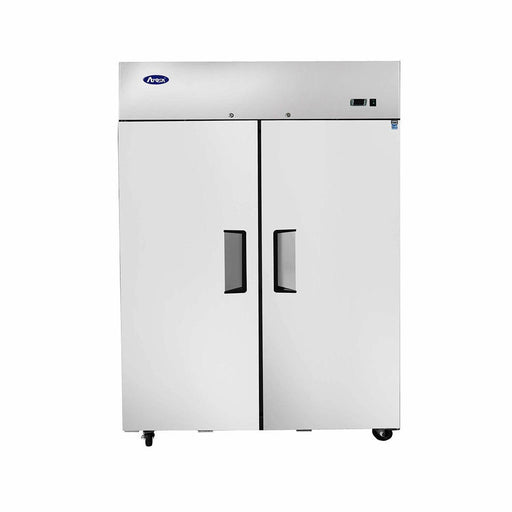
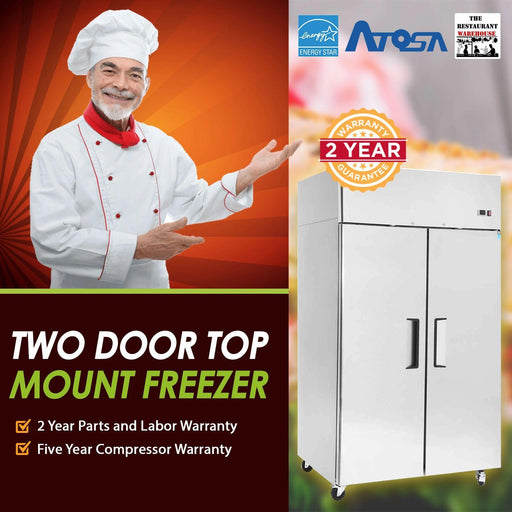
Atosa MBF8002GR 52-Inch Two Door 43.2 cu. ft. Commercial Freezer
Atosa
Original price
$5,206.00
Original price
$5,206.00
-
Original price
$5,206.00
Original price
$5,206.00
Current price
$3,751.00
$3,751.00
-
$3,751.00
Current price
$3,751.00
Atosa MBF8002GR 52-Inch Two-Door Commercial Reach-In Freezer In stock and built for daily commercial use. The Atosa MBF8002GR co...
View full details
Original price
$5,206.00
Original price
$5,206.00
-
Original price
$5,206.00
Original price
$5,206.00
Current price
$3,751.00
$3,751.00
-
$3,751.00
Current price
$3,751.00
Save 28%
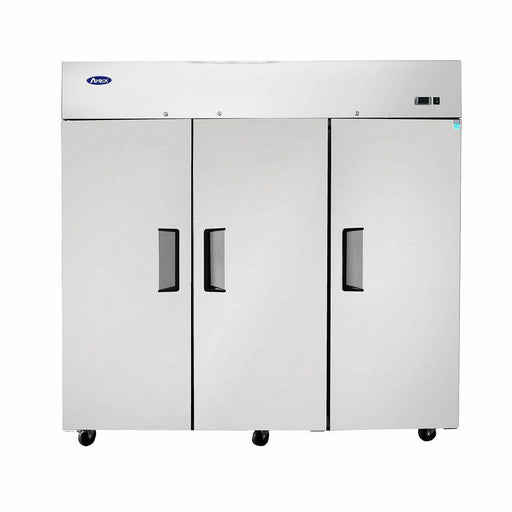
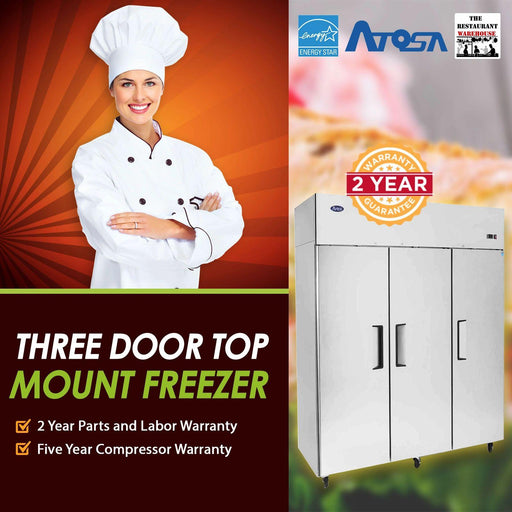
Atosa MBF8003GR 78-Inch Three Door 64.9 cu. ft. Commercial Freezer
Atosa
Original price
$7,356.00
Original price
$7,356.00
-
Original price
$7,356.00
Original price
$7,356.00
Current price
$5,300.00
$5,300.00
-
$5,300.00
Current price
$5,300.00
Atosa MBF8003GR 3-Door Commercial Reach-In Freezer – 64.9 Cu Ft Built for high-volume commercial kitchens that need maximum frozen storage an...
View full details
Original price
$7,356.00
Original price
$7,356.00
-
Original price
$7,356.00
Original price
$7,356.00
Current price
$5,300.00
$5,300.00
-
$5,300.00
Current price
$5,300.00
Save 28%
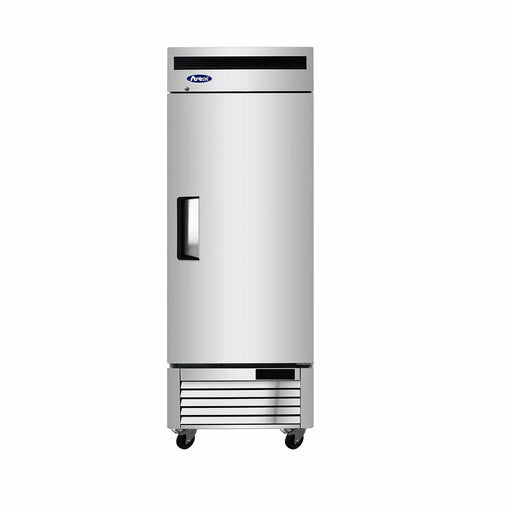
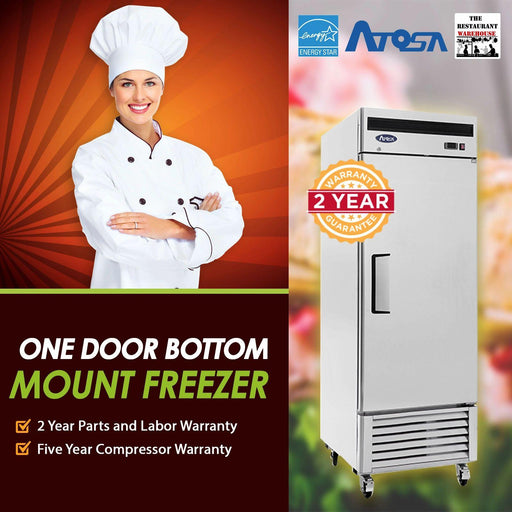
Atosa MBF8501GR 27-Inch One Door 19.1 cu. ft. Commercial Freezer
Atosa
Original price
$3,624.00
Original price
$3,624.00
-
Original price
$3,624.00
Original price
$3,624.00
Current price
$2,612.00
$2,612.00
-
$2,612.00
Current price
$2,612.00
Atosa MBF8501GR 27-Inch One Door Commercial Reach-In Freezer In Stock. Ships in 1 business day (same-day ...
View full details
Original price
$3,624.00
Original price
$3,624.00
-
Original price
$3,624.00
Original price
$3,624.00
Current price
$2,612.00
$2,612.00
-
$2,612.00
Current price
$2,612.00
Save 28%
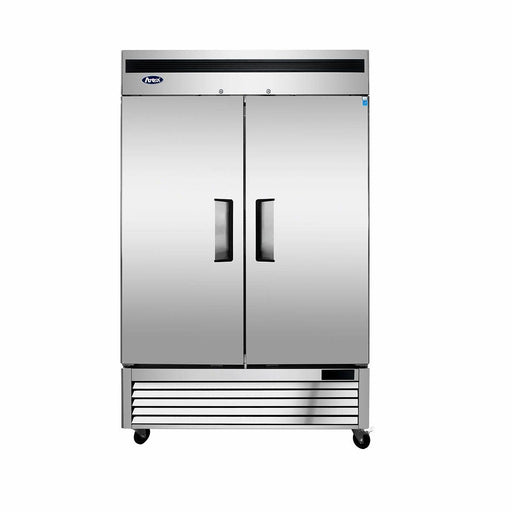
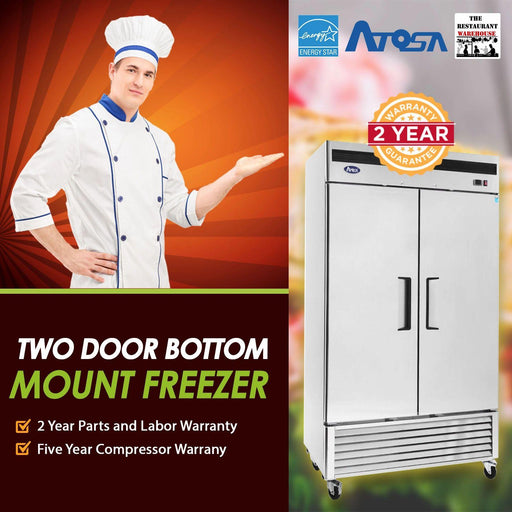
Atosa MBF8503GR 55-Inch Two Door 44.77 cu. ft. Commercial Freezer
Atosa
Original price
$5,434.00
Original price
$5,434.00
-
Original price
$5,434.00
Original price
$5,434.00
Current price
$3,916.00
$3,916.00
-
$3,916.00
Current price
$3,916.00
Atosa MBF8503GR 55-Inch Two Door Commercial Reach-In Freezer – ENERGY STAR® Purchase Highlights In stock Ships i...
View full details
Original price
$5,434.00
Original price
$5,434.00
-
Original price
$5,434.00
Original price
$5,434.00
Current price
$3,916.00
$3,916.00
-
$3,916.00
Current price
$3,916.00
Save 28%
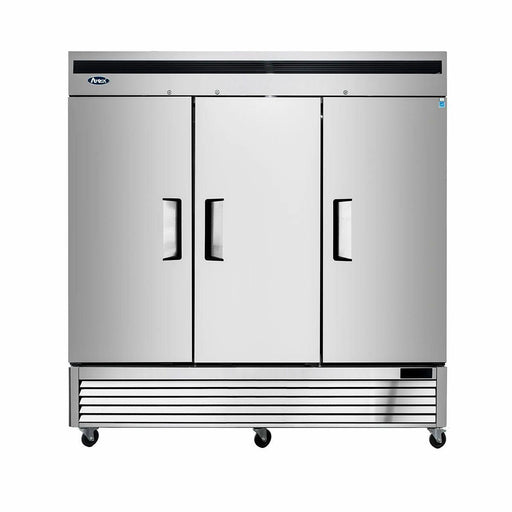
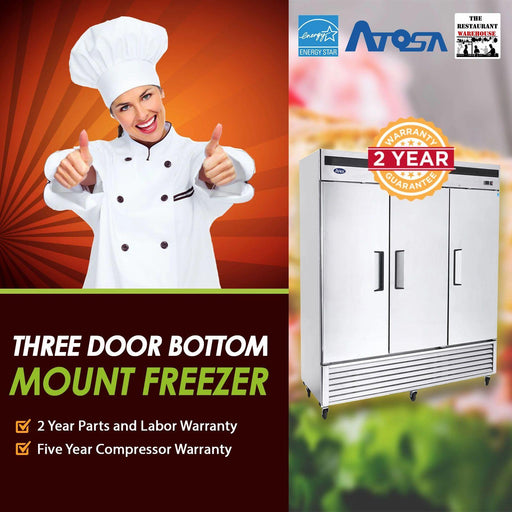
Atosa MBF8504GR 82-Inch Three Door 71 cu. ft. Commercial Freezer
Atosa
Original price
$7,751.00
Original price
$7,751.00
-
Original price
$7,751.00
Original price
$7,751.00
Current price
$5,585.00
$5,585.00
-
$5,585.00
Current price
$5,585.00
Atosa MBF8504GR 82-Inch Three Door Commercial Reach-In Freezer – 71.0 cu. ft. Purchase Highlights In stock ...
View full details
Original price
$7,751.00
Original price
$7,751.00
-
Original price
$7,751.00
Original price
$7,751.00
Current price
$5,585.00
$5,585.00
-
$5,585.00
Current price
$5,585.00
Save 28%
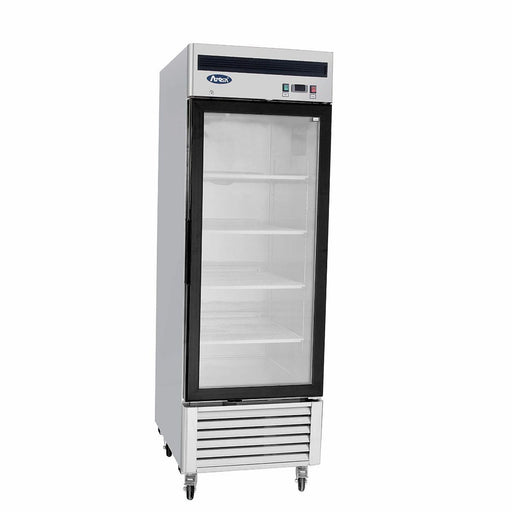
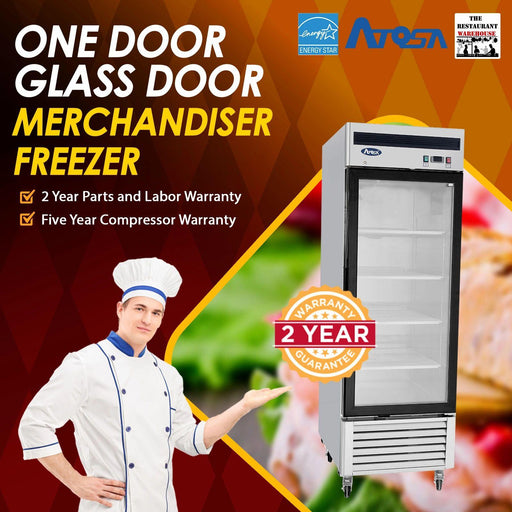
Atosa USA MCF8701GR 27-Inch Glass One Door Merchandiser Upright Freezer
Atosa
Original price
$3,962.00
Original price
$3,962.00
-
Original price
$3,962.00
Original price
$3,962.00
Current price
$2,855.00
$2,855.00
-
$2,855.00
Current price
$2,855.00
Atosa USA MCF8701GR 27-Inch Glass One Door Merchandiser Upright Freezer The Atosa USA MCF8701GR is a commercial-grade glass door merchandiser f...
View full details
Original price
$3,962.00
Original price
$3,962.00
-
Original price
$3,962.00
Original price
$3,962.00
Current price
$2,855.00
$2,855.00
-
$2,855.00
Current price
$2,855.00
Save 28%
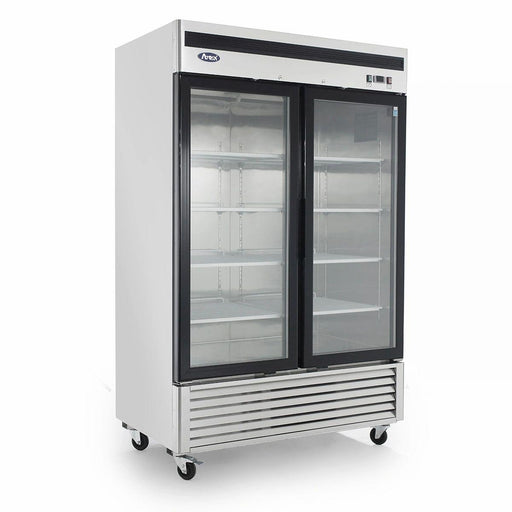
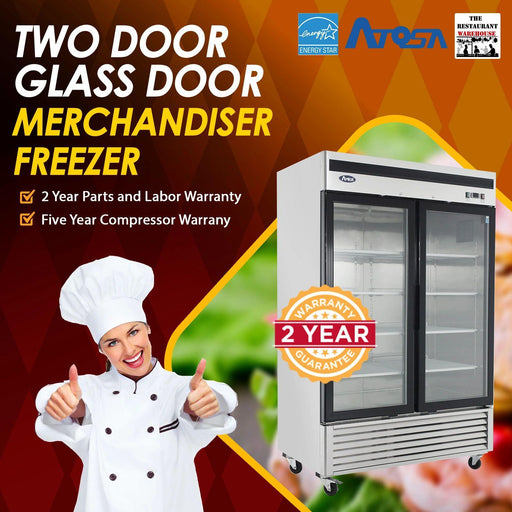
Atosa USA MCF8703ES 55-Inch Glass Two Door Merchandiser Upright Freezer
Atosa
Original price
$6,111.00
Original price
$6,111.00
-
Original price
$6,111.00
Original price
$6,111.00
Current price
$4,403.00
$4,403.00
-
$4,403.00
Current price
$4,403.00
Atosa USA MCF8703ES 55-Inch Glass Two Door Merchandiser Upright Freezer The Atosa USA MCF8703ES is a commercial two glass door merchandiser fre...
View full details
Original price
$6,111.00
Original price
$6,111.00
-
Original price
$6,111.00
Original price
$6,111.00
Current price
$4,403.00
$4,403.00
-
$4,403.00
Current price
$4,403.00
Save 28%
Atosa USA MCF8701GRL 27-Inch Glass One Door Left Hinge Merchandiser Freezer
Atosa
Original price
$3,962.00
Original price
$3,962.00
-
Original price
$3,962.00
Original price
$3,962.00
Current price
$2,855.00
$2,855.00
-
$2,855.00
Current price
$2,855.00
Atosa USA MCF8701GRL 27-Inch Glass One Door Merchandiser Upright Freezer - Left Hinge The Atosa USA MCF8701GRL is a commercial glass door merchandi...
View full details
Original price
$3,962.00
Original price
$3,962.00
-
Original price
$3,962.00
Original price
$3,962.00
Current price
$2,855.00
$2,855.00
-
$2,855.00
Current price
$2,855.00
Save 28%


Atosa AUF24SD 24 inch Undercounter Freezer
Atosa
Original price
$2,265.00
Original price
$2,265.00
-
Original price
$2,265.00
Original price
$2,265.00
Current price
$1,632.00
$1,632.00
-
$1,632.00
Current price
$1,632.00
Atosa AUF24SD 24" Undercounter Freezer — One-Section Reach-In The Atosa AUF24SD is a 24-inch one-section undercounter freezer engineered to delive...
View full details
Original price
$2,265.00
Original price
$2,265.00
-
Original price
$2,265.00
Original price
$2,265.00
Current price
$1,632.00
$1,632.00
-
$1,632.00
Current price
$1,632.00
Save 28%


Atosa AUF27SD 27 inch Undercounter Freezer
Atosa
Original price
$2,265.00
Original price
$2,265.00
-
Original price
$2,265.00
Original price
$2,265.00
Current price
$1,632.00
$1,632.00
-
$1,632.00
Current price
$1,632.00
Atosa AUF27SD 27" Undercounter Freezer — One-Section Reach-In The Atosa AUF27SD is a 27-inch one-section undercounter freezer that delivers true c...
View full details
Original price
$2,265.00
Original price
$2,265.00
-
Original price
$2,265.00
Original price
$2,265.00
Current price
$1,632.00
$1,632.00
-
$1,632.00
Current price
$1,632.00
Save 28%


Atosa AUF36SD 36 inch Undercounter Freezer
Atosa
Original price
$2,884.00
Original price
$2,884.00
-
Original price
$2,884.00
Original price
$2,884.00
Current price
$2,078.00
$2,078.00
-
$2,078.00
Current price
$2,078.00
Atosa AUF36SD 36" Undercounter Freezer — Two-Section Reach-In The Atosa AUF36SD is a 36-inch two-section undercounter freezer that delivers 8.6 cu...
View full details
Original price
$2,884.00
Original price
$2,884.00
-
Original price
$2,884.00
Original price
$2,884.00
Current price
$2,078.00
$2,078.00
-
$2,078.00
Current price
$2,078.00
Save 28%


Atosa AUF48SD 48 inch Undercounter Freezer
Atosa
Original price
$3,285.00
Original price
$3,285.00
-
Original price
$3,285.00
Original price
$3,285.00
Current price
$2,367.00
$2,367.00
-
$2,367.00
Current price
$2,367.00
Atosa AUF48SD 48" Undercounter Freezer — Two-Section Reach-In The Atosa AUF48SD is a 48-inch two-section undercounter freezer that delivers 11.8 c...
View full details
Original price
$3,285.00
Original price
$3,285.00
-
Original price
$3,285.00
Original price
$3,285.00
Current price
$2,367.00
$2,367.00
-
$2,367.00
Current price
$2,367.00
Save 28%


Atosa AUF60SD 60 inch Undercounter Freezer
Atosa
Original price
$3,285.00
Original price
$3,285.00
-
Original price
$3,285.00
Original price
$3,285.00
Current price
$2,674.00
$2,674.00
-
$2,674.00
Current price
$2,674.00
Atosa AUF60SD 60" Undercounter Freezer — Two-Section Reach-In The Atosa AUF60SD is a 60-inch two-section undercounter freezer that delivers 15 cub...
View full details
Original price
$3,285.00
Original price
$3,285.00
-
Original price
$3,285.00
Original price
$3,285.00
Current price
$2,674.00
$2,674.00
-
$2,674.00
Current price
$2,674.00
Save 19%
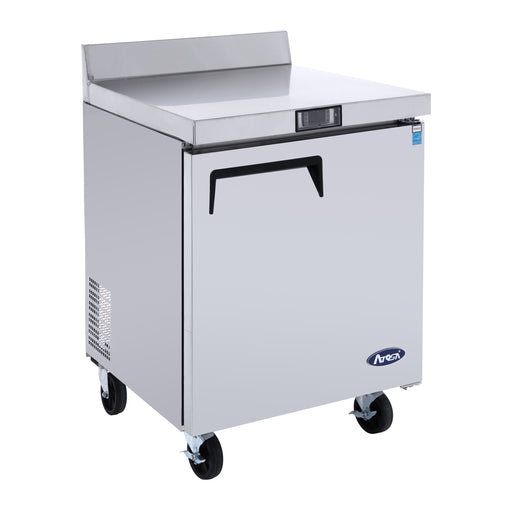
Atosa USA MGF8412GR 27-Inch Worktop Freezer
Atosa
Original price
$2,328.00
Original price
$2,328.00
-
Original price
$2,328.00
Original price
$2,328.00
Current price
$1,678.00
$1,678.00
-
$1,678.00
Current price
$1,678.00
Atosa USA MGF8412GR 27-Inch Stainless Steel Worktop Freezer Ships Fast Most orders ship same or next business day Free Frei...
View full details
Original price
$2,328.00
Original price
$2,328.00
-
Original price
$2,328.00
Original price
$2,328.00
Current price
$1,678.00
$1,678.00
-
$1,678.00
Current price
$1,678.00
Save 28%
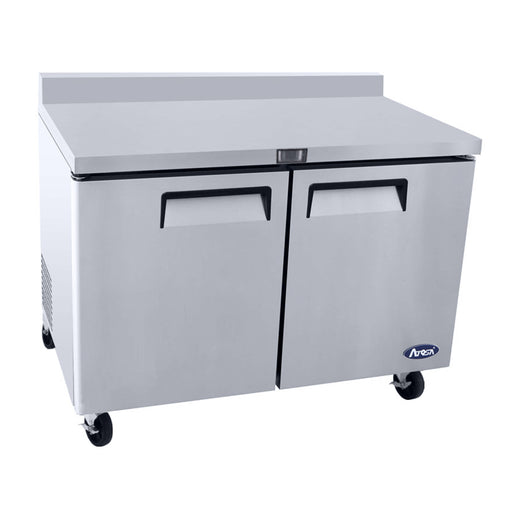
Atosa USA MGF8413GR 48-Inch Worktop Freezer
Atosa
Original price
$3,391.00
Original price
$3,391.00
-
Original price
$3,391.00
Original price
$3,391.00
Current price
$2,444.00
$2,444.00
-
$2,444.00
Current price
$2,444.00
Atosa USA MGF8413GR 48-Inch Stainless Steel Worktop Freezer with Backsplash Ships Fast Quick turnaround on most orders Free...
View full details
Original price
$3,391.00
Original price
$3,391.00
-
Original price
$3,391.00
Original price
$3,391.00
Current price
$2,444.00
$2,444.00
-
$2,444.00
Current price
$2,444.00
Save 28%

Atosa MGF8428GR Worktop Freezer with Drawers and Backsplash
Atosa
Original price
$3,328.00
Original price
$3,328.00
-
Original price
$3,328.00
Original price
$3,328.00
Current price
$2,398.00
$2,398.00
-
$2,398.00
Current price
$2,398.00
Atosa MGF8428GR 27-Inch Worktop Freezer with Drawers & Backsplash Ships Fast Most orders ship same or next business day ...
View full details
Original price
$3,328.00
Original price
$3,328.00
-
Original price
$3,328.00
Original price
$3,328.00
Current price
$2,398.00
$2,398.00
-
$2,398.00
Current price
$2,398.00
Save 28%

Atosa MGF8414GR 60-inch Worktop Freezer with Backsplash
Atosa
Original price
$4,300.00
Original price
$4,300.00
-
Original price
$4,300.00
Original price
$4,300.00
Current price
$3,099.00
$3,099.00
-
$3,099.00
Current price
$3,099.00
Atosa MGF8414GR 60-Inch Stainless Steel Worktop Freezer with Backsplash Ships Fast Most orders ship quickly from U.S. warehouses ...
View full details
Original price
$4,300.00
Original price
$4,300.00
-
Original price
$4,300.00
Original price
$4,300.00
Current price
$3,099.00
$3,099.00
-
$3,099.00
Current price
$3,099.00
Save 28%

True TWT-27F-HC 27 inch WorkTop Freezer
True RefrigerationTrue TWT-27F-HC WorkTop Freezer For over 70 years, True has been an industry leader in commercial refrigeration and continues to exceed customer'...
View full details
True TWT-48F-HC 48 inch WorkTop Freezer
True RefrigerationTrue TWT-48F-HC WorkTop Freezer For over 70 years, True has been an industry leader in commercial refrigeration and continues to exceed customer'...
View full details
True TWT-60F-HC 60 inch WorkTop Freezer
True RefrigerationTrue TWT-60F-HC WorkTop Freezer For over 70 years, True has been an industry leader in commercial refrigeration and continues to exceed customer'...
View full details

True T-23F-HC Reach-In Freezer
True RefrigerationTrue T-23F-HC Reach-In Freezer True Freezers For over 70 years, True has been an industry leader in commercial refrigeration and continues to ex...
View full details

True T-35F-HC Reach-In Freezer
True RefrigerationTrue T-35F-HC Reach-In Freezer True Freezers For over 70 years, True has been an industry leader in commercial refrigeration and continues to ex...
View full details

True T-43F-HC Reach-In Freezer
True RefrigerationTrue T-43F-HC Reach-In Freezer True Freezers For over 70 years, True has been an industry leader in commercial refrigeration and continues to ex...
View full details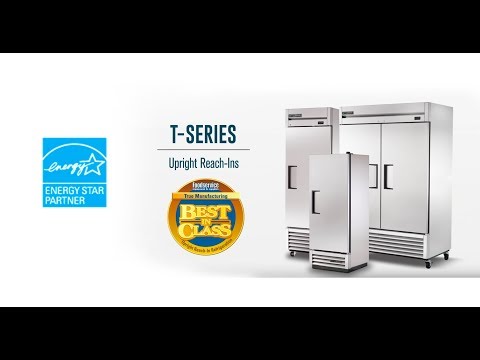

True T-49F-HC Reach-In Freezer
True RefrigerationTrue T-49F-HC Reach-In Freezer True Freezers For over 70 years, True has been an industry leader in commercial refrigeration and continues to ex...
View full details

True T-72F-HC Reach-In Freezer
True RefrigerationTrue T-72F-HC Reach-In Freezer True Freezers For over 70 years, True has been an industry leader in commercial refrigeration and continues to ex...
View full details
True TUC-27F-HC 27 inch Reach-In Undercounter Freezer
True RefrigerationTrue TUC-27F-HC Reach-In Undercounter Freezer For over 70 years, True has been an industry leader in commercial refrigeration and continues to ex...
View full details
True TUC-48F-HC 48 inch Undercounter Freezer
True RefrigerationTrue TUC-48F-HC Reach-In Undercounter Freezer For over 70 years, True has been an industry leader in commercial refrigeration and continues to ex...
View full details
True TUC-60F-HC 60 inch Undercounter Freezer
True RefrigerationTrue TUC-60F-HC Reach-In Undercounter Freezer For over 70 years, True has been an industry leader in commercial refrigeration and continues to ex...
View full details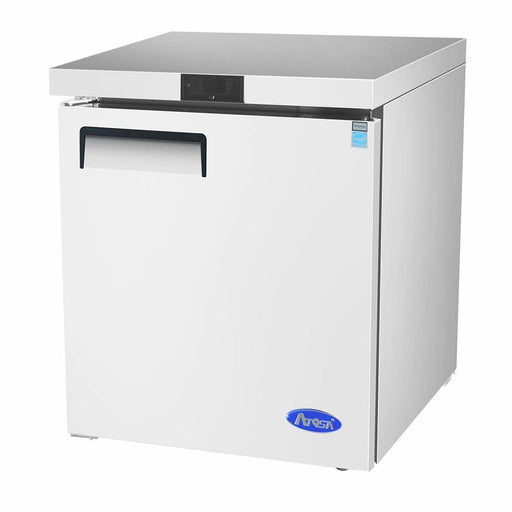
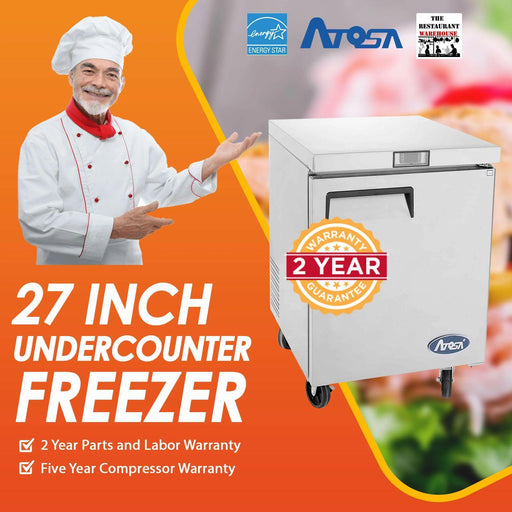
Atosa USA MGF8405GR Undercounter 27-Inch One Door Freezer
Atosa
Original price
$2,265.00
Original price
$2,265.00
-
Original price
$2,265.00
Original price
$2,265.00
Current price
$1,632.00
$1,632.00
-
$1,632.00
Current price
$1,632.00
Product Update: The Atosa MGF8405GR has been replaced by the new Atosa AUF27SD — same 27-inch undercounter freezer footprint, upgraded electronic c...
View full details
Original price
$2,265.00
Original price
$2,265.00
-
Original price
$2,265.00
Original price
$2,265.00
Current price
$1,632.00
$1,632.00
-
$1,632.00
Current price
$1,632.00
Save 28%
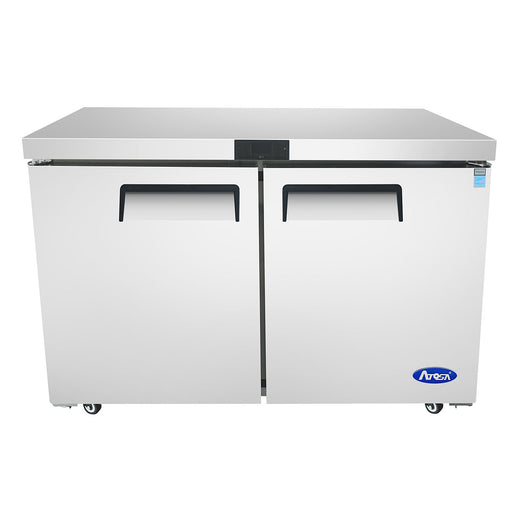
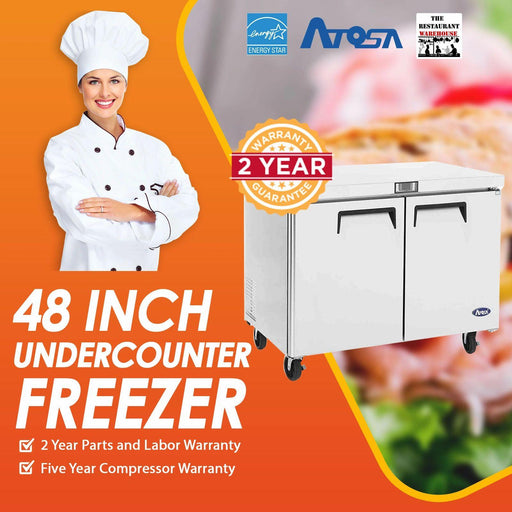
Atosa USA MGF8406GR Undercounter 48-Inch Two Door Freezer
Atosa
Original price
$3,285.00
Original price
$3,285.00
-
Original price
$3,285.00
Original price
$3,285.00
Current price
$2,367.00
$2,367.00
-
$2,367.00
Current price
$2,367.00
Product Update: The Atosa MGF8406GR has been replaced by the new Atosa AUF48SD — same 48-inch undercounter freezer footprint, upgraded electronic c...
View full details
Original price
$3,285.00
Original price
$3,285.00
-
Original price
$3,285.00
Original price
$3,285.00
Current price
$2,367.00
$2,367.00
-
$2,367.00
Current price
$2,367.00
Save 28%


Atosa USA MGF8420GR 27-inch Two-Drawer Undercounter Freezer
Atosa
Original price
$3,265.00
Original price
$3,265.00
-
Original price
$3,265.00
Original price
$3,265.00
Current price
$2,353.00
$2,353.00
-
$2,353.00
Current price
$2,353.00
Atosa USA MGF8420GR 27-Inch Two-Drawer Undercounter Freezer The Atosa USA MGF8420GR two-drawer undercounter freezer is engineered for professiona...
View full details
Original price
$3,265.00
Original price
$3,265.00
-
Original price
$3,265.00
Original price
$3,265.00
Current price
$2,353.00
$2,353.00
-
$2,353.00
Current price
$2,353.00
Save 28%
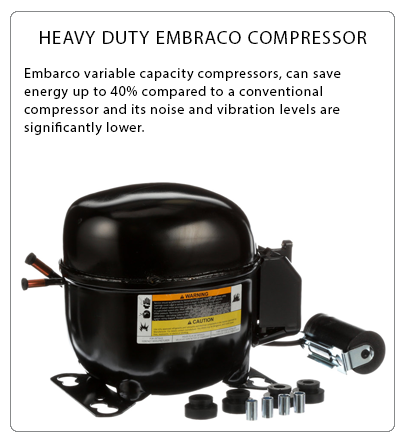
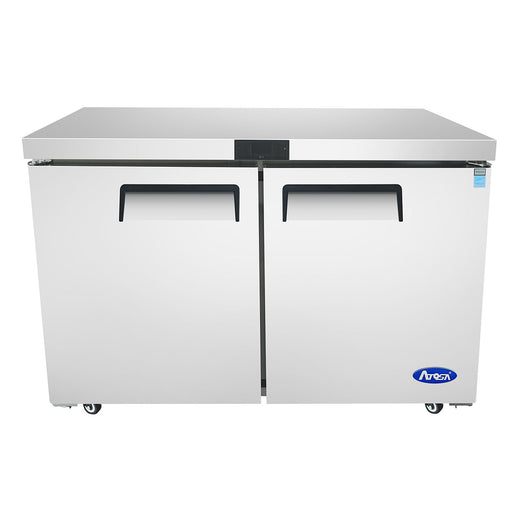
Atosa USA MGF8407GR Undercounter 60-Inch Two Door Freezer 17.9 cu. ft.
Atosa
Original price
$3,710.00
Original price
$3,710.00
-
Original price
$3,710.00
Original price
$3,710.00
Current price
$2,674.00
$2,674.00
-
$2,674.00
Current price
$2,674.00
Product Update: The Atosa MGF8407GR has been replaced by the new Atosa AUF60SD — same 60-inch undercounter freezer footprint, upgraded electronic c...
View full details
Original price
$3,710.00
Original price
$3,710.00
-
Original price
$3,710.00
Original price
$3,710.00
Current price
$2,674.00
$2,674.00
-
$2,674.00
Current price
$2,674.00
Save 28%
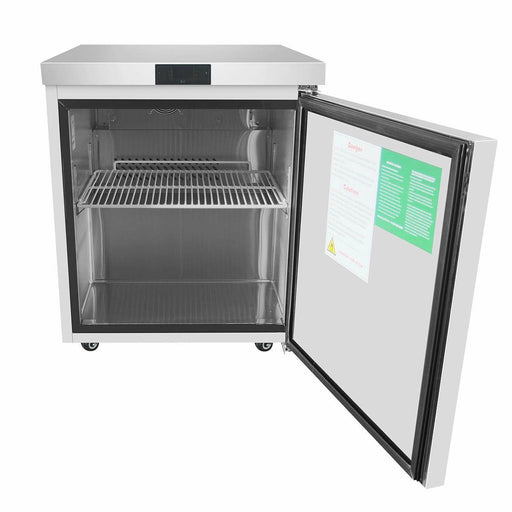
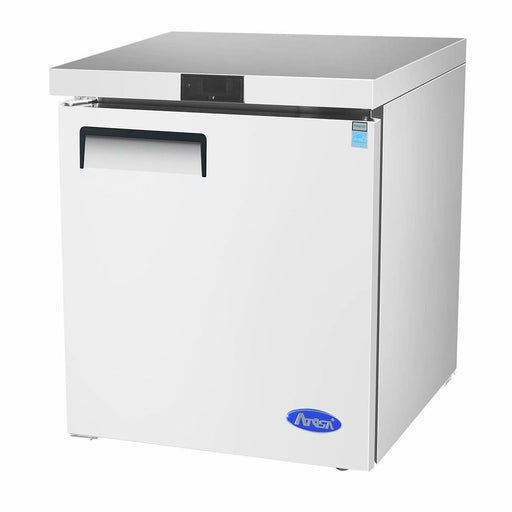
Atosa USA MGF24FGR Shallow Depth 24-Inch Undercounter Freezer
Atosa
Original price
$2,265.00
Original price
$2,265.00
-
Original price
$2,265.00
Original price
$2,265.00
Current price
$1,632.00
$1,632.00
-
$1,632.00
Current price
$1,632.00
Product Update: The Atosa MGF24FGR has been replaced by the new Atosa AUF24SD — same 24-inch undercounter freezer footprint, upgraded electronic co...
View full details
Original price
$2,265.00
Original price
$2,265.00
-
Original price
$2,265.00
Original price
$2,265.00
Current price
$1,632.00
$1,632.00
-
$1,632.00
Current price
$1,632.00
Save 28%


Atosa MGF8401GRL 27-inch Undercounter Refrigerator Left Hinged
Atosa
Original price
$1,982.00
Original price
$1,982.00
-
Original price
$1,982.00
Original price
$1,982.00
Current price
$1,429.00
$1,429.00
-
$1,429.00
Current price
$1,429.00
Product Update: The Atosa MGF8401GR has been replaced by the new Atosa AUR27SD - same 27-inch undercounter footprint, upgraded electronic controlle...
View full details
Original price
$1,982.00
Original price
$1,982.00
-
Original price
$1,982.00
Original price
$1,982.00
Current price
$1,429.00
$1,429.00
-
$1,429.00
Current price
$1,429.00
Save 28%
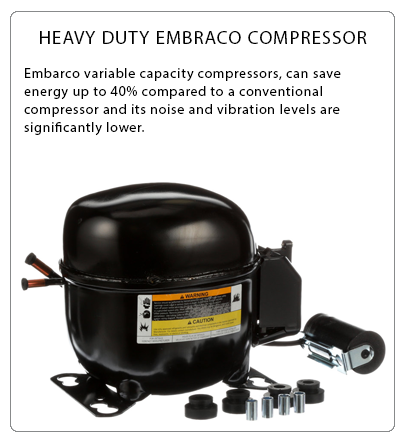
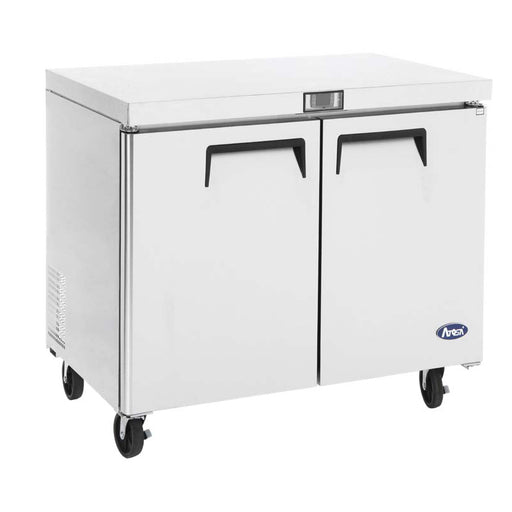
Atosa USA MGF36FGR Undercounter 36-Inch Two Door Freezer
Atosa
Original price
$2,884.00
Original price
$2,884.00
-
Original price
$2,884.00
Original price
$2,884.00
Current price
$2,078.00
$2,078.00
-
$2,078.00
Current price
$2,078.00
Product Update: The Atosa MGF36FGR has been replaced by the new Atosa AUF36SD — same 36-inch undercounter freezer footprint, upgraded electronic co...
View full details
Original price
$2,884.00
Original price
$2,884.00
-
Original price
$2,884.00
Original price
$2,884.00
Current price
$2,078.00
$2,078.00
-
$2,078.00
Current price
$2,078.00
Save 28%

Atosa MGF8405GRL 27-inch Undercounter Freezer Left Hinged
Atosa
Original price
$2,265.00
Original price
$2,265.00
-
Original price
$2,265.00
Original price
$2,265.00
Current price
$1,632.00
$1,632.00
-
$1,632.00
Current price
$1,632.00
Product Update: The Atosa MGF8405GR has been replaced by the new Atosa AUF27SD — same 27-inch undercounter freezer footprint, upgraded electronic c...
View full details
Original price
$2,265.00
Original price
$2,265.00
-
Original price
$2,265.00
Original price
$2,265.00
Current price
$1,632.00
$1,632.00
-
$1,632.00
Current price
$1,632.00
Save 28%


Atosa AUF27D2 27 inch Undercounter Freezer with Drawers
Atosa
Original price
$3,265.00
Original price
$3,265.00
-
Original price
$3,265.00
Original price
$3,265.00
Current price
$2,353.00
$2,353.00
-
$2,353.00
Current price
$2,353.00
Atosa AUF27D2 27" Undercounter Freezer with Drawers - 2-Drawer Base The Atosa AUF27D2 is a 27-inch two-drawer undercounter freezer engineered for ...
View full details
Original price
$3,265.00
Original price
$3,265.00
-
Original price
$3,265.00
Original price
$3,265.00
Current price
$2,353.00
$2,353.00
-
$2,353.00
Current price
$2,353.00
Save 28%
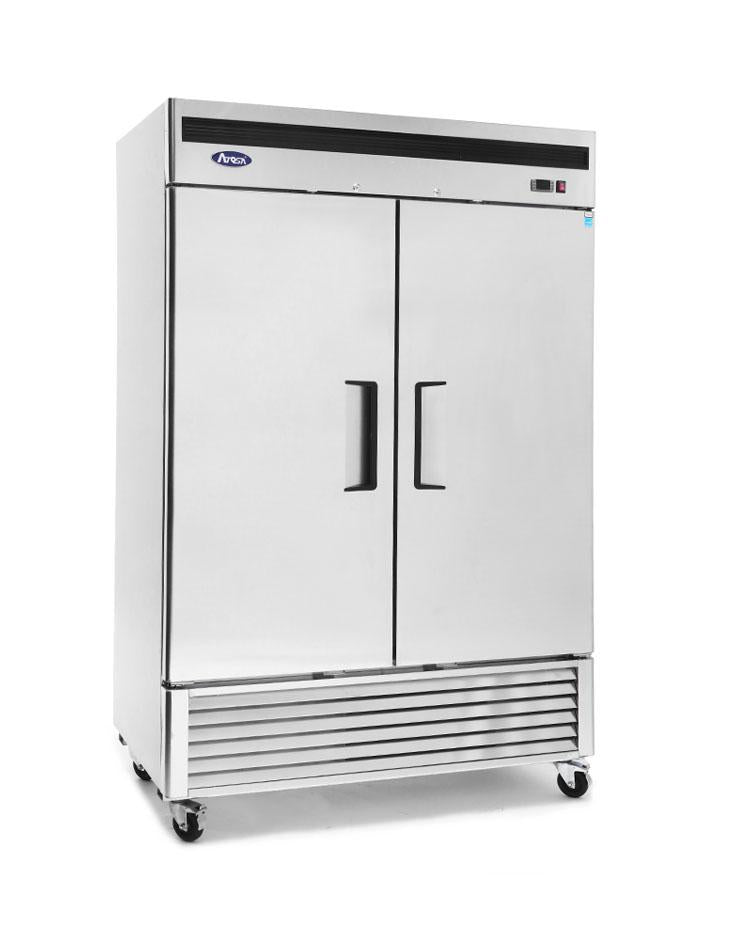
A commercial freezer, also called a restaurant freezer, industrial freezer, or commercial deep freezer, is one of the most important pieces of equipment in any professional kitchen. Unlike a residential freezer, a commercial freezer is engineered for continuous 24/7 operation, frequent door openings, high-volume frozen storage, and the fast temperature recovery that busy foodservice operations demand. Whether you run a restaurant, bar, deli, café, food truck, catering operation, or grocery business, the right commercial freezer protects your product, cuts food waste, and keeps service moving during peak hours.
At The Restaurant Warehouse, we focus on practical, operator-friendly freezers for restaurants of every size: stainless steel construction, digital temperature controls, heavy-duty compressors, easy-to-clean interiors, and layouts that fit real kitchens. Every commercial freezer in this collection is NSF-certified and holds product safely at 0°F or below when properly loaded and installed.
Searching for a commercial freezer near you? Every commercial freezer in this collection ships free to the contiguous 48 states from a US warehouse in 1 to 3 business days, no need to hunt down a local dealer. If you're weighing a used commercial freezer against a new one, remember that a new NSF-certified unit comes with full manufacturer warranty coverage and clean service history, while used freezers often ship with expired warranties and unknown compressor hours.
Shop Commercial Freezers by Type
| Type | Best For | Why Operators Buy It | Shop |
|---|---|---|---|
| Reach-In | Most restaurants and back-of-house kitchens | The workhorse of professional kitchens, upright storage, easy access, familiar layout | Reach-In |
| Chest | Bulk backup storage, low-turnover product | Maximum capacity per dollar; better cold retention when the lid stays shut | Chest |
| Undercounter | Prep stations, tight lines, food trucks | Frozen storage under the counter without taking floor space | Undercounter |
| Glass Door | Grab-and-go, retail, convenience-forward operations | Customer-facing display drives impulse purchase without opening the door | Glass Door |
| Merchandising | Retail and customer-facing frozen display | Purpose-built for retail visibility with interior lighting and shelving | Merchandiser |
What a Commercial Freezer Actually Does
A commercial freezer holds frozen product at 0°F or below around the clock while shrugging off constant door openings, temperature swings from hot kitchen air, and the wear that puts a residential freezer out of service in a season. The refrigeration system is oversized for the cabinet, the insulation is thicker, the door gaskets are heavier, and the compressor is rated for continuous duty rather than the on-off cycling a home freezer sees.
For a busy restaurant, that means product stays at safe temperature even during a dinner rush when the freezer door opens 200 times an hour. For a bar or grocery operation, it means ice cream, frozen appetizers, and prepped meals hold quality week after week without freezer burn. For a catering or food truck operator, it means predictable performance under conditions a residential unit was never built to handle.
Anatomy of a Commercial Freezer
Cabinet and Insulation
The cabinet on a commercial freezer is stainless steel outside and aluminum or stainless inside, with high-density polyurethane insulation between the walls typically 2.5 to 3 inches thick. That insulation is what separates a commercial-grade cabinet from a residential one, the extra thickness keeps interior temperature stable when hot kitchen air rushes in during frequent door openings, and it cuts compressor run time dramatically.
Refrigeration System
Commercial freezers use one of two compressor placements. A top-mount compressor keeps the mechanical system out of the sweep of kitchen floor debris and puts the coldest air at the bottom of the cabinet, which is where most operators want it. A bottom-mount compressor puts the system at a comfortable service height for repairs and keeps the top shelves easier to reach. Both configurations are common in this collection; the choice depends on your kitchen layout and how you load the cabinet.
Doors and Gaskets
Door hinges are heavy-duty on a commercial freezer, engineered for tens of thousands of open-close cycles. Gaskets are magnetic and replaceable; a torn gasket is the single most common cause of compressor overwork and rising energy bills, so plan on inspecting them every six months. Available in one door commercial freezer, two door commercial freezer, three door commercial freezer, and four-door configurations, units can be spec'd to match everything from a single-line kitchen to a high-volume prep operation running four cooks at once. A commercial stand up freezer (also called a commercial standing freezer or upright) is the workhorse configuration most restaurants land on.
Interior Shelving and Layout
Interior shelves are coated wire or stainless steel and are usually adjustable to hold half-size or full-size sheet trays, hotel pans, standard storage containers, and case-goods. On a well-designed commercial upright freezer, shelves come out completely for cleaning and are rated to hold at least 100 pounds each so you can stack case product without worrying about failure.
How to Choose the Right Commercial Freezer
Sizing a commercial freezer isn't complicated if you work through it in order. Here's the four-step framework we walk buyers through.
Step 1: Calculate Your Frozen Storage Volume
Add up what you actually store frozen on a given day. Meats, seafood, fruits, vegetables, prepared meals, backup product, ice cream, dough, write it all down and convert to cubic feet. Then add 25% overhead for growth, deliveries that arrive early, and unexpected volume. A single-door commercial upright freezer holds roughly 20 to 25 cubic feet. A two-door holds 40 to 50. A three-door holds 60 to 75. A four-door reach-in holds 80 to 100 cubic feet of usable space.
Step 2: Match Configuration to Workflow
If your kitchen pulls product frequently during service, choose an upright reach-in with wide, well-lit doors. If most of your frozen product is bulk backup that sits for days before it gets used, a chest freezer holds more per dollar. If you need frozen product at the prep station itself, an undercounter freezer keeps it within arm's reach without taking floor space. If you're merchandising to customers, a glass door display freezer drives visibility.
Step 3: Measure the Footprint and Delivery Path
Measure the space where the freezer will live. Include clearance for the door swing (at least 90 degrees, ideally 120), airflow behind the cabinet (3 inches minimum for rear-breathing units), and access to the compressor for service. Also confirm your delivery path, doorways, freight elevators, tight turns, can accommodate the freezer's shipping dimensions. Most commercial upright freezers ship on a pallet 30 to 40 inches wide and 80 to 84 inches tall.
Step 4: Confirm Electrical Requirements
Small commercial freezers (undercounter, some single-door uprights) run on standard 115V/60Hz outlets. Larger multi-door freezers and reach-ins may require 208-230V service or a dedicated 20-amp circuit. Confirm your outlet and circuit with your electrician before ordering, running a big freezer on an undersized circuit is the fastest way to burn out a compressor.
What to Look For in a Commercial Freezer
- Temperature performance: holds 0°F or below consistently under real kitchen conditions with fast recovery after door openings
- Compressor quality: commercial-duty compressor rated for continuous operation with a 5-year warranty minimum
- Digital controls: digital thermostat with visible temperature readout, high-temp alarm, and defrost timer
- Door configuration: match door count to your workflow, 1 door for tight lines, 2 doors for standard restaurants, 3 or 4 doors for high volume
- Interior capacity: adjustable heavy-duty shelving rated for real case-good weights
- Gaskets and hinges: heavy-duty magnetic gaskets and self-closing doors reduce compressor load and energy cost
- Certifications: NSF-certified for food safety, UL or ETL for electrical safety, DOE-compliant for energy efficiency
- Cleanability: stainless steel construction, coved corners, removable shelving and gaskets
- Mobility: heavy-duty locking casters for kitchens that need to move the unit for cleaning
- Warranty: 2 years parts and labor on the full unit, 5 years on the compressor at minimum
Certifications and Warranty Basics
Every commercial freezer sold by The Restaurant Warehouse is NSF-certified for foodservice sanitation, meets the electrical safety standards of UL and ETL, and complies with current DOE energy efficiency requirements. Many models are also ENERGY STAR rated, which qualifies them for utility rebates in a growing number of states and cuts monthly electric costs by 15% to 30% versus a non-rated equivalent.
Standard warranty coverage on commercial freezers is 2 years parts and labor plus 5 years on the compressor. When comparing units, always compare the compressor warranty specifically, the compressor is the most expensive part to replace and the one most likely to fail past year two. A 5-year compressor warranty is the current industry standard on any serious commercial upright freezer.
Commercial Freezer Pricing and Value
Commercial freezers are priced by size, door count, and refrigeration configuration. Here's what to expect for a new, in-warranty unit shipped free to the contiguous 48 states.
- Undercounter (24", 48"): $1,800 to $3,500
- Chest freezer (14, 30 cu ft): $1,400 to $2,800
- 1-door commercial upright freezer: $2,400 to $3,800
- 2-door commercial upright freezer: $3,800 to $5,600
- 3-door commercial upright freezer: $5,600 to $7,800
- 4-door commercial upright freezer: $7,800 to $10,500
- Glass door merchandiser freezer: $2,400 to $6,200 depending on door count
Pricing varies with cabinet build quality, refrigeration system, and specific manufacturer. Shopping for a commercial freezer for sale usually means matching door count and capacity to your actual volume, buying too big is one of the most common mistakes operators make. All units in this collection ship free to the contiguous 48 states with 1 to 3 day delivery from a US warehouse.
Ways to Acquire a Commercial Freezer
Not every operator wants to write a check for a big freezer on day one. The Restaurant Warehouse offers three ways to get frozen storage into your operation.
Buy outright, the simplest path. Order online, ship in 1 to 3 days, own the freezer on day one. This is the right choice for operators who have the capital and want the Section 179 tax benefit.
Finance the purchase, for operators who want to preserve working capital. Fixed monthly payments over 24 to 60 months, with quick approval for most established businesses. See our equipment financing options.
Rent the equipment, for pop-ups, catering operators, seasonal businesses, and operators who want commercial freezer capacity without a long-term commitment. Rental terms are flexible and include maintenance. See our equipment rental program.
Delivery, Installation, and Lead Time
Every commercial freezer in this collection ships from a US warehouse via LTL freight with liftgate service to the address on your order. Standard transit is 1 to 3 business days from ship date with tracking provided at every step. Delivery is to the curb, the driver lowers the pallet with the liftgate but does not bring the unit inside.
Installation is straightforward: uncrate, level the unit on its casters or feet, plug into the correct electrical outlet, and let the refrigeration system stabilize for at least 24 hours before loading with frozen product. This settling time is critical, a freezer that gets loaded before the compressor and refrigerant have stabilized can run high for days and stress components. Most commercial freezers come with a factory-set thermostat that hits -10°F to 0°F out of the box and can be adjusted from the digital control.
Related Equipment for a Complete Cold-Side Kitchen
A commercial freezer is one piece of the cold-side puzzle. Most operations pair a commercial upright freezer with additional refrigeration to build a complete kitchen. Browse commercial refrigerators for reach-in fresh storage, undercounter refrigerators for prep-station cold storage, and walk-in coolers for high-volume bulk refrigeration. For frozen dessert operations, our ice cream freezer collection covers dipping cabinets and display units.
Commercial Refrigerator and Freezer Combinations
Tight on floor space? A commercial refrigerator freezer combination puts fresh and frozen storage into a single cabinet, one side runs above freezing for produce and dairy, the other side runs at 0°F for frozen product. These commercial combination refrigerator freezers are popular in food trucks, small kitchens, and prep stations where you can't dedicate square footage to two separate cabinets. Browse our commercial fridge and freezer lineup for dual-temp models and matched pairs, or shop the commercial fridge freezer for sale collection for standalone refrigeration.
Commercial Freezer Buying Guides
Not ready to buy yet? These research guides walk through configuration, brand comparison, and price expectations in more depth than a collection page can cover.
- Commercial Freezer Buying Guide, the primary decision framework
- Best Commercial Freezer, top-rated models compared
- Best Commercial Freezer Brands, brand-by-brand comparison
- Commercial Freezers for Sale, pricing and availability overview
- Commercial Freezers Guide, full category overview
Commercial Freezer FAQ
What is a commercial freezer?
A commercial freezer, sometimes called a restaurant freezer or industrial freezer, is a heavy-duty frozen storage unit engineered for continuous 24/7 operation in professional kitchens, bars, and foodservice businesses. Unlike a residential freezer, a commercial freezer is built to handle frequent door openings, high-volume storage, and the fast temperature recovery a working kitchen demands. They come in upright (stand-up), chest, undercounter, and glass-door display configurations.
Is there a difference between a restaurant freezer and an industrial freezer?
The terms are used interchangeably in most catalogs. A restaurant freezer, industrial freezer, and commercial freezer all refer to NSF-certified frozen storage built for continuous professional use. All units in this collection meet those standards.
Should I buy a new or used commercial freezer?
A new commercial freezer ships with full 2-year parts and labor warranty plus 5-year compressor coverage, clean service history, and current DOE efficiency ratings. A used commercial freezer costs less upfront but usually arrives with expired warranties, unknown compressor hours, and older refrigerants that cost more to service. For most operators, the total cost of ownership on a new NSF-certified unit is lower over a 10-year window.
What temperature should a commercial freezer hold?
A commercial freezer should hold product at 0°F or below per FDA Food Code guidelines. Most digital thermostats are factory-set between -10°F and 0°F. Product held colder than 0°F stays safe indefinitely, though quality degrades over time depending on the item.
How much does a commercial freezer cost?
Expect roughly $1,800 to $3,500 for undercounter, $2,400 to $3,800 for a 1-door upright, $3,800 to $5,600 for a 2-door, and $7,800 to $10,500 for a 4-door reach-in. Pricing varies with cabinet build, refrigeration system, and manufacturer.
What size commercial freezer should I buy?
Calculate your daily frozen storage volume, add 25% overhead, and match to door count. A 1-door holds 20 to 25 cubic feet, a 2-door holds 40 to 50, a 3-door holds 60 to 75, and a 4-door reach-in holds 80 to 100 cubic feet of usable space. Most restaurants land on a 2-door commercial upright freezer as the best balance of capacity and footprint.
How long does a commercial freezer last?
A properly installed and maintained commercial freezer lasts 10 to 15 years. Key maintenance tasks include monthly condenser cleaning, gasket inspection every six months, and annual calibration of the temperature controller. Cheap residential freezers pressed into commercial service often fail within 12 to 24 months.
What warranty comes with a commercial freezer?
Standard warranty coverage is 2 years parts and labor plus 5 years on the compressor. Terms vary by manufacturer, so check individual product pages. The compressor warranty matters most because it's the most expensive component to replace.
What's the difference between a commercial freezer and a residential freezer?
A commercial freezer is engineered for continuous 24/7 operation with a heavy-duty compressor, thicker insulation, magnetic door gaskets rated for tens of thousands of cycles, and NSF certification for food safety. A residential freezer is built for a few dozen door openings per day in a home. Running a residential freezer in a commercial setting typically kills the compressor in 12 to 24 months and voids the warranty.
Should I buy an upright or chest commercial freezer?
Choose a commercial upright freezer if you pull product frequently during service and need to see and access everything easily. Choose a chest freezer for bulk backup storage of low-turnover product where maximum capacity per dollar matters more than access speed. Most restaurants use uprights on the line and add a chest freezer in the back for overflow.
Do I need a dedicated electrical circuit for a commercial freezer?
Small commercial freezers (undercounter, some 1-door uprights) run on standard 115V/60Hz outlets. Larger 2-door, 3-door, and 4-door commercial upright freezers may require 208-230V service or a dedicated 20-amp circuit. Always confirm outlet and circuit sizing with your electrician before ordering.
Can I rent a commercial freezer?
Yes. The Restaurant Warehouse rents commercial freezers to pop-ups, catering operators, seasonal businesses, and any operator who wants freezer capacity without a long-term commitment. Rental terms are flexible and include maintenance. See our equipment rental program for details.
Do these units come with casters and shelves?
Most commercial upright freezers include heavy-duty locking casters, three or four adjustable interior shelves per section, and factory-installed digital temperature controls. Always confirm what's included on the specific product page before ordering.
How long should I wait to load a new commercial freezer with product?
Wait at least 24 hours after plugging in a new commercial freezer before loading product. This gives the refrigerant time to settle and the cabinet to reach setpoint. Loading too early stresses the compressor and can cause the unit to run high for days.