

Choosing Your Commercial Countertop Pizza Oven
Choosing the right commercial countertop pizza oven is a huge decision for any food business. It's way more than just another appliance; it’s a real commitment to the consistency, speed, and quality that directly hits your bottom line. Getting this investment right is the first, most critical step to serving up the perfect pizza your customers will crave.
Why the Right Countertop Pizza Oven Matters
Think of your oven as the heart of your kitchen. The right one dictates your workflow, product consistency, and even your utility bills. It's the engine that powers your pizza-making, whether you're running a busy café, a dedicated pizzeria, or a bar that's just getting into food.
Making a confident choice means you need to get what separates a good oven from a great one. It really comes down to a few core factors that determine how it'll perform under the real-world pressure of a packed service.
At a Glance Oven Selection Guide
Choosing an oven can feel overwhelming with all the options out there. This quick guide is designed to match an oven type to your business profile, helping you narrow down the choices based on what really matters for your day-to-day operations.
| Oven Type | Ideal For | Key Advantage | Main Consideration |
|---|---|---|---|
| Deck Oven | Artisan pizzerias, cafes serving specialty pizzas | Creates an authentic, crispy crust | Requires more skill and preheating time |
| Convection Oven | Cafes, bars, convenience stores | Fast, even cooking and versatility | May dry out some toppings if not watched |
| Conveyor Oven | High-volume pizzerias, fast-food spots | Unbeatable consistency and speed | Higher upfront cost and larger footprint |
| Impinger Oven | Quick-service restaurants, high-turnover venues | Extremely fast cooking times | Can be noisy and requires significant power |
By looking at your menu, volume, and kitchen setup, this table gives you a solid starting point. Now, let's dig deeper into the specific factors that will guide you to the perfect oven for your business.
Key Selection Factors to Consider
-
Power Source: Does an electric model give you the plug-and-play convenience you need? Or will a gas-powered unit provide the raw heat and faster recovery times your high volume demands?
-
Capacity and Footprint: How many pizzas are you cranking out during your busiest hour? Your answer will point you toward either a compact single-deck unit or a multi-deck beast that can handle the rush without taking over your entire counter.
-
Cooking Technology: The type of heat is a game-changer. Convection ovens use fans for quick, even baking, which is great for consistency. On the other hand, deck ovens use hot stone surfaces to deliver that classic, sought-after crispy crust.
This isn't just a local trend, either. The demand for these compact powerhouses is growing everywhere. In North America, the market is booming thanks to the expanding bakery industry and the fast-food world's love for tabletop pizza ovens that offer convenience and save on space and energy. You can check out more market data on the rise of tabletop pizza ovens on futuremarketinsights.com.
Think of your oven as a strategic business partner. The right one works with you to maximize output and delight customers. The wrong one just creates bottlenecks and disappointing, inconsistent results.
Ultimately, this guide is your roadmap. By matching an oven’s features with your specific operational needs and business goals, you can make sure your investment pays off with every single delicious pizza you pull out of it. We'll get you set up to make a choice that supports your kitchen's flow and boosts your profits from day one.
Exploring Different Countertop Oven Technologies
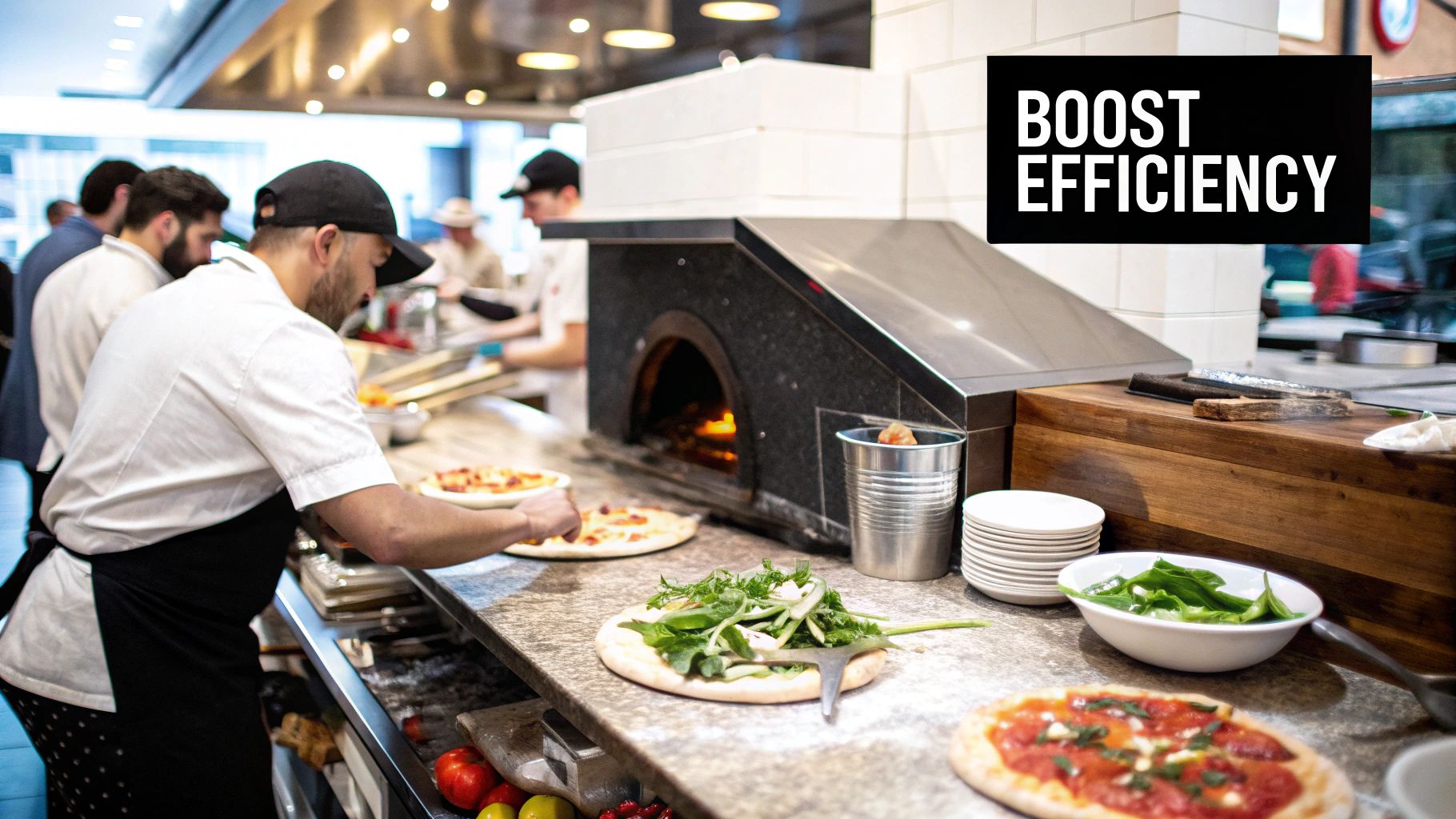
When you're picking out a commercial countertop pizza oven, you've got to look under the hood. Not all ovens are created equal in how they generate and move heat, and those differences are what shape the final pizza you pull out. The technology inside is what dictates everything—how fast it heats up, how well it holds its temperature, and the signature crunch and chew of your crust.
Think of it like choosing a car. You wouldn't expect a nimble electric motor to perform the same way as a roaring V8 engine, right? It's the same with pizza ovens. By understanding the core types—electric, gas, and the classic wood-fired—you can line up the oven's strengths with the kind of pizza you want to be known for.
The Reliable Workhorse: Electric Ovens
Electric countertop pizza ovens are the plug-and-play solution for so many modern kitchens. They use heavy-duty heating elements—way more powerful than what you'd find in a home oven—to create steady, radiant heat. This makes them incredibly simple to install and even easier to use, since you don't have to worry about running gas lines or setting up complex ventilation.
Their biggest selling point is unwavering temperature precision. You can dial in an exact temperature with digital controls and trust the oven to hold it there, which is a lifesaver for getting consistent results with minimal staff training. This rock-solid reliability makes electric models a favorite for cafes, bars, and spots where pizza is a star menu item but not the only focus.
The magic happens with a combination of top and bottom heating elements working with a stone or steel deck.
- Radiant Heat: The elements glow red-hot, beaming heat down onto the cheese and toppings while simultaneously heating the deck from below.
- Conduction Heat: The super-hot deck then transfers that energy directly into the pizza dough, creating a crisp, perfectly cooked crust from the bottom up.
This one-two punch ensures the cheese is bubbly and melted while the base is beautifully firm. For any business that needs a dependable, low-maintenance solution, an electric commercial countertop pizza oven is almost always the perfect fit. For more ideas on fitting powerful equipment into limited areas, explore our guide on commercial oven picks for small spaces.
The Power and Speed of Gas Ovens
Gas-powered countertop ovens are all about raw power and lightning-fast heat recovery. Hooked up to a natural gas or propane line, they use a live flame to heat the oven chamber and deck. Think of a gas oven as a high-performance sports car—it gets up to speed in a hurry and stays powerful even when you're pushing it hard.
That rapid recovery is their killer feature. Every time you open the door to slide a pizza in or out, heat escapes. A gas oven's powerful flame brings the temperature screaming back up to the sweet spot far quicker than most electric models can. This makes them a phenomenal choice for high-volume pizzerias that need to crank out pie after pie during a chaotic dinner service.
A gas oven's ability to quickly recover lost heat is its superpower. In a busy service, this means the tenth pizza you cook will be just as perfectly baked as the first, with no frustrating temperature drops slowing you down.
The live flame also creates a unique kind of heat—a mix of radiant and convective currents—that many chefs swear by for a superior bake and a slightly different flavor. While they do require professional installation and proper ventilation, the sheer output and efficiency of a gas commercial countertop pizza oven are tough to beat for any serious pizza-focused operation.
The Authentic Charm of Wood-Fired Ovens
While they're a bit less common in a countertop size, smaller wood-fired and brick-style ovens deliver an authenticity and flavor that nothing else can touch. These ovens use a real wood fire to heat a ceramic or brick dome to blistering temperatures, often soaring past 700-900°F.
The cooking process is a beautiful symphony of three different heat types working together:
- Conduction: The fire-heated hearth cooks the base of the pizza directly.
- Convection: Hot air rolls and circulates naturally within the dome.
- Reflection: Intense radiant heat bounces off the dome's ceiling and onto the toppings.
This intense, all-encompassing heat can cook a pizza in as little as 90 seconds, producing that signature puffy, leopard-spotted crust you see on a classic Neapolitan pie. The burning wood also infuses the pizza with a subtle smokiness that you just can't fake. Of course, this artisanal method demands real skill to manage the fire, hold a consistent temperature, and rotate the pizzas at the perfect moment. It's a technology best suited for specialty pizzerias dedicated to the true craft of traditional pizza.
Diving Into High-Performance Oven Features
Once you've settled on a power source, the real fun begins. The magic of a professional-grade commercial countertop pizza oven is all in the details—the specific features that dictate cooking speed, consistency, and the final quality of every single pizza you pull out.
Learning to spot these features on a spec sheet is like learning a new language. It helps you see past the marketing fluff and choose an oven that’s truly built for the results you want. Think of it like this: two cars might have the same size engine, but their performance is worlds apart thanks to differences in transmission, suspension, and aerodynamics. It's the same with ovens. Two units with the same max temperature can bake a completely different pizza based on how they're built and controlled.
Let's break down the components that really make a difference.
The Foundation of a Perfect Crust: Deck Material
The surface your pizza cooks on is arguably the most critical piece of the puzzle for achieving that perfect crust. This isn’t just a shelf; it's an active cooking surface that manages heat transfer and moisture, which is the secret to getting that ideal crispy-on-the-bottom, chewy-in-the-middle texture.
-
Stone Decks: Usually made from materials like cordierite or special ceramic composites, stone decks are the classic choice for a reason. They act like a heat battery, soaking up high temperatures and holding onto them exceptionally well. Their slightly porous nature also wicks moisture away from the dough, which is how you get that distinctively crisp, firm crust that never feels soggy. This makes them the go-to for incredible artisan and Neapolitan-style pizzas.
-
Steel Decks: Steel is a beast when it comes to conducting heat. It blasts energy into the dough much faster than stone, delivering a powerful, quick sear to the bottom of the crust. This is fantastic for achieving a super-fast bake time and often produces a slightly different, lighter crust texture.
The right deck material is the first step toward the kind of crust your customers will rave about.
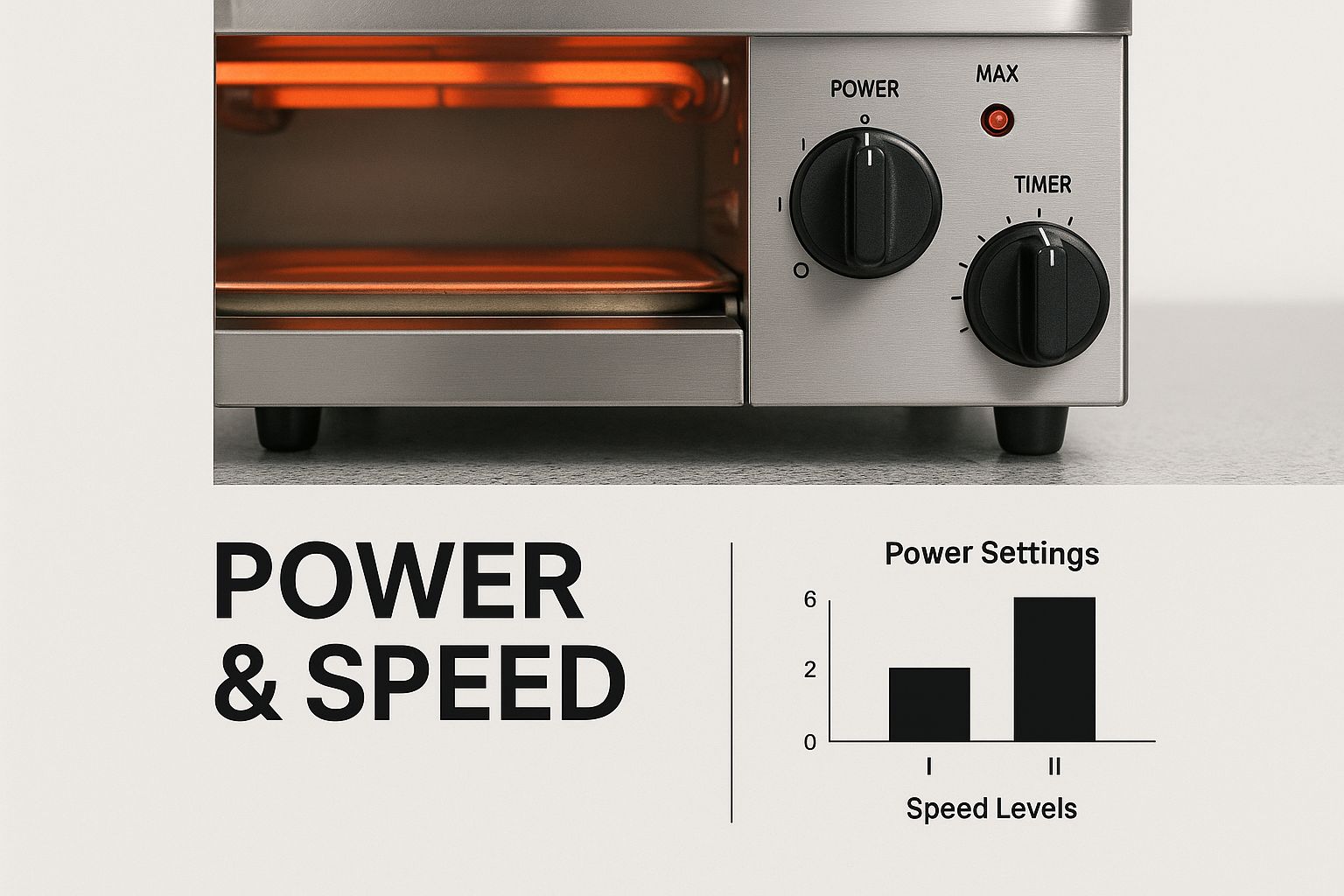
As you can see, high-performance heating elements and precise controls are the dynamic duo that delivers the intense, consistent heat needed for rapid cooking and even faster recovery times.
The Unsung Hero: Superior Insulation
What’s happening outside the oven is just as important as what’s going on inside. High-quality insulation is the unsung hero of any efficient commercial countertop pizza oven. Think of it as the difference between a cheap coffee thermos and a high-end, vacuum-sealed flask.
Superior insulation, usually made from ceramic fiber or mineral wool, does a fantastic job of trapping heat inside the cooking chamber. This pays off in several huge ways:
- Energy Efficiency: Less heat escaping means the oven doesn't have to work as hard to stay hot. Over time, that translates into significantly lower utility bills.
- Faster Recovery Times: When you open the door to slide a pizza in or out, less ambient heat is lost. This allows the oven to get back up to its target cooking temperature much more quickly—a massive advantage during a dinner rush.
- A Cooler Kitchen: A well-insulated oven radiates less heat into your workspace, creating a more comfortable and safer environment for your staff to work in.
An oven with poor insulation is constantly leaking money and heat. Investing in a unit with robust insulation pays for itself through lower energy costs and much-improved performance when you're slammed with orders.
The demand for this kind of efficient, high-performing equipment is a major driver in the foodservice industry. In fact, the global pizza oven market was valued at approximately USD 1.84 billion in 2024 and is projected to keep growing, largely fueled by the demand for top-notch, artisanal pizza in restaurants all over the world. You can dive deeper into the growth of the pizza oven market on maximizemarketresearch.com.
Precision and Control: Temperature Management
Finally, how you control the oven's temperature dictates your consistency. The type of control system determines the level of precision you have over the cooking process, which is absolutely vital for training new staff and ensuring every single pizza meets your high standards.
-
Thermostatic Controls: These are the most common and user-friendly controls you'll find. You set a specific temperature (say, 550°F), and the oven automatically cycles its heating elements on and off to maintain that temperature within a very narrow range. They offer fantastic consistency with almost no guesswork.
-
Infinite Controls: These are simpler dials, often just labeled from low to high, that control the power output to the heating elements. They don't correspond to a specific temperature but rather a level of energy. Mastering them requires a bit more hands-on experience, but they can offer some nuanced control for seasoned chefs.
For most businesses, thermostatic controls are the way to go. They dramatically reduce the learning curve and guarantee the oven is always at the right temperature for the job. This level of precision ensures that whether it's your first day or your thousandth pizza, the results remain consistently delicious.
Matching an Oven to Your Business Needs
Choosing the right commercial countertop pizza oven is less about staring at spec sheets and more about getting real about your day-to-day operations. This is where you connect the dots between an oven’s features and what your business actually needs to thrive. The perfect oven for a bustling slice shop cranking out pies all day is a world away from the one that’s just right for a quiet bar looking to add a few pizzas to the menu.
Making the right call starts with an honest look at how you work. It’s about asking the right questions—about your menu, your busiest nights, and the physical space you’re working with—and letting the answers guide you to the perfect machine. Get this right, and you’ve got a strategic asset; get it wrong, and you’re looking at a source of daily frustration.
Analyze Your Menu First
Before you even glance at a single oven model, look at your menu. Are you a one-trick pony, perfecting the 16-inch New York-style pie? Or is your kitchen a playground of flatbreads, calzones, and toasted sandwiches?
-
Pizza-Focused Operations: If pizza is your bread and butter, you need a specialist. A stone deck oven, for instance, is a master at creating that classic, crispy crust pizza lovers dream about. Its ability to hold heat is perfect for banging out pizza after pizza.
-
Versatile Kitchens: For cafes, bars, or delis where the oven is a multi-purpose tool, a convection model might be a better fit. The fan-circulated heat is more forgiving and cooks a wider variety of foods evenly, from melting cheese on a sub to baking off appetizers.
The diversity of your menu is your first filter. A specialized oven is a rockstar at one thing, while a versatile one can be the workhorse for a broader menu. This flexibility is a growing trend, too. The global market for commercial wood-fired pizza ovens is projected to grow by USD 15.17 million between 2025 and 2029, partly because of a rising demand for ovens with multi-cooking functions. You can check out more on this market growth on prnewswire.com.
Calculate Your Peak Hour Pizza Output
Next, it’s time to get brutally honest about your volume. Don't plan for a slow Tuesday afternoon—plan for your craziest Friday night. How many pizzas do you absolutely have to get out the door per hour to keep customers happy and your kitchen from descending into chaos?
Think of oven capacity like lanes on a highway. A single-deck oven is a one-lane road, perfect for light traffic. A multi-deck or conveyor oven is a four-lane expressway, built to handle the rush hour surge without creating a bottleneck.
Let’s get specific. A small wine bar might only sell 10-15 pizzas during its busiest hour. A compact, single-deck electric oven can handle that with ease. But a popular pizzeria near a stadium might need to pump out 60+ pizzas an hour. For that kind of volume, a multi-deck gas oven or a high-speed conveyor oven isn't just a nice-to-have; it's essential. To learn more about high-volume solutions, check out our commercial conveyor pizza oven buying guide.
Measure Your Space and Utilities
Finally, it’s time to get practical. Grab a tape measure and take a good look at your hookups. A commercial countertop pizza oven might sound small, but it can still command a lot of space and have very specific power or ventilation needs.
Key Physical Considerations:
- Countertop Footprint: Measure the exact width, depth, and height you have available. Don't forget to leave clearance space around the unit—usually a few inches on each side and the back—for proper ventilation and safe operation.
- Ventilation Needs: Does the oven need a hood? Most electric countertop models are ventless, but pretty much every gas-powered unit has to be installed under a Type I ventilation hood. Always, always check your local fire and health codes before you buy.
- Power Supply: Confirm your electrical setup. Does the oven plug into a standard 120V outlet, or does it demand a beefier 208/240V connection? A power mismatch is a common, frustrating, and expensive installation mistake.
By carefully thinking through your menu, your real-world output needs, and your physical limitations, you’re doing more than just buying an oven. You’re choosing a business partner that’s engineered to help you succeed. This methodical approach ensures your investment pays you back in efficiency, consistency, and happy customers for years to come.
Mastering Daily Operations and Installation
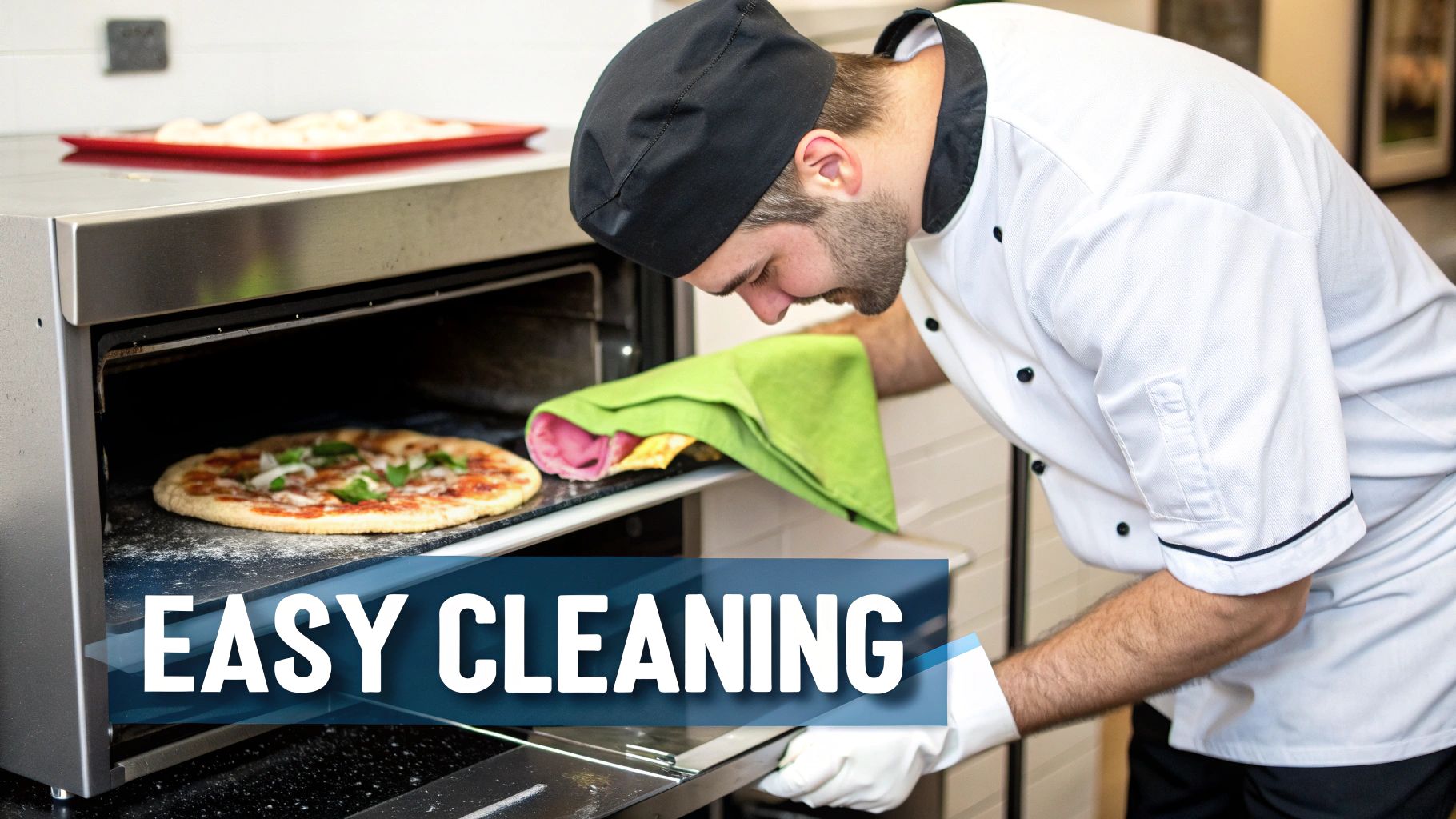
So, you've picked out the perfect commercial countertop pizza oven. That's a huge step, but the specs on paper are only half the story. Getting incredible performance from your new workhorse really boils down to how you handle it from day one, starting even before it’s plugged in.
Think of the installation process not as the final task, but as laying the foundation for thousands of perfectly cooked pizzas. Rushing this can lead to all sorts of headaches—safety issues, inconsistent results, and operational hiccups you just don't have time for. A few careful checks upfront will save you a world of trouble down the road.
Pre-Installation and Setup Checklist
Before that shiny new oven even comes out of the box, it’s time to play detective. Running through these checks ensures a smooth setup and helps you dodge those nasty surprises that can shut down your pizza service before it even starts.
- Verify Electrical Loads: First things first, check your outlet. Many of these commercial-grade ovens need a 208/240V connection, not the standard 120V plug you have everywhere else. Make sure the circuit can handle the power draw listed by the manufacturer. An overloaded circuit isn't just a performance killer; it's a serious fire hazard.
- Confirm Ventilation Codes: This one is non-negotiable. While a lot of electric models are conveniently ventless, gas ovens almost always have to be installed under a Type I hood. To sidestep hefty fines or a forced shutdown, you absolutely have to know your local regulations. For a deeper dive on this, you can learn more about if your commercial oven needs a hood in our detailed guide.
- Ensure Proper Clearance: Ovens get hot, and they need room to breathe. Check the manufacturer's spec sheet for the required clearance space on all sides. Proper airflow prevents the unit from overheating and keeps your staff safe in a busy kitchen.
Once you’ve ticked these boxes, you can finally unbox that beauty with confidence.
Mastering Day-to-Day Oven Operations
With your oven safely installed, the real fun begins. The focus now shifts to creating a flawless workflow, because in the pizza business, consistency is king. Mastering a few daily habits will empower your team to crank out perfect pies every single time, even when the dinner rush feels chaotic.
The very first thing you need to do with a new stone-deck oven is curing the pizza stone. This isn't a step you can skip. It involves heating the stone slowly over several hours to burn off any factory residue and, more importantly, to strengthen it against thermal shock. Rushing this is the fastest way to get a cracked stone.
A well-cured and properly preheated pizza stone acts like a heat battery. It stores and radiates intense, dry heat directly into the dough, which is the secret to achieving that perfectly crisp, never-soggy crust your customers will love.
Effective preheating is another daily ritual you can't ignore. A commercial countertop pizza oven needs plenty of time to get up to its target temperature and stabilize—often 60 minutes or more. Kicking off service with a lukewarm oven is a surefire recipe for inconsistent cook times and disappointing, doughy pizzas.
Finally, get your team dialed in on proper launching and turning techniques. A swift, confident launch keeps the dough from sticking to the peel. A quick turn halfway through the bake is what guarantees that cheese is uniformly melted and the crust is a perfect golden-brown all the way around. These are the little details that separate a pretty good pizza from a truly great one.
Protecting Your Investment with Smart Maintenance
A high-quality commercial countertop pizza oven is a serious investment, and thinking about its care after you buy it is the surest way to shorten its life. Just like you wouldn't drive a high-performance car without regular tune-ups, your oven needs a consistent maintenance routine to stay the reliable workhorse your kitchen depends on.
The key is building a simple schedule. This isn't about complicated, greasy repairs. It's about forming straightforward daily, weekly, and monthly habits that stop grime in its tracks, catch tiny issues before they become big headaches, and make sure every single pizza comes out just right.
Your Daily Maintenance Checklist
Think of these as your end-of-shift non-negotiables. They take just a few minutes but prevent the kind of baked-on gunk and residue that can mess with flavor and kill your oven's efficiency over time.
- Brush the Deck: Once the oven has cooled down, grab a stiff-bristled, non-metallic brush. Sweep out any burnt cheese, runaway toppings, or excess flour from the pizza stone. This stops that nasty carbon buildup that makes pizzas taste off.
- Wipe Down the Exterior: Use a soft cloth and a mild, food-safe cleaner to wipe down all the stainless steel surfaces. This keeps your oven looking sharp and gets rid of grease before it has a chance to bake on and become a permanent fixture.
- Clean the Door: Pay close attention to the inside of the door and the glass. A clean window lets your crew check on pizzas without opening the door, which is a huge deal for keeping the internal temperature rock-steady.
These simple habits are your first line of defense. Don't skip them.
Weekly and Monthly Health Checks
Moving beyond the daily wipe-down, these periodic checks are your chance to spot minor problems before they turn into expensive repairs and frustrating downtime. Set a recurring reminder in your calendar—it's worth it.
A well-maintained oven isn't just about longevity; it's about consistency. Regular checks ensure the oven you rely on today performs just as flawlessly a year from now, protecting both your investment and your reputation for quality.
Once a week, take a moment to inspect the door gaskets and seals. If they look cracked, worn, or brittle, you're losing precious heat. That leak forces the oven to work harder, which means higher energy bills and slower cooking.
On a monthly basis, it’s a smart move to calibrate the temperature gauge. Use an independent oven thermometer to make sure the temperature on the dial is what you’re actually getting inside. A thermostat that's off is one of the biggest culprits behind inconsistent, frustrating bakes.
Troubleshooting Common Oven Issues
Even with the best care, you’ll run into hiccups now and then. Knowing how to quickly diagnose the usual suspects can save a busy service from grinding to a halt.
Problem 1: Uneven Heating or Hot Spots
If you're pulling pizzas that are burnt on one side and pale on the other, you've likely got a heating element issue. In an electric oven, this often points to a failing element that needs to be replaced. For a gas model, a clogged burner is the most common cause.
Problem 2: Slow Preheat or Recovery Times
Is your oven taking forever to get up to temp? Or does the temperature plummet and struggle to climb back up after you open the door? The first thing to check is that door seal again. If the seal looks good and tight, the problem could be a faulty thermostat that isn’t telling the elements to kick on when it should. Keeping your commercial countertop pizza oven in top shape ensures it delivers delicious results for years.
Got Questions? We've Got Answers.
Stepping into the world of commercial countertop pizza ovens can definitely bring up a few questions. Whether you're buying your very first one or looking to upgrade, getting straight answers is the key to choosing with confidence. We've rounded up some of the most common questions we hear from chefs and owners just like you.
Let's clear up the big topics: capacity, installation, and how long you can expect your new workhorse to last.
How Many Pizzas Can a Commercial Countertop Oven Cook at Once?
This is one of the first things everyone wants to know, and the answer really depends on the model. Capacity has a huge impact on your kitchen's output. A smaller, more compact unit might just hold a single 12-inch pizza, which can be absolutely perfect for a café, bar, or any spot adding pizza as a cool new menu item.
On the other end of the spectrum, you've got the multi-deck powerhouses built for serious volume. These beasts can cook anywhere from two to six 16-inch pizzas at the same time across different levels. The trick is to look at the deck dimensions and the number of decks listed for any oven you're considering. You want to make sure its throughput can handle your busiest rush.
Do I Need Special Ventilation for My Countertop Pizza Oven?
Ventilation is a big deal, and the requirements depend almost entirely on the oven's power source and, most importantly, your local codes. This is one area where you absolutely can't afford to guess.
- Electric Ovens: These are usually the easiest to get up and running. Most don't need to be placed under a Type I ventilation hood, which simplifies installation quite a bit.
- Gas-Powered Ovens: These models almost always require professional installation under a commercial hood. It's the only way to safely vent the fumes and heat they produce.
- Wood-Fired Ovens: Due to the smoke and intense heat, these have the strictest ventilation rules of all.
Honestly, before you even think about buying a commercial countertop pizza oven, your first call should be to your local health and fire departments. Getting their specific codes and requirements sorted out beforehand will save you from making a costly mistake and ensures you're compliant from day one.
What Is the Lifespan of a Commercial Countertop Pizza Oven?
With the right care, a high-quality commercial countertop pizza oven is a fantastic long-term investment. You can expect it to reliably serve your business for 10 to 15 years—sometimes even longer.
Its longevity really boils down to a few things: the build quality of the unit you buy, how often you're firing it up, and how well you stick to the manufacturer's maintenance schedule. Investing in a trusted brand and committing to a smart, simple care routine is the best way to get the most out of your oven for years to come.
Ready to find the perfect oven to power up your pizza game? The experts at The Restaurant Warehouse can help you pick the right equipment for your space, volume, and budget. Explore our wide selection of top-tier commercial countertop pizza ovens today!
About The Author

Sean Kearney
Sean Kearney is the Founder of The Restaurant Warehouse, with 15 years of experience in the restaurant equipment industry and more than 30 years in ecommerce, beginning with Amazon.com. As an equipment distributor and supplier, Sean helps restaurant owners make confident purchasing decisions through clear pricing, practical guidance, and a more transparent online buying experience.
Connect with Sean on LinkedIn, Instagram, YouTube, or Facebook.