

How to Build a Restaurant: A Complete Checklist
That incredible restaurant idea in your head deserves a real shot at success. To build a restaurant that lasts, you need to turn that vision into a rock-solid business plan. This is the real starting line—long before you pick out decor or finalize a menu. It’s where you do the essential work: deep-dive market research, nailing down your unique concept, and getting your financial projections right. Think of it as the blueprint for your entire business. It’s the crucial first step that turns a brilliant idea into a thriving, profitable reality.
Ready to Build a Restaurant? Start with a Plan
Every great restaurant I've ever seen started with more than just a passion for food—it started with a well-defined concept and a bulletproof plan. This is where your culinary dream meets the hard reality of running a business. It’s about digging into the 'who' and 'why' behind your future spot.
This early stage isn't about picking out paint colors; it's about truly understanding the market you're jumping into. The global restaurant scene is huge, projected to hit an incredible $6.81 trillion by 2032. That massive number means massive opportunity, but it also means fierce competition. Getting your initial planning right isn't just important; it's everything.
How to Define Your Unique Restaurant Concept
Your concept is the soul of your restaurant. It's that unique mix of your food, service style, atmosphere, and the people you want to serve. Are you picturing a grab-and-go spot for the lunch crowd, an elegant fine-dining destination for special nights out, or a cozy neighborhood café where regulars feel at home?
To bring your vision into focus, you have to get specific with these elements:
- Cuisine and Menu: What dishes will define you? Will the menu be tight and focused or offer a broad selection? Start thinking about where you'll source ingredients, seasonality, and how the menu tells your brand's story.
- Service Style: Is it full table service, quick counter service, or maybe a hybrid? The way you serve guests directly shapes your staffing needs, your kitchen layout, and the entire customer experience.
- Target Audience: Who are you cooking for? And please, don't say "everyone." Get specific. A 25-year-old urban professional wants a totally different dining experience than a family with young kids. Know your tribe.
This flow chart gives a great visual of how you move from a raw idea to a structured, actionable plan.
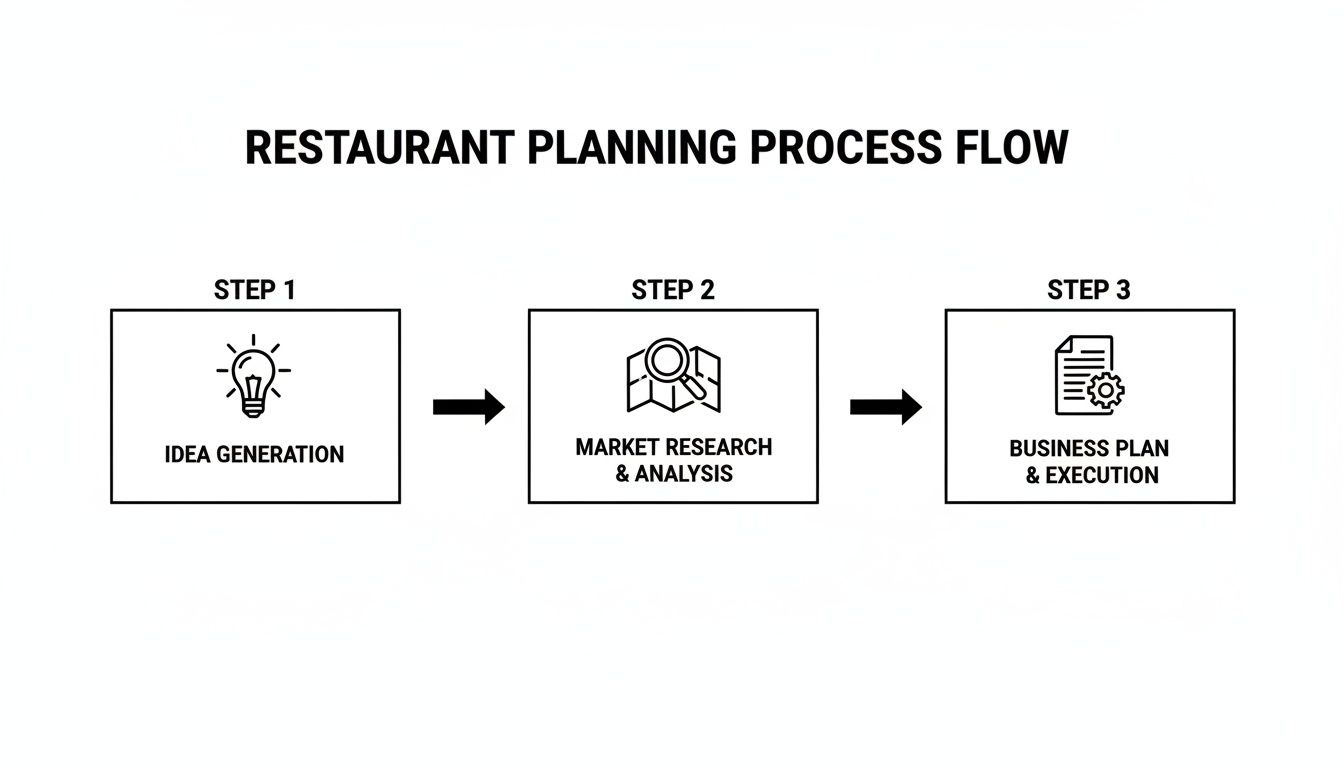
As you can see, research is the critical bridge that connects your creative spark to a business strategy that can actually succeed.
Choosing Your Service Style
How you serve your guests is a huge piece of your restaurant's identity. It’s not just about whether you use tablecloths; your service style—be it fine dining, fast-casual, or a food truck window—dictates your entire operational flow. The way you serve guests directly shapes your staffing needs, your kitchen layout, and the entire customer experience. A quick-service model demands a kitchen designed for speed and efficiency, with equipment that can handle high volume. A full-service restaurant, on the other hand, requires a more complex setup to manage paced-out, multi-course meals. This decision will directly influence every piece of restaurant equipment you purchase, from the front-of-house setup to the back-of-house workflow.
Designing a Profitable Menu
Your menu is your number one sales tool. It’s so much more than a list of dishes; it sets customer expectations and quietly guides their choices. A well-designed menu also has a massive impact on your kitchen operations, the skills your staff needs, and the equipment you’ll rely on every single day. When you're planning it, think beyond the food itself. Consider the layout, the pricing strategy for each item, and your food storage plan. If your signature dishes require a lot of cold storage, you'll need to invest in reliable commercial refrigerators and freezers. If fried appetizers are your main draw, a set of high-capacity deep fryers is non-negotiable. Every item on your menu should be intentionally chosen to be both delicious for your guests and profitable for your business.
Doing Market Research That Matters
Real market research isn't about staring at spreadsheets. It's about putting on your shoes and getting a feel for the community you want to join. Spend serious time in the neighborhoods you’re considering.
A brilliant idea in the wrong location is a recipe for disaster. Your research has to confirm that there's a genuine, unmet need for what you want to offer, right where you plan to offer it.
Walk around during lunch rushes and dinner services. Who’s eating out? What are the price points at nearby spots? This kind of hands-on observation gives you priceless insights you'll never find online. Look for the gaps. Is there a desperate need for healthy lunch options, or is no one serving authentic Neapolitan pizza? That's your opening.
How to Write a Business Plan That Gets Funded
With a sharp concept and solid research backing it up, it's time to put it all down in your business plan. This document is so much more than a formality for getting a loan; it's your operational roadmap. It forces you to think through every single detail, from your marketing angle to your financial forecasts.
A well-crafted plan will be your guide long after the grand opening. For a step-by-step breakdown, check out our article on how to write a restaurant business plan.
Adopting the Right Mindset for Success
Your business plan is your map, but your mindset is the engine that will get you there. Building a restaurant will test your patience and your passion, so you need to be resilient. It’s about having the flexibility to change a menu item that isn't selling while staying true to the core concept you worked so hard to define. This practical outlook should guide every decision, from the team you hire to how you finance your kitchen equipment. A winning mindset means you're always a student of your market, ready to learn from mistakes, and focused on the long-term health of your business—not just the thrill of opening night.
Finding the Money to Build Your Restaurant
Your business plan is the map, but let’s be real—capital is the fuel that actually gets your restaurant off the ground. Turning that dream on paper into a real, physical space takes a significant financial investment, and the very first step is figuring out exactly where all that money needs to go. That means building a realistic, line-by-line budget.
When you start to build a restaurant, the costs come at you from every direction, and they add up fast. You’re not just funding construction. You’re paying for architect fees, building permits, the first round of staff training, and your initial food and beverage inventory. A classic mistake I see all the time is underestimating these smaller, miscellaneous costs, which can completely derail a project before it even finds its footing.
A detailed budget forces you to think through every single expense, giving you a clear financial target. To get a solid handle on the numbers, you can start with a detailed restaurant startup costs calculator that breaks down common expenses and helps you build a custom forecast for your specific concept.
Once you have that solid budget, it's time to go find the money. There are a few well-trodden paths you can take, each with its own pros and cons. The right choice really boils down to your personal financial situation, how strong your business plan is, and what your long-term goals are.
What Are Your Restaurant Funding Options?
Here are the most common funding avenues new restaurateurs turn to:
- Traditional Bank Loans: Banks offer term loans with predictable, steady repayment schedules. The catch? They typically demand a strong credit history, significant collateral, and an incredibly detailed business plan. For a brand-new venture, the approval process can feel long and demanding.
- SBA Loans: Backed by the Small Business Administration, these loans often come with better terms and lower down payment requirements than conventional bank loans. They’re designed to help small businesses get started, but they also have a rigorous application process and strict eligibility rules.
- Investors and Partnerships: Bringing on partners or angel investors can give you a major capital boost without the burden of debt. The trade-off, of course, is that you’ll be giving up a percentage of ownership and control over your business.
To help you get a clearer picture of where your initial capital will go, here’s a sample breakdown for a mid-size casual dining spot. This is just an estimate, but it's a great starting point for seeing how the puzzle pieces fit together.
Exploring Alternative Funding like Crowdfunding
Beyond the traditional routes, don't overlook the power of crowdfunding. It's one of several modern funding options that lets you raise capital while doing something equally important: building a community around your restaurant before you even serve a single dish. This approach allows you to gauge interest in your concept and create a loyal following from day one. Unlike taking on investors, which requires you to give up a percentage of ownership and control, crowdfunding lets you keep 100% of your company. You’re inviting people to be part of your story by offering rewards like pre-paid dinners or exclusive opening night tickets, turning future customers into your earliest backers. It requires a compelling story and a great marketing push, but the payoff can be huge.
A Look at a Sample Startup Budget
| Expense Category | Estimated Cost Range | Key Considerations |
|---|---|---|
| Lease & Real Estate | $5,000 - $30,000 | Includes security deposit, first/last month's rent, and any broker fees. Highly variable by location. |
| Construction & Renovation | $75,000 - $250,000+ | Covers everything from plumbing and electrical to flooring and paint. Depends heavily on the space's condition. |
| Kitchen Equipment & Supplies | $50,000 - $150,000 | Includes ranges, ovens, refrigeration, and smallwares. Financing this portion is a smart move. |
| Permits & Licenses | $2,000 - $10,000 | Health permits, liquor licenses, and business licenses add up. Don't underestimate these costs. |
| Initial Inventory | $10,000 - $25,000 | Your first big order of food, beverages, and supplies to get you through opening week. |
| Marketing & Grand Opening | $5,000 - $20,000 | Signage, website development, social media ads, and promotional events to create buzz. |
| Working Capital Reserve | $20,000 - $50,000 | CRITICAL: Cash to cover payroll, rent, and unexpected expenses for the first 3-6 months. |
This table shows just how many moving parts there are. Protecting your cash flow, especially that working capital reserve, is absolutely essential for surviving the unpredictable first year.
Smart financial planning isn't just about securing a lump sum of cash. It's about structuring your funding to preserve cash flow for the critical first six to twelve months of operation when revenue is unpredictable.
Average Startup Costs and Per-Square-Foot Estimates
Let's talk numbers. The total cost to build a restaurant can swing wildly, from as low as $95,000 to well over $2 million. That huge range is why a custom budget is so important. A more focused way to estimate is by looking at the cost per square foot, which typically falls between $100 and $800. A small, simple takeout spot in a low-cost area will be on the lower end, while a large, high-end restaurant in a major city will push the upper limits. This per-square-foot metric helps you compare potential locations and understand how size directly impacts your startup capital needs. It forces you to be realistic about the scale of your vision from day one.
Budgeting for Kitchen Equipment and Technology
Your kitchen is the heart of your operation, and outfitting it is one of your biggest line items, often averaging around $115,000. This is where you absolutely cannot afford to cut the wrong corners. You need reliable refrigerators to keep ingredients fresh, powerful deep fryers that can handle the dinner rush, and enough prep space to keep service flowing smoothly. While buying used equipment can seem tempting, the risk of breakdowns and costly repairs can cripple a new business. A smarter approach is to find high-quality, affordable new equipment. To protect your cash flow, look into restaurant equipment financing, which allows you to get the gear you need with manageable monthly payments instead of a massive upfront expense.
Planning for Ongoing Costs and Your Own Salary
The spending doesn't stop once you open the doors. Your budget needs to account for ongoing operational costs like rent, utilities, payroll, marketing, and inventory replenishment. And don't forget about yourself! Many owners don't take a salary for the first several months, pouring every dollar back into the business. It's a noble sacrifice, but you need a plan for your personal finances, too. Eventually, restaurant owners can expect to make around $5,000 per month, but you have to survive until then. This is why that working capital reserve I mentioned earlier is non-negotiable. It’s the safety net that covers these ongoing costs and your own living expenses while the restaurant finds its footing and builds a steady stream of revenue.
Why You Should Consider Equipment Financing
Here’s a strategy that seasoned operators use to manage their startup capital effectively: equipment financing. Instead of sinking a huge chunk of your initial loan into expensive kitchen gear—like ovens, walk-in coolers, and commercial ranges—you finance it separately. This one move can have a massive, positive impact on your financial health from day one.
By leasing or financing your equipment, you free up a substantial portion of your main loan. That cash can now be put to work on essential operating expenses that you simply can't finance, such as:
- Payroll: Covering your staff's wages before the restaurant is turning a profit.
- Marketing: Funding a strong grand opening campaign to build that initial buzz.
- Inventory: Purchasing your first big stock of food, drinks, and supplies.
- Working Capital: Creating that crucial cash cushion for unexpected repairs or slow nights.
Think of it this way: a bank loan gets your doors open, but it's the preserved working capital that keeps them open. At The Restaurant Warehouse, we specialize in financing solutions that help you get top-tier equipment while protecting your cash flow. This lets you invest in the quality gear you need to build a restaurant for the long haul, without sacrificing the financial flexibility you need to survive—and thrive—in your first year. This tactical approach to funding is often the key to successfully navigating the early challenges of the restaurant business.
How to Design an Efficient Commercial Kitchen
The kitchen is the engine of your entire restaurant. Get the design right, and you've got a smooth, fast, and profitable operation. Get it wrong, and you're signing up for chaos, slow ticket times, and frustrated staff.
To build a restaurant that hums under pressure, you need to design your kitchen for one thing above all else: workflow. This isn't just about figuring out where the big appliances fit. It's about creating a logical path for food to travel, from the delivery truck all the way to a customer's plate. A smart layout cuts out wasted steps, prevents staff from bumping into each other, and eliminates the bottlenecks that can grind a busy service to a halt.
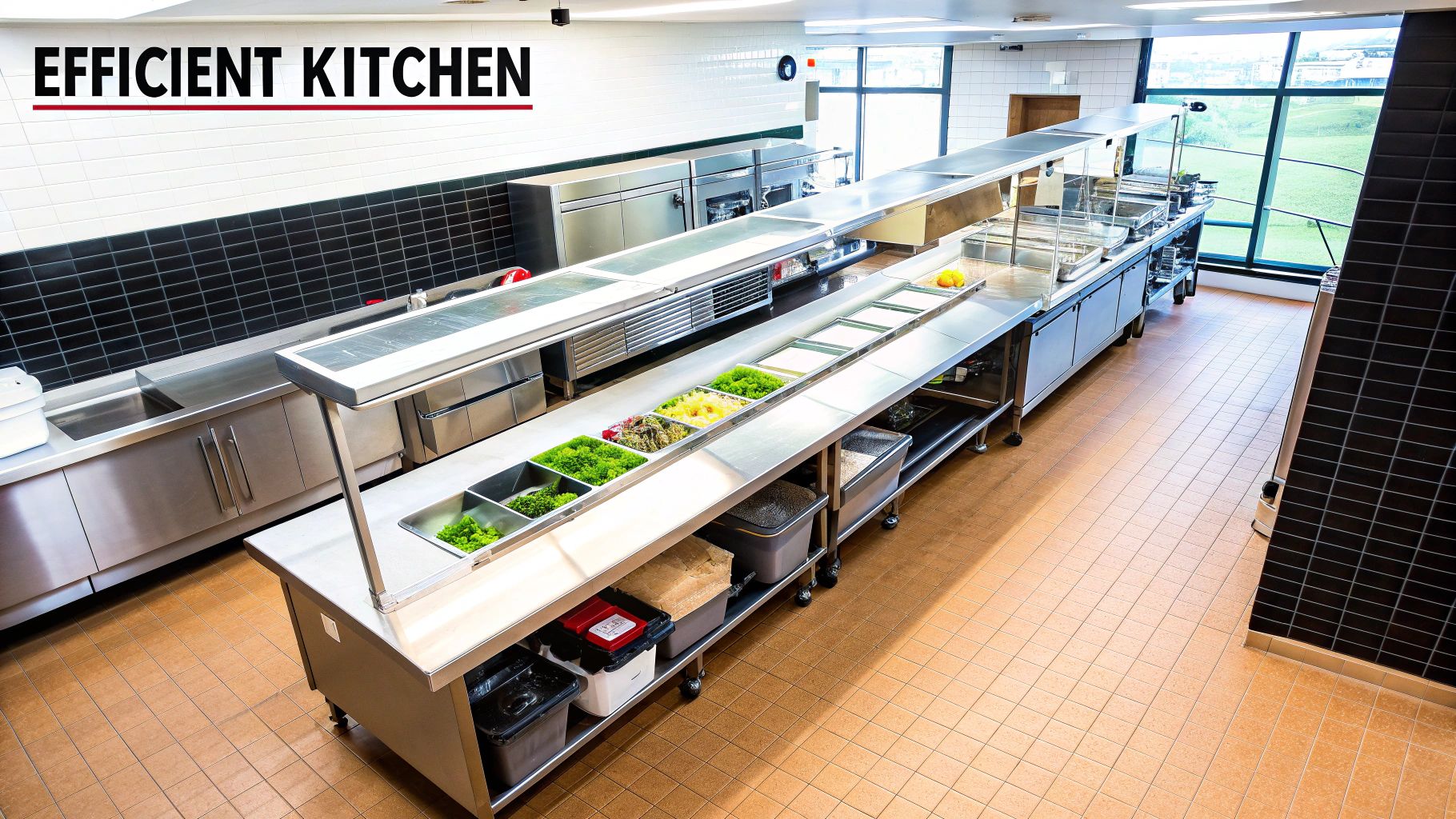
Today's restaurant scene, with the explosion of delivery and takeout, puts even more strain on kitchen design. The fast-food and quick-service restaurant (QSR) industry—set to be worth $1.1 trillion in 2025—has completely changed customer expectations around speed. This shift demands smarter, more flexible layouts that can juggle dine-in tickets and a relentless stream of to-go orders without breaking a sweat.
Planning Your Front-of-House and Dining Area
While the kitchen is the engine, your front-of-house is where guests experience everything you've built. This space is much more than just a place to sit—it’s the physical expression of your restaurant's concept. Every detail, from the lighting and music to the spacing between tables, should directly support the atmosphere you want to create for your specific audience. The way you serve guests is the ultimate guide. A fast-casual spot needs a clear, efficient path to the counter, while an intimate fine-dining room requires a layout that encourages lingering. Getting this balance right creates a welcoming environment for your customers and a functional workspace for your team.
Creating Smart Kitchen Work Zones
The secret to an efficient kitchen is simple: create distinct zones for each function. Think of it as an assembly line. When every task has its own dedicated space, the entire process becomes seamless and organized.
Here are the key zones every commercial kitchen must have:
- Receiving & Storage: This is your drop-off point for all supplies. It needs to be near a back door and have plenty of dry storage shelving, plus walk-in coolers and freezers for anything perishable.
- Food Preparation: This is where the magic starts—washing, chopping, and portioning. You'll need tons of counter space (stainless steel prep tables are the gold standard), multiple sinks, and direct access to both cold and dry storage.
- Cooking Line (The "Hot Line"): The heart of the kitchen. Your ranges, ovens, fryers, and grills are arranged in a logical sequence that mirrors how your dishes are made.
- Service & Plating: Once cooked, food comes here for the final touches before a server whisks it away. This area needs heat lamps to keep dishes warm and must be located right at the kitchen's exit to the dining room.
- Washing & Cleaning: The dish pit. Keep it away from food prep and cooking areas to avoid cross-contamination, but close enough for servers to drop off dirty dishes without a long trek.
When it comes to materials, the kitchen floor has to be tough, slip-resistant, and a breeze to clean. While quarry tile is a classic choice, you can also look into stylish and durable options like cement tiles specifically designed for restaurants.
See a Smart Kitchen Layout in Action
Let's follow a simple burger order. In a well-designed kitchen, the process is fluid. The cook grabs a pre-portioned patty from a low-boy refrigerator right under the grill. Buns and toppings are in a refrigerated prep station just a step away. The entire flow is linear and intuitive.
Now, picture a poorly designed kitchen. That same cook might have to walk across the kitchen to the main walk-in for the patty, then trek back to a separate prep area for toppings, dodging other staff the whole way. Those extra steps, multiplied by hundreds of orders a night, lead to massive delays and a seriously stressful workplace.
Your kitchen layout is a physical representation of your menu. The flow of the stations must mirror the flow of your most popular dishes from raw ingredient to finished plate.
For a deeper dive into layout strategies and sample designs, check out our detailed guide on creating a commercial kitchen floor plan.
Your Essential Kitchen Equipment Checklist
Once you have your zones mapped out, you can start populating them with the right equipment. The goal is to give each station everything it needs to function independently, minimizing the need for staff to leave their post. This table breaks down the essentials for each core zone.
| Kitchen Zone | Essential Equipment Examples | Purpose & Workflow Benefit |
|---|---|---|
| Receiving & Storage | Walk-In Cooler, Walk-In Freezer, Dunnage Racks, Shelving Units | Safely stores bulk ingredients upon arrival. Proper shelving prevents cross-contamination and makes inventory checks easy. |
| Food Preparation | Stainless Steel Prep Tables, Compartment Sinks, Reach-In Refrigerator, Slicers, Mixers | Provides dedicated space and tools for washing, chopping, and portioning, keeping raw ingredients separate from cooked food. |
| Cooking Line | Commercial Range, Griddle, Fryer, Charbroiler, Convection Oven, Salamander/Broiler | The "hot zone" where all cooking happens. Arranged logically to match the menu, allowing multiple dishes to be fired at once. |
| Service & Plating | Heat Lamps, Pass-Through Shelves, Plating Surfaces, Low-Boy Refrigerators | The final stop before food goes to the customer. Heat lamps keep dishes warm while orders are assembled, ensuring quality. |
| Washing & Cleaning | 3-Compartment Sink, Commercial Dishwasher, Dishtables (Clean & Soiled), Grease Traps | Isolates dirty dishes from the clean kitchen flow, preventing contamination and streamlining the cleaning process for quick turnaround. |
Thinking through the equipment for each zone is a crucial step that turns a floor plan into a functional, high-output kitchen ready for service.
Working with Pros: Plumbing, Electrical, and HVAC
Beyond the layout and equipment, you have to nail the critical infrastructure—ventilation, plumbing, and electrical systems. These are not DIY projects. Your ventilation and fire suppression systems, for instance, must be designed by certified specialists to meet strict local codes and handle the intense heat and grease from your cooking line.
Don't even think about winging it. Working with an experienced architect and a contractor who specializes in restaurants is non-negotiable. They will help turn your vision into a functional, code-compliant reality, making sure things like drain placement and electrical outlet capacity are right from the start. Getting this right on paper will save you from a world of expensive headaches down the road.
Permits and Licenses: Making the Legal Stuff Easy
Look, the path to opening a restaurant is absolutely paved with paperwork. This is the one area where you simply cannot afford to cut corners or hope for the best.
A single missed permit or a failed inspection can trigger expensive, soul-crushing delays that throw your entire project off the rails. It’s better to think of legal compliance not as a hurdle, but as a critical part of your restaurant's foundation. Getting this right from day one protects you from nasty fines and forced closures down the road.
More importantly, it ensures the safety of your staff and your future customers, and it proves to any banks or investors that you’re a serious, professional operator. Let’s break down the essential paperwork you'll need to get through this process.
LLC or Corporation? Choosing Your Business Structure
Before you can even think about applying for most permits, you have to legally establish your business. This is one of the very first major decisions you'll make, and it has long-term implications for your personal liability and how you’ll file your taxes.
For most new restaurateurs, the choice usually boils down to two main options:
- Sole Proprietorship: This is the simplest and cheapest structure to get going. You and the business are legally the same entity. It's straightforward for taxes, but it also means your personal assets—like your house or car—are at risk if the business gets into debt or is sued.
- Limited Liability Company (LLC): An LLC creates a legal wall between you and your business. This protects your personal assets from any business liabilities. While it involves a bit more paperwork and a small setup fee, this protection is invaluable for the vast majority of restaurant owners. It’s the smarter move.
Getting Professional Legal and Business Advice
Deciding on an LLC is a great first move, but please don't try to handle the rest of the legal and financial setup on your own. This is one of the most common—and costly—mistakes I see new owners make. Hiring a lawyer who specializes in hospitality and a sharp accountant isn't an expense; it's an investment in your restaurant's survival. They are the ones who will review your lease for hidden traps, structure partnership agreements to protect everyone involved, and help you find the right legal advice for your specific needs. Think of them as part of your core startup team, just as critical as your contractor or chef. Getting this right on paper from the start will save you from a world of expensive headaches down the road and build a professional foundation that lets you focus on what you do best: creating an amazing dining experience.
Your Essential Permit and License Checklist
The specific permits you'll need will vary slightly based on your city and state, but pretty much every restaurant is going to require this core set of documents. You need to start the application process early—some of these, like a liquor license, can take many, many months to secure.
Here’s your must-have list:
- Business License: The fundamental permit from your city or county that allows you to legally operate.
- Employer Identification Number (EIN): A federal tax ID number you'll need before you can hire any employees. You get this from the IRS.
- Food Service License: This is issued by your local health department after a successful inspection, proving your kitchen meets all safety and sanitation standards.
- Food Handler's Permits: These are required for all staff who handle food. It usually involves a short training course and a simple exam.
- Certificate of Occupancy: This confirms your building is safe for the public and compliant with all building codes. You can’t open without it.
Don't just treat this as a simple to-do list you can rush through. Every single permit has its own timeline, fees, and inspection requirements. Create a master calendar with application deadlines and scheduled inspection dates to stay organized and avoid missing a critical step.
Don't Forget the Sign Permit
It might seem like a small detail compared to your health inspection or liquor license, but your sign permit is one of those things that can sneak up on you and cause major headaches. Your sign is your 24/7 advertisement to the world, but you can't just hang up whatever you want. Most cities have surprisingly strict local zoning laws that dictate everything from the size and lighting of your sign to its exact placement on the building. Getting this wrong means more than just a do-over; it can lead to hefty fines and delays. You absolutely must get your sign design approved before you spend thousands of dollars having it made. Just like any other license, this one has its own timeline and application process, so treat it with the same level of importance to avoid any last-minute surprises that could push back your grand opening.
How to Pass Your Health and Safety Inspections
Inspections can be nerve-wracking, but they are necessary milestones on your journey to opening day. The three big ones you’ll face are from the health, building, and fire departments.
Health inspectors will scrutinize everything from food storage temperatures and staff hygiene to your dishwashing procedures. They leave no stone unturned. The fire marshal will check your fire suppression systems (like the one in your hood), make sure your emergency exits are clear and accessible, and verify you have the right type and number of fire extinguishers.
Building inspectors are the ones who sign off on all the construction, electrical, and plumbing work at various stages of your build-out. Your contractor will usually manage scheduling these, but it's crucial for you to stay informed on their progress to keep your project on track. Passing these inspections is the final gate you must clear before you can finally open your doors.
Communicating with Local Officials Early and Often
Here’s a pro tip that can save you an incredible amount of time, money, and stress: treat your local officials as a resource, not an obstacle. Before you add any equipment or finalize your layout, reach out to your local health inspector and city zoning department. They are the experts on local codes and can answer your specific questions before you make an expensive commitment. Asking them directly, "What are the ventilation requirements for this six-burner range and deep fryer?" or "Are there any restrictions on where I can place my walk-in freezer?" can prevent you from having to undo costly work. This early communication builds a positive relationship and shows you’re committed to doing things the right way from the start, which can make the entire inspection process go much more smoothly.
Hiring Your Dream Team for Opening Day
Your physical space is set and the kitchen is gleaming, but the true heart of your restaurant is the team you're about to build. All that shiny new equipment can't create a welcoming atmosphere or execute a flawless service—only people can do that. This final, critical phase is all about finding, training, and preparing the right individuals to bring your restaurant concept to life.
Make no mistake, this is a huge challenge. The U.S. foodservice industry is projected to add 200,000 jobs in 2025, but that growth comes with a tough reality for operators. High employee turnover and a staggering number of open positions mean you're competing for top talent in a very crowded market. The National Restaurant Association offers some great insights into the current state of the industry.
How to Write Job Descriptions That Attract Top Talent
To stand out, your job descriptions need to do more than just list responsibilities. They should sell your restaurant's vision and its culture. Forget the generic "Line Cook Needed" post that gets lost in the noise.
Think about what makes you special. For a farm-to-table concept, you could try: "Passionate Line Cook Wanted for a Scratch Kitchen Celebrating Local Ingredients." This immediately signals what you're all about and attracts candidates who share that same passion.
A strong job description should clearly outline:
- The Role's Core Mission: What’s the real goal? For a server, it's not just "take orders," it's "create memorable dining experiences."
- Essential Duties: Be specific but concise. Bullet points are your friend here for detailing key tasks.
- Desired Qualities: Go beyond skills. Mention attributes like a positive attitude, a collaborative spirit, or a calm demeanor under pressure.
- The 'What's in It for Them': Highlight benefits, opportunities for growth, or what makes your restaurant a genuinely great place to work.
Defining Key Restaurant Roles
Before you can post a single job opening, you need a clear map of who you're looking for. Think of your team in two distinct but connected parts: the front of house (FOH), which is the public face of your restaurant, and the back of house (BOH), which is its powerful engine. For your FOH, you'll need a General Manager to steer the ship, supported by servers, hosts, and bartenders who directly shape the guest experience. In the BOH, you’re looking for a Head Chef or Kitchen Manager to lead the culinary vision, line cooks to execute the menu flawlessly, prep cooks to handle all the essential prep work, and dishwashers—truly one of the most critical roles in the entire operation. The exact number of positions will scale with your concept; a small café might have a nimble team where people wear multiple hats, while a large fine-dining spot will need a more specialized and defined hierarchy.
Where to Find Your First Employees
With your key roles defined, it's time to go find your people. In today's competitive market, you have to cast a wide and strategic net. Start with online industry-specific job boards like Poached or Culinary Agents, which are packed with experienced professionals actively looking for their next role. Don't underestimate the power of social media; use Instagram to showcase your restaurant's unique culture and attract local talent who are genuinely excited about what you're building. Tap into your personal and professional networks—great hospitality pros almost always know other great ones. For fresh, eager BOH talent, connect with local culinary schools to find the next generation of chefs. And never forget the classics: a simple "Now Hiring" sign in your window can still work wonders, especially for attracting local FOH candidates.
How to Interview for Skills and Team Fit
During interviews, skills are important, but attitude is everything. You can teach someone how to use your POS system, but you absolutely cannot teach them to have a genuine sense of hospitality.
Use situational questions to see how candidates think on their feet. Instead of asking, "Are you a team player?" try something like, "Tell me about a time you had a disagreement with a coworker during a busy service. How did you handle it?" Their answer will reveal far more about their personality and problem-solving abilities than any canned response.
Hire for attitude, train for skill. A team that genuinely enjoys working together will always outperform a group of highly skilled but disconnected individuals.
The Importance of Background and Reference Checks
After a great interview, it’s tempting to make an offer on the spot, but this final step is one you absolutely cannot skip. You need to do thorough background and reference checks, especially since your team will be handling cash, expensive inventory, and important deliveries. This isn't about looking for dirt; it's about verifying the great things you saw in the interview and ensuring you're building a trustworthy team. A quick call to a previous manager can confirm a candidate's reliability, their ability to handle pressure, and how they contributed to their last team's culture. It’s a simple due diligence step that protects your investment, your staff, and the positive environment you’re working so hard to create.
Setting Up Your Staff Training Program
Consistency is the hallmark of any great restaurant. A thorough training program ensures every single team member, from the head chef to the newest busser, understands your standards from day one.
And please, don't make training a one-day information dump. Structure it over several days, covering these key areas:
- Culture and Vision: Start by sharing your story. Why did you open this restaurant? What experience do you want every single guest to have? Get them excited about the mission.
- Menu Deep Dive: This is non-negotiable. Every front-of-house employee must be able to describe each dish, including ingredients, potential allergens, and recommended pairings.
- Service Standards: Role-play different scenarios. Walk them through your specific steps of service, from greeting guests to handling complaints with grace.
- Operational Systems: Get them comfortable with the tools. Provide hands-on training with your POS system, reservation software, and any other tech they'll be using daily.
As you build your team, remember that fostering great relationships from the start can lay the groundwork for a loyal customer base. In fact, there are many smart tips to increase customer loyalty for restaurants you can implement before your doors even open.
Creating an Employee Handbook and Training Tools
Your training program needs a playbook, and that’s your employee handbook. This isn't just a boring legal document; it's the single source of truth for your restaurant's culture, policies, and expectations. It should clearly lay out everything from your mission statement and code of conduct to the nitty-gritty details of scheduling, time-off requests, and the dress code. Having these standards in writing ensures every team member gets the same consistent message from their very first day. This document is your foundation for building the professional, cohesive team that will make your restaurant a success.
Beyond the handbook, create tangible tools that make training effective and repeatable. Develop a detailed menu guide—complete with photos, ingredient lists, allergen information, and wine pairings—so your staff can answer any guest question with confidence. Create cheat sheets for the POS system and checklists for opening and closing duties. To really solidify your service standards, write out role-playing scenarios for common situations. This hands-on approach is a core part of a well-structured training program and helps your team practice handling everything from a simple reservation to a customer complaint with poise and professionalism.
The Final Countdown to Opening Night
With your team hired and trained, it’s time for the final sprint to the finish line. A "soft launch" or a "friends and family" night is an invaluable dress rehearsal. It allows your team to experience a live service in a low-pressure environment, helping you identify and fix any kinks in your workflow before you officially open to the public.
Use this time to finalize your POS configurations, double-check every last bit of your inventory, and start building some pre-launch buzz on social media. Announce your opening date, share sneak peeks of the menu, and introduce your key team members. A well-executed countdown ensures that when you finally unlock those doors, you're not just opening a restaurant—you're welcoming a full house.
The Owner’s Role After Opening
Once the doors are open, your job description changes completely. You shift from being a project manager to being the leader, the host, and the ultimate quality control. Your presence on the floor during those first few months is critical. It’s about more than just overseeing operations; it’s about setting the tone for your entire brand. You’re there to support your team, connect with your first customers, and solve problems in real-time. This hands-on leadership builds a strong culture and shows everyone—staff and guests alike—how much you care about the experience you’re creating.
Marketing Your New Restaurant
You’ve poured everything into creating an incredible menu and a beautiful space, but none of that matters if no one knows you exist. Marketing isn't an afterthought; it's the engine that will drive your first customers through the door. You need a clear, proactive plan to tell your story and get people excited about what you’re offering. This doesn't have to mean a massive budget for flashy ads. It starts with the fundamentals: building a solid online foundation and creating a launch event that generates real buzz in your community.
Think of your marketing plan as the bridge between your kitchen and your customers. Your goal is to make it as easy as possible for people to find you, understand what you’re about, and feel compelled to come in and try your food. A great place to start is by creating a simple restaurant marketing plan that outlines your goals, your target audience, and the specific tactics you'll use to reach them. This plan will be your guide as you navigate the crucial first few months of business, ensuring your efforts are focused and effective.
Building Your Online Presence
Your online presence is your digital front door. The first thing you need is a clean, professional website that’s easy to use, especially on mobile. It must clearly display your location, hours, phone number, and, most importantly, your menu. Next, immediately claim your business profiles on Google and Yelp. This is how new customers will discover you through local searches and read reviews from other diners. Finally, pick one or two social media platforms where your target audience spends their time and start sharing your journey. Use it to post mouth-watering photos, introduce your team, and tell the story behind your restaurant.
Planning Your Grand Opening
After your soft launch helps you work out the operational kinks, it’s time to plan your official grand opening. This is your big debut to the public and the local press, so make it an event to remember. This isn't just another night of service; it's a party that celebrates your arrival. You can create excitement by offering special promotions, hosting live music, or doing giveaways. The goal is to generate a ton of positive energy and word-of-mouth buzz that will carry you through your first few weeks. A well-planned event can create a wave of social media content and attract the attention of local food bloggers and journalists.
Answering Your Top Questions About Building a Restaurant
The road to opening a restaurant is paved with big decisions and even bigger questions. It's completely normal for the sheer volume of details to feel like a tidal wave. But here’s the thing: you're not the first person to wonder about timelines, budgets, or the smartest way to buy equipment. We've been there.
Let's dive into some of the most common questions we hear from aspiring restaurateurs. Our goal is to give you clear, practical answers from our experience to help you move forward with real confidence.
How Long Does It Really Take to Build a Restaurant?
This is usually the first question on everyone's mind, and the honest answer is: it’s rarely a quick process. While every project has its own unique twists and turns, a realistic timeframe to get from a concept on a napkin to your grand opening is typically anywhere from six months to well over a year.
Breaking it down into phases helps you see where the time goes:
- Planning & Financing: This is where it all begins. Nailing down your business plan and securing the capital you need can easily take 2 to 4 months.
- Design & Permitting: Working with architects and, more importantly, waiting for the city to approve your permits, often adds another 2 to 3 months. Don't underestimate this part; city offices move at their own pace.
- Construction: The actual build-out is usually the longest stretch, ranging from 4 to 6 months, sometimes more, depending on how much work is needed.
- Final Setup & Inspections: Getting your equipment installed, hiring your opening team, and passing that final flurry of inspections will take another 1 to 2 months.
A pro tip from the trenches: Always, always build a contingency buffer of at least 20% into your schedule. Unexpected delays with permits, supply chains, or construction aren't just possible—they're pretty much guaranteed. Having that extra time built in prevents a small hiccup from turning into a full-blown crisis.
Understanding the Permit Approval Timeline
Let's be honest, the permit approval process is where a lot of timelines go to die. It's the one part of building a restaurant where you have the least direct control, and that can be incredibly frustrating. You can have the best contractor and the most detailed plans, but you're still at the mercy of the local government's schedule. A single missed permit or a failed inspection can trigger expensive, soul-crushing delays that throw your entire project off the rails. It’s better to think of legal compliance not as a hurdle, but as a critical part of your restaurant's foundation, and that means giving this phase the time and attention it deserves.
The key to getting through this phase with your sanity intact is to start early and stay organized. You need to begin the application process as soon as you have your architectural plans finalized—some permits, like a liquor license, can take many, many months to secure. Don't just treat this as a simple to-do list you can rush through. Every single permit has its own timeline, fees, and inspection requirements. Create a master calendar with application deadlines and scheduled inspection dates to stay organized and avoid missing a critical step. This proactive approach is your best defense against the unpredictable nature of bureaucracy.
Should I Buy New or Used Kitchen Equipment?
Ah, the classic budget dilemma every new owner wrestles with. The answer isn’t a simple "new" or "used." The smartest move is a hybrid approach that balances your budget with battlefield reliability.
Think of it this way: new equipment is your A-team. You want to invest in new for the absolute workhorses of your kitchen—the gear you can't afford to have fail. I'm talking about your commercial range, your primary walk-in cooler, and that high-temp dishwasher. Buying these new gives you the peace of mind of a full warranty, the latest energy-saving tech (which cuts down on utility bills), and the assurance they won't die on you during a slammed Saturday night rush.
Used equipment, on the other hand, is your secret weapon for stretching your budget. It lets you get solid, quality pieces for a fraction of the sticker price. This is the perfect route for items where a breakdown isn't a complete catastrophe.
Consider used gear for things like:
- Stainless steel prep tables
- Storage shelving and dunnage racks
- Sinks and dishtables
- Certain small appliances
By strategically mixing new and used, you're putting your money where it counts most—on mission-critical reliability—while saving a ton of cash on the supporting cast.
Where to Find Affordable Used Equipment
Okay, so you're sold on the hybrid approach. Where do you actually find these budget-friendly used pieces? Your best bets are often restaurant auctions, both online and in-person. These are fantastic for scoring everything from prep tables to shelving when another restaurant closes its doors. Just be sure to inspect the items beforehand if you can, or at least read the condition reports very carefully. Online marketplaces like Facebook Marketplace and Craigslist can also be goldmines, but you have to be a savvy shopper. There's a great guide to buying used equipment that can help you spot red flags. Always test the equipment before you hand over any cash. Finally, don't forget to check with local used restaurant supply dealers. They often refurbish equipment and can sometimes offer a limited warranty, giving you a little extra peace of mind.
What Are the Most Common Hidden Costs to Expect?
Your initial budget is a great roadmap, but it’s rarely the final number. A successful restaurant launch means planning for the expenses you don't see coming.
Keep a close eye out for these common budget-busters. We’ve seen many new owners get blindsided by fees to expedite permits when they fall behind schedule or by unexpected construction change orders from their contractor. That initial marketing blitz and your grand opening event can also add up faster than you think.
Another one that catches people off guard is the hefty security deposits utility companies often demand for new commercial accounts. But the most critical hidden cost of all is underestimating your operating capital. You absolutely must have enough cash in the bank to cover all your expenses—payroll, rent, utilities, inventory—for the first three to six months. That’s the realistic window before you can expect to start turning a profit.
Uncovering Hidden Construction and Utility Costs
The build-out phase is where your budget gets truly tested. It's not just about the materials you see; it's about what's hiding behind the walls. Your contractor might discover old, non-compliant plumbing, or you might realize the initial placement for your deep fryers won't work, triggering a costly "change order." Beyond construction, utility setup can bring its own surprises. You might face significant connection fees or find out that your new walk-in freezer requires a major electrical panel upgrade. This is why it's vital to have a contingency fund of at least 15-20% of your construction budget set aside specifically for these unforeseen expenses. It’s the financial safety net that keeps your project moving forward when the inevitable surprises pop up.
How Do I Choose a Winning Location for My Restaurant?
"Location, location, location"—it's a cliché for a very good reason. The right spot can practically guarantee your success, while the wrong one can sink even the most amazing concept.
This decision has to be driven by data and real-world observation, not just a gut feeling. Here are the key factors to dig into:
- Visibility and Foot Traffic: Is the building easy to spot from the street? Is there a natural, steady flow of people walking by who could become your customers?
- Parking and Accessibility: If parking is a nightmare, people might just decide not to come. Make sure there’s plenty of convenient parking and that your entrance is accessible to everyone.
- Local Demographics: Does the neighborhood’s vibe match your target customer? A high-end cocktail bar probably won't do well in a quiet, family-centric suburb.
- Nearby Businesses: Being close to complementary businesses (like movie theaters, offices, or shopping centers) can be a massive advantage, creating a natural customer funnel.
Seriously, spend time in any spot you're considering. Go there at different times of the day and on different days of the week. Sit in your car and watch. That's the only way to truly get a feel for the area's rhythm and its real potential.
Equipping your new restaurant is one of the biggest investments you'll make, and it's where your vision really starts to take shape. At The Restaurant Warehouse, we provide the high-quality commercial equipment you need with flexible financing options designed to protect your startup capital. Explore our extensive catalog and find the right gear to bring your dream kitchen to life.
The Benefits of "Second-Generation" Restaurant Spaces
One of the smartest shortcuts you can take is to look for a "second-generation" space—a location that was previously a restaurant. If you don't have a lot of money, it's usually cheaper to buy an existing restaurant and fix it up, rather than building a brand new one. These spaces come with a massive head start. The most expensive and complicated infrastructure—like commercial-grade plumbing, electrical systems, and crucial ventilation for your kitchen hoods—is often already in place. This alone can save you tens of thousands of dollars and months of construction headaches. Plus, the location has a track record, which can give you valuable insight into the local market and foot traffic patterns.
Renovating an Existing Space vs. Building from Scratch
The idea of building your dream restaurant from the ground up is incredibly appealing, but it's a path loaded with complexities. When you build from scratch, the costs come at you from every direction. You’re not just funding construction; you’re also paying for architect fees, building permits, and your initial inventory. Renovating an existing space, on the other hand, allows you to focus your budget on what will directly impact your guests—the decor, the service, and the quality of your kitchen equipment. While you'll still need permits for renovations, the process is often simpler than a new build. This approach helps you preserve that critical cash flow for the first six to twelve months of operation, giving you the financial stability you need to succeed.
Key Takeaways
- Turn Your Vision into a Blueprint: A great restaurant idea is just the start. Success depends on a detailed business plan that defines your concept, identifies your ideal customer, and proves your financial viability before you spend a single dollar on construction.
- Protect Your Startup Capital at All Costs: Getting a loan is one thing; keeping your business afloat is another. Use smart strategies like equipment financing to get the gear you need without depleting your cash reserves, which are essential for covering payroll and unexpected costs in the crucial first months.
- Build Your Foundation, Both Physical and Legal: Your kitchen's layout directly impacts your speed and profitability, so design it for a logical workflow. At the same time, treat permits and licenses as a top priority by starting the process early to prevent bureaucratic delays from stalling your grand opening.
Related Articles
About The Author

Sean Kearney
Sean Kearney is the Founder of The Restaurant Warehouse, with 15 years of experience in the restaurant equipment industry and more than 30 years in ecommerce, beginning with Amazon.com. As an equipment distributor and supplier, Sean helps restaurant owners make confident purchasing decisions through clear pricing, practical guidance, and a more transparent online buying experience.
Connect with Sean on LinkedIn, Instagram, YouTube, or Facebook.