

The Ultimate Janitorial Equipment Checklist
Running a restaurant means watching every dollar. It’s tempting to grab the cheapest mop from a big-box store, but that’s a mistake that costs you more in the long run. Consumer-grade tools aren't built for the demands of a commercial kitchen and break down quickly, leading to constant replacement costs and wasted staff time. Professional-grade janitorial equipment is an investment in efficiency. The right machines and supplies save countless labor hours, reduce chemical waste, and deliver a superior clean. This article will show you how to choose durable, effective equipment that provides a real return on your investment.
Why Your Choice in Janitorial Equipment Matters
Janitorial equipment includes all the tools, machines, and supplies needed to keep commercial spaces clean, safe, and hygienic. For foodservice operators, this is not an area to overlook. The right equipment is fundamental to your operation's success and includes everything from mops and brooms to auto-scrubbers, disinfectants, and waste management systems.
The demand for professional cleaning solutions is growing, reflecting a heightened awareness of hygiene and safety standards in commercial facilities. For a foodservice business, investing in the right janitorial equipment is about more than just appearances—it's a core part of protecting your business. A clean facility helps prevent foodborne illnesses, reduces slip-and-fall accidents, and creates a positive first impression that encourages customers to return. Conversely, poor sanitation can lead to health code violations, a damaged reputation, and even closure.
Navigating the options can be overwhelming, especially when trying to balance quality with affordability. Professional-grade equipment costs more upfront than consumer versions, but it is built for heavy daily use and delivers a significantly better return on investment (ROI) over time. The challenge for many operators is finding reliable equipment at fair, wholesale prices without hidden markups. This guide will help you understand the essential equipment you need and how to choose it wisely.
When designing your cleaning program, it also helps to understand how janitorial tools support broader food safety practices. Resources from neutral authorities, like the U.S. Food & Drug Administration's guidance on retail food protection, can provide useful context for setting standards and procedures in your operation.
If you need help aligning your janitorial setup with your food safety goals, contact The Restaurant Warehouse to speak with a specialist and review your current cleaning toolkit.
Janitorial equipment basics:
- Commercial cleaning chemicals
- Disinfectant spray commercial
- Restaurant cleaning products
- Foodservice equipment and supply store
- Wholesale pricing on restaurant supplies
Your Must-Have Janitorial Supplies Checklist
Maintaining a spotless commercial environment, especially in the demanding foodservice industry, requires a well-stocked arsenal of janitorial equipment. Each tool plays a crucial role in ensuring hygiene, safety, and operational efficiency. Understanding the primary categories helps you build a comprehensive cleaning program.
Key categories of janitorial equipment include:
- Floor Care Machines: Heavy-duty equipment like auto-scrubbers, floor burnishers, and commercial vacuums for efficient maintenance of large floor areas.
- Manual Cleaning Tools: The essentials for daily spills, detailed work, and cleaning tight spaces.
- Cleaning Chemicals: The agents that dissolve grime, sanitize surfaces, and disinfect against pathogens.
- Waste Management Supplies: Tools for the orderly collection, disposal, and recycling of waste.
- Restroom and Hygiene Products: Critical items for public health and customer comfort, from hand soaps to paper dispensers.
- Specialty Cleaning Tools: Items like microfiber cloths and pressure washers that tackle specific tasks with greater efficiency.
Start with the Basics: Manual Cleaning Tools
Even with advanced machinery, manual tools are indispensable. They are the backbone of any cleaning regimen, allowing for precision and immediate response.
- Mops, Buckets, and Wringers: Options range from traditional string mops to modern microfiber versions. A good mop bucket with a divided well separates clean and dirty water, improving cleaning effectiveness. For more details, see our guide on What to Look For in a Commercial Mop Bucket: A Buyer's Handbook.
- Brooms and Dustpans: Choose the right broom for the job, from lobby brooms with fine bristles for dust to sturdy push brooms for larger debris.
- Brushes and Squeegees: Scrub brushes with varying stiffness levels tackle everything from grout to delicate surfaces. Squeegees are essential for streak-free windows and drying floors to prevent slips.
In addition to these front-of-house and back-of-house tools, most facilities also rely on:
- Detailing Tools: Small brushes, grout tools, and handheld scrub pads designed for corners, baseboards, and equipment legs where grease and soil build up.
- Spill Response Kits: Pre-assembled kits with absorbent materials, gloves, and disposal bags to respond rapidly to spills—especially important in dining rooms and entryways.
Thoughtful placement of these tools—such as wall-mounted organizers near key zones—speeds response times and keeps your operation looking orderly.
Sponges, Dusters, and Toilet Brushes
Beyond the larger tools, your daily cleaning routine relies on a few humble heroes: sponges, dusters, and toilet brushes. Sponges are your go-to for scrubbing down counters, tables, and equipment, effectively removing tough food residue and stains to keep surfaces sanitary. Dusters are just as critical for maintaining a clean, professional appearance. They remove dust from light fixtures, shelves, and furniture, which is essential for preventing allergens and contaminants from settling in your dining and prep areas. Finally, the importance of a dedicated toilet brush can't be overstated. As cleaning experts point out, these tools are crucial for maintaining restroom hygiene and ensuring sanitary conditions. A spotless restroom directly reflects your establishment's commitment to cleanliness, making these simple tools fundamental to a positive customer experience.
Keeping Restrooms Clean and Stocked
The cleanliness of your restrooms directly impacts your business's reputation. These supplies are non-negotiable for public health and customer satisfaction.
- Dispensers: Touchless dispensers for paper towels and hand soap are becoming standard, as they minimize cross-contamination and control product consumption.
- Hand Soaps and Sanitizers: High-quality hand soaps and sanitizers are a must, providing a crucial layer of protection in high-traffic areas.
- Odor Control Products: Urinal screens, air fresheners, and enzymatic cleaners help manage odors that can otherwise create a negative impression.
- Restroom Fixtures and Sinks: For handwashing stations, understanding the right fixtures is key. Explore our insights on Beyond the Basics: Decoding Commercial Hand Wash Basin Features.
Restrooms should be stocked and checked against a schedule. Many operators use laminated restroom checklists hung inside janitor closets or on the back of restroom doors to ensure tasks such as refilling dispensers, wiping touchpoints, and mopping floors are completed consistently.
Toilet Seat Covers
While they might seem like a minor detail, providing toilet seat covers is a critical part of your restroom hygiene strategy. They offer more than just peace of mind; they serve as a physical barrier that helps prevent the spread of germs and reduce cross-contamination between users. In a foodservice environment, where perceptions of cleanliness are directly tied to your brand's reputation, this small amenity speaks volumes. Stocking dispensers consistently shows customers that you prioritize their health and comfort in every corner of your establishment, not just in the dining room. It’s an inexpensive investment that reinforces your commitment to maintaining a safe and sanitary space for everyone.
Managing Waste and Recycling Effectively
Efficient waste management is about more than just tidiness; it's about organization, hygiene, and regulatory compliance.
- Trash Cans and Liners: Available in various sizes for different needs, from small office bins to large, heavy-duty containers. Liners are essential for containing waste and protecting the cans.
- Janitor Carts and Dollies: These mobile units are invaluable for transporting tools, supplies, and waste, which improves staff efficiency and safety.
- Recycling and Compost Bins: Color-coded or clearly labeled containers make it easier for staff and guests to separate waste streams correctly.
To optimize your waste stations, consider traffic patterns and menu style. For example, fast-casual restaurants often benefit from centralized self-bussing waste stations in the dining room, while full-service establishments may rely more on server-side bus tubs that are emptied into back-of-house waste and recycling containers.
To get personalized recommendations on carts, containers, and placement for your space, book a quick consultation with The Restaurant Warehouse team and build a waste management setup that fits your floorplan.
General Maintenance and Upkeep Supplies
Beyond daily cleaning, your restaurant relies on a host of small but essential supplies to stay functional and safe. These are the items you don’t think about until one is missing, causing a frustrating delay or a potential hazard. Stocking general maintenance supplies is a proactive strategy that prevents minor issues from becoming major disruptions. Having the right tools on hand for quick fixes—from changing a light bulb to reaching a high shelf—ensures your team can work efficiently and your facility remains in top condition, supporting everything from food safety to employee morale.
Light Bulbs, Batteries, and Power Strips
Consistent and appropriate lighting is critical in a foodservice environment. A dimly lit prep area is a safety risk, while a flickering bulb in the dining room can ruin a customer's experience. Keeping a well-organized inventory of replacement light bulbs for every area—including walk-in coolers, heat lamps, and standard fixtures—is a simple way to prevent downtime. The same goes for batteries for smoke detectors and thermostats. Furthermore, using commercial-grade power strips with surge protection for POS systems and other sensitive electronics is a smart investment. Proper maintenance of your facility ensures that all your equipment, both large and small, can perform as intended.
Step Stools and Ladders
Asking an employee to stand on a chair or milk crate to reach something is a serious safety liability. Providing the right equipment for accessing high storage areas, cleaning vents, or changing light fixtures is non-negotiable. A sturdy, non-slip step stool is perfect for quick tasks in the stockroom or kitchen, while a taller, A-frame ladder is necessary for more involved maintenance. Investing in commercial-grade ladders ensures they can withstand daily use and provide a stable platform for your staff. This simple provision is a key part of a culture that keeps the kitchen safer and shows your team that you prioritize their well-being.
Work Smarter with Professional Janitorial Equipment
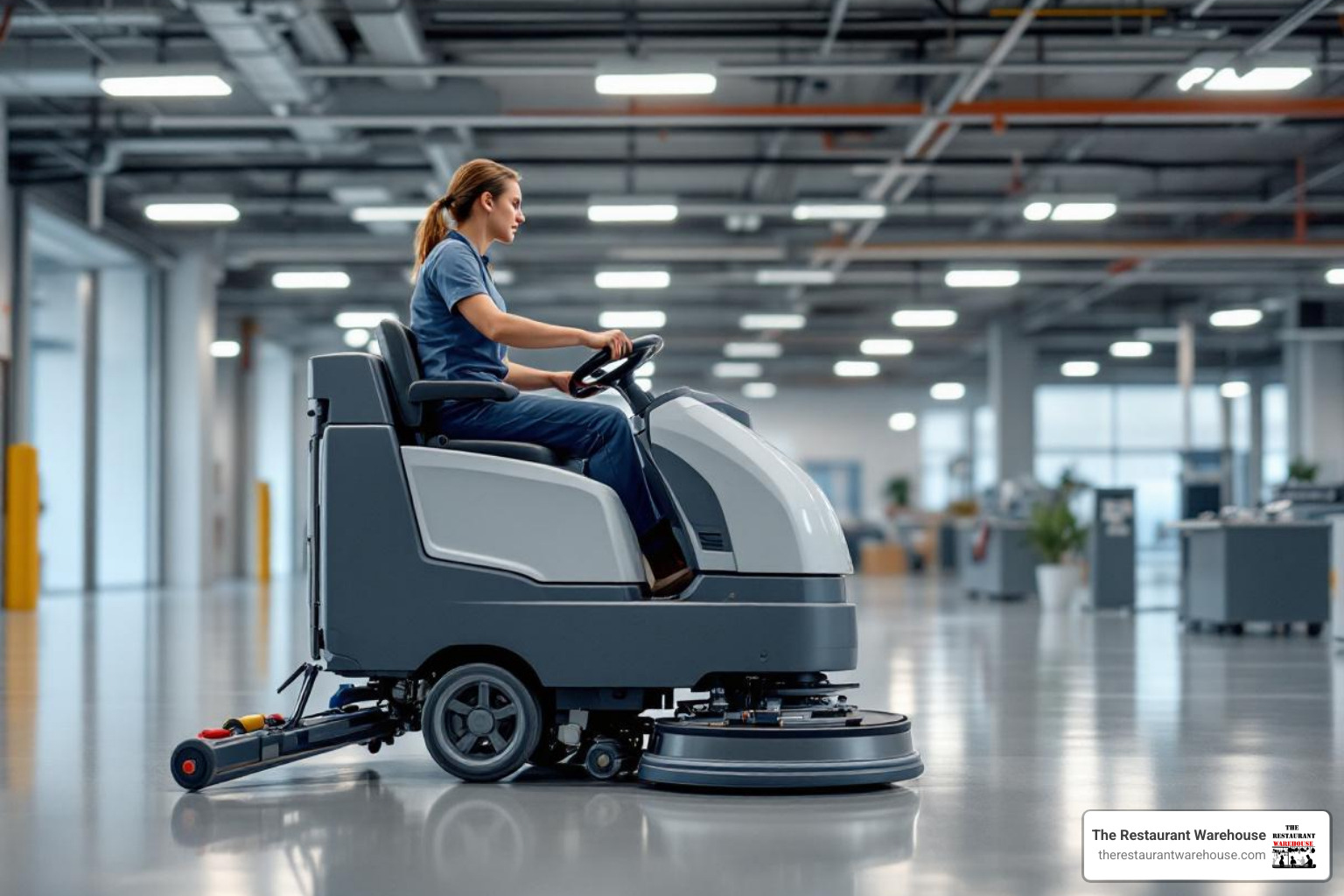
Investing in professional-grade janitorial equipment is a strategic move for any foodservice business. While the initial cost is higher than for consumer-grade alternatives, the long-term benefits in savings and operational efficiency are significant.
Professional-grade equipment offers several key advantages:
- Durability: Commercial equipment is built with robust components to withstand heavy daily use, resulting in a much longer lifespan.
- Labor Savings: Machines like auto-scrubbers and sweepers clean large areas faster and more effectively than manual methods, reducing labor hours and costs.
- Better ROI: Due to their durability and efficiency, professional machines provide a superior return on investment. Fewer breakdowns and better performance save money over time.
- Superior Clean: Professional equipment delivers a higher level of cleanliness, contributing to a safer and more hygienic environment.
- Improved Staff Productivity: Effective and easy-to-use equipment boosts staff morale and makes cleaning tasks less arduous.
When evaluating whether to upgrade, many operators compare:
- Cleaning Time per Shift: How many labor hours are spent on floors now versus projected time with a machine.
- Chemical and Water Use: Auto-scrubbers often use solution more efficiently than traditional mopping.
- Guest Experience Metrics: Online reviews and customer comments frequently mention cleanliness—especially floors and restrooms—so improved results can directly support revenue.
Find the Right Machine for Your Floors
When it comes to floor care, the right machine can make all the difference. The demand for efficient floor maintenance is a major driver of the janitorial equipment market.
- Auto-Scrubbers: These machines apply a cleaning solution, scrub the floor, and vacuum up the dirty water, leaving floors clean and dry almost immediately. They come in compact walk-behind models for smaller areas and larger ride-on models for maximum efficiency in big spaces. Look for features like cleaning path width, tank capacity, easy-to-service recovery tanks, and battery power for quiet, fume-free operation.
- Floor Burnishers: Used after cleaning, burnishers polish hard floors to a high-gloss shine, enhancing appearance and protecting the floor surface. Adjustable pad pressure and speed controls help match the machine to different floor finishes.
- Carpet Extractors: These machines deep-clean carpets by injecting a cleaning solution and then extracting it along with dirt and grime. For dining rooms or lobby areas with carpet, periodic extraction can extend carpet life and maintain a fresh appearance.
To choose between models, consider:
- Daily vs. weekly usage.
- Floor types (sealed concrete, tile, luxury vinyl plank, carpet, etc.).
- Access to power outlets and storage space for larger machines.
Floor Buffers for Scrubbing and Polishing
Floor buffers are the workhorses for maintaining hard floors, using a rotating pad to either scrub away tough grime or polish surfaces to a high-gloss shine. Low-speed models are ideal for deep cleaning and stripping old wax, while high-speed burnishers create that pristine, "just-cleaned" look that impresses guests as soon as they arrive. This isn't just about appearances; a well-polished floor is easier to clean daily and better resists scuffs and stains. Investing in a commercial-grade buffer gives you a durable machine built for the demands of a busy restaurant, saving your staff significant time and effort. These machines are a key piece of floor care equipment that protects your investment and keeps your dining room looking its best.
How to Choose the Best Vacuums and Sweepers
Vacuums and sweepers are essential for maintaining both cleanliness and indoor air quality.
- Vacuums: Choose the right type for your needs. Backpack vacuums offer excellent maneuverability for stairs and tight spaces, while wet/dry vacuums are indispensable for spills. A critical feature to look for is HEPA filtration, which captures 99.97% of airborne particles, significantly improving air quality.
- Sweepers: Commercial floor sweepers are far more effective than manual sweeping for collecting dust and debris from hard surfaces. They cover more ground in less time and reduce airborne dust. Like scrubbers, they are available in walk-behind and ride-on models. Key features include hopper capacity, dust control systems, and power source.
Many operators integrate these machines into tiered floor-care programs:
- Daily: Spot sweeping, vacuuming, and damp mopping of high-traffic zones.
- Weekly: Full-auto-scrubbing of hard floors and detail vacuuming along edges.
- Monthly/Quarterly: Deep cleaning, including burnishing or carpet extraction.
Integrating these tools into a daily routine is simple with a clear plan. Our Restaurant Cleaning Checklist can help you get started.
If you're comparing multiple machines and unsure which combination delivers the best value, contact The Restaurant Warehouse for a tailored equipment bundle recommendation based on your square footage, staffing, and budget.
Why Powerful Suction Matters
Powerful suction is more than just a feature; it's the engine behind a truly effective cleaning program. In a foodservice environment, it's not enough to just pick up crumbs. Strong suction ensures that vacuums and sweepers capture fine dust, allergens, and other microscopic particles that can compromise air quality and food safety. This is especially true for machines with HEPA filtration, which rely on robust airflow to trap nearly 100% of airborne contaminants. By removing more debris in a single pass, professional-grade equipment with powerful suction also drastically cuts down on cleaning time. This efficiency reduces labor costs and allows your staff to focus on other critical tasks, all while maintaining a higher standard of cleanliness.
Beyond the Floor: Specialized Cleaning Machines
While floors are a top priority, a truly comprehensive cleaning plan addresses every part of your facility. Specialized machines are designed to tackle specific challenges that manual tools can't handle efficiently, from greasy kitchen equipment to outdoor patios. Integrating these tools into your routine ensures a deeper, more professional level of clean that protects your equipment, impresses your guests, and creates a safer environment for everyone. They represent a smart investment in operational excellence, helping you maintain high standards with less labor.
Pressure Washers for Outdoor Surfaces
Your restaurant's exterior is the first thing customers see, and a dirty patio or entryway can create a poor first impression. Pressure washers are essential for maintaining these outdoor spaces. They use a high-velocity stream of water to blast away stubborn dirt, grease, mold, and food stains from concrete, brick, and siding. This is especially important for cleaning dumpster pads, which can attract pests and create unpleasant odors if not regularly maintained. Investing in strong, commercial-grade equipment ensures you have the power to handle these difficult messes, keeping your property looking clean and inviting.
Steamers and Ozone Generators for Sanitizing
For a deep clean without harsh chemicals, steamers and ozone generators are fantastic tools. Steam cleaners use high-temperature vapor to dissolve tough grease and sanitize surfaces, making them ideal for kitchen equipment like deep fryers, ovens, and prep tables. They are also incredibly effective on tile grout and upholstery. Ozone generators work differently by sanitizing the air itself, neutralizing persistent odors from cooking, smoke, or waste. This makes them perfect for refreshing dining rooms or dealing with problem areas, ensuring your restaurant always smells fresh and clean.
Air Movers and Carpet Dryers
Wet floors are a major safety hazard in any commercial space. Air movers, also known as carpet dryers, are high-powered fans designed to speed up drying times significantly after mopping, carpet extraction, or accidental spills. By circulating air at a high velocity across the floor surface, they help prevent slip-and-fall accidents and allow you to reopen sections of your restaurant to foot traffic much faster. They also play a crucial role in preventing the growth of mold and mildew in damp carpets or corners, protecting both your property and your indoor air quality.
Utility Carts for Transporting Supplies
Efficiency is key to a successful cleaning program. Utility carts, or janitor carts, act as mobile closets for your cleaning staff, allowing them to transport all their necessary supplies in a single trip. As we've covered in our guide to managing waste and recycling effectively, these mobile units are invaluable for transporting tools, supplies, and waste, which improves staff efficiency and safety. A well-organized cart ensures your team has everything they need—from chemicals and cloths to trash liners and mops—right at their fingertips, reducing downtime and streamlining the entire cleaning process.
Essential Supplies to Pair with Your Equipment
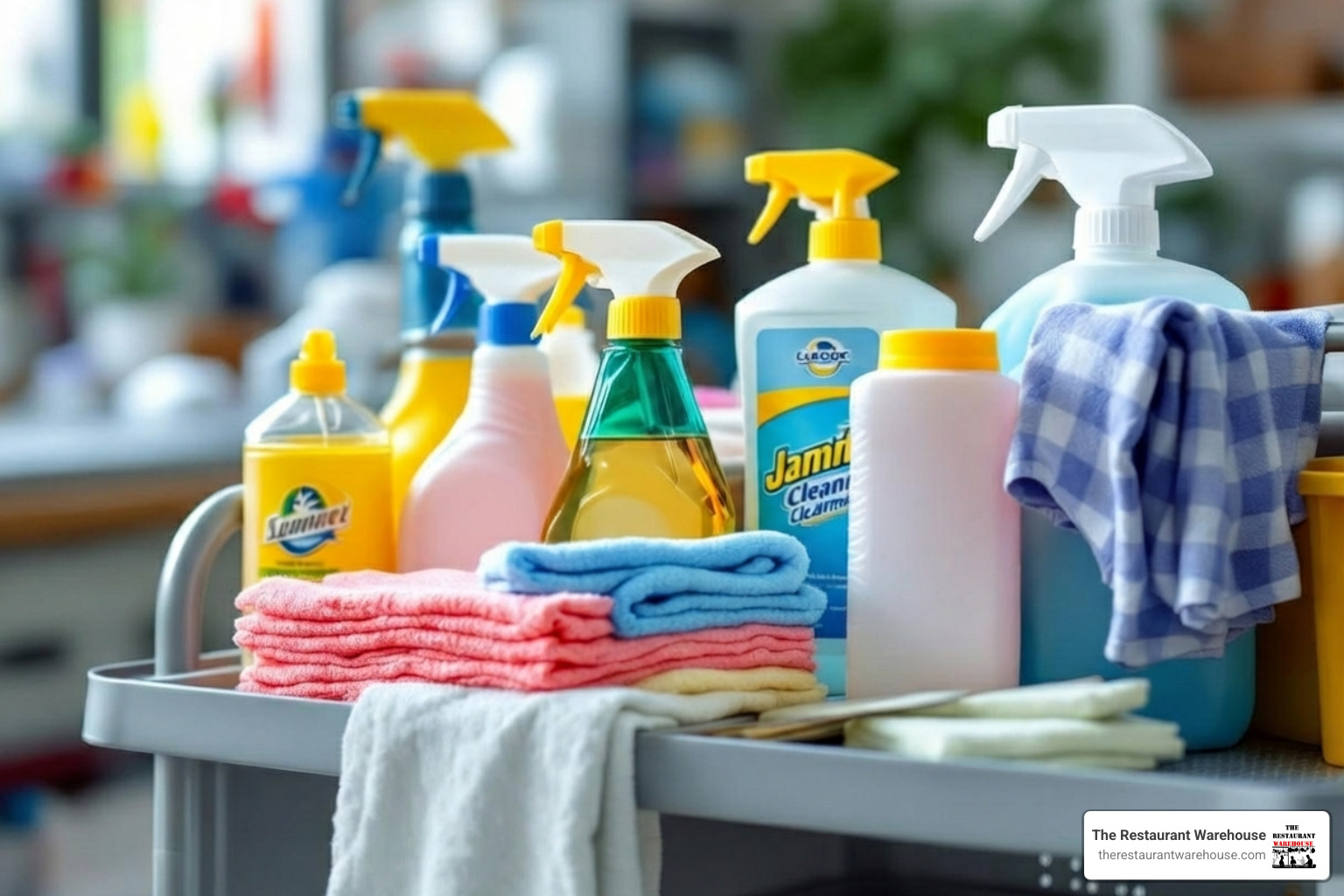
While powerful machines do the heavy lifting, the effectiveness of any cleaning program depends on the quality of its supporting supplies. These items are crucial for chemical safety, hygiene, and achieving a truly pristine environment.
Choosing the Right Janitorial Cleaning Chemicals
Choosing the right chemical for the job is essential for both efficacy and safety.
- All-Purpose Cleaners: Versatile for daily cleaning of most surfaces to tackle light grease and grime.
- Disinfectants and Sanitizers: Absolutely critical in foodservice. Disinfectants kill a broad spectrum of microorganisms, while sanitizers reduce bacteria to safe levels. Always use products approved by government bodies, such as those on the EPA's List of Approved Disinfectants, to ensure effectiveness.
- Degreasers: Essential for foodservice environments, these powerful cleaners break down heavy grease, oils, and fats on floors and other surfaces.
- Specialty Chemicals: Delimers for scale removal, restroom cleaners with acid formulations, and enzymatic drain treatments help address recurring problem areas.
- Concentrates vs. Ready-to-Use: Concentrated chemicals offer significant cost savings and are more environmentally friendly due to less packaging. They require a dilution control system for safe and accurate mixing.
To manage chemicals safely:
- Store them in a locked cabinet or janitor closet.
- Keep Safety Data Sheets (SDS) accessible for all products, as recommended by agencies such as the Occupational Safety and Health Administration.
- Train staff on proper dilution, application, and required personal protective equipment.
For smart purchasing on high-demand items, consult our Smart Buyer's Guide to Wholesale Disinfecting Wipes.
Specialty Cleaners for Kitchen Surfaces
While all-purpose cleaners are great for handling daily spills and grime, some surfaces in a commercial kitchen require more specific attention. Using the wrong chemical on sensitive materials can lead to damage, streaks, or just not get the job done, which is frustrating for your staff. Specialty cleaners are formulated to work effectively on particular materials, like stainless steel or glass, without causing harm. Investing in the right products protects your equipment, ensures you meet health standards, and helps maintain a professional appearance that both your team and your customers will notice. It's a small detail that makes a big difference in the longevity and look of your kitchen.
Glass, Stainless Steel, and Oven Cleaners
Stainless steel is the backbone of a commercial kitchen, covering everything from your refrigerators to your work tables. To keep it in top condition, it's best to avoid abrasive scrubbers or harsh chemicals that can leave scratches and dull the finish. A dedicated stainless steel cleaner, whether it's a spray or a pre-moistened wipe, is your best bet for cutting through grease and fingerprints while leaving a protective, streak-free shine. For tougher jobs like cleaning ovens and deep fryers, a heavy-duty cleaning paste is essential. These are made to break down stubborn, baked-on grease and oil, saving your team a lot of time and effort. Don't forget a quality glass cleaner for sneeze guards, display cases, and windows to maintain a spotless front-of-house appearance.
Simple Solutions like Vinegar and Baking Soda
For everyday cleaning or when you find yourself in a pinch, some of the best solutions might already be in your dry storage. You can make a simple paste from baking soda and water to create a gentle abrasive that lifts grime from stainless steel without causing scratches. After cleaning, a quick wipe-down with a 50/50 mix of white vinegar and water in a spray bottle will cut through any remaining residue and leave a fantastic, streak-free shine. These simple DIY methods are incredibly cost-effective and provide a food-safe cleaning option for daily maintenance, allowing you to save your stronger specialty chemicals for the more challenging deep-cleaning tasks.
Stocking Up on Paper Products and Dispensers
Paper products and their dispensers are fundamental to hygiene and convenience.
- Paper Towels and Toilet Tissue: Basic necessities for any commercial facility.
- Napkins and Guest-Facing Paper Goods: In quick-service and fast-casual concepts, selecting appropriate napkin dispensers and fold types can significantly impact consumption and cost.
- Dispensers: These are crucial for controlling consumption, reducing waste, and maintaining a professional appearance. Touchless dispensers are highly effective at reducing cross-contamination in high-traffic areas like restrooms.
- Back-of-House Disposables: Prep-area towels, deli paper, and similar items should be integrated into your broader janitorial plan to ensure they are stored, dispensed, and disposed of correctly.
When you standardize your dispensers across locations, you simplify ordering and inventory and reduce the risk of running out of critical paper products during busy service periods.
Why You Should Be Using Microfiber Cleaning Tools
Microfiber technology has revolutionized manual cleaning with its superior performance.
- Superior Cleaning: Microfiber's tiny synthetic fibers create a static charge that attracts and traps dust, dirt, and microbes more effectively than traditional cotton.
- Reduced Water and Chemical Use: Microfiber often cleans effectively with less water and fewer chemicals, leading to cost savings and environmental benefits.
- Durability and Reusability: High-quality microfiber cloths and mops can be laundered hundreds of times, making them a sustainable and cost-effective choice. Explore our options for Cleaning Rags Wholesale: Your Source for Industrial-Strength Wipers.
- Cross-Contamination Prevention: Using a color-coding system for microfiber cloths (e.g., red for restrooms, yellow for food service areas) is a best practice to prevent the spread of germs.
To get the most from microfiber:
- Establish a laundering schedule and avoid fabric softeners that can reduce absorbency.
- Use separate laundry bags or bins by color to reinforce your cross-contamination controls.
- Train staff to fold cloths into quadrants so that each side is used efficiently.
Combining the right chemicals, paper systems, and microfiber tools ensures that your investment in larger janitorial equipment is fully supported and consistently delivers the level of cleanliness your guests expect.
Floor Care Consumables and Protection
Your floor care machines are powerful, but they can't work alone. The right consumables—like pads, brushes, and polishes—are what actually make contact with your floors, doing the hard work of scrubbing away grime and adding a protective shine. Think of these items as the essential partners to your equipment. Using high-quality consumables not only produces better results but also protects your investment in both your machinery and your flooring, ensuring they both have a long, effective life.
Floor Pads and Brushes
Floor pads and brushes are the workhorses of your floor care program, designed to attach to machines like auto-scrubbers and burnishers. They come in a variety of materials and textures, each tailored for a specific task. For example, an abrasive black pad is used for stripping old finish, a less aggressive green or blue pad is for daily scrubbing, and a soft white pad is for polishing floors to a high gloss. Choosing the correct pad or brush is critical; using one that’s too aggressive can damage your floor finish, while one that’s too soft won’t clean effectively. Regularly inspecting and replacing these items ensures your machines perform at their best and your floors always look professionally maintained.
Floor Polish, Wax, and Entrance Mats
Beyond daily scrubbing, protecting your floors is a key part of maintenance. Floor polish and wax create a durable, protective layer that shields your flooring from scratches, scuffs, and stains. This finish not only adds a brilliant shine that impresses guests but also makes routine cleaning much faster and more effective, as dirt sits on top of the wax instead of grinding into the floor itself. Another crucial element of protection is a good entrance mat system. High-quality mats placed at all entrances trap dirt, dust, and moisture from shoes before they can be tracked throughout your facility. This simple step drastically reduces cleaning time and minimizes slip-and-fall hazards, protecting your investment in your entire stock of restaurant equipment by keeping the environment safe and clean.
Pro Tips from the Cleaning Industry
Getting the best results from your janitorial equipment isn't just about having the latest technology. Industry veterans know that certain timeless principles and tools are effective for a reason. While modern machines save incredible amounts of time on large-scale tasks, the details are what guests notice. Mastering a few foundational practices will help your team work more efficiently and maintain a higher standard of cleanliness. Here are a few pro tips that focus on core techniques to keep your facility spotless and safe, proving that sometimes the simplest approach is the most effective one for your business.
The Importance of Manual Effort
While an auto-scrubber can clean a dining room floor in minutes, it can’t get into tight corners or clean the baseboards. This is where manual tools shine. As cleaning professionals often note, "Even with advanced machinery, manual tools are indispensable. They are the backbone of any cleaning regimen, allowing for precision and immediate response." Think of them as your detail-oriented specialists. Brooms, brushes, and mops are your first line of defense for spills and are essential for cleaning around kitchen equipment, under tables, and in restrooms where larger machines simply can’t fit. Investing in quality manual tools ensures no spot is missed.
Simple and Effective Cleaning Formulas
Your chemical closet doesn't need to be overflowing with dozens of different bottles. In fact, a streamlined approach is often safer and more effective. "Choosing the right chemical for the job is essential for both efficacy and safety." For most foodservice operations, you can handle nearly every task with three core products: a versatile all-purpose cleaner for daily grime, a powerful degreaser for kitchen surfaces, and an EPA-approved disinfectant or sanitizer for touchpoints. By focusing on a few high-quality products, you can train your staff more effectively and reduce the risk of chemical misuse. Always follow dilution instructions to get the best results and manage costs for items like wholesale disinfecting wipes.
Why Professionals Trust Traditional String Mops
In an age of microfiber flat mops, the classic string mop and bucket might seem outdated, but they remain a favorite among professionals for good reason. "Traditional string mops with a bucket that has a wringer are recommended. A wringer helps you control how much water goes on the floor." This control is critical in a restaurant setting, as it allows you to leave floors drier, reducing slip hazards and speeding up drying time. String mops are also highly durable and their absorbent fibers are excellent for tackling large spills and cleaning textured floors like quarry tile. When you need to cover a large area efficiently, a reliable commercial mop bucket and string mop are hard to beat.
Choosing Smart: What's New in Janitorial Equipment
The janitorial equipment industry is constantly evolving, driven by technology, sustainability, and the need for greater efficiency. Staying aware of these trends helps ensure your cleaning practices are as effective and responsible as possible.
New and Noteworthy Janitorial Technology
Demand for sustainable and smart janitorial equipment is shaping the latest innovations:
- Eco-Friendly Products: This includes green-certified chemicals that are biodegradable and less harmful to the environment, alongside equipment specifically engineered for lower water and energy consumption.
- Robotic Automation: Autonomous floor scrubbers and vacuums are becoming more common and accessible. They use advanced sensors like LIDAR to navigate complex layouts, clean large areas with minimal supervision (often during off-hours), and can even return to a docking station to recharge. This boosts efficiency, provides consistent results, and significantly reduces labor costs.
- Smart Technology: The Internet of Things (IoT) is making janitorial work more proactive. IoT-enabled smart dispensers monitor supply levels of paper towels or soap and send real-time alerts to staff when they are running low, preventing stockouts and optimizing refill schedules. Another key innovation is the electrostatic sprayer, which applies a positive charge to disinfectant droplets. This causes them to wrap around and evenly coat surfaces—including the sides and backs of objects—for more comprehensive coverage with less chemical waste.
In addition, some operators are experimenting with:
- Sensor-Based Cleaning Schedules: Occupancy sensors and counters in high-traffic areas like restrooms help prioritize cleaning efforts where they are needed most, rather than relying on a fixed schedule.
- Data Dashboards: Centralized dashboards are being used to track machine run time, battery health, chemical consumption, and areas cleaned, providing managers with valuable data to optimize performance and budget for maintenance.
These innovations point toward a future of smarter, more sustainable, and more autonomous cleaning solutions.
How to Choose the Right Janitorial Equipment
Selecting the right janitorial equipment requires a systematic approach to ensure you get long-term value.
- Assess Your Facility: Consider your total square footage, floor types, and high-traffic areas. For example, a 1,500 sq. ft. cafe with vinyl flooring may only need a compact walk-behind scrubber, while a 15,000 sq. ft. event space with a mix of tile and carpet requires a larger ride-on scrubber and a commercial carpet extractor. Map out your facility's specific needs before shopping.
- Budget for Quality and TCO: While wholesale pricing helps, professional-grade equipment offers better durability and long-term ROI. Focus on the Total Cost of Ownership (TCO), which includes the initial price plus projected costs for maintenance, repairs, consumables (pads, batteries), and labor. A cheaper machine with frequent breakdowns can have a much higher TCO over its lifespan.
- Consider Staff Training: Ensure your team can operate any new equipment safely and effectively. Complex machines may require more intensive training, so factor that time and cost into your decision. User-friendly equipment can reduce training time and increase adoption.
- Check Maintenance Needs: Understand the maintenance requirements and availability of parts and service for any machine you consider. A machine that is easy to service with readily available parts will have less downtime.
- Request Demos: Whenever possible, test equipment in your own facility. Ask the vendor to demonstrate the machine on your most challenging surfaces, like a greasy floor section or in a tight hallway, to see how it performs in your unique environment.
- Standardize Across Locations: If you operate multiple units, standardizing models and brands simplifies staff training, parts stocking, and service relationships. This creates operational consistency and can lead to better volume pricing.
For more support in planning your space around efficient cleaning, you can also review neutral resources such as facility hygiene recommendations from public health agencies or university extension programs, which often publish practical guidance for sanitation procedures in foodservice environments.
To make an informed decision on all your facility's needs, explore our detailed buying guides, like this one on choosing the right janitorial sink and our overview of restaurant supplies wholesale.
If you're ready to upgrade or standardize your janitorial program, reach out to The Restaurant Warehouse to compare models, lock in wholesale pricing, and build a cleaning package tailored to your operation.
Recognizing Trusted Brands
When you start shopping for janitorial equipment, choosing a trusted brand is one of the best ways to ensure you’re getting quality and reliability. Professional-grade equipment is specifically designed for heavy daily use, which means it will hold up far better than consumer models and give you a better return on your investment over time. By selecting tools from established names in the industry, you can feel more confident that you're purchasing durable, effective equipment that will support your cleaning program and keep your facility safe and hygienic for both staff and customers.
As you research, you’ll notice a few suppliers that specialize in professional-grade tools. For instance, CleanFreak offers a wide selection of janitorial equipment, including auto scrubbers and floor buffers, at competitive prices. You may also come across WebstaurantStore, which provides a variety of cleaning equipment designed for the unique demands of commercial foodservice environments. Other reputable sources like Jan-Supply also focus on quality, helping operators find the right tools for maintaining high standards of cleanliness. Investing in equipment from these types of trusted brands helps ensure your cleaning program is built on a foundation of quality.
Smart Purchasing: Budgeting for Your Janitorial Needs
Building a professional cleaning toolkit requires a smart financial strategy. While it’s tempting to cut costs on janitorial supplies, the right investment pays for itself through efficiency, durability, and a better customer experience. The key is to balance your budget with the long-term value of your equipment. This means looking beyond the initial price tag to understand the total cost of ownership and exploring flexible ways to acquire the tools that will serve your business best. A well-planned budget ensures you can afford high-quality equipment without straining your cash flow, setting your operation up for success from day one.
Understanding the Real Costs of Equipment
When you're outfitting your facility, it's important to distinguish between consumer-grade and professional-grade equipment. Professional-grade equipment costs more upfront than consumer versions, but it is built for heavy daily use and delivers a significantly better return on investment (ROI) over time. These machines are constructed with more durable motors, stronger frames, and higher-quality components, meaning they last longer and require fewer repairs. This durability translates directly into lower long-term costs and less operational downtime. Investing in commercial-quality tools ensures your team can clean effectively and efficiently, shift after shift, without the constant need for replacements.
Making Major Purchases Affordable with Financing
A commercial auto-scrubber or floor burnisher is a significant investment, but it doesn't have to be a barrier to entry. Many operators use financing to acquire essential machinery without a large upfront capital expense. This approach allows you to get the equipment you need immediately and pay for it over time with predictable monthly payments, preserving your cash for other operational needs. At The Restaurant Warehouse, we offer several restaurant equipment financing options to make major purchases more manageable. Spreading the cost allows you to benefit from the labor savings and efficiency of professional equipment right away.
The Benefits of Factory Direct Sellers
Working with a factory-direct seller is one of the smartest ways to get quality equipment at a fair price. A "factory direct" seller sources products straight from the manufacturer, cutting out the middlemen—like distributors and dealers—who add their own markups. This streamlined supply chain means the savings are passed directly to you. At The Restaurant Warehouse, our factory-direct model ensures you get wholesale pricing on everything from commercial freezers to janitorial carts. This approach not only makes professional-grade equipment more affordable but also simplifies the purchasing process, giving you direct access to top-tier products without the inflated costs.
Prioritizing Safety and Sustainability
A modern cleaning program goes beyond just appearances; it must also protect your staff and the environment. Prioritizing safety means equipping your team with the proper Personal Protective Equipment (PPE) to handle cleaning chemicals and tasks without risk. At the same time, a focus on sustainability can reduce your environmental footprint and often lower operational costs. By integrating safe practices and eco-friendly products into your janitorial routine, you create a healthier workplace for your employees and a more responsible business model that resonates with today's conscientious consumers.
Essential Personal Protective Equipment (PPE)
Personal Protective Equipment (PPE) includes items worn to keep your cleaning staff safe from chemical splashes, airborne particles, and other workplace hazards. Providing and enforcing the use of PPE is not just a best practice—it's a fundamental part of maintaining a safe work environment. A well-stocked janitorial closet should always include a full range of PPE to protect your team from head to toe. These items are your first line of defense against injury and exposure, ensuring that your cleaning tasks are performed safely and effectively every single time.
Disposable Gloves and Safety Goggles
Disposable gloves are non-negotiable when handling any cleaning chemical, from all-purpose cleaners to powerful degreasers. They protect the skin from irritation, burns, and absorption of harmful substances. Nitrile or latex gloves provide a reliable barrier and should be discarded after each use to prevent cross-contamination. Similarly, safety goggles are essential for protecting the eyes from chemical splashes, which can occur when diluting concentrates or spraying surfaces. A simple splash can cause serious eye damage, making goggles a critical piece of safety gear for your team.
Dust Masks and Protective Aprons
When performing tasks that generate dust, such as sweeping large areas or cleaning vents, dust masks or respirators are crucial. They prevent the inhalation of fine particles, allergens, and airborne contaminants that can cause respiratory issues. For tasks involving strong chemicals, a respirator may be necessary to filter out harmful fumes. Protective aprons or coveralls serve as a shield for clothing and skin, preventing chemicals from soaking through and causing irritation or burns. This is especially important when working with corrosive substances like drain cleaners or deliming agents.
Making Your Cleaning Program Eco-Friendly
Adopting a sustainable cleaning program is both environmentally responsible and good for business. This includes choosing green-certified chemicals that are biodegradable and less harmful to the environment, alongside equipment specifically engineered for lower water and energy consumption. For example, modern auto-scrubbers use advanced technology to clean floors effectively with minimal water, and concentrated cleaning solutions reduce plastic waste from packaging. By making conscious choices, you can reduce your facility's environmental impact while often saving money on utilities and supplies, creating a win-win for your budget and the planet.
Frequently Asked Questions about Janitorial Equipment
Choosing and using janitorial equipment can bring up many questions. Here are answers to some of the most common inquiries.
Does Janitorial Equipment Really Improve Health and Safety?
Proper janitorial equipment is essential for creating a safe and healthy space, especially in foodservice. It contributes in several key ways:
- Pathogen Removal: Disinfectants, sanitizers, and the tools used to apply them are your first line of defense against harmful bacteria and viruses, preventing the spread of foodborne and contact-transmitted illnesses.
- Slip-and-Fall Prevention: Machines like auto-scrubbers leave floors clean and dry almost immediately, significantly reducing the risk of accidents in high-traffic zones. Proper wet floor signage is also a key component of this system.
- Improved Air Quality: Vacuums with HEPA filtration and sweepers with advanced dust control systems capture airborne particles, dust, and allergens, creating healthier indoor air for staff and customers with sensitivities.
- Cross-Contamination Control: Using specific tools for different areas, such as a color-coded microfiber cloth system and dedicated restroom equipment, prevents the transfer of germs from one part of your facility to another.
- Brand Protection: A visibly clean facility is one of the strongest signals of quality and care you can send to a customer. Consistently clean floors, restrooms, and surfaces build trust and directly contribute to positive reviews and repeat business.
Commercial vs. Residential: Which Cleaning Equipment Do You Need?
While they may perform similar functions, commercial and residential janitorial equipment are built to different standards. The distinction is crucial for making a wise investment.
- Durability: Commercial equipment is made with heavy-duty motors, thicker housings, and more robust materials to withstand daily, continuous use for hours at a time. Residential equipment is designed for infrequent, lighter use and will fail quickly under commercial demands.
- Performance and Capacity: Commercial machines have more powerful motors, larger capacities (e.g., solution tanks, hoppers), and wider cleaning paths to cover large areas efficiently. A commercial vacuum may have a 50-foot cord, while a residential one has a 20-foot cord, impacting productivity.
- Cost and ROI: Commercial equipment has a higher initial cost, but its longevity, efficiency, and lower repair needs result in a lower total cost of ownership and a better long-term return on investment. Furthermore, using residential equipment in a commercial setting often voids the manufacturer's warranty.
How Can I Make My Cleaning Program More Sustainable?
Sustainability in cleaning is a responsible practice that benefits the environment and your bottom line. You can make your program more sustainable in several ways:
- Use Green Products: Opt for certified green cleaning chemicals and look for equipment with eco-modes that conserve water and energy.
- Adopt Microfiber: Reusable microfiber tools reduce water and chemical consumption and minimize waste compared to disposable paper towels or cotton rags.
- Choose Concentrates: Using concentrated chemicals with a proper dilution control system dramatically reduces packaging waste, storage space, and transportation emissions.
- Implement Recycling: A comprehensive waste and recycling program for paper, cardboard, plastics, and glass diverts materials from landfills.
- Maintain Equipment: Proper, regular maintenance extends the life of your machines, reducing the need for premature replacement and the waste it creates. Follow manufacturer guidelines for daily and weekly upkeep.
- Responsible Disposal: When equipment reaches the end of its life, work with a disposal partner who can properly recycle components like batteries, electronics, and metal frames.
How Often Should I Replace My Janitorial Equipment?
Replacement timelines depend on usage, maintenance, and build quality, but you can watch for common signs:
- Increased downtime and a noticeable rise in repair frequency and cost.
- Declining cleaning performance, even after servicing.
- Parts becoming difficult or expensive to source.
- Safety features becoming outdated or failing.
Many operators plan for a refresh cycle on their heaviest-used machines (like auto-scrubbers) every 5–7 years, with lighter-use items lasting longer if maintained properly. Instead of waiting for a catastrophic failure, ask these questions annually: Are repair costs for this machine projected to exceed 50% of a new model's price this year? Does new technology offer labor savings that would pay for an upgrade in under two years? Tracking usage hours and maintenance history helps you budget for replacements instead of reacting to unexpected failures.
How Can I Train Staff to Use Janitorial Equipment Safely?
Effective training protects staff and guests and extends the life of your equipment:
- Use manufacturer manuals and videos as the foundation for all training.
- Demonstrate proper use in person, then observe staff while they operate the machine in a controlled setting.
- Create and post simple, laminated quick-start guides with pictures in janitor closets for easy reference.
- Implement a formal check-off or certification process for heavy machinery, ensuring no one operates it without documented training.
- Refresh training annually or whenever you add new models or when safety incidents occur.
Some operators also appoint a "sanitation champion" at each location to oversee training, checklists, and routine inspections of janitorial tools. This creates ownership and accountability within the team.
If you need help choosing equipment that matches your team's skill level and available training time, contact The Restaurant Warehouse for guidance on user-friendly options and best practices for onboarding your staff.
Making the Right Investment in Cleanliness
Choosing the right janitorial equipment is a strategic investment in your business's success. From manual tools to advanced machines, each piece plays a vital role in upholding the highest standards of cleanliness, safety, and hygiene. Recognizing the long-term value of professional-grade equipment translates to reduced labor costs, improved efficiency, and, most importantly, the health and safety of your staff and customers.
A thoughtful program looks beyond individual tools. It combines the right machines, chemicals, paper systems, microfiber, and waste management into a cohesive plan, supported by clear procedures and staff training. By standardizing equipment where possible and keeping sustainability in mind, you build a cleaning operation that is both reliable and cost-effective.
At The Restaurant Warehouse, we are committed to helping you make these informed decisions. We supply commercial foodservice equipment and supplies at wholesale prices by avoiding high retail overhead. Our goal is to connect you with the affordable, high-quality janitorial equipment you need to maintain a pristine and welcoming environment. For more sourcing options, read The Janitors Jackpot: Top Sources for Wholesale Cleaning & Maintenance Supplies.
If you're ready to upgrade your cleaning tools, standardize across locations, or simply reduce the time your team spends on daily cleaning, contact us today for expert advice on outfitting your facility with the best janitorial equipment that meets your specific needs and budget.
To explore additional categories beyond janitorial equipment—such as storage, shelving, and front-of-house essentials—visit The Restaurant Warehouse online store and start building a cleaner, safer operation.
Key Takeaways
- Invest in Commercial-Grade Tools for Long-Term Savings: Choosing professional-grade equipment over cheaper residential options prevents constant replacement costs and saves significant labor hours, delivering a better return on your investment.
- A Complete System Outperforms a Single Machine: Effective cleaning relies on a full toolkit, combining heavy-duty machines for large areas with manual tools for detail work, the right chemicals for each surface, and proper safety gear for your team.
- Match Your Equipment to Your Facility's Needs: Assess your restaurant’s unique factors—like floor type and square footage—and consider the total cost of ownership, not just the initial price, to select equipment that is both effective and sustainable for your budget.
Related Articles
About The Author

Sean Kearney
Sean Kearney is the Founder of The Restaurant Warehouse, with 15 years of experience in the restaurant equipment industry and more than 30 years in ecommerce, beginning with Amazon.com. As an equipment distributor and supplier, Sean helps restaurant owners make confident purchasing decisions through clear pricing, practical guidance, and a more transparent online buying experience.
Connect with Sean on LinkedIn, Instagram, YouTube, or Facebook.