

How to Choose the Right Restaurant Supply Store
After years in the foodservice industry, I’ve seen the same costly mistakes trip up even the most passionate restaurant owners. The most common one? Choosing the wrong restaurant supply store. A bad supplier relationship leads to inconsistent stock, unreliable equipment, and frustrating service delays that bleed your bottom line. This isn't just another list of stores. This is an insider's guide to making one of the most critical decisions for your business. I'll show you what "commercial-grade" really means, how to spot a supplier who will be a true partner, and how to get the best deals without compromising on quality.
Why Your Restaurant Supply Store Is Your Most Important Partner
A restaurant supply store is your one-stop shop for the commercial-grade smallwares, disposables, and tabletop items essential for running a successful food business. These specialized suppliers offer everything from dinnerware and glassware to food storage and cleaning supplies, typically at wholesale prices that can save restaurants 20-40% compared to retail.
With the food scene constantly evolving, the demand for reliable restaurant supply stores has never been greater. Whether you're launching a food truck, opening a cafe, or revamping an existing kitchen, finding the right supplier can mean the difference between smooth operations and costly delays.
The challenge isn't just finding a restaurant supply storeit's finding the right one that offers transparent pricing, quality products, and genuine support. Many restaurant owners get burned by hidden markups, poor customer service, or subpar products that fail when you need them most.
My experience in the foodservice industry has taught me that the best suppliers don't just sell productsthey become strategic partners in your business growth. They help you steer the complexities of sourcing and find the items that truly fit your operational needs and budget.
Why "nearby" matters: even with fast shipping, urgent needs happen. A reliable, responsive supplier with clear stock visibility and realistic delivery estimates can keep a dinner rush from derailing when you need more glasses, plates, cups, or takeout containers on short notice. Proactive suppliers also help you forecast, standardize SKUs, and reduce waste, lowering total cost of ownership while keeping your team focused on serving guests.
What youll get in this guide: five no-nonsense tips to pinpoint the store model that suits your workflow, assess quality like a pro, stretch your budget without sacrificing reliability, and form a supplier partnership that grows with you. Youll also find practical checklists you can apply immediately.
If youre ready to streamline ordering, avoid stockouts, and simplify your back-of-house, youre in the right place.
Start Here: Create Your Essential Supply List
Walking into a restaurant supply store without a clear plan is a recipe for overspending. Before comparing suppliers, you need to map out exactly what your food business requires to operate smoothly. Every successful restaurant, caf , or food truck needs specific supplies to function, and understanding your needs upfront saves money, time, and stress.
A food truck specializing in gourmet burgers has different needs than an upscale bistro. The truck might prioritize durable melamine plates and efficient food storage, while the bistro focuses on neat porcelain dinnerware and premium glassware. The foodservice industry serves everyone from restaurants and cafes to hotels and caterers. Each has unique requirements, but all need reliable, commercial-grade supplies. For a comprehensive breakdown, check out our guide on Restaurant Supply Essentials.
Your Front-of-House Checklist
Your front-of-house is where customers form lasting impressions. Every plate, glass, and piece of flatware is part of your brand story.

Let's start with dinnerware. Porcelain offers a classic, neat look perfect for fine dining. Stoneware brings a rustic, homey feel for casual spots. Melamine is nearly indestructible, making it ideal for high-volume operations or outdoor dining.
Consider plate diameters (typically 10 0 12 inches for entr es, 8 0 9 inches for salads, 6 0 7 inches for appetizers), rim vs coupe styles (rims help with sauced dishes), and stackability (important for tight storage). Reinforced edges reduce chipping over time.
Glassware also deserves attention. The right wine glass can improve aroma and flavor, while sturdy water goblets are a practical necessity. Bar service requires its own specialized glassware, from cocktail glasses to beer glasses. Check volume markings, balance, and base thickness to ensure durability and guest comfort.
For flatware, you're choosing between 18/0 stainless steel (economical and durable) and 18/10 stainless steel (more corrosion-resistant with a premium feel). The weight and balance contribute significantly to the dining experience. Heavier, well-balanced pieces feel more premium, while lighter patterns help reduce replacement costs at scale.
Don't forget finishing touches like table linens that set the mood and tabletop accessories like unique salt and pepper shakers that add personality. Materials matter here too: polyester blends resist staining and are easier to launder than 100% cotton.
Front-of-house quick checklist:
- Plate sizes standardized across courses for consistent presentation
- Glassware by category (water, wine, beer, cocktail), with buffer stock for breakage
- Flatware pattern selected for weight, feel, and replacement availability
- Tabletop accessories (ramekins, caddies, shakers) aligned with brand
- Linens sized to your tables and laundering plan
Your Back-of-House & Sanitation Checklist
While your front-of-house charms customers, your back-of-house keeps the promises your menu makes. Here, functionality and durability are paramount.
- Cookware basics: stainless steel (even heating, low reactivity), cast iron (heat retention, searing), and non-stick (delicate items). Choose riveted handles and heavy-gauge construction for longevity.
- Knives and prep tools: chefs knife, paring knife, serrated knife, honing steel, color-coded cutting boards, bench scrapers, and durable mixing bowls.
- Measuring tools: standardized measuring cups, ladles (with ounce markings), and digital scales for portion control.
- Food storage: food pans in standard sizes stack efficiently and fit into prep tables and refrigeration units. Ingredient bins keep bulk items fresh and accessible. Tight-fitting lids, date labels, and clear material help with visibility and rotation.
- Sanitation and disposables: gloves, hair restraints, labels, and compliant cleaning chemicals. Squeegees, deck brushes, and color-coded towels support consistent cleaning routines.
For a deeper, role-by-role checklist, explore our Restaurant Store Essentials guide.
Pro tip: Build your par levels and reorder points alongside your initial supply list. This ensures you maintain adequate buffer stock without over-ordering, reduces last-minute panics, and improves cash flow.
For best practices on safe handling and storage that you can apply with the smallwares you buy, see the USDAs guidance on kitchen food safety and storage basics: USDA: Kitchen Companion Your Safe Food Handbook.
Contact us to discuss which supplies make the most sense for your specific operation. For more detailed insights, explore our comprehensive Restaurant Store Essentials guide.
Don't Forget This Essential Kitchen Equipment
Beyond the major appliances that anchor your kitchen, a collection of smaller, high-quality equipment is what truly drives day-to-day efficiency. These are the workhorses your culinary team relies on for every single order. Investing in durable, well-designed food prep tools and cookware isn't just about having the right items; it's about creating a smoother, faster, and safer workflow. The right tools reduce prep time, ensure recipe consistency, and stand up to the demanding pace of a commercial kitchen, preventing frustrating breakages during a busy service. Think of these items as the foundation of your back-of-house operations—get them right, and everything else runs more smoothly.
Food Prep Tools
Every great dish starts with precise preparation, which is impossible without the right tools. The cornerstone of any chef's toolkit is a set of quality knives, including a versatile chef's knife, a nimble paring knife for detailed work, and a serrated knife for breads and delicate produce. To maintain their edge, a honing steel is non-negotiable. Just as important are your surfaces; using color-coded cutting boards is a simple but critical step in preventing cross-contamination. You'll also need essentials like bench scrapers for managing dough and clearing workspaces, along with a variety of durable mixing bowls for everything from tossing salads to combining ingredients for your signature sauces.
Cookware and Bakeware
The right cookware can make or break a recipe. Different materials serve different purposes, so a well-stocked kitchen needs variety. Stainless steel is the all-around champion for its even heating and low reactivity, making it perfect for sauces and general cooking. For achieving a perfect sear on steaks, nothing beats the heat retention of cast iron. Meanwhile, non-stick pans are essential for delicate items like eggs and fish that are prone to sticking. When you shop restaurant equipment, always check for construction quality. Look for heavy-gauge materials that resist warping and riveted handles that won't loosen over time, ensuring your investment lasts for years of service.
Choosing Your Supplier: Online Store or Local Showroom?
Now that you know what you need, it's time to decide where to get it. The world of restaurant supply store options has expanded, giving you more choices than ever. You can browse massive online catalogs or visit a local showroom for a hands-on experience. Each approach has its advantages.
Online stores offer wholesale pricing that's hard to beat, thanks to lower overhead. Their wider selection means you can find everything from basic plates to specialty items. The convenience is also a major plusno need to rush to a store before it closes.
Local showrooms still play a vital role. There's something irreplaceable about being able to inspect products hands-on. When you need something immediately, immediate availability is a lifesaver. And the expert advice in-person from seasoned professionals is invaluable.
Membership clubs offer another route, focusing on bulk purchasing with member-exclusive pricing, which is great for high-volume operations. The trick is knowing when to use each option. For a comprehensive look, check out our guide on Online Restaurant Supply Stores.
The Perks of Buying Restaurant Supplies Online
Online restaurant supply stores shine when it comes to cost savings. Without the overhead of physical storefronts, they can pass significant savings to you. At The Restaurant Warehouse, we've built our business model on this principleavoiding high commissions and retail overhead to bring you lower prices.
The extensive catalogs available online are another huge benefit, giving you access to thousands of products. Need niche products for a specific cuisine? Online suppliers are more likely to stock them.
User reviews from other restaurant owners help you avoid costly mistakes. You can learn if a serving platter chips easily or if a set of tongs holds up to daily use. The 24/7 shopping convenience and direct shipping save you time and transportation costs. Price comparison is also effortless online, helping you make informed decisions. Our Restaurant Supply Guide 2024 explores these advantages in more detail.
What else to check online:
- Clear lead times by product (and backorder visibility)
- Transparent return and replacement policies
- Packaging standards for breakable items
- Price-match or bulk-quote options for larger rollouts
- Ability to save shopping lists or set reorder reminders
Access to a Massive Inventory
One of the biggest advantages of shopping online is the sheer volume of options. Physical showrooms are limited by their floor space, but an online catalog can be virtually endless. This means you can find everything from standard commercial refrigerators to highly specialized deep fryers without having to visit multiple suppliers. If you're outfitting a kitchen with a specific theme or need a hard-to-find tool for a unique menu item, an online store is your best bet. You can shop restaurant equipment from thousands of products, compare specifications side-by-side, and source everything you need from one place, which streamlines your ordering process and saves a ton of time.
When a Local Store Is Your Best Bet
Sometimes, you just need to see and touch an item before you buy. Feeling the weight of flatware or checking the clarity of glassware tells you more than a product description ever could. Photos can be deceiving, and seeing an item in person ensures it matches your restaurant's ambiance.
Urgent needs are where local stores become heroes. When your last dinner plate breaks mid-service, you can't wait for shipping. Local suppliers stock essential items for these emergencies.
Building local relationships can also be beneficial. Local suppliers often become valuable partners who understand your specific challenges. They might offer flexible terms or alert you to special deals. These relationships create a support network that purely transactional online shopping can't always replicate.
A practical approach that blends both:
- Use online ordering for planned purchases, bulk buys, and specialty items
- Keep a shortlist of local stores for emergency pickups and hands-on evaluation
- Standardize SKUs so you can source from more than one channel without disrupting your operation
Contact us to discuss how we can combine online convenience with personalized service to meet your restaurant's unique supply needs.
Options for Equipment Rentals
Buying new equipment isn't always the answer, especially when you're facing a short-term need. This is where equipment rentals come in as a smart, flexible solution. Think about that big catering event, the summer rush that requires an extra freezer, or testing a new menu item before committing to a commercial deep fryer. Renting gives you access to professional-grade equipment for a specific period without the long-term financial commitment or maintenance worries. It's a practical way to scale for seasonal demands or special events.
Renting is also a powerful tool for managing cash flow, converting a large upfront purchase into a predictable operational expense. This frees up capital for other critical areas of your business. While it's perfect for temporary situations, for core pieces of your kitchen, ownership is usually the most cost-effective path. If a large purchase feels out of reach, consider looking into restaurant equipment financing. It can bridge the gap, helping you acquire the essential assets you need to grow your business sustainably.
Don't Skimp on Quality: Why Commercial-Grade Is a Must
Picture this: you're in the middle of a dinner rush when your "durable" dinner plates start chipping, or your food storage containers crack after just a few weeks. This is why understanding the difference between commercial-grade and residential supplies is critical for your success.
When we talk about restaurant supply store purchases, we're investing in the backbone of our operation. Commercial-grade items are built to handle the relentless pace of a busy kitchen, where supplies are used constantly and cleaned in high-temperature dishwashers. Compare that to home kitchen items, and you'll see why residential-grade products won't last in a professional setting.
The beauty of commercial-grade supplies is their engineering. They are crafted to withstand high-volume use and intense cleaning cycles. More importantly, quality supplies directly impact food safety, ensure consistency, and keep your staff working efficiently. The FDA provides valuable information on food-safe materials that should guide every purchasing decision. See FDA guidance on food-contact materials here: FDA: Food-Contact Substances.
Think of commercial-grade supplies as a long-term investment. They may cost more upfront, but they save you money and headaches in the long run.
What Does "Commercial-Grade" Actually Mean?
How do you separate true commercial quality from clever marketing? The secret is knowing what to look for, starting with certifications.
NSF certification is your best friend. An NSF mark means a product has been independently tested to meet strict public health and safety standards. This is essential for anything that touches food.
Beyond certifications, look at the material composition. For dinnerware, this could mean reinforced rolled edges to prevent chipping. For food storage, it means using plastics that won't warp or stain and can handle extreme temperatures. Pay attention to construction details, like seamless interiors on containers that prevent bacteria buildup or sturdy bases on glassware that resist tipping.
The heat resistance, stain resistance, and breakage resistance of commercial items are engineered for repeated trips through high-temperature dishwashers. This robust construction ensures your supplies perform reliably day after day. For more guidance, check out our Restaurant Supply Tips.
What to look for by category:
- Dinnerware: vitrified porcelain, chip-resistant rims, stackability, consistent glazing
- Glassware: tempered rims, heavy bases, appropriately sized bowls for wine and cocktails
- Flatware: 18/10 for corrosion resistance in heavy-use dishwashing environments; balanced tang and finish
- Storage: dishwasher-safe ratings, tight-fitting lids, clear material for visibility, wide temperature tolerance
How Your Equipment Affects Every Plate You Serve
The quality of your supplies directly influences every dish that leaves your kitchen. It's about how those supplies help you create consistently excellent food and experiences.
For example, quality food storage containers with tight-fitting lids maintain the freshness of your ingredients, which is fundamental to the taste of your final dishes. This consistency is what builds customer loyalty.
The impact extends beyond the kitchen. When food is presented on durable, aesthetically pleasing dinnerware and served in pristine glassware, it sends a message about your commitment to excellence. Customers notice these details, and professional presentation lifts the entire dining experience.
Quality supplies also contribute to staff efficiency and safety. Supplies that are easy to clean and handle reduce frustration and delays. When your team has confidence in their tools, they work more efficiently and safely, creating a more productive kitchen environment.
Long-term savings highlights:
- Fewer breakages and replacements
- Lower labor time for re-cleaning or re-plating
- Less waste from spoiled product when storage performs as designed
Contact us to discuss how the right commercial-grade supplies can transform your kitchen's performance.
Think Beyond the Price Tag: Consider Long-Term Costs
It's easy to get drawn in by a low price, but the cheapest option is rarely the most cost-effective. Think of your supplies not as one-time purchases, but as long-term investments in your restaurant's future. A slightly higher upfront cost for a commercial-grade item often translates into significant savings down the road. That budget-friendly case of glassware might seem like a win until you're replacing chipped glasses every week. The real cost includes not just the price of a new glass, but the time spent reordering and the risk to your reputation if a customer gets a flawed item. Quality equipment is engineered to endure the demands of a professional kitchen, saving you from constant replacement cycles and operational headaches.
This long-term view applies to everything from your deep fryers to your food pans. Better equipment holds up to intense use, maintains food safety standards, and helps your team work more efficiently. If the initial investment for higher-quality gear feels steep, remember that options like restaurant equipment financing can make it manageable. Spreading the cost over time allows you to get the reliable tools you need now, preventing the costly cycle of buying and replacing cheaper, inferior products. It’s a strategic move that protects your budget and your business in the long run.
Why Brand Names Can Matter
While a brand name isn't everything, it often serves as a reliable shortcut to quality and peace of mind. Established brands have a reputation to protect, which means they invest in consistent manufacturing, quality control, and customer support. When you choose a well-known name for a critical piece of equipment like a refrigerator or freezer, you're not just buying the item itself; you're buying a track record of performance. This is especially important for complex machinery where reliability is non-negotiable. A trusted brand is more likely to offer a solid warranty and have a network for service and replacement parts, which is invaluable when you need a quick fix.
This doesn't mean you need a top-tier brand for every single item in your kitchen. For simple tools or disposables, a more generic option might be perfectly fine. The key is to be strategic. For the workhorses of your kitchen—the equipment you rely on every single day—a reputable brand provides an extra layer of assurance. At The Restaurant Warehouse, we focus on providing a curated selection of restaurant equipment that balances proven reliability with affordability, ensuring you get dependable performance without overspending. It’s about making a smart investment in tools that will support your business for years to come.
How to Get the Supplies You Need Without Breaking the Bank
Running a restaurant is expensive, and every dollar counts. When stocking up from a restaurant supply store, the key isn't just finding the cheapest price. It's about making smart choices that stretch your budget while getting quality items that won't let you down.
Would you rather buy cheap plates that crack after a few months or invest in durable ones that last for years? The math usually favors quality, but that doesn't mean you have to break the bank. Smart budgeting helps you get what you need without emptying your account. For a deeper dive into budget-friendly approaches, check out our Restaurant Supply Guide.
Should You Buy New or Used Restaurant Equipment?
One of the biggest decisions you'll face is whether to buy new or used supplies. Both have their place, and knowing when to choose each can save you thousands.
New supplies come with perks like warranty protection and the latest models. Everything arrives in pristine condition, ready to work. There's peace of mind in knowing these items haven't been used in another kitchen. However, new items cost significantly more upfront.
Used supplies offer dramatic cost savings, often 40-60% off retail. This is smart for items that don't see heavy daily use or when outfitting a large space on a tight budget. Plus, it supports sustainability. The catch? Thorough inspection is non-negotiable. Check for cracks, dents, or excessive wear. A reputable restaurant supply store that deals in used items will often inspect and refurbish them, giving you more confidence.
A quick used-buying checklist:
- Inspect for hairline cracks on dinnerware and chips on rims
- Check warping on cutting boards and pans
- Ensure lids and seals on storage containers fit snugly
- Verify brand/model availability for future replacements
- Sanitize thoroughly and re-label upon receipt
The Case for Professionally Refurbished Gear
Let's talk about the smart middle ground: professionally refurbished gear. This isn't just "used" equipment sold as-is from a back room. Refurbished means an expert has taken a pre-owned item, thoroughly inspected it, replaced any worn parts, and tested it to ensure it meets high performance standards. It’s the best of both worlds—you get a reliable, high-quality piece of equipment without the brand-new price tag, potentially saving you thousands on big-ticket items. This approach removes the gamble often associated with buying used equipment from an unverified source.
This is especially true for robust mechanical items like commercial deep fryers, mixers, and slicers. A trusted supplier who offers refurbished options isn't just cleaning up old equipment; they're restoring it. This process gives you confidence that the gear is not only cost-effective but also fully vetted for performance. Choosing refurbished also supports sustainability by extending the life of quality products, making it a smart choice for both your budget and the environment. It's a practical way to acquire dependable equipment that keeps your kitchen running smoothly without overspending.
Tips for Finding Deals and Financing Your Purchases
Smart shopping goes beyond the new vs. used debate. It's about becoming a deal-hunting expert and using financing to keep your cash flow healthy.
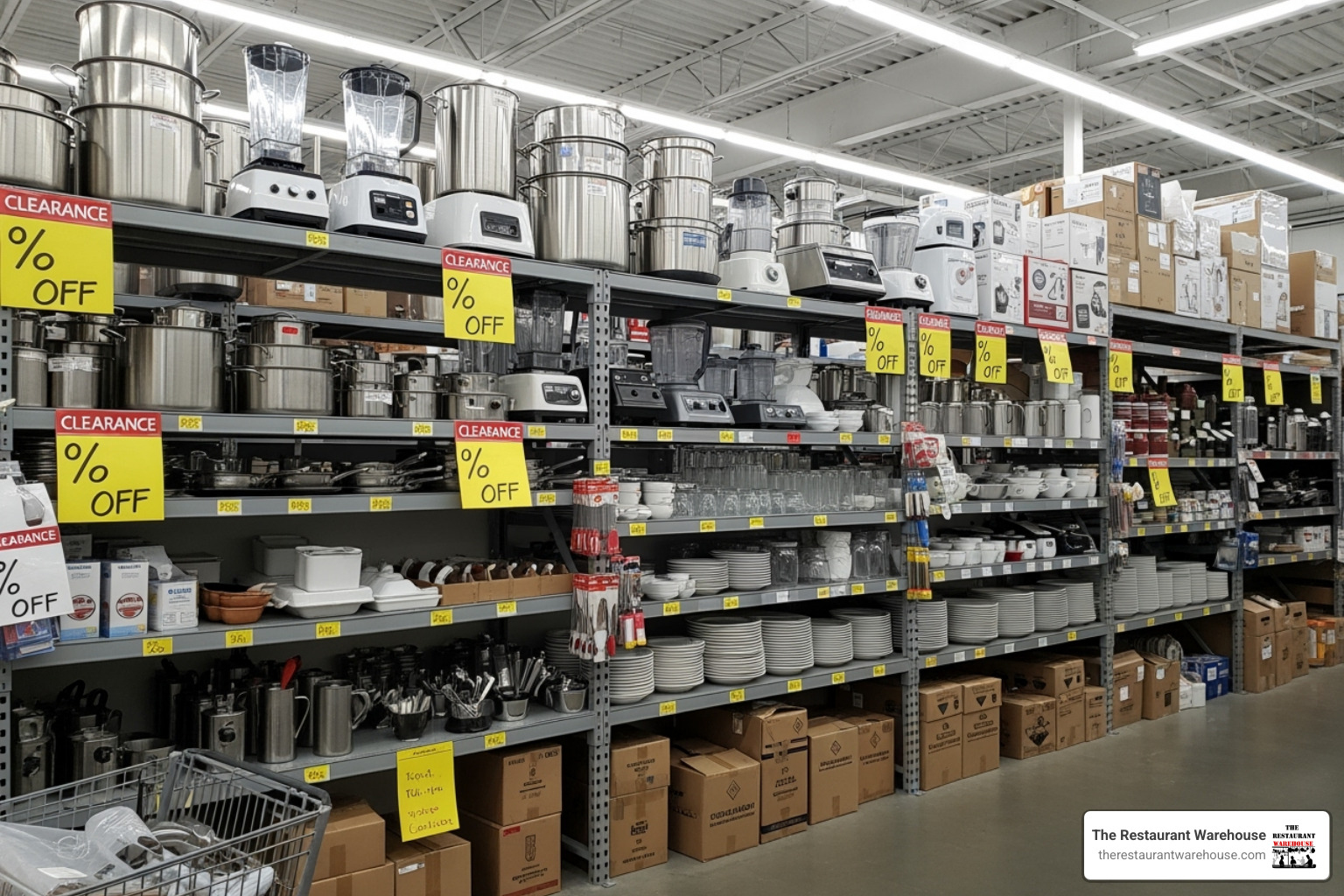
Seasonal sales and clearance sections are goldmines for budget-conscious buyers. These sales offer significant discounts on everything from dinnerware to storage containers. Plan your non-urgent purchases around these events.
Don't overlook loyalty programs or wholesale pricingour specialty at The Restaurant Warehousewhich provides better value than retail, especially in larger quantities.
For cash flow management, financing can be a game-changer. Leasing programs and flexible terms let you get the supplies you need without a massive upfront payment. This approach helps you preserve working capital for other critical needs like staffing or marketing, letting you acquire quality supplies while spreading costs over time.
Budgeting tactics that work:
- Build a replacement schedule for high-loss items (e.g., glassware) and budget monthly
- Standardize SKUs to open up bulk discounts and simplify reorders
- Use ABC inventory analysis to prioritize spend on high-impact items
- Track breakage and loss; address root causes to lower replacement costs
Contact Us to discuss your budgetwe're here to help you find financing solutions that work for your specific situation.
Hunt for Discount Codes and Loyalty Rewards
Before you finalize any purchase, always do a quick search for discount codes. Many suppliers offer special promotions through their newsletters or loyalty programs. Signing up for an account can give you access to exclusive deals, early notifications about sales, and even rewards points on your purchases. Some programs offer cash-back incentives, giving you a percentage back on every dollar you spend, which adds up quickly when you're outfitting an entire kitchen. It’s a simple step that takes just a few minutes but can lead to significant savings over time. Think of it as a small investment in your bottom line.
Ask About Price-Matching Guarantees
Never assume the listed price is the final price. If you find the exact same item for less at a competitor, don't hesitate to ask your preferred supplier if they offer a price-matching guarantee. Many stores will happily match a lower price to win your business, sometimes even for up to 30 days after your purchase. This strategy allows you to consolidate your orders with a supplier you trust while still getting the most competitive price on the market. Just be sure to have the competitor's offer handy and read the fine print on the price-match policy.
Find Free Shipping Deals
Shipping costs, especially for heavy restaurant equipment, can add a surprising amount to your final bill. Always look for suppliers that offer free shipping. Some stores provide it on orders that meet a certain dollar amount, which you can often reach by bundling your purchases. At The Restaurant Warehouse, we simplify things by offering free freight shipping to any commercial address in the lower 48 states. This straightforward policy eliminates hidden fees and helps you budget more accurately, ensuring the price you see is the price you pay.
Check the Outlet Section for Hidden Gems
The outlet or clearance section of a restaurant supply store is a treasure trove for savvy shoppers. This is where you’ll find open-box returns, scratch-and-dent models, or discontinued items at a steep discount. These products are often functionally perfect but have minor cosmetic flaws that won’t impact performance. Whether you need a backup freezer or extra prep tables, regularly checking the outlet section can help you acquire high-quality gear for a fraction of the cost. Inventory turns over quickly, so it pays to check back often.
Request a Custom Quote for Big Orders
If you're opening a new location or undertaking a major kitchen renovation, you're likely buying a long list of items. Instead of adding everything to a cart and checking out, reach out to the supplier directly and request a custom quote. Most companies are willing to offer bulk pricing or package deals for large orders that aren't advertised on their website. This not only secures you a better price but also helps you build a direct relationship with a sales representative who can offer personalized advice and support for your project.
Explore Flexible Financing Terms
High-quality commercial equipment is an investment, but it shouldn't drain your working capital. Look for suppliers that offer flexible restaurant equipment financing options. These programs allow you to get the essential equipment you need now—like new refrigerators or deep fryers—while spreading the cost over manageable monthly payments. Financing frees up your cash for other critical business needs, such as payroll, inventory, and marketing. It’s a strategic way to equip your kitchen for success without compromising your financial stability from day one.
Finding a Supplier You Can Trust
Finding a restaurant supply store is one thing; building a genuine partnership is another. In the food industry, your suppliers should be more than just vendors. They should be strategic allies who understand your challenges and support your growth.
When you're short on plates during a dinner rush or a health inspector arrives unannounced, you want a supplier who has your back. This partnership extends beyond placing orders. It's about expert support, responsive service, and proactive solutions.
The global restaurant supply market is projected to grow, increasing demand for commercial supplies. This makes it even more important to have reliable partnerships that can handle supply chain complexities and ensure consistent access to the items you need. A true partner helps you meet today's demands and prepare for tomorrow's opportunities. For insights into how these partnerships can strengthen your operations, explore our resources on Restaurant Supply Chain Solutions.
What Makes a Good Supplier a Great Partner?
When evaluating a potential restaurant supply store for a long-term partnership, look beyond their product catalog and pricing. Assess their capacity to be a reliable extension of your team.
Knowledgeable staff should be at the top of your list. They can provide informed recommendations based on real industry experience and offer solutions custom to your needs. Responsive customer service is non-negotiable. Quick resolutions to inquiries or issues can make or break your day. A supplier that's easy to reach and proactive in their communication is committed to your success.
Reliable shipping and consistent stock availability are crucial. Unpredictable delivery times or frequent backorders can disrupt your entire service schedule. Finally, look for strong problem-solving ability. A supplier's capacity to adapt and assist, whether by finding an alternative product or helping with a custom solution, is what separates a true partner from just another vendor.
Additional partnership indicators:
- Proactive notifications on backorders and substitutions
- Access to account history, invoices, and reorder shortcuts
- Help with standardizing SKUs and consolidating vendors
- Sustainability options (packaging choices, durable SKUs)
Look for a Proven Track Record
A supplier's history tells a story about their reliability and expertise. Companies that have been around for decades, like City Food Equipment, which has served kitchens since 1985, have weathered industry shifts and proven their commitment. Longevity often means they've built strong relationships with manufacturers and understand the real-world demands of a commercial kitchen. Look for suppliers with a history of positive customer reviews and testimonials. A long-standing presence, like that of RestaurantSupply.com, which has been a trusted name since 1999, signals stability and a business model built on customer satisfaction, not just quick sales. This track record is your assurance that they'll be there for you when you need support, replacements, or advice down the road.
How They Keep Prices Low Matters
Every restaurant owner is looking for a good deal, but it's important to understand where those savings come from. The best suppliers achieve low prices through smart business models, not by sacrificing quality. Online stores, for example, have a distinct advantage. Without the high overhead of physical showrooms, they can pass those savings directly to you. At The Restaurant Warehouse, we've built our entire business on this principle—avoiding retail markups to bring you consistently lower prices on quality equipment. Other suppliers might leverage massive purchasing power or offer professionally refurbished equipment. The key is transparency. Be wary of prices that seem too good to be true without a clear explanation. A trustworthy partner is open about how they provide value.
More Than Just Supplies: How a Partner Helps You Grow
A great restaurant supply store actively contributes to your success by serving as a trusted advisor.
They do this by keeping you informed about new products and innovations. A proactive supplier stays on top of industry developments and shares relevant information, like a new type of food storage container that extends shelf life or a more efficient cleaning system.
They also provide crucial supply chain insights that help you make smarter purchasing decisions. Understanding market trends and potential shortages allows you to plan your buying more effectively. Flexible solutions are another hallmark of a great partnership. As your business scales, they should be able to adapt their service to match your changing needs, whether by adjusting delivery schedules or offering different payment terms.
Operational wins you can expect:
- Faster training and onboarding when supplies are standardized
- Lower variance in plating and portioning with consistent tools
- Fewer service disruptions thanks to reliable replenishment
Ready to find a supplier partner who truly supports your success? Contact us today to discuss how we can help your restaurant thrive. For more insights, check out our guide on the Restaurant Supply Chain.
Frequently Asked Questions about Restaurant Supply Stores
After years of helping restaurateurs, I've heard just about every question imaginable about restaurant supply stores. Here are the most common ones, with straight answers to help you make smarter purchasing decisions.
Restaurant Supply Store vs. Wholesale Club: What's the Difference?
This is a common question, and the differences are significant. Wholesale clubs sell products for both businesses and consumers, and their items are often built for occasional use, not the daily grind of a commercial kitchen.
A restaurant supply store is different. Everything is built to commercial-grade standards. We're talking about dinnerware that survives hundreds of high-temperature wash cycles and glassware engineered to resist breaking. The product focus is on foodservice needs, so you'll find industry-specific items like hotel pans, portion cups, and specialized cleaning chemicals that wholesale clubs don't carry. Many of our products also carry NSF certification, meeting strict public health standards.
How Do I Check the Quality of Used Equipment?
Buying used can be a smart budget move, but you need to know what to look for. I always tell customers to be thorough.
Start with a thorough inspection. Look for cracks, dents, warping, or other signs of excessive wear. Run your hands over surfaces to feel for damage. For anything with moving parts, like a rolling cart, test functionality. Do the wheels roll smoothly? Do the shelves feel secure? Always ask for the item's history if possible. Most importantly, work with reputable sellers who inspect and stand behind their used inventory. The goal is to find reliable products that still have plenty of commercial life left in them.
Practical tip: take photos and measurements of your shelves, drawers, and storage spaces before shopping. Matching sizes and stackability will save you time and returns.
Can I Count on Fast Shipping From Online Stores?
The honest answer is that it varies by supplier. The key is to do your homework before you need something urgently.
Check shipping policies carefully. Look for estimated delivery times and whether they offer expedited options. Warehouse locations make a huge difference; suppliers with multiple distribution centers can often deliver faster. Customer reviews are invaluable for understanding real shipping experiences. Some suppliers use direct fulfillment from their own warehouses, which tends to be more reliable than drop-shipping arrangements.
At The Restaurant Warehouse, we prioritize direct fulfillment because we know that when you need supplies, you often need them fast. For time-sensitive orders, always confirm delivery estimates upfront. The restaurant industry moves quickly, and your supplier should too.
What Should I Look For in a Return Policy?
Look for a window that accommodates real-world testing (at least a couple of weeks), clear guidance on restocking fees, and prepaid return labels for damaged-in-transit items. Keep original packaging until you’re sure you’re keeping the items.
How Do I Set Par Levels for My Supplies?
Start with one week of peak volume as your baseline, then add a safety stock buffer (often 15-30% depending on delivery lead times and breakage rates). Use reordering reminders and standardized SKUs to keep everything consistent and easy to restock.
Making the Right Choice for Your Restaurant
Choosing the right restaurant supply store doesn't have to be overwhelming. By following these essential strategies, you can turn a daunting task into a competitive advantage.
Start with clarity about what you truly need, from neat dinnerware to durable storage solutions. Evaluate your options between online convenience and local showrooms. Never compromise on quality; commercial-grade standards are what keep your operation running smoothly. Master your budget through smart purchasing, whether that means finding deals on used items or using financing to preserve cash flow.
Most importantly, the best restaurant supply store becomes a true partner in your successone who provides expertise, reliable service, and a genuine interest in helping your business thrive.
At The Restaurant Warehouse, we've built our approach around being that partner. We skip the high commissions and retail overhead, passing those savings directly to you. We believe every food business deserves access to quality supplies at fair prices.
By making informed, strategic choices about your supply partnerships, you're setting the foundation for smooth operations, delighted customers, and healthy profits.
Ready to experience the difference that wholesale pricing and genuine partnership can make? Explore our full Restaurant Supply Store Guide to see how The Restaurant Warehouse can support your culinary dreams.
If you want help building your custom supply checklist or standardizing SKUs, Contact us and well walk you through a plan that fits your menu, space, and budget.
Get Help with Your Kitchen Design
A well-designed kitchen is the heart of an efficient restaurant, directly impacting your speed, safety, and output. The flow from your prep stations to your cooking line and dish pit can make or break a busy service. Some suppliers go beyond just selling equipment and offer kitchen design services to help you optimize this workflow. They can help you select the right size refrigerators and freezers to fit your layout or position your deep fryers for maximum safety and productivity. This kind of support transforms a supplier from a simple vendor into a true operational partner, helping you build a foundation for success from the ground up.
Find a Partner Who Offers Repair Services
Even the highest-quality equipment will eventually need maintenance or repair. When a critical piece of machinery goes down, the last thing you want is to scramble to find a trustworthy technician. That's why finding a supplier who also offers repair services is a huge advantage. This creates a single point of contact for the entire lifecycle of your equipment, from purchase to maintenance. A partner who can both sell you the gear and fix it when it breaks demonstrates a long-term commitment to your business. It provides peace of mind, knowing that expert help is just one phone call away, minimizing downtime and protecting your investment.
Ask About Customization Options
Your brand is what sets you apart, and the right supplier can help you extend that identity to your supplies. Many top-tier suppliers offer customization services, like adding your logo to disposables, glassware, or dinnerware. This small touch creates a more professional and memorable experience for your guests. Customization can also apply to purchasing. A great partner will work with you on custom price quotes for large orders, helping you shop for restaurant equipment in a way that fits your budget. These flexible options show that a supplier is invested in your unique needs and is willing to adapt to help you grow.
Key Takeaways
- Start with a Strategic Supply List: Before you begin shopping, create a detailed checklist for both your front and back of house. Knowing exactly what you need prevents impulse buys, streamlines your search, and ensures every purchase serves a specific purpose in your operation.
- Prioritize Durability Over Initial Cost: Commercial-grade equipment is an investment that pays off. While the upfront price may be higher, its ability to withstand heavy use saves you significant money over time by reducing the need for constant replacements and preventing service interruptions.
- Choose a Supplier Who Acts Like a Partner: Look for more than just a product catalog. A great supplier offers reliable service, expert advice, and consistent stock, becoming a valuable resource that actively supports your restaurant's efficiency and growth.
Related Articles
About The Author

Sean Kearney
Sean Kearney is the Founder of The Restaurant Warehouse, with 15 years of experience in the restaurant equipment industry and more than 30 years in ecommerce, beginning with Amazon.com. As an equipment distributor and supplier, Sean helps restaurant owners make confident purchasing decisions through clear pricing, practical guidance, and a more transparent online buying experience.
Connect with Sean on LinkedIn, Instagram, YouTube, or Facebook.