

Master Your Restaurant Supply Chain
A restaurant supply chain is the sprawling, complex network of people, processes, and technologies that gets food, drinks, and equipment from their original source—think farms, vineyards, and factories—straight to your kitchen door.
You can think of it as the central nervous system of your restaurant. It works quietly behind the scenes to make sure every ingredient shows up fresh and on time, so you can focus on creating those amazing guest experiences.
The Hidden Engine of Your Restaurant
Every single restaurant, whether it's a cozy neighborhood café or a massive fine-dining operation, has a hidden engine that keeps it humming. This engine isn't the oven or your POS system; it’s the restaurant supply chain. It's the entire journey a single tomato takes from a distant farm, through a distributor's warehouse, onto a delivery truck, and finally into your chef's hands to become part of a signature sauce.
This journey involves a whole series of carefully coordinated stages. If this system isn't managed well, you're opening the door to service-crushing problems. I'm talking about running out of a bestseller mid-service, throwing away money on spoiled ingredients, or serving up inconsistent food that can seriously damage your reputation. Mastering this system isn't just about logistics; it’s a core part of strategic business management.
More Than Just Deliveries
It’s easy to dismiss the supply chain as just "getting stuff delivered," but it's so much more intricate than that. It covers every single decision and action that brings a product to your restaurant. This includes things like:
- Sourcing and Procurement: Finding and building relationships with reliable suppliers who deliver quality products at a fair price.
- Inventory Management: The art of stocking just enough to meet demand without over-ordering and creating waste.
- Logistics and Transportation: The actual physical movement of your goods, making sure they're stored and transported under the right conditions to stay fresh.
- Receiving and Quality Control: The crucial step of inspecting every delivery to make sure you got what you paid for and that it meets your quality standards.
Getting this entire process right is more critical now than ever. With restaurant spending now capturing 56.4% of the food market share over grocery shopping, the pressure to deliver a consistently high-quality experience is immense. This growth is driving huge investments in the industry, making a solid operational foundation absolutely essential.
Why Every Operator Is a Logistics Manager
Whether you realize it or not, if you run a restaurant, you're also managing a miniature logistics company. The success of your menu, your overall profitability, and your customer satisfaction are all directly tied to how efficiently your supply chain operates.
A weak link anywhere in this chain—a late delivery, a bad batch of produce, or a simple inventory miscalculation—can throw your entire operation into chaos, leading to lost sales and frustrated customers.
Understanding this system is the first step toward making it better. By mapping out exactly how goods flow into your business, you can start to pinpoint bottlenecks, cut down on waste, and forge stronger, more reliable relationships with your suppliers. For a deeper look into all the essential components, check out our complete restaurant supply guide to get your operation fully equipped for success.
The Four Pillars of Restaurant Logistics
A high-performing restaurant supply chain is no accident. It’s carefully built on a foundation of four interconnected pillars, all working together to get ingredients from the source to your service line smoothly. It's a lot like a sturdy four-legged table—if one leg is wobbly, the whole thing becomes unstable and unreliable.
When you master these four areas, you can stop reacting to problems and start managing your operations proactively. Let’s break down each one and see how it plays out in the real world of running a restaurant.
Pillar 1: Procurement and Sourcing
Procurement is the art and science of getting the ingredients and supplies you need. This goes way beyond just placing an order; it's about building strong, dependable relationships with suppliers who deliver consistent quality at a fair price.
This is where the promise of your menu truly begins. A farm-to-table bistro, for example, will put a huge emphasis on sourcing from local organic farms to guarantee that peak freshness and support the community. A large fast-food chain, on the other hand, needs to lock in contracts with major distributors who can deliver the exact same products to hundreds of locations without fail.
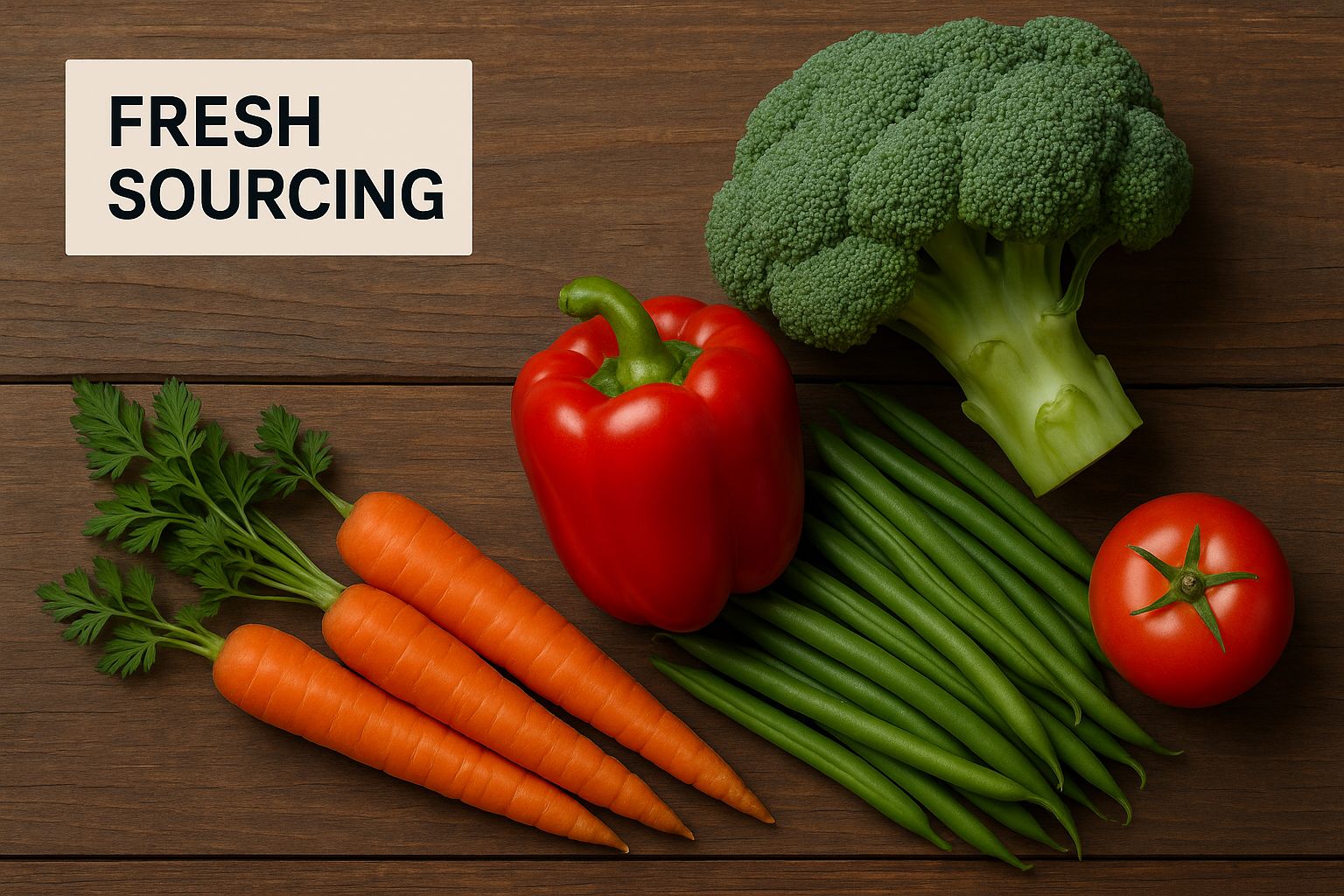
As you can see, the whole process starts with the quality of what you buy. Great procurement really comes down to a few key actions:
- Vetting Suppliers: You need to evaluate potential partners on their reliability, quality standards, and pricing. Do they have a good track record?
- Negotiating Contracts: This is about securing favorable terms that protect your restaurant from sudden price hikes or unexpected supply shortages.
- Maintaining Relationships: Fostering genuine partnerships built on good communication and trust is invaluable, especially when disruptions happen.
Pillar 2: Inventory Management
Once you’ve bought all your supplies, you have to store them somewhere. Inventory management is that delicate balancing act of having exactly what you need on hand without tying up your cash in excess stock or, even worse, losing money to spoilage. Honestly, poor inventory control is one of the fastest ways to drain your profits.
Think of your storeroom and walk-in cooler as expensive real estate. Every single item sitting on those shelves represents cash that isn't in your bank account. The goal is to maximize the return on every square foot of that space.
Success here hinges on precise tracking and forecasting. This means using proven methods like First-In, First-Out (FIFO) to ensure older stock gets used before it expires. It also means using your sales data to get better at predicting future demand. A steakhouse, for instance, has to be incredibly careful about managing its inventory of prime cuts, because overstocking can lead to a huge financial loss.
Pillar 3: Logistics and Transportation
Logistics is all about the physical journey of goods from your supplier to your restaurant's back door. This pillar is all about efficient movement and, most importantly, maintaining the integrity of the product while it's in transit. For a restaurant, this is absolutely critical for perishable goods.
Just think about the journey of fresh seafood. It has to be transported in refrigerated trucks kept at a very specific temperature to prevent spoilage and ensure it's safe to eat. A delay of just a few hours or a problem with the truck’s cooling system can make an entire shipment totally unusable.
The people who coordinate all these moving parts are absolutely essential. If you're curious about the kind of operational roles that keep a supply chain moving, looking into a position like an Internet Dispatch Coordinator role gives you a great peek into the detailed coordination it takes.
Pillar 4: Distribution and Receiving
The final pillar is distribution and receiving—the last mile of the supply chain journey. Distribution is the process of ensuring that items from a central warehouse or supplier get to the right final destination. This gets particularly complex for restaurant groups with multiple locations.
Receiving is your last line of defense for quality control. It’s the critical moment when your team physically accepts deliveries, checks them against the invoice, and inspects for quality, accuracy, and any signs of damage. A well-trained employee who can spot a case of wilted lettuce or verify the weight of a fish delivery before signing off can save the restaurant hundreds of dollars. This final check is what closes the loop, making sure the high standards you set during procurement are met right at your doorstep.
Let's be honest, even the most perfectly planned day in a restaurant can get thrown into chaos by one surprise. A smooth, well-oiled supply chain is great, but a resilient one? That's what really separates the restaurants that thrive from those that just get by. Building that resilience isn't about trying to predict and prevent every single problem—that’s impossible. It’s about creating a system that can take a punch, adapt on the fly, and keep your kitchen humming.
Think about this all-too-common scenario: a freak snowstorm shuts down a major highway, delaying the fresh fish delivery you’re counting on for your Friday night special. Or worse, a key supplier suddenly goes out of business, leaving you high and dry. These aren't just hypotheticals; they're the real-world headaches that can bring a packed service to a screeching halt. A proactive strategy is your only real defense against this kind of chaos.
Developing a Network of Backup Suppliers
The single most important step you can take to build a resilient supply chain is to get rid of single-source dependency. Relying on just one supplier for a critical ingredient category, like your produce or protein, is like building your house on a single pillar. If that supplier has a sudden price hike, a quality issue, or a truck breaks down, your entire menu is at risk.
The fix is to cultivate a network of vetted backup suppliers. This doesn’t mean you’re constantly bouncing between vendors. It means you’ve already built relationships with your plan B and even your plan C before you actually need them.
- Primary Supplier: This is your go-to partner, handling the lion's share of your orders. You've got great pricing and a track record of reliability with them.
- Secondary Supplier: A solid backup you order from every now and then just to keep the relationship warm. They're ready to step in and fill any gaps when your primary can't deliver.
- Local Specialist: For certain key items, like that amazing artisanal cheese or unique local produce, having a direct line to a smaller producer gives you an incredibly agile sourcing option.
When you diversify your supplier base this way, a price surge from one vendor becomes a point of negotiation, not a five-alarm fire. You gain leverage and, more importantly, peace of mind.
Think of it like having insurance for your inventory. You hope you never need to make a major claim, but you'll be incredibly grateful for the coverage when a disaster inevitably strikes.
Implementing Strict Receiving Protocols
So many supply chain failures aren't even discovered until it’s way too late—usually right when a line cook opens a box in the middle of a dinner rush. A case of wilted lettuce can be just as damaging to your service as a delivery that never shows up. This is where strict, non-negotiable receiving protocols become your last line of defense.
Your team needs to be trained to do more than just scribble a signature on a delivery slip. They are your frontline quality control agents.
- Verify Against the Invoice: First things first, check that every single item and quantity on the invoice actually matches what’s on the pallet.
- Inspect for Quality: This is huge. Open the boxes. Temp the refrigerated goods. Look for any signs of wilting, bruising, or spoilage. Don't be afraid to refuse any product that doesn't meet your standards.
- Check Dates: Make sure all products have acceptable "use by" or "best by" dates. This simple check prevents frustrating (and costly) premature waste.
Putting a rock-solid receiving checklist in place ensures you catch problems at the back door, long before they can ever affect a customer's plate or hit your bottom line. It turns your receiving dock from a simple drop-off point into a strategic checkpoint for your entire operation.
All of these potential disruptions can feel overwhelming, but having a plan makes them manageable. Let's look at some common risks and how you can get ahead of them.
Common Supply Chain Risks and Mitigation Strategies
| Risk Type | Example Scenario | Primary Impact | Mitigation Strategy |
|---|---|---|---|
| Supplier Failure | A primary vendor abruptly goes out of business or has a major internal crisis (e.g., a fire at their warehouse). | Immediate inability to source critical ingredients, forcing last-minute menu changes or service disruptions. | Develop and maintain relationships with vetted secondary and even tertiary local suppliers for all key product categories. |
| Logistics & Transportation Delays | A major snowstorm, highway closure, or vehicle breakdown delays a critical delivery by 24-48 hours. | Running out of key items mid-service, leading to unhappy customers and lost revenue. | Build a small buffer of safety stock for non-perishable and key frozen items. Maintain open communication with drivers. |
| Quality & Safety Issues | A batch of fresh produce arrives wilted and unusable, or a refrigerated item is delivered outside the safe temperature zone. | Food waste, increased food cost, and potential food safety hazards if the issue isn't caught immediately. | Implement strict receiving protocols with a detailed checklist; train staff to inspect, temp, and refuse subpar products. |
| Price Volatility | Due to a poor growing season or market speculation, the price of a key ingredient like avocados or beef suddenly spikes by 30%. | Drastically increased cost of goods sold (COGS), which either squeezes profit margins or forces unpopular price hikes. | Diversify the menu to rely less on a single volatile ingredient. Establish price caps or longer-term contracts with primary suppliers. |
| Sudden Demand Surges | An unexpected local event or viral social media post leads to a massive, unplanned rush on a specific menu item. | Stockouts on popular dishes, leading to customer disappointment and a chaotic kitchen environment. | Use a POS system with strong inventory tracking to identify trends. Have a plan with backup suppliers for quick-turnaround orders. |
As you can see, the key isn't to hope these things won't happen, but to have a clear, actionable plan for when they do. A little foresight goes a long way in turning a potential crisis into a minor hiccup.
Strategies to Optimize and Cut Costs
A supply chain that just survives disruptions is one thing; it keeps your doors open. But a supply chain that’s truly optimized? That’s where you start actively boosting your bottom line. It’s about shifting from a defensive stance to an offensive one, fine-tuning every step to squeeze out inefficiencies and unlock profits you didn't even know were there.
This isn’t about making painful, dramatic cuts. It’s about getting smarter and more strategic in your decisions. Think of these strategies as a toolkit. Each one is a different lever you can pull to turn your supply chain from a simple cost center into a real competitive advantage.
Leverage Group Purchasing Power
One of the biggest hurdles for independent restaurants is competing with the massive buying power of national chains. This is where a Group Purchasing Organization (GPO) can be a game-changer. A GPO pools the orders of many smaller businesses to negotiate much better pricing and terms with suppliers, from your food vendors to equipment dealers.
It’s like getting the benefits of buying in bulk, but you’re doing it with a whole community of other restaurants. This collective muscle can unlock significant savings that would be impossible to get on your own. The trade-off? Joining a GPO often means committing to their list of approved suppliers, which might slightly limit your flexibility to source unique, hyper-local ingredients.
Adopt Lean Inventory Models
Holding onto too much inventory is like letting cash just sit on your storeroom shelves, slowly losing its value. Adopting a lean inventory model, like the popular Just-in-Time (JIT) approach, is all about minimizing those holding costs by having goods arrive only when you actually need them.
- Benefit: This approach drastically cuts down on the capital you have tied up in stock, slashes the risk of spoilage, and frees up precious storage space. A well-executed JIT system can make a serious dent in food waste, which is a huge source of loss for most restaurants.
- Challenge: The catch is that you have a much smaller safety net. A lean model lives and dies by the reliability of your suppliers. Even a minor delivery delay can lead to stockouts and force you to 86 a popular menu item.
A well-managed lean inventory system transforms your storeroom from a warehouse into a high-speed transit hub. Ingredients arrive, are quickly processed, and are served to customers, minimizing the time they spend as a cost on your books.
Negotiate Smarter Supplier Contracts
Your supplier agreements shouldn't be treated like they're set in stone. They are living documents that deserve to be revisited and negotiated regularly. And smart negotiation goes way beyond just haggling over the price per pound—it’s about looking at the total value of the relationship.
Get creative and negotiate for terms that directly support your cash flow and operational stability. You could push for:
- Longer payment terms (like net 45 instead of net 30) to give your cash flow more breathing room.
- Price locks on key commodities for a set period, shielding you from wild market price swings.
- Rebates that kick in once you hit certain purchasing volumes throughout the year.
When you build a strong, transparent partnership with your suppliers, these kinds of collaborative negotiations become possible. It becomes less about one side winning and more about finding ways to create value for everyone involved.
Engineer Your Menu for Profitability
Menu engineering is the art and science of strategically designing your menu to subtly guide customers toward your most profitable dishes. It involves a deep dive into each menu item, weighing its ingredient cost (your food cost percentage) against its popularity (sales volume).
Once you understand which items are your "stars" (high profit, high popularity) and which are your "puzzles" (high profit, low popularity), you can start making data-backed decisions. This might mean giving a high-margin item a more prominent spot on the menu or slightly tweaking the recipe of a popular dish to use more cost-effective ingredients. It’s a powerful way to directly link your supply chain costs to your daily sales. For a deeper dive into improving your supply chain, explore these essential supply chain management best practices that can give you an edge.
Embrace Sustainable and Local Sourcing
Here’s something that might surprise you: sustainability is a powerful cost-cutting strategy. Think about it. Minimizing food waste through practices like nose-to-tail cooking, repurposing ingredients, and being precise with your portion control directly lowers your food costs. When you throw less away, you have to buy less.
On top of that, sourcing locally can often trim your transportation costs and get you fresher products with a longer shelf life, which cuts down on waste even further. And don't forget your equipment. Investing in modern, energy-efficient kitchen equipment can lead to huge long-term savings on your utility bills. If you need to upgrade, exploring a restaurant equipment financing guide can make those crucial investments much more manageable.
Using Technology to Your Advantage
While smart strategies and strong supplier relationships are the foundation of a great supply chain, technology is the force multiplier that takes your entire operation to the next level. It gives you the visibility and data you need to stop putting out fires and start making proactive, intelligent moves.
Think of it this way: running your supply chain without modern tools is like trying to drive through a busy city using a crumpled paper map. You might eventually get to your destination, but you have no clue about traffic jams, accidents, or faster routes. Technology gives you that live, dynamic GPS view of your whole operation.
From Manual Guesswork to Automated Precision
The biggest leap forward technology offers is the shift away from manual, error-prone tasks to automated, data-driven precision. This is most obvious in inventory management—a classic headache for nearly every restaurant owner.
Instead of relying on late-night clipboard counts and gut feelings, modern inventory management software automates the entire game. These systems track stock levels in real time, fire off purchase orders automatically when you're running low, and even sync with your POS system to deplete inventory with every sale. This simple automation frees up a ton of time and drastically cuts down on the human error that leads to over-ordering and waste.
By connecting your sales data directly to your ordering process, you create a self-regulating system that helps ensure you have exactly what you need, right when you need it. This simple connection is the first step toward a smarter, more efficient kitchen.
The Power of Predictive Analytics and AI
The next frontier for restaurant supply chains is all about artificial intelligence (AI) and predictive analytics. These aren't just buzzwords; these tools go beyond tracking what you've already sold. They dig into historical data, weather forecasts, local events, and even your own marketing promotions to predict future demand with surprising accuracy.
Imagine knowing with a high degree of certainty that an upcoming street festival will cause a 30% spike in demand for your craft beer and appetizers. That insight lets you adjust your orders ahead of time, preventing stockouts and cashing in on a golden opportunity. For a deeper dive into how AI in supply chain management is reshaping logistics, it's worth exploring specific applications like demand forecasting and risk mitigation.
Essential Tech Tools for Your Restaurant
Jumping into technology doesn't mean you have to overhaul your entire operation overnight. You can start by picking tools that solve your most immediate problems. Here are a few key technologies that are making a huge impact right now:
- Inventory Management Systems: This is the cornerstone of a modern restaurant supply chain. These platforms give you real-time tracking, automated ordering, and sharp analysis of your food costs.
- Supplier Relationship Management (SRM) Platforms: Think of these as a central hub for all your supplier communications, contracts, and performance data. They help you keep track of vendor reliability and negotiate better deals.
- Predictive Analytics Software: By crunching past and present data, these tools help you make smarter decisions on everything from staffing levels to how much to prep each morning.
- Temperature Monitoring Sensors: These small, wireless sensors sit inside your walk-ins and freezers, providing 24/7 monitoring. If the temperature ever strays from the safe zone, you get an instant alert on your phone, preventing catastrophic spoilage.
By strategically adopting these tools, you gain a clear, end-to-end view of your supply chain. This visibility allows you to pinpoint inefficiencies, build stronger partnerships, and ultimately, give your profitability a serious boost.
Building a Global Brand with Supply Chain Strategy
Ever wonder how massive restaurant chains manage to serve the exact same burger in Tokyo as they do in Texas? It’s not magic; it’s a masterfully built supply chain. These giants aren't just selling a menu; they're selling a complete, industrialized system that can be dropped into almost any market on earth. Their global success is a powerful lesson in how to scale a food business.
At the heart of this strategy is standardization. Every core component, from a signature sauce to a specific burger patty, has to be identical everywhere. This incredible consistency comes from highly detailed production guides, mandating the exact cooking equipment, and using centralized commissaries or approved co-packers to produce those key ingredients. It’s all about creating a reliable customer experience, which is the bedrock of any global brand.
The Global-Local Balancing Act
But here’s where the real genius comes in. A truly intelligent global supply chain isn't completely rigid. The smartest brands have perfected a balancing act, blending their strict standardization with strategic localization.
While core components like sauces or proteins are kept uniform, they’ll source fresh produce like lettuce and tomatoes from local suppliers in each new country. This dual approach is brilliant—it slashes shipping costs, guarantees freshness, and even helps the brand feel more integrated into the local economy, all while maintaining absolute quality control over every single ingredient.
This very trend is reshaping how culinary brands are growing internationally. The game has shifted from just selling a concept to delivering a full-stack supply chain solution that handles everything from production to logistics. You can discover more insights about this industrialization of cuisine and see how it's becoming the key to breaking into new markets.
This industrialized system is the ultimate strategic asset. It allows a brand to scale rapidly and efficiently, turning the abstract concept of quality control into a concrete, repeatable process that works anywhere in the world.
This level of detail extends to every corner of the operation, including the physical workspace itself. Standardizing the kitchen layout is just as critical as standardizing the recipes. Our guide on restaurant kitchen design tips dives into how an efficient layout is essential for keeping up with consistency and speed, no matter where in the world your kitchen is located.
Got Questions? We’ve Got Answers.
Even the best-laid plans for a restaurant supply chain can hit a snag. When you're in the thick of it, practical, everyday questions pop up. Here are some straightforward answers to the things we hear most often from restaurant owners and managers.
How Do I Choose the Right Suppliers?
Thinking of your suppliers as true partners—not just vendors—is the real secret here. It’s way more than just hunting for the lowest price. You're looking for a partner who delivers a solid balance of quality, reliability, and cost that actually works for your business.
A great place to start is by asking around. Talk to other local restaurant owners and see who they trust. Once you have a shortlist, it's time for a "taste test." Ask for samples of their core products, especially the ones that are signatures on your menu. Quality has to be non-negotiable.
Then, have a real conversation. Don't be shy about negotiating terms that go beyond just the price per unit. Discuss delivery windows, payment schedules, and—this is a big one—what their process is for handling mistakes or incorrect orders. A strong supplier relationship is built on a foundation of trust and open, clear communication.
A supplier who gives you the rock-bottom price but shows up late with questionable quality isn't a bargain. They're a liability that puts your kitchen's flow and your restaurant's reputation at risk.
When Is the Right Time to Adopt New Technology?
The best time to bring in new tech is when you have a specific, nagging problem that your current manual methods just can't solve anymore. It’s not about chasing shiny new toys; it’s about making a smart investment to fix something that's costing you time or money.
For instance, if you're constantly tossing out produce because of over-ordering, that’s a clear signal. An inventory management system with good forecasting isn't just a cool feature—it offers a direct and measurable return by cutting down that food waste.
Start by zeroing in on your biggest headaches:
- Is managing inventory a constant struggle? It’s time to look into automated inventory software.
- Losing money to spoilage? Temperature monitoring sensors could be a game-changer.
- Can't seem to get ahead of busy days? Explore a POS system that offers solid demand forecasting.
My advice? Start small. Pick one problem, find one solution, and really measure the difference it makes before you even think about adding more tech to your setup.
How Can I Actually Measure My Supply Chain ROI?
Measuring the return on your supply chain efforts is crucial for knowing what’s working and what’s just wishful thinking. Don’t try to find one single, magical number. Instead, focus on a few key performance indicators (KPIs) that are directly tied to your profits.
Keep a close eye on your Cost of Goods Sold (COGS) as a percentage of your total revenue. As you make improvements, this number should start to drop. Another great one is your inventory turnover rate. A higher number here is a fantastic sign, as it means your cash isn’t just sitting on shelves as slow-moving stock.
And finally, track your food waste percentage. Every single percentage point you reduce here is pure profit that goes straight back into your business.
Ready to build a more efficient and profitable kitchen? The Restaurant Warehouse provides the high-quality, affordable equipment and supplies you need to master your supply chain. From commercial refrigeration to cooking equipment, find everything you need to succeed at The Restaurant Warehouse.
About The Author

Sean Kearney
Sean Kearney is the Founder of The Restaurant Warehouse, with 15 years of experience in the restaurant equipment industry and more than 30 years in ecommerce, beginning with Amazon.com. As an equipment distributor and supplier, Sean helps restaurant owners make confident purchasing decisions through clear pricing, practical guidance, and a more transparent online buying experience.
Connect with Sean on LinkedIn, Instagram, YouTube, or Facebook.
Leave a comment