

Restaurant Supply Chain Solutions That Work
At its most basic, restaurant supply chain solutions are all about keeping a smooth, uninterrupted flow of ingredients from the farm to the customer's plate. They're the secret sauce behind ensuring freshness, reining in costs, and making sure every diner has a consistently great experience.
Why Your Restaurant Supply chain Matters More Than Ever
Think of your kitchen as a symphony orchestra. Every single ingredient is a musician, and your supply chain is the conductor making sure everyone plays their part perfectly and on time. Get it right, and the result is beautiful. Get it wrong, and you get chaos.
A well-oiled supply chain is what lets you:
- Deliver consistent food quality every single service.
- Keep a tight grip on costs and protect your profit margins.
- Avoid the nightmare of running out of a key ingredient and cut down on spoilage.
A strong supply chain is the unseen backbone of your restaurant, delivering freshness and reliability to every single plate that leaves the kitchen.
This entire network is a complex web, stretching from producers and farmers to distributors and the logistics of delivery. Thankfully, modern tools like inventory software and real-time tracking give operators the visibility they need to stay in control.
The Core Elements
So, what are the key pieces of this puzzle? It really boils down to three things:
- Smart Sourcing: Never put all your eggs in one basket. Having a good mix of vendors makes your supply chain far more reliable.
- Inventory Management: Using the right software can slash waste by as much as 30%, keeping money in your pocket instead of the trash can.
- Vendor Partnerships: Building strong relationships isn't just about getting good prices; it leads to better service, cost discounts, and priority access when supplies are tight.
When these pieces work together, they form the intricate system that defines a successful restaurant supply chain. You can learn more about aligning your supply chain with your overall business model in our comprehensive Restaurant Business Plan guide.
Why It's So Critical
Restaurants are in a constant race against the clock. Every service is a performance, and a single missing ingredient can derail a popular menu item and leave diners disappointed.
Think about the real-world consequences:
- Unexpected delays can force you to 86 an item at the last minute.
- Sudden price spikes can demolish your margins without any warning.
- Your reputation takes a hit when food quality suddenly drops.
Getting your supply chain right is like tuning a guitar before a concert. Even one off-key note can throw off the entire performance.
Every delivery is a baton pass in a relay race. It has to be flawless, every time.
This is why we talk about restaurant supply chain solutions as more than just placing orders. It's a holistic approach that covers planning, communication, and constant monitoring to keep things running smoothly.
Setting a Strong Foundation
Ready to get started? The first step is to map out every single link, from the farm gate all the way to your kitchen door. Look for potential weak spots, like ingredients you only get from one supplier or items that are prone to seasonal shortages.
Here are a few foundational steps you can take right now:
- Build relationships with at least 3 different vendors for each of your key products.
- Integrate inventory software to get real-time data and alerts on stock levels.
- Review your supply chain performance every month to spot trends early and adjust your strategy.
Taking these steps lays the groundwork for consistent deliveries, better cost control, and happier guests. Up next, we'll dive into targeted solutions for managing your inventory, vendors, and forecasting.
Solving Common Restaurant Supply Chain Challenges
Every restaurant owner knows that sinking feeling when the supply chain stumbles. Maybe it’s a surprise avocado shortage right before the weekend brunch rush, or a delivery of wilted lettuce you just can’t serve. These aren't just little hiccups; they're cracks in your foundation that directly impact your kitchen’s rhythm, your food costs, and ultimately, how happy your customers are when they leave.
These disruptions are more than just frustrating stories. Globally, supply chain chaos still costs businesses a staggering $184 billion a year, even as things have improved. This number highlights a weak spot that restaurants have to actively manage every single day.
This is where smart restaurant supply chain solutions come in. They’re designed to tackle these exact problems head-on, turning unpredictable chaos into a process you can actually control. Let's break down the most common headaches and see how they play out in the real world.
The Problem of Inaccurate Inventory
Imagine your walk-in cooler is a bank vault, but you have no clue how much cash is actually inside. That's what it feels like to run a kitchen with fuzzy inventory numbers. Counting everything by hand is a recipe for mistakes, giving you a warped picture of what you really have on the shelves.
This lack of clarity creates two huge problems. First, you over-order popular ingredients "just in case," which ties up your cash in extra stock that might spoil. Second—and often worse—you under-order and run out of a key item in the middle of a busy service. Now you’re forced to 86 a popular dish and disappoint your customers.
Without accurate, real-time inventory data, you're essentially guessing what your kitchen needs. This guesswork is expensive, leading directly to food waste on one end and lost sales on the other.
This is where technology really starts to shine, giving you a crystal-clear view of your stock levels to stop these expensive errors before they happen. For a deeper look at the mechanics, our detailed article on the restaurant supply chain provides some great background.
Navigating Volatile Vendor Pricing and Reliability
Your relationships with suppliers are the backbone of your business, but they can also be a major source of stress. Prices for staples like beef, chicken, and produce can swing wildly thanks to weather, market shifts, or shipping snags. A supplier you rely on might suddenly hike their prices, leaving you scrambling for another option.
Even worse is unreliability. A vendor who’s always late or drops off sub-par products forces your team to constantly react, trying to find last-minute replacements or change the menu on the fly. This inconsistency chips away at the quality promise you make to your diners.
A truly resilient restaurant has backup plans for everything critical. This goes beyond just food suppliers. For instance, having a strategy for securing emergency energy supplies for uninterrupted service ensures a power outage doesn't completely shut you down.
The Difficulty of Forecasting Demand
Trying to predict how many customers will walk through your door is one of the toughest parts of this business. A sudden change in weather, a big local event, or even a random viral post can cause a huge spike or dip in traffic. Without a solid forecast, you're always playing catch-up.
This guesswork directly messes with your ordering and prep work.
- Over-forecasting leads you to prep way too much food, which ends up as waste and lost profit.
- Under-forecasting means you’re not ready for a rush, leading to long ticket times, a stressed-out team, and unhappy guests who might not come back.
Modern tools can change this from a guessing game into a strategic advantage. By analyzing your past sales data and mixing in outside info like weather forecasts and local events, they create incredibly accurate demand predictions. This lets you staff correctly, order the right amount of product, and prep with confidence.
Building Your Smart Pantry with Digital Inventory Tools

Let's be honest, manual inventory counts with clipboards and clunky spreadsheets are relics. Modern restaurant supply chain solutions are here to turn that tedious chore into one of your sharpest strategic tools. It’s like upgrading your basic pantry to a "smart pantry"—one that gives you a live, accurate picture of every single item you have in stock.
This is all about moving from reactive ordering to proactive control. Instead of just guessing how much tomato sauce you’ll need for the weekend rush, you’ll have hard data guiding your every move. Digital inventory tools are the foundation for slashing waste, preventing those dreaded 86's, and freeing up cash that would otherwise be sitting on a shelf as excess stock.
Gaining Clarity with Real-Time Tracking
The single biggest game-changer with a digital system is real-time visibility. Every time a dish is punched into your Point of Sale (POS) system, the inventory platform automatically deducts the ingredients used to make it. When a new shipment arrives from a supplier, a quick scan updates your stock levels instantly.
You get a constant, accurate feed of information. You're no longer relying on a physical count from three days ago; you know exactly what you have on hand right now. This live view is absolutely critical for making smart, on-the-fly decisions during a slammed dinner service.
Automating Orders to Prevent Shortages
Once you have a crystal-clear view of your inventory, the next logical step is to automate the reordering process. These systems let you set "par levels" for every item, from salt to salmon fillets. When your stock of an ingredient dips below that preset minimum, the software can automatically generate a purchase order or ping you with an alert that it's time to restock.
This proactive approach is your safety net. It ensures you never face the nightmare of running out of a key ingredient mid-rush. Automated ordering keeps your stock levels right where they need to be, preventing both costly overstocking and the customer disappointment that comes with stockouts. It transforms the chaotic scramble of last-minute ordering into a smooth, predictable workflow.
By connecting your sales data directly to your inventory levels, you create a powerful feedback loop. The system learns your sales patterns, helping you order precisely what you need, exactly when you need it, which is a cornerstone of effective restaurant supply chain solutions.
This kind of precision is about more than just convenience; it’s about financial health. Efficient inventory management directly attacks one of the industry's biggest profit killers: food waste.
Slashing Spoilage with Smart Systems
Spoilage is a silent drain on restaurant profit margins. Digital inventory tools fight back by helping you enforce a strict First-In, First-Out (FIFO) system. By tracking expiration dates and batch numbers as they come in, the software ensures your team always reaches for the oldest products first.
This simple digital discipline drastically reduces the chances of finding a case of expired cream hiding in the back of the walk-in. Some of the more advanced systems will even send you alerts for items nearing their use-by date, giving you a chance to run a special or create a feature dish to move that product quickly.
This systematic approach is critical on a larger scale. The UN's Food and Agriculture Organization estimates that around 30% of all food produced for people is wasted each year. By implementing smart inventory tools, restaurants can play a meaningful role in curbing that trend. You can find more insights on the global food supply chain and its challenges over at Lacerta.com.
Connecting Inventory to Your Bottom Line
At the end of the day, a smart pantry isn't just about counting boxes. It’s about connecting what’s on your shelves directly to your financial performance. These digital tools provide powerful analytics that reveal exactly what's happening in your business.
- Cost of Goods Sold (COGS): Get precise, real-time COGS data without spending hours on calculations.
- Menu Profitability: See exactly which dishes are your profit drivers and which are costing you more than they're worth.
- Waste Tracking: Pinpoint where your waste is coming from, whether it's spoilage, over-portioning, or potential theft.
By weaving together your inventory data with sales and supplier information, you get a complete, unfiltered view of your operational health. This allows you to make data-driven decisions that cut costs, optimize your menu pricing, and boost overall profitability—turning your supply chain into a genuine competitive edge.
How to Forge Stronger Vendor Partnerships
Your suppliers are more than just line items on an invoice—they’re the bedrock of your kitchen's consistency. Treating these relationships as purely transactional is a common mistake, one that leaves restaurants vulnerable when things go wrong. A real restaurant supply chain solution means turning these connections from simple transactions into strategic alliances that can weather any storm.
It’s a total shift in mindset. Instead of just chasing the lowest price per pound, the goal is to build a network of reliable partners who are genuinely invested in your success. Strong partnerships unlock benefits that go way beyond cost, like priority access to high-demand products, better service, and a dependable flow of quality ingredients that your customers can actually taste.
Moving Beyond Price Alone
The first step in building a strong vendor network is to completely redefine how you vet potential suppliers. While cost is always part of the conversation, it can't be the only part. A cheap supplier who consistently delivers late or drops off subpar produce will cost you more in the long run through food waste, kitchen stress, and unhappy guests.
A more robust vetting process looks at a much broader set of criteria:
- Reliability: Does the vendor have a proven track record of on-time, accurate deliveries? Check their references. Better yet, ask other local restaurant owners about their real-world experiences.
- Quality Consistency: Is the quality of their product the same with every single order? Inconsistent quality torpedoes the consistency of your dishes.
- Communication: How do they handle problems? A great partner is proactive, giving you a heads-up about potential shortages or delays before they become a full-blown crisis.
This balanced approach ensures you're choosing partners who contribute to your operational stability, not just your short-term cost savings.
Using Technology to Manage Relationships
Juggling multiple vendors, purchase orders, and performance metrics can get overwhelming, fast. This is where centralized platforms come into play, serving as a command center for all your supplier interactions and streamlining the entire process from start to finish.
Imagine having a single dashboard where you can place orders with all your vendors, track delivery statuses in real-time, and automatically compare invoices against purchase orders. This kind of central hub gets rid of messy paperwork and confusing email chains, freeing up an incredible amount of time.
By digitizing your vendor management, you turn subjective feelings about a supplier's performance into hard, objective data. You can clearly see who consistently delivers on time and who falls short, empowering you to make smarter partnership decisions.
This data-driven approach is fundamental to modern vendor management. To really nail down your processes for long-term success and build rock-solid supplier relationships, it's worth diving deeper into effective vendor management best practices.
The Power of Strategic Alliances
Once you’ve established a network of reliable suppliers, the final step is to nurture these relationships into true strategic alliances. This really comes down to open communication, mutual respect, and a shared goal of long-term success.
Here are a few simple ways to build these powerful partnerships:
- Share Your Forecasts: Give your key vendors a heads-up about upcoming promotions or seasonal menu changes. This lets them plan ahead and ensure they have the stock you’ll need when you need it.
- Provide Prompt Feedback: Let suppliers know when they do a great job and, just as importantly, when there are issues. Constructive feedback helps them improve their service to you.
- Pay Your Invoices On Time: Honestly, being a reliable customer is the easiest way to become a valued partner. Timely payments build immense goodwill.
By investing in these relationships, you create a loyal network that will prioritize your needs, especially during industry-wide shortages or disruptions. This collaborative approach turns your supply chain from a potential liability into one of your restaurant's most powerful competitive advantages.
The Future of Food Service Supply Chain Technology
Not too long ago, high-tech tools for managing a restaurant's supply chain felt like something reserved for the big chains with massive budgets. That's not the case anymore. Today, incredibly powerful tools are within reach for kitchens of all sizes, completely changing how we handle everything from ordering ingredients to getting food to the customer. These modern restaurant supply chain solutions are building smarter, stronger, and more transparent businesses from the ground up.
Think of it as giving your restaurant a brand-new nervous system. Instead of just reacting to problems as they pop up—like running out of a key ingredient during the dinner rush—you can now see them coming and act ahead of time. This fundamental shift from a reactive mindset to a proactive one is where this technology really shines. It helps you get a tight grip on your inventory, lock down food safety, and build a deeper level of trust with your diners.
AI-Powered Predictive Forecasting
Artificial intelligence (AI) is taking the guesswork out of planning. We used to rely on gut feelings and last year's sales numbers, but AI-powered forecasting tools dig so much deeper. They start with your historical sales data, sure, but then they layer on all sorts of external factors—local weather forecasts, community events, upcoming holidays, and even what's trending on social media—to predict your next rush with uncanny accuracy.
Imagine knowing, with a high degree of confidence, that a sunny Saturday is going to boost your patio sales by 30%. You could staff up, prep the right amount of food, and be ready for it. This kind of foresight is a game-changer. It helps you:
- Optimize Staffing: Schedule the right number of people to handle the expected flow of customers, so you're never overstaffed and bleeding cash, or understaffed and stressing everyone out.
- Reduce Food Waste: Order what you actually need based on data-driven forecasts, which means less food spoilage and more money in your pocket.
- Improve the Guest Experience: Make sure you've got enough of your most popular dishes on hand, preventing the dreaded "we're out of that" conversation during peak hours.
This tech connects what's happening in the dining room to what needs to happen in the stockroom in a way that just wasn't possible before. It makes your whole operation smarter and more profitable.
The way restaurants manage their supply chains has changed dramatically. What used to be a manual, often reactive process is now becoming a sophisticated, data-driven operation.
Here’s a quick look at how things have evolved:
Modern vs Traditional Restaurant Supply Chain Approaches
| Operational Area | Traditional Approach | Modern Solution |
|---|---|---|
| Inventory Management | Manual counts on clipboards, prone to human error and infrequent updates. | Real-time tracking with automated alerts for low stock levels. |
| Demand Forecasting | Based on past sales history and intuition, often leading to over or under-ordering. | AI-powered predictive analytics using sales data, weather, events, and trends. |
| Vendor Relations | Phone calls and emails for ordering, with limited price comparison or transparency. | Centralized supplier management platforms for easy ordering and relationship tracking. |
| Food Safety | Manual temperature logs and paper-based tracking, making traceability difficult. | IoT sensors for continuous monitoring and blockchain for farm-to-fork traceability. |
| Order Fulfillment | A single system for dine-in, often struggling to adapt to delivery/takeout surges. | Integrated systems that sync online, mobile, and in-house orders with inventory. |
This table really highlights the jump from guesswork to precision. Modern solutions give you the visibility and control needed to navigate the complexities of today's food service world.
The Rise of IoT and Blockchain
Beyond forecasting, two other technologies are making a huge impact on restaurant supply chains: the Internet of Things (IoT) and blockchain. When they work together, they create a new level of safety and transparency that runs all the way from the farm to the customer's fork.
The Internet of Things (IoT) is all about putting tiny sensors on everything—from the delivery trucks bringing you produce to the walk-in cooler in your kitchen. These sensors constantly keep an eye on critical data like temperature and humidity. If a fridge door is accidentally left open or a shipment of fresh fish gets too warm on its way to you, you get an instant alert right on your phone. This real-time monitoring is a lifesaver for food safety and staying compliant.
Blockchain, on the other hand, creates an unchangeable digital record of an ingredient's entire journey. Every time that product changes hands—from the farmer to the distributor to your back door—it's logged on the blockchain. This creates an airtight, verifiable history of its origin and how it was handled, delivering the kind of farm-to-table transparency that modern diners are increasingly looking for.
Combining IoT's real-time monitoring with blockchain's verifiable history creates a powerful system for ensuring both the safety and authenticity of your ingredients, building immense trust with your customers.
Meeting the Digital Ordering Boom
Technology's influence doesn't stop at the back door; it's right at the front, shaping how customers interact with your restaurant. The move to digital ordering channels has been massive. By 2025, it's expected that digital orders will make up 70% of sales in many markets—a huge leap from 40% in 2023. You can find more data on this major shift in dining habits from Bizplanr.ai. This explosion means your supply chain has to be nimble enough to handle a high volume of takeout and delivery orders without throwing your dine-in experience into chaos.
This infographic shows how technology-driven logistics breaks down into key areas of improvement.
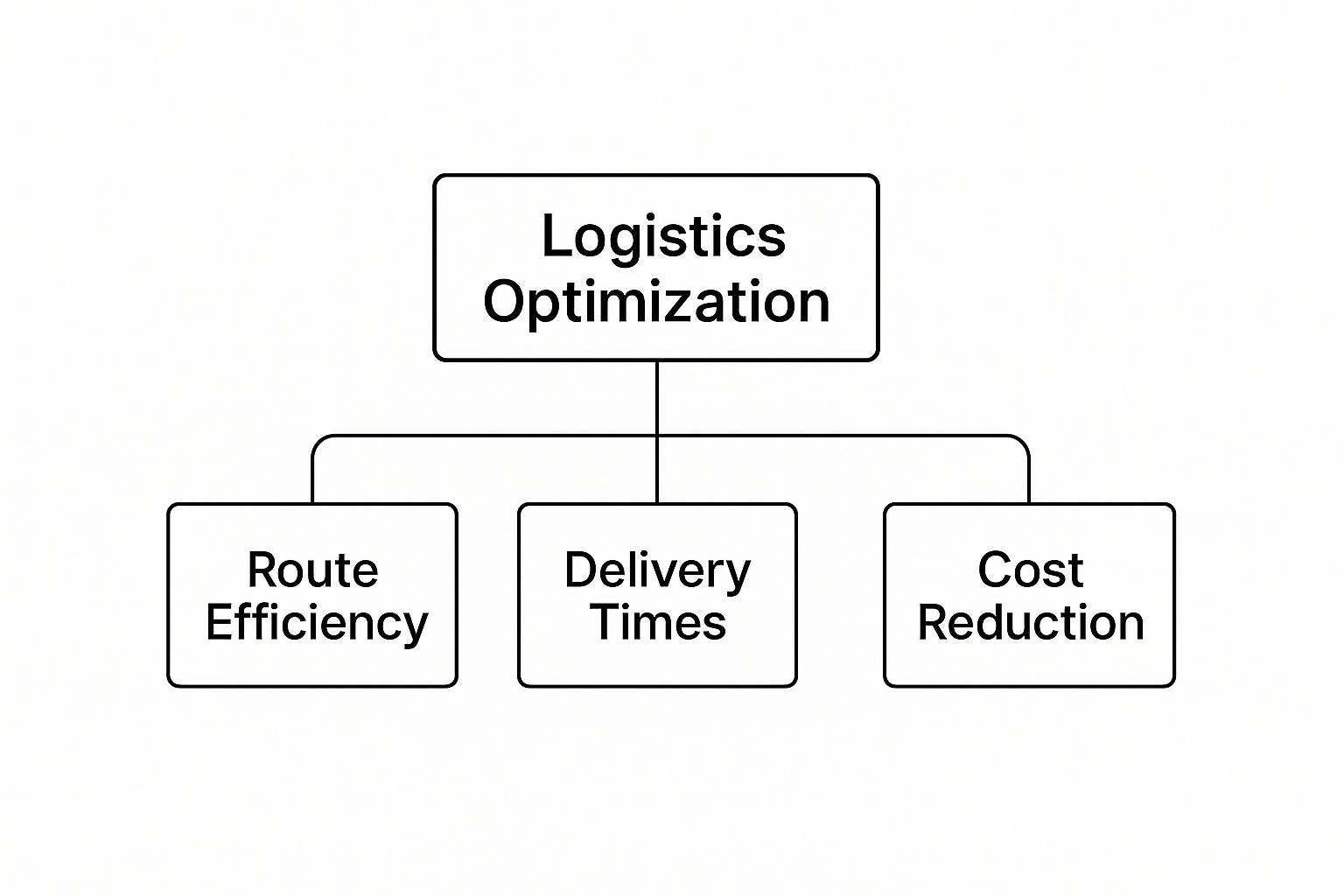
As you can see, optimizing your logistics isn't a single fix. It's a strategy with many moving parts, all focused on making things more efficient, faster, and cheaper all at once. Modern supply chain solutions are built to integrate these pieces, helping you meet the complex demands of today's market—from getting online orders out the door faster to cutting down on what you spend on deliveries. Getting on board with these accessible technologies isn't really an option anymore—it's how you build a restaurant that's ready for the future.
Your Action Plan For Implementing Supply Chain Solutions
Bridging theory and real life in a restaurant supply chain feels like going from a map to the actual road trip. You can read about best practices all day, but if you don’t weave them into your daily grind, nothing really changes. I’ve watched teams buy fancy software only to see their old frustrations reappear—because a tool is only as powerful as the plan behind it.
This action plan is your roadmap out of the reactive scramble and into forward-thinking work. Over the next few steps, you’ll lay the groundwork for a supply chain that adapts to busy weekends, cuts costs, and frees your team from manual chaos.
Start With A Thorough Supply Chain Audit
Any solid solution begins with an honest check of the current state. Think of it like pulling out every drawer in your kitchen to see what’s lurking inside. This isn’t about playing the blame game—it’s about spotting the gaps that quietly drain profit and patience.
Your audit should answer questions like:
- Where is our biggest source of food waste? Spoilage in the walk-in or over-portioning on the line?
- Which suppliers are a consistent headache? Use real delivery and quality records, not just gut feelings.
- How many hours go into manual inventory counts and ordering? Turning labor into dollars makes the impact obvious.
- Which items run out most often during service? Identify the menu stars that cause the biggest headaches when they’re missing.
That honest baseline becomes the anchor for every change you make. No starting point means no way to measure progress.
Set Clear And Measurable Goals
Now that you know where the holes are, it’s time to patch them with targets you can actually track. “Get more efficient” won’t cut it when you’re reporting to an owner. You need goals stamped with hard numbers and a deadline.
A well-defined goal acts as a compass for your entire team. It ensures everyone is working toward the same outcome and provides a clear benchmark for success, turning abstract ideas into tangible business objectives.
Consider objectives such as:
- Reduce overall food waste by 15% within six months.
- Cut time spent on weekly inventory by 50% with a digital inventory tool.
- Eliminate stockouts of our top five menu items during peak hours.
Each number reflects a pain point you uncovered in your audit. When you hit a milestone, everyone sees the impact on cost, quality, and customer satisfaction.
Choose Partners And Plan A Phased Rollout
With your goals in hand, start vetting vendors and tools through the lens of those exact needs. Don’t be dazzled by features you don’t require—focus on fixes that tie back to your audit and targets.
Implement changes in bite-sized phases. A big-bang switch rarely sticks and often burns out your team.
For new restaurants, a clear checklist can save hours of trial and error—our restaurant equipment startup checklist is built for just this.
Phased Rollout Example:
- Phase 1: Launch a digital inventory system in your busiest station.
Train your line cooks, gather feedback, and iron out kinks. - Phase 2: Renegotiate vendor contracts based on real usage data.
Reward reliable suppliers and replace those missing the mark. - Phase 3: Introduce automated order triggers and safety stock levels.
Monitor performance and scale to other stations.
Each step builds on the last, creating small wins that fuel momentum. By the time you reach the final phase, what once felt like a major overhaul will become just another part of your kitchen’s daily rhythm.
Got Questions About Restaurant Supply Chain Solutions? We've Got Answers.
When you're thinking about upgrading your restaurant's supply chain, a few practical questions always come up. How much will it cost? How long will it take? And will it actually make a difference to my bottom line? Let's get right into the direct, no-fluff answers every restaurant owner wants to know.
Are These Solutions Actually Affordable for a Small Restaurant?
Yes, absolutely. Gone are the days when you needed a massive upfront investment. Many of the best inventory and vendor management platforms now run on a subscription model (SaaS), so you're looking at a manageable monthly fee instead of a huge capital expense.
This means a small café or food truck can get their hands on the same powerful tools as a large chain, paying only for what they actually need. The real question is about return on investment. If a system helps you cut food waste by even 5-10%, it will likely pay for itself and then some.
What’s a Realistic Timeline for Getting Set Up?
It’s probably faster than you think. For a straightforward inventory management system, you could be up and running in just a few weeks. The process usually breaks down into three simple stages:
- Data Import: This is where you upload your current menus, recipes, and supplier lists into the new system.
- Team Training: A crucial step. You'll teach your kitchen and management staff how to use the new tools for their daily tasks.
- Go-Live: You flip the switch and start using the system for all your daily ordering and tracking.
A smart way to handle the change is with a phased rollout. You could start with just one area, like the bar or dry storage, to make the transition smoother and less disruptive to your day-to-day operations.
The goal of modern restaurant supply chain solutions isn't to add complexity, but to remove it. A good system should simplify your workflow, making it easier to track costs, reduce waste, and free up your team to focus on creating great food and experiences for your guests.
How Do I Know If It's Actually Working? (Measuring ROI)
You don't have to guess—you measure it. Tracking your return on investment comes down to watching a few key performance indicators (KPIs).
You'll want to look for tangible improvements in metrics like a lower Cost of Goods Sold (COGS), a measurable drop in your spoilage and waste percentages, and fewer labor hours spent on tedious manual inventory counts. By comparing the "before" and "after" numbers, you get a clear, data-backed picture of how your new solution is directly boosting your profitability.
Ready to build a more resilient and profitable kitchen? The Restaurant Warehouse provides the top-quality equipment and supplies you need to support a modern, efficient supply chain. Explore our extensive catalog and flexible financing options at https://therestaurantwarehouse.com.
About The Author

Sean Kearney
Sean Kearney is the Founder of The Restaurant Warehouse, with 15 years of experience in the restaurant equipment industry and more than 30 years in ecommerce, beginning with Amazon.com. As an equipment distributor and supplier, Sean helps restaurant owners make confident purchasing decisions through clear pricing, practical guidance, and a more transparent online buying experience.
Connect with Sean on LinkedIn, Instagram, YouTube, or Facebook.
Leave a comment